Game review
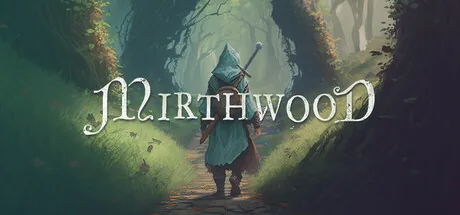
Mirthwood
6.5 / 10
- Developer
- Bad Ridge Games
- Publisher
- V Publishing
- Released
- 6 November 2024
- Platforms
- Windows
- Genre
- RPG, Farming Sim, Open World Survival Craft
- Monetisation
- One-time purchase, no in-game store
- Players
- Online co-op added July 2025
The short version
Mirthwood blends Stardew Valley-style farming with open-world fantasy adventuring, casting the player as a settler who can grow crops, raise a homestead, explore ruins, fight monsters and make morally loaded choices in a storybook-medieval world. Built by a two-person team at Bad Ridge Games and published by V Publishing, it released as a full 1.0 on 6 November 2024. Its 1,364 English-language Steam reviews sit at Mostly Positive, roughly 73.5%, and reading the full top 100 negative and positive reviews finds a striking consensus: gorgeous, ambitious and genuinely different from its obvious influences, but launched in a state its own fans overwhelmingly describe as early access wearing a 1.0 label. Reading the patch history since tells a second, fairer story — nearly two years of continuous free content updates, including a co-op mode the original release never had.
Biggest strengths
- Art direction and atmosphere draw wide, consistent praise as genuinely beautiful and distinctive, with music and voice work singled out repeatedly as standout for a two-person production
- The core pitch — farming and homesteading layered with real combat, exploration and morally weighted choices — is credited by reviewers as a genuinely different mix from its farming-sim peers rather than a Stardew Valley clone
- The developers have shipped continuous free content since launch, including a "Foundations" update and, notably, an online co-op mode in mid-2025 that the original release lacked entirely
Biggest weaknesses
- The single most consistent complaint across the top negative reviews, spanning the entire period from launch through 2026, is that the game shipped as a "1.0" while playing and feeling like an early access build, complete with a public content roadmap posted after the full release
- Combat draws specific, repeated criticism as underwhelming and easily cheesed, with bow aiming singled out as unreliable even after developer attention
- Quest tracking and progression bugs recur across the sample at launch, including quests that fail to update or register conversations correctly, forcing manual workarounds
Who it's for: Cozy-RPG and Stardew Valley fans who want something with real combat and open-world exploration layered on top of the farming, and who are willing to accept some remaining rough edges in exchange for genuine ambition; a poor fit for anyone expecting Stardew-level polish out of the box.
Our recommendation: Worth buying now for what nearly two years of free updates have made it, but go in aware that its launch reputation as an unfinished 1.0 was earned, and check recent patch notes before assuming any specific complaint is still current.
6.5 / 10
Introduction
Mirthwood asks what happens if a Stardew Valley-style homestead gets dropped into a fuller open-world fantasy RPG: plant crops and raise animals, but also explore ruins, fight monsters with a sword and bow, and make choices — including, several reviewers note with some glee, whether to steal from or kill the townsfolk — that carry weight. Bad Ridge Games, a two-person development team, built it, and V Publishing released it as a full 1.0 on 6 November 2024. This review reads the 100 most-upvoted negative reviews and 100 most-upvoted positives out of 1,364 English-language reviews sitting at Mostly Positive, roughly 73.5%, and finds a genuinely unusual situation: a near-unanimous verdict on what went wrong at launch, followed by nearly two years of the developers visibly working to fix it.
An ambitious mix that mostly earns its comparisons
Start with what draws praise. Mirthwood's central pitch — real farming and homesteading married to open-world combat, exploration and consequence-bearing choices — is credited across the sample as something genuinely different from its farming-sim peers rather than a reskin. One widely-upvoted review called it "the Dark Souls of cozy games" and compared it to the original Fable crossed with Wildermyth; another described it as "Witcher but 2.5D." The game's own community tags on Steam back this framing, with RPG, Farming Sim, Sandbox, Open World Survival Craft and Medieval all sitting near the top of the vote count together, rather than any single genre dominating. Art direction and atmosphere draw the widest, most consistent praise in the entire sample — "storybook-beautiful," in one reviewer's words — and the music and voice work are singled out repeatedly as remarkable for a two-person team to have produced at all.
A 1.0 that its own fans say wasn't ready
Here is where the review sample speaks with unusual unity. Reviewer after reviewer — including many who ultimately recommended the game — say plainly that Mirthwood launched in a state that looked and played like early access, not a finished 1.0. One of the most-upvoted negatives put it bluntly: "do not call this a version 1.0 when it should still be in early access," pointing to content that was locked, unavailable or blocked off at launch. Another noted the irony directly: the game shipped with "an early access style roadmap for 2025 content" despite not carrying the Early Access label on its store page, which left buyers paying full price for what read as a pre-release build. Specific, credible bugs back this up across the sample — quests that fail to register progress or conversations, forcing players to relaunch the game to continue, and Stardew-scale farm buildings sized in ways that make basic homestead layout awkward. Even several of the most enthusiastic positive reviews carry the same caveat unprompted; one wrote that if they'd paid for "this 'full release'" without reading community discussion first, they'd have felt deceived.
Combat draws its own specific, repeated criticism independent of the launch-state argument. Multiple reviewers describe it as underwhelming and easy to exploit, and one reviewer returning over a year after launch to check on the bow specifically found the crosshair still didn't align properly with the weapon's arc — a concrete, testable complaint rather than a vague "combat feels bad" one. A smaller cluster argues more broadly that Mirthwood's individual systems — socialising, farming, crafting, fighting — are each comparatively shallow on their own, which is a fair tension for a game whose whole pitch is combining several genres rather than mastering one.
Two years of visibly making good on it
What separates Mirthwood from a typical rushed launch is what happened next. The patch and update history since November 2024 shows continuous, substantial free content shipping roughly every month or two: a "Foundations" update billed as content-packed in November 2025, jousting and new customisation options at the end of 2025, a "Seafarers" expansion adding sailing content in June 2026, and — most significantly — an online co-op mode that arrived in mid-2025 and expanded into a full multiplayer beta by July 2026, none of which existed at launch at all. The game also achieved Steam Deck Verified status in October 2025. That's a materially different trajectory from a studio that ships a rough 1.0 and moves on, and reviews posted well into 2025 and 2026 increasingly note the game "in a more playable state" than it was at release, even where they stop short of a full recommendation.
Final Verdict
Mirthwood is a genuinely ambitious, visually striking game that asked to be judged as a finished product before it was one, and its own review base called that out clearly and consistently at launch. Two small developers took that feedback and kept building rather than abandoning ship, adding an entire co-op mode and a steady stream of free content across the better part of two years — the kind of sustained post-launch investment this library doesn't see from every studio twice its size. The honest recommendation today is not the one this game earned in November 2024: combat still draws specific, credible criticism and some systems remain thinner than the pitch promises, but a buyer picking it up now is getting a substantially more finished game than the one its harshest launch-week reviews described, for a fair price, with a developer that has kept showing up.
Pros and cons
Pros
- Art direction and atmosphere draw wide, consistent praise as genuinely beautiful and distinctive, with music and voice work singled out repeatedly as standout for a two-person production
- The core pitch — farming and homesteading layered with real combat, exploration and morally weighted choices — is credited by reviewers as a genuinely different mix from its farming-sim peers rather than a Stardew Valley clone
- The developers have shipped continuous free content since launch, including a "Foundations" update and, notably, an online co-op mode in mid-2025 that the original release lacked entirely
- The developers are widely described across the sample as active, responsive and present in community discussion, which several reviewers cite directly as a reason for cautious optimism
Cons
- The single most consistent complaint across the top negative reviews, spanning the entire period from launch through 2026, is that the game shipped as a "1.0" while playing and feeling like an early access build, complete with a public content roadmap posted after the full release
- Combat draws specific, repeated criticism as underwhelming and easily cheesed, with bow aiming singled out as unreliable even after developer attention
- Quest tracking and progression bugs recur across the sample at launch, including quests that fail to update or register conversations correctly, forcing manual workarounds
- A cluster of reviews argues the game's various systems — socialising, farming, crafting and combat — are individually shallow, more a wide surface than a deep one
Screenshots
-
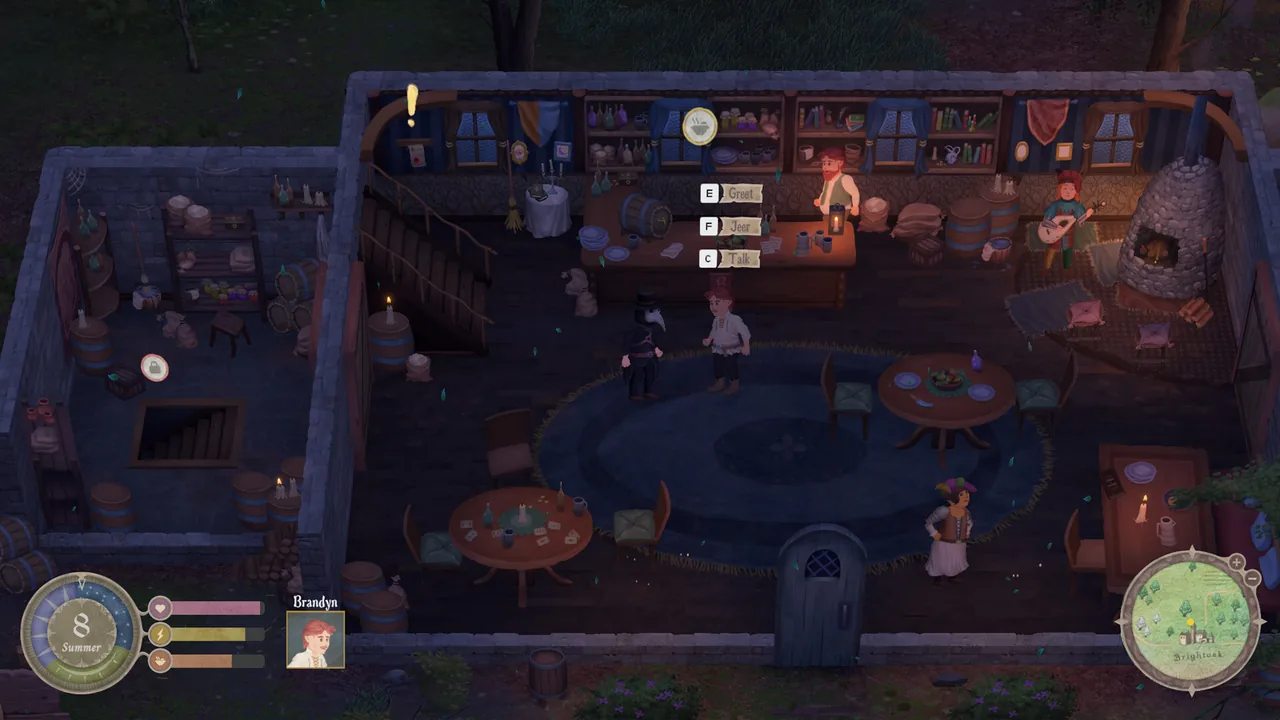
MirthwoodImage: V Publishing via Steam -
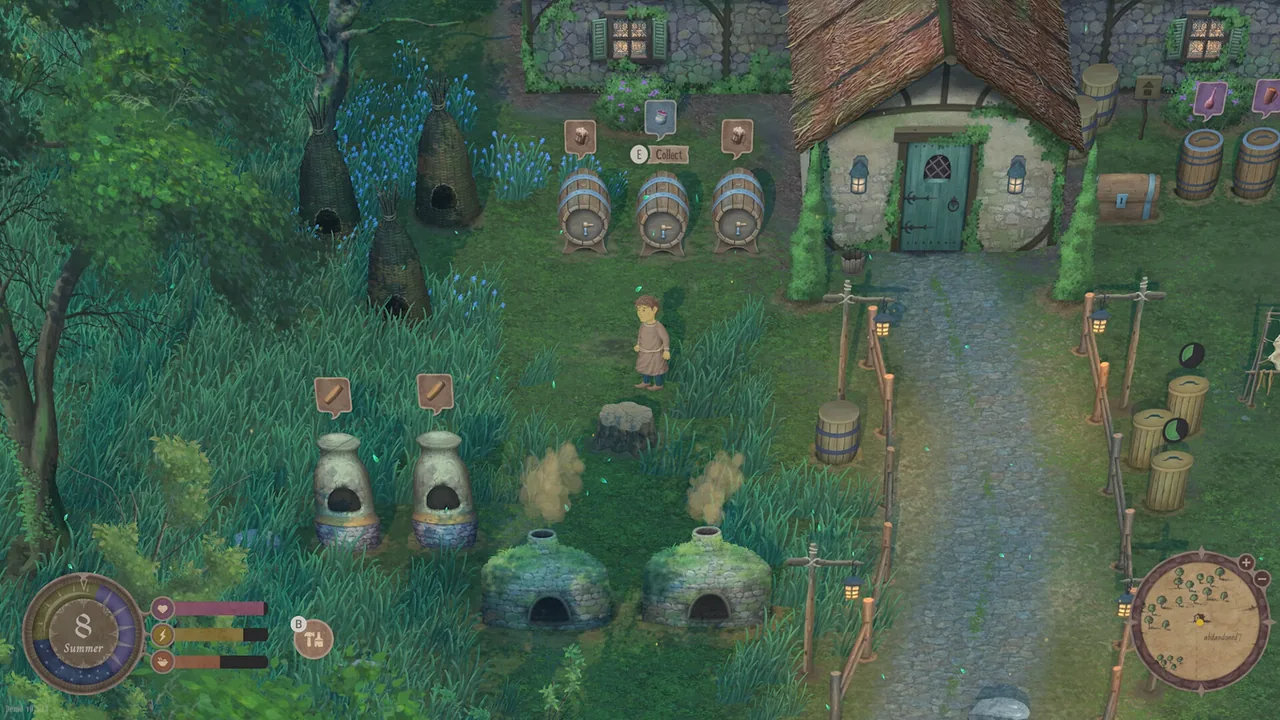
MirthwoodImage: V Publishing via Steam -
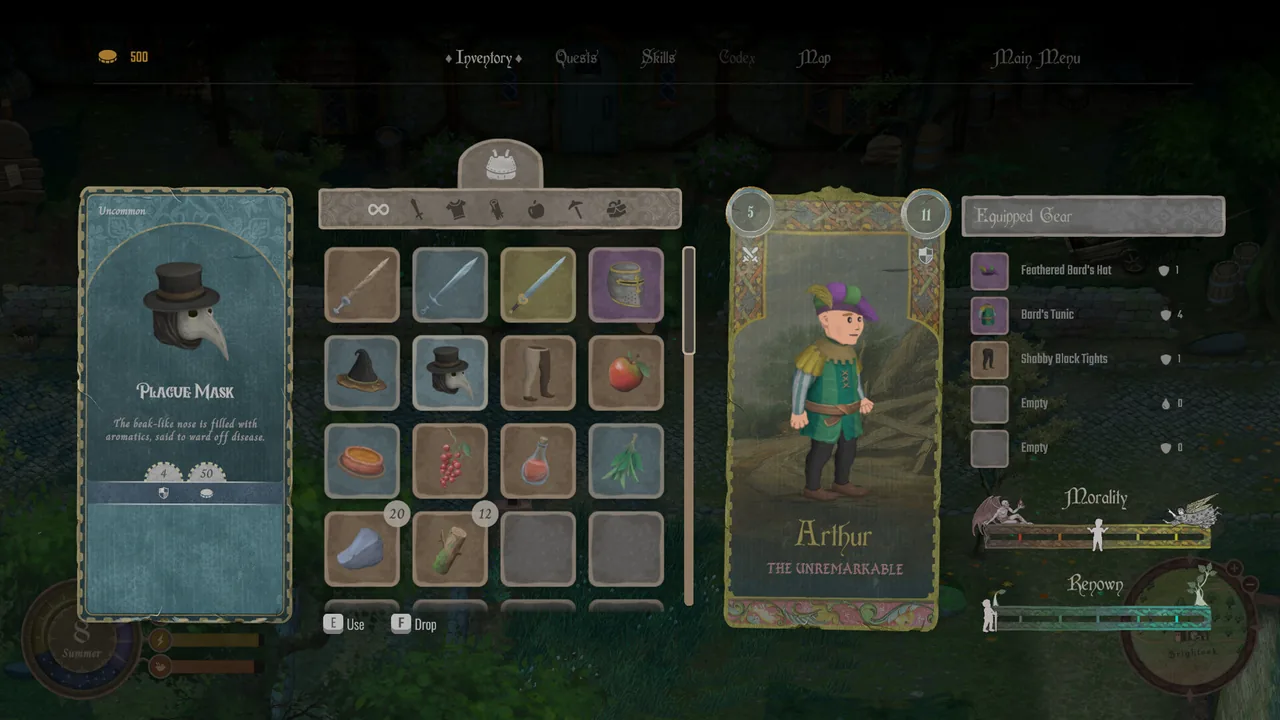
MirthwoodImage: V Publishing via Steam -
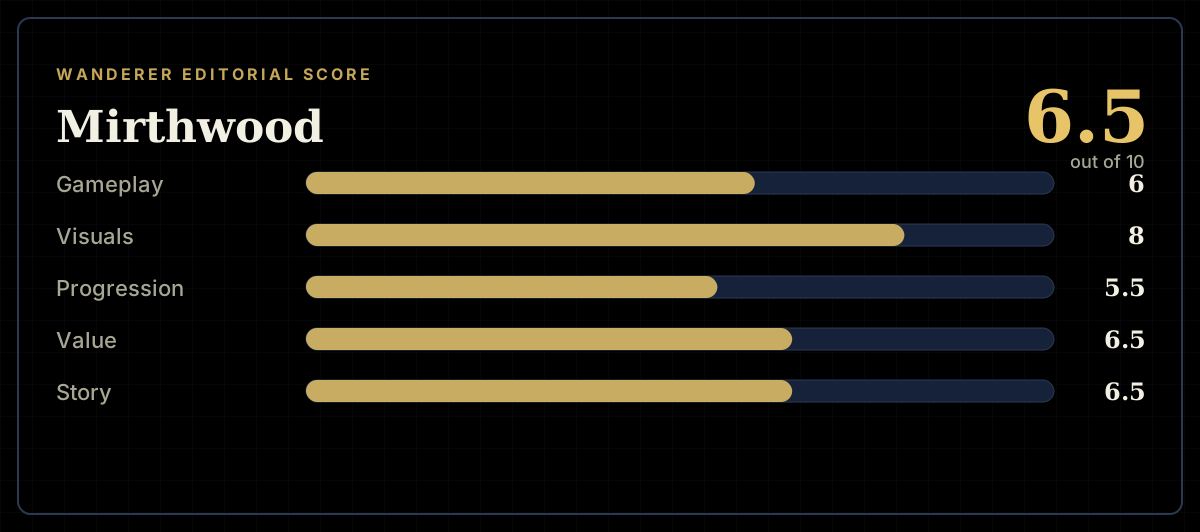
How the review scores each part of the gameWanderer Editorial -
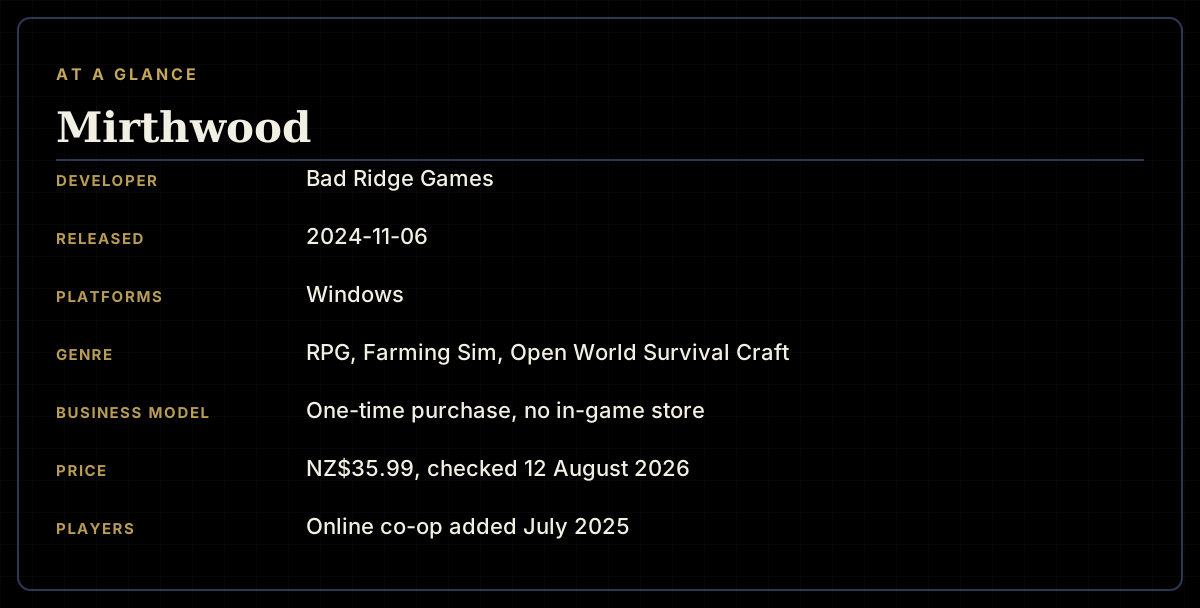
The essentials at a glanceWanderer Editorial -
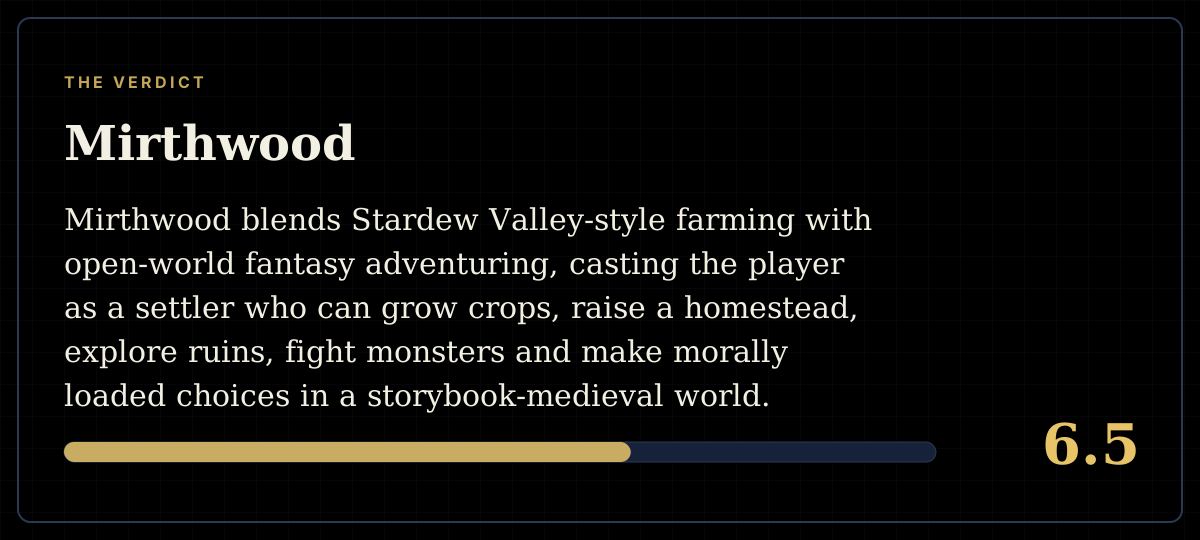
The short versionWanderer Editorial