Game review
Dinkum
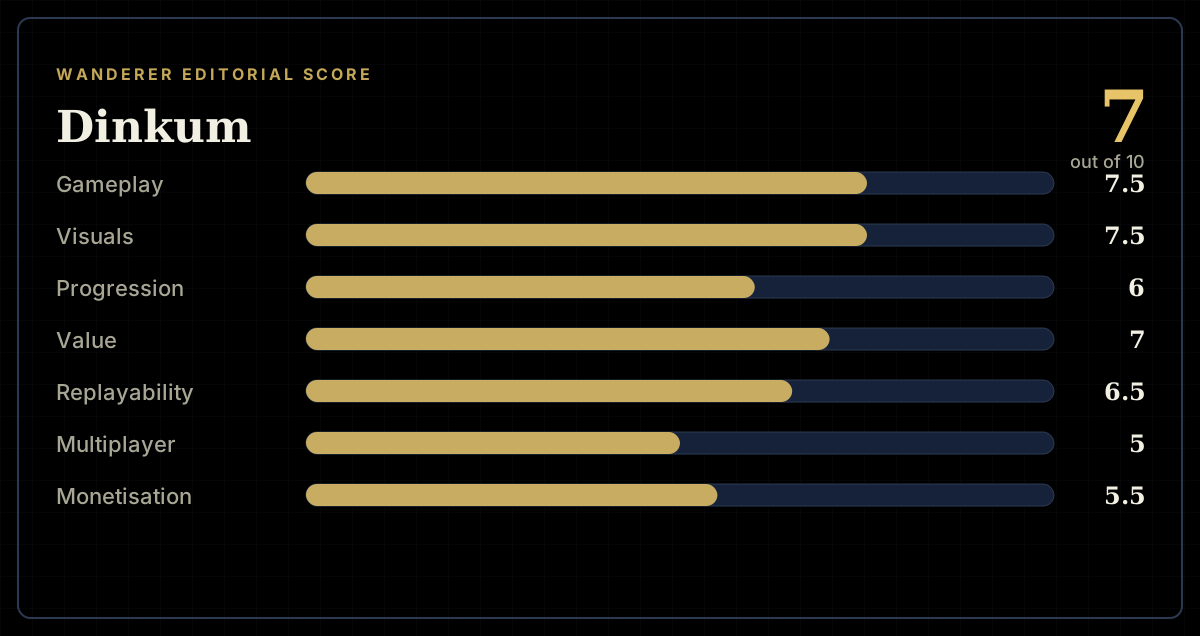
7 / 10
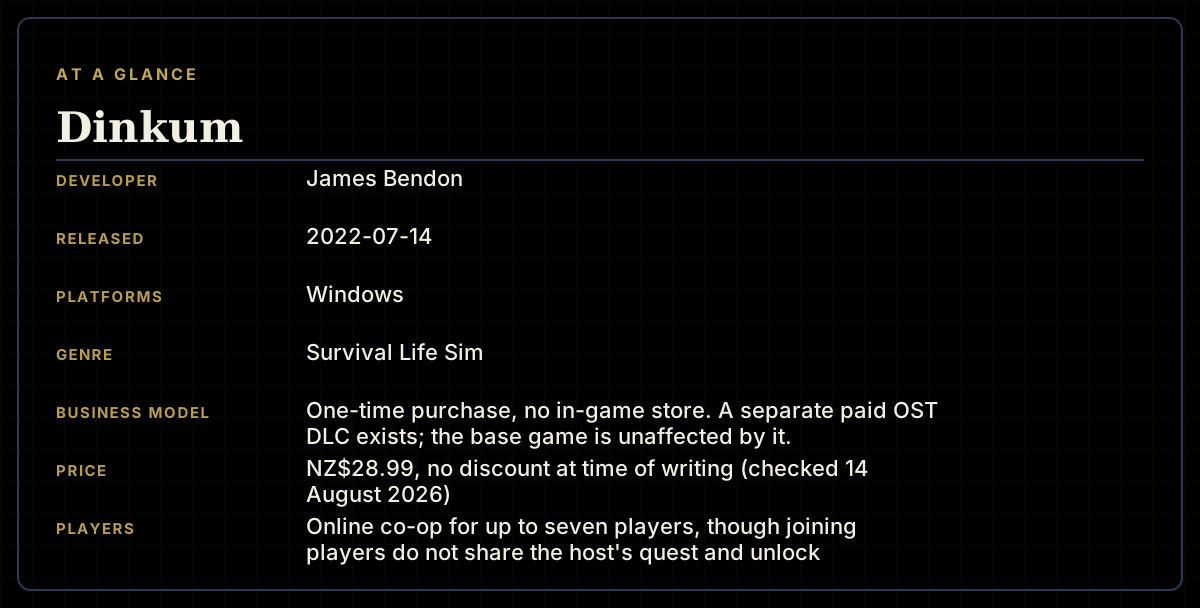
- Developer
- James Bendon
- Publisher
- KRAFTON, Inc.
- Released
- 14 July 2022
- Platforms
- Windows
- Genre
- Survival Life Sim
- Monetisation
- One-time purchase, no in-game store. A separate paid OST DLC exists; the base game is unaffected by it.
- Players
- Online co-op for up to seven players, though joining players do not share the host's quest and unlock progression — a complaint present since Early Access launch and still current.
The short version
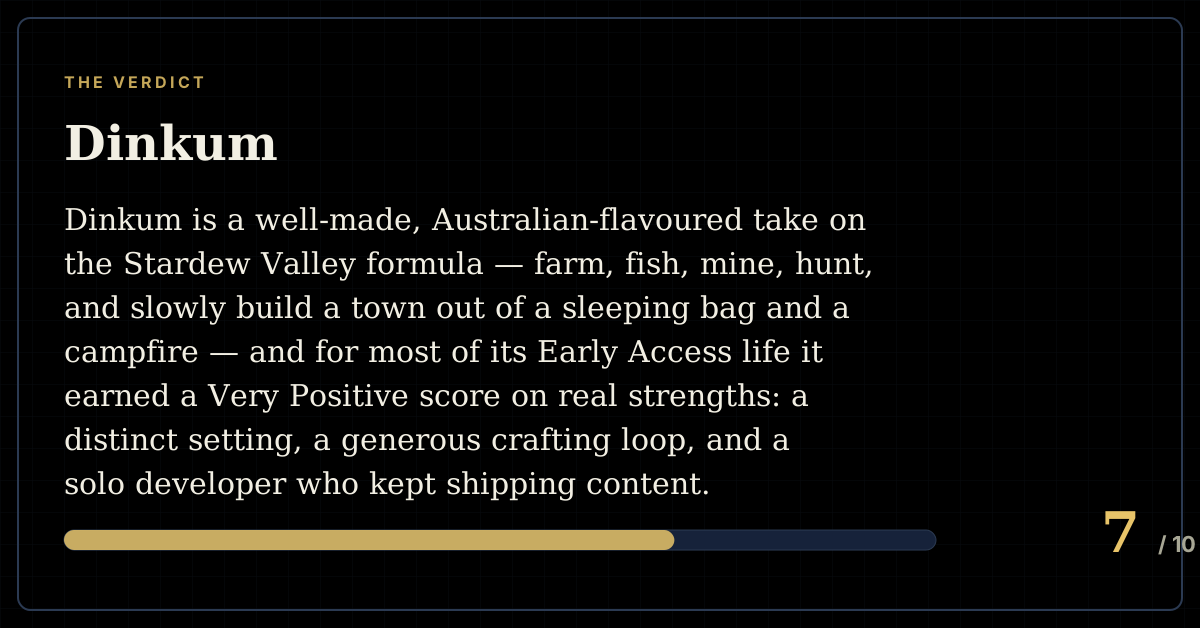
Dinkum is a well-made, Australian-flavoured take on the Stardew Valley formula — farm, fish, mine, hunt, and slowly build a town out of a sleeping bag and a campfire — and for most of its Early Access life it earned a Very Positive score on real strengths: a distinct setting, a generous crafting loop, and a solo developer who kept shipping content. That reputation held until February 2025, when developer James Bendon handed publishing rights to KRAFTON ahead of the 1.0 launch, and a large, verified wave of veteran players — many with thousands of hours logged — turned against a new EULA covering personal data collection. The game underneath hasn't changed; whether you're comfortable with who now runs the business behind it is a separate, and much more recent, question.
Biggest strengths
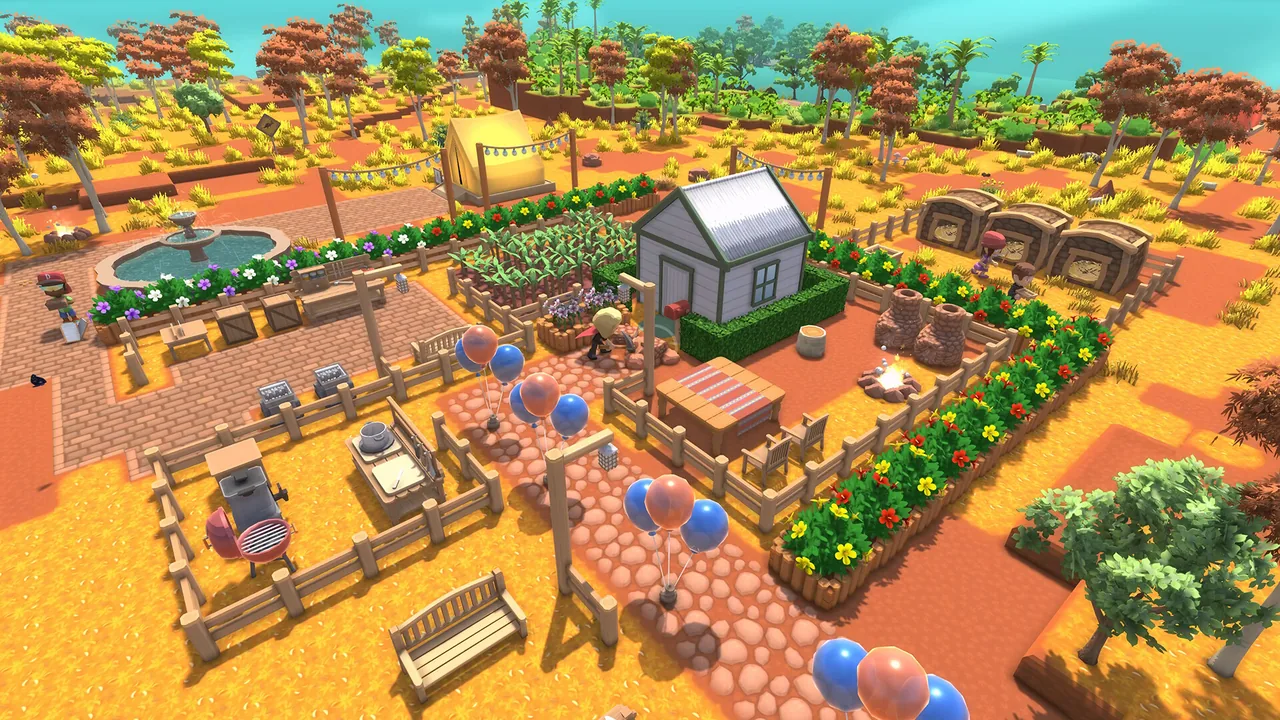
- A distinctive Australian outback setting with red desert, forest, and mining biomes that avoid the usual cottagecore palette
- Deep crafting and building systems that a solo developer kept expanding for nearly three years in Early Access
- Combines farming, fishing, mining, hunting and bug-catching without any one system feeling like filler
Biggest weaknesses
- Joining players in co-op don't share quest completion or unlocks, a design gap present since 2022 launch and still unresolved
- February 2025's KRAFTON publishing deal introduced a new EULA covering personal data that a large, verifiable wave of long-time players objected to
- Several thousand-hour reviewers cite Krafton's public conduct toward the Subnautica 2 team as a reason they stopped recommending the game
Who it's for: Fans of cozy survival-crafting games who want a distinctly Australian setting and don't mind co-op that plays better solo. Read the current EULA before buying if publisher trust matters to you.
Our recommendation: The game itself remains a genuinely good, content-rich survival life-sim worth its asking price. The publishing change is real, well-documented, and recent enough that it belongs in any honest recommendation — go in with eyes open rather than avoid a good game on reputation alone.
7 / 10
Dinkum spent nearly three years earning one of the more consistent reputations in the cozy survival-sim genre: an Australian solo developer, an Australian setting nobody else was using, and a steady stream of Early Access updates that most of the genre's other Early Access darlings never manage. Then, six weeks before its 1.0 launch in April 2025, that developer sold publishing rights to KRAFTON — and a large chunk of that reputation evaporated in a matter of days, not over the quality of the game, but over what the new publisher was asking players to agree to in order to keep playing it.
Both halves of that story are true, they're not the same story, and conflating them does a disservice to whichever question you're actually trying to answer. So this review handles them separately: what Dinkum is as a game, and what happened to the business behind it.
What Dinkum actually is
Strip away the outback dressing and Dinkum sits comfortably in Stardew Valley's lineage: wake up, manage stamina, farm crops, sell what you grow, build up a settlement, go to bed, repeat with more options each day. What sets it apart is the setting and the breadth of systems layered on top. You're not tending a generic temperate farm — you're clearing red desert scrub, fishing billabongs, mining underground tunnels, and hunting genuinely dangerous wildlife that doesn't pull punches just because the art style is cute. The developer's commitment to that Australian identity, down to slang in item names and quest text, gives the game a personality that most farm-sim clones don't bother building.
The systems underneath are generous rather than groundbreaking: farming, fishing, mining, bug catching, hunting, and town building all feed into each other through a shop-and-reinvest loop, and none of them feel like padding added to hit a feature checklist. Fifteen official screenshots and years of update posts — biome expansions, new crafting tiers, a "Go-Go Town" content update in late 2024 — back up a 1.0 that arrived with real substance rather than an Early Access tag quietly removed.
The co-op gap that never closed
One design complaint has followed Dinkum from its very first week to its most recent updates: joining a friend's world doesn't share your progression. A 134-vote review from 18-19 July 2022, days after Early Access launch, describes exactly this — quests, unlocks and money don't carry over for the joining player, making multiplayer close to pointless as anything but a shared sandbox to look at. Reviews from 2024 and 2025 describe the identical problem in near-identical language, and one recent review adds a sharper edge: a lost connection can wipe a joining player's inventory and experience outright, not just pause the session. For a game whose store page leads with co-op as a selling point, this is a real and long-standing gap, not a launch hiccup that got patched away.
The controversy, dated and verified
In February 2025, ahead of the April 1.0 launch, developer James Bendon announced that KRAFTON would become Dinkum's publisher. The developer's own news feed carries the paper trail: a "Notice on Personal Information Transfer" on 10 February, a post titled "Regarding KRAFTON Publishing and How We Handle Personal Data" on 12 February, and a "KRAFTON Q&A" on 18 February attempting to address player questions directly. That sequence confirms the substance of what triggered the backlash — a new EULA covering personal data handling — independent of anything said in a Steam review.
What followed is genuinely large by this game's standards. The single most-upvoted negative review of all time, at over 1,100 votes and written by a player with more than 6,700 hours logged, objects specifically to KRAFTON's use of AI-generated voiceover in the publisher's own marketing videos — not to anything inside the game itself, and the store page carries no AI Generated Content Disclosure, because none applies to Dinkum's actual content. Other high-vote reviews raise the EULA's data-collection terms directly, and several cite KRAFTON's public conduct toward Unknown Worlds — the Subnautica developer, delaying Subnautica 2 and laying off staff shortly after acquisition — as their reason for withdrawing a recommendation they'd have happily given a year earlier. These are widely-reported, independently verifiable events about KRAFTON as a company, not unfounded claims invented for this game's review section, which is why they belong here rather than being waved off as noise.
What's notable is the playtime attached to these reviews. The loudest objectors aren't disappointed newcomers — they're players with thousands of hours who are protesting a business decision, not retracting an assessment of the game they spent that time in. Several say exactly that: they liked Dinkum, they're leaving a negative review anyway, on principle.
Recent sentiment tells a calmer story
Here's the part the most-voted reviews don't show on their own: sentiment has not stayed at controversy levels. Pulling the 600 most recent English reviews — all from January through August 2026, a year after the deal — sentiment runs 85 to 89% positive every single month, barely different from the 91.8%-positive lifetime score across all languages. Krafton doesn't come up at all in that recent sample. The backlash was real, loud, and well-documented in February through April 2025; it did not become the game's permanent reputation. Anyone buying Dinkum today is buying into a stable, positively-received game, with a publisher-trust question attached that they should decide on their own terms rather than take as settled by either side of the argument.
Presentation and the small things that add up
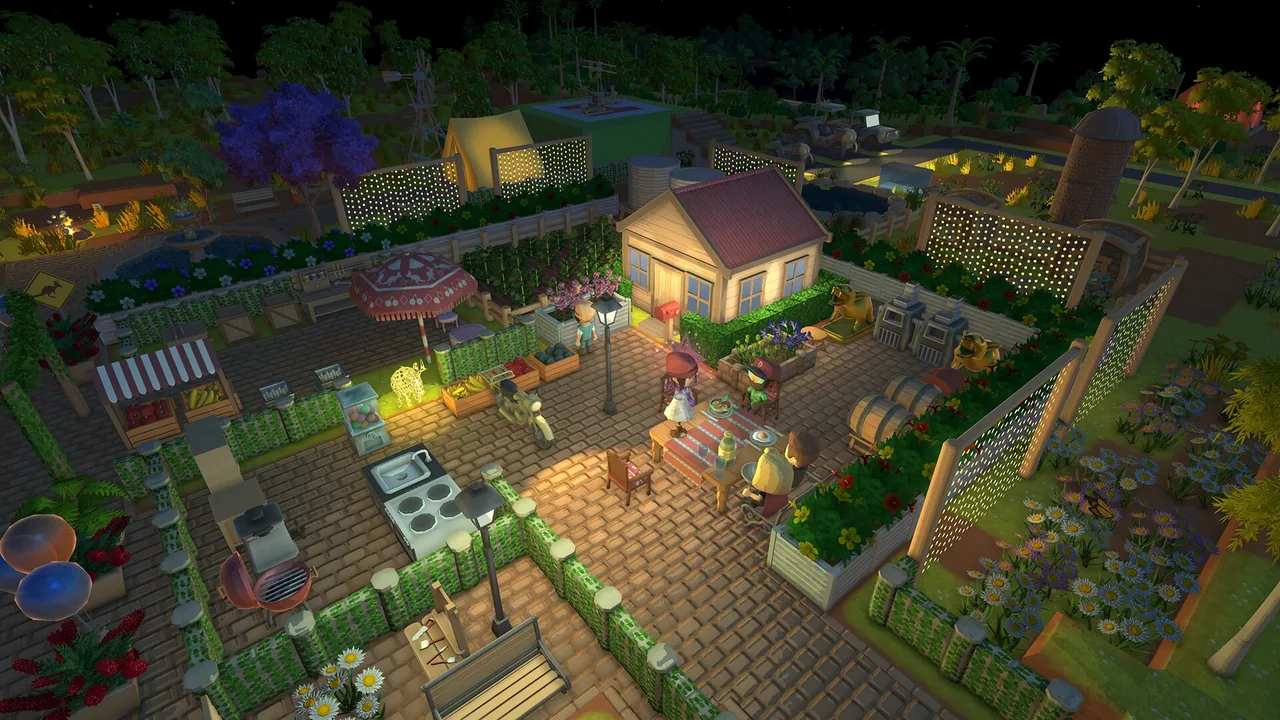
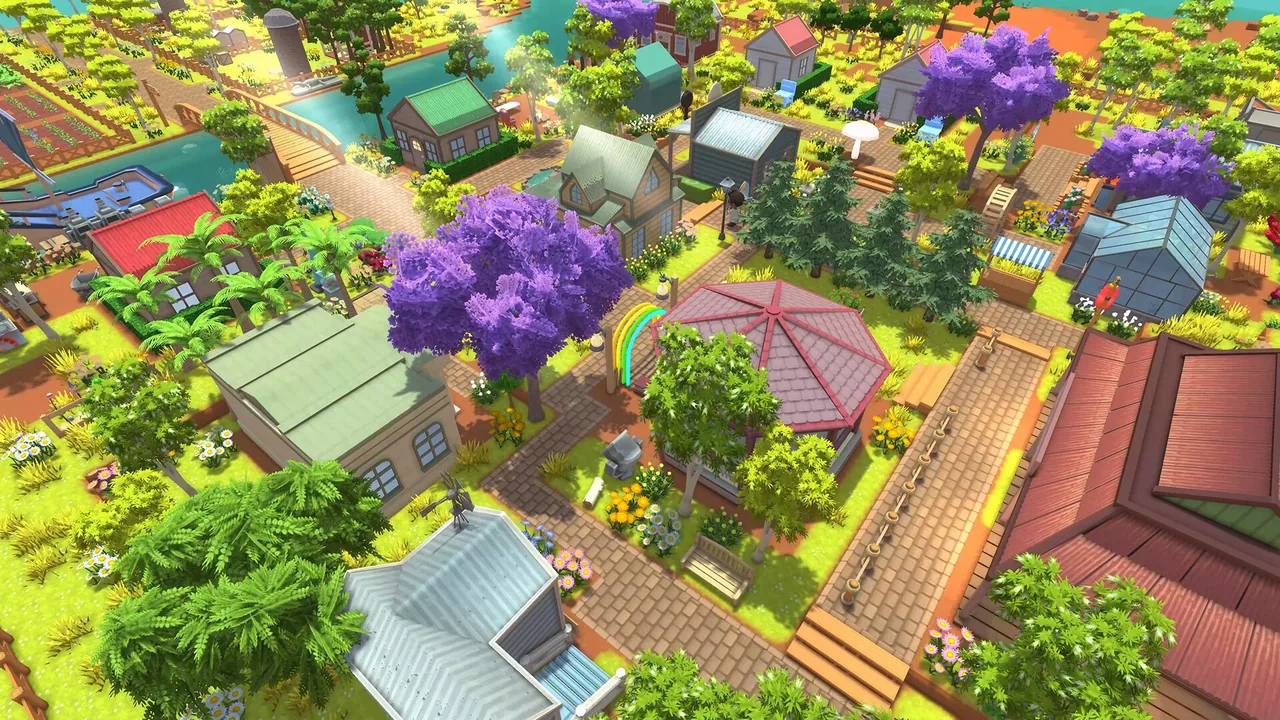
Dinkum's art style is low-poly and warm-lit rather than pixel-art, which sets it apart visually from most of the genre it's competing with — Stardew Valley's clones tend to default to 16-bit sprites, and Dinkum's fully 3D island lets the camera pull back for wide desert vistas and drop into tight mine tunnels without a style change. It's not a technically demanding game and doesn't need to be; the low-poly look holds up on modest hardware, which matters for a genre whose audience skews toward casual and older PCs. Positive reviews consistently single out the character customisation and town-decorating tools as more flexible than they expected from a solo-developer project, and the wildlife design — deer, emus, and more dangerous outback fauna rendered with the same cute-but-not- harmless philosophy as the rest of the island — gets repeated praise for making exploration feel like it has stakes rather than being purely decorative.
Full localisation into fourteen languages, added via a February 2025 update, is a genuine value-add that a lot of Early Access darlings never get around to, though the timing — landing in the same week as the KRAFTON announcement — meant it was largely overshadowed in the review section by the publishing news.
Value and what you're actually paying for
At NZ$28.99 for the base game, Dinkum undercuts most full-priced life-sims while delivering a comparable amount of content, and the store listing carries no in-game currency shop, no cosmetic loot box, and no premium track bolted onto the base experience. The one paid add-on is a soundtrack DLC that doesn't touch gameplay. Judged purely on what your money buys inside the game, that's about as clean as monetisation gets in 2026 — there's nothing here that pressures a purchase you didn't already make at checkout.
Where the monetisation question gets complicated is the EULA rather than the storefront. Objecting players aren't describing a paywall inside the game; they're describing terms attached to continuing to use software they already own, which is a different kind of transaction than the one the price tag represents. That's reflected in the monetisation score here sitting below what the in-game systems alone would earn — the game doesn't monetise aggressively, but the publishing relationship around it introduced a cost that isn't measured in dollars, and a portion of the existing player base clearly felt it as one anyway.
Where the ordinary complaints sit
Away from the publisher story, the negative reviews read like most survival-sim critiques: a secondary stamina system that several long-time players say was nerfed in a later update and made gathering feel like a chore rather than a relaxed loop; the day only saves at day's end, with no manual save option, which one 10,600-hour reviewer calls a dealbreaker despite otherwise recommending the game; and a handful of players who find the island's activities repeat without much variation once the initial systems are all unlocked. None of these are severe, and they're the ordinary cost of this genre's design, but they're worth knowing before a first purchase.
Verdict
Judge Dinkum purely as a survival life-sim and it's a well above-average one — a distinct setting, a generous set of interlocking systems, and nearly three years of Early Access support from a developer who kept showing up. That earns a strong score on its own. What holds it back from higher is a co-op mode that has never delivered on its own premise and a publishing relationship that a substantial, verifiable portion of its longtime audience no longer trusts, even while continuing to play and enjoy the game itself. A 7 reflects a genuinely good game sitting under a real, recent, and unresolved reputational cloud — buy it for what's on the island, and make your own call about who's now running the business behind it.
Pros and cons
Pros
- A distinctive Australian outback setting with red desert, forest, and mining biomes that avoid the usual cottagecore palette
- Deep crafting and building systems that a solo developer kept expanding for nearly three years in Early Access
- Combines farming, fishing, mining, hunting and bug-catching without any one system feeling like filler
- Fifteen storefront screenshots and years of update history back up a genuinely content-rich 1.0 release
- Base price includes the full game with no in-game store bolted on afterward
Cons
- Joining players in co-op don't share quest completion or unlocks, a design gap present since 2022 launch and still unresolved
- February 2025's KRAFTON publishing deal introduced a new EULA covering personal data that a large, verifiable wave of long-time players objected to
- Several thousand-hour reviewers cite Krafton's public conduct toward the Subnautica 2 team as a reason they stopped recommending the game
- Balance changes to the stamina system in later updates are a recurring complaint from players who liked the original pacing
- A disconnect during multiplayer can wipe a joining player's inventory and experience, not just interrupt the session
Screenshots
-
DinkumImage: KRAFTON, Inc. via Steam -
DinkumImage: KRAFTON, Inc. via Steam -
DinkumImage: KRAFTON, Inc. via Steam -
How the review scores each part of the gameWanderer Editorial -
The specsWanderer Editorial -
The short versionWanderer Editorial