
Game review
Astrea: Six-Sided Oracles
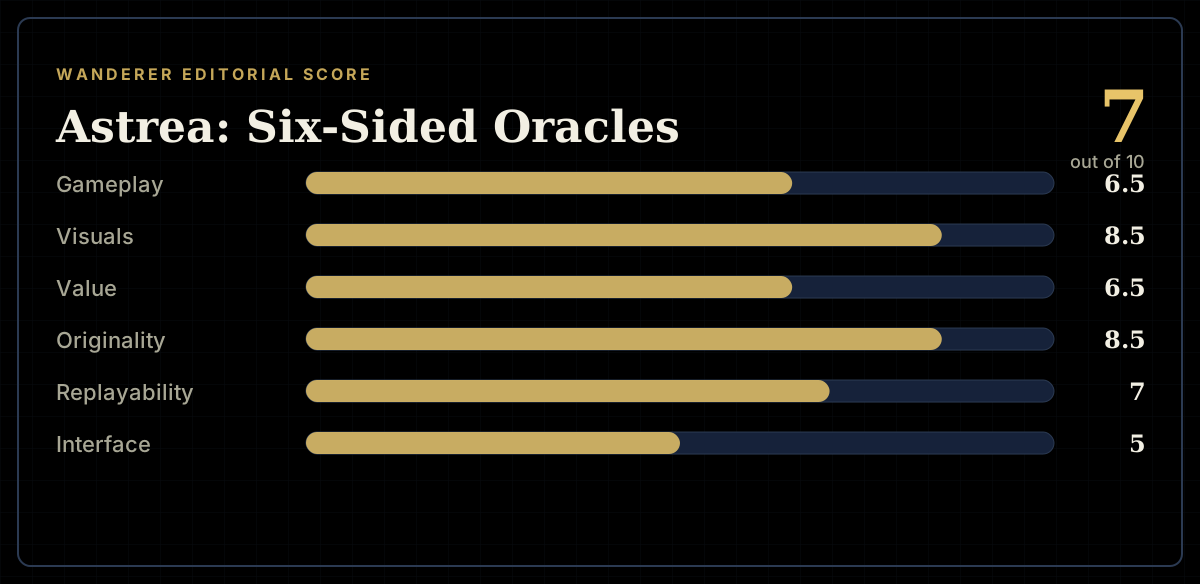
7 / 10
- Developer
- Little Leo Games
- Publisher
- Akupara Games
- Released
- 21 September 2023
- Platforms
- Windows
- Genre
- Dice Roguelike Deckbuilder
- Monetisation
- One-time purchase, plus two paid DLC packs. No ads, subscriptions or premium currency.
- Players
- Single-player only
The short version
Astrea: Six-Sided Oracles takes the Slay the Spire-style roguelike deckbuilder and rebuilds it around dice instead of cards, tracking a dual resource of Purification and Corruption instead of a single health bar. Steam has it Very Positive, 2,756 of 2,982 reviews (92.4%), rising to 94.6% among English-language reviews (981 of 1,037), with reviewers repeatedly calling the dice-and- dual-resource system a genuine, successful innovation on a crowded genre rather than a reskin.
A real minority pushes back on specifics rather than the concept, though, and the pattern is quantifiable: 25 of the 56 English-language negative reviews sampled for this piece cite overwhelming complexity -- too many similar-looking status icons, too much to track per turn -- and 21 cite dice variance specifically, several arguing certain builds simply cannot beat certain bosses no matter how well they're played. One reviewer also documented a specific scaling bug that made a stat-boosting Blessing apply multiples of its stated value.
Biggest strengths
- A genuinely inventive core system -- dice instead of cards, and a dual Purification/Corruption resource instead of simple health -- that reviewers repeatedly credit as real innovation on the roguelike deckbuilder formula rather than a cosmetic swap
- Gorgeous, consistently praised art direction that draws compliments even from reviewers who otherwise can't recommend the game
- Deep build variety across multiple playable characters, with several reviewers logging well over 100 hours (one reports around 200 actual hours despite a 492-hour Steam counter inflated by idle sessions) chasing different strategies
Biggest weaknesses
- Overwhelming complexity is the single most repeated complaint in the negative sample -- 25 of 56 English-language negative reviews cite similar-looking status icons and too much simultaneous information to track per turn, several explicitly contrasting it with Slay the Spire's comparative clarity
- Dice variance draws real fairness complaints in a further 21 of 56 negative reviews, with several reviewers describing specific matchups they say are unwinnable regardless of skill or build quality
- A reviewer documented a specific scaling bug in which a Blessing meant to add a small Purification/Corruption bonus applied a multiplied value instead, and other reviewers separately report crashes and unclear whether losses stem from bugs or simply illegible game states
Who it's for: Deckbuilder veterans -- especially fans of Slay the Spire and Monster Train -- who want a genuinely different resource system and don't mind a demanding learning curve. A poor fit for anyone who wants a gentler on-ramp into the genre, or who is sensitive to high-variance RNG swings deciding runs.
Our recommendation: Recommended for genre veterans specifically looking for something structurally new rather than more of the same; newcomers to roguelike deckbuilders should start with Slay the Spire itself and come to this one once the genre's fundamentals feel comfortable.
7 / 10
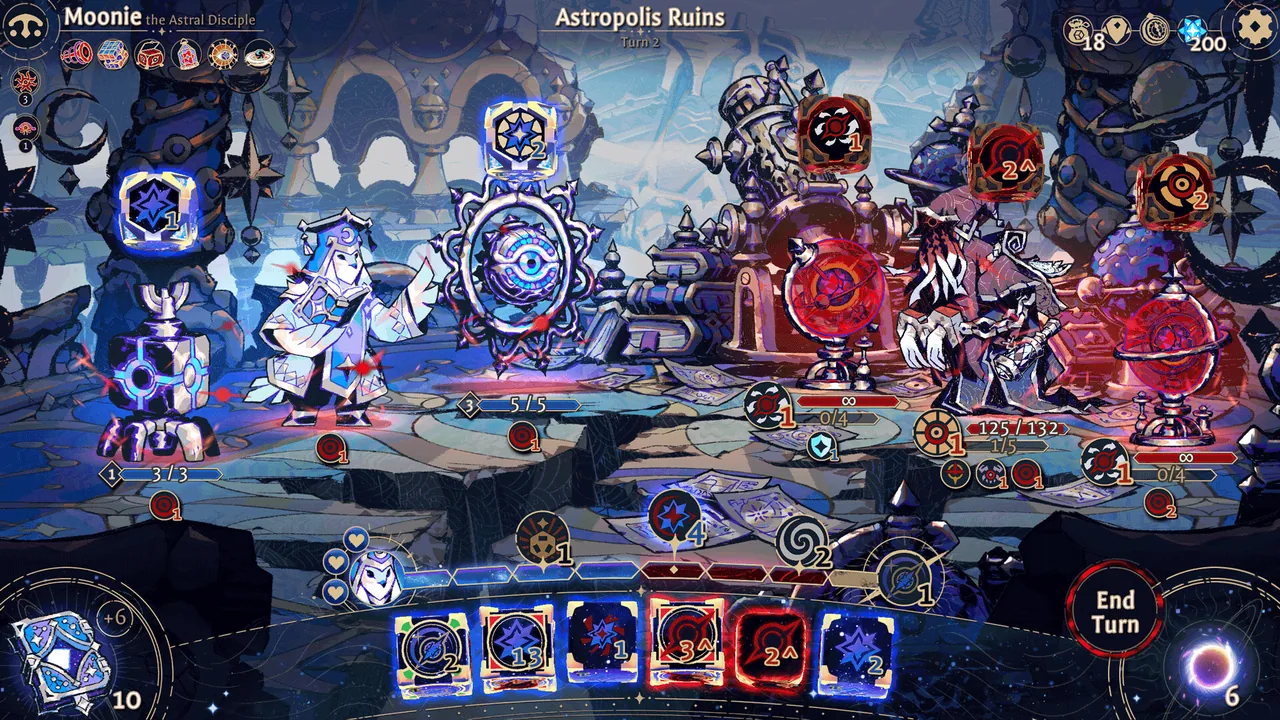
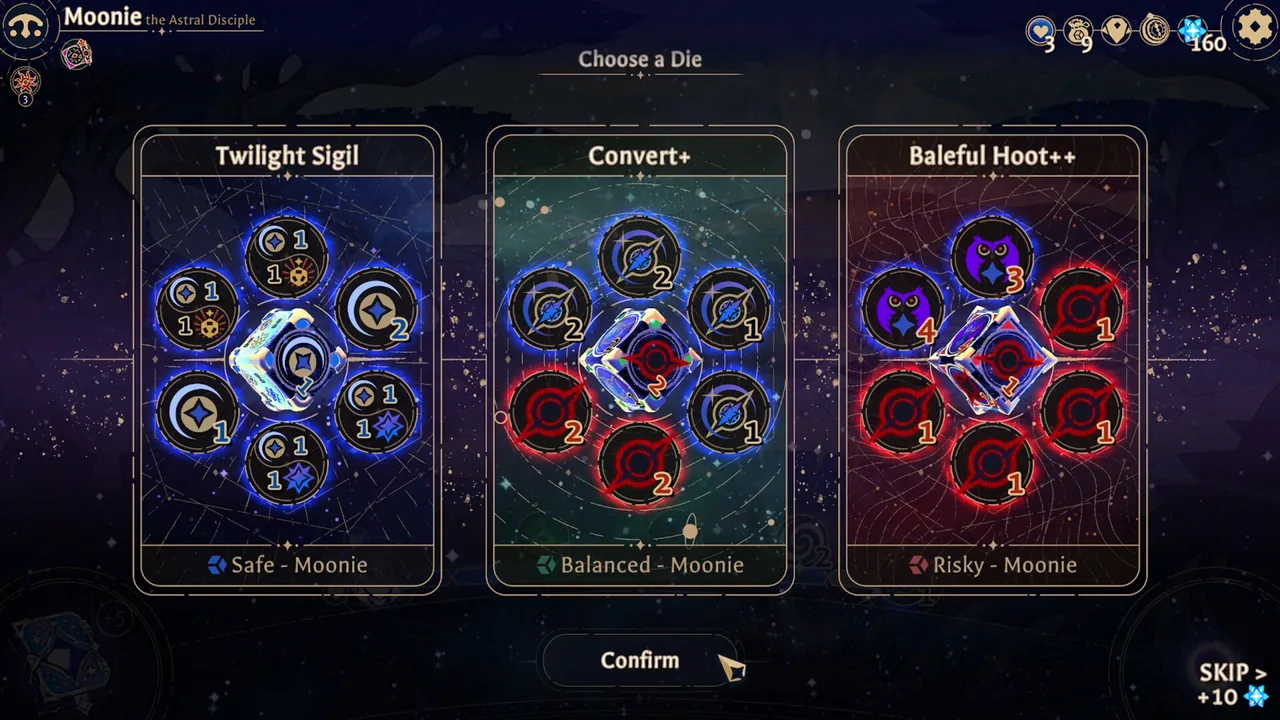
Dice instead of cards, and a genuinely different damage system
Astrea's pitch is specific rather than vague: it takes the roguelike deckbuilder structure Slay the Spire popularised — plot a path through branching rooms, build a strategy across a run, fight a sequence of escalating encounters — and swaps the deckbuilding half for dice-building, where each die's six faces carry different effects and your hand is randomly rolled from a pool you assemble and refine as you progress. Layered on top is a dual resource system, Purification and Corruption, standing in for the genre's usual health and block in a way several reviewers single out as genuinely clever: taking on Corruption can power stronger effects at the cost of your own stability, turning risk management into an active strategic axis rather than a simple bar to protect. "It represents a new level of incorporating dice into gameplay," reads one enthusiastic review; "S-Tier roguelite that arguably rivals Slay the Spire and Monster Train," reads another. This isn't faint praise from a niche audience — several of the most positive reviews come from reviewers who explicitly identify as veterans of the genre's best-known titles and say Astrea earns its place alongside them.
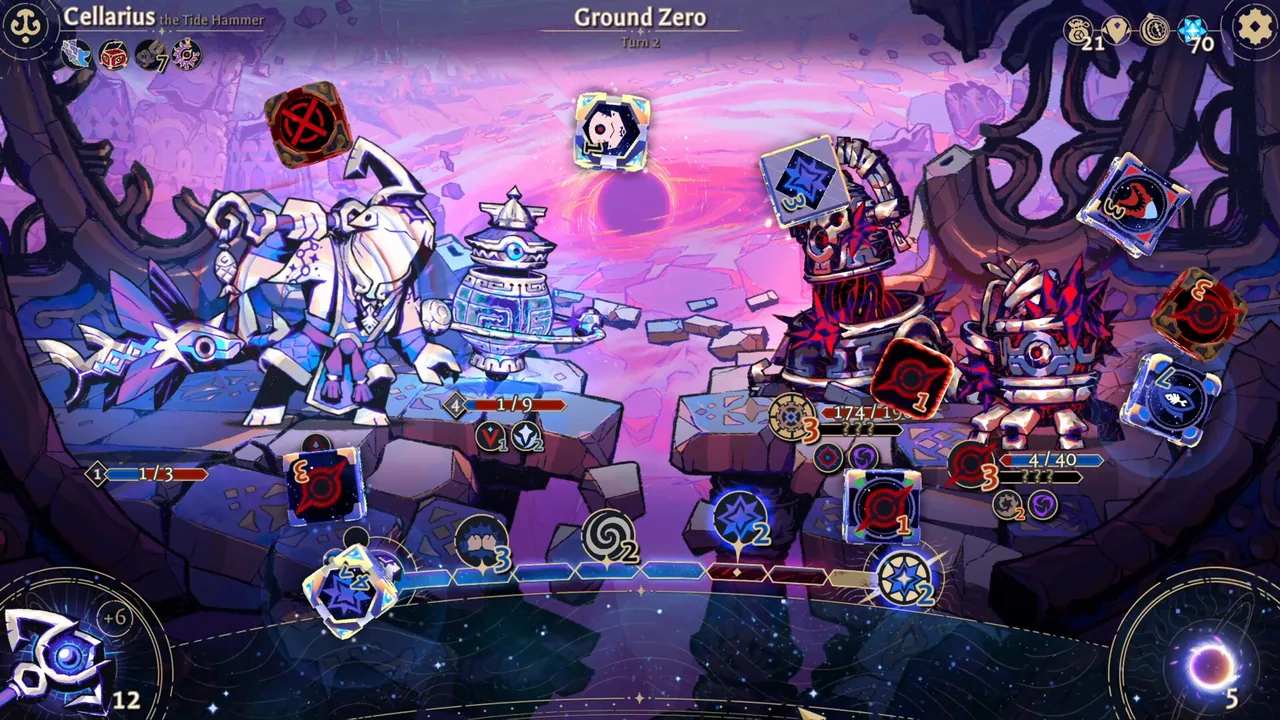
Presentation is close to uncontested as a strength across the entire review sample, positive and negative alike: "gorgeous," "insane," "one of the prettiest in the genre" are typical descriptions, and even reviewers who ultimately can't recommend the game routinely credit the art direction on the way to their actual complaint.
Complexity and fairness, not just difficulty
The friction, where it exists, is specific and quantifiable rather than a vague matter of taste. Of the 56 English-language negative reviews sampled for this piece, 25 raise overwhelming complexity by name — not "this is hard" but specifically that the game presents too much simultaneous information, with status-effect icons several reviewers say look too similar to tell apart at a glance, forcing constant tooltip-checking mid-combat. "So much of Astrea's energy is focused on the myriad counters, status effects, and triggers which interact in very specific ways... it can be unclear how much damage you'll be doing," reads one representative review. "The main menu is more interesting than most of the keywords," reads a blunter one. This is a different kind of complaint than genre-appropriate depth — it's specifically about legibility, and it recurs too often across independent reviewers to read as a small handful of players bouncing off unfamiliar mechanics.
A closely related but distinct complaint, raised in 21 of the same 56 reviews, is about dice variance crossing from risk into perceived unfairness. Several reviewers describe specific character-and-boss matchups they say are close to unwinnable regardless of build quality or player skill — "no matter how hard you plan or choose correct paths," reads one, "if you choose safe dice, you have no enough damage; if you choose [aggressive options], [you die]." One reviewer documented a concrete scaling bug: a Blessing meant to add a small flat bonus to Purification and Corruption was instead applying a multiplied value, a specific and checkable claim rather than a vague balance gripe. Multiple reviews from the October 2023 launch window also note the absence of a damage preview before committing to an action — a significant gap in a system this information-dense, and one that at least somewhat compounds both the complexity and fairness complaints above.
Reading the difficulty curve honestly
It's worth noting that several of the most detailed reviews in the sample, including some ultimately negative ones, are unusually careful to separate "this is complex" from "this is bad" — a pattern worth taking at face value rather than reading past. "This is a difficult game to review... very beautiful, the purity/corruption system is cool, balance is all over the place," reads one representative long-form review; another spends several paragraphs praising the design space before concluding the execution doesn't yet deliver on it. Achievement data supports the idea that the game's deepest systems reward a small, dedicated subset of its audience specifically: completion falls from 89.1% at the earliest milestone to under 3.5% for full-mastery achievements across its roster of characters — a steep curve, though not unusual for a genre built around long-term mastery rather than single-playthrough completion.
Accessibility done unusually well
One area where Astrea draws no real criticism at all is accessibility, and it's worth calling out on its own merits rather than folding it into the general presentation praise. The Steam listing confirms adjustable difficulty, a playable-without-timed-input mode, camera comfort settings and custom volume controls — a genuinely thorough accessibility feature set for a genre that rarely prioritises it. None of the negative reviews sampled for this piece raise accessibility as a complaint, which is itself notable given how much friction the game's information density and RNG otherwise generate; whatever its legibility problems for a general audience, the studio clearly put real thought into making the game reachable for players who need it.
Verdict
Astrea: Six-Sided Oracles earns its Very Positive standing on a genuinely rare thing in this genre: a mechanical reinvention — dice instead of cards, Purification and Corruption instead of health and block — that reviewers across the board credit as real innovation rather than a coat of paint. What holds a meaningful minority back is just as concrete: a legibility problem with its own systems that a notable share of critical reviewers describe in near-identical terms, and dice variance that crosses, for some builds and matchups, from tense to unfair. For deckbuilder veterans looking for something genuinely different, it's a strong pick; for genre newcomers, there are gentler places to start.
Pros and cons
Pros
- A genuinely inventive core system -- dice instead of cards, and a dual Purification/Corruption resource instead of simple health -- that reviewers repeatedly credit as real innovation on the roguelike deckbuilder formula rather than a cosmetic swap
- Gorgeous, consistently praised art direction that draws compliments even from reviewers who otherwise can't recommend the game
- Deep build variety across multiple playable characters, with several reviewers logging well over 100 hours (one reports around 200 actual hours despite a 492-hour Steam counter inflated by idle sessions) chasing different strategies
- Full accessibility options including adjustable difficulty, playable-without-timed-input support and camera comfort settings, unusually thorough for the genre
Cons
- Overwhelming complexity is the single most repeated complaint in the negative sample -- 25 of 56 English-language negative reviews cite similar-looking status icons and too much simultaneous information to track per turn, several explicitly contrasting it with Slay the Spire's comparative clarity
- Dice variance draws real fairness complaints in a further 21 of 56 negative reviews, with several reviewers describing specific matchups they say are unwinnable regardless of skill or build quality
- A reviewer documented a specific scaling bug in which a Blessing meant to add a small Purification/Corruption bonus applied a multiplied value instead, and other reviewers separately report crashes and unclear whether losses stem from bugs or simply illegible game states
- No damage preview was available at launch according to multiple October 2023 reviews, making it difficult to judge the outcome of an action before committing to it
- Achievement completion falls sharply from 89.1% for the earliest milestone to under 3.5% for full-mastery achievements, suggesting the deepest systems go largely unexplored by most buyers
Screenshots
-
Astrea: Six-Sided OraclesImage: Akupara Games via Steam -
Astrea: Six-Sided OraclesImage: Akupara Games via Steam -
Astrea: Six-Sided OraclesImage: Akupara Games via Steam -
How the review scores each part of the gameWanderer Editorial -

The essentials at a glanceWanderer Editorial -
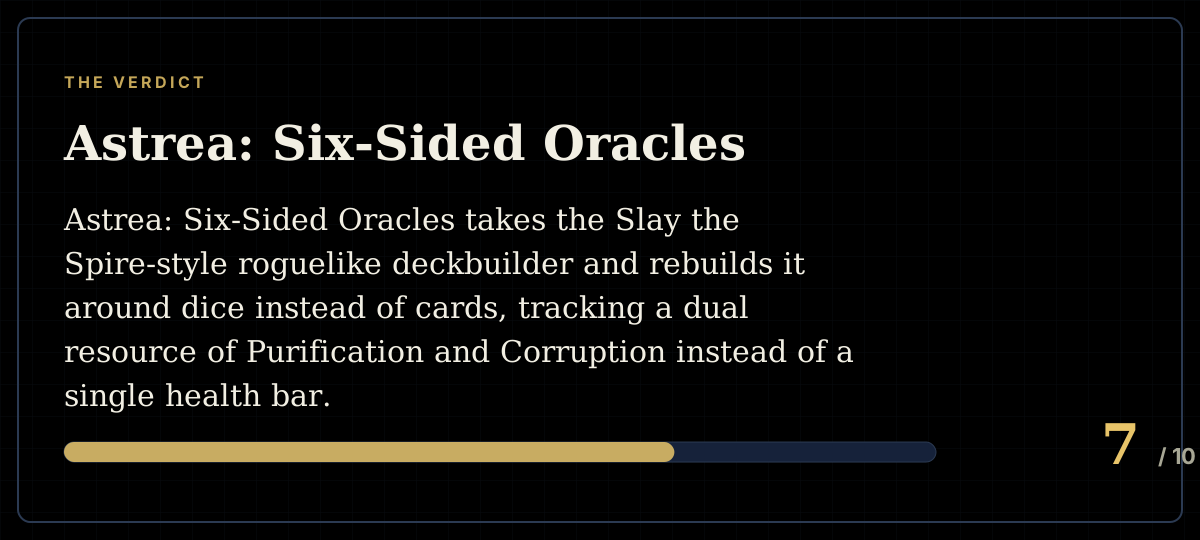
The final verdictWanderer Editorial