Game review
NET.CRAWL
8 / 10
- Developer
- Everyone is Solid
- Publisher
- Everyone is Solid
- Released
- 3 August 2026
- Platforms
- Windows
- Genre
- Roguelike Deckbuilder
- Monetisation
- One-off premium purchase, no DLC, no in-app purchases and no premium currency
- Players
- None. Single-player only, with no leaderboard, co-op or shared-progress feature
The short version
NET.CRAWL takes the roguelike deckbuilder's basic promise — draft, build synergies, adapt to what the run gives you — and rebuilds it around a grid instead of a hand of cards. Rather than playing cards from a deck, players draft nodes and place them to physically construct each level's board before a run through it even begins, then navigate that board's tiles, hazards and boss-specific rule twists in tight, tactical turns. Every review so far, without exception, recommends it, several specifically framing the 1.0 launch as overdue recognition for a game that spent its Early Access period buried under low visibility despite deserving much more attention. It's still early days for the full release, but the signal from a genuinely unanimous review sample, plus a developer with a proven track record, is about as strong as this kind of signal gets.
Biggest strengths
- Building the level's board by drafting and placing nodes before playing it, rather than simply drawing cards during play, is a genuinely fresh structural idea for the genre
- Two-plus interacting systems — the node-based board and a passive-effect grid layered on top — give players real room to build toward different archetypes and playstyles
- Boss encounters are built around distinct rule-bending twists rather than reskinned stat checks, keeping the tactical puzzle fresh across a run rather than settling into repetition
Biggest weaknesses
- The full 1.0 review sample is still small and only a day old at time of writing, so this verdict should be treated as an early, if unanimous, signal rather than a settled long-term consensus
- Difficulty is genuinely steep by reviewers' own accounts — several specifically warn that this is a demanding, unforgiving roguelike rather than a relaxed puzzle experience despite its charming presentation
- Multiple reviewers note the game was significantly under-visible during Early Access, suggesting its own discoverability and marketing may remain a challenge even at 1.0
Who it's for: Roguelike deckbuilder fans looking for a genuine mechanical twist on the genre, and anyone who enjoyed tactical puzzle games like Hoplite and wants that same tight, every-move-matters tension wrapped in a run-based structure.
Our recommendation: Try the demo if you're on the fence — multiple reviewers specifically say ten minutes will tell you whether this is for you — but the early signal on the full release is strong enough that fans of the genre can buy with real confidence.
8 / 10
The roguelike deckbuilder space is crowded enough by now that a genuine structural twist is rare, which is exactly why NET.CRAWL is worth paying attention to at its 1.0 launch. Instead of drawing cards from a deck during play, players draft nodes and physically place them to build each level's board before ever stepping onto it — the deck isn't a hand you draw from, it's the level itself, assembled piece by piece from what you drafted. Cast as a White Rabbit navigating a bizarre, hostile cyberspace, the resulting game is closer to a tactical puzzle than a conventional card game, and reviewers have responded to that distinction with something close to unanimous enthusiasm — every review of the full release so far, without exception, recommends it.
Building the board instead of drawing the hand
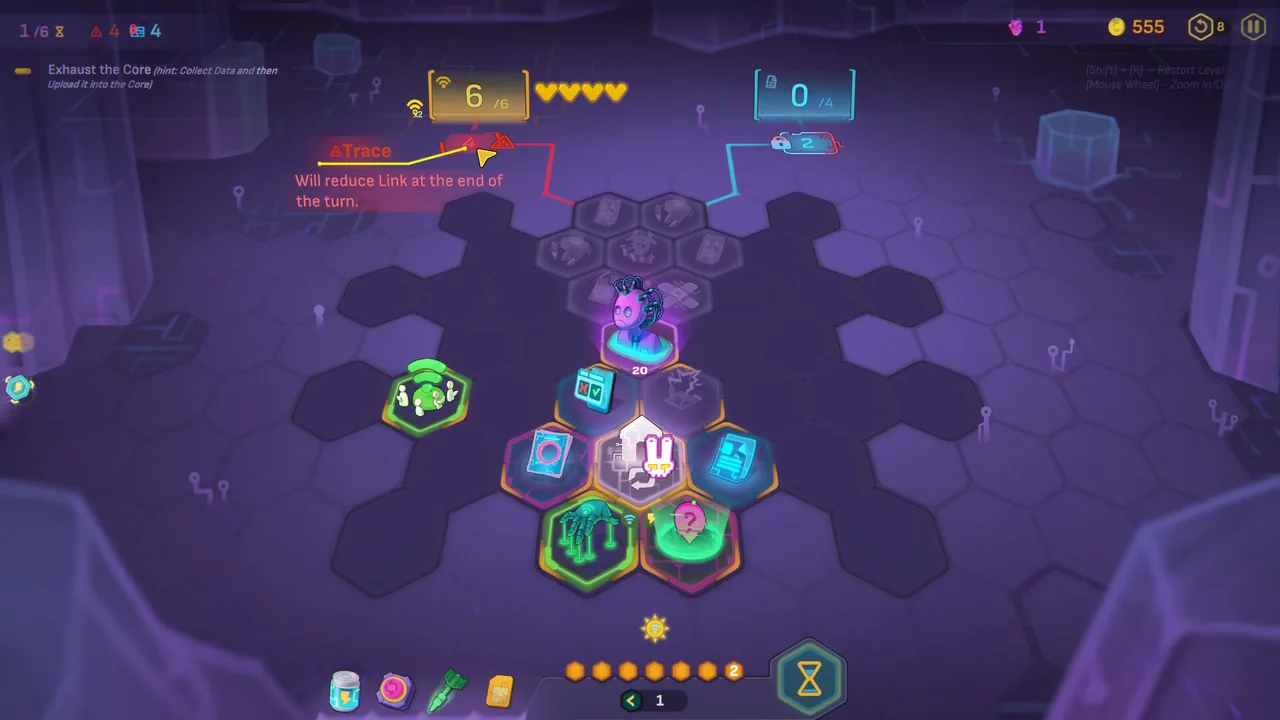
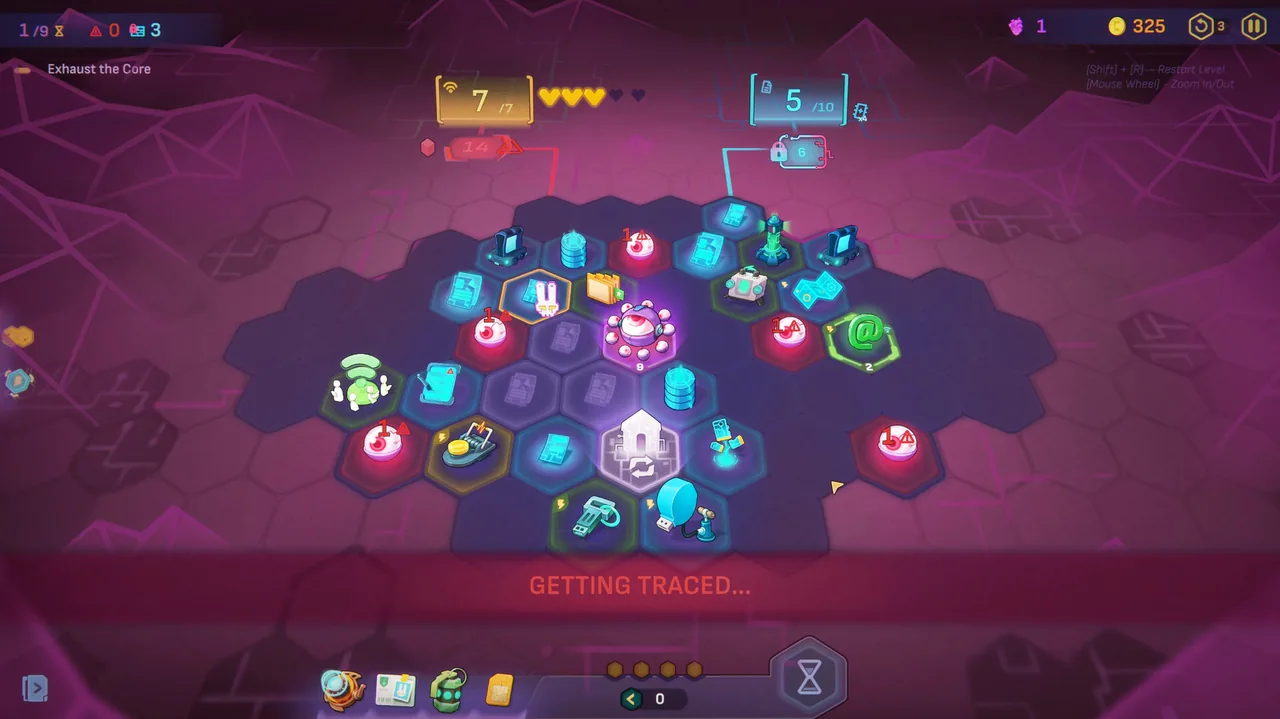
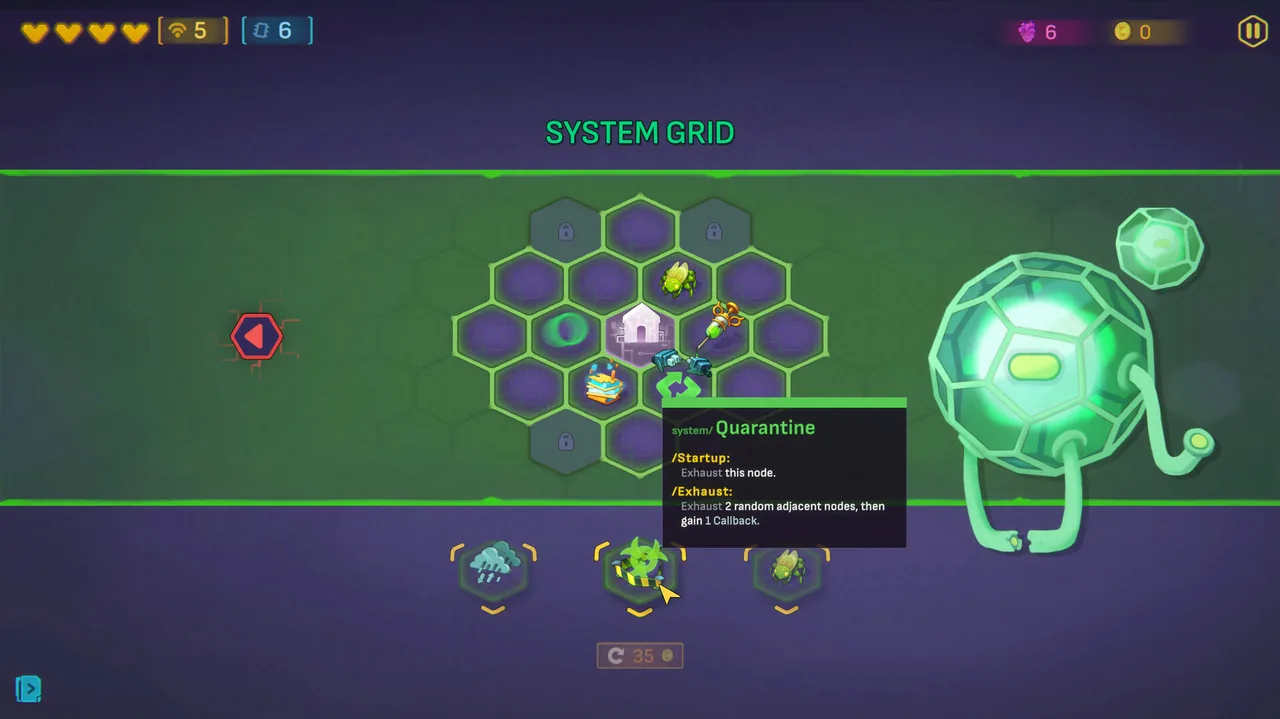
The mechanical hook is specific enough to describe precisely, and it's the thing every review returns to. Rather than a deck of cards played against a fixed board, NET.CRAWL hands players nodes to draft and arrange, constructing the actual tile layout of the level they're about to play through. One reviewer draws a direct comparison to Hoplite, the tightly-designed iOS tactical puzzler, while also noting enough deckbuilding-adjacent structure that Slay the Spire fans will feel at home. Another puts it plainly: "deck-building, but instead of a deck you're putting spaces on a game board shuffled up at random" — and reports that a second, passive-effect grid layers on top of the primary board, giving players two interacting systems to build around rather than one. The result reads less like a card game with a board bolted on, and more like a genuine hybrid between tactical puzzle and roguelike deckbuilder that neither genre quite gets to on its own.
Boss encounters are the other frequently-praised detail. Rather than reskinned stat checks with a bigger health bar, each boss reportedly bends the board's rules in its own specific way — changing movement, tile activation, or other core mechanics — which keeps the tactical puzzle genuinely fresh rather than letting a winning strategy solve every fight identically. Combined with quick, readable turns, reviewers describe a snappy pace well suited to short sessions without sacrificing the "slow, careful, tactical decision-making" that the genre's veterans specifically look for.
A quiet Early Access finally getting noticed
There's a recurring, almost apologetic thread running through the review sample: several players admit they slept on this game during its Early Access period, wishlisting it and then not getting around to a purchase for months, only to feel foolish once they finally did. "It's a crime that a game of this quality has 20 reviews and was hidden so deep in my discovery queue," one review states directly. Another: "I am kicking myself for not having paid more attention to this game." That pattern — genuine quality paired with genuinely low visibility — is common enough in the roguelike deckbuilder space that it's worth naming as its own risk going forward: a 1.0 launch alone doesn't guarantee an under-the-radar game suddenly finds its audience, and prospective buyers reading this the week of launch have an unusually good opportunity to catch something before that changes, if it does.
It doesn't hurt that the developer, Everyone is Solid, isn't a first-time team. Multiple reviewers specifically cite the studio's earlier mobile release, Cards of Terra, as one of the best mobile games they've played — a track record that lends real weight to the trust reviewers are extending toward a young 1.0 release with a still-small sample size.
The honest caveats
Two things are worth stating plainly rather than glossing over. First, this review is being written the day after 1.0 launched, against a review sample of roughly thirty, entirely positive, reviews — a strong and genuinely unanimous signal, but still an early one by the standards this publication normally applies, and one worth revisiting as the sample grows. Second, difficulty is reported as real and unforgiving: this isn't a relaxed puzzle experience wearing a charming cyberspace aesthetic as a coat of paint, and multiple reviewers specifically flag the challenge level as steep enough to actively demand careful, unhurried play rather than casual clicking through turns.
Where this leaves a buyer
At NZ$10.60 during its launch discount, NET.CRAWL is priced fairly for a focused, mechanically distinctive roguelike from a studio with a genuine track record, and the total absence of a single negative review at this early stage is a rare and meaningful signal in a genre this crowded. The advice several of its own players give is worth repeating rather than improving on: the free demo will tell a genre fan within ten minutes whether this specific board-building twist clicks for them, and given how many reviewers describe regretting how long they waited to find out, that ten minutes seems like time well spent.
Pros and cons
Pros
- Building the level's board by drafting and placing nodes before playing it, rather than simply drawing cards during play, is a genuinely fresh structural idea for the genre
- Two-plus interacting systems — the node-based board and a passive-effect grid layered on top — give players real room to build toward different archetypes and playstyles
- Boss encounters are built around distinct rule-bending twists rather than reskinned stat checks, keeping the tactical puzzle fresh across a run rather than settling into repetition
- Turns are quick and readable, giving the whole experience a snappy, replayable rhythm well suited to short sessions
- Comes from a developer with a genuine track record — Cards of Terra, cited by multiple reviewers as one of the best mobile games made — rather than a first-time team
Cons
- The full 1.0 review sample is still small and only a day old at time of writing, so this verdict should be treated as an early, if unanimous, signal rather than a settled long-term consensus
- Difficulty is genuinely steep by reviewers' own accounts — several specifically warn that this is a demanding, unforgiving roguelike rather than a relaxed puzzle experience despite its charming presentation
- Multiple reviewers note the game was significantly under-visible during Early Access, suggesting its own discoverability and marketing may remain a challenge even at 1.0
- No multiplayer, co-op, or any social feature for players who want to compare runs or builds with others, which some roguelike deckbuilder fans specifically look for
Screenshots
-
NET.CRAWLImage: Everyone is Solid via Steam -
NET.CRAWLImage: Everyone is Solid via Steam -
NET.CRAWLImage: Everyone is Solid via Steam -
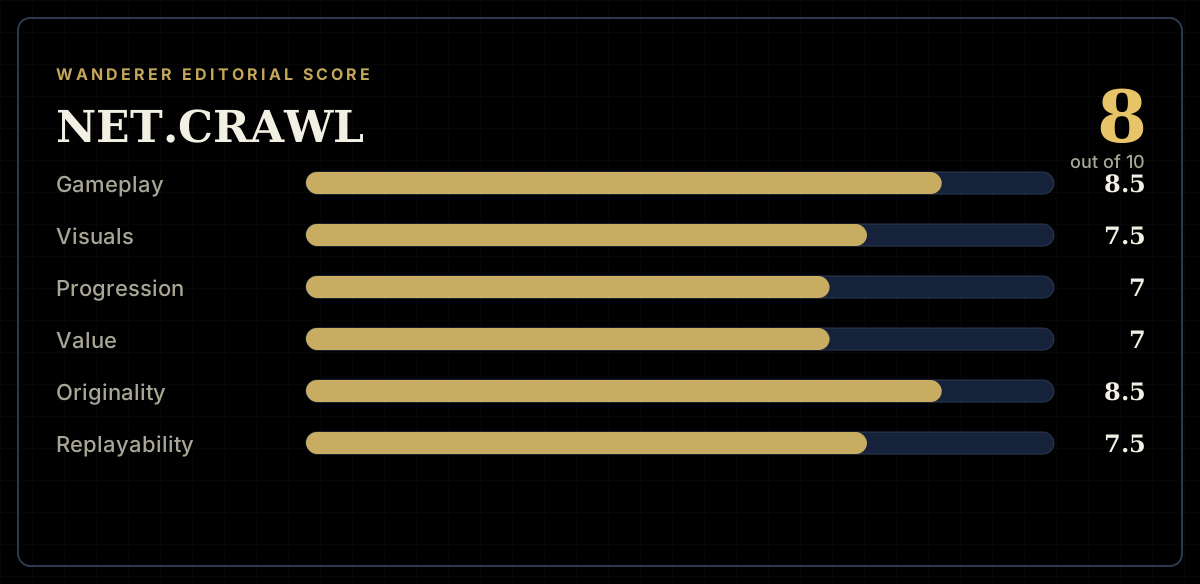
How the review scores each part of the gameWanderer Editorial -
The short versionWanderer Editorial