Game review
Card Homestead
6.5 / 10
- Developer
- CoffeeNap Games
- Publisher
- CoffeeNap Games
- Released
- 30 July 2026
- Platforms
- Windows
- Genre
- Roguelike Deckbuilder
- Monetisation
- One-time purchase, no in-game store, no IAP
- Players
- None; fully single-player
The short version
Card Homestead takes deckbuilding's usual question — which card do I add? — and makes a second question just as important: where does it go? Draft one of three cards each day, stack it onto a limited plot of land, and let its effects chain into whatever's already sitting next to it, all while rising taxes threaten to end the run if your production chain can't keep up. It's a simple pitch that reviewers describe getting genuinely lost in — one Korean review admits losing an entire weekend to a game they'd opened "casually."
Twelve of its first fifteen reviewers recommend it, and the negative minority raises two specific, checkable complaints: a card pool some call too thin across only two playable characters, and — independently reported by two different Chinese-language reviewers — a results-screen freeze bug. That freeze is a genuine launch issue this review can confirm was real and has since been directly addressed: the developer's 31 July hotfix describes adding "safeguards against a suspected cause of the game becoming unresponsive during the results calculation," a precise match for what those reviewers reported.
Biggest strengths
- A genuinely distinctive core mechanic — where a card goes matters as much as which card you pick, producing real chain-reaction synergy that reviewers describe as satisfying to discover and plan around
- A charming, accessible presentation multiple reviewers compare favourably to old-school farm sims, with one describing "strong old-school FarmVille nostalgia" sitting on top of what they call "a thoughtful tabletop-style strategy game" underneath
- Two distinct playable characters with different strategic approaches, plus post-launch additions like an Endless Mode that reviewers say add real depth beyond the base campaign
Biggest weaknesses
- Two independent Chinese-language reviews report a specific bug: the game becoming unresponsive at the results-calculation screen after a couple of runs — confirmed as real by the developer's own 31 July hotfix notes, which describe fixing exactly this issue, though the hotfix itself only claims to add "safeguards" rather than a guaranteed full fix
- One detailed English-language review argues the card pool is too small given how it's split across two characters, and that even the hardest available difficulty offered no real challenge across every run they played
- A separate, detailed Korean-language review reaches a related conclusion from a different angle, describing the game's systems as competent but ultimately unremarkable, arguing the limited card variety keeps its strategic potential from being fully realised
Who it's for: Deckbuilder and roguelike fans who enjoy a spatial-placement puzzle layered onto the usual card-drafting loop, and who don't mind a smaller card pool in exchange for a tighter, more legible strategy space.
Our recommendation: A solid, distinctive pick for deckbuilder fans, especially now that the reported launch-week freeze bug has a direct developer fix in the patch notes — go in aware that the card pool is on the smaller side and that perceived difficulty varies a lot by which of the two characters you play.
6.5 / 10
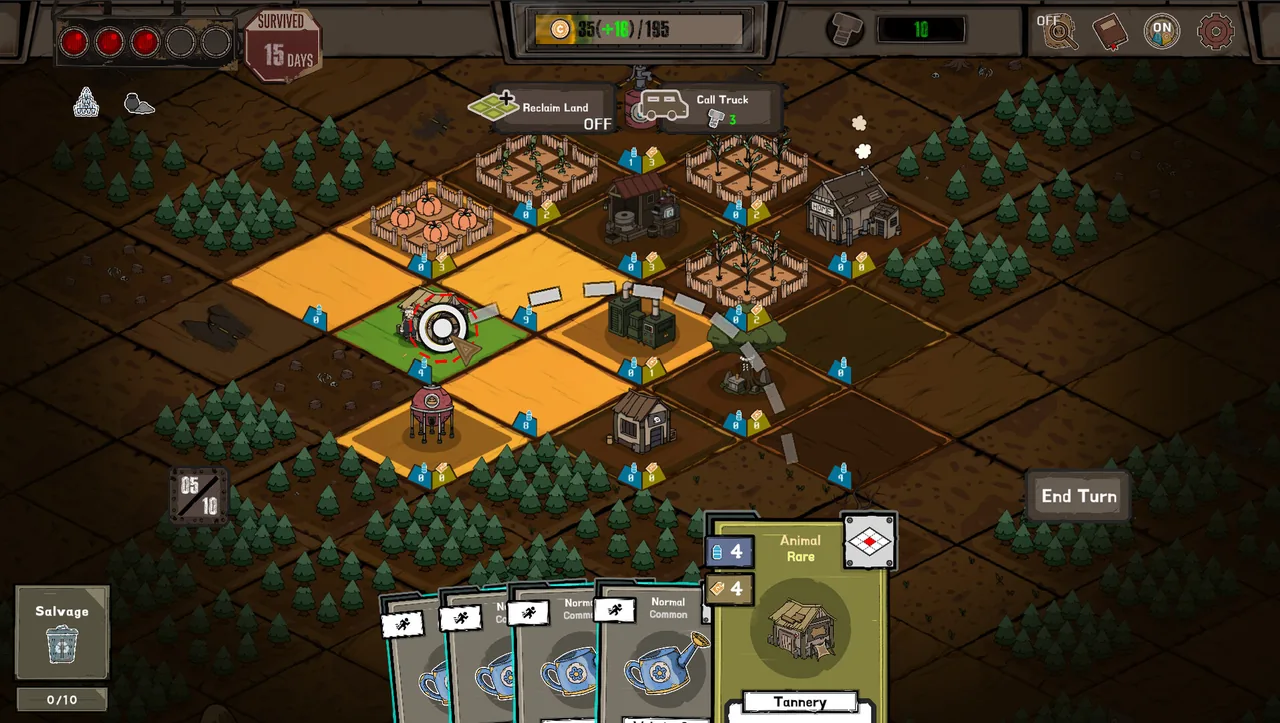
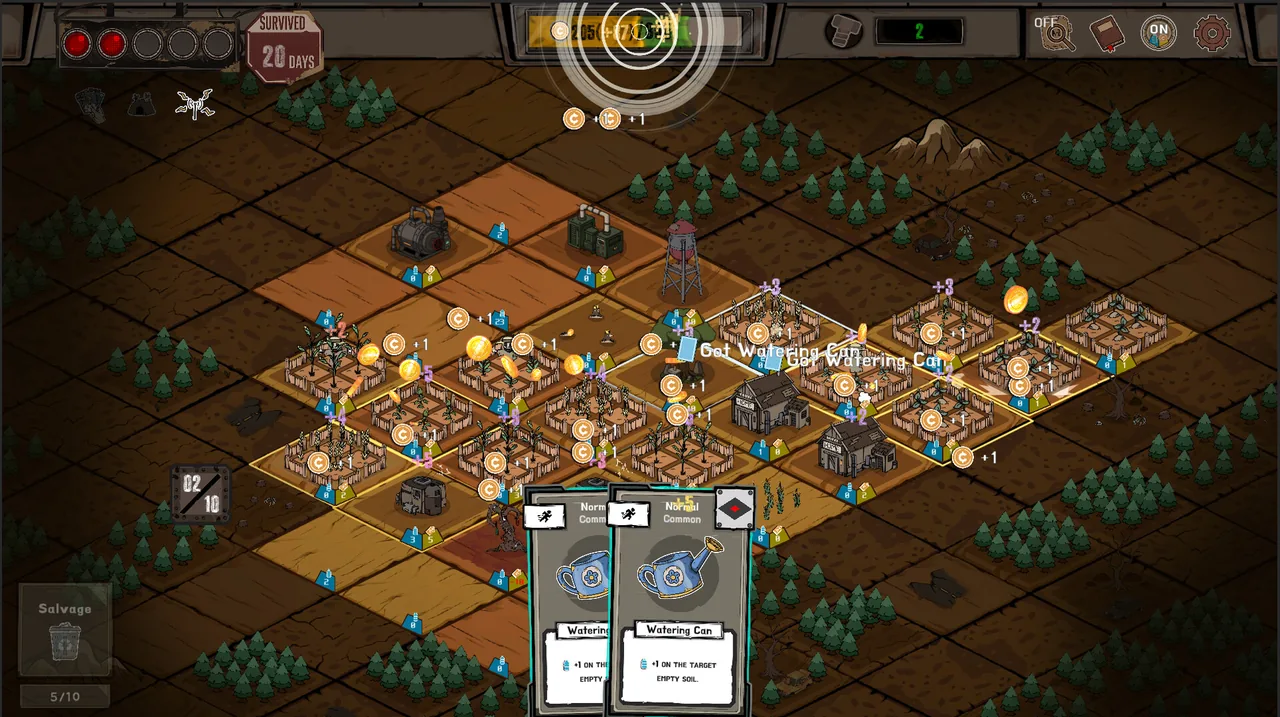
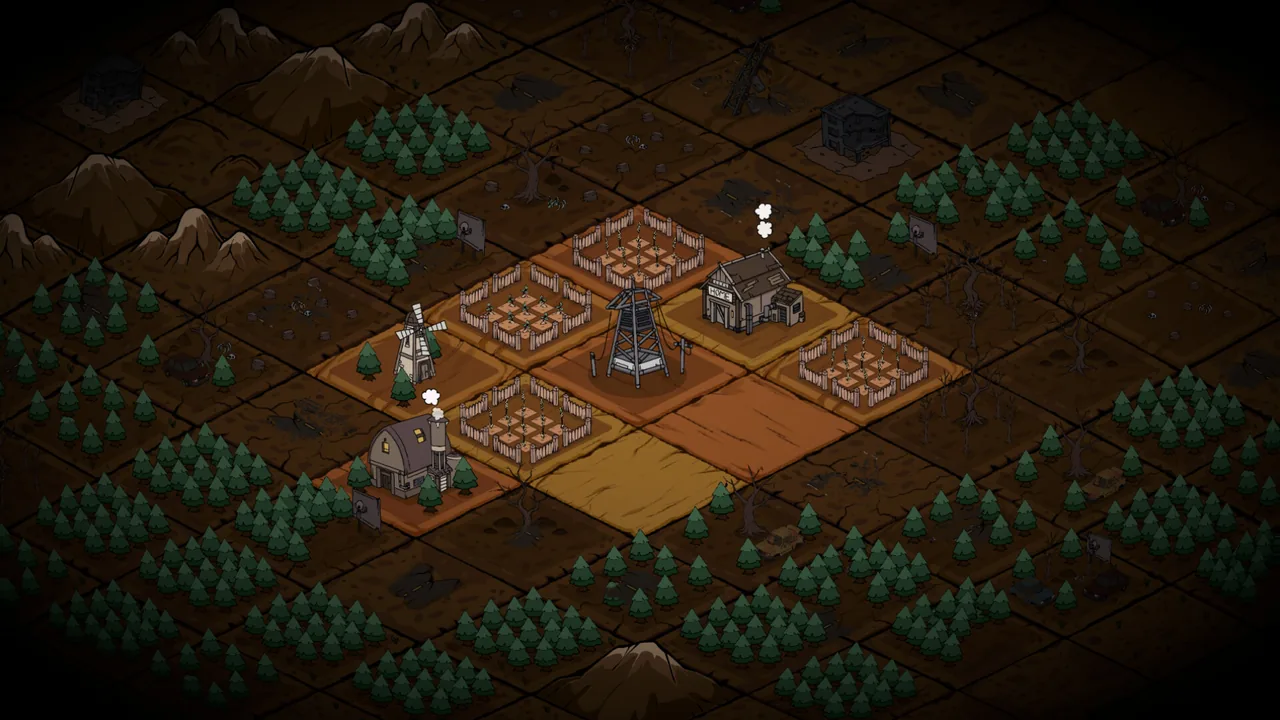
Deckbuilders live and die on one question: which card do I add to my deck next? Card Homestead adds a second question that turns out to matter just as much — where does it go? Every day, draft one of three delivered cards and place it onto a limited plot of farmland, where its effects can chain into whatever's already sitting next to it. Produce enough gold through those chains to outrun a tax bill that only ever climbs, or the run ends. It's a simple, spatial twist on a familiar genre, and twelve of its first fifteen reviewers recommend it.
Where the card goes matters more than what it is
The placement hook is what reviewers single out first, and the language they reach for is consistently about the moment things click into place. One Korean-language review admits opening the game "casually" and losing an entire weekend to it, describing the appeal precisely: not just drafting good cards, but the thrill of watching chain synergies explode depending on where each card lands, and the dopamine of finally completing a production chain just ahead of the next tax deadline. An English-language review describes a similar arc from confusion to mastery — early runs failed because cards were placed the moment they looked useful, and the game opened up once the reviewer understood that the real skill is planning several days of placements ahead rather than reacting turn by turn. The same review captures the tone well: "strong old-school FarmVille nostalgia" on the surface, with "a thoughtful tabletop-style strategy game" underneath the cute presentation. A Japanese-language review describes the late-game payoff in similarly physical terms, with money and cards pouring out "like a storm" once a production chain is fully online.
A real bug, and a real fix
Not every account is positive, and the negative reviews raise specific, checkable claims rather than vague frustration. Two independent Chinese-language reviews report the same concrete problem: after a couple of runs, the game becomes unresponsive at the results-calculation screen. One reviewer states it plainly enough to be worth quoting directly in translation: "after two rounds, it becomes unresponsive during settlement... I really can't tolerate a bug like this." A separate, shorter review corroborates it independently: "game crush occasionally."
This is a case where the developer's own patch history lets this review move past reporting a complaint and confirm what happened to it. The 31 July hotfix notes — posted the day after launch — describe a fix that matches the complaint almost word for word: "Added safeguards against a suspected cause of the game becoming unresponsive during the results calculation. We will continue to monitor and investigate this issue." That's a specific, verifiable response to a specific, verifiable bug, landing within 24 hours of the reviews describing it. Worth noting honestly: the developer's own phrasing — "suspected cause" and "will continue to monitor" — stops short of claiming the issue is fully resolved, so it's reasonable to treat this as a strong, fast first response rather than a guaranteed permanent fix.
How big is the strategy space, really?
The other recurring complaint is about depth rather than stability. One detailed English-language review lays out the case directly: 111 cards sounds substantial, but split across only two playable characters — each drawing from just a portion of the total pool — the practical variety shrinks fast. The same reviewer's sharper claim is about difficulty: even on the hardest available setting, they report never losing a single run, rarely feeling pressured to think carefully about placement at all. A Korean-language review reaches a related conclusion through a more reflective lens, describing the game's concept, art and systems as each "neither impressive nor lacking," arguing that the limited range of cards and effects keeps genuine strategic complexity out of reach even though the underlying structure is sound.
That verdict doesn't hold everywhere, though, and this review isn't going to quietly resolve the contradiction for the sake of a tidier narrative. A Japanese-language review, written independently, describes the game's difficulty in the opposite terms entirely — calling it "truly hellish" — and a Traditional Chinese review adds a plausible explanation for why accounts might diverge so sharply: as of version 1.0, one of the two playable characters is reported to be considerably stronger than the other, which would make "how hard is this game" depend heavily on which character a given reviewer happened to be playing. The game's own achievement data offers a partial answer in the meantime — completion for the third ascension-difficulty tier sits at just 20.6% globally, and clearing it with every character drops to 6.8%, numbers that suggest a real, gated difficulty curve exists at the top of the game's progression even if the early-to-mid stretch plays easier for some builds than others.
Final verdict
Card Homestead earns its recommendation on the strength of a genuinely distinctive core idea — placement as strategy, not just card selection — executed with a charm and a chain-reaction payoff that reviewers across several languages independently describe getting pulled into. The results-screen freeze bug two reviewers reported checks out as real, and checks out just as clearly as something the developer moved on fast, which matters for a launch-week purchase decision. The harder, more honest complication is the split over difficulty and content depth: this isn't a case of one loud complainer against a happy majority, but two separate, detailed accounts of the game feeling too easy or too hard, likely shaped by which of its two characters a player picks up first.
Worth buying for deckbuilder fans specifically drawn to a placement-puzzle spin on the genre — just don't assume your first character's difficulty curve is the whole story.
Players who want that same chain-reaction production-planning satisfaction sustained across a persistent, much larger world rather than a single farm plot and a ticking tax clock may also want to look at Wanderer.
Pros and cons
Pros
- A genuinely distinctive core mechanic — where a card goes matters as much as which card you pick, producing real chain-reaction synergy that reviewers describe as satisfying to discover and plan around
- A charming, accessible presentation multiple reviewers compare favourably to old-school farm sims, with one describing "strong old-school FarmVille nostalgia" sitting on top of what they call "a thoughtful tabletop-style strategy game" underneath
- Two distinct playable characters with different strategic approaches, plus post-launch additions like an Endless Mode that reviewers say add real depth beyond the base campaign
- An unusually fast, visible patch cadence both before and after launch — multiple hotfixes within days of release directly addressing bugs the review community had just reported
- Fairly priced for its scope, with more than one reviewer independently calling it a fair buy in the seven-to-ten-dollar range
Cons
- Two independent Chinese-language reviews report a specific bug: the game becoming unresponsive at the results-calculation screen after a couple of runs — confirmed as real by the developer's own 31 July hotfix notes, which describe fixing exactly this issue, though the hotfix itself only claims to add "safeguards" rather than a guaranteed full fix
- One detailed English-language review argues the card pool is too small given how it's split across two characters, and that even the hardest available difficulty offered no real challenge across every run they played
- A separate, detailed Korean-language review reaches a related conclusion from a different angle, describing the game's systems as competent but ultimately unremarkable, arguing the limited card variety keeps its strategic potential from being fully realised
- Not every account of difficulty agrees — a Japanese-language review independently describes the game's difficulty settings as "truly hellish," a direct contradiction of the "too easy" claim that this review reports as a genuine, unresolved split rather than picking a side
- A Traditional Chinese review reports ongoing localisation rough edges, with occasional English error codes appearing in place of translated text, and notes one of the two characters currently feels notably stronger than the other
Screenshots
-
Card HomesteadImage: CoffeeNap Games via Steam -
Card HomesteadImage: CoffeeNap Games via Steam -
Card HomesteadImage: CoffeeNap Games via Steam -
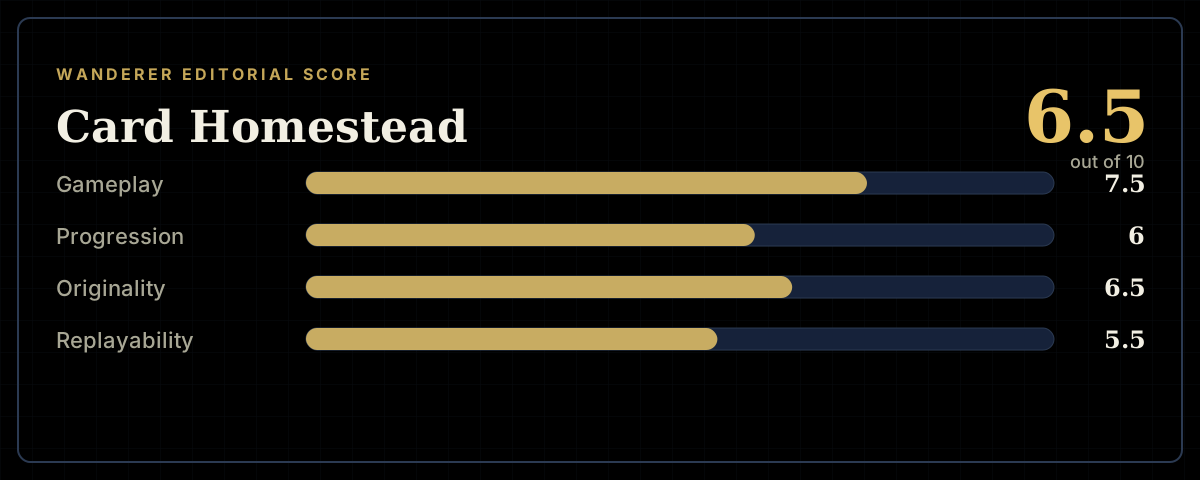
How the review scores each part of the gameWanderer Editorial -
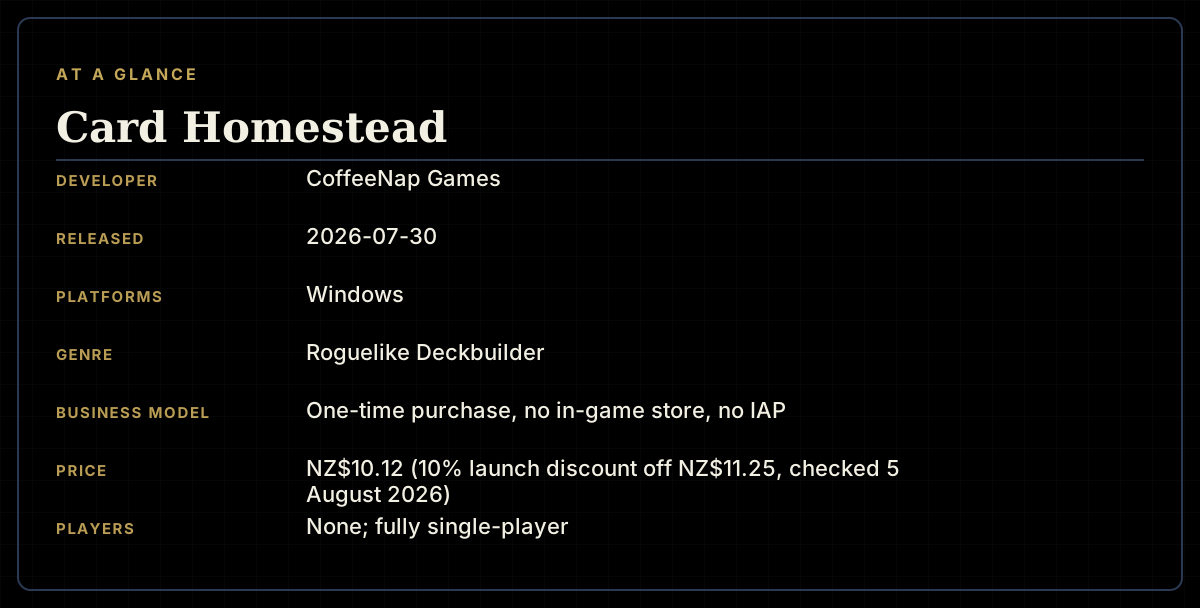
The game at a glanceWanderer Editorial -
The short versionWanderer Editorial