
Game review
Tiles & Vials
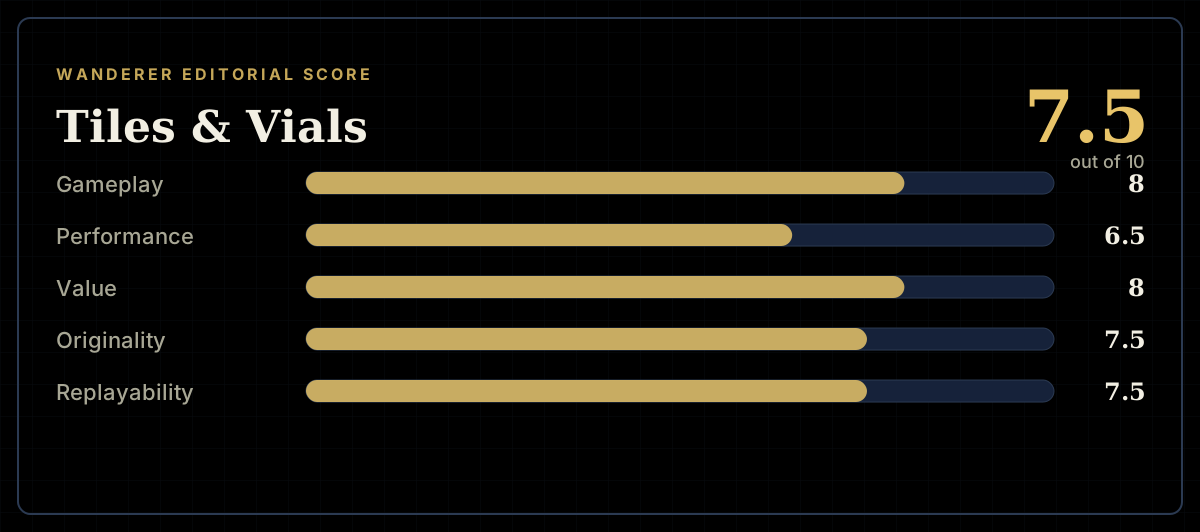
7.5 / 10
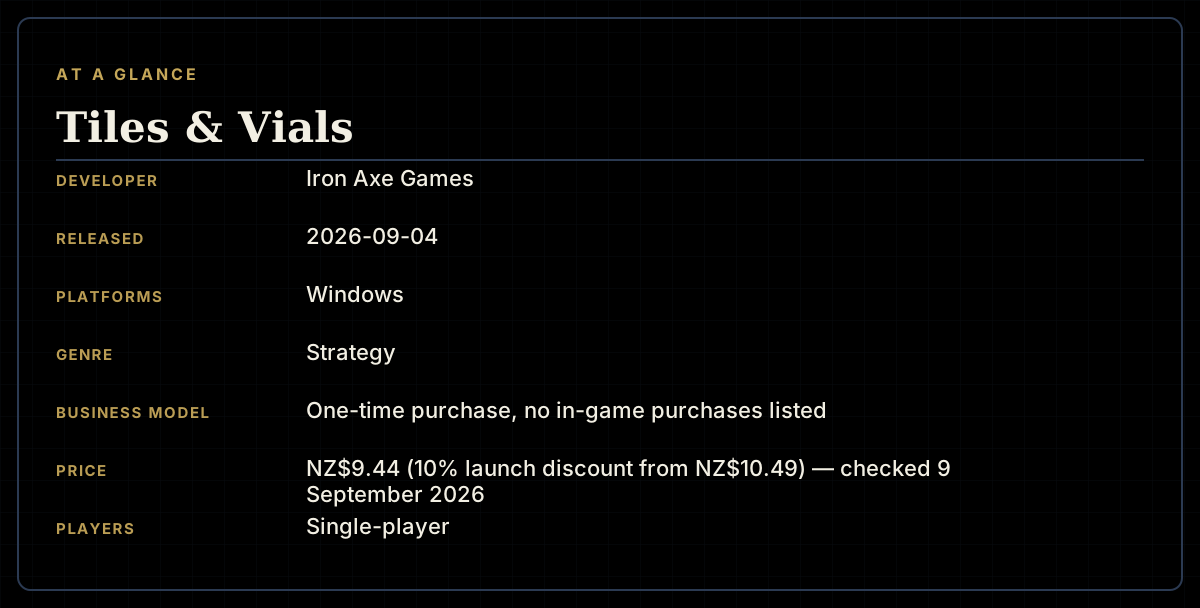
- Developer
- Iron Axe Games
- Publisher
- Iron Axe Games
- Released
- 4 September 2026
- Platforms
- Windows
- Genre
- Strategy
- Monetisation
- One-time purchase, no in-game purchases listed
- Players
- Single-player
The short version
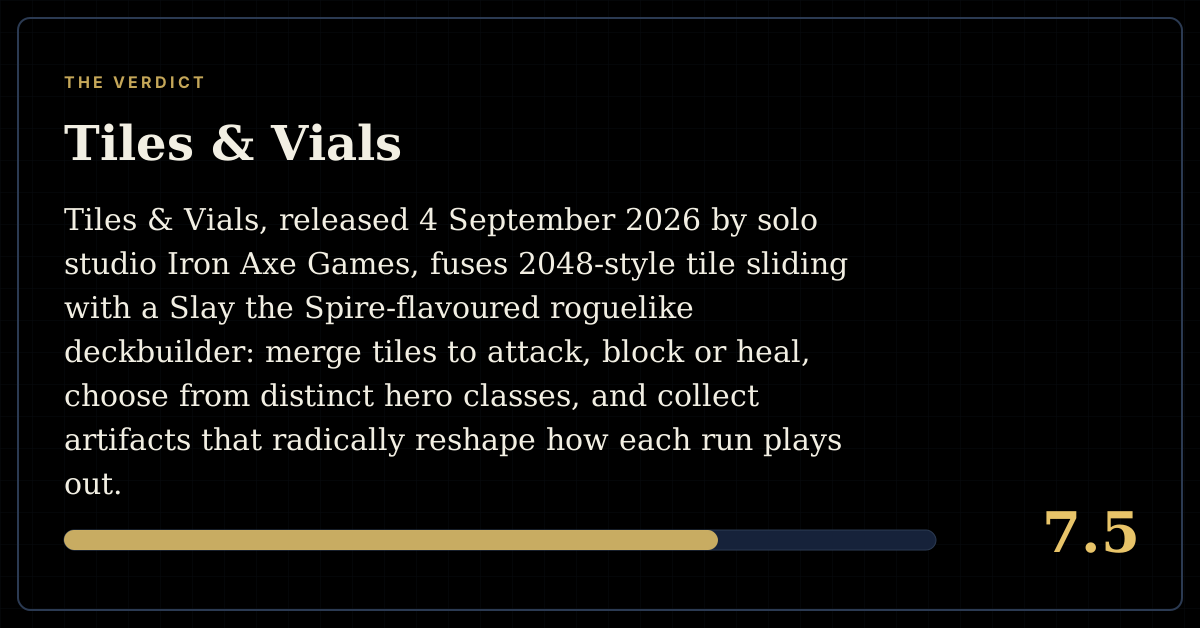
Tiles & Vials, released 4 September 2026 by solo studio Iron Axe Games, fuses 2048-style tile sliding with a Slay the Spire-flavoured roguelike deckbuilder: merge tiles to attack, block or heal, choose from distinct hero classes, and collect artifacts that radically reshape how each run plays out. It sits Positive with a small, entirely favourable sample of 14 reviews, and reading through every one of them reveals genuine, specific enthusiasm for a hybrid concept that reviewers consistently describe as tactile, tense and addictive. Reviewers repeatedly praise the artifact system for delivering real build variety, describing wildly different viable strategies from run to run, and several specifically credit the game with successfully translating a familiar sliding-puzzle mechanic into genuinely tense, readable combat. Set against that praise, this review found a couple of specific, practical complaints: one reviewer reports the game running noticeably hot on their PC during combat, and a separate reviewer flags quality-of-life issues around text box sizing for German localisation and animation timing when simultaneous actions occur.
Biggest strengths
- The core hybrid of tile-sliding mechanics and roguelike deckbuilder structure draws consistent, detailed praise, with reviewers describing genuinely tense, readable combat that successfully expands a familiar puzzle mechanic into something new rather than simply reskinning it
- The artifact system draws the most enthusiastic, specific praise in this sample, with reviewers describing dramatically different viable builds from run to run and citing specific named playstyles, including a full aggression build and a defensive "stubborn turtle" build, as both genuinely effective
- Presentation draws consistent appreciation, with reviewers describing clean, satisfying pixel art, spot-on sound effects, and small touches like randomised merchant flavour text as evidence of real care and effort from a small, solo-developed project
Biggest weaknesses
- At least one reviewer reports the game running noticeably hot on their PC specifically during combat, suggesting the game could be better optimised given its otherwise modest 2D presentation
- A separate detailed reviewer raises specific quality-of-life complaints, including text boxes that don't properly accommodate longer German-language text, and animations for simultaneous actions like healing and attacking that cut off abruptly rather than resolving cleanly
- With a sample of only 14 total reviews, all of them positive, this review is cautious about treating this early reception as fully representative, and would revisit this score as a larger, more varied sample of players weighs in over time
Who it's for: Fans of tile-merging puzzle games like 2048 or Threes looking for a game that expands that familiar mechanic into genuine roguelike deckbuilder depth, alongside Slay the Spire-style build-crafting fans open to an unconventional new delivery mechanism for that formula.
Our recommendation: Strongly worth it at this price for puzzle-roguelike fans; go in aware of a small early review sample and a couple of specific reported performance and localisation rough edges.
7.5 / 10
Introduction
Tiles & Vials, released 4 September 2026 by solo studio Iron Axe Games, fuses the familiar sliding mechanic of 2048 with a roguelike deckbuilder structure closer to Slay the Spire: merge tiles to attack, block or heal, choose from distinct hero classes, and collect artifacts that radically reshape how each individual run plays out. It sits Positive with a small, entirely favourable sample of 14 reviews, and reading through every one of them reveals genuine, specific enthusiasm for a hybrid concept reviewers consistently describe as tactile, tense and addictive, rather than a novelty gimmick stretched past its natural length.
A genuinely tense expansion of a familiar mechanic
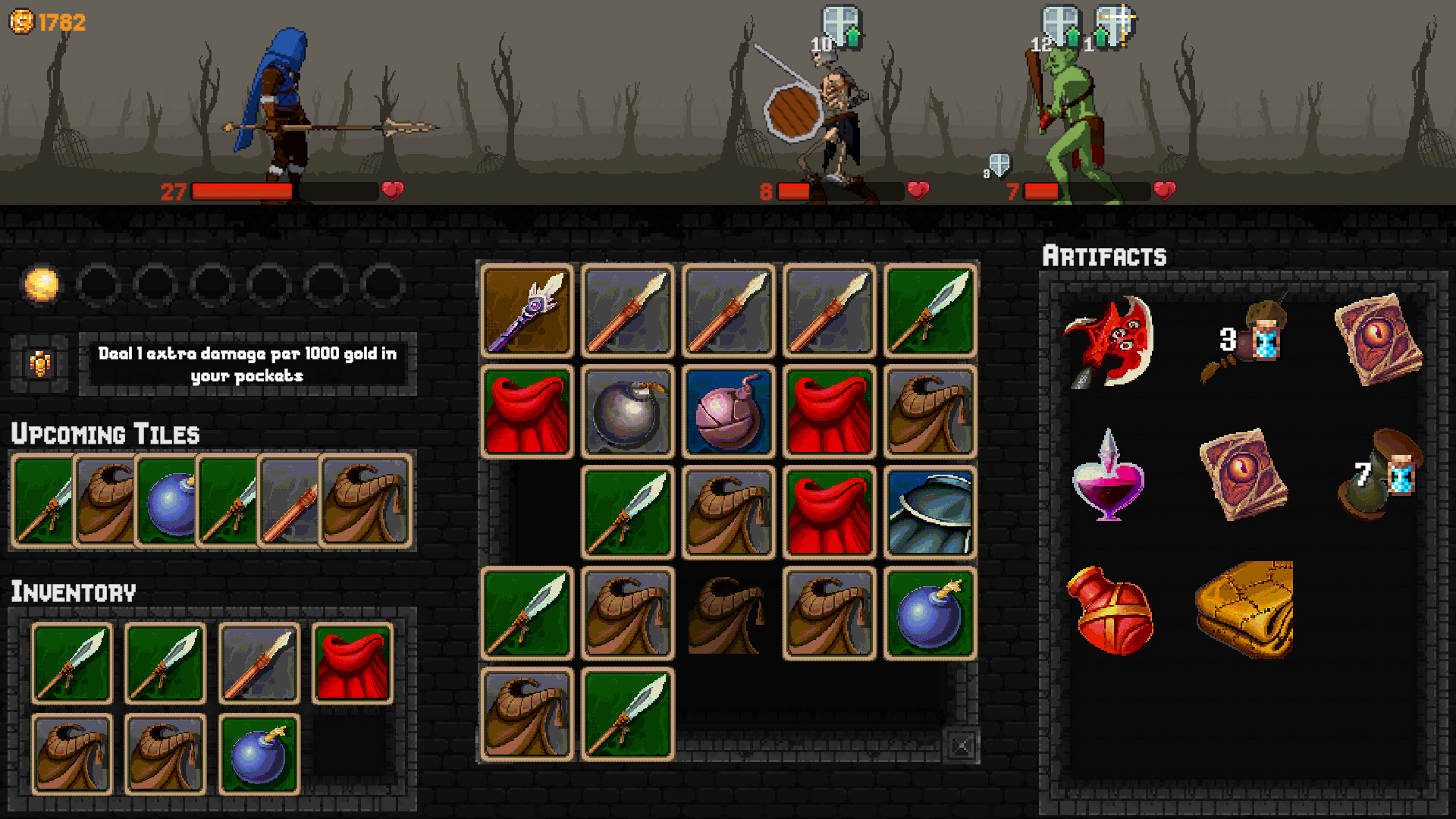
The clearest, most consistent praise across this small sample concerns how well the core hybrid actually works in practice. Reviewers repeatedly describe the moment-to-moment tile-merging combat as properly tense once the board fills up, with the challenge of avoiding jamming your own tiles adding a layer of spatial pressure that pure card-based deckbuilders don't have. More than one reviewer explicitly frames the game as expanding a mechanic they already knew from casual sliding puzzles into something with genuine strategic depth, rather than simply reskinning that mechanic with a fantasy combat coat of paint. One detailed reviewer describes the sensation vividly as feeling like solving "a magical equivalent of a Rubik's Cube," rewarded specifically by the screams of dying enemies — a small but telling detail about how well the game's feedback loop lands.
Artifacts deliver real, named build variety
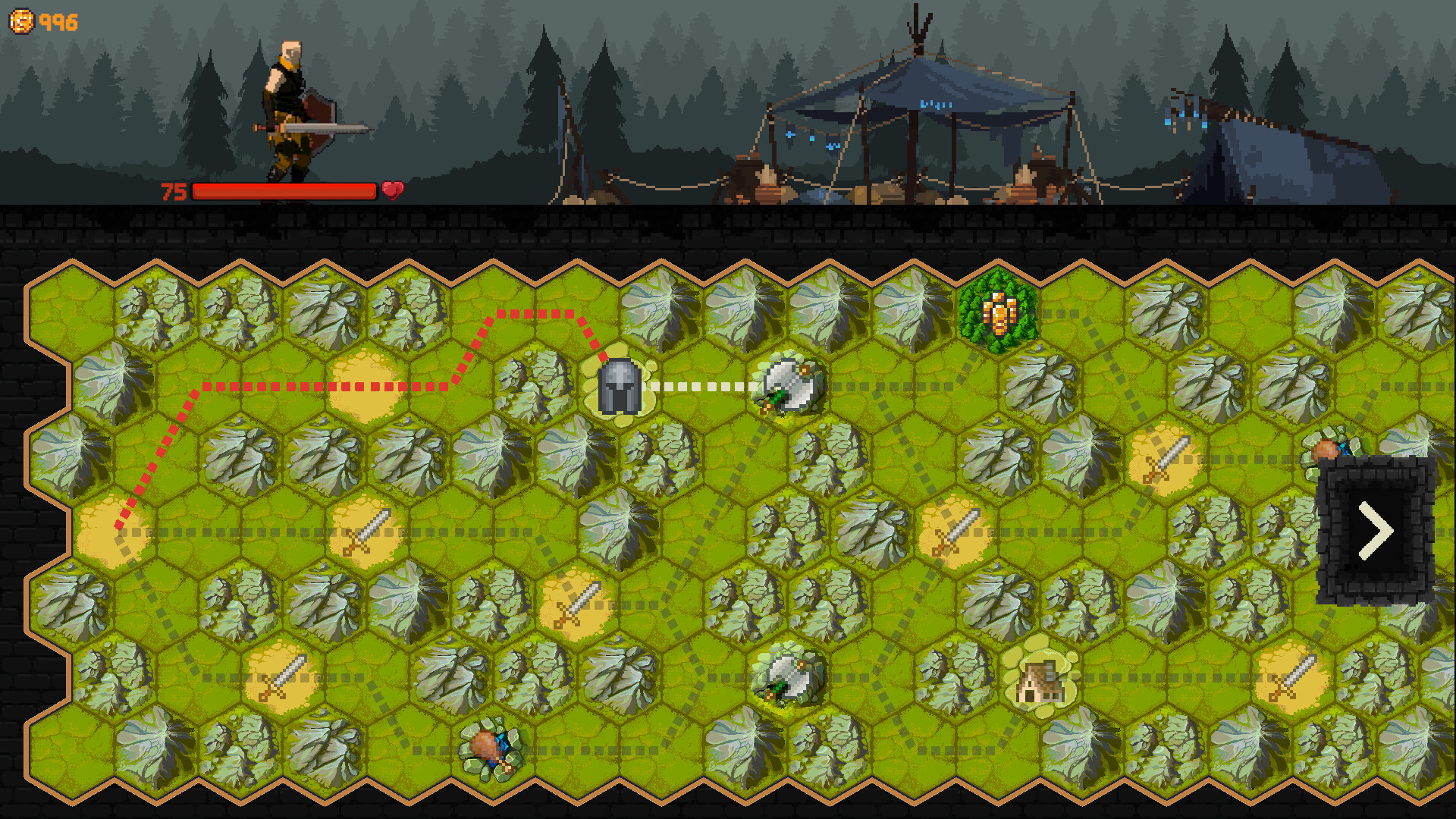
Beyond the core mechanic, this review found the most enthusiastic and specific praise in this sample reserved for the artifact system. Reviewers describe dramatically different viable strategies from run to run, citing specific named playstyles — a full aggression build one reviewer summarises as "I AM DEATH," and a defensive "stubborn turtle" build described by another as equally effective in a different way. That specificity matters: reviewers aren't simply saying the game has "lots of builds" in the abstract, they're describing concrete, contrasting strategies they've personally executed, which reads as considered engagement with the system rather than reflexive praise. Distinct hero classes layer further variety on top of the artifact system, and reviewers who'd played an earlier public demo specifically note the full release meaningfully expands on what that demo offered.
Presentation, and a solo developer's evident care
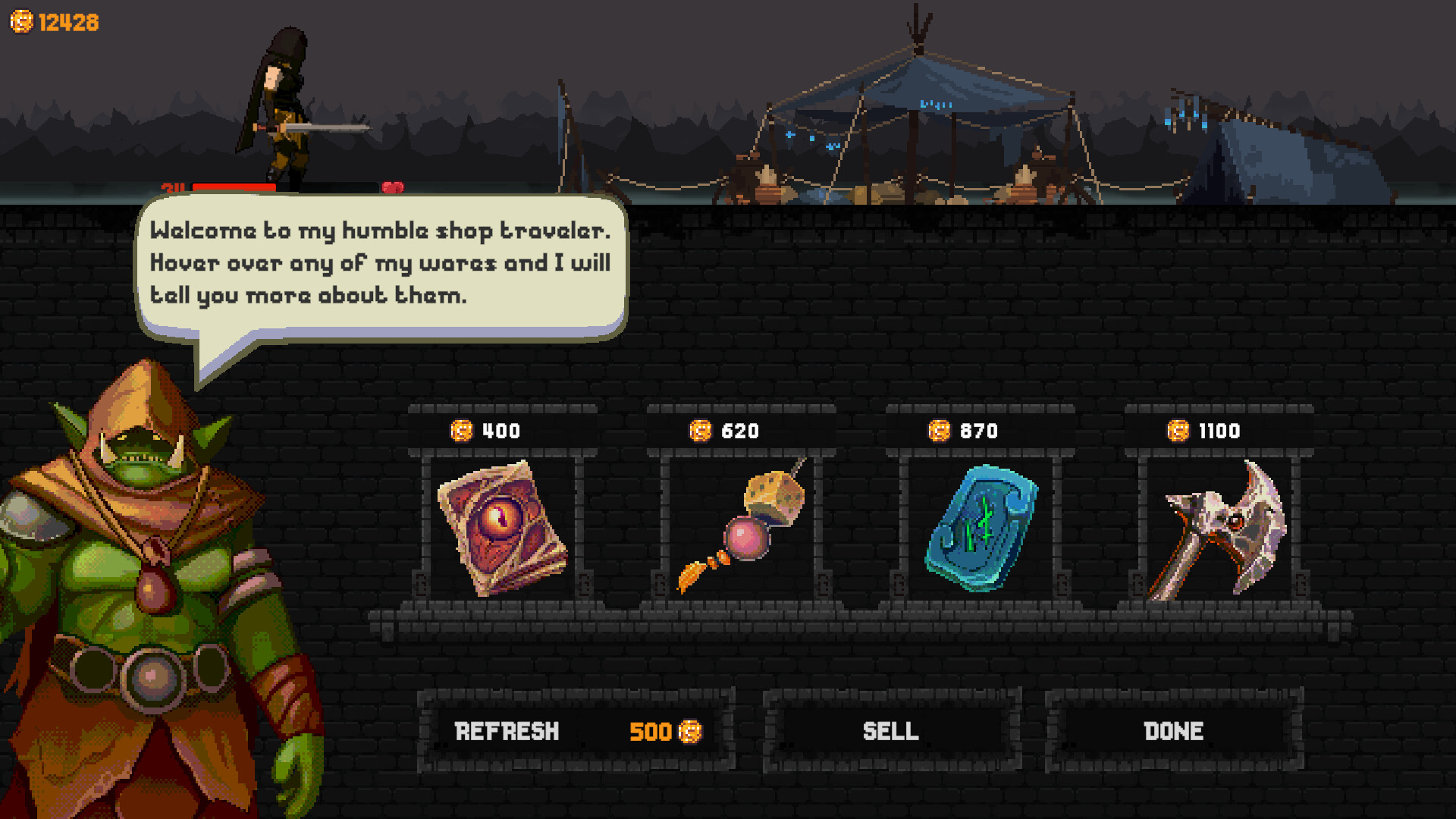
Presentation draws consistent, if less central, appreciation throughout this sample. Reviewers describe clean, satisfying pixel art and sound effects that land well, and small touches — randomised flavour text from the game's merchant character is specifically singled out — read to reviewers as evidence of real care from what's clearly a small, likely solo-developed project. Multiple reviewers separately credit the developer with active, visible engagement on the game's Discord, describing fast responses to reported issues as a genuinely positive signal for how the game is likely to develop from here.
Performance runs hot, and some rough localisation edges
Set against that praise, this review found two specific, practical complaints worth taking seriously despite the otherwise uniform positivity. At least one reviewer reports the game running noticeably hot on their PC specifically during combat, which is a slightly unexpected complaint for a game with fairly modest 2D presentation and worth flagging for players on older or more power-conscious hardware. Separately, a detailed reviewer raises specific quality-of-life issues: text boxes that don't properly accommodate longer German-language text, and animations for simultaneous actions like healing and attacking that cut off abruptly rather than resolving cleanly. Neither complaint is described as severe, and the same reviewer specifically credits the developer with fixing issues quickly, but both are concrete, reproducible points rather than vague polish grumbling.
A small sample, and why it still carries weight
With only 14 total reviews, all of them positive, this review treats its own conclusions as an early, provisional snapshot. No detailed reviewer in this sample raised a substantive complaint about difficulty balance, content depth, or long-term progression pacing, which means this review's picture of the game's potential weaknesses is necessarily less complete than for titles with a larger, more contested review base. That said, the specificity on display throughout this sample — named build strategies, precise localisation and performance complaints, detailed comparisons to specific other titles — reads as genuinely considered engagement rather than a handful of low-effort "fun game" reviews, and this review weighs that specificity accordingly even while remaining appropriately cautious about drawing firm conclusions from so few voices.
What would most improve this game, based on this sample
Reading across every account in this small sample, this review can identify a few specific, concrete directions that would most likely improve the experience further, even though no reviewer frames these as urgent complaints. Some form of in-game performance profiling or a lower-fidelity visual mode would directly address the reported combat heat and framerate complaint without requiring players to guess at manual settings adjustments themselves. Expanded localisation testing, specifically around text box sizing for longer languages like German, would likewise resolve the second specific quality-of-life complaint raised in this sample. Beyond those two concrete, addressable points, this review's research found no structural design complaint substantial enough to meaningfully weigh against the strength of the core hybrid concept and its execution.
Final Verdict
Tiles & Vials succeeds at a genuinely difficult creative task: taking a mechanic most players already know from casual sliding puzzles and expanding it into a roguelike deckbuilder with real strategic depth and build variety, all from what reads as a small, solo-developed project. Every reviewer in this review's small research sample recognises and rewards that achievement with specific, detailed enthusiasm, tempered only by a couple of concrete performance and localisation complaints and the appropriate caution this review applies to any conclusion drawn from a sample this size. Strongly worth it at this price for puzzle and roguelike-deckbuilder fans alike.
Pros and cons
Pros
- The core hybrid of tile-sliding mechanics and roguelike deckbuilder structure draws consistent, detailed praise, with reviewers describing genuinely tense, readable combat that successfully expands a familiar puzzle mechanic into something new rather than simply reskinning it
- The artifact system draws the most enthusiastic, specific praise in this sample, with reviewers describing dramatically different viable builds from run to run and citing specific named playstyles, including a full aggression build and a defensive "stubborn turtle" build, as both genuinely effective
- Presentation draws consistent appreciation, with reviewers describing clean, satisfying pixel art, spot-on sound effects, and small touches like randomised merchant flavour text as evidence of real care and effort from a small, solo-developed project
- Multiple reviewers specifically credit the developer with active, visible community engagement, describing fast responses to reported issues on the game's Discord as a positive sign for its ongoing development
Cons
- At least one reviewer reports the game running noticeably hot on their PC specifically during combat, suggesting the game could be better optimised given its otherwise modest 2D presentation
- A separate detailed reviewer raises specific quality-of-life complaints, including text boxes that don't properly accommodate longer German-language text, and animations for simultaneous actions like healing and attacking that cut off abruptly rather than resolving cleanly
- With a sample of only 14 total reviews, all of them positive, this review is cautious about treating this early reception as fully representative, and would revisit this score as a larger, more varied sample of players weighs in over time
- No detailed reviewer in this sample raised a substantive complaint about difficulty balance, content depth, or long-term progression pacing, meaning this review's picture of the game's potential weaknesses is necessarily less complete than for titles with a larger, more contested review base
- The game currently lists no controller support, which may be a relevant gap for players who specifically prefer gamepad input for turn-based strategy games of this kind
Screenshots
-
Tiles & VialsImage: Iron Axe Games via Steam -
Tiles & VialsImage: Iron Axe Games via Steam -
Tiles & VialsImage: Iron Axe Games via Steam -
How the review scores each part of the gameWanderer Editorial -
The essentials at a glanceWanderer Editorial -
The short versionWanderer Editorial