Game review
Combolands: Roguelike Citybuilder
7.5 / 10
- Developer
- Crux Games
- Publisher
- Crux Games
- Released
- 24 August 2026
- Platforms
- Windows
- Genre
- Strategy, Indie
- Monetisation
- One-time purchase, no in-game purchases listed
- Players
- Single-player
The short version
Combolands: Roguelike Citybuilder, released 24 August 2026 by Crux Games, has become a genuine breakout hit: Overwhelmingly Positive with English-speaking players, 97.9% across a very large sample of 977 reviews as of this check. Reading through a wide slice of that sample confirms the reception is earned — reviewers repeatedly praise a satisfying spatial-placement puzzle loop, deep and varied meta-progression, and excellent Steam Deck performance for short, replayable sessions. It also surfaces a genuine, specific tension that spans both fans and critics: this is much closer in substance to a Balatro-style combo-scoring card roguelite than to any traditional city simulator, and reviewers disagree sharply on whether that matters. Separately, a specific, well-corroborated complaint — that the game is too easy even at its highest difficulty setting — comes from detailed reviewers on both sides of the recommendation line, a stronger signal than either camp's opinion alone. A smaller number of reviewers report serious progress-loss bugs and a platform-specific achievement problem on Linux.
Biggest strengths
- The core loop of placing buildings for spatial synergy and combo scoring draws wide, specific praise for feeling intuitive rather than fiddly, with reviewers repeatedly describing it as satisfying to find the right spot for a piece rather than frustrating
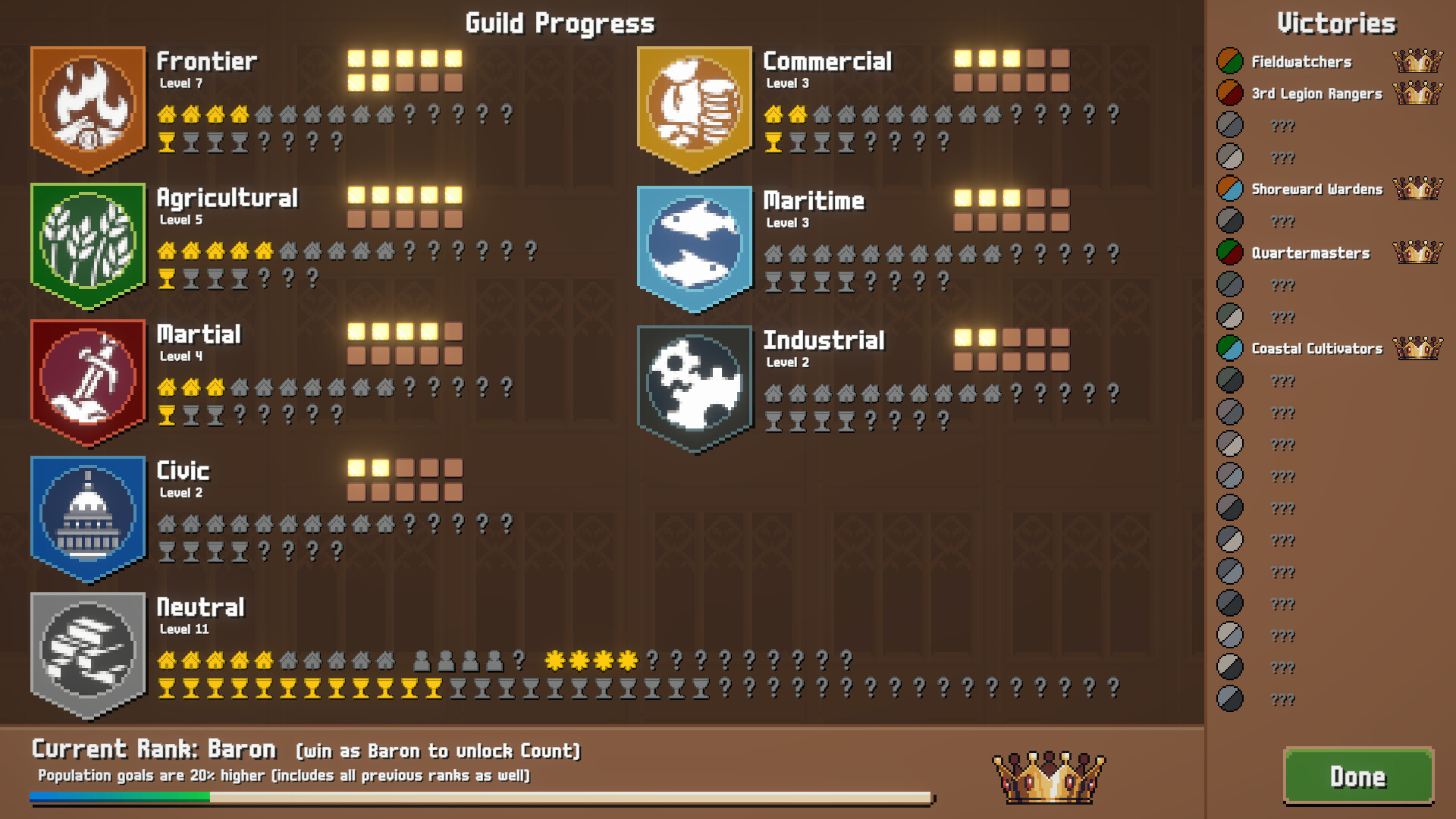
- Meta-progression is described as deep and varied by many reviewers, with a large number of unlockable guild combinations and starting conditions that keep individual runs feeling distinct rather than repetitive
- Performance on Steam Deck draws repeated, specific praise, with multiple reviewers describing it as ideal for short sessions during breaks despite carrying an unverified compatibility tag
Biggest weaknesses
- A specific, well-corroborated complaint spans both fans and critics: the game is reported as too easy even at its highest available difficulty setting, with one detailed long-time player reporting failing only two runs out of more than thirty, which several reviewers say undercuts both the challenge and the achievement-hunting experience
- Multiple reviewers, including some who otherwise recommend the game, argue it isn't a city builder in any meaningful sense — there are no roads or paths, building placement is determined by random card draws rather than planning, and the resulting layouts don't resemble the coherent cities shown in official screenshots; other reviewers explicitly don't consider this a problem once they understand the game as a Balatro-style puzzle roguelite instead
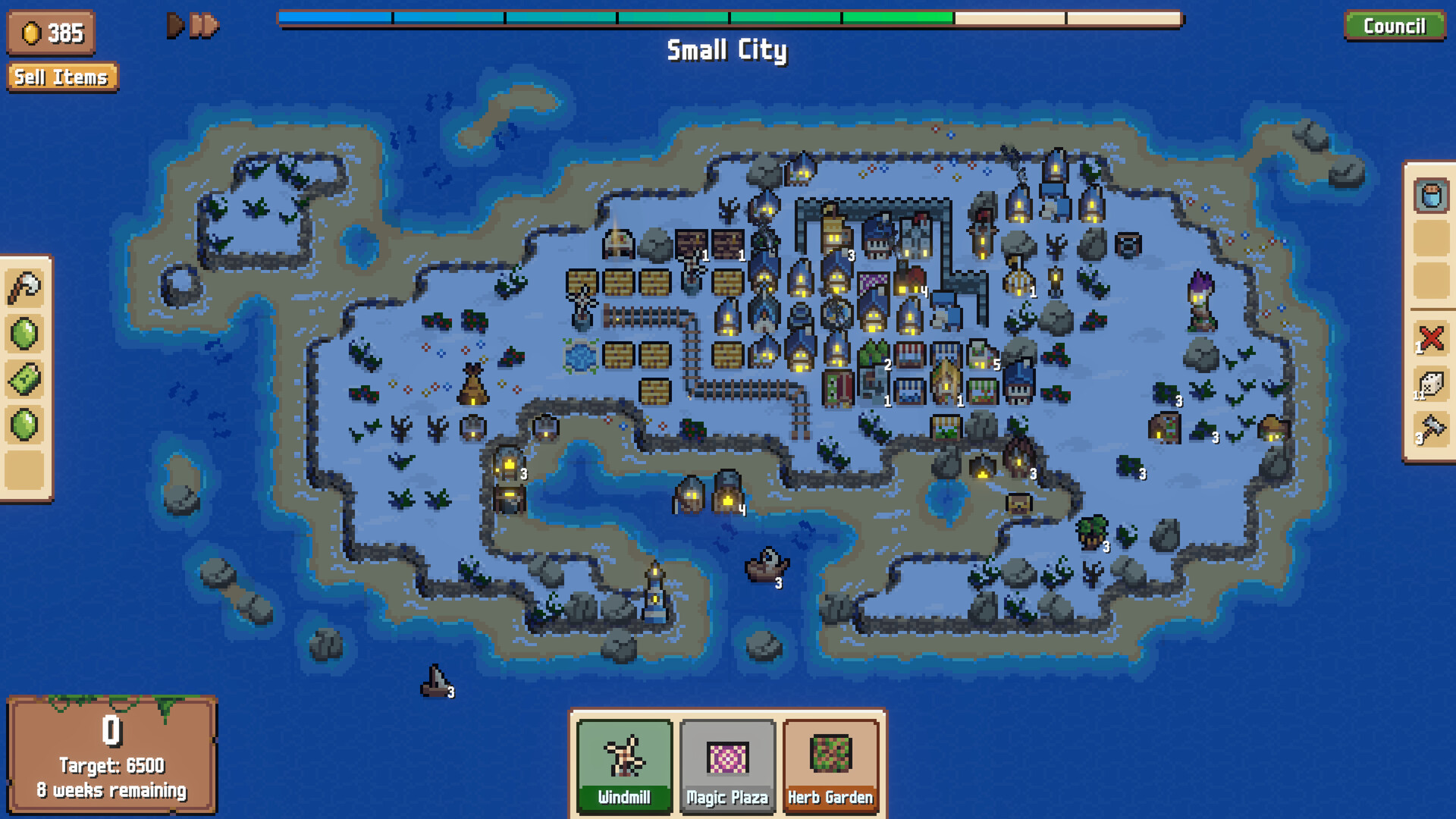
- Several critical reviewers describe the visual presentation as muddy or bland once a board fills up, with many buildings looking similar to each other and only minor visual differentiation between them
Who it's for: Fans of Balatro-style combo-scoring roguelites and spatial-placement puzzle games who don't need a literal city simulator underneath the theming, and who want short, replayable sessions rather than a long single campaign.
Our recommendation: Worth its price if you go in expecting a Balatro-adjacent puzzle roguelite rather than a city-building sim; skip if the "citybuilder" framing specifically is what drew you in, or if you want a roguelike that stays genuinely difficult once you've learned its systems.
7.5 / 10
Introduction
Combolands: Roguelike Citybuilder, released 24 August 2026 by Crux Games, has clearly struck a nerve: it sits Overwhelmingly Positive with English-speaking players, 97.9% across a large sample of 977 reviews. Reading through a wide slice of that sample confirms the reception is grounded in real, specific strengths rather than hype alone. It also surfaces something more interesting than a simple near-unanimous score: a genuine, recurring disagreement, echoed independently by both fans and critics, about what kind of game this actually is underneath its city-building presentation — and a separate, well-supported complaint that cuts across that divide entirely.
A satisfying puzzle loop with real depth
The praise here is specific and consistent. Reviewers repeatedly describe the core act of placing buildings for spatial synergy and combo scoring as intuitive rather than fussy — one reviewer who expected the game to demand pixel-perfect placement was pleasantly surprised to find it forgiving and legible instead. Meta-progression draws similarly specific praise: a large number of unlockable guild combinations and starting conditions are repeatedly cited as keeping individual runs distinct from one another rather than just larger versions of the same strategy. Performance on Steam Deck comes up unprompted in a striking number of reviews, several specifically describing it as their preferred way to play during short breaks, and runs themselves are commonly reported at 20 to 30 minutes — a genuinely different, more bite-sized pace than most roguelike deckbuilders offer.
Is it a city builder? Reviewers genuinely disagree
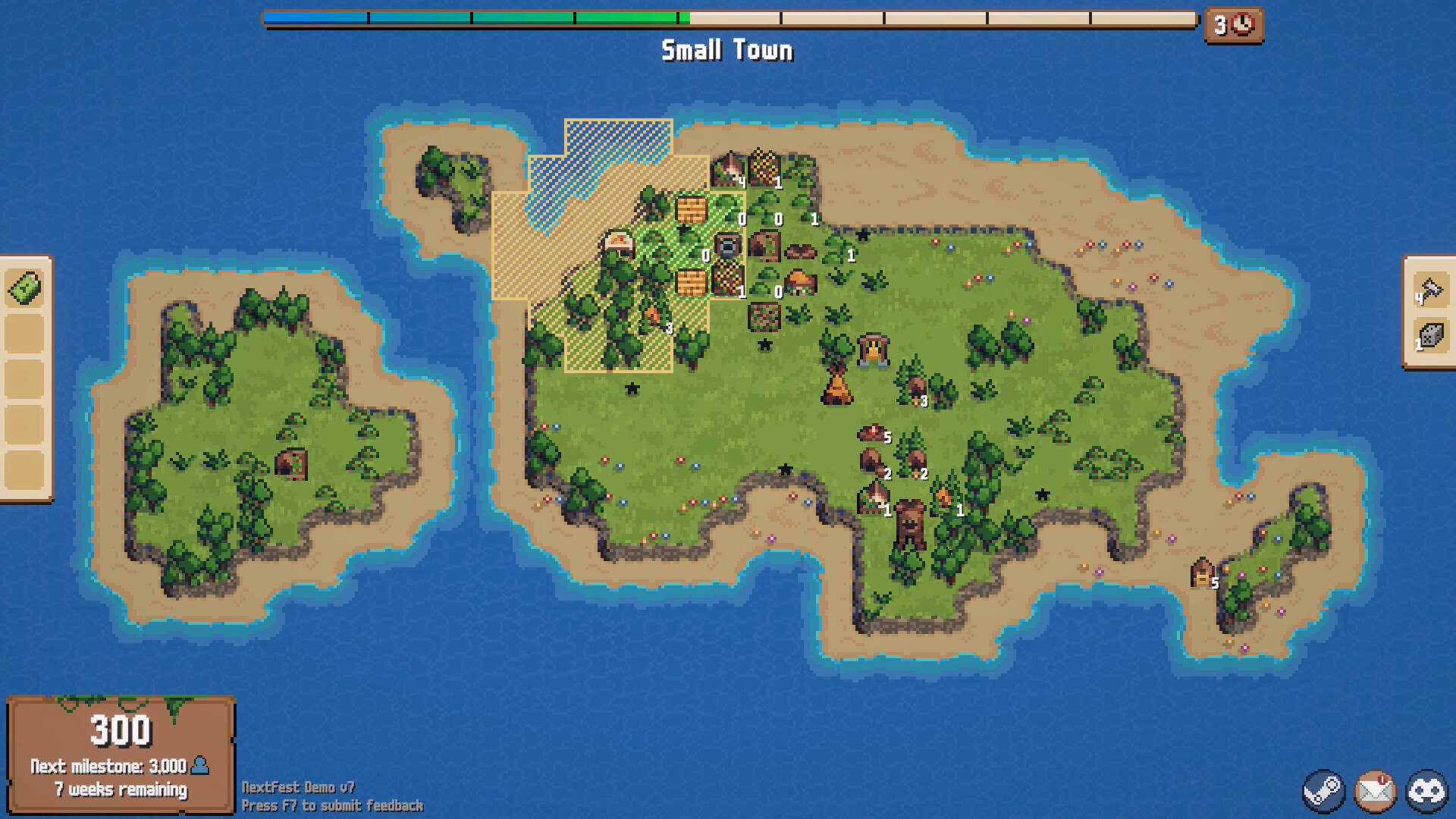
The most interesting pattern in this review's research isn't a complaint so much as a live dispute that recurs independently across both positive and negative reviews. Multiple critical reviewers argue plainly that this isn't a city builder in any meaningful sense: there are no roads or paths, buildings are drawn essentially at random rather than planned, and the resulting boards never resemble the coherent, orderly cities shown in the game's own screenshots — one reviewer calls it, more precisely, "a citybuilder-themed Balatro-style tile puzzle." Separately, and just as tellingly, a number of clearly positive reviews independently reach the same underlying observation and simply don't mind it, framing the game instead as a fresh, well-executed entry in the Balatro-style combo-scoring genre that happens to wear city-building skin — one reviewer goes further, arguing the game's Steam tags are wrong in a different way, since its heavy meta-progression makes it a roguelite rather than a true roguelike. Both camps are describing the same mechanical reality; they simply differ on whether the city-building framing constitutes a meaningful mismatch between marketing and product. This review reports that dispute as genuinely live rather than settling it, but flags it clearly: anyone buying this specifically expecting a city simulator is very likely to be disappointed, regardless of how the broader community feels about the game itself.
Too easy, even for its biggest fans
Separate from that dispute, one specific complaint is unusually well corroborated because it comes from both sides of the recommendation line rather than one. A detailed, heavily-invested positive review — thirty-five hours logged — states the game is "considerably too easy, even at highest difficulty," reporting only two failed runs out of more than thirty attempts, and specifically calls the resulting achievement grind monotonous as a result. A separate reviewer makes almost the same point from the opposite side of the recommendation, arguing that a roguelike is supposed to punish failure meaningfully and expressing surprise at beating the game on a first attempt. When a dedicated fan and a critical reviewer land on the identical specific observation independently, that's a stronger signal than either perspective alone, and it's worth taking seriously as this game's clearest genuine weakness.
Rougher edges: presentation, onboarding and a couple of real bugs
A smaller cluster of complaints, concentrated mostly among critical reviewers, concerns presentation and clarity rather than the core loop. Several describe the board becoming visually muddy once filled, with many buildings differentiated only slightly from one another, and more than one reviewer separately describes the onboarding as unclear about which buildings unlock when or what a new player should prioritize early. Separately, this review found two independent reports of serious progress-loss bugs — one tied to a game crash, one described only as a reset with no clear cause — and one specific, credible report that Steam achievements fail to unlock at all when playing on Linux despite meeting the in-game requirements to earn them.
Randomness, and the tools meant to manage it
A related, more mixed thread concerns how much control a player actually has over what they're given each turn. Several critical reviewers describe the random draw of available buildings as the game's central frustration: because selection is largely down to chance, a board can end up scattered and directionless rather than the product of deliberate planning, and one reviewer specifically notes the game doesn't clearly communicate which buildings are available at a given stage versus locked away for later. Combolands does offer reroll and ban tools to push back against unwanted draws, and several reviewers acknowledge these exist, but more than one still argues they cost enough in-run resources that they only partially offset the core issue rather than resolving it. This sits alongside, rather than replacing, the deeper meta-progression praised above — the frustration is specifically about moment-to-moment card variance within a single run, not the broader unlock structure between runs.
Final Verdict
Combolands: Roguelike Citybuilder earns its breakout reception on real, specific merits: a satisfying, legible placement-and-combo puzzle loop, genuinely deep meta-progression, and excellent portable performance for short sessions, all independently confirmed across a very large review sample. What keeps this from scoring even higher is a well-corroborated difficulty problem serious fans and critics agree on — this stops being a real challenge well before most players run out of things to unlock — layered on top of a genuine, ongoing community disagreement about whether its city-building presentation oversells what is, mechanically, a Balatro-style card and tile puzzle. Worth its price for players going in with that framing understood; a poor fit for anyone specifically shopping for a city simulator.
Pros and cons
Pros
- The core loop of placing buildings for spatial synergy and combo scoring draws wide, specific praise for feeling intuitive rather than fiddly, with reviewers repeatedly describing it as satisfying to find the right spot for a piece rather than frustrating
- Meta-progression is described as deep and varied by many reviewers, with a large number of unlockable guild combinations and starting conditions that keep individual runs feeling distinct rather than repetitive
- Performance on Steam Deck draws repeated, specific praise, with multiple reviewers describing it as ideal for short sessions during breaks despite carrying an unverified compatibility tag
- Runs are reported as short — typically 20 to 30 minutes — making the game an easy pick-up-and- play option, and the price is repeatedly described as easy to justify given the amount of content and replayability on offer
Cons
- A specific, well-corroborated complaint spans both fans and critics: the game is reported as too easy even at its highest available difficulty setting, with one detailed long-time player reporting failing only two runs out of more than thirty, which several reviewers say undercuts both the challenge and the achievement-hunting experience
- Multiple reviewers, including some who otherwise recommend the game, argue it isn't a city builder in any meaningful sense — there are no roads or paths, building placement is determined by random card draws rather than planning, and the resulting layouts don't resemble the coherent cities shown in official screenshots; other reviewers explicitly don't consider this a problem once they understand the game as a Balatro-style puzzle roguelite instead
- Several critical reviewers describe the visual presentation as muddy or bland once a board fills up, with many buildings looking similar to each other and only minor visual differentiation between them
- Onboarding is described by more than one reviewer as unclear, with insufficient in-game guidance about which buildings become available at which stage or what a player should be prioritizing early on
- At least two independent reviewers report serious bugs resulting in complete loss of run progress, one tied to a crash; a separate reviewer reports that Steam achievements do not unlock at all when playing on Linux despite meeting in-game requirements
Screenshots
-
Combolands: Roguelike CitybuilderImage: Crux Games via Steam -
Combolands: Roguelike CitybuilderImage: Crux Games via Steam -
Combolands: Roguelike CitybuilderImage: Crux Games via Steam -
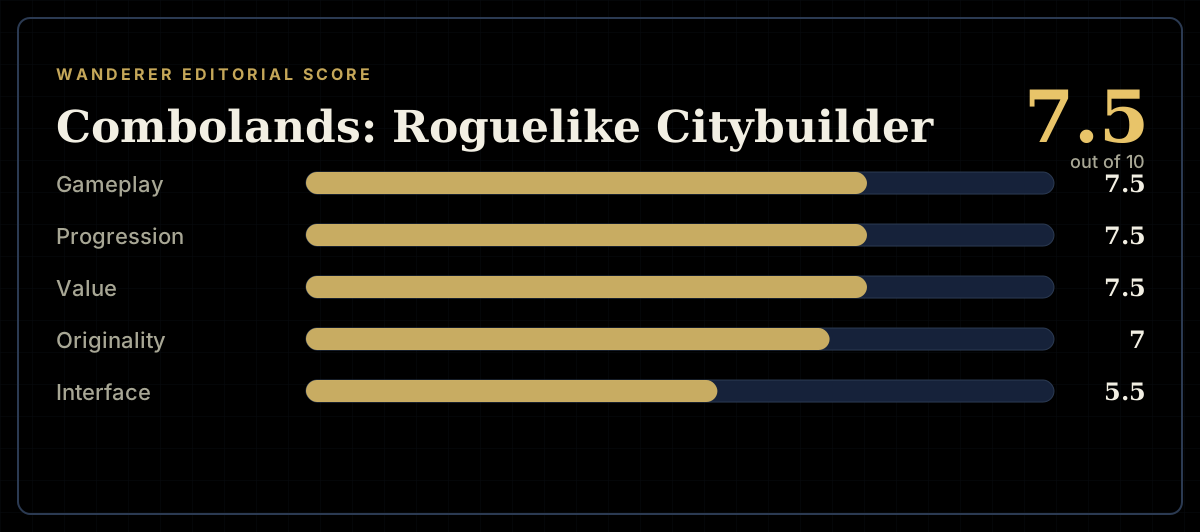
How the review scores each part of the gameWanderer Editorial -
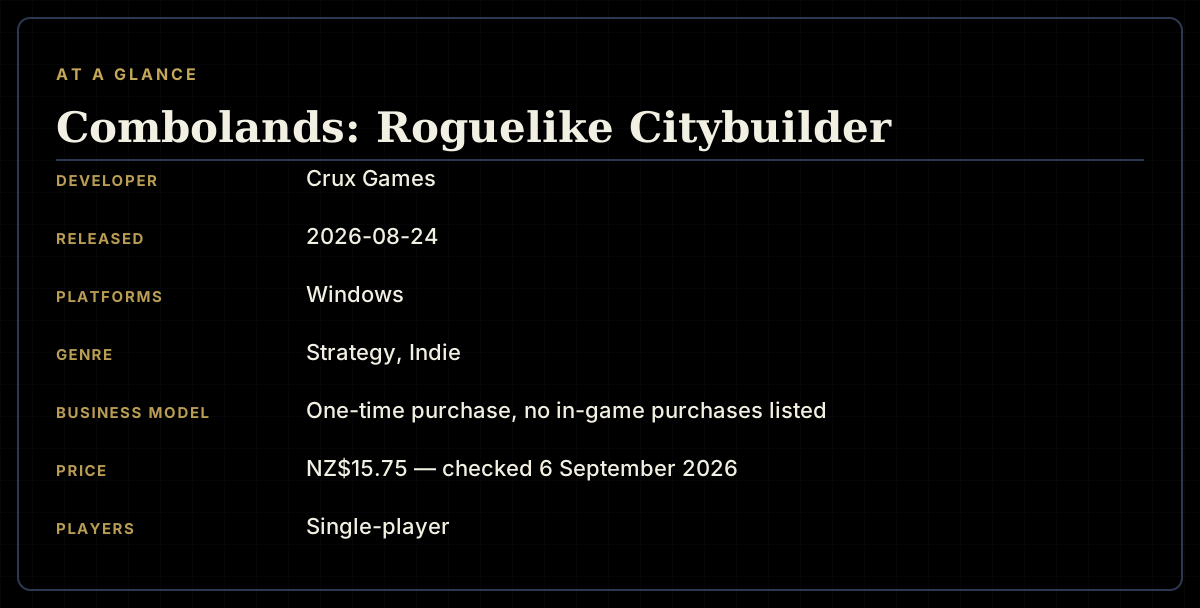
The essentials at a glanceWanderer Editorial -
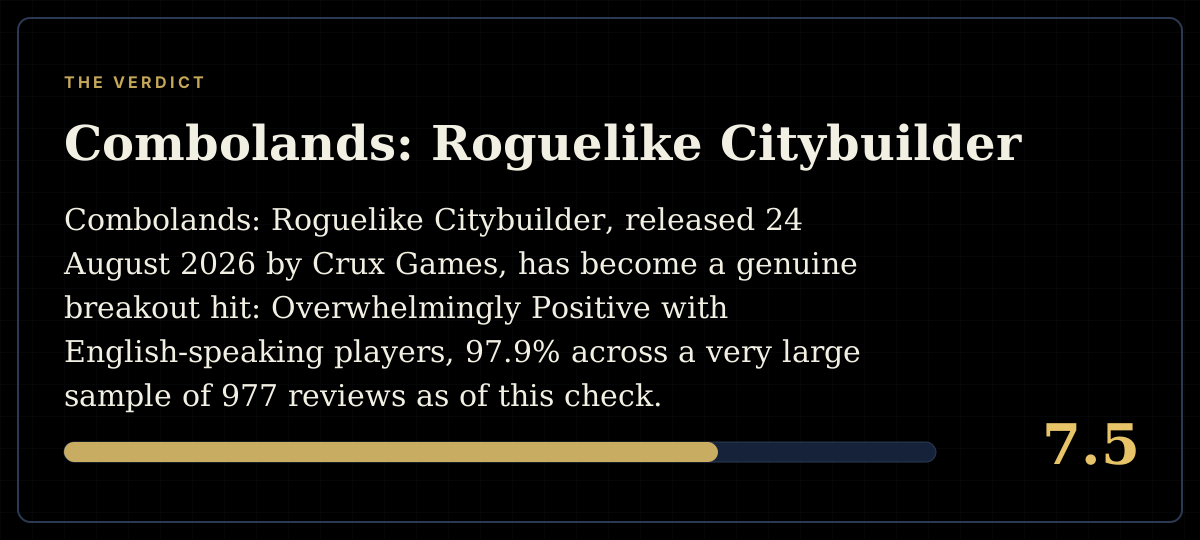
The short versionWanderer Editorial