Game review
Beyond Words
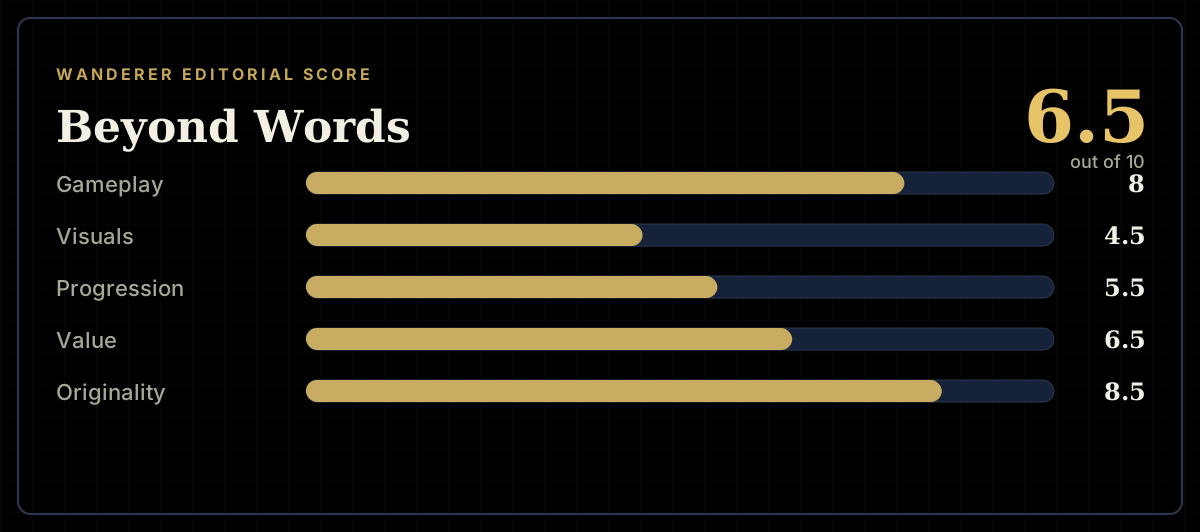
6.5 / 10
- Developer
- MindFuel Games
- Publisher
- PQube
- Released
- 9 April 2026
- Platforms
- Windows, Linux
- Genre
- Word-Building Roguelike
- Monetisation
- One-time purchase, currently NZ$17.61 discounted from NZ$23.49. No microtransactions.
- Players
- Single-player only
The short version
Beyond Words takes Balatro's run-based, escalating-multiplier structure and rebuilds it around spelling words instead of playing poker hands, and reviewers who bought it for that pitch are consistently won over — several call it exactly what it promises to be, delivered well. Sitting at 87.4% positive across 103 reviews, the core idea is a genuine success.
The honest, detailed criticism centres on two connected problems. First, balance: reviewers with 20+ hours describe some cards and bosses as near-unbeatable while others do almost nothing, leaving runs to live or die on what you're dealt rather than how you play. Second, and more unusual, is the game's art history — reviewers independently confirm the original card art was AI-generated, that backlash led the developers to hire real artists post-launch, and that the redrawn art still reads to at least one detailed critic as inconsistent and cheap-feeling compared to the trailer.
Biggest strengths
- A genuinely successful, well-executed fusion of word-game mechanics with Balatro-style escalating run structure, praised specifically by name across most positive reviews
- Strong writing and presentation in its menus, tutorial and framing devices, cited warmly by multiple reviewers
- The developers responded to launch-week AI-art criticism by hiring human artists rather than ignoring the feedback
Biggest weaknesses
- Card and boss balance draws detailed, specific criticism from invested reviewers — some elements are described as near-unbeatable, others as nearly worthless, leaving runs to hinge on what you're dealt rather than skill
- The game's card art was originally AI-generated; though replaced with human-made art after backlash, at least one detailed review says the replacement still lacks a cohesive style compared to the original trailer
- The word dictionary doesn't recognise some valid but less common English words, costing at least one reviewer runs over words like "hedonia" or "bailiff"
Who it's for: Word game and deckbuilder fans specifically drawn to the Scrabble-meets-Balatro pitch — this delivers exactly that fusion. Less suited to players sensitive to visual presentation, given the honestly mixed state of the current art, or anyone who wants tight, predictable balance rather than runs that can be decided by an early lucky or unlucky boss draw.
Our recommendation: Try the demo first, which multiple reviewers specifically recommend before buying. If the core spelling-roguelike loop hooks you the way it hooked most reviewers, the balance and art issues are real but survivable; if you're on the fence, waiting for further balance and visual patches is reasonable advice several reviewers give directly.
6.5 / 10
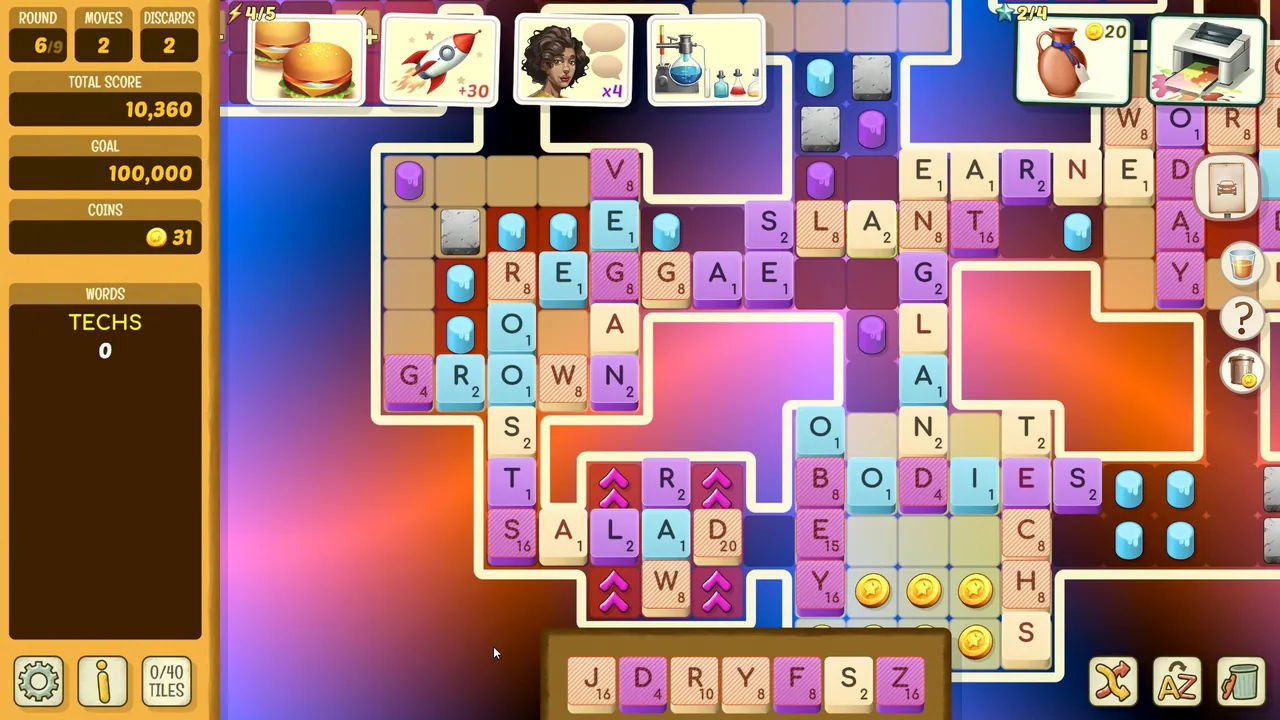
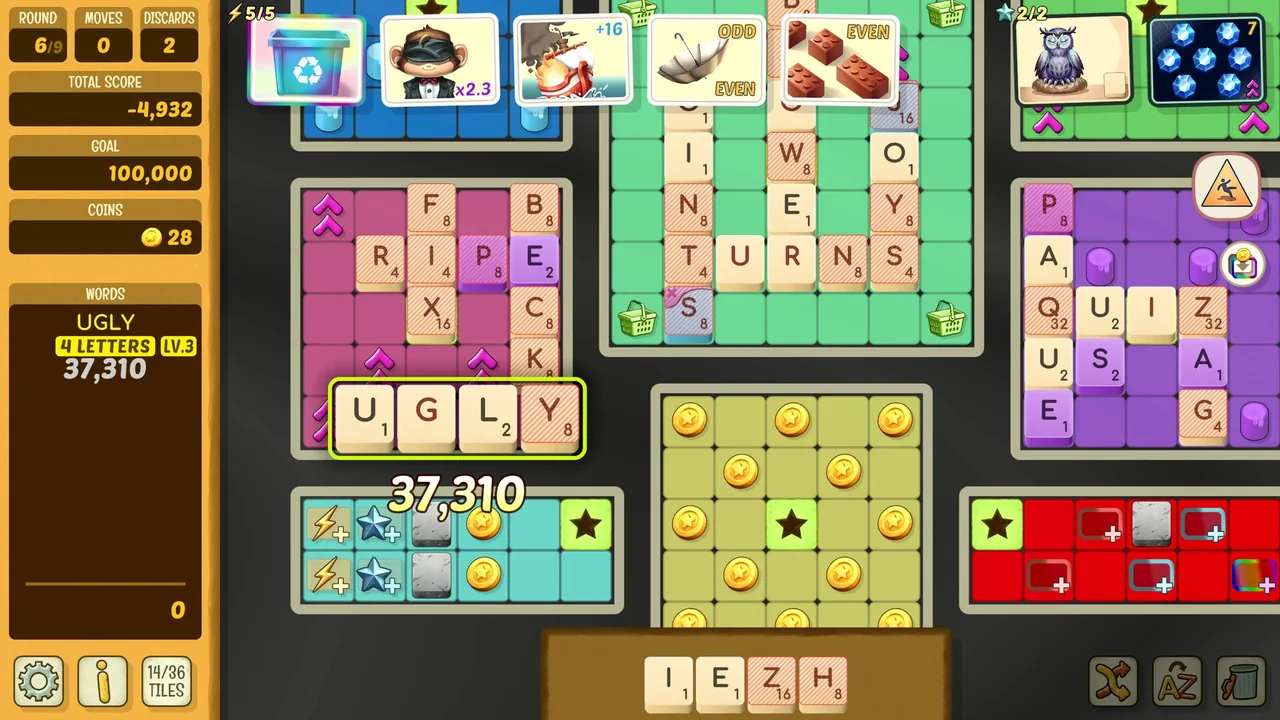
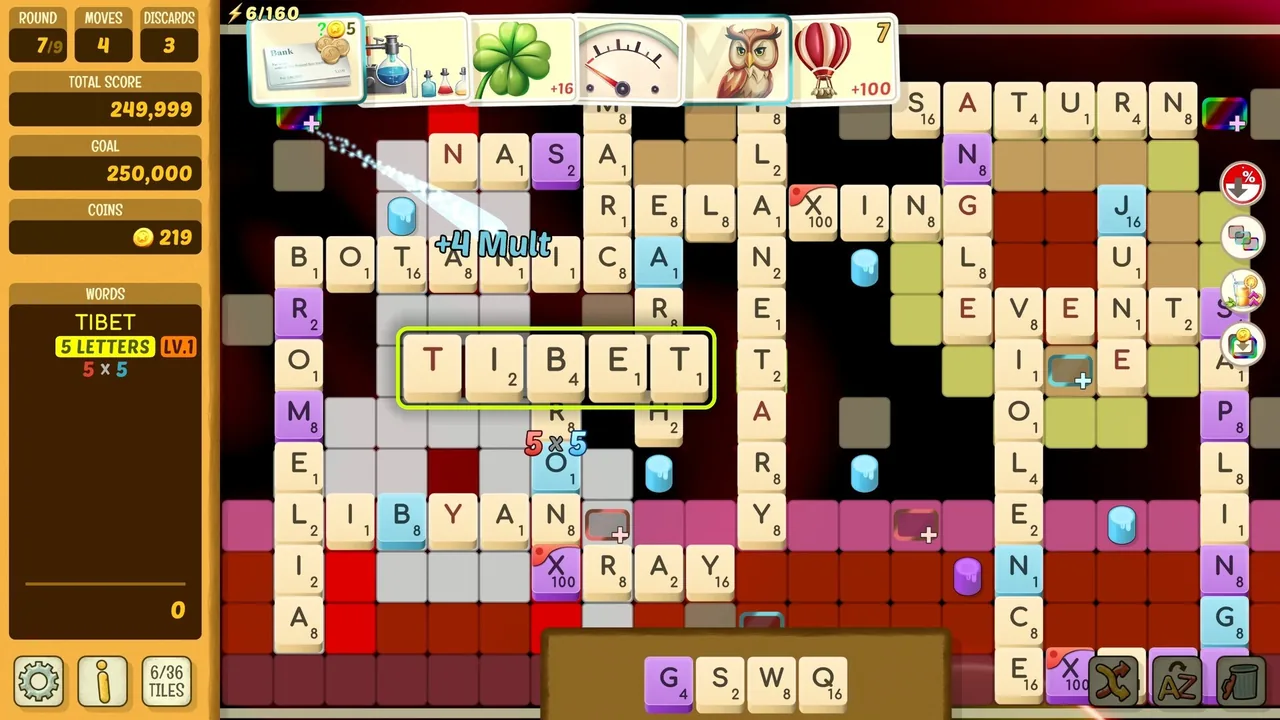
The pitch for Beyond Words is almost absurdly easy to state: Balatro, but you're spelling words instead of playing poker hands. Reviewers who bought it for exactly that reason are, by a wide margin, satisfied with what they got. "It's essentially Balatro with Scrabble," one writes. "But very very good it is too!" Another, more concisely: "Do you like Balatro? Do you like Scrabble more than Poker? This is for you." The fusion itself is the easy part of this review — it works, and most of the corpus agrees.
Where the runs actually break
The harder, more interesting part of the review is what happens once you're several hours in. The most detailed negative review in the sample — written by someone who clearly wanted to recommend the game outright — spends most of its length on specific balance complaints rather than the core concept: certain cards are "completely worthless or straight downgrades of others," while others can "practically win the run singlehandedly." Bosses draw the same criticism, with some described as minor annoyances and others as near-unbeatable run-killers depending on your build, leaving runs to hinge on the luck of a boss draw rather than the decisions you made to get there. A separate reviewer flags a more specific, concrete frustration: the game's dictionary doesn't recognise some legitimate but less common English words — "hedonia," "bailiff" — costing runs to a technical gap rather than a design one.
The art's complicated history
Here's a detail worth reporting plainly rather than glossing over, because it's independently confirmed by more than one reviewer rather than a single unverified claim. The game's card art was originally AI-generated. Following backlash after launch, the developers hired human artists to redo it — a fact one satisfied reviewer cites approvingly, noting the developers "have stated that no AI is in the final product" and that they have "no reason to distrust them." A more critical reviewer, however, argues the replacement art still falls short: comparing the current cards to the original trailer, they describe the redraw as looking "traced over" rather than freshly designed, resulting in a set of cards with "a complete lack of a cohesive style" and a UI that gives the whole game "a very cheap feel." Both accounts agree on the underlying history — AI art at launch, a real developer response to criticism, and a genuinely mixed verdict on how well the replacement landed. That's a rare, concrete example in this library of a studio actually responding to an AI-content controversy rather than the allegation sitting unresolved.
Reading the completion data
The achievement curve shows a genuinely accessible entry point with a long tail. Early milestones sit at 85.1% and 83.8%, meaning nearly all buyers get well into their first runs. The rarest achievements, tied to deep mastery goals, fall under 0.5%, a steep but not unusual drop for a roguelike whose hardest content is reserved for a committed minority.
6.5 out of 10. Beyond Words succeeds cleanly at its central idea — a genuinely fun, well-executed fusion of word games and run-based deckbuilding that most players who try it enjoy. It's held well below the top tier by two connected, honestly documented problems: balance swingy enough that several invested reviewers call runs a coin flip rather than a skill test, and a visual identity still recovering from a genuine, developer-acknowledged AI-art controversy at launch. Try the demo, as reviewers themselves recommend, and judge the current state of both before deciding whether the core idea is worth the rough edges around it right now.
Pros and cons
Pros
- A genuinely successful, well-executed fusion of word-game mechanics with Balatro-style escalating run structure, praised specifically by name across most positive reviews
- Strong writing and presentation in its menus, tutorial and framing devices, cited warmly by multiple reviewers
- The developers responded to launch-week AI-art criticism by hiring human artists rather than ignoring the feedback
- A free demo exists and is repeatedly recommended by reviewers as the best way to judge fit before buying
Cons
- Card and boss balance draws detailed, specific criticism from invested reviewers — some elements are described as near-unbeatable, others as nearly worthless, leaving runs to hinge on what you're dealt rather than skill
- The game's card art was originally AI-generated; though replaced with human-made art after backlash, at least one detailed review says the replacement still lacks a cohesive style compared to the original trailer
- The word dictionary doesn't recognise some valid but less common English words, costing at least one reviewer runs over words like "hedonia" or "bailiff"
- A meaningful share of reviewers describe losing interest a few hours in despite enjoying the initial premise, once the balance issues become apparent
Screenshots
-
Beyond WordsImage: PQube via Steam -
Beyond WordsImage: PQube via Steam -
Beyond WordsImage: PQube via Steam -
How the review scores each part of the gameWanderer Editorial -
The short versionWanderer Editorial