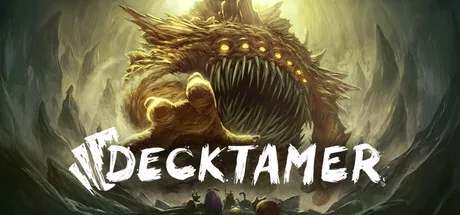
Game review
Decktamer
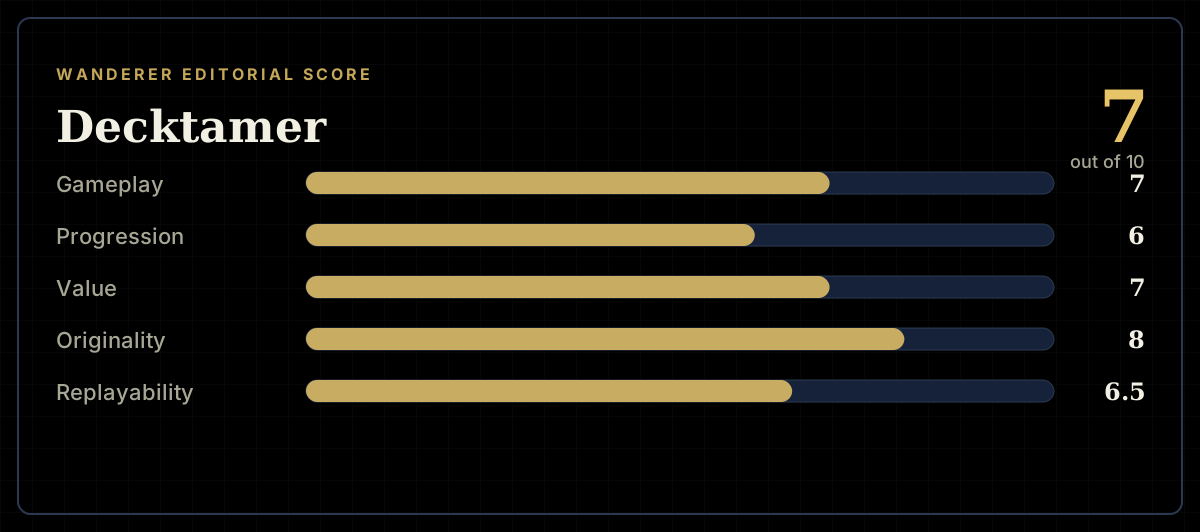
7 / 10
- Developer
- Horizon Edge
- Publisher
- Assemble Entertainment
- Released
- 27 October 2025
- Platforms
- Windows
- Genre
- Deckbuilding Roguelike
- Monetisation
- One-off premium purchase, no DLC, no in-app purchases and no premium currency
- Players
- None. Single-player only, with no leaderboard, co-op or shared-progress feature
The short version
Decktamer sends players diving into a surreal, ever-stranger abyss, tasked not with collecting pre-built cards but with taming the mutant creatures they fight — and losing those creatures permanently, deck slot and all, the moment they die in battle. It's a genuinely distinctive spin on the deckbuilding roguelike formula, drawing sincere comparisons to Made in Abyss and Junji Ito's body-horror surrealism for its atmosphere. Reception sits at a Very Positive 85.5% across nearly 2,000 reviews, and the praise for its art, sound and puzzle-like turn-based combat is substantial and specific. What keeps this review from a simple recommendation is an equally substantial, still-current thread of criticism: steep, RNG-dependent difficulty spikes that Steam's own achievement data confirms — barely a third of players have beaten even the medium difficulty tier — and short individual battles that a meaningful slice of reviewers feel prevent the "building" part of deckbuilding from ever really taking hold. A dedicated Difficulty Update in March 2026 addressed some of this directly, but reviews written well after that patch continue to raise the same core complaints.
Biggest strengths
- A genuinely distinctive core mechanic — taming enemy creatures into your deck rather than drafting pre-made cards, with permanent loss on death — that reviewers consistently single out as unlike anything else in the genre
- Art direction and sound design draw close to universal praise, with several reviewers invoking Made in Abyss and body-horror influences for the abyss's steadily more surreal, unsettling creature designs
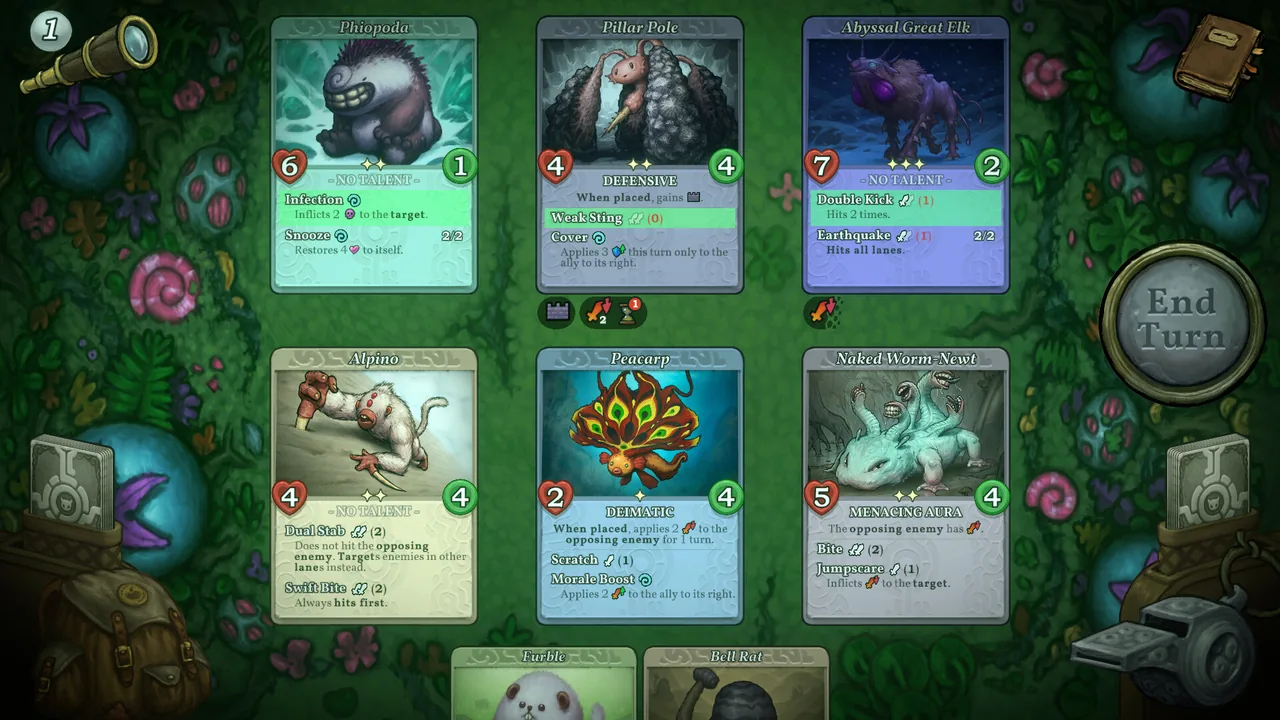
- Turn-based combat is repeatedly described as genuinely puzzle-like, rewarding careful positioning and ability-transfer combos between creatures rather than simple stat-checking
Biggest weaknesses
- A specific, still-current complaint describes higher difficulty tiers as excessively RNG-dependent, with Steam's own achievement data showing only about a third of players have cleared even the medium difficulty setting
- Several detailed reviews argue individual battles and levels are too short (cited as roughly seven-to-eight-minute encounters before a boss) to let a deck meaningfully develop, leaving the experience feeling like a series of disposable minion trades rather than genuine deckbuilding
- A specific and recurring frustration concerns balance patches perceived as overcorrecting against powerful builds discovered by a small, highly engaged competitive community, at the expense of build variety for more casual players
Who it's for: Deckbuilding roguelike veterans who want a genuinely tough, RNG-forward challenge with a distinctive creature-taming hook, rather than players looking for an accessible, low-friction entry into the genre.
Our recommendation: A genuinely inventive deckbuilder worth its modest price for experienced genre fans who go in expecting a steep, sometimes unfair difficulty curve rather than a gentle one.
7 / 10
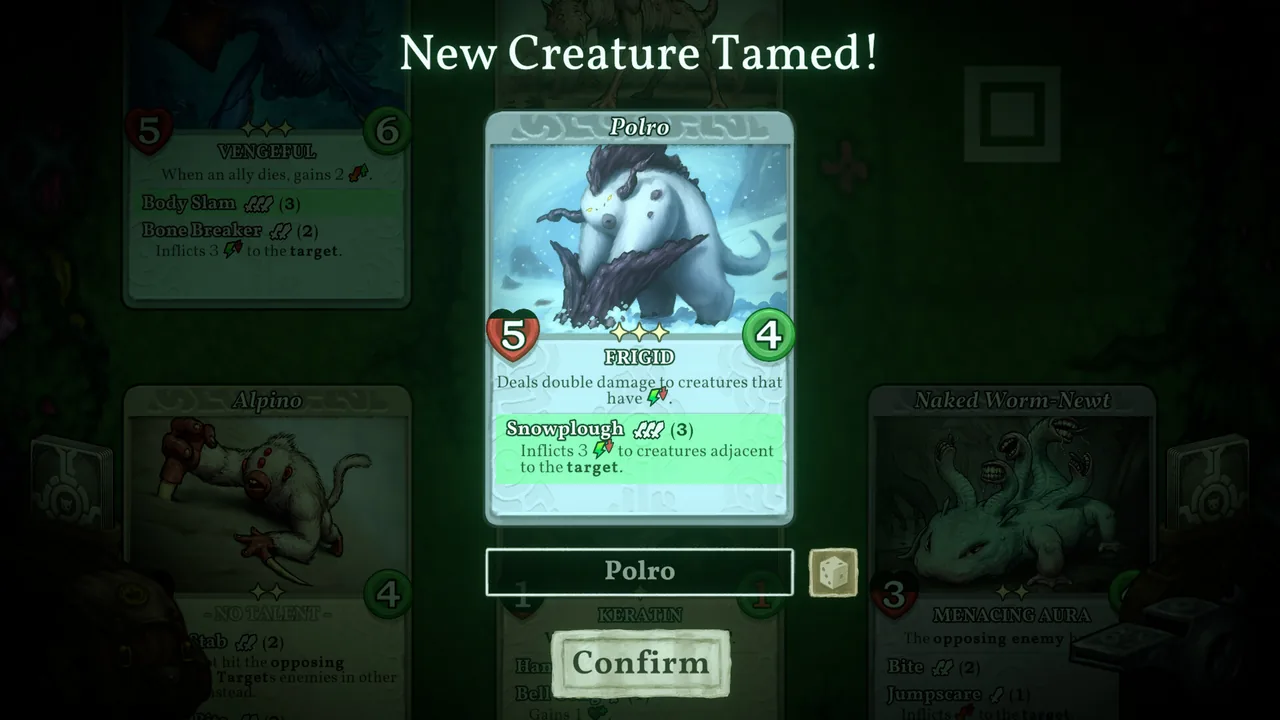
Deckbuilding roguelikes usually start players with a fixed hand of cards and let them draft improvements as they go. Decktamer, from developer Horizon Edge and publisher Assemble Entertainment, flips that premise on its head: your deck isn't handed to you at all. Every card you'll ever hold is an enemy creature you first had to defeat and tame in battle, and if that creature dies later, it's gone — permanently, deck slot and all. It's a genuinely distinctive spin on a crowded genre, and since its 27 October 2025 release, it's built a Very Positive reputation across nearly 2,000 Steam reviews. It's also, by its own most engaged players' honest account, a game whose difficulty curve doesn't always play fair — and understanding that tension is most of what makes this review worth writing carefully.
A genuinely different kind of deckbuilder
The core hook lands with real force in the review sample. "In this game you do not collect a team of cute pets to face the world," one review opens, framing the mental adjustment new players need to make. "In this game you gather disposable minions you throw at problems." That's an accurate, almost unsettling way to describe a system where every card in your hand is a living creature you risk losing for good, and reviewers consistently describe it as the thing that makes Decktamer feel unlike its genre peers. The setting reinforces the tone: a bottomless abyss where creatures grow stranger and more dangerous the deeper you dive, drawing sincere comparisons to Made in Abyss and Junji Ito's body-horror aesthetic. "Like that Junji Ito hole, this game was made for me," one review puts it. "It's a creepy and surreal creature tamer/deckbuilder with hard battles." Art direction and sound design draw close to universal praise across the sample, regardless of how a given reviewer felt about the difficulty underneath it.
Combat itself is repeatedly described in genuinely puzzle-like terms rather than simple stat-checking. Ability transfer between creatures — taking a trait one mutant shouldn't normally have and moving it to another — gives experienced players real room to build unexpected, specific combos, and several long-time deckbuilder veterans describe the decision space as unusually rich. "This is an incredible deckbuilder. You have so many decisions to make every turn that it's a fantastic amount of fun," one review states plainly. Another, with over 2,000 hours across Slay the Spire alone, frames Decktamer as "content-heavy" and didn't mind the steep difficulty precisely because of that deep prior genre experience — an important qualifier that becomes central to understanding the game's more critical reviews.
The difficulty problem, backed by the game's own numbers
What separates Decktamer's review sample from a simple "great game, some people found it hard" story is how specific and quantifiable the difficulty complaint actually is. "Less than 41% of the people who got this game beat the 'medium' difficulty as of writing," one detailed review states, citing Steam's own achievement statistics directly — and independently checking that data confirms the broad shape of the claim: only about a third of players have the WinMedium achievement, with completion dropping further at each successive boss tier. That's not a subjective complaint about personal skill; it's a structural signal that the difficulty curve is steep enough to lock out a meaningful majority of the game's own purchasers before they see its later content.
The RNG dependency compounding that difficulty draws its own specific, repeated criticism. "Pretty frustratingly RNG driven and low creativity on high difficulty," one review states. "On the higher difficulties if you lowroll your tames or don't get any synergistic creatures... " the run becomes close to unwinnable regardless of skillful play. A particularly candid review frames the tension honestly rather than simply venting: "It's a really good game like 60% of the time, but the game is far more reliant on RNGsus than some people would have you believe, and the difficulty spikes is insane." That kind of specific, percentage-framed self-assessment — genuinely enjoyed most of the time, genuinely frustrated by a real and identifiable minority of runs — is a more useful signal than blanket praise or blanket condemnation would be.
A related, more pointed complaint concerns how the developer has responded to community feedback about balance. "The obsession the devs have with nerfing anything that is even remotely good based on a few tryhards in the discord turned this game off for me," one review states, and a similar sentiment appears in at least one other detailed review specifically criticising a nerf to a build that "only really goes infinite at lower difficulties" — arguing the studio prioritised a small, highly skilled competitive subset of its playerbase over the broader casual audience's enjoyment of creative, if overpowered, builds in a single-player game with no leaderboard to protect.
A second, separate complaint: not enough room to build
Distinct from the difficulty conversation, several detailed reviews raise a structural complaint about pacing that's worth treating as its own issue rather than folding into the balance discussion. "The levels are too short (8x7 minute battles before the level boss) so you don't actually 'build' a deck as much as you have a bunch of transient monsters," one review argues, suggesting the game's central taming mechanic doesn't get enough runway within a single level to pay off the way genre benchmarks like Slay the Spire or Monster Train allow. Another reviewer, directly comparing Decktamer against several respected peers — Wildfrost, Hunters Moon, Monster Train among them — describes feeling like they had comparatively little control over their own build's direction. It's a fair, specific critique distinct from the difficulty conversation: even players who accept a hard game can reasonably want more room to actually execute a plan before a run ends.
A developer that's kept responding
None of this criticism has gone unanswered. Horizon Edge shipped a dedicated "Difficulty Update" on 1 March 2026, directly targeting the balance concerns raised throughout the review sample's first several months. The studio has continued a steady cadence of numbered patches well past that point — version 1.7.4 as recently as early August 2026 — alongside community-facing initiatives like a creature-design contest that let players submit and vote on new additions to the bestiary. "Devs are brilliant, listens to community and even hosts events where you can submit creatures and get them added to the game," one review notes approvingly. That's genuine, sustained engagement worth crediting — though it's equally worth noting plainly that reviews written well after the March difficulty patch continue to raise the same core complaints about RNG dependency and short battle length, suggesting the update improved rather than fully resolved the underlying tension.
Where this leaves a buyer
At NZ$19.99, Decktamer offers a genuinely distinctive take on the deckbuilding roguelike formula, backed by striking art, satisfying puzzle-like combat, and a developer that's stayed engaged with its community for the better part of a year post-launch. The honest caveat belongs specifically to players newer to the genre or looking for a gentler difficulty curve: Steam's own numbers confirm this is a game a meaningful majority of purchasers haven't beaten past its easier difficulty tier, and the RNG-dependency and short-battle-length complaints raised by experienced deckbuilder fans are specific, current, and worth taking seriously rather than dismissing as skill-issue noise. Experienced genre veterans who go in expecting real, occasionally unfair resistance should find plenty to love in the creature-taming hook alone; players hoping for a more forgiving on-ramp should adjust expectations accordingly.
Pros and cons
Pros
- A genuinely distinctive core mechanic — taming enemy creatures into your deck rather than drafting pre-made cards, with permanent loss on death — that reviewers consistently single out as unlike anything else in the genre
- Art direction and sound design draw close to universal praise, with several reviewers invoking Made in Abyss and body-horror influences for the abyss's steadily more surreal, unsettling creature designs
- Turn-based combat is repeatedly described as genuinely puzzle-like, rewarding careful positioning and ability-transfer combos between creatures rather than simple stat-checking
- An actively engaged developer that shipped a dedicated Difficulty Update, runs community creature-design contests, and has continued regular numbered patches nearly a year after launch
Cons
- A specific, still-current complaint describes higher difficulty tiers as excessively RNG-dependent, with Steam's own achievement data showing only about a third of players have cleared even the medium difficulty setting
- Several detailed reviews argue individual battles and levels are too short (cited as roughly seven-to-eight-minute encounters before a boss) to let a deck meaningfully develop, leaving the experience feeling like a series of disposable minion trades rather than genuine deckbuilding
- A specific and recurring frustration concerns balance patches perceived as overcorrecting against powerful builds discovered by a small, highly engaged competitive community, at the expense of build variety for more casual players
- Optimisation and UI clarity draw real, if less universal, complaints, including unclear unlock conditions and requests for better in-battle information toggles
Screenshots
-
DecktamerImage: Assemble Entertainment via Steam -
DecktamerImage: Assemble Entertainment via Steam -
DecktamerImage: Assemble Entertainment via Steam -
How the review scores each part of the gameWanderer Editorial -
The short versionWanderer Editorial