Game review
Padoria
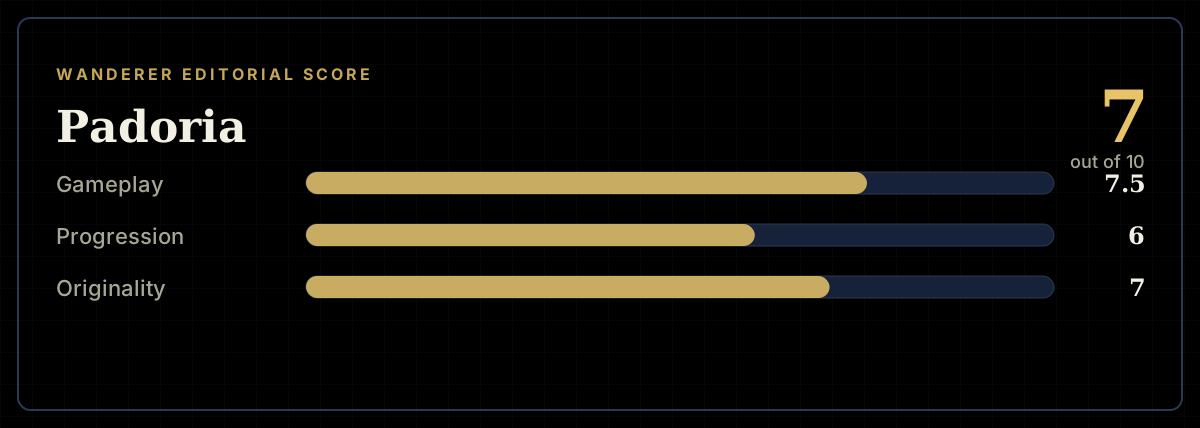
7 / 10
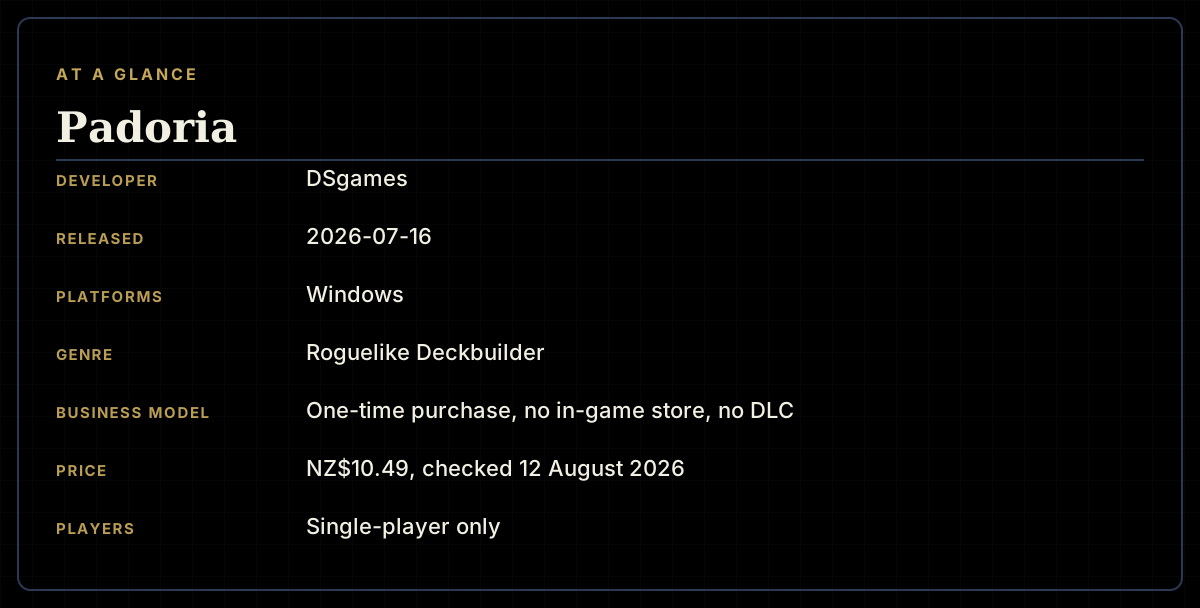
- Developer
- DSgames
- Publisher
- DSgames
- Released
- 16 July 2026
- Platforms
- Windows
- Genre
- Roguelike Deckbuilder
- Monetisation
- One-time purchase, no in-game store, no DLC
- Players
- Single-player only
The short version
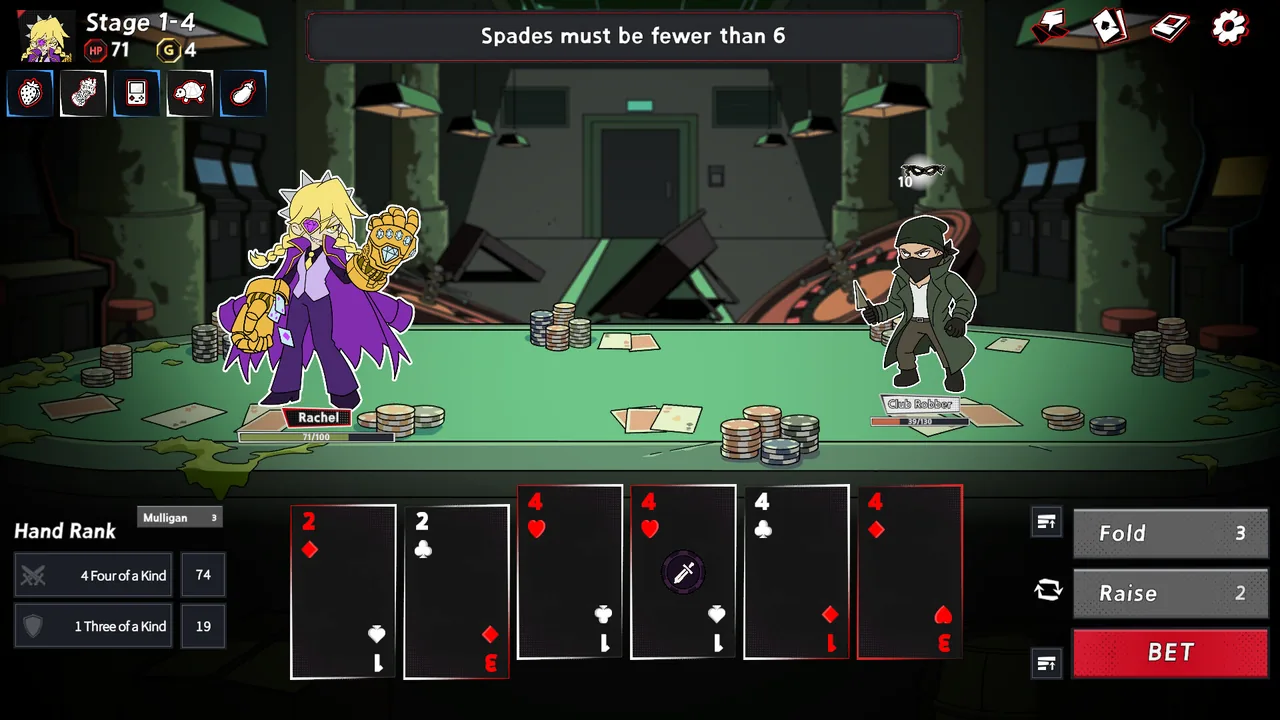
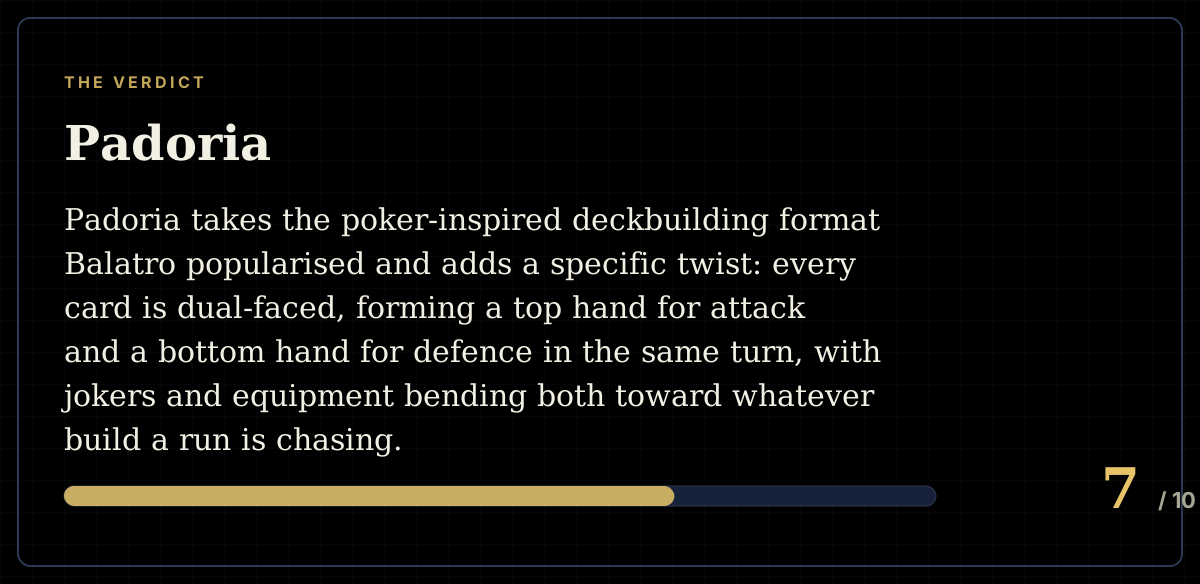
Padoria takes the poker-inspired deckbuilding format Balatro popularised and adds a specific twist: every card is dual-faced, forming a top hand for attack and a bottom hand for defence in the same turn, with jokers and equipment bending both toward whatever build a run is chasing. It released 16 July 2026, and its complete review record — six reviews, every single one positive — is written entirely in Korean. This review reads them directly rather than treating the language gap as a reason to move on, because a game this specifically well-liked, in a genre this library's readers care about, deserves the real evidence.
What emerges is a coherent, credible picture: a genuinely engaging dual-hand combat puzzle that experienced deckbuilder-roguelike players compare favourably to Slay the Spire, alongside specific, repeated complaints about weak combat feedback, an unexplained ruleset for a genre newcomers won't intuit on their own, and a difficulty spike around the game's fourth stage that the developer's own patch notes suggest was partly caused by an actual bug rather than intended design.
Biggest strengths
- The core dual-hand mechanic — every card's top number feeding an attack hand, the bottom number feeding a simultaneous defence hand — draws specific, repeated praise as a genuinely fresh puzzle layered onto a familiar poker-hand-building format
- Joker and equipment synergies open real build variety, with reviewers describing runs that lean into burst damage, defensive stalling or unconventional hand-scoring depending on what's drafted
- An experienced Slay the Spire player specifically credited Padoria as satisfying by that genre's standard, at a price they considered fair for a short-playtime review
Biggest weaknesses
- Multiple reviewers independently describe combat as lacking meaningful hit feedback — little to no animation or sound cue for landing or taking damage, making it genuinely hard to tell whether an attack connected
- The game offers minimal upfront explanation of its own systems despite being sold specifically on its poker-hand mechanics, leaving reviewers to work out joker effects and currency systems through trial and error
- Key UI elements — HP, shield values, buff and debuff indicators — are reported as too small to read comfortably during play
Who it's for: Fans of Balatro-style poker roguelikes and deckbuilders (Slay the Spire, and similar) looking for a genuinely different spin on the dual-purpose-card idea. Best suited to players comfortable learning a ruleset through experimentation, since the game currently offers little in the way of upfront explanation.
Our recommendation: Worth the low price for deckbuilder fans specifically, with realistic expectations about combat feedback that reviewers consistently describe as underdeveloped, and a genuine difficulty wall around the fourth stage that a July patch has already partly addressed.
7 / 10
Introduction
Padoria's hook is a genuine twist on a format that's become crowded since Balatro's success: every card in your deck is dual-faced, and every turn you build two poker hands simultaneously from the same cards — a top hand that attacks, and a bottom hand that defends. Released 16 July 2026 from developer DSgames, its entire review record at time of writing is six reviews, every one positive, and every one written in Korean. Rather than treat that language gap as a reason to set the game aside, this review reads all six directly, because a 100%-positive record in a genre this library's readers specifically follow is worth understanding properly rather than filed away as unreadable.
A genuinely different puzzle, well received
The dual-hand system is what reviewers keep circling back to, and the praise is specific rather than generic. One reviewer, describing themselves as new to this style of card game, wrote (in translated sense) that it has "an addictive charm that draws you in the more you play" — difficult at first, increasingly enjoyable as its systems click. A more experienced reviewer drew the genre's standard comparison directly: "A poker roguelike similar to Balatro. Cards are flipped so the upper number is used for attack, the lower number for defence... sounds like it requires a lot of thought at first, but is actually quite casual once you try it. Combining various jokers to build an efficient deck is important." The most credentialed review in this sample comes from a self-described veteran of Slay the Spire — five years played, multiple characters cleared to high ascension levels — who called the purchase satisfying for its modest price even after a short playthrough, specifically praising how varied the deck-building directions felt once the attack/defence duality opened up different strategic approaches. Runs are compact, too: one reviewer clocked a typical session at around 30 minutes, making the game easy to slot into a short break.
What holds it back, according to its own fans
The negative side of this small sample isn't really negative in tone — every review recommends the game — but each one raises specific, credible complaints worth taking seriously. The most repeated is about combat feedback: "hit motion or attack motion... seems like a lot needs to be added," wrote one reviewer, describing paper-style graphics where it's genuinely hard to tell whether an attack landed. Another made the same point with more detail, wishing specifically for damage-based hit effects and a heavier defensive sound cue when blocking a big attack — a complaint the same reviewer noted applied to Slay the Spire's own combat feel as well, suggesting a personal preference as much as a flaw unique to Padoria, but a real one nonetheless. A second recurring complaint concerns explanation: the game is marketed specifically on its poker mechanics, yet reviewers describe no in-game tutorial for how those mechanics actually work, nor for what the game's currency and joker systems do — tooltips described as too vague to reliably understand a given joker's exact effect. Readability draws a smaller but specific complaint too, with HP, shield and status-effect values described as displayed too small to track comfortably mid-fight.
The Stage 4 wall, and a patch that may have partly fixed it
The most consistent structural complaint concerns difficulty pacing: multiple reviewers independently describe stages one through three as reasonable, followed by a sharp spike — one reviewer specifically named Stage 4, another described the same jump starting in the game's third act — severe enough that at least one reviewer couldn't progress past it despite investing real effort into deck construction. What makes this worth reporting carefully rather than as a pure balance complaint is the developer's own patch history. A Version 1.1 update on 22 July explicitly reduced early-stage enemy stats "to provide a smoother early-game experience" and fixed an issue where "enemies in Stage 4 could occasionally become hidden" — the same stage reviewers name as the wall. A follow-up patch four days later fixed an additional instance of that same hidden-enemy bug. It's entirely possible the difficulty spike reviewers describe was compounded by genuinely broken encounters rather than pure balance tuning, and that the July patches have already addressed at least part of what frustrated this sample's reviewers.
Final Verdict
Padoria earns its perfect small review record on the strength of a genuinely clever central idea — turning every card into a simultaneous attack-and-defence decision is a real, well-executed twist on a format that's had a lot of imitators since Balatro's success, and reviewers who know this genre well are responding to it specifically rather than politely. The rough edges are real too: combat that reads as visually and aurally flat, a ruleset the game doesn't explain clearly for a title sold specifically on that ruleset, and a difficulty spike that may be partly a bug rather than intended design, with patches already underway to address it. At NZ$10.49, and with a developer clearly still actively tuning the game less than a month after launch, this is a good pickup for deckbuilder fans specifically — just go in ready to learn its systems the hard way, and don't expect much punch behind the numbers yet.
Pros and cons
Pros
- The core dual-hand mechanic — every card's top number feeding an attack hand, the bottom number feeding a simultaneous defence hand — draws specific, repeated praise as a genuinely fresh puzzle layered onto a familiar poker-hand-building format
- Joker and equipment synergies open real build variety, with reviewers describing runs that lean into burst damage, defensive stalling or unconventional hand-scoring depending on what's drafted
- An experienced Slay the Spire player specifically credited Padoria as satisfying by that genre's standard, at a price they considered fair for a short-playtime review
- Runs are compact — around 30 minutes according to one reviewer — making it easy to fit in a single session
- The developer shipped two patches within ten days of launch, including a fix for enemies becoming invisible at Stage 4, which may have been contributing to reviewers' difficulty complaints at that exact point in the game
Cons
- Multiple reviewers independently describe combat as lacking meaningful hit feedback — little to no animation or sound cue for landing or taking damage, making it genuinely hard to tell whether an attack connected
- The game offers minimal upfront explanation of its own systems despite being sold specifically on its poker-hand mechanics, leaving reviewers to work out joker effects and currency systems through trial and error
- Key UI elements — HP, shield values, buff and debuff indicators — are reported as too small to read comfortably during play
- A sharp difficulty spike is reported consistently around the game's fourth stage or third act, severe enough that at least one reviewer couldn't progress past it; the developer's own July patch notes describe a related bug (enemies occasionally turning invisible at that exact stage) that may explain part of the jump
- This review's entire evidence base is six reviews, all in one language — a genuinely small sample that should be read as an early, promising signal rather than a settled long-term verdict
Screenshots
-
PadoriaImage: DSgames via Steam -

PadoriaImage: DSgames via Steam -
PadoriaImage: DSgames via Steam -
How the review scores each part of the gameWanderer Editorial -
The essentials at a glanceWanderer Editorial -
The short versionWanderer Editorial