Game review
Monster Train 2
8 / 10
- Developer
- Shiny Shoe
- Publisher
- Big Fan Games
- Released
- 21 May 2025
- Platforms
- Windows
- Genre
- Roguelike Deckbuilder
- Monetisation
- One-off premium purchase, no DLC, no in-app purchases and no premium currency
- Players
- None. Single-player only, with no leaderboard, co-op or shared-progress feature
The short version
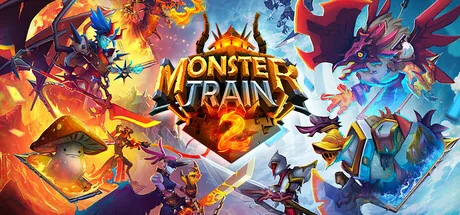
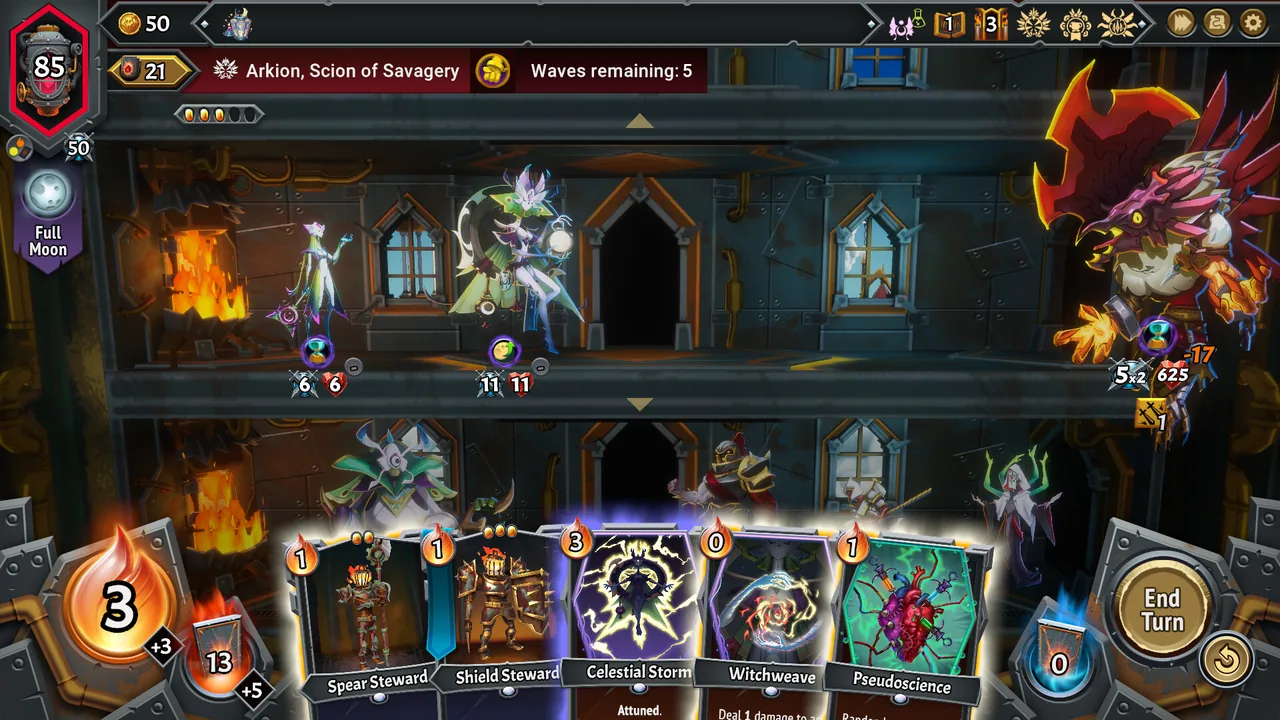
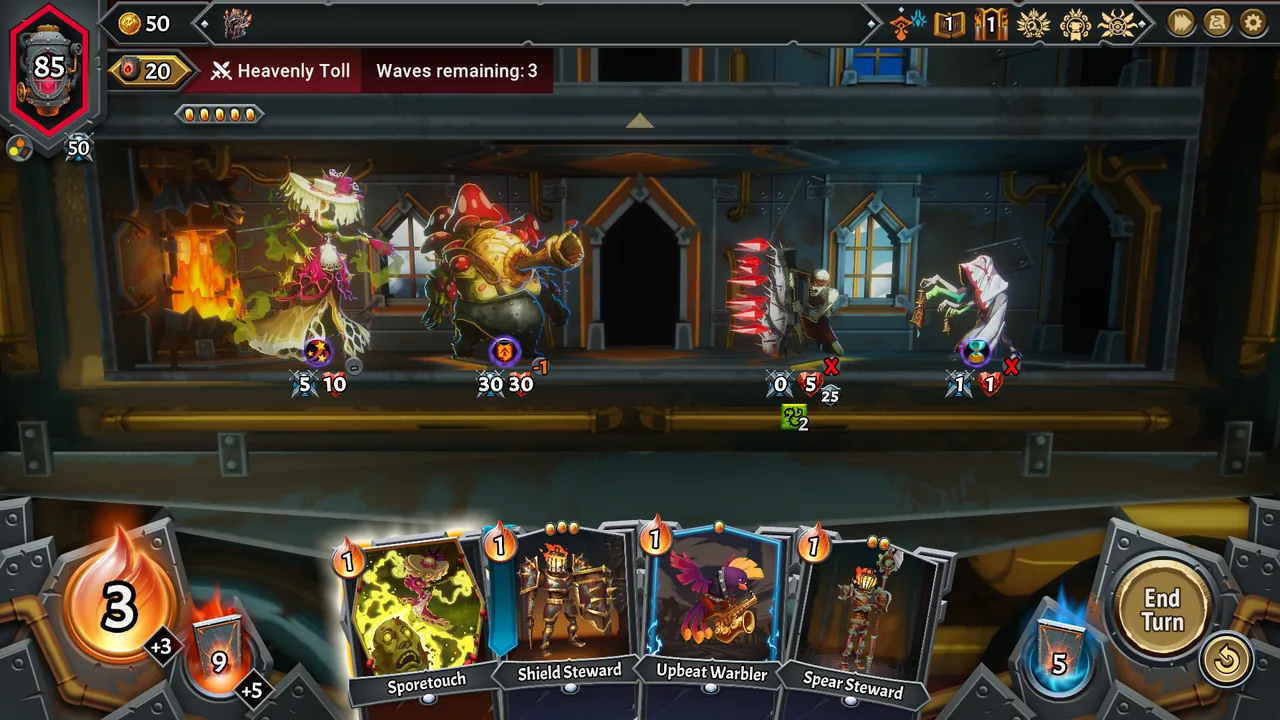
Monster Train 2 keeps its predecessor's central idea — defending three stacked floors of a train from enemies pushing up from a rising inferno — and builds outward: more clans, new Room and Equipment systems, additional Pyres, and a genuinely bigger scope than the original ever attempted. Most players, including a large share of returning veterans, describe it as a straightforward improvement, and a 95% positive score across ten thousand reviews backs that up. What keeps this from a clean, uncomplicated recommendation is a specific and detailed counter-argument from some of the original's most devoted fans — players with a thousand-plus hours in Monster Train 1 — who describe reduced difficulty options, at least one specifically unbalanced boss, and writing that trades the first game's tone for something several reviewers find actively worse. Both pictures are true at once, and which one applies to a given buyer depends heavily on exactly what they loved about the original.
Biggest strengths
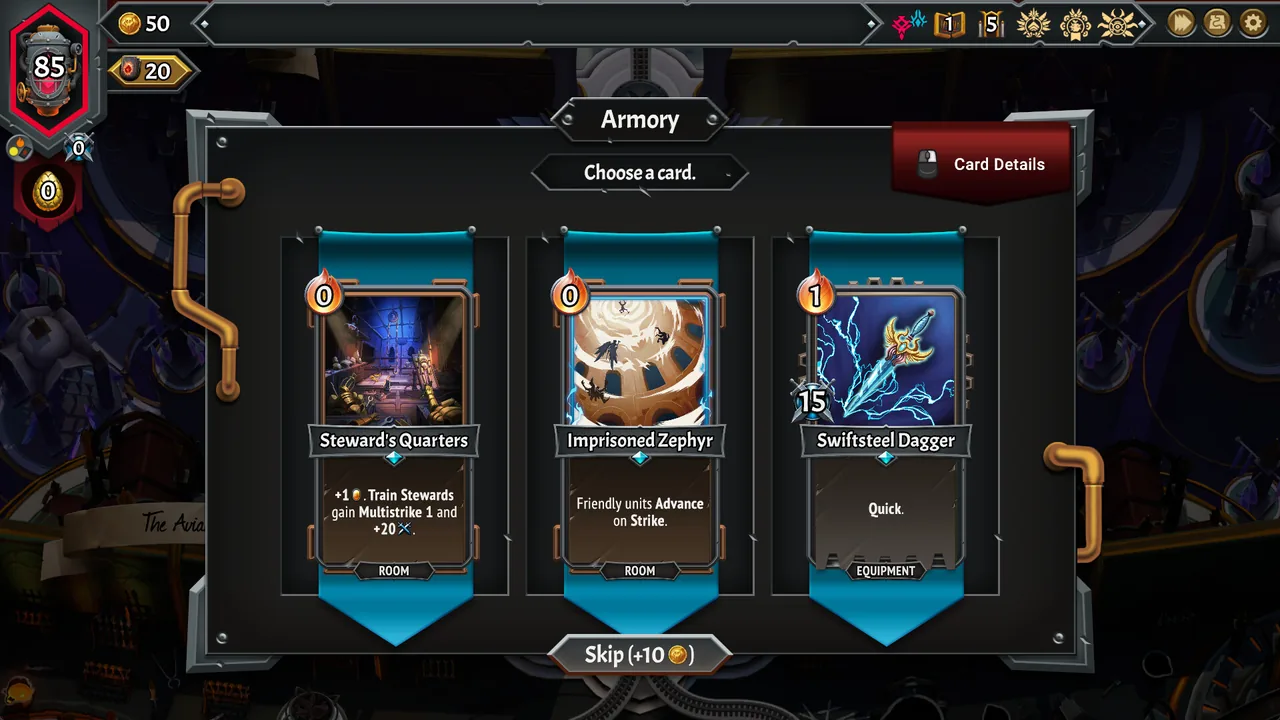
- New Rooms and Equipment systems give deckbuilding and floor-defence genuinely more strategic texture than the original's already-respected formula
- Scope is substantially larger across the board — more clans, more Pyres, more enemy variety — without abandoning the vertical three-floor structure that made the original distinctive
- Post-launch support has been real and sustained, with a major "Destiny of the Railforged" content update running from February through April 2026, a thriving mod scene, and an actively celebrated one-year anniversary
Biggest weaknesses
- A specific, recurring complaint from long-time veterans holds that difficulty and challenge options were reduced relative to the original, making runs feel less interesting to players who valued that tension
- At least one new boss — Corruption Seraph — draws repeated, pointed criticism as "completely unbalanced" and among the least fun mechanics in the genre, according to multiple detailed reviews
- Several reviewers with hundreds or thousands of hours in Monster Train 1 describe the writing and worldbuilding as a genuine step down, with one describing added narrative content around character backstory as landing badly compared to the original's tone
Who it's for: Roguelike deckbuilder fans generally, and Monster Train veterans who want more scope and content rather than a tighter, more focused rebalance of exactly what worked before.
Our recommendation: A confident buy for players new to the series or open to more mechanical complexity than the original offered; approach with slightly more caution if what you loved about Monster Train 1 was specifically its difficulty tuning and tone, since a real subset of veterans report those specific things got worse here.
8 / 10
Monster Train's single best idea — three stacked floors of a train to defend at once, heat rising from a furnace at the bottom while enemies push up toward the pyre at the top — was distinctive enough five years ago to help the game stand apart in an already-crowded genre. Monster Train 2 keeps that structure intact and builds substantially outward from it: new Room and Equipment systems, additional playable Pyres, more clans, a bigger enemy roster. Ten thousand reviews in, 95% of players recommend it. What makes this sequel worth examining closely rather than simply confirming that verdict is a genuinely detailed, well-articulated counter-argument running through a meaningful slice of the negative reviews — one that comes specifically from the players who know the original best.
What the sequel actually adds
The scope increase is real and substantial rather than cosmetic. New Rooms and Equipment systems give players more to build around beyond the original's card-and-unit economy, and one reviewer frames this as a logical evolution rather than bloat: bigger card pools, deeper synergies, and enough new mechanical space that veterans of the first game aren't just replaying a reskinned version of what they already mastered. Several reviews describe the change in almost the same terms — "Monster Train, but bigger," "the first game, but more" — treating that straightforward escalation as exactly what a sequel to a beloved roguelike should deliver. One especially detailed review calls it "the most standard kind of sequel" and means it as high praise: no early-access limbo, no half-measures, just the original formula expanded with genuine confidence.
Presentation-level care shows up in small, specific details too. More than one reviewer singles out something easy to miss: right-clicking to inspect a card surfaces the name of the artist who drew it, a small gesture of craft-attribution that several players call out unprompted as the kind of thing that shows genuine care went into the whole package.
Where the original's biggest fans push back
The counter-narrative here isn't vague nostalgia — it's specific, and it comes disproportionately from players with genuinely enormous investment in the first game. One reviewer opens by noting 1,500-plus hours in Monster Train 1 and roughly 40 hours in the sequel before deciding they were likely done with it. Another, with 700 hours in the original, describes the sequel as "less fun the more you play it," specifically pointing to card unlocks that dilute the pool with unhelpful options rather than meaningfully expanding strategic depth. A third, comparing the two games directly, argues that "base system changes make the gameplay much less interesting" and that difficulty and challenge options are meaningfully reduced relative to what the original offered.
One specific boss draws unusually concentrated criticism across multiple independent reviews: Corruption Seraph, described by one player as "completely unbalanced" and "easily the most unfun mechanic I've experienced across the genre." When a single named encounter shows up repeatedly, unprompted, across otherwise-unrelated negative reviews, that's a stronger signal than a single frustrated player having a bad run — it points to a genuine design rough edge rather than a skill issue.
Writing and tone are the third, more subjective front of the disagreement. Several long-time fans describe Monster Train 2's narrative additions as a step down from the original's voice, with one review specifically criticising new character-backstory content — framed around a father figure and feelings of personal inadequacy — as landing badly against the tone the first game had established. This is inherently the most subjective of the complaints raised here, but its recurrence across multiple detailed reviews suggests it's a real design choice being reacted to consistently, not an isolated taste mismatch.
Two honest pictures, both accurate
It would be a mistake to read the above as evidence the aggregate 95% score is somehow wrong or inflated. The two pictures coexist because they're describing different things: for players coming to the series fresh, or veterans who wanted more of what Monster Train 1 offered without needing it to stay identical, Monster Train 2 by most accounts genuinely delivers — bigger, more mechanically rich, still built on the same distinctive three-floor foundation. For a specific, vocal subset of the original's most dedicated players, the exact things that made the first game click — its tighter difficulty curve, a tone they'd grown attached to, boss encounters they trusted to be fair — took a step in a direction they didn't want, even as the sequel technically offers more of nearly everything else.
Post-launch support cuts in the sequel's favour regardless of which camp a player falls into. The "Destiny of the Railforged" content update ran from February through April 2026, nearly a year after launch, and the game's modding community was active enough to earn its own spotlight post in July 2026 — this is a title Shiny Shoe and Big Fan Games have kept building rather than one that shipped and went quiet.
Where this leaves a buyer
At NZ$35.99, Monster Train 2 is priced as a full sequel rather than an expansion, and for most players — new to the series or otherwise — the review evidence suggests that price is well justified by scope and continued support alone. The one group worth pausing before buying: if what you specifically loved about the original was its difficulty tuning or its particular tone, read a handful of the detailed veteran reviews before committing, because their specific complaints are consistent enough across independent accounts to be a real signal rather than outlier grumbling. For everyone else, this reads as a confident, well-supported sequel doing exactly what most sequels promise and rarely deliver: more of a good thing, built with real care.
Pros and cons
Pros
- New Rooms and Equipment systems give deckbuilding and floor-defence genuinely more strategic texture than the original's already-respected formula
- Scope is substantially larger across the board — more clans, more Pyres, more enemy variety — without abandoning the vertical three-floor structure that made the original distinctive
- Post-launch support has been real and sustained, with a major "Destiny of the Railforged" content update running from February through April 2026, a thriving mod scene, and an actively celebrated one-year anniversary
- Small presentation details draw specific praise, like the ability to inspect a card and see the name of the artist who drew it — the kind of attention to craft that shows up throughout
- Even players who prefer the original generally describe Monster Train 2 as competent rather than badly made — the disagreement is about direction, not quality
Cons
- A specific, recurring complaint from long-time veterans holds that difficulty and challenge options were reduced relative to the original, making runs feel less interesting to players who valued that tension
- At least one new boss — Corruption Seraph — draws repeated, pointed criticism as "completely unbalanced" and among the least fun mechanics in the genre, according to multiple detailed reviews
- Several reviewers with hundreds or thousands of hours in Monster Train 1 describe the writing and worldbuilding as a genuine step down, with one describing added narrative content around character backstory as landing badly compared to the original's tone
- Some players report the core loop becoming "less fun the more you play it," specifically citing unhelpful card unlocks that dilute rather than deepen the deckbuilding over time
- As a straight sequel rather than a rebalance or expansion of the original, players who were fully satisfied with Monster Train 1's scope may find less reason to switch than the reviews suggest at a glance
Screenshots
-
Monster Train 2Image: Big Fan Games via Steam -
Monster Train 2Image: Big Fan Games via Steam -
Monster Train 2Image: Big Fan Games via Steam -
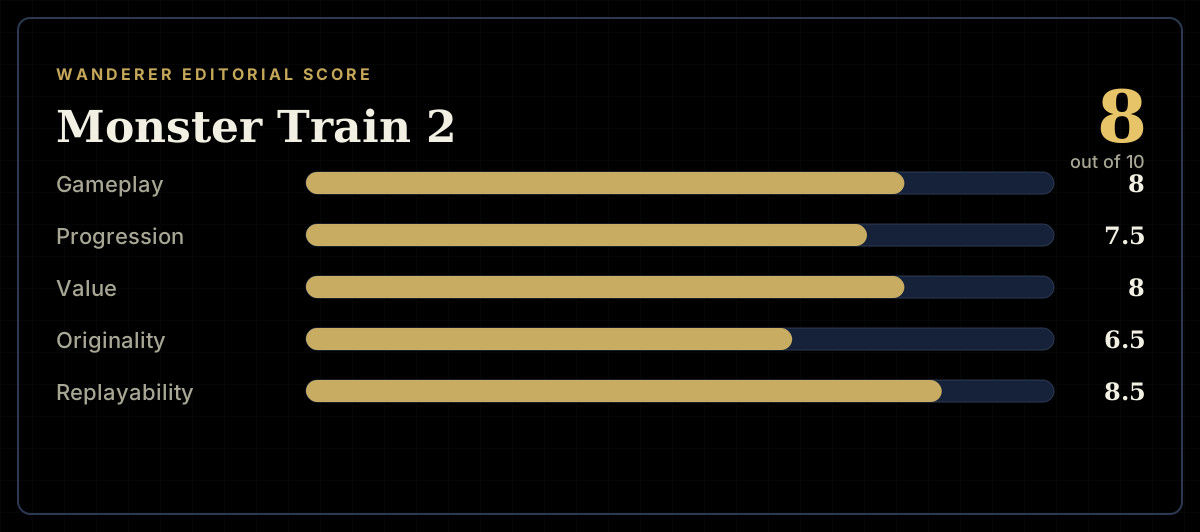
How the review scores each part of the gameWanderer Editorial -
The short versionWanderer Editorial