Game review
Gemblades
7 / 10
- Developer
- Ace Benoff
- Publisher
- Ace Benoff
- Released
- 7 August 2026
- Platforms
- Windows
- Genre
- Deckbuilder
- Monetisation
- One-time purchase. No microtransactions or DLC listed on the store page.
- Players
- Single-player only, with Steam leaderboards for competitive scoring.
The short version
Gemblades is a single-player deckbuilder that draws directly from tabletop deckbuilders Ascension and Dominion: draft a deck of gem-powered heroes called Gemblades, spend resources drawn from your own deck to recruit stronger cards from a shared row, and race to a victory-point target before your turns run out. Solo developer Ace Benoff released it 7 August 2026 for NZ$5.99, and it opened to a near-unanimous Positive score -- 36 of 37 English reviews recommend it, with real board-game fans among its most enthusiastic advocates.
The one consistent complaint, raised across otherwise glowing reviews rather than in a separate negative camp, is that the game's five difficulties are currently too easy to clear. "Finished all 5 difficulties in less than an hour," reads one review. "Hopefully more gets added to up the difficulty as right now it seems almost impossible to lose."
Biggest strengths
- A clean, faithful translation of the Ascension/Dominion tabletop deckbuilding pattern that real board-game fans specifically single out as a "must buy" for that audience
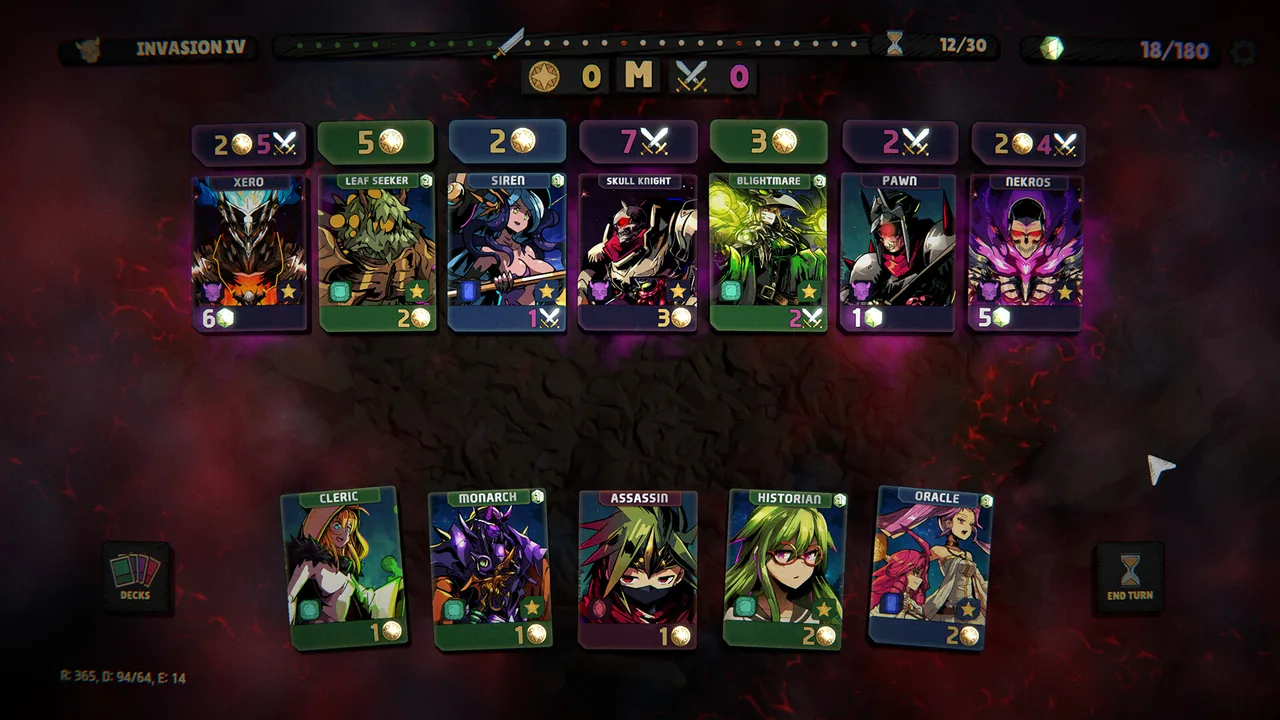
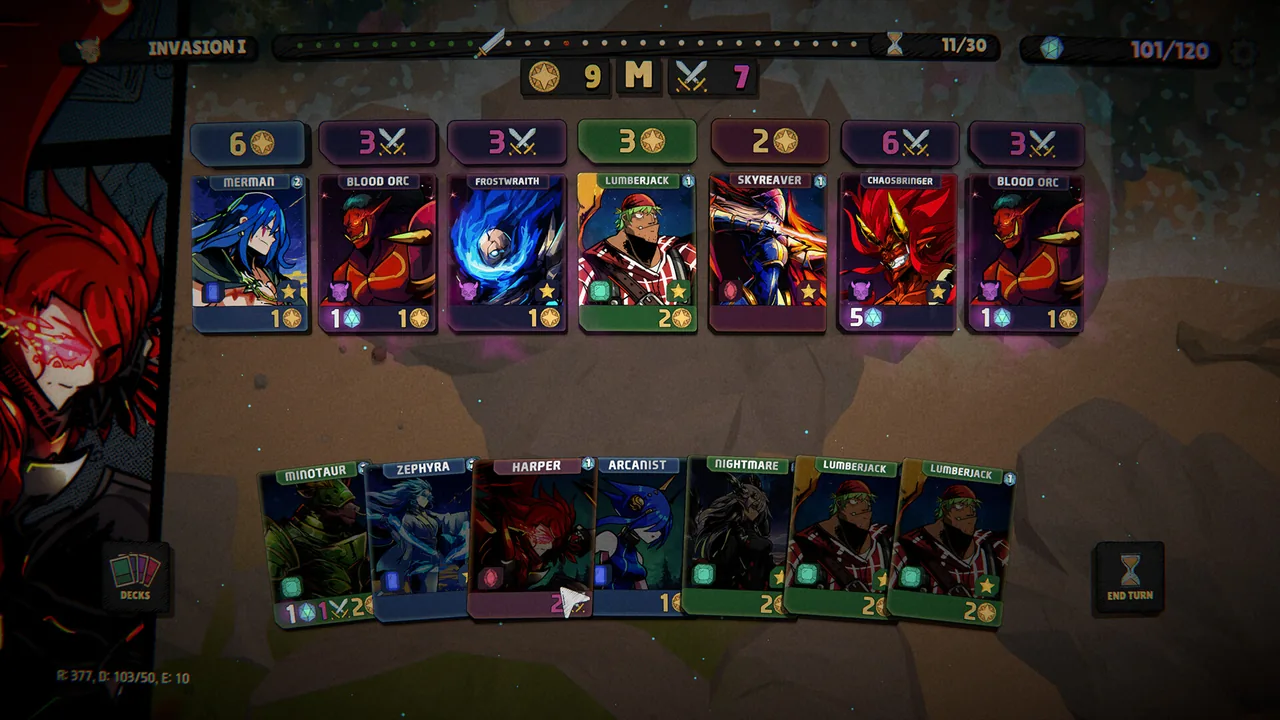
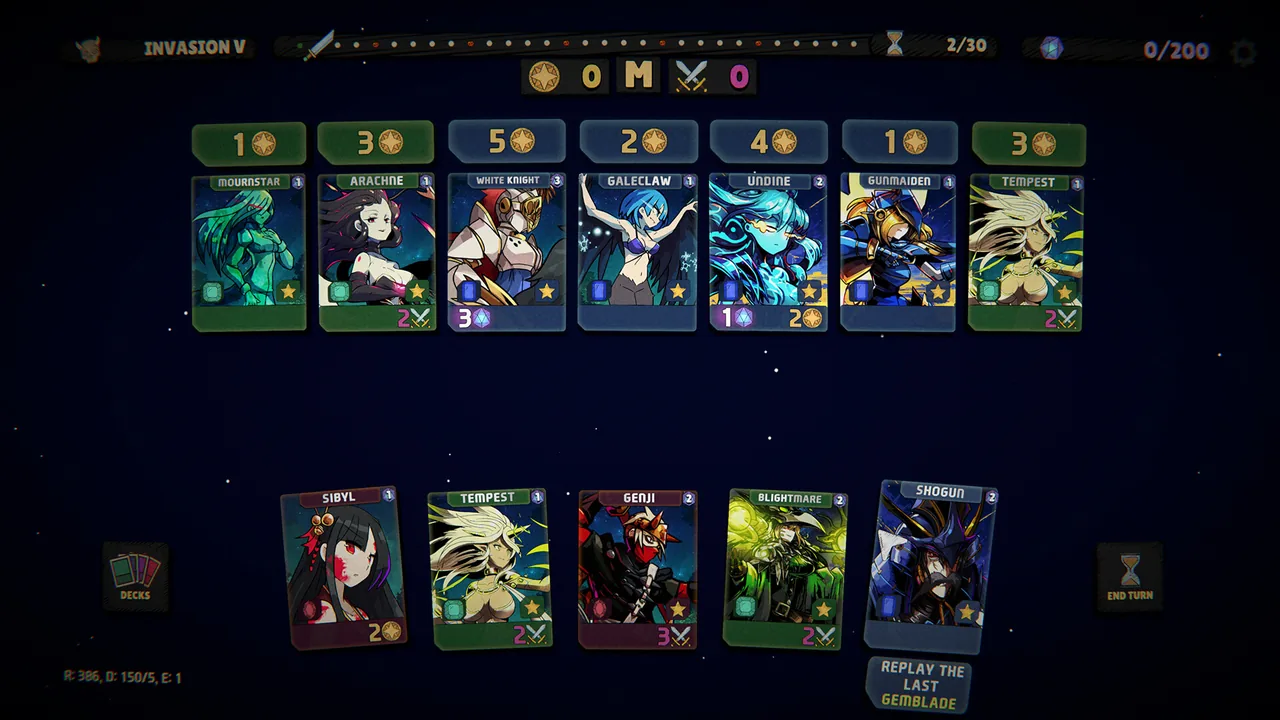
- Polished presentation reviewers describe repeatedly as "pristine," with distinct visual and thematic identities for each of the game's Gemtypes
- A responsive, actively engaged solo developer, praised by name-adjacent terms across multiple reviews for quickly addressing bugs and taking suggestions on Discord
Biggest weaknesses
- The current five difficulties are widely reported as too easy, with multiple reviewers independently describing clearing everything in under an hour and calling the game "almost impossible to lose" once a competent deck comes together
- At least one detailed reviewer reports finding a dominant, unintended strategy -- thin-deck builds -- that the developer would need to specifically balance around to keep other approaches viable
- Unlocking new cards is described by one reviewer as feeling like "such a chore" relative to how fun the actual deckbuilding is, a friction point between the game's meta-progression and its core loop
Who it's for: Fans of tabletop deckbuilders -- Ascension, Dominion, Star Realms -- who want a clean, faithful digital adaptation of that specific play pattern rather than a roguelike deckbuilder in the Slay the Spire mould. Not for anyone wanting deep long-term difficulty or a large content library on day one; several reviewers report clearing everything currently available within a handful of hours.
Our recommendation: An easy recommendation at NZ$5.99 for tabletop-deckbuilder fans specifically, with a genuinely responsive solo developer already engaging with community feedback on Discord -- just go in knowing the current difficulty ceiling is low and the endgame is mostly about leaderboard chasing rather than a long single-player content tail.
7 / 10
Gemblades doesn't try to reinvent the deckbuilder -- it tries to nail a specific, well-established tabletop feel that most digital adaptations reach for and miss. Draft a deck of gem-powered heroes called Gemblades, spend resources pulled from your own deck each turn to recruit stronger cards from a shared central row, and race to hit a victory-point "gem" target within a set number of turns rather than grinding down an opponent's health bar directly. Solo developer Ace Benoff released it 7 August 2026 for NZ$5.99 (checked 13 August 2026, on a launch discount), and it opened to a near-unanimous Positive score -- 36 of 37 English reviews recommend it, with the game's sharpest praise coming specifically from players who know the board games it's drawing from.
Getting the feel right, according to people who'd know
"It really is Ascension, which is a pretty good thing to be!" reads one review, going on to call it "solitaire style" and praising "a cool variety of cards to think about." That's not faint praise -- Ascension is a well-regarded, well-loved tabletop deckbuilder, and translating its specific feel into a satisfying solo digital game is a real design achievement rather than a given. A separate reviewer, describing themselves as "a big fan of Dominion, and especially Ascension, as well as roguelike deck builders of all sorts," calls Gemblades a game that's "really scratching an itch very specific for me." A third simply states: "if you like boardgames like Ascension or Dominion, this is a must buy!" -- adding praise for a developer who is "active on discord and quickly responds to bugs and suggestions," a detail echoed across several other reviews about the same responsiveness.
The presentation earns consistent credit too, without much qualification: "the quality of the visuals and audio is pristine," reads one review; another calls it "beautiful art-style" with "good music" and "lots of characters." For a NZ$5.99 solo-developer release, that level of polish drawing repeated, specific praise -- rather than being damned with faint "decent for the price" language -- is a genuinely good sign about where the developer's effort went.
Too easy, almost universally
The one complaint that shows up again and again isn't really a separate criticism from the praise -- it's baked into the same reviews, raised by players who clearly like what's here and want more of a challenge from it. "Fun game but finished all 5 difficulties in less than an hour," reads one review. "Hopefully more gets added to up the difficulty as right now it seems almost impossible to lose." A more detailed review reaches a similar conclusion after longer play: "4 hours of fun that are definitely worth the $5. But only 4 stars because the game clearly needs more content and difficulty updates. I already reached Ascension 4 and started finding the game a bit stale." That same reviewer offers a specific, mechanically-informed diagnosis rather than a vague "make it harder" request: "I feel like the devs need to find a way to make sure thin-deck strategies aren't always the best choice" -- identifying a specific dominant strategy the current balance rewards too consistently. A separate long-session reviewer, over 24 hours in, reaches the same broad conclusion from a different angle: "at the current time, I feel like the difficulty is very low, though there are a LOT of card unlocks which add a lot more depth to the game in your pursuit of leaderboard stardom" -- suggesting the leaderboard chase, rather than the included difficulty tiers, is currently doing most of the work keeping engaged players around.
A smaller, more specific complaint concerns the unlock system's pacing relative to the core loop's fun: "deck building is fun but why does trying to unlock new cards feel like such a chore in this game," reads one review -- a meta-progression friction point distinct from the difficulty complaint, worth knowing if grinding toward new content rather than just replaying with what's already unlocked matters to you.
The achievement data corroborates the "too easy, deep leaderboard chase" pattern directly: the main progression achievements (recruiting your first card, breaking a boss, clearing the early invasion tiers) sit comfortably above 60-80% completion, while true mastery goals -- collecting every foil variant, defeating a thousand bosses -- sit at a fraction of a percent, exactly the shape you'd expect from a short, currently-easy core game with a long optional grind bolted on for leaderboard-focused players.
7.0 out of 10. Gemblades is a genuinely well-crafted digital deckbuilder that earns real trust from players who know its tabletop inspirations, backed by a responsive solo developer and presentation well above what its NZ$5.99 asking price would suggest. Its single consistent weakness -- a current difficulty ceiling multiple reviewers describe clearing within an hour or two -- is a fixable, already-acknowledged problem rather than a fundamental design flaw, and the developer's demonstrated responsiveness elsewhere is a good sign it'll be addressed. A confident, cheap pickup for deckbuilder and board-game fans today, worth revisiting for a difficulty and content check once the developer has had time to respond to that exact, consistent piece of community feedback.
Pros and cons
Pros
- A clean, faithful translation of the Ascension/Dominion tabletop deckbuilding pattern that real board-game fans specifically single out as a "must buy" for that audience
- Polished presentation reviewers describe repeatedly as "pristine," with distinct visual and thematic identities for each of the game's Gemtypes
- A responsive, actively engaged solo developer, praised by name-adjacent terms across multiple reviews for quickly addressing bugs and taking suggestions on Discord
- Genuinely cheap for the amount of polish on display, with multiple reviewers calling four hours of play "definitely worth" the launch price even while asking for more content
- Steam leaderboards give the tightly-scoped core loop a real, ongoing reason to keep optimising runs after the five included difficulties are cleared
Cons
- The current five difficulties are widely reported as too easy, with multiple reviewers independently describing clearing everything in under an hour and calling the game "almost impossible to lose" once a competent deck comes together
- At least one detailed reviewer reports finding a dominant, unintended strategy -- thin-deck builds -- that the developer would need to specifically balance around to keep other approaches viable
- Unlocking new cards is described by one reviewer as feeling like "such a chore" relative to how fun the actual deckbuilding is, a friction point between the game's meta-progression and its core loop
- A very thin negative-review sample (just one English-language negative among 37 total) means this review has limited critical counterweight to draw on beyond complaints raised inside otherwise positive reviews
Screenshots
-
GembladesImage: Ace Benoff via Steam -
GembladesImage: Ace Benoff via Steam -
GembladesImage: Ace Benoff via Steam -
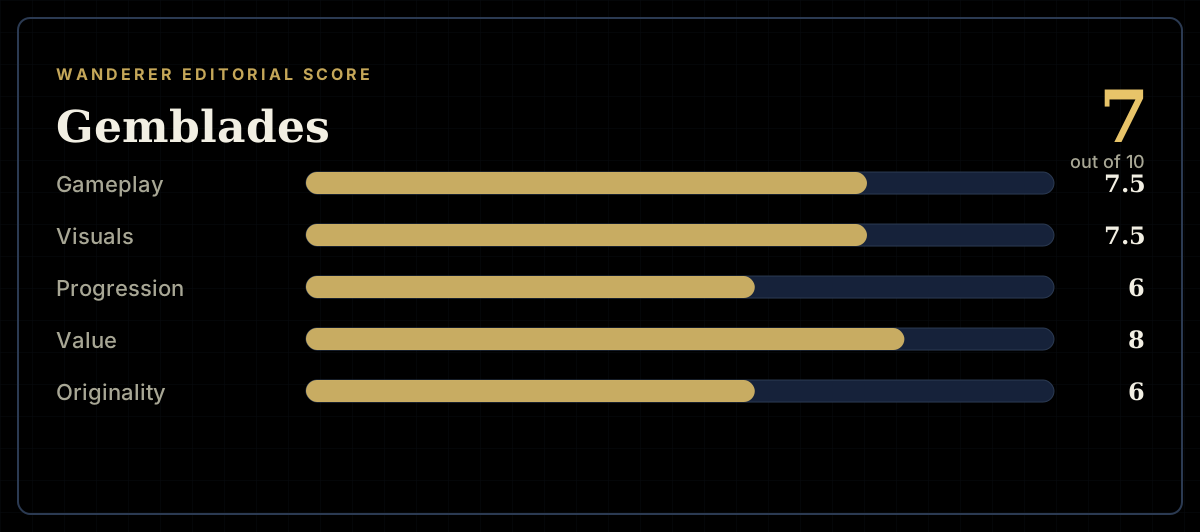
How the review scores each part of the gameWanderer Editorial -
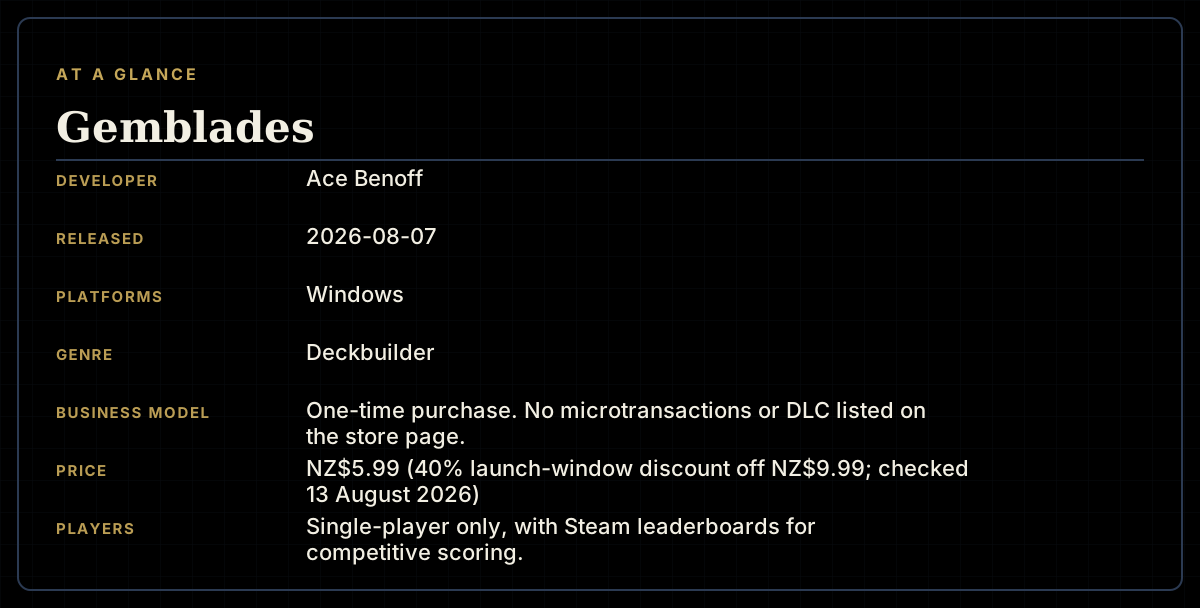
The essentialsWanderer Editorial -
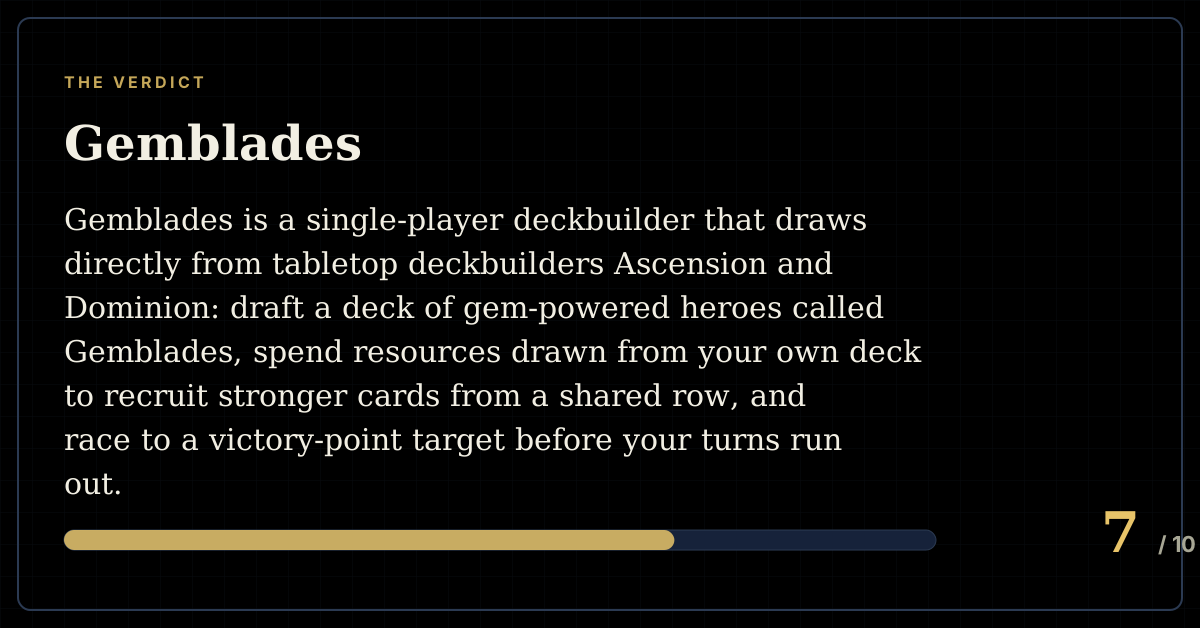
The short versionWanderer Editorial