
Game review
Nadir: A Grimdark Deckbuilder
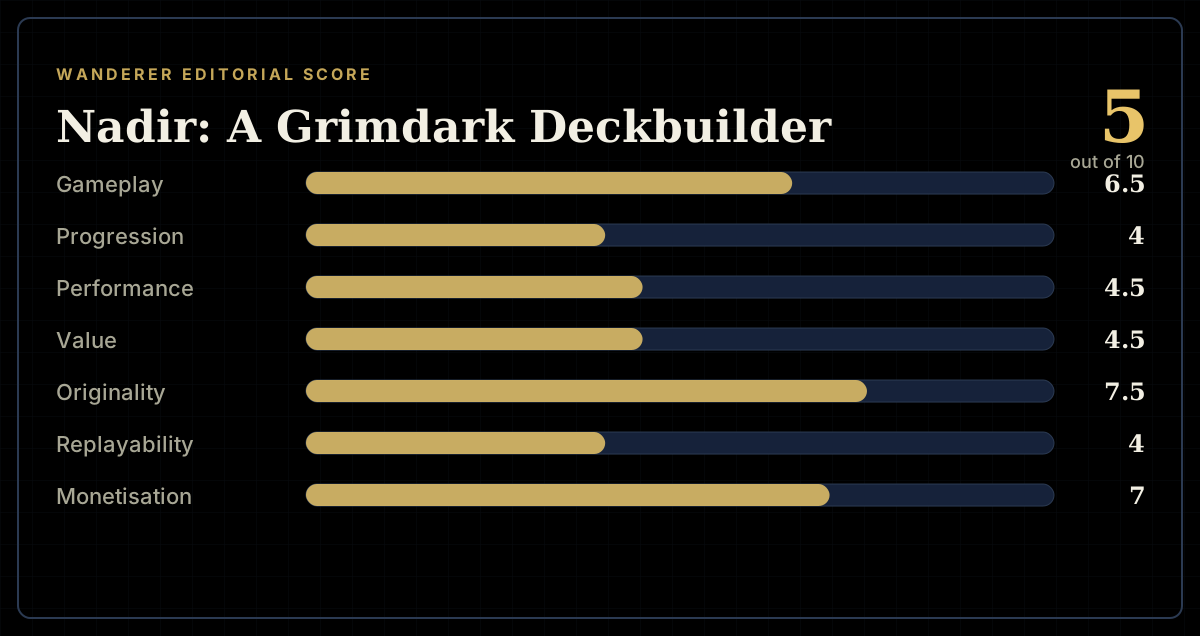
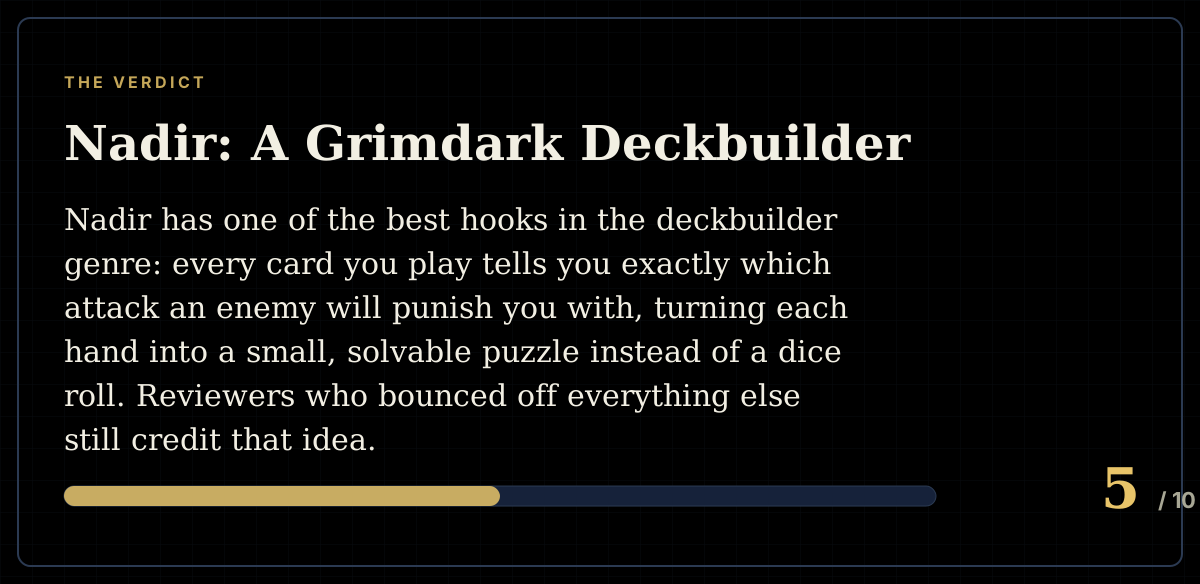
5 / 10
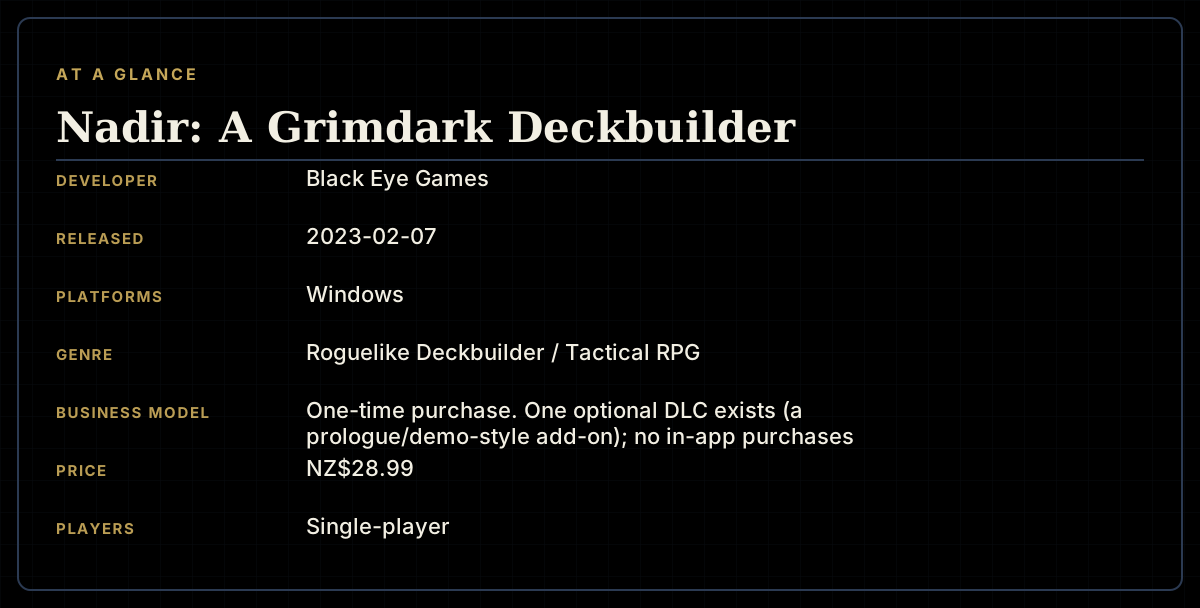
- Developer
- Black Eye Games
- Publisher
- Black Eye Games
- Released
- 7 February 2023
- Platforms
- Windows
- Genre
- Roguelike Deckbuilder / Tactical RPG
- Monetisation
- One-time purchase. One optional DLC exists (a prologue/demo-style add-on); no in-app purchases
- Players
- Single-player
The short version
Nadir has one of the best hooks in the deckbuilder genre: every card you play tells you exactly which attack an enemy will punish you with, turning each hand into a small, solvable puzzle instead of a dice roll. Reviewers who bounced off everything else still credit that idea. What surrounds it is a game that left Early Access on 7 February 2023 clearly unfinished — missing death animations, broken balance, roughly three to five hours of real content according to detailed negative reviews — and has not received a single update since a hotfix five days later. Steam's own achievement data backs this up: the final-boss achievements sit at 3–4% completion, and review volume has collapsed from 56 in 2023 to 4 so far in 2026. This is a genuinely clever idea inside a game its own developer appears to have walked away from.
Biggest strengths
- A genuinely original core mechanic — you see and choose the enemy's next attack rather than guessing, which several reviewers single out as unlike anything else in the genre
- Strong, consistent grimdark art direction that reviewers praise even when they dislike the game
- Honest, one-time pricing with no microtransactions and only a single, non-essential DLC
Biggest weaknesses
- No news post or patch since 10 February 2023 — three and a half years of silence on a game multiple reviewers call unfinished at launch
- Achievement data shows a steep drop-off: the four final-boss achievements sit at 2.9%–4.1% completion, well below the 13.7% median across all 24
- Review volume has collapsed year over year (56 in 2023, 34 in 2024, 6 in 2025, 4 so far in 2026) and what little sentiment remains has trended more negative, not less
Who it's for: Deckbuilder fans curious about a genuinely different core mechanic who are willing to accept an unfinished, unsupported game for a low price — not a fit for anyone who wants a complete roguelike with a real end-game.
Our recommendation: Wait for a deep sale, and know what you're buying.
5 / 10
The pitch
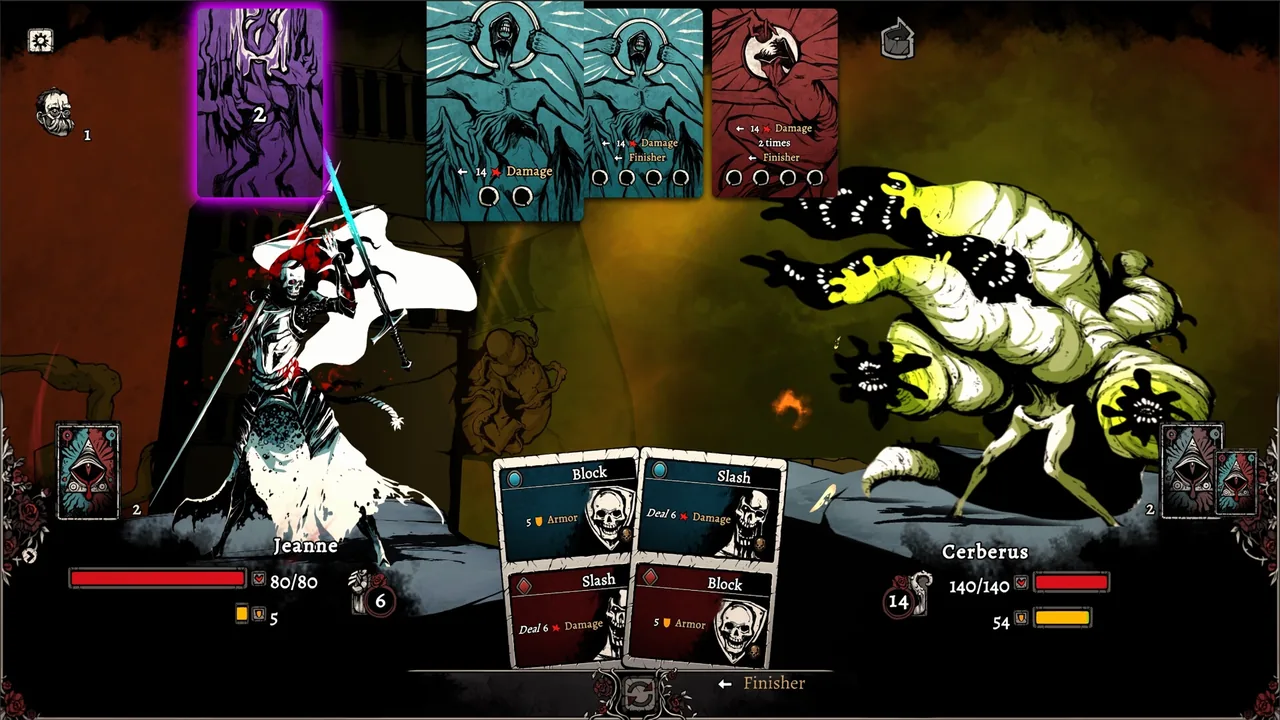
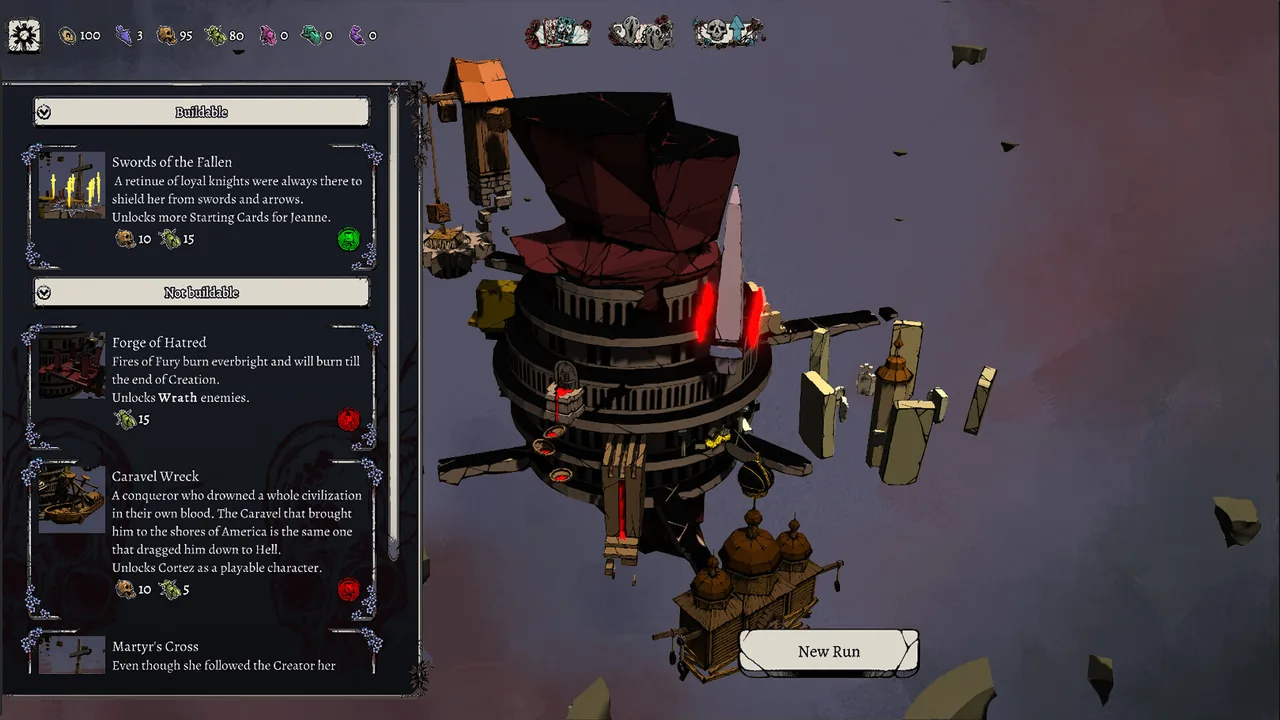
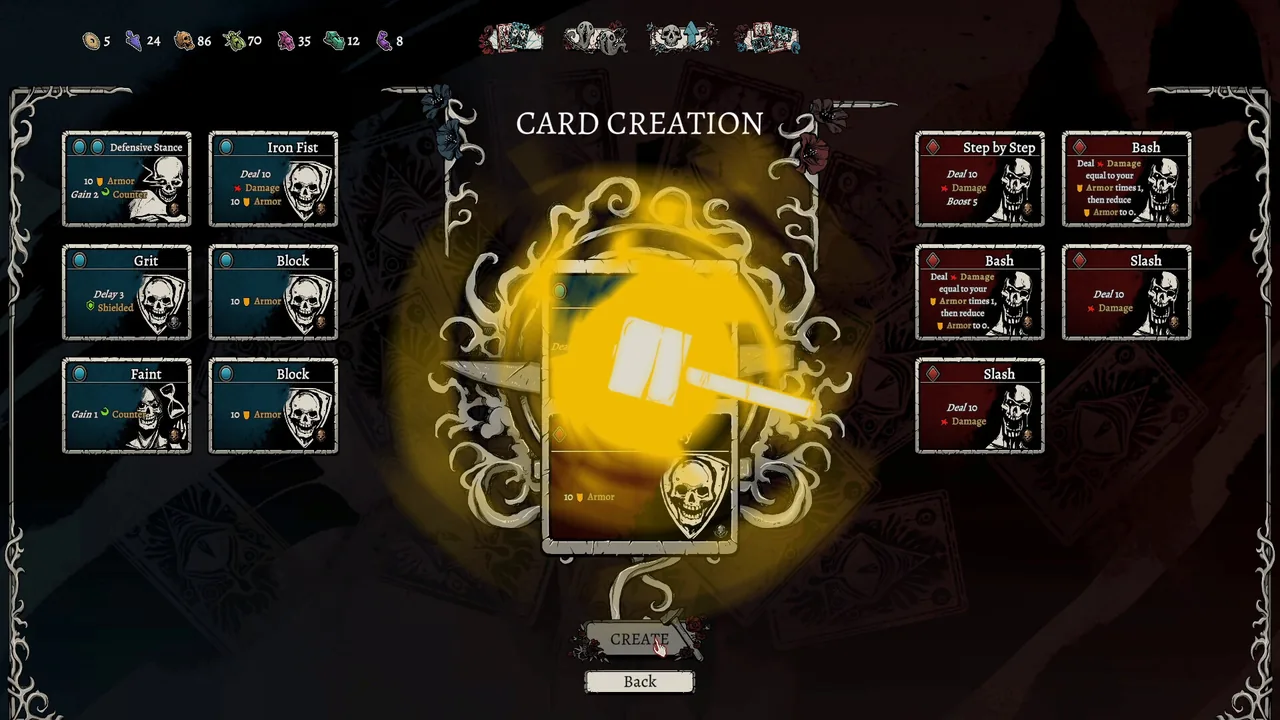
Nadir is a roguelike deckbuilder set in a grim, demon-infested underworld: you build a deck, descend through encounters, and gradually grow a home base between runs. The twist that distinguishes it from Slay the Spire and its many imitators is combat itself — cards cost you an enemy's next attack, which is shown and telegraphed in advance, so playing a hand means choosing which hit you're willing to take rather than reacting to a random one. You can also craft your own cards from components you find, letting you build genuinely idiosyncratic decks rather than picking from a fixed pool.
The idea works. The game around it doesn't finish the job
It's rare for a review corpus to agree this closely across three years of dramatically different opinions: reviewers who loved Nadir and reviewers who couldn't recommend it both single out the core "predict the attack" system as smart and distinct. One of the most-upvoted reviews calls it "a very thinky kind of deckbuilder, with a very intriguing card playing system," while a detailed critical review that walks through the game's problems in depth still opens by calling the concept "clever" before explaining why the execution falls short.
What breaks the experience, according to the negative-review corpus, isn't the core loop — it's everything built around it. Missing death animations and "jarring instant switches" between screens are called out repeatedly. One widely-upvoted review that specifically catalogues its playtime puts real content at three to five hours before the game starts repeating itself with an "outside growth mechanism" standing in for new content. Balance is a recurring complaint too: one reviewer with real playtime describes it as "SO broken that the game offers no challenge," while others report runs stalling out entirely against later bosses.
Three and a half years of silence
Nadir left Early Access on 7 February 2023. Steam's news feed for the game shows a post-launch hotfix three days later, a Spring Sale announcement in March 2023, and nothing since — no balance patches, no content drops, no acknowledgement of the "unfinished" complaints that were already being written in the game's first week. Black Eye Games' own Steam developer page lists no release of any kind after Nadir, so there's no visible evidence the team simply moved on to a new project either; the honest, verifiable fact is silence, not a stated cause. Multiple reviews describe the game outright as "abandonware," and while this review can't confirm the studio's status beyond what Steam shows, the pattern — a 1.0 launch with acknowledged rough edges, followed by total quiet — is exactly what those reviewers are reacting to.
What the numbers say about how far people get
Steam's achievement data is the clearest evidence that the "unfinished" read is fair rather than exaggerated. Of Nadir's 24 achievements, the most-earned sits at 55.8% (a basic resource-gathering task), and the median across all 24 is 13.7%. The bottom of the list is where it gets stark: the achievements for defeating the game's named end-bosses — Lilith, Minos, King, and Chernobog — sit at 4.1%, 4.0%, 3.0% and 2.9% respectively. Whatever the intended difficulty curve was, only a small fraction of buyers are reaching the content those bosses gate.
Review volume tells the same story from a different angle. English reviews per year: 56 in 2023, 34 in 2024, 6 in 2025, and 4 so far in 2026 — a game that's fading from view rather than building an audience, with what little recent sentiment exists skewing more negative than the lifetime 52.9% positive score suggests.
Value and monetisation
There's nothing predatory here — Nadir is a single NZ$28.99 purchase with one optional DLC and no in-app purchases of any kind, which is worth crediting even in an otherwise critical review. The value problem isn't monetisation design, it's that several detailed reviews put genuine content at three to five hours, which is a hard sell at full price for a deckbuilder with much more complete competitors — Slay the Spire, Balatro and Monster Train all exist at similar or lower price points with none of the "abandoned mid-development" baggage.
Verdict
Nadir deserves credit it rarely gets in its own review section: the core "predict the enemy's attack" mechanic is a genuinely fresh idea in a crowded genre, and the art direction is strong enough that even its harshest critics compliment it. But a game that left Early Access acknowledging it needed more time, then went silent for three and a half years while its achievement data shows almost nobody finishing it, cannot be recommended at full price. If the concept intrigues you, wait for a deep discount and go in knowing you're buying a clever three-to- five-hour idea, not a complete game.
Pros and cons
Pros
- A genuinely original core mechanic — you see and choose the enemy's next attack rather than guessing, which several reviewers single out as unlike anything else in the genre
- Strong, consistent grimdark art direction that reviewers praise even when they dislike the game
- Honest, one-time pricing with no microtransactions and only a single, non-essential DLC
Cons
- No news post or patch since 10 February 2023 — three and a half years of silence on a game multiple reviewers call unfinished at launch
- Achievement data shows a steep drop-off: the four final-boss achievements sit at 2.9%–4.1% completion, well below the 13.7% median across all 24
- Review volume has collapsed year over year (56 in 2023, 34 in 2024, 6 in 2025, 4 so far in 2026) and what little sentiment remains has trended more negative, not less
- Multiple detailed negative reviews put real content at three to five hours, with the rest padded by a repetitive outer loop
Screenshots
-
Nadir: A Grimdark DeckbuilderImage: Black Eye Games via Steam -
Nadir: A Grimdark DeckbuilderImage: Black Eye Games via Steam -
Nadir: A Grimdark DeckbuilderImage: Black Eye Games via Steam -
How the review scores each part of the gameWanderer Editorial -
The game at a glanceWanderer Editorial -
The short versionWanderer Editorial