
Game review
Hermit and Pig
8.5 / 10
- Developer
- Heavy Lunch Studio LLC
- Publisher
- Heavy Lunch Studio LLC
- Released
- 5 February 2026
- Platforms
- Windows, macOS
- Genre
- Turn-Based RPG
- Monetisation
- One-off premium purchase, no DLC, no in-app purchases and no premium currency
- Players
- None. Single-player only, with no leaderboard, co-op or shared-progress feature
The short version
Hermit and Pig follows a socially anxious old man and his devoted truffle-hunting pig as they're dragged out of quiet forest life into a conspiracy involving a shuttered factory, a corrupted wildlife, and rumours of a mushroom large enough to feed a hungry town. Reviewers reach for Earthbound, Mother, Undertale and Omori as comparison points, and mean it as the highest praise those games can offer — but the game's own contribution is genuinely novel: dialogue encounters function as real battles, where saying the wrong thing deals actual "cringe damage," turning social anxiety itself into a core combat mechanic rather than just narrative flavour. Reception is about as close to unanimous as reviews get — 157 of 158 Steam reviews are positive — with the writing, the timed combo-based combat, and an unusually deep set of accessibility options drawing the most consistent praise. The lone dissenting voice raises a real, specific point: for players who want pure strategic depth rather than reflex-timing challenges, the combat's emphasis on timing and button combos can grate, even with the game's extensive options to soften it.
Biggest strengths
- Dialogue-as-combat is a genuinely original mechanic — awkward social encounters deal real "cringe damage" rather than existing purely as narrative flavour, and reviewers consistently single it out as the game's standout idea
- Writing draws sustained, specific praise across the review sample, frequently described as among the funniest and most well-observed dialogue reviewers have encountered in the genre
- An unusually deep accessibility and difficulty suite — disable combos, disable timers, adjust overall challenge — lets players tune the combat to their own comfort level without losing the story
Biggest weaknesses
- The timed, combo-based combat system is a genuine point of friction for players who prefer pure strategic turn-based RPG combat over reflex and memorisation — the game's single documented negative review raises exactly this complaint, even while acknowledging the story seemed strong
- At least one otherwise positive review notes the combat mechanics can occasionally "get in their own way" of the writing and pacing that are the game's clearer strength
- A roughly nine-to-ten-hour runtime, while well-paced by most accounts, means players specifically shopping for a longer RPG experience should adjust expectations accordingly
Who it's for: Fans of Earthbound-style narrative RPGs who want genuinely funny, socially-aware writing and don't mind — or actively enjoy — combat built around timing and combos rather than pure turn-based strategy.
Our recommendation: An easy recommendation for narrative RPG fans at a fair price for its roughly nine-to-ten-hour runtime, with accessibility options thorough enough that almost any player should be able to tune the combat to their taste.
8.5 / 10
Every few years, a small studio releases an RPG that so clearly loves Earthbound it doesn't bother hiding the influence, and the only question left is whether it has anything of its own to say. Hermit and Pig, from Heavy Lunch Studio LLC, answers that question early and confidently: yes. It follows an aging, socially anxious hermit and his devoted truffle-hunting pig, pulled from a quiet life in the woods into a conspiracy involving a shuttered factory, wildlife behaving strangely, and persistent rumours of a mushroom large enough to feed an entire hungry town. It's a familiar genre skeleton dressed in genuinely distinctive clothes, and the response since its 5 February 2026 launch has been about as close to unanimous as Steam reviews get: 157 of 158 reviews positive, a rate few games at any budget manage to sustain.
A conspiracy told through mushrooms and cringe
The setup is charming on its own terms — a hermit and his pig, foraging nearly forty types of fungi to heal, cure status effects and turn the tide of battle, drawn steadily into corporate malfeasance and creature encounters that escalate from odd to sinister. But what reviewers keep returning to, far more than the plot mechanics, is the writing itself. "I never thought a game about a goofy old man who lives in the woods with his pig collecting mushrooms would turn out to have one of the most hilariously sardonic stories I've seen in a game like this," one review states, a sentiment echoed dozens of times across the sample in different phrasing. Another calls the dialogue "some of the best I have ever come across in a video game," high praise from a genre where memorable writing is often the deciding factor between a good RPG and a merely competent one. The anti-corporate, mildly anti-capitalist satire running underneath the mushroom-forest charm draws its own specific praise — reviewers describe it as pointed without being overbearing, "timely and leftist without it being overbearing," in one reviewer's own words.
Turning social anxiety into an actual game mechanic
The genuinely novel idea holding all of this together is the game's treatment of conversation as combat. Where most narrative RPGs treat dialogue as a break between battles, Hermit and Pig makes awkward social encounters function as real fights — say the wrong thing to the wrong character at the wrong moment, and you take actual "cringe damage." One outlet quoted in the game's own store page frames it precisely: the mechanic "validates the internal struggle of social anxiety by turning it into a gameplay loop." That's not hyperbole reviewers are simply repeating from marketing copy, either — the review sample independently arrives at the same read, again and again, describing the mechanic as the thing that elevates the game from a well-executed homage into something that feels like its own idea. Physical combat runs on a related principle: timed, combo-based turn-based battles that grow more demanding as the story progresses, requiring players to read enemy behaviour and execute button sequences before a clock runs out, rather than simply selecting from a menu.
Where the combat divides opinion
That timing-and-combo emphasis is also the review sample's one real point of friction, and it's worth taking seriously precisely because it comes from otherwise sympathetic readers of the game. The single documented negative review states the complaint plainly: "I hate when RPGs are just timed minigames and reaction tests. No strategy, all reflexes. Couldn't enjoy what seems like a decent story because gameplay is so annoying." That's a genuine, specific design preference at odds with what the game is actually trying to do, and it's echoed in a softer form even within some positive reviews — one otherwise warm review notes the combat mechanics can "end up getting in their own way" of the writing and pacing that are more clearly the game's strength.
To its considerable credit, Hermit and Pig ships with an accessibility and difficulty suite deep enough to address most of that friction directly: combos can be removed entirely, timers can be disabled, and overall challenge is separately adjustable, letting players who want the story and foraging without the reflex-testing dial the combat down to something closer to traditional menu-based turn-based RPG combat. Reviewers repeatedly single these options out by name as unusually thorough for an indie release of this size — "so many accessibility and customization options that even big games lack," one puts it — and it's a real point in the game's favour that a small studio built genuine choice into its core combat loop rather than treating difficulty as a single slider.
A studio that's kept showing up
Post-launch, Heavy Lunch Studio has continued supporting the game with the kind of steady, unglamorous patches that suggest genuine ongoing investment rather than a launch-and-move-on release. Steam Cloud and screenshot support arrived shortly after launch; a quality-of-life patch increased walking speed and fixed missable trinkets; Mac third-party controller support followed. The studio has also leaned into cross-promotion with kindred indie narrative games, bundling Hermit and Pig with Born of Bread and running an Earth Appreciation Festival charity discount event — small gestures, but consistent with a team that's stayed engaged with its community well past the initial release window.
Where this leaves a buyer
At NZ$21.99 for a roughly nine-to-ten-hour, tightly written narrative RPG, Hermit and Pig is an easy recommendation for anyone drawn to the Earthbound-Mother-Undertale-Omori lineage of quirky, heartfelt turn-based storytelling — and the review sample's near-unanimous positivity isn't an accident of a small sample size skewing favourable; it's dozens of independently written reviews converging on the same specific praise for the same specific things. Players who know they want pure strategic combat without reflex or timing elements should note the one real documented complaint and lean on the game's genuinely thorough accessibility options rather than assume the default settings are the only way to play. For everyone else, a hermit, his pig, and a conspiracy involving giant mushrooms turns out to be a considerably better pitch than it has any right to sound.
Pros and cons
Pros
- Dialogue-as-combat is a genuinely original mechanic — awkward social encounters deal real "cringe damage" rather than existing purely as narrative flavour, and reviewers consistently single it out as the game's standout idea
- Writing draws sustained, specific praise across the review sample, frequently described as among the funniest and most well-observed dialogue reviewers have encountered in the genre
- An unusually deep accessibility and difficulty suite — disable combos, disable timers, adjust overall challenge — lets players tune the combat to their own comfort level without losing the story
- Sustained post-launch support including quality-of-life patches (faster walking speed, cloud saves), a charity discount event, and multiple cross-promotional bundles with similar indie darlings
Cons
- The timed, combo-based combat system is a genuine point of friction for players who prefer pure strategic turn-based RPG combat over reflex and memorisation — the game's single documented negative review raises exactly this complaint, even while acknowledging the story seemed strong
- At least one otherwise positive review notes the combat mechanics can occasionally "get in their own way" of the writing and pacing that are the game's clearer strength
- A roughly nine-to-ten-hour runtime, while well-paced by most accounts, means players specifically shopping for a longer RPG experience should adjust expectations accordingly
- The niche, quirky Earthbound-adjacent tone and heavy social-anxiety and anti-corporate themes won't land for every RPG fan, even if the review sample skews near-unanimously positive
Screenshots
-

Hermit and PigImage: Heavy Lunch Studio LLC via Steam -
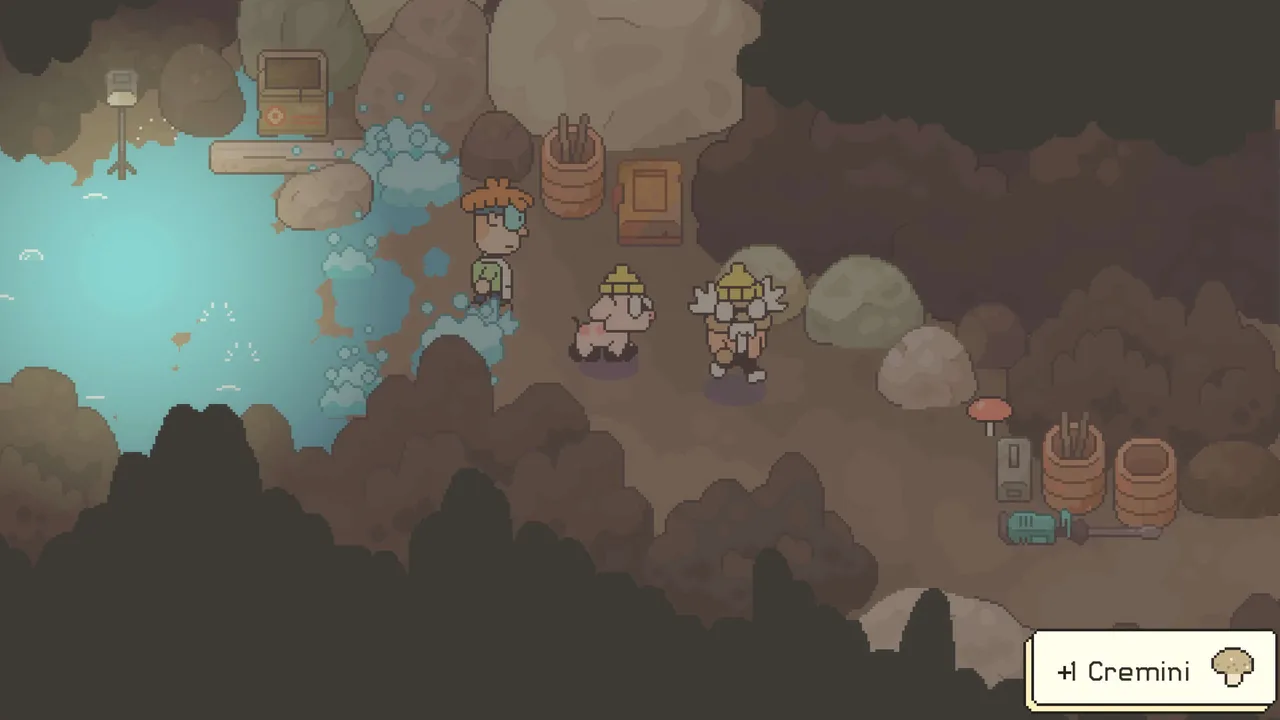
Hermit and PigImage: Heavy Lunch Studio LLC via Steam -

Hermit and PigImage: Heavy Lunch Studio LLC via Steam -
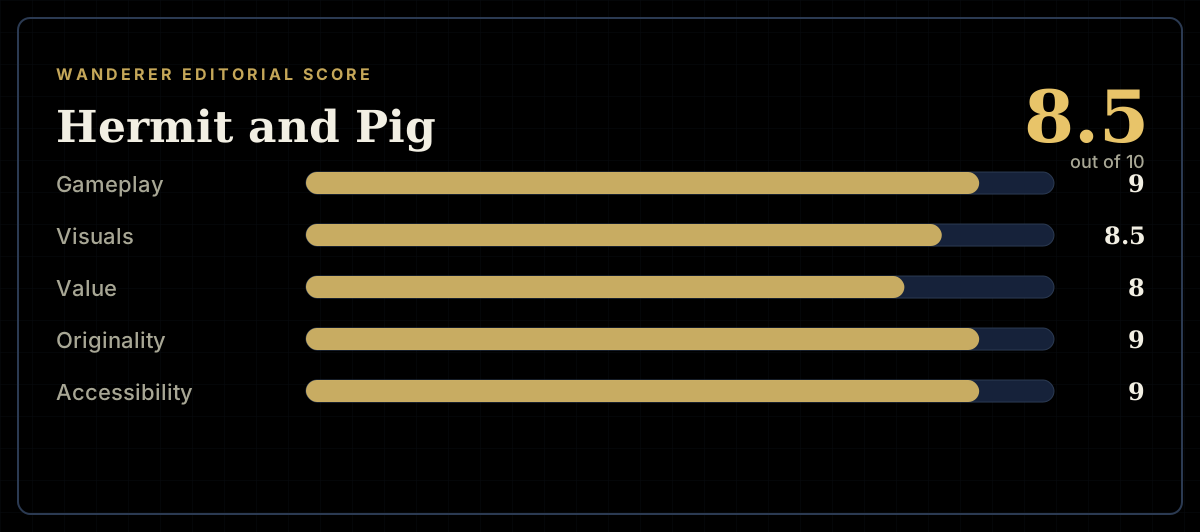
How the review scores each part of the gameWanderer Editorial -
The short versionWanderer Editorial