Game review
Cult of PiN
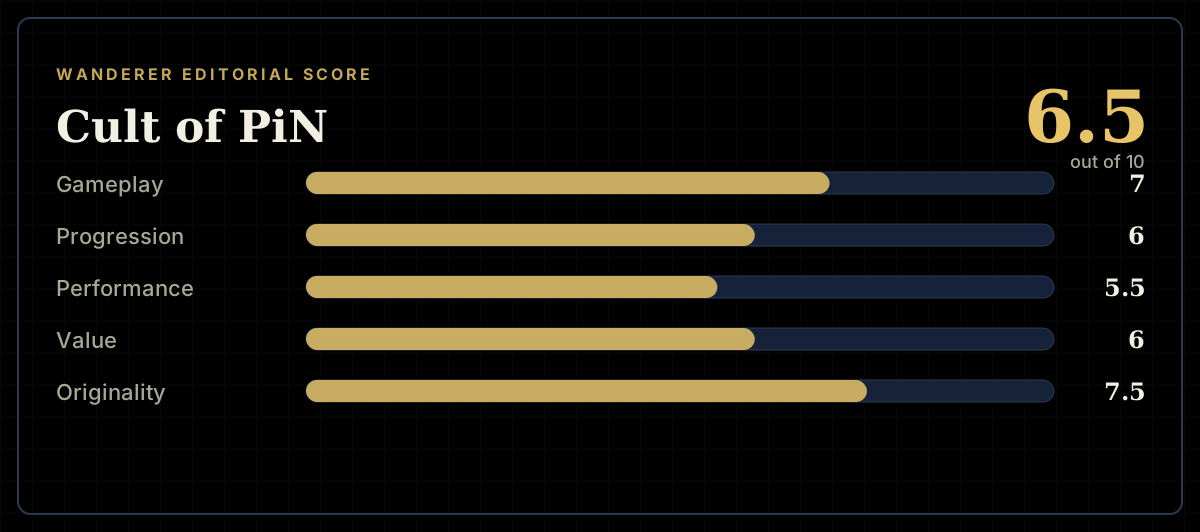
6.5 / 10
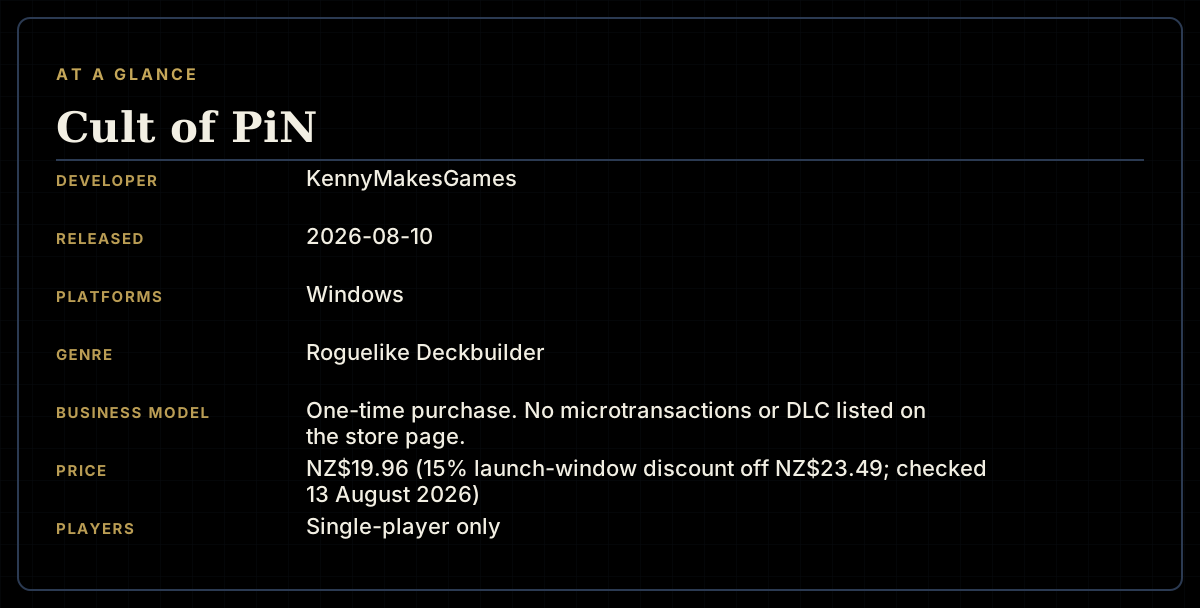
- Developer
- KennyMakesGames
- Publisher
- KennyMakesGames
- Released
- 10 August 2026
- Platforms
- Windows
- Genre
- Roguelike Deckbuilder
- Monetisation
- One-time purchase. No microtransactions or DLC listed on the store page.
- Players
- Single-player only
The short version
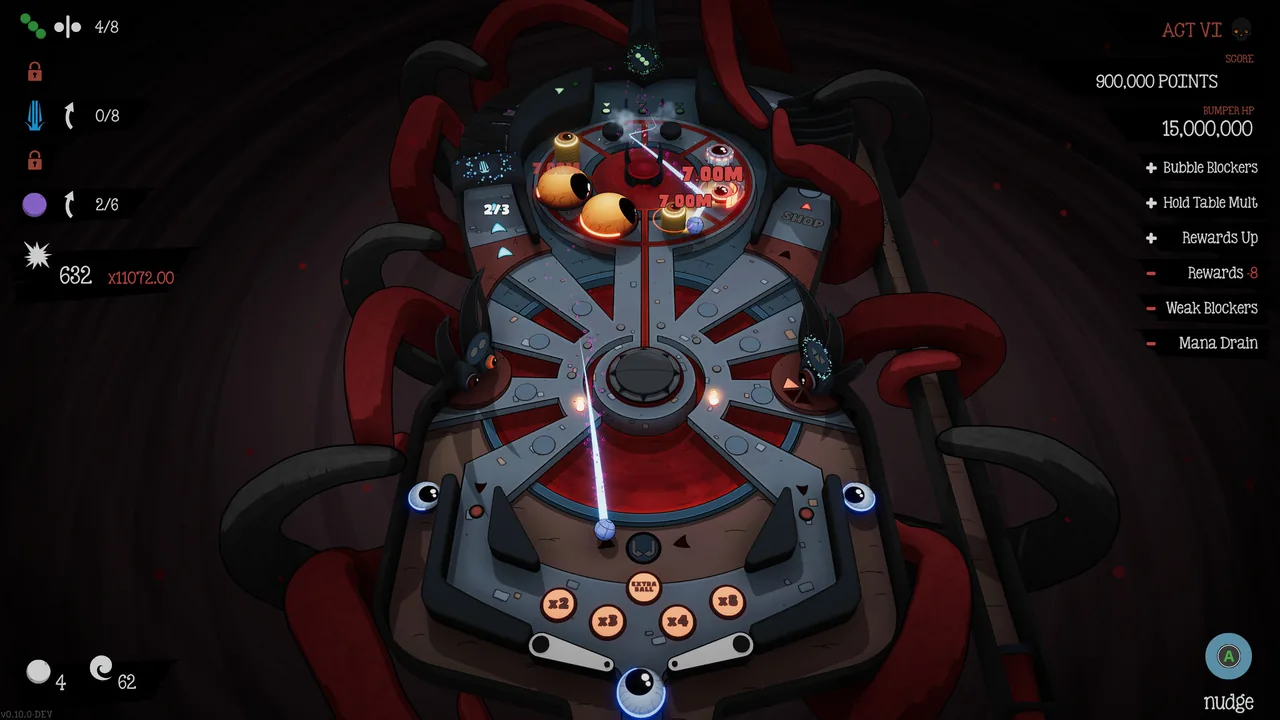
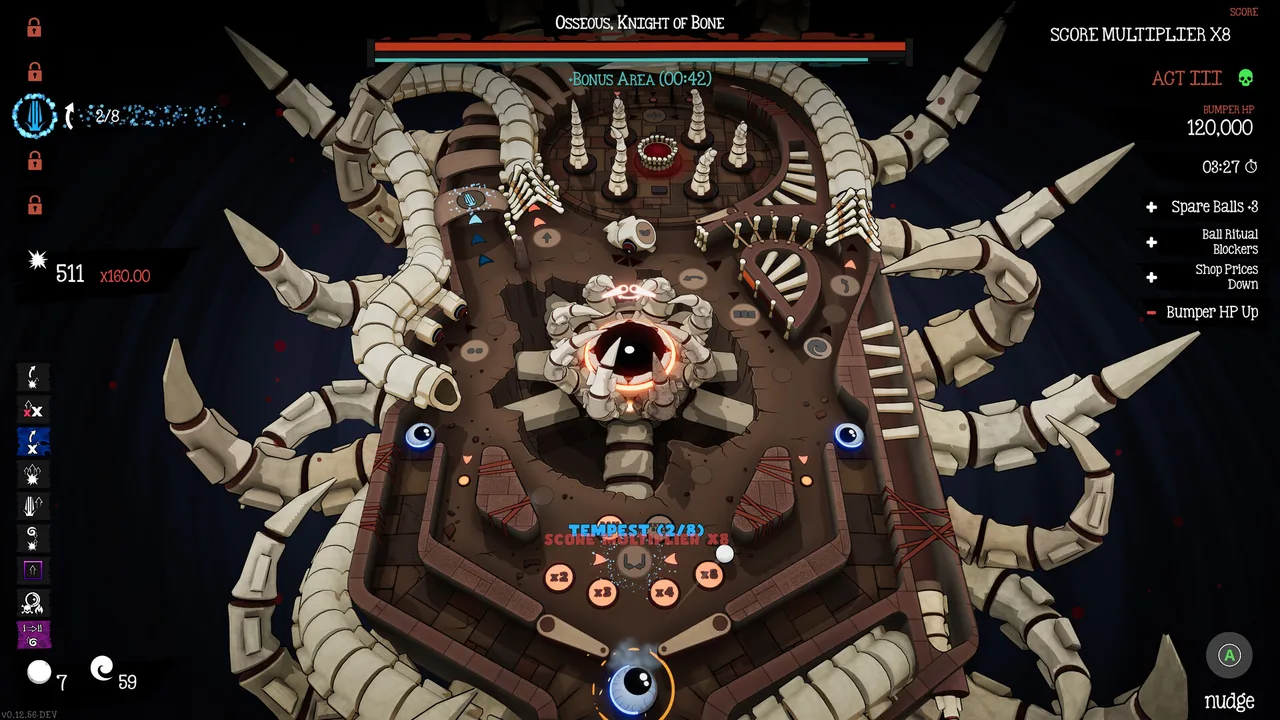
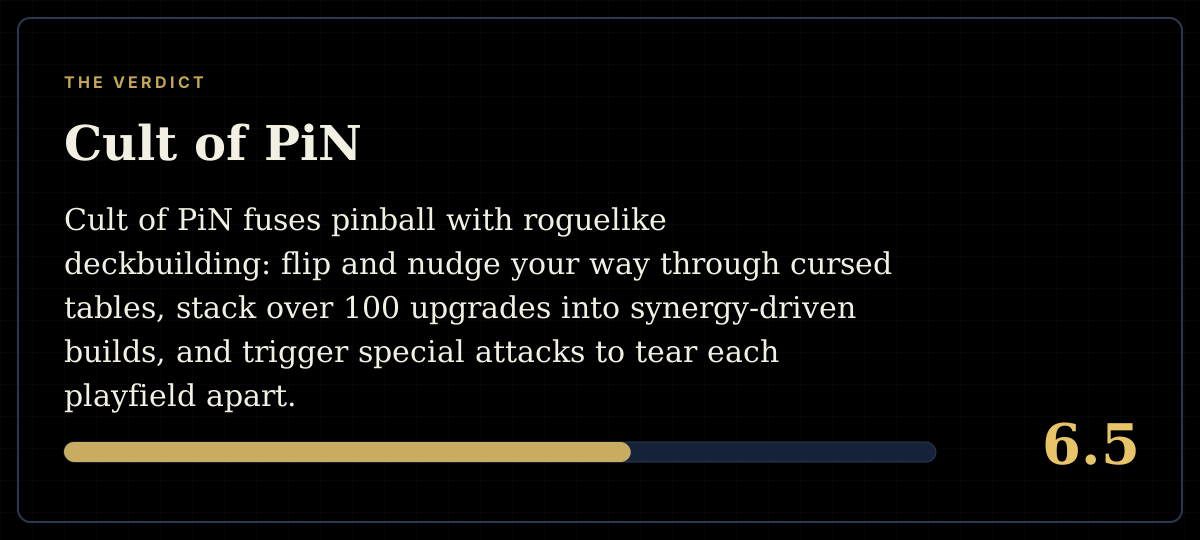
Cult of PiN fuses pinball with roguelike deckbuilding: flip and nudge your way through cursed tables, stack over 100 upgrades into synergy-driven builds, and trigger special attacks to tear each playfield apart. KennyMakesGames released it 10 August 2026 for NZ$19.96, and it opened to Very Positive, 83.9% of 62 English reviews, with real-life pinball enthusiasts among its strongest advocates.
A detailed, dev-engaged review corpus tells a more complicated story underneath that headline score, though. Multiple reviewers -- including one who publicly revised a harsh review after a polite developer response, while keeping the substance of the critique -- describe the first few tables as nearly identical, a "ritual powerup" system that snowballs a run into being effectively unloseable, and specific, unrecoverable bugs like a ball falling permanently through the floor. More than one reviewer independently uses the same phrase: this feels like it shipped as a 1.0 release a little before it was ready for one.
Biggest strengths
- Real pinball enthusiasts specifically credit it with capturing the feel: "this game 100% scratches the itch," reads one review from a self-described real-life pinball person, praising the ramps, tables and comparative physics quality against most pinball games
- A genuinely creative genre crossover -- pinball mechanics driving roguelike deckbuilding and synergy stacking -- that reviewers repeatedly call a strong, original concept even when critical of the execution
- Confirmed to run smoothly on Steam Deck and ROG Ally by multiple independent reviewers, a real plus for a genre that benefits from handheld play
Biggest weaknesses
- Multiple detailed reviewers describe the first several tables as "practically the exact same gameplay," with a ritual-powerup system that encourages repeating the same strategy rather than engaging differently with each new table
- Run balance is reported to snowball hard: a strong early multiball reportedly makes "the game effectively become impossible to lose" once a build gets going, undercutting the roguelike tension the genre usually relies on
- Specific, run-ending bugs are reported by more than one reviewer independently, including a ball falling permanently through the floor and flippers becoming intangible mid-run, serious issues for a full 1.0 release rather than an Early Access build
Who it's for: Real pinball fans and roguelike-deckbuilder players curious about the crossover, especially anyone who enjoyed Balatro's escalating-synergy structure and wants to see it applied to a pinball table. Not for anyone wanting a long-tail roguelike with deep table variety, or anyone who wants a fully polished, bug-free full release on day one.
Our recommendation: A creative, distinctive idea that real pinball players say genuinely lands, but the most detailed reviews -- including from people who clearly wanted to love it -- describe repetitive early tables, run-breaking bugs, and balance that snowballs into trivial once a build gets going. Worth a wishlist and a wait for patches rather than a confident day-one NZ$19.96 buy.
6.5 / 10
Pinball and roguelike deckbuilding aren't genres that obviously belong together, which is exactly what makes Cult of PiN's pitch interesting: flip, nudge and destroy your way through cursed playfields, stacking more than 100 upgrades into synergy-driven builds, triggering special attacks by completing missions on the table itself. KennyMakesGames released it 10 August 2026 for NZ$19.96 on a launch discount (checked 13 August 2026), and three days later holds a Very Positive score across a small but detailed 62-review sample -- real enthusiasm from an audience with a genuine stake in whether a pinball game feels like pinball.
When it clicks for pinball fans, it really clicks
The strongest praise comes specifically from reviewers with real pinball background, and it reads as more credible for that. "I'm a real-life pinball person -- this game 100% scratches the itch," reads one review. "Good tables, good ramps, the physics could be a tiny bit better but it's much better than most of the games out there as far as realistic playability." Another, a self-described "huge Lovecraft enthusiast" who grew up on the Windows XP pinball game, calls it "a very creative way to put a twist on pinball" that "hits all of my buttons," while noting it "runs smoothly on Steam Deck." A third simply states: "this is the pinball roguelite you've been waiting for." That kind of specific, credentialed enthusiasm is worth weighing heavily -- a pinball game that lands with actual pinball people is doing something real, regardless of whatever else is going on underneath.
The roguelike-deckbuilding layer draws real praise too, particularly for players who enjoy pushing a run's power ceiling: "it nails the mix of accessibility and a surprisingly high skill element," reads one review, recommending it specifically "if you enjoy 'breaking' a rogue-like, as runs can really ramp up in player power if you manage to stack your synergies." That snowballing power curve is, as it turns out, also the game's most consistent point of criticism -- praised by players who enjoy engineering a broken build, and criticised by others for making that break come too easily and too consistently.
A detailed, dev-engaged critique worth reading in full
The single most useful review in Cult of PiN's early corpus isn't a simple thumbs-down -- it's a reviewer who publicly revised their tone after "a very polite response from a dev," while keeping the substance of their original critique intact and posted alongside the update. That structure makes it unusually trustworthy: the criticism wasn't softened to be nicer, it was reconsidered and still stands. "The first 3 maps are all practically the exact same gameplay due to the odd choice of having ritual powerups rather than engaging map interactions," the original review reads, "making it so that you simply slam lights until you get the exact same powerups you already got, so that you can get even more of them." The balance complaint follows directly from that: "a multiball takes like 30 shots in the beginning, but then trivializes the game. Then, the game effectively becomes impossible to lose so long as you get ritual upgrades and can string a multiball or two together."
The same review flags specific, serious bugs -- "the ball falling through the floor and ruining the run permanently" -- and lands on a verdict echoed independently by other reviewers: "this feels like an early access game, and it's not, it's full release." A separate reviewer hits nearly the same bugs independently: "my flippers being incorporeal, causing the ball to simply fall through until the run ends," alongside "menus overlapping and causing softlocks or missed upgrades." A third reports the game "keeps crashing every five minutes, which makes it unplayable," adding, tellingly, "it's pretty disappointing, especially since it's a full release and not early access." Three independent reviewers reaching for that exact same framing -- a 1.0 game that plays like an EA build -- is a strong, corroborated signal rather than one frustrated outlier.
A smaller cluster of complaints concerns pinball feedback specifically, an area you'd expect a pinball-themed game to nail above all else: "hardly any feedback, sounds, effects -- the music in the trailer is the music in the game, monotonous," reads one review. Another flags a specific mechanical frustration with the boss encounters: "the biggest flaw... [is] the blockers, the boss appearing in the middle of the table... most of the time it was the blockers doing everything. I'd catch a ball, toss it where I want it to go, then it'd be a waiting game like a minute later before I even needed to hit a paddle" -- a pacing complaint that cuts against the fast, reactive feel pinball is supposed to deliver.
To the developer's credit, several reviewers independently describe them as actively engaged and responsive -- the polite response that changed one reviewer's framing isn't presented as an isolated incident, and the achievement data shows a healthy, gradually declining completion curve (84.7% for the easiest goal down to fractions of a percent for full mastery) consistent with a game people are genuinely playing through rather than bouncing off immediately.
6.5 out of 10. Cult of PiN is a genuinely original idea -- pinball as a roguelike deckbuilder's chassis -- that lands convincingly for players with real pinball background and offers real, if uneven, build-crafting depth. But its own most detailed, most fair-minded reviewers, several of whom clearly wanted to recommend it, independently converge on the same complaint: repetitive early tables, a ritual-powerup system that snowballs runs into becoming trivial, and specific, run-ending bugs unusual for a full 1.0 release rather than an Early Access build. Worth a wishlist and a patient wait for the developer -- who reviewers describe as listening -- to smooth those edges before committing NZ$19.96 to it today.
Pros and cons
Pros
- Real pinball enthusiasts specifically credit it with capturing the feel: "this game 100% scratches the itch," reads one review from a self-described real-life pinball person, praising the ramps, tables and comparative physics quality against most pinball games
- A genuinely creative genre crossover -- pinball mechanics driving roguelike deckbuilding and synergy stacking -- that reviewers repeatedly call a strong, original concept even when critical of the execution
- Confirmed to run smoothly on Steam Deck and ROG Ally by multiple independent reviewers, a real plus for a genre that benefits from handheld play
- A developer reviewers describe as actively listening and responding constructively to detailed critical feedback, including publicly and politely engaging with a harsh early review
Cons
- Multiple detailed reviewers describe the first several tables as "practically the exact same gameplay," with a ritual-powerup system that encourages repeating the same strategy rather than engaging differently with each new table
- Run balance is reported to snowball hard: a strong early multiball reportedly makes "the game effectively become impossible to lose" once a build gets going, undercutting the roguelike tension the genre usually relies on
- Specific, run-ending bugs are reported by more than one reviewer independently, including a ball falling permanently through the floor and flippers becoming intangible mid-run, serious issues for a full 1.0 release rather than an Early Access build
- Some reviewers find the physics-feedback -- sound, table feel, visual chaos -- surprisingly flat for a pinball game specifically, "hardly any feedback... the music in the trailer is the music in the game, monotonous"
- A licensing note flagged by at least one reviewer: content creators covering the game may encounter a copyright claim tied to the game's composer, worth knowing before streaming or recording it
Screenshots
-
Cult of PiNImage: KennyMakesGames via Steam -
Cult of PiNImage: KennyMakesGames via Steam -
Cult of PiNImage: KennyMakesGames via Steam -
How the review scores each part of the gameWanderer Editorial -
The essentialsWanderer Editorial -
The short versionWanderer Editorial