Game review
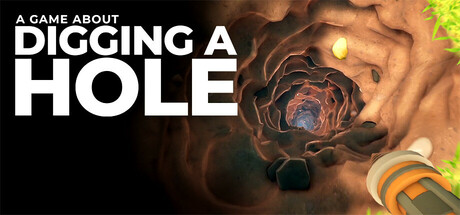
A Game About Digging A Hole
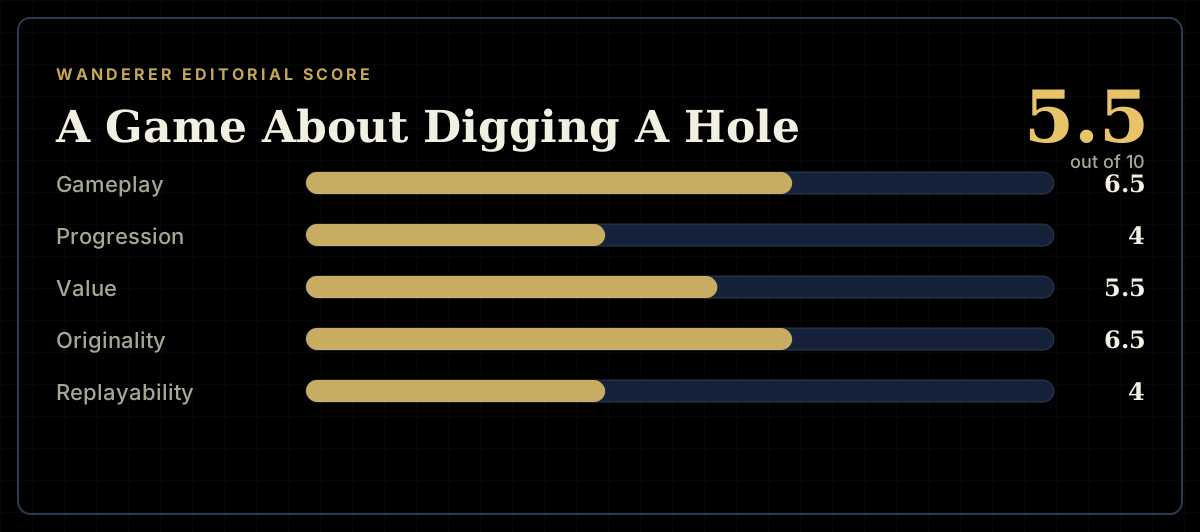
5.5 / 10
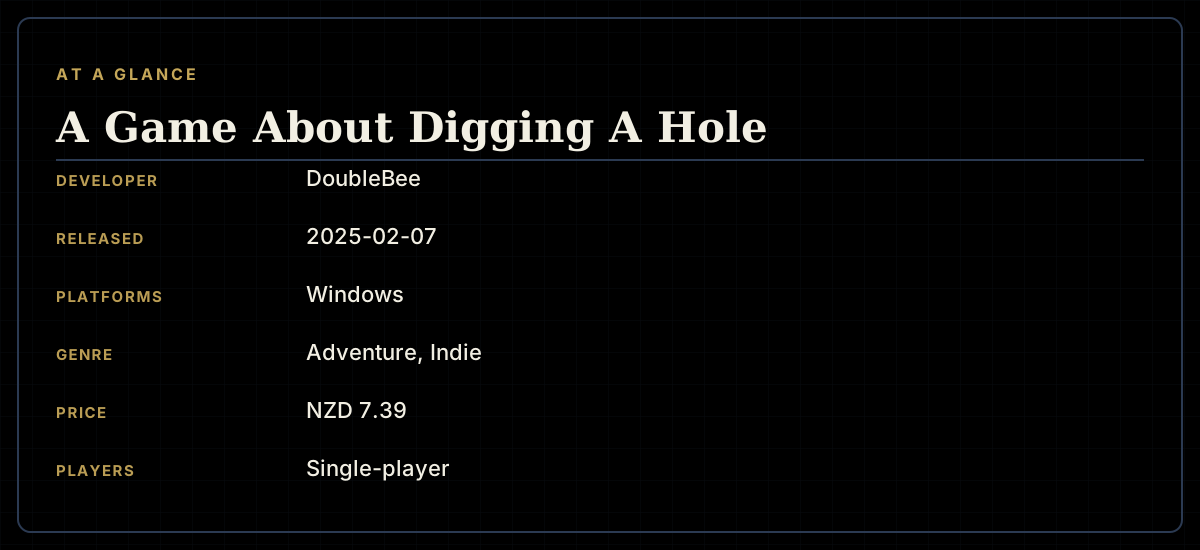
- Developer
- DoubleBee
- Publisher
- rokaplay select, Drillhounds
- Released
- 7 February 2025
- Platforms
- Windows
- Genre
- Adventure, Indie
- Players
- Single-player
The short version
Biggest strengths
- A genuinely satisfying core loop — dig, manage battery and cargo capacity, sell ore, upgrade equipment — that captures the addictive simplicity of classic browser mining games like Motherload
- Charming, self-aware writing and presentation that lands well with its audience, evidenced by an enormous volume of upvoted jokes and references in its own review section
- Cheap enough at its asking price that even heavily critical reviewers acknowledge it's hard to feel ripped off
Biggest weaknesses
- By far the most consistent, most-upvoted complaint across the entire review base: a late-game "endgame" section abruptly strips away every digging tool and forces an unrelated, poorly-received stealth sequence, which reviewers overwhelmingly describe as breaking the game's own premise
- Very short overall runtime, with most reviewers reporting completion in one to two hours and an explicit "beat the game in under 30 minutes" achievement earned by a real share of the playerbase
- The economy runs dry well before the game ends — money stops mattering once upgrades are maxed out, which happens long before you find the rarest ores
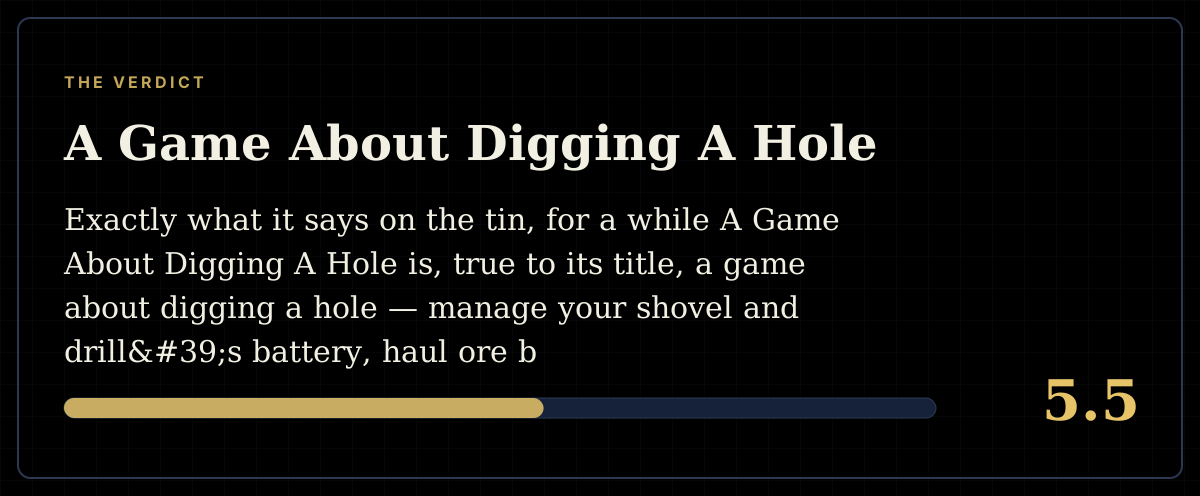
5.5 / 10
Exactly what it says on the tin, for a while
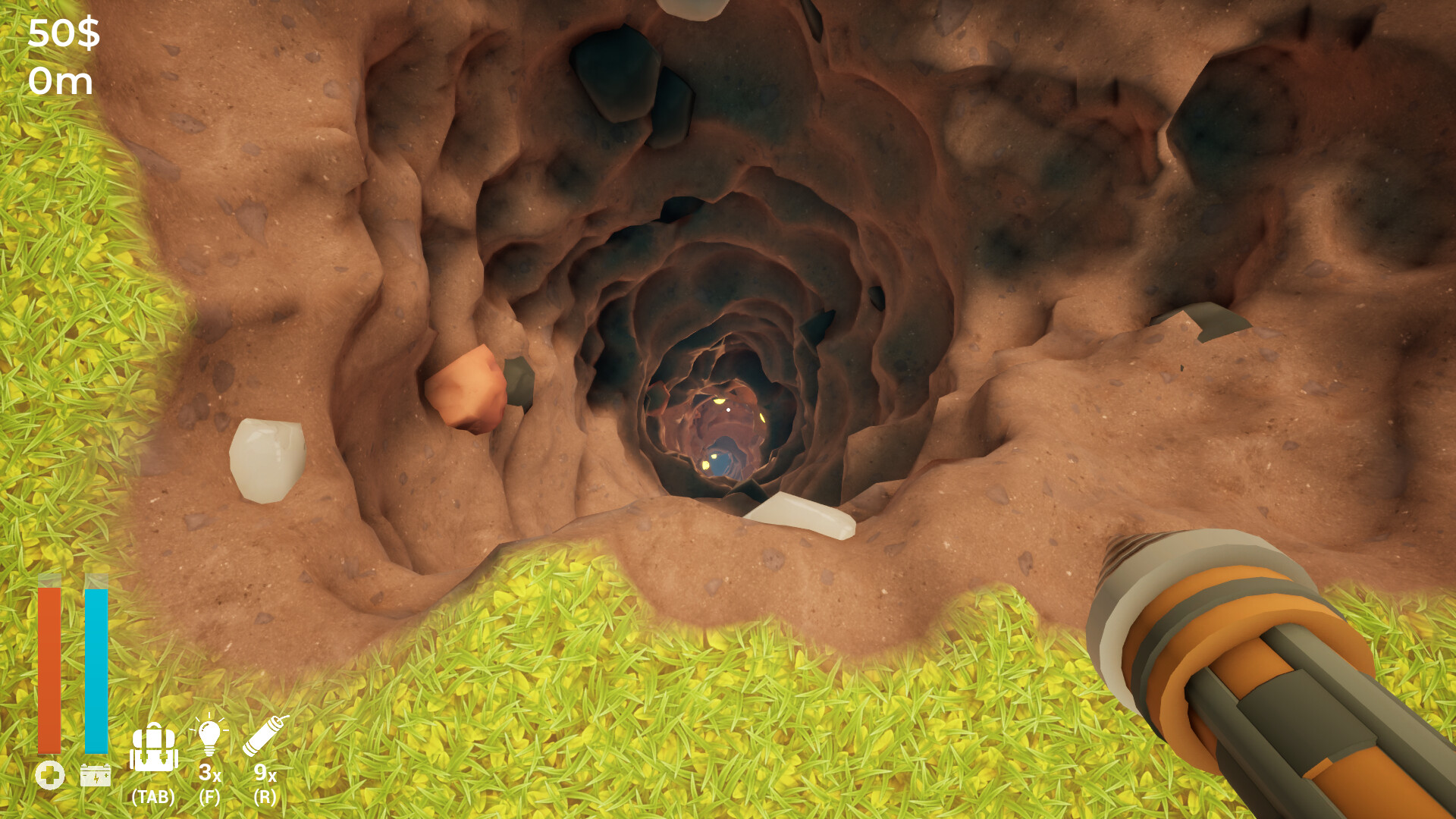
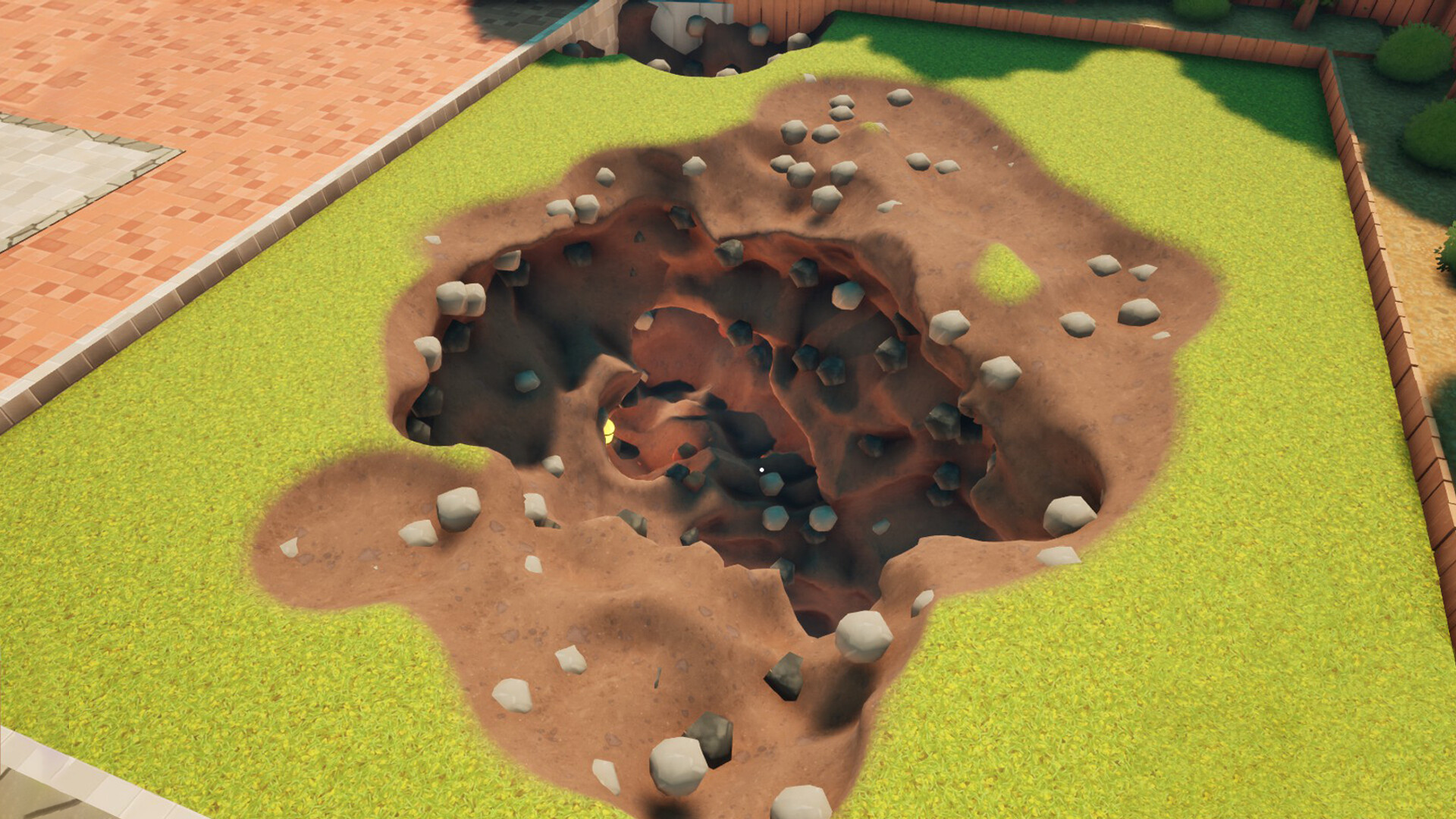
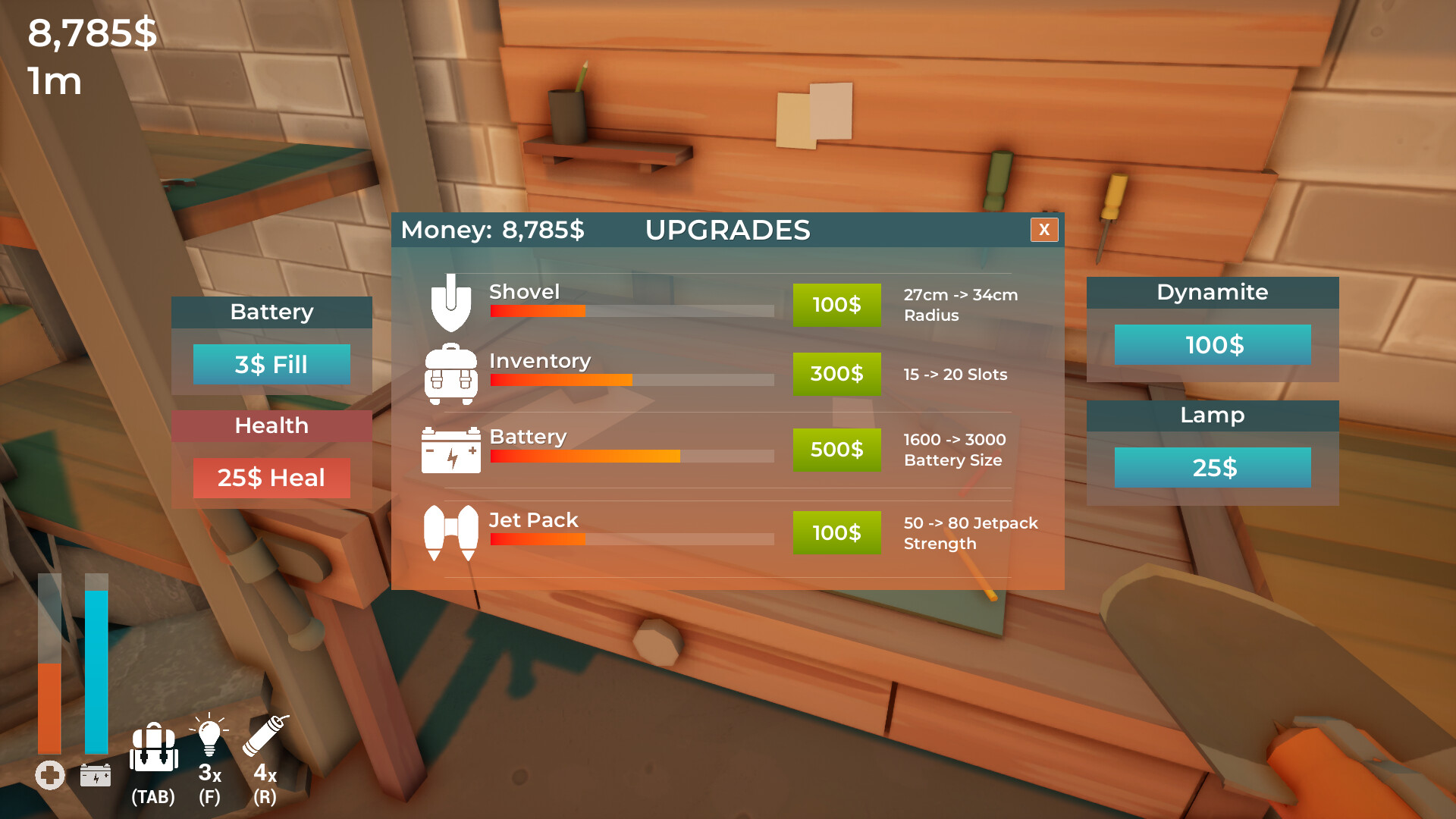
A Game About Digging A Hole is, true to its title, a game about digging a hole — manage your shovel and drill's battery, haul ore back up to sell, and reinvest in better tools to dig faster, deeper, and longer. It's a clean, direct descendant of Motherload and the other flash-era mining games that defined a certain kind of addictive, low-friction browser gaming, and for a meaningful stretch of playtime it delivers on that lineage well. Reviewers consistently describe the core loop as "mindless fun" in the best sense — no tutorial needed, no mechanic more complicated than it has to be, and a real sense of escalating capability as better equipment lets you push further down.
The game's writing and presentation have also clearly connected with its audience in a way that goes beyond the mechanics — its own Steam review section has become something of a comedy showcase, with jokes about digging as a life's purpose and requests for an endless mode racking up hundreds to over a thousand upvotes each. That's not incidental; it reflects a genuine, self-aware charm in how the game presents its own extremely simple premise that a lot of players clearly find endearing.
A twist nearly everyone hates
Here the review sample becomes remarkably, almost unanimously specific. The single most consistent complaint — appearing across dozens of independently written reviews, many with hundreds of upvotes — concerns what happens once you reach the game's ending: rather than concluding the mining loop the entire game has built, the "endgame" abruptly removes every tool you've been using and forces a stealth sequence built around avoiding enemies with no combat or digging options at all. "A fun cute game completely ruined by its 'endgame'," one of the most-upvoted reviews puts it. "The whole idea of the game is gone," says another, describing the shift from mining to unrelated stealth as jarring and poorly executed on its own terms, not just as a tonal mismatch. A third reviewer frames it precisely: "it takes away all those fun tools and turns from 'a game about digging a hole' to 'a game about dealing with unkillable one-hit-KO moles.'"
This isn't a minority complaint or a matter of taste about difficulty — it's the dominant, specific, repeatedly-worded criticism running through the negative review sample, describing the same structural design choice independently and in strikingly similar language across reviewers who plainly haven't coordinated with each other. When that many people converge on describing the exact same moment as the point the game lost them, it's a strong signal about a real design misstep rather than a subjective preference.
Short, and running out of things to spend on
Beyond the ending, the review base converges on a second, related complaint: the game is short, and its own economy stops giving players a reason to keep digging well before the credits roll. Most reviewers report finishing the whole experience in one to two hours, and the achievement data backs this up concretely — 8.0% of the entire playerbase has earned an achievement for beating the game in under 30 minutes, a genuinely fast clear time for a mining game built around gradual equipment progression. Several reviewers separately point out that money becomes functionally useless once the equipment tree is maxed out, which happens well before a full playthrough concludes, leaving the back half of a run without the escalating-reward feeling that made the opening hour compelling.
A smaller, more technical complaint concerns the game's physics: dug-out debris has no collision simulation and can float in place rather than falling or clearing, occasionally blocking the exact tunnels players need to move through. It's a minor annoyance on its own, but it compounds the sense that the back half of the game received less polish than the strong, well-tuned opening.
Why this complaint has spread so far
It's worth asking why one specific design decision generated such an unusually consistent, coordinated-sounding reaction across a review base of over eleven thousand people who never spoke to each other. Part of the answer is in how directly the ending contradicts the marketing and the game's own title: several reviewers explicitly say they were misled by comparisons to relaxing simulator games or Minecraft-style mining, only to discover the actual final content is a tense, tool-free stealth gauntlet with no relationship to anything the first ninety minutes taught them. One reviewer captures the mismatch precisely by invoking Motherload directly — noting that the older game also had a dramatic final stretch, but one that escalated the existing mining and mechanics rather than discarding them for an entirely different genre.
That comparison is useful because it isolates exactly what the complaint is and isn't about. It isn't that players object to a dramatic or difficult ending in principle — the Motherload comparison shows there's an appetite for exactly that. It's specifically that the tools and skills built up over the whole game become irrelevant at the one moment they should matter most, which reads less like an intentional difficulty spike and more like a structural mismatch between the game's two halves.
Where this leaves it
A Game About Digging A Hole nails its central premise for as long as it sticks to that premise — a cheap, charming, well-written take on classic browser mining games that plenty of reviewers genuinely love for exactly what it is. Where it falls apart, by the near-unanimous account of its own audience, is the specific decision to abandon that premise entirely for an unrelated and poorly-received stealth section right as the game should be delivering its payoff, combined with an economy and runtime that don't stretch far enough to justify much beyond a single sitting. Recommended for a cheap, nostalgic afternoon with tempered expectations for the ending — and be ready for the tonal rug-pull the reviews warn about well before you get there.
Pros and cons
Pros
- A genuinely satisfying core loop — dig, manage battery and cargo capacity, sell ore, upgrade equipment — that captures the addictive simplicity of classic browser mining games like Motherload
- Charming, self-aware writing and presentation that lands well with its audience, evidenced by an enormous volume of upvoted jokes and references in its own review section
- Cheap enough at its asking price that even heavily critical reviewers acknowledge it's hard to feel ripped off
- A wide, immediately readable core mechanic that needs no tutorial and rewards short, casual sessions
Cons
- By far the most consistent, most-upvoted complaint across the entire review base: a late-game "endgame" section abruptly strips away every digging tool and forces an unrelated, poorly-received stealth sequence, which reviewers overwhelmingly describe as breaking the game's own premise
- Very short overall runtime, with most reviewers reporting completion in one to two hours and an explicit "beat the game in under 30 minutes" achievement earned by a real share of the playerbase
- The economy runs dry well before the game ends — money stops mattering once upgrades are maxed out, which happens long before you find the rarest ores
- No physics on dug-out debris, which can float in mid-air and block mine entrances and exits, a reported source of real frustration in the back half of runs
Screenshots
-
A Game About Digging A HoleImage: rokaplay select via Steam -
A Game About Digging A HoleImage: rokaplay select via Steam -
A Game About Digging A HoleImage: rokaplay select via Steam -
How the review scores each part of the gameWanderer Editorial -
At a glanceWanderer Editorial -
The short versionWanderer Editorial