Game review
Glenwich Idle MMO
6 / 10
- Developer
- Saido Labs
- Publisher
- Saido Labs
- Released
- 1 February 2025
- Platforms
- Browser, Windows, macOS, Android
- Genre
- Idle MMORPG
- Monetisation
- Free to play. The store page commits to no adverts, no microtransactions and no pay-to-win systems; development is funded through an optional Patreon offering quality-of-life perks, extra character slots and cosmetics such as a founder's cape.
- Players
- Massively multiplayer -- shared world, guilds, a player-run exchange and 5-player co-op dungeons
The short version
Glenwich is exactly what it looks like once you get past the shiny new Steam Early Access badge: a free, fair-monetised browser idle-RPG in the direct lineage of RuneScape and Melvor Idle -- one reviewer on the browser-game aggregator pbbg.com calls it outright "a clone of Melvor Idle" -- with a shared world, guilds and a player-run exchange layered on top. The skilling loop, crafting web and AFK combat all work as advertised, and the no-ads, no-pay-to-win promise holds up. What it doesn't have is an identity of its own: the Steam port arrives fourteen months into the game's life still showing placeholder "TO DO" item icons and a level-cap XP bar that visibly overflowed past its own maximum value, in screenshots the developer chose to publish.
It's a reasonable free download for genre regulars who've exhausted Melvor Idle and want the same loop with other people's chat messages in the sidebar. It's not a reason for anyone else to look twice yet.
Biggest strengths
- Genuinely fair monetisation -- no ads, no microtransactions, no pay-to-win, confirmed by the store page and matched by community comment; the Patreon tier is cosmetics and quality-of-life only.
- A real, deep skilling web -- 14+ trainable skills, hundreds of crafting recipes, combat skill trees with per-branch ability points, guild levels and assignments, and a working player-driven exchange.
- Active, fast iteration for a small team -- Steam's own news feed shows a June 2026 update adding two entire new skills (Thieving, Construction), player settlements and a raised level cap, on top of a stability patch weeks after Early Access launched.
Biggest weaknesses
- Almost entirely derivative -- a reviewer on pbbg.com calls it plainly "a clone of Melvor Idle," itself a RuneScape-inspired idler, so Glenwich offers little beyond "the same loop, but with a shared world."
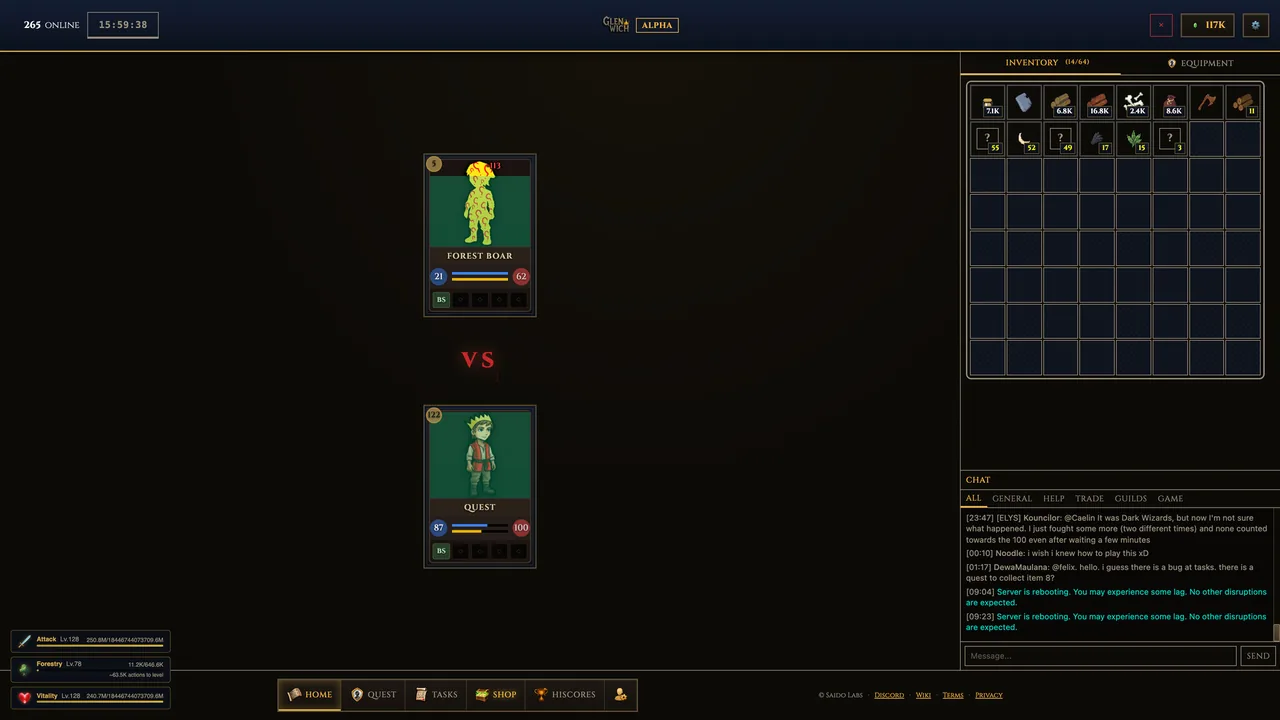
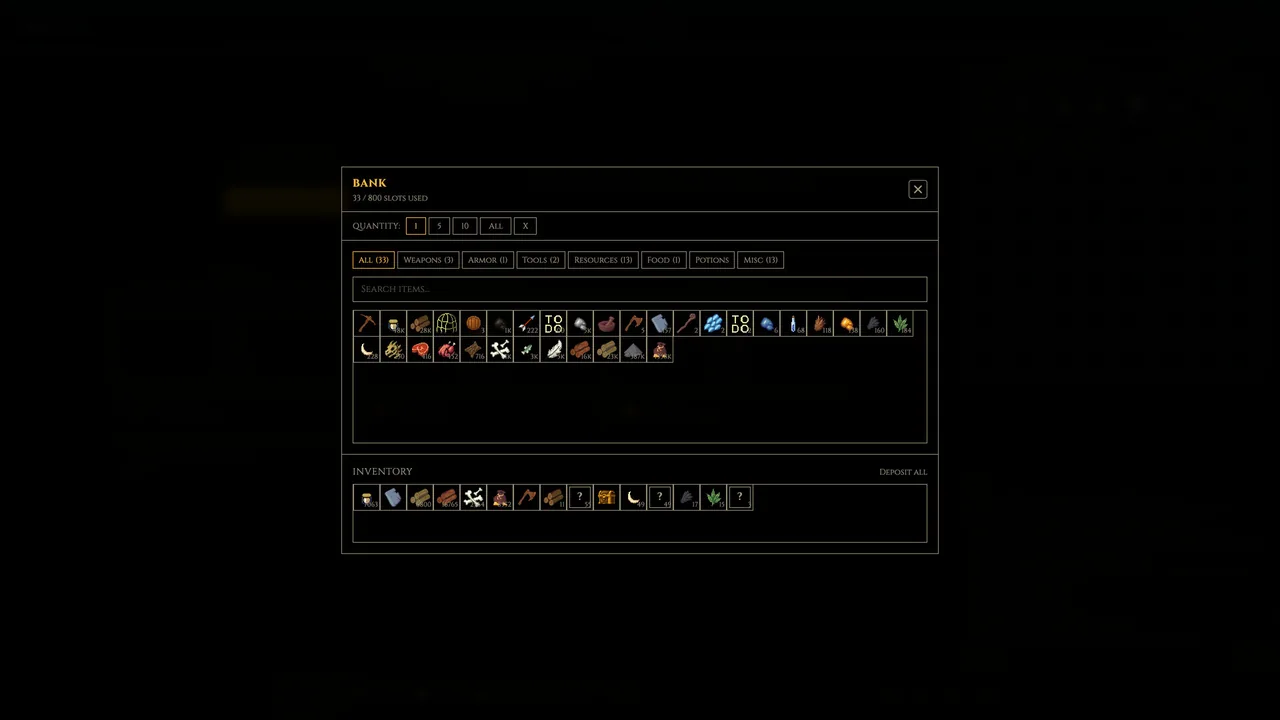
- Visible unfinished polish in the developer's own marketing screenshots: two bank item slots are literally labelled "TO DO" placeholder icons, several inventory slots show generic "?" icons, and one skill's XP bar reads "250.8M / 18,446,744,073,709.6M" -- a number that matches an unsigned-64-bit integer overflow almost exactly.
- Steam Early Access reception is thin and Mixed (in the high 30s to low 40s reviews, around 44% positive at last check), and Steam's own achievement stats show a steep funnel: over 60% of players fell the tutorial "get wood" milestone, but only roughly 1 in 6 reach total level 100, and most later milestones cluster around 4% -- a small, barely-progressed Steam population so far.
Who it's for: Idle-skilling regulars who already like RuneScape, Melvor Idle or similar games and want the same loop with a shared economy and guilds attached. Less suited to anyone who wants a distinct hook, a polished interface, or a large, populated Steam community today.
Our recommendation: Worth trying since it costs nothing and the fairness promise (no ads, no pay-to-win, cosmetic-only Patreon) genuinely holds up -- but go in through the browser at glenwich.com rather than the young, thinly-reviewed Steam Early Access listing, and expect rough edges typical of a small team still filling in its own art.
6 / 10
A year-old browser game wearing a brand-new Steam badge
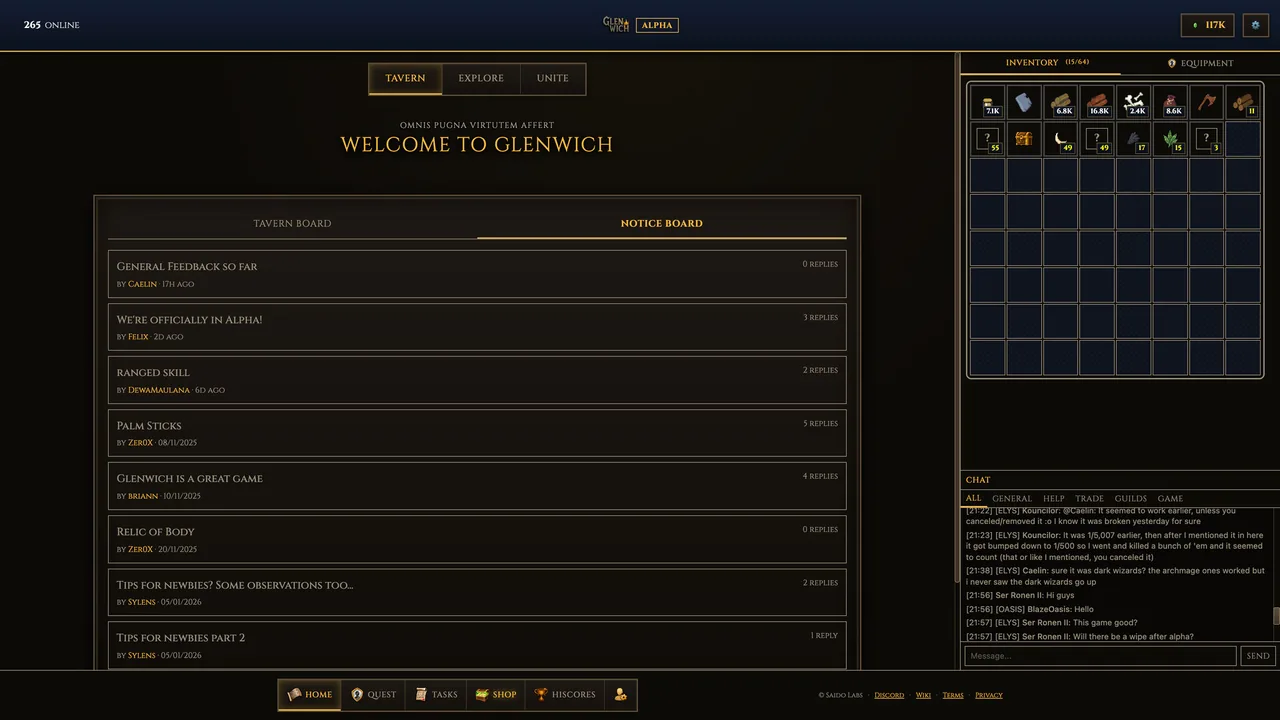
Steam's storefront makes Glenwich look like a fresh 2026 Early Access debut: the listing went live on 6 April 2026, with two solitary news posts and a Mixed review score in the high 30s. None of that is the game's real age. Glenwich launched as a free browser title at glenwich.com in early preview back in February 2025, and spent well over a year building an economy, a guild system and a returning playerbase before it ever touched Steam -- the game's own in-client notice board, visible in its storefront screenshots, carries forum threads dated back to November 2025 and still didn't declare itself out of "preview" and into "Alpha" until roughly January 2026, months before the Steam listing existed. The Steam Early Access badge is a second storefront for an already-running live service, not the game's actual starting line -- which matters for anyone reading the young Steam review count as the whole story.
RuneScape, twice removed
Glenwich's pitch is the by-now-familiar idle-skilling loop: gather wood, ore, fish and crops, smith and cook and brew, fight through combat skill trees with unlockable abilities like Bleed Strike and Execute, and let it all keep ticking while a character sits AFK. None of that is new -- it's the Melvor Idle formula, which is itself explicitly built as an idle take on RuneScape. A review on the browser-game aggregator pbbg.com puts it in exactly those terms, describing Glenwich as "a clone of Melvor Idle." What Glenwich adds on top is the "MMO" half of its name: a persistent shared world with public chat channels, guilds with their own bank, levels and kill/collect assignments, and a player-run exchange where buy and sell orders sit against each other like a small stock market. One official screenshot shows a ten-member guild led by a level 39 player with a level 122 officer beneath them; a separate one shows a single account that has already filled all six of its character slots, the furthest along sitting at Total Level 640. That's real evidence of people playing over a genuine stretch of time, not a demo built for the store page.
The skill list runs to 14 at Steam launch, with Thieving and Construction added in a June 2026 update alongside player settlements and a raised level cap -- so the content keeps growing at a pace that's unusually fast for how small this project is. But growth in scope doesn't change what the loop feels like moment to moment, and moment to moment, Glenwich feels like it's executing someone else's design rather than pursuing its own.
The screenshots the developer chose to publish
The most telling evidence in this review didn't come from a player complaint -- it came from Glenwich's own storefront art. One official bank-inventory screenshot shows two item icons literally reading "TO DO" where finished art should be, sitting next to several more slots using a generic "?" placeholder icon. Another shows a character's Attack skill XP bar reading "250.8M / 18,446,744,073,709.6M" -- a maximum value that lines up almost exactly with 2^64 divided by a million, the textbook signature of an unsigned 64-bit integer that overflowed instead of holding a real number. Neither of these is a leaked bug report; they're in marketing material the developer selected to sell the game. It's a small, honest tell about the scale of the operation behind Glenwich, and it matches the picture from Steam's own achievement data: over 60% of players cleared the "get wood" tutorial milestone, but that drops to under 20% for a first fish or first farmed crop, roughly 1 in 6 for reaching total level 100, and down into a cluster sitting around 4% for guild creation, world boss kills and the higher level milestones -- consistent with a young, still-small Steam population that mostly hasn't gone deep yet.
Fair by design, rough by scale
The one place Glenwich clearly earns credit is monetisation. The store page states plainly that there are no adverts, no microtransactions and no pay-to-win systems, and that holds up against outside description of the game: development runs on an optional Patreon that trades money for quality-of-life conveniences, extra character slots and cosmetics like a founder's cape, none of which affect in-game power. For a genre where idle games routinely lean on energy timers or paid boosts, a completely free, ad-free, pay-to-win-free MMO is worth calling out on its own terms.
Community feedback around the Steam launch describes the more ordinary growing pains of a small team shipping quickly: tutorial and quest-tracking bugs, crashes, and complaints about time-gated daily XP limits slowing progression more than players would like. One frustrated early reviewer put the tutorial problem bluntly -- "if it takes 3 hours to get past the tutorial because I keep failing to chop down a tree, I think ill pass" -- and that specific complaint lines up with Steam's own achievement numbers: over a third of players never even trigger the "get wood" milestone that's supposed to be the very first thing anyone does. A stability patch followed within weeks of Early Access going live, which suggests the rough patches are being worked rather than ignored -- consistent with the pace of content the news feed shows -- but as of this review, Glenwich reads as a functional, generous, distinctly unoriginal skilling game still catching its Steam presentation up to the browser game it's been quietly running for a year and a half.
Value
There's no price to weigh here -- Glenwich is free on every platform it ships on, and the fairness promise around monetisation genuinely checks out. The real cost is time spent on a loop that offers almost nothing you haven't played before if you've touched RuneScape or Melvor Idle, wrapped in an interface and art pass that still has literal placeholder icons in it. For genre diehards who want the shared-world layer and don't mind rough edges, that's a fine trade at zero dollars. For anyone hoping for a fresh take on idle skilling, this isn't it yet.
Pros and cons
Pros
- Genuinely fair monetisation -- no ads, no microtransactions, no pay-to-win, confirmed by the store page and matched by community comment; the Patreon tier is cosmetics and quality-of-life only.
- A real, deep skilling web -- 14+ trainable skills, hundreds of crafting recipes, combat skill trees with per-branch ability points, guild levels and assignments, and a working player-driven exchange.
- Active, fast iteration for a small team -- Steam's own news feed shows a June 2026 update adding two entire new skills (Thieving, Construction), player settlements and a raised level cap, on top of a stability patch weeks after Early Access launched.
- The AFK/idle promise is real: combat, gathering and crafting all continue while a character sits untouched, matching the genre's core pitch.
Cons
- Almost entirely derivative -- a reviewer on pbbg.com calls it plainly "a clone of Melvor Idle," itself a RuneScape-inspired idler, so Glenwich offers little beyond "the same loop, but with a shared world."
- Visible unfinished polish in the developer's own marketing screenshots: two bank item slots are literally labelled "TO DO" placeholder icons, several inventory slots show generic "?" icons, and one skill's XP bar reads "250.8M / 18,446,744,073,709.6M" -- a number that matches an unsigned-64-bit integer overflow almost exactly.
- Steam Early Access reception is thin and Mixed (in the high 30s to low 40s reviews, around 44% positive at last check), and Steam's own achievement stats show a steep funnel: over 60% of players fell the tutorial "get wood" milestone, but only roughly 1 in 6 reach total level 100, and most later milestones cluster around 4% -- a small, barely-progressed Steam population so far.
- Community-reported bugs include tutorial and quest-tracking issues, crashes, and time-gated daily XP pacing that several reviewers found frustrating.
Screenshots
-
Glenwich Idle MMOImage: Saido Labs via Steam -
Glenwich Idle MMOImage: Saido Labs via Steam -
Glenwich Idle MMOImage: Saido Labs via Steam -
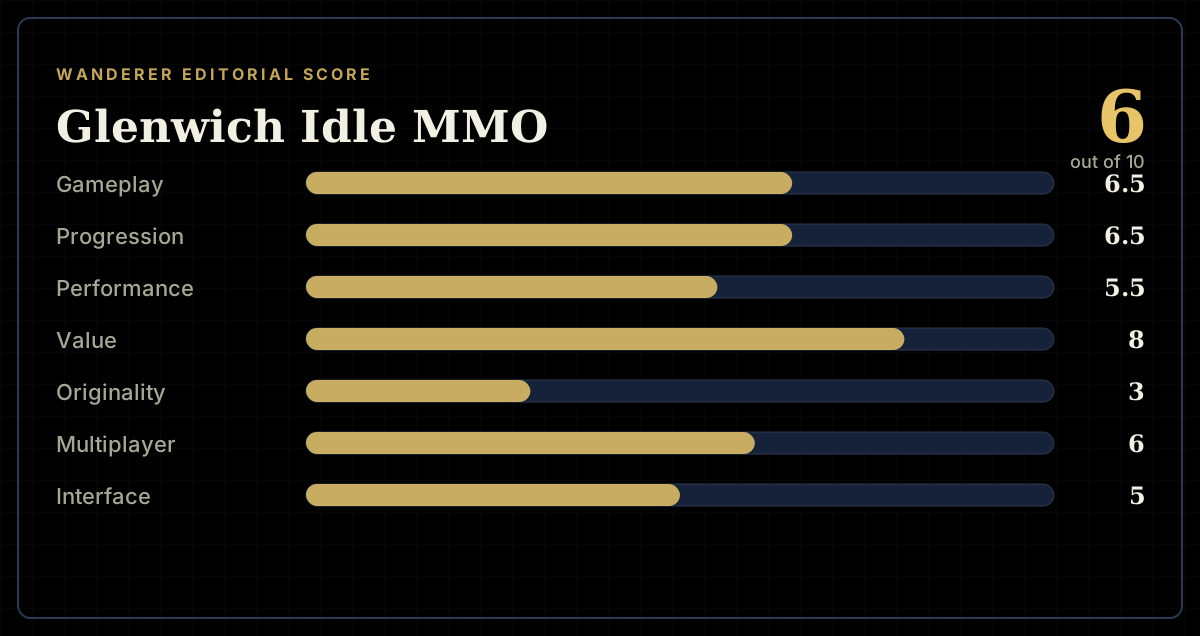
How the review scores each part of the gameWanderer Editorial -
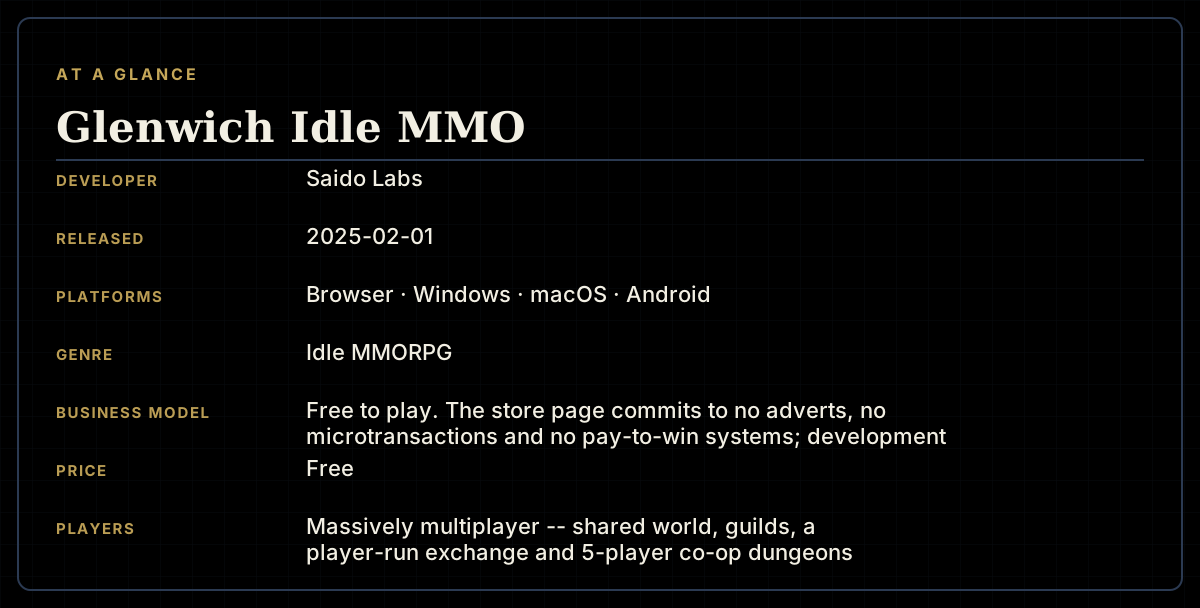
The game at a glanceWanderer Editorial -
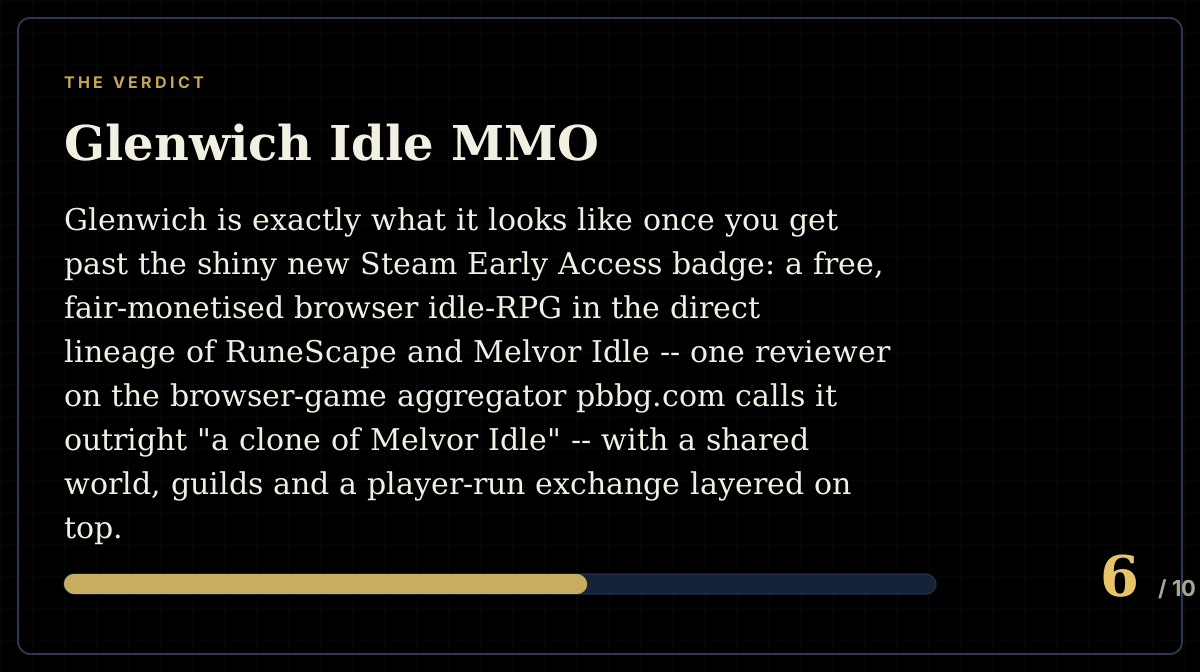
The short versionWanderer Editorial