Game review
Fidget Spinner RPG
7 / 10
- Developer
- Bryce Summer
- Released
- 26 September 2023
- Platforms
- Windows
- Genre
- Idle RPG
- Monetisation
- One-time purchase, no DLC, no in-game purchases
- Players
- Single-player only, no multiplayer, co-op or leaderboard features
The short version
Fidget Spinner RPG commits fully to a premise that could have been a five-minute joke: level up eleven separate skills, craft and upgrade dozens of items, and automate an entire production chain, all in the pursuit of making one fidget spinner spin at physically absurd RPMs. For NZ$5.99 with zero microtransactions, that's a lot of genuine RPG-lite structure wrapped around a gag, and reviewers who stuck with it consistently describe more depth than the concept suggests. What holds it back is what happened after launch — a developer who shipped updates constantly through Early Access went almost silent the moment 1.0 hit, leaving a documented balance exploit in the prestige system and recurring save-corruption reports unaddressed for years.
Biggest strengths
- Eleven skills gate behind specific Competency levels, so each new system (mining, blacksmithing, jewelcrafting, engineering) gets room to land before the next one arrives
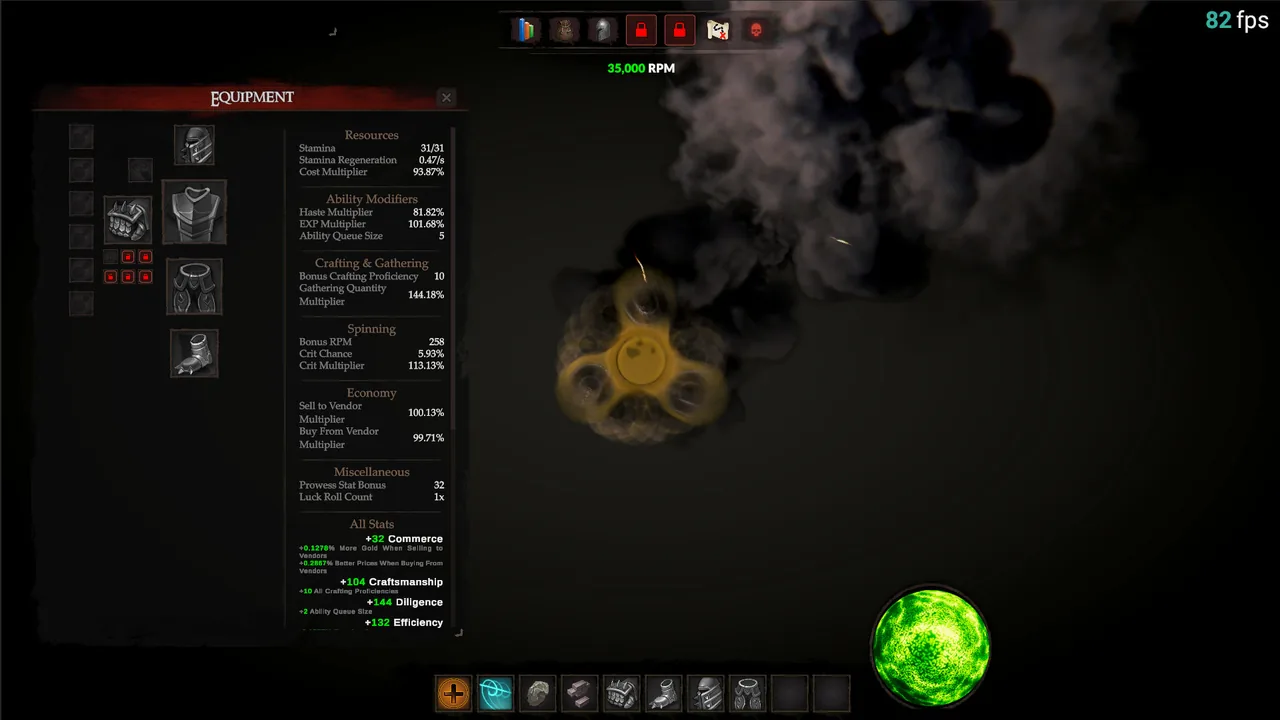
- The escalating visual spectacle is a genuine payoff for the joke premise — smoke appears around 16,000 RPM, fire around 75,000, and sparks past 350,000, so the absurdity keeps compounding
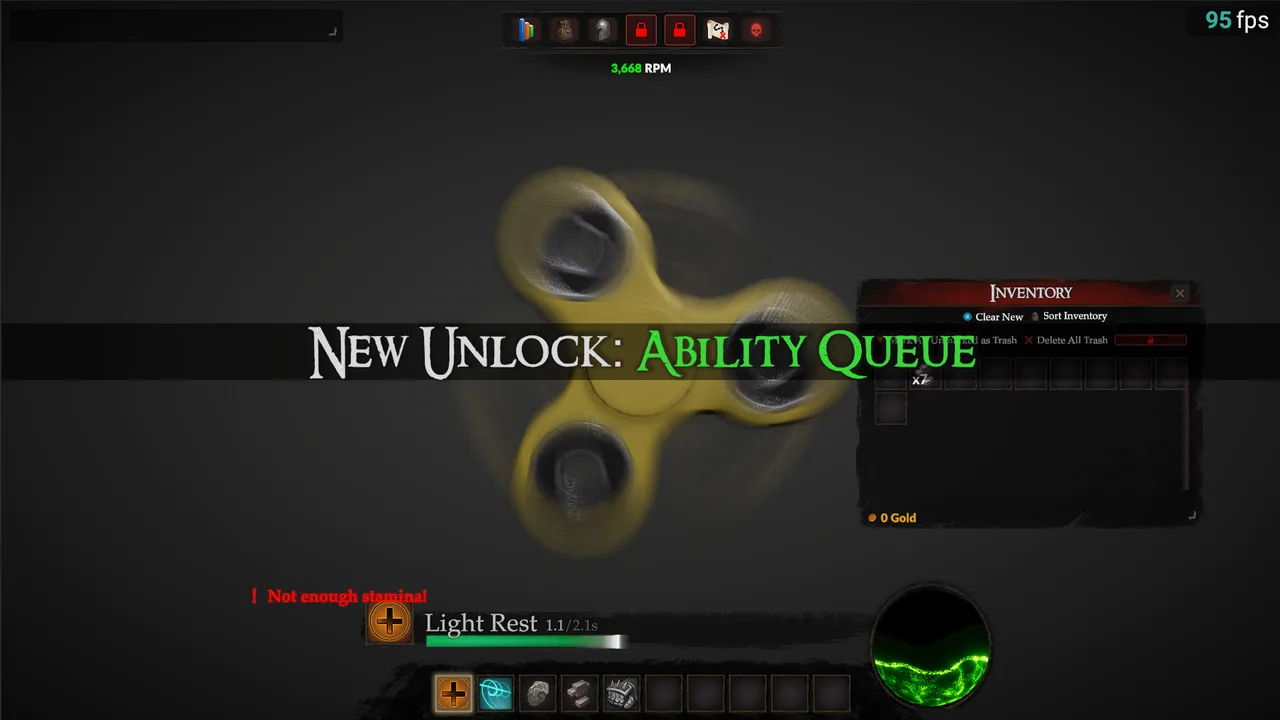
- Engineering and Construction let the RPG-lite opening hours hand off to real automation via macros and linked machines, so late-game grinding doesn't require sitting at the keyboard
Biggest weaknesses
- A logarithmic RPM-scaling formula, still unpatched as of a March 2026 review, lets players clear almost every achievement without ever using the Prestige system it was meant to be balanced around
- The Prestige loop's heirlooms and augments are described by long-time players as either too niche to matter or priced out of reach, so repeat runs don't feel rewarding
- Development has been effectively dormant since a bugfix patch in October 2023, roughly three years before this review, despite an Early Access history of multiple updates a day
Who it's for: Idle and incremental fans who want a cheap, self-contained skill-tree game they can finish in a few dozen hours without a live-service treadmill, and who don't need ongoing developer support to feel good about a purchase.
Our recommendation: Worth the price for what's already in the box. Don't buy it expecting anything to change — the last update landed in October 2023, and the game's own most dedicated players have been asking for fixes to a known progression exploit for years with no response.
7 / 10
Fidget Spinner RPG could have been a one-joke Steam page: a fidget spinner, a click, a number that goes up. Instead it ships eleven separate skills, a full crafting and equipment chain, a talent tree per skill, a prestige system, and enough escalating visual spectacle that by the time your spinner is doing several hundred billion revolutions per minute, it's throwing sparks across the screen like something out of a much more expensive game. For NZ$5.99, that's a genuinely dense little RPG-lite wrapped around a gag concept, and three-and-a-half years of player reviews back that up. What they also back up, increasingly, is that the person who built all of that stopped showing up around the same time the game left Early Access.
A joke premise with a real skill tree underneath
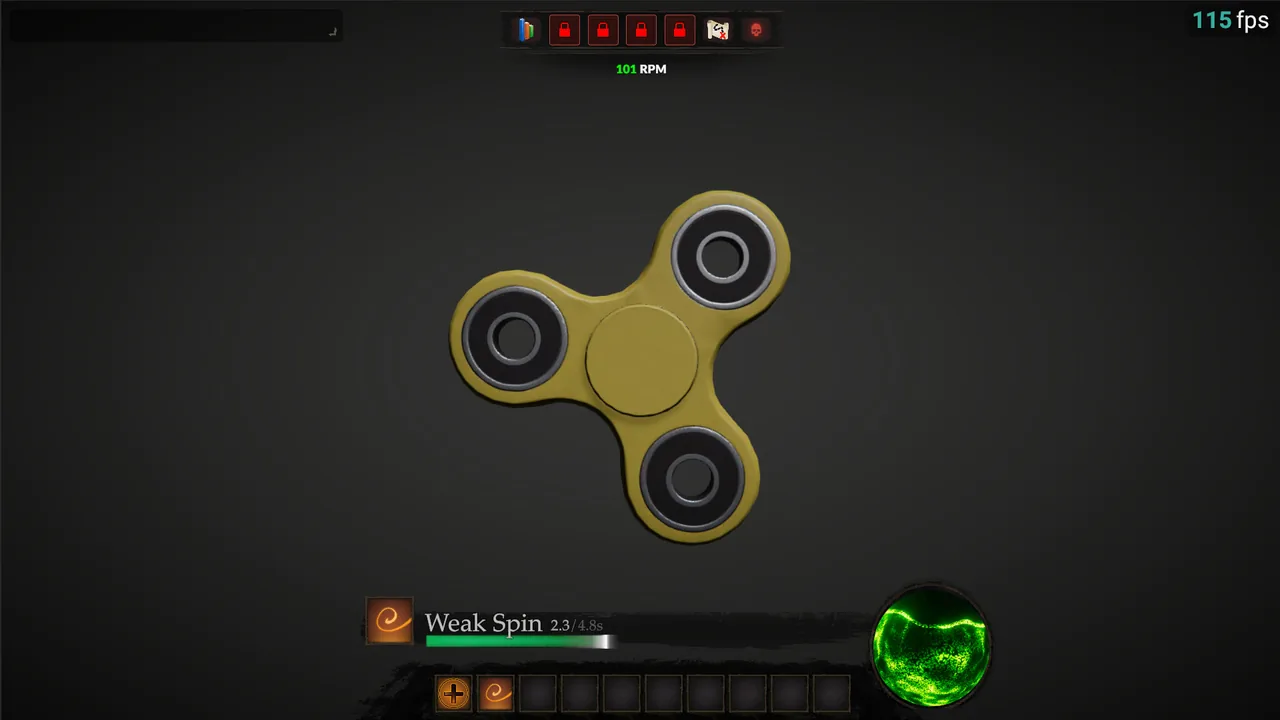
The core loop starts as pure clicker: spin the spinner, level up Spinning and Competency, unlock the next system. But Competency gates everything else — Mining, Blacksmithing, Jewelcrafting, Haggling, Alchemy, Engineering, Salvaging and Construction all sit behind specific Competency thresholds, so the game introduces one new system at a time rather than dumping the full 11-skill spread on you at once. Each skill carries its own passive talent tree and its own perks, and items you craft roll from a pool of 13 stats plus unique effects, with repeated crafts of the same item improving in quality as your proficiency with that specific item rises. That's a meaningfully deeper crafting model than most games in this price bracket bother building — closer to a proper RPG's itemization than a clicker's flat upgrade list.
The catch, and it's one the game's own top-voted 189-hour review calls out directly, is that there's "no tutorial past the first 10 minutes of gameplay." Steam's own achievement data backs that up in a way that's hard to argue with: only 60.6% of owners ever finish the tutorial achievement at all. Nearly four in ten people who bought this game never got past the opening explanation of what to do, and for a game whose entire hook is watching later systems compound on earlier ones, that's a real cost.
From clicking to automation, on the game's own schedule
What separates Fidget Spinner RPG from a straight idle clicker is that the RPG half gradually hands control to an idle half. Engineering unlocks Macros — programmable command queues bound to hotkeys — and Construction lets you build and link machines that handle resource gathering and processing without direct input. Get the pieces in place and the game shifts from something you're actively clicking through to something running in the background while you do something else, which is the exact transition idle-RPG fans are looking for and one this genre doesn't always deliver cleanly. Reviewers who pushed past the early hours consistently describe this shift positively; the complaint, when it shows up, is more about how long it takes to get there than whether it's worth reaching.
The visual escalation that rewards sticking around is worth calling out on its own. Around 16,000 RPM the spinner starts trailing a thin stream of smoke; by 75,000 RPM the centre is visibly on fire; past 350,000 RPM sparks start flying off it entirely, and the effects keep ratcheting up as the numbers climb into the billions and beyond. It's a small thing, but it's the kind of payoff that makes an absurd premise feel like it was actually designed around its own joke rather than just named after one.
The Prestige loop that never quite earns its keep
Where the design comes apart is at the far end of that curve. Prestige is meant to be the long-term hook — reset your run, keep XP-based bonuses, spend a separate currency on heirlooms and pick from a set of run-altering augments — but the same detailed 189-hour review that praised the early game calls the heirlooms "either very niche in effect" or priced out of reach for anything actually useful, and describes the augment challenges as rarely feeling rewarding enough to pursue even once.
It gets worse than a weak incentive, though. A March 2026 review, nearly three years after 1.0, reports that the game's stat-scaling formula uses a logarithmic curve rather than a more conventional escalating cost, which means a sufficiently patient player can pick up almost every achievement in the game without prestiging at all — undermining the entire point of the system the developer built. Steam's own achievement numbers are consistent with a Prestige system most players never seriously engage with either way: only 8.3% of owners ever unlock it, and just 6.3% complete a first Prestige run. Whether that's players walking away before reaching it or players finding, correctly, that they don't need to bother, either reading points at the same design problem.
A developer who went quiet after launch
The most telling pattern in Fidget Spinner RPG's history isn't in any single review — it's in the Steam news feed. Between the April 2022 "Hello World!" post and the end of that first week, the developer shipped patch after patch, sometimes multiple in a single day; one of the earliest positive reviews, from May 2022, specifically praises a developer who "implements MULTIPLE updates a day" and "listens to feedback." That pace continued in bursts through Early Access — construction and new skills arriving on the experimental branch before rolling to main, regular bugfix passes — right up to the 26 September 2023 version that formally exited Early Access. Two more bugfix patches followed in the first week of October 2023. Then nothing. As of this review, in August 2026, the news feed has been silent for essentially three years.
Players noticed well before the silence became undeniable. A May 2022 review flagged the drop in patch frequency as a "cash grab" risk within weeks of the Early Access launch, before pulling back to note it was too early to be sure. A March 2024 review — six months after 1.0 — is more explicit: after cataloguing unbalanced system pacing and the AI-generated text (more on that below), it adds that "the developer looks to have been quite active in the past" and says plainly it would reconsider its verdict "if the game receives new updates." No such update has come. That's not a hypothetical worry any more; it's the game's actual post-launch record, and it's the single biggest factor keeping the score below where the core design would otherwise land.
Save corruption and the AI-content disclosure
Two more threads run through the negative reviews and neither has been addressed by a patch, because there haven't been any. Save-file loss shows up more than once, years apart: a January 2024 review describes losing a save with over 100 hours on it after running a disk-cleaning tool, and an August 2025 review reports a save being "broken or totally erased" twice. Steam Cloud is listed as a supported feature, but neither report suggests it caught the loss.
The other is a documented AI-content disclosure issue. The store page carries a dedicated "AI Generated Content Disclosure" section, which reads in full: "Various text lines in the game's 'News Ticker' were pre-generated with generative AI. All generated text lines have been manually reviewed prior to being published to ensure they are free of any inappropriate or trademarked material. You can disable the game's news ticker in the in-game settings, which will prevent the display of any AI generated content." That's a narrow scope — cosmetic flavour text in one optional UI element, not core systems or item descriptions — and it's disclosed as Steam's own policies now require. What the review corpus shows is that the disclosure came later than the feature did: six of the 27 English negative reviews, dated from May 2023 through October 2025, specifically object to buying the game before any such notice existed, with a December 2023 review putting it plainly — "I feel like you should disclose the use of AI content in your Steam Store description. It's a little ehhh to wait until after I bought the game." None of the six treat it as their primary complaint about the game itself; all of them frame it as something a prospective buyer deserves to know going in, which is a fair position regardless of how minor the actual content is.
Where the review numbers actually sit
Fidget Spinner RPG holds 85.2% positive across 182 lifetime English reviews and 84.3% across 235 reviews in every language combined — close enough that there's no meaningful language-driven skew to correct for, and English makes up three-quarters of the most recent activity. It has softened a little over time: the 100 most recent English reviews sit at 79% positive, roughly six points below the lifetime figure, which tracks with a small, cheap game whose enthusiastic early adopters have mostly said their piece and whose remaining reviewers are increasingly the ones running into the unpatched Prestige exploit or the save-loss reports years after anyone was fixing anything.
Final verdict
There's a genuinely well-built idle RPG inside Fidget Spinner RPG — eleven skills that unlock at a sensible pace, a crafting system with real stat variety, an automation layer that actually takes over the grind, and a joke premise that pays off visually as the numbers get sillier. NZ$5.99 for that, with no ads and no monetisation beyond the sticker price, is fair value on the numbers alone. But this is also a game whose developer built all of that energetically through Early Access and then stopped, leaving a Prestige system that a patient player can route around entirely, save-corruption reports with no response, and an AI-disclosure complaint that's been recurring for three years without so much as an acknowledgement. Buy it for what's already there, not for what it might become — nothing suggests it's becoming anything else. Players who like a self-contained skill-and-crafting climb without needing a live team behind it will get their money's worth; anyone hoping ongoing support might fix the known issues should adjust expectations before clicking purchase.
Wanderer players who enjoy a gathering-and-crafting skill ladder that keeps working while they're away will recognise the shape of what Fidget Spinner RPG is reaching for, even if the execution and the support behind it land in different places.
Pros and cons
Pros
- Eleven skills gate behind specific Competency levels, so each new system (mining, blacksmithing, jewelcrafting, engineering) gets room to land before the next one arrives
- The escalating visual spectacle is a genuine payoff for the joke premise — smoke appears around 16,000 RPM, fire around 75,000, and sparks past 350,000, so the absurdity keeps compounding
- Engineering and Construction let the RPG-lite opening hours hand off to real automation via macros and linked machines, so late-game grinding doesn't require sitting at the keyboard
- A one-time NZ$5.99 purchase with no ads, no premium currency and no battle pass, in a genre where that's increasingly rare
- Steam Cloud saves are supported and the core loop was praised across 2022 through 2026 reviews, showing the underlying design has aged reasonably well even without support
Cons
- A logarithmic RPM-scaling formula, still unpatched as of a March 2026 review, lets players clear almost every achievement without ever using the Prestige system it was meant to be balanced around
- The Prestige loop's heirlooms and augments are described by long-time players as either too niche to matter or priced out of reach, so repeat runs don't feel rewarding
- Development has been effectively dormant since a bugfix patch in October 2023, roughly three years before this review, despite an Early Access history of multiple updates a day
- Save corruption has been reported years apart with no acknowledged fix, including one player who lost a save north of 100 hours deep
- Six of the 27 English-language negative reviews, spread from May 2023 to October 2025, single out AI-generated flavour text that wasn't disclosed on the store page at the time of purchase
Screenshots
-
Fidget Spinner RPGImage: Bryce Summer via Steam -
Fidget Spinner RPGImage: Bryce Summer via Steam -
Fidget Spinner RPGImage: Bryce Summer via Steam -
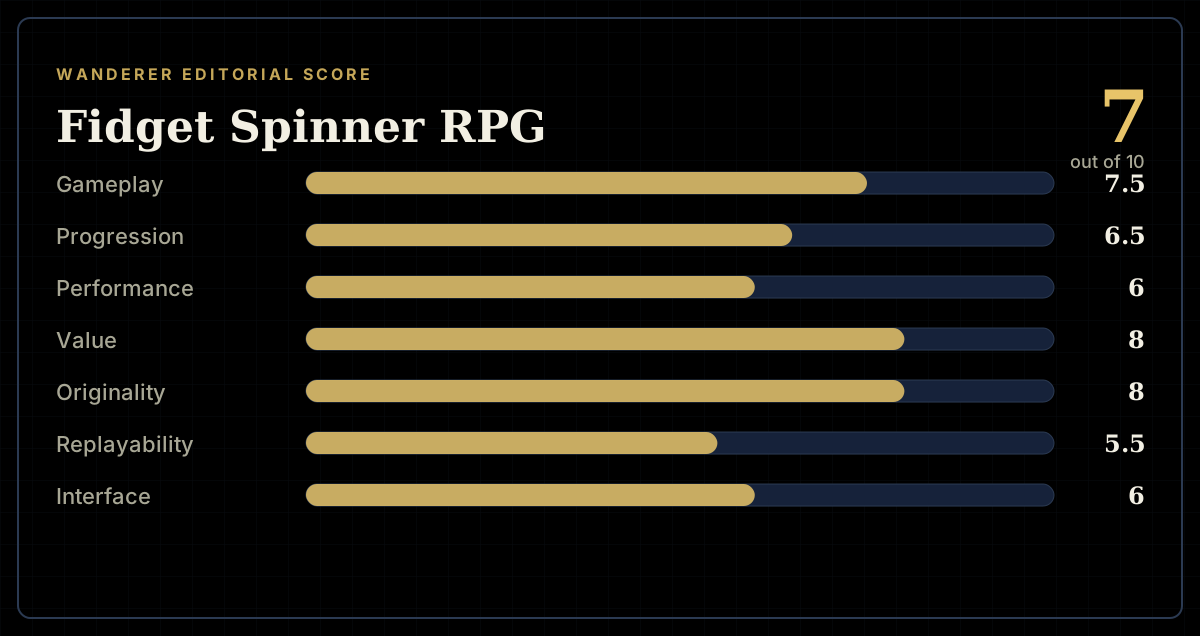
How the review scores each part of the gameWanderer Editorial -
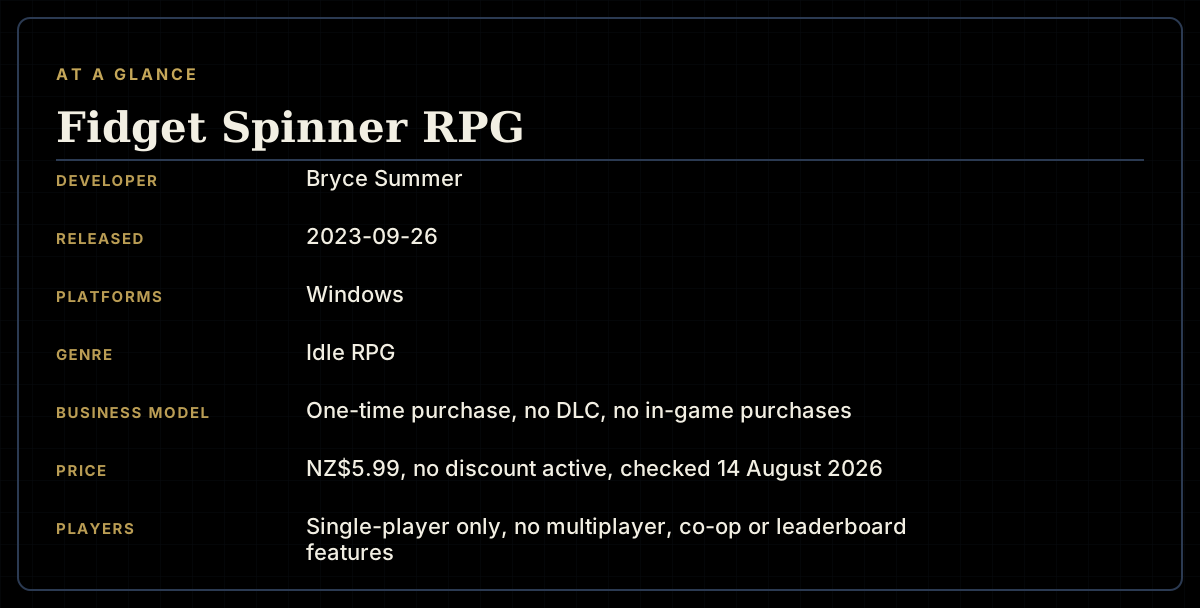
The game at a glanceWanderer Editorial -
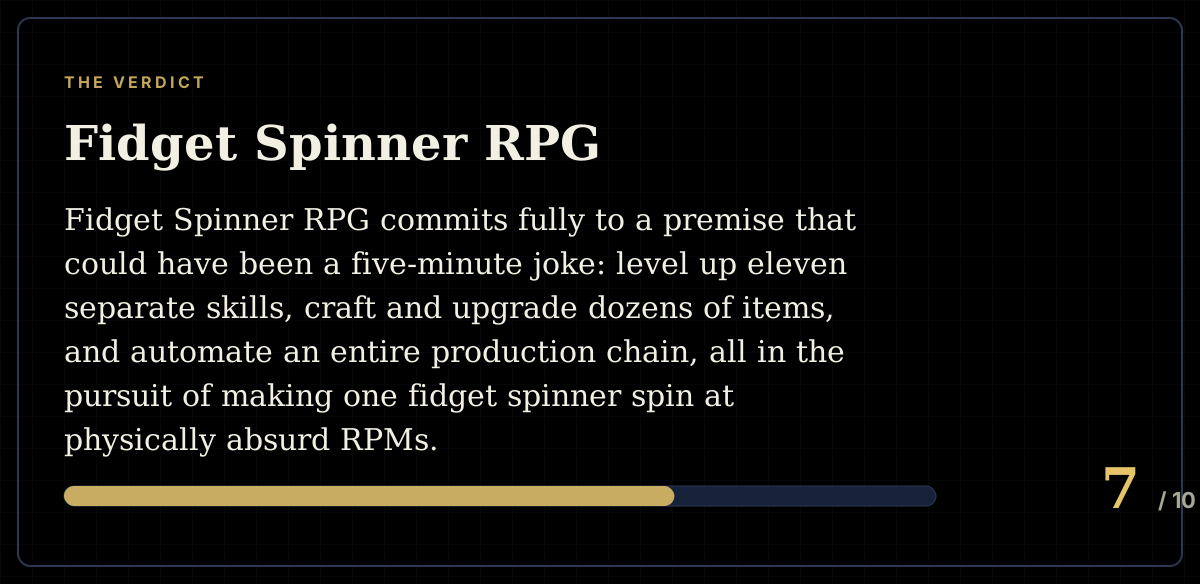
The short versionWanderer Editorial