
Game review
Reborn: An Idle Roguelike RPG
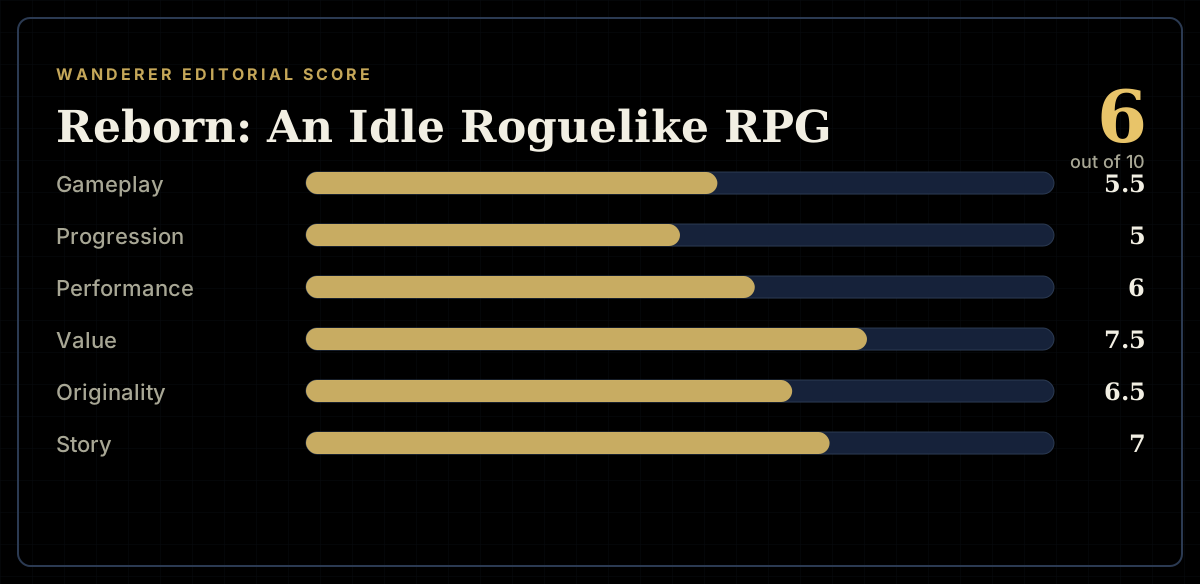
6 / 10
- Developer
- Blake Farnsworth
- Publisher
- Blake Farnsworth
- Released
- 9 May 2024
- Platforms
- Windows, macOS
- Genre
- Idle Roguelike RPG
- Monetisation
- Free, no ads, no in-game purchases, no daily login requirements
- Players
- Single-player
The short version
Reborn casts you as Katie, an immortal warrior who auto-fights her way through an ever-deepening cave while a village of 19 named villagers lives its own story around her, each death and rebirth banking permanent progress for the next run. It spent a full year in Early Access — from 9 May 2024 to a 1.0 exit on the same calendar date in 2025 — and now sits at a Mixed 64% across 118 lifetime reviews. Read the negative sample in full and one word recurs constantly: slow. Not slow in the deliberate, come-back-later sense idle games are built on, but slow in ways players say cost them agency — crafting, the system meant to give a returning player something to do, arrives so late that several reviewers had put in ten-plus hours before touching it.
Biggest strengths
- Free with no monetisation of any kind — no ads, no in-game purchases, no daily login requirement — a genuine rarity in the idle genre this library reviews most often, and multiple reviewers call this out with visible relief
- A real story wrapped around the idle loop: 19 named villagers with evolving relationships and personal arcs, built and expanded by a solo developer over roughly 18 months of active work, praised by several long-playtime reviewers as the game's actual hook rather than the combat
- Genuine long-term engagement is visible in the corpus itself — positive reviewers with 404, 690 and even 1,365 hours logged, plus a global achievement for playing a full year (1.8% of the base has it), evidence that whatever the pacing complaints, a real subset of players keep coming back
Biggest weaknesses
- Crafting — one of the four headline systems on the store page — is introduced far later than players expect; the achievement for first crafting a recipe sits at 22.6% completion versus 41.3% for simply entering the cave, and one detailed negative review calls the gap "not late entry card late, we are talking endgame level late"
- Multiple reviewers, including one two years into the game's life with 4,700+ hours logged, describe the mid-to-late game as thin: content runs out well before the numbers do, leaving a wait-timer loop rather than fresh systems
- Onboarding friction is a repeated, specific complaint rather than vague grumbling: NPC interaction not working via keyboard, a documented dialogue softlock in the opening minutes, and "really bad" first impressions named independently across the review history
Who it's for: Patient idle-genre fans who value a genuine, evolving village narrative over fast numeric payoff, and who are drawn in by a free, ad-free, solo-developed game with no monetisation angle to distrust. A poor fit for anyone who wants an idle game's usual instant-gratification pacing, or expects Early Access-grade rough edges to be long gone a year after 1.0.
Our recommendation: Worth trying precisely because it costs nothing and asks nothing of your wallet — but go in expecting a genuinely slow-burn game whose most interesting system, crafting, doesn't open up for hours, and budget patience for UI and onboarding friction the developer hasn't fully sanded down even a year past its 1.0 exit.
6 / 10
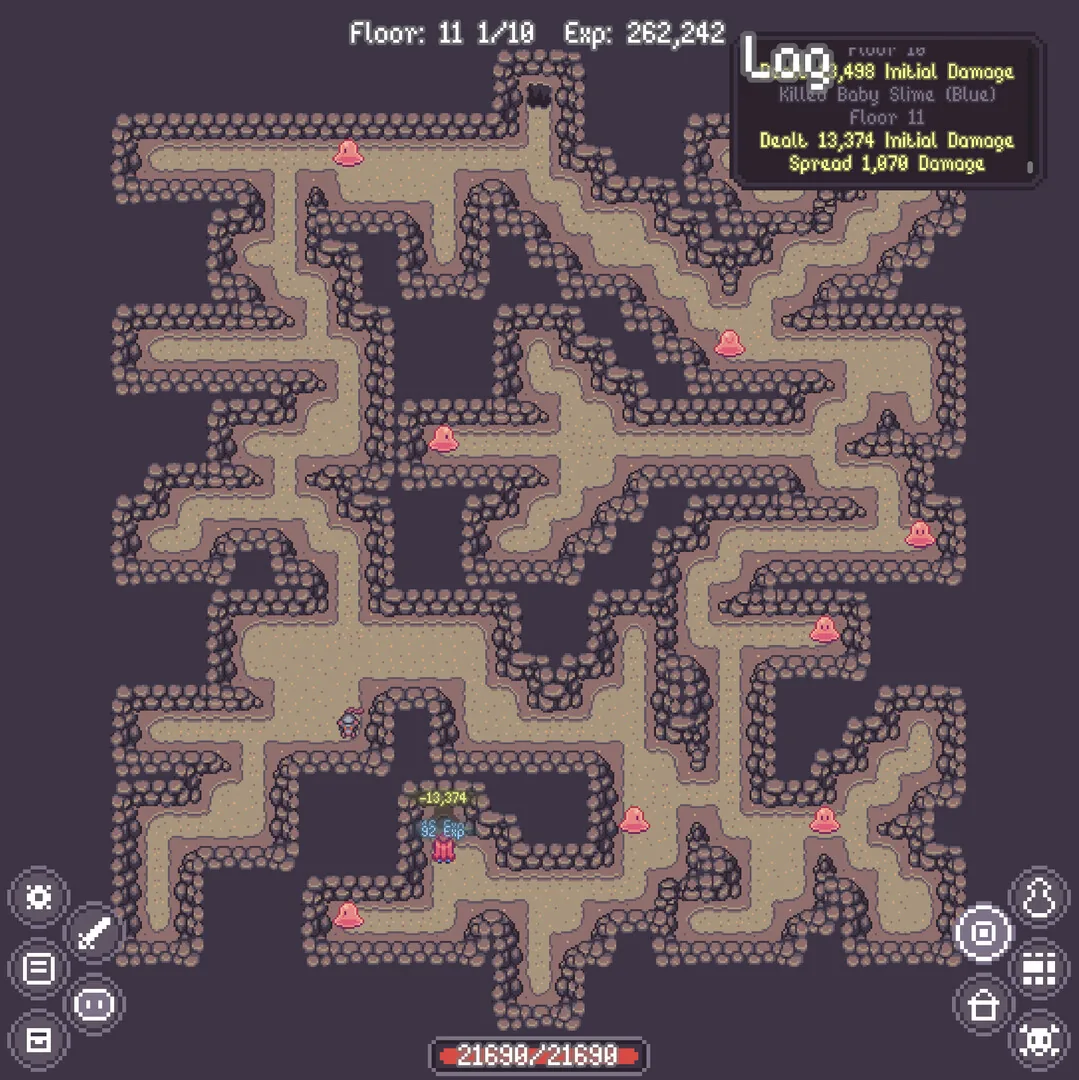
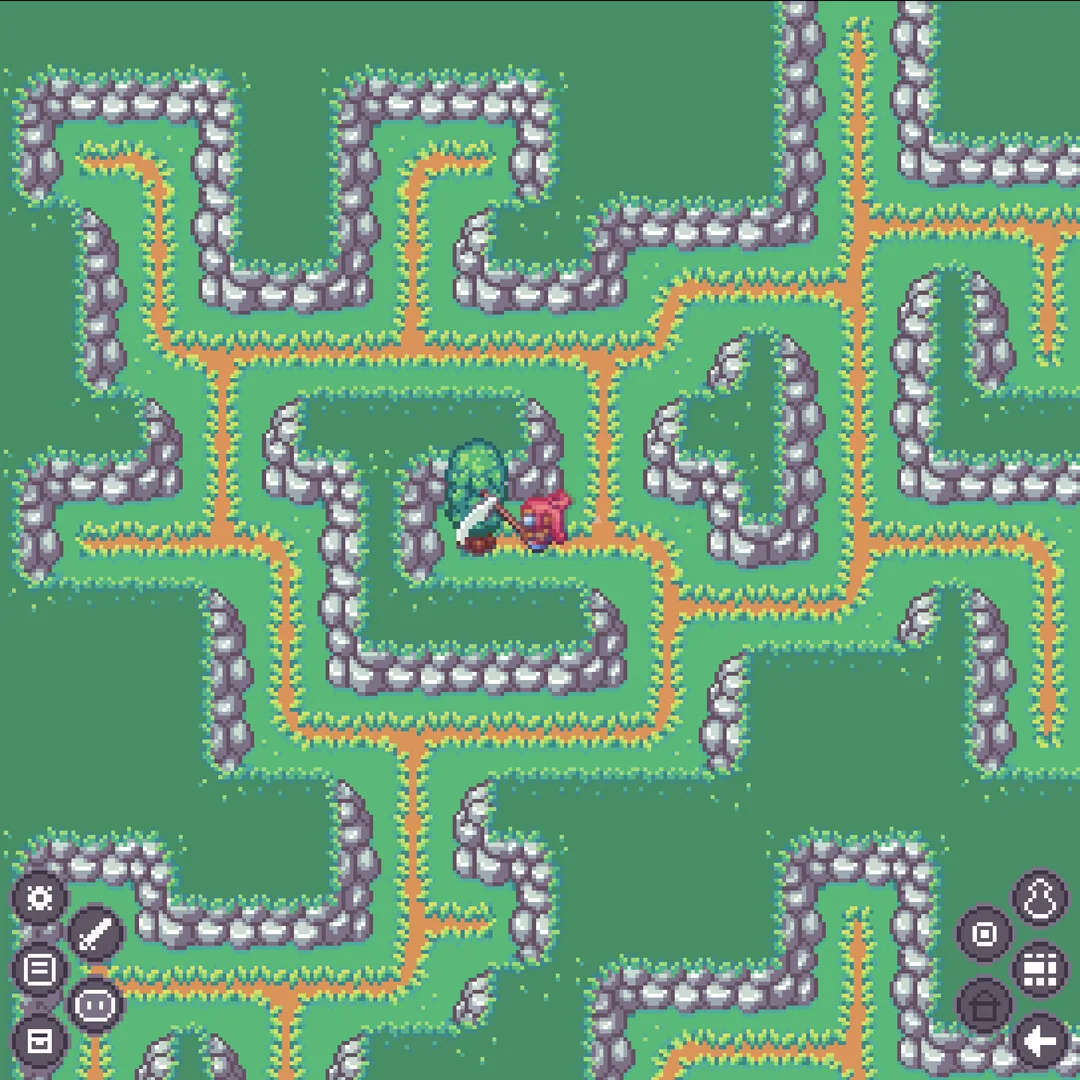
Reborn: An Idle Roguelike RPG spent exactly one year in Early Access — Steam's own store page lists an Early Access Release Date of 9 May 2024, and the developer's news feed confirms "V1.0.0" landed on 9 May 2025, precisely twelve months later. That matters for how to read this game: the visible Steam date makes it look like a game barely three months old at the time of this review, when the truth is a solo developer, Blake Farnsworth, has been iterating on it in public for well over two years. You play Katie, an immortal "Reborn" sent to guard a small village on the edge of a dangerous cave; set her to auto-fight deeper while you're away, and check in to spend what she's earned on stats, gear, potions and the village's own slowly-unfolding story. It's entirely free, with no ads, no in-game purchases and no daily login hooks — genuinely unusual in a genre this library reviews more often than any other, and one where predatory monetisation is the norm rather than the exception. Its reviewers reward that honesty with real hours, and punish its pacing with a Mixed 64.4% across 118 lifetime reviews.
The system players came for arrives last
Read the full 42-review English negative corpus and one specific, measurable complaint outranks every other: crafting — one of the four systems the store page leads with — shows up far later than the pacing of an idle game can comfortably absorb. "Crafting is introduced extremely late," reads one detailed negative from July 2025, "we are not talking late entry card late, we are talking endgame level late." Steam's own achievement data backs the shape of that complaint up: 41.3% of players have the achievement for simply entering the cave — essentially a tutorial checkpoint — while only 22.6% have crafted anything at all, a steep drop for a system meant to give a returning idle player something concrete to do between cave runs. A separate, older negative from June 2024 (during Early Access) independently flags items "vanishing when they should not... such as equipment that is currently worn," a bug-shaped complaint rather than a pacing one, but pointed at the same underlying system.
The pacing complaint isn't limited to crafting specifically. "Takes way too long for the game to get going, and not in the normal idle game way," reads one review; another simply repeats "very very very very SLOW" for emphasis. That's a meaningfully different complaint from most idle-game criticism, which is usually about a game being too passive — here the objection is closer to the opposite: that the active, hands-on early hours ask a lot before the idle half of the loop starts paying off. One of the most detailed negatives, from a reviewer with over 4,700 hours logged, still couldn't reach 100% completion and describes lacking "lots of mid to late game content/mechanics" despite that extraordinary investment — a specific, credible signal that the content well runs dry well before the numbers do.
Rough edges a year past 1.0 haven't fully sanded down
Onboarding friction shows up independently, and specifically, across multiple reviews rather than as one person's bad first ten minutes. "Really bad onboarding experience," reads one from May 2025 (1.0 launch week), naming "movement and talking to NPCs" as clunky and noting keyboard-only interaction doesn't fully work. Another reviewer reports getting softlocked in a dialogue bug inside their first ten minutes of play. These aren't 2024 Early Access complaints excusable as growing pains — they're dated to and after the 1.0 launch, and recent sentiment hasn't moved much to suggest they've since been resolved: 66 of the last 100 English reviews are positive, close enough to the 64.4% lifetime figure that this reads as a stable, ongoing Mixed reception rather than a game climbing out of a rough launch.
What the game gets right
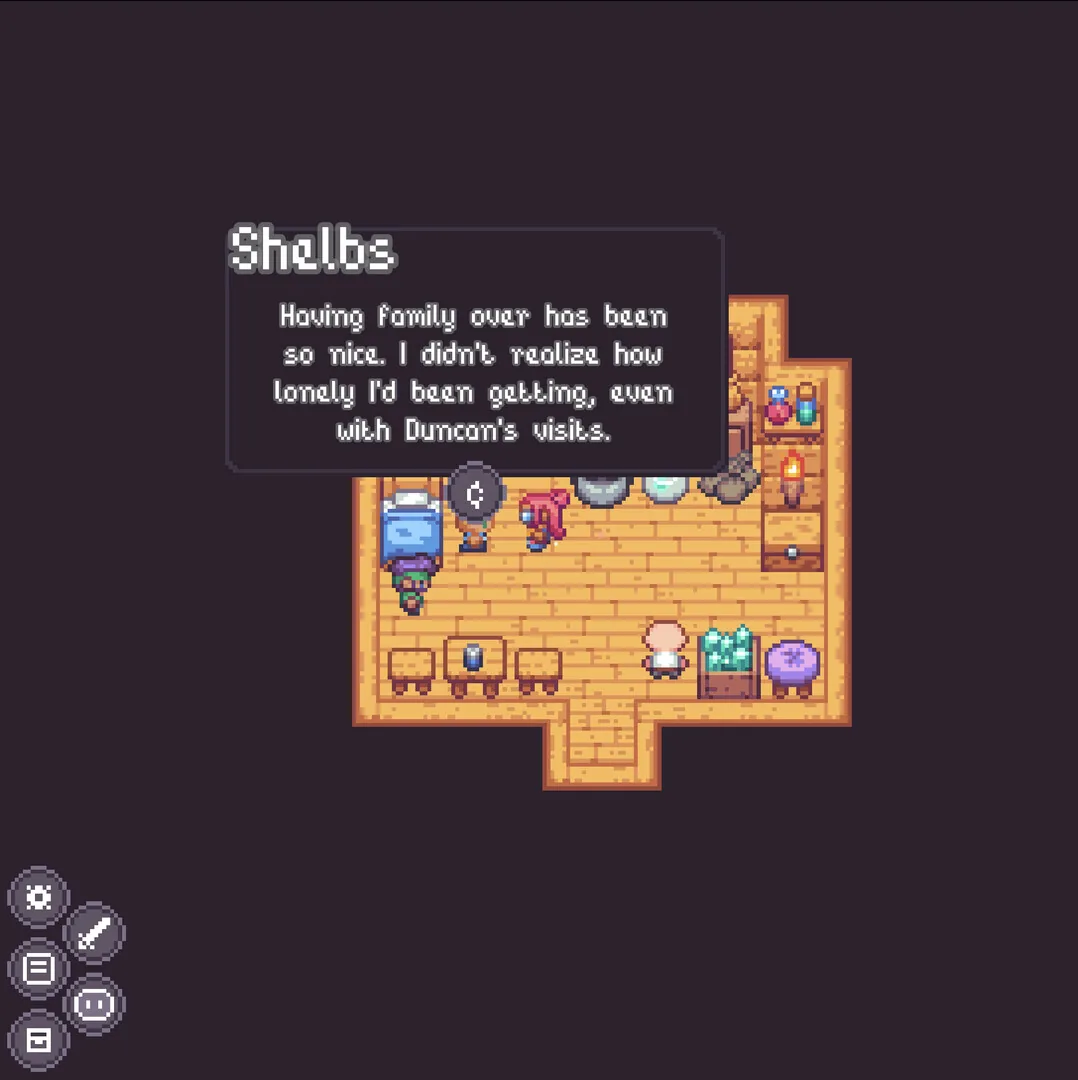
None of this erases what's genuinely distinctive here. The village of 19 named villagers, each with an evolving relationship and personal storyline that unfolds as you play, is the part of the pitch that positive reviewers actually talk about — the combat and stat-building is described more as the vehicle than the destination. And the retention data tells its own honest story: alongside the steep early drop-off common to every idle game, a real long tail persists — 7.3% of players have stuck around a full week, 3.5% a full month, and 1.8% a full year, evidence of a genuine, if minority, audience that finds the slow burn worth sticking with. Combined with a completely honest monetisation stance — free, no ads, no purchases, no login-streak manipulation — this reads as a solo developer who built the game he wanted to build rather than one tuned to extract money from frustration, even where that same patience costs the game some of its accessibility to a wider audience.
Final verdict
Reborn: An Idle Roguelike RPG is a sincere, free, story-driven idle roguelike let down by pacing decisions that even its own long-term fans name as the game's central flaw — a headline system arriving too late, and an idle loop that, for stretches, doesn't feel especially idle. It costs nothing to try, which lowers the bar for recommending it considerably, and the village-relationship writing is a genuine differentiator in a genre that rarely bothers with story at all. But go in knowing what the corpus consistently says: budget patience for the opening hours, and don't expect crafting — the system most likely to hook an idle-game player long-term — to open up quickly.
Pros and cons
Pros
- Free with no monetisation of any kind — no ads, no in-game purchases, no daily login requirement — a genuine rarity in the idle genre this library reviews most often, and multiple reviewers call this out with visible relief
- A real story wrapped around the idle loop: 19 named villagers with evolving relationships and personal arcs, built and expanded by a solo developer over roughly 18 months of active work, praised by several long-playtime reviewers as the game's actual hook rather than the combat
- Genuine long-term engagement is visible in the corpus itself — positive reviewers with 404, 690 and even 1,365 hours logged, plus a global achievement for playing a full year (1.8% of the base has it), evidence that whatever the pacing complaints, a real subset of players keep coming back
- Death-and-rebirth progression is honestly structured: permanent stat gains carry across runs, so failed cave attempts still bank something rather than resetting a player to zero
- Solo dev is visibly present in the community (an active Discord, direct in-description thanks to reviewers by name) and the year-long Early Access period shows real iteration rather than an asset dump
Cons
- Crafting — one of the four headline systems on the store page — is introduced far later than players expect; the achievement for first crafting a recipe sits at 22.6% completion versus 41.3% for simply entering the cave, and one detailed negative review calls the gap "not late entry card late, we are talking endgame level late"
- Multiple reviewers, including one two years into the game's life with 4,700+ hours logged, describe the mid-to-late game as thin: content runs out well before the numbers do, leaving a wait-timer loop rather than fresh systems
- Onboarding friction is a repeated, specific complaint rather than vague grumbling: NPC interaction not working via keyboard, a documented dialogue softlock in the opening minutes, and "really bad" first impressions named independently across the review history
- Several reviewers, including some who otherwise recommend the game, describe pacing as unusually slow even by idle-genre standards — one calls the early hours "very very very very SLOW," another notes progress barely moves without manually intervening far more than an "idle" label implies
- Recent English-language sentiment (66% of the last 100 reviews positive) sits close to the lifetime figure rather than recovering post-launch, suggesting the pacing and crafting-timing complaints are still live a year after 1.0, not teething problems the developer has since fixed
Screenshots
-
Reborn: An Idle Roguelike RPGImage: Blake Farnsworth via Steam -
Reborn: An Idle Roguelike RPGImage: Blake Farnsworth via Steam -
Reborn: An Idle Roguelike RPGImage: Blake Farnsworth via Steam -
How the review scores each part of the gameWanderer Editorial -
The short versionWanderer Editorial