Game review
Idle Industries
6 / 10
- Developer
- Maxine Tarabbia
- Publisher
- Maxine Tarabbia
- Released
- 15 July 2023
- Platforms
- Windows
- Genre
- Idle factory-automation sim
- Monetisation
- One-time purchase, no DLC, no in-game purchases, source code publicly available
- Players
- Single-player only, no multiplayer or leaderboard features
The short version
Idle Industries is a solo developer's attempt to fuse Factorio-style belt logistics with the prestige loop of a classic idle game, and the idea is more interesting than almost anything else in this appid range: miners feed ore onto belts, refineries turn it into something more valuable, and once you've stacked up a million credits you can reset everything for a permanent doubling of resource value and start again. It's a genuinely novel combination for a NZ$7.39 one-person project, and Steam's own achievement data shows a real slice of players coming back for a second prestige run. What holds it back is friction in exactly the places a game like this can't afford it — fiddly placement controls, a grey-on-grey palette several of its own fans say is hard to read, and a content ceiling that both positive and negative reviewers independently describe as too small for what it's attempting.
Biggest strengths
- Combines Factorio-style belt-and-refinery logistics with a genuine idle prestige system that doubles resource value on reset, a hybrid this specific appid band doesn't otherwise offer
- Offline time resimulation means production keeps advancing while the game is closed rather than only while a save is open
- Fully original soundtrack and an open-source codebase, unusual transparency for a NZ$7.39 solo project
Biggest weaknesses
- Multiple reviewers report accidentally placing belts and machines due to imprecise controls, one calling them simply "weird"
- The muted grey-on-grey stone texture makes miners, refineries and belts hard to tell apart at a glance, a complaint a positive reviewer raises alongside their praise for the core idea
- The tutorial delivers key mechanics through small, unskippable on-screen text that several players say is easy to miss entirely
Who it's for: Factorio and idle-game fans curious about the hybrid on paper, especially anyone drawn to the idea of an offline-resimulating automation sandbox that costs less than a takeaway coffee and ships with its source code open for inspection.
Our recommendation: Worth a look at its low price if the concept appeals to you, but go in expecting a rough, short first pass at an idea rather than a polished implementation of one. The achievement curve shows most buyers don't get far past a first prestige, which lines up with what the reviews say about content running out faster than the belt-building fantasy promises.
6 / 10
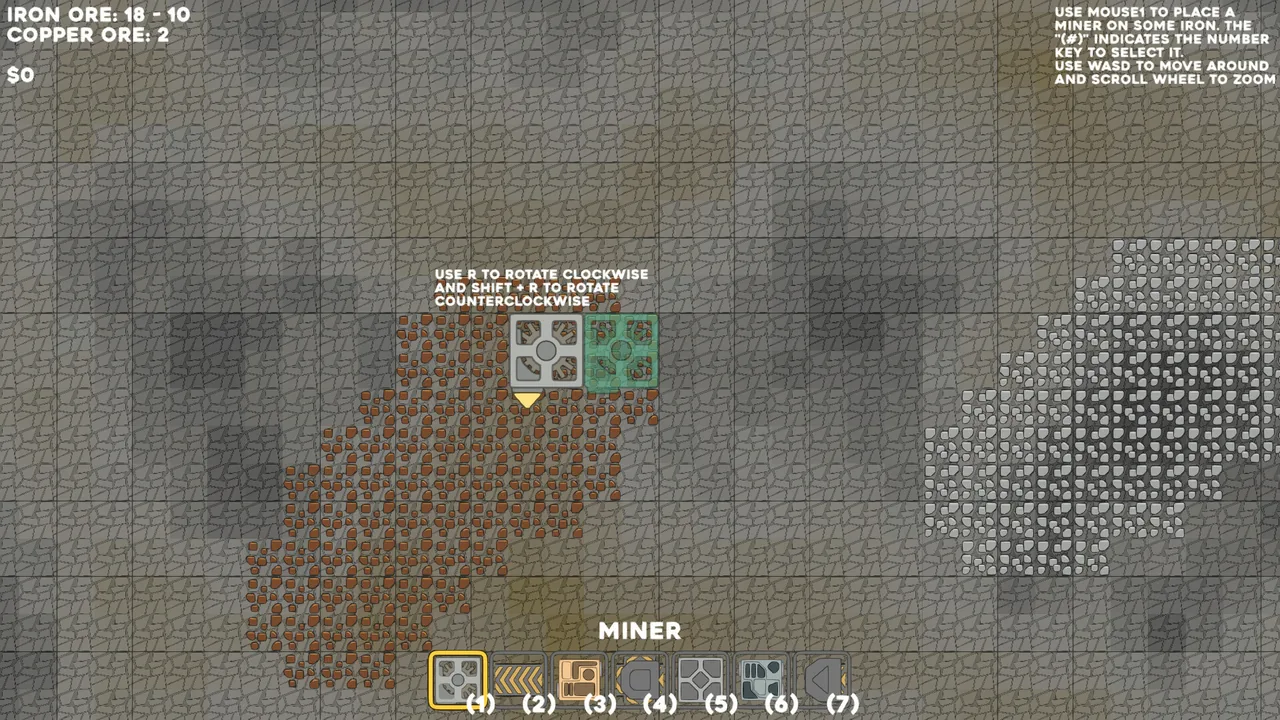
Idle Industries opens with a screen most idle games never bother showing you: a patch of iron ore, a single miner to place on it, and on-screen text explaining that R rotates clockwise and Shift+R rotates the other way. That's a Factorio tutorial, not an idle-game one, and the combination is the entire pitch. Solo developer Maxine Tarabbia has built a small automation sandbox — miners feed ore onto belts, belts feed refineries, refineries turn raw materials into something worth more — and then wrapped a classic idle-game prestige system around it: get to a million credits, reset everything, and every resource is worth twice as much on the next run. It's a genuinely unusual pairing for a one-person, NZ$7.39 project, and it's the kind of idea this appid range rarely produces. Whether it holds together for the roughly five hours the store page promises is a different question, and the game's own tiny review corpus — nine reviews in over two years, every one of them read for this review — answers it with real specificity.
A real logistics puzzle wearing an idle game's clothes
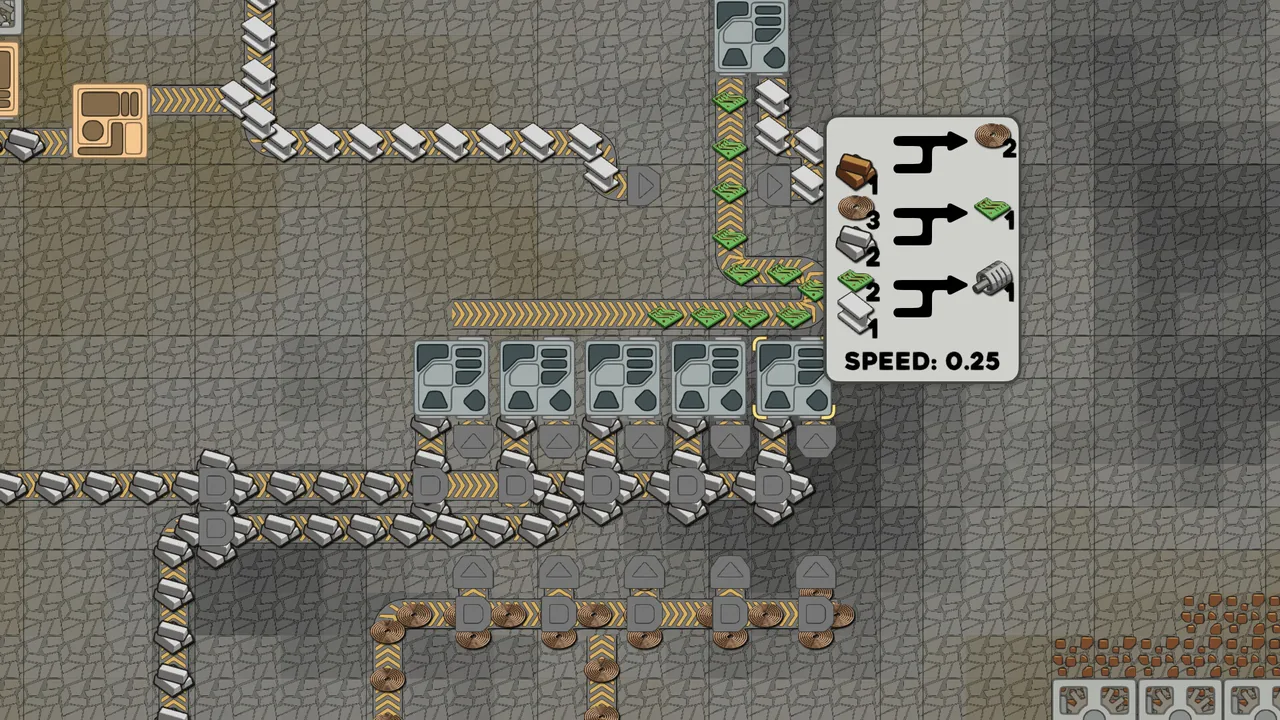
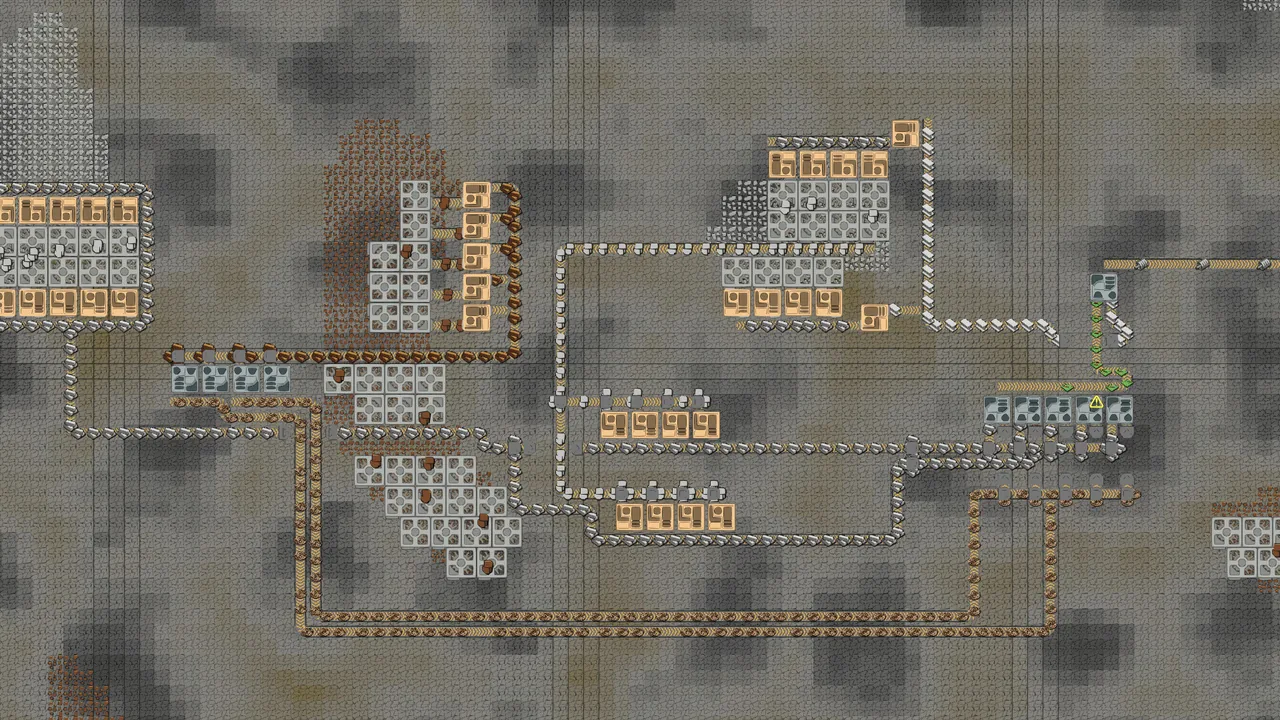
The core loop asks you to do more than watch numbers climb. Miners have to be placed directly on ore deposits, belts have to physically route resources to refineries, and refineries have recipe requirements shown as tooltip cards — three units of copper and one iron in, one circuit board out, at a listed processing speed. That's a genuine layout puzzle, not a menu of upgrade buttons, and the promotional screenshots bear it out: mid-game factory sprawls with multiple refinery clusters, criss-crossing belt lines, and resource icons queued up waiting to be processed. It's recognisably built by someone who understands what makes Factorio-likes satisfying, scaled down to fit a much smaller, much cheaper package.
Layered on top of that logistics puzzle is the idle half of the design. Progress continues while the game is closed through offline time resimulation, so a factory built before switching off keeps producing rather than freezing in place. And once a run's economy climbs high enough — the credits threshold is set at one million — prestiging resets the board but permanently doubles the value of every resource from that point on, the same escalating-multiplier hook that makes idle games compulsive in the first place. Combining that hook with an actual spatial-logistics game, rather than a single upgrade tree, is the one thing here that genuinely sets Idle Industries apart from the dozens of other appid-adjacent clicker games it shares a release window with.
Where the controls and the palette get in the way
The reviews that exist are consistent about where the experience breaks down, and it isn't the underlying concept. Placement is the most repeated complaint: multiple players describe accidentally dropping belts and machines in the wrong spot, with one calling the controls simply "weird" and reporting that early minutes are lost to undoing misplaced pieces. A second, related complaint is visual — the game's muted grey stone-tile palette makes it genuinely difficult to distinguish machines and belt types from a distance, a criticism that shows up even in an otherwise positive four-star-style review that goes out of its way to praise the underlying idea in the same breath. When your genre depends on reading a busy factory floor at a glance, a colour scheme that several of your own fans single out as hard to parse is a real cost, not a cosmetic quibble.
The tutorial takes some of the blame too. Rather than gating progress behind a completed instruction, it delivers key mechanics through small on-screen text boxes that advance on their own timer, and at least one reviewer reports missing a crucial mechanic entirely because the relevant text scrolled past unattended. For a game already asking players to learn Factorio-style logistics from scratch, a tutorial that can silently skip past a load-bearing explanation is a self-inflicted wound.
A short game, honestly measured against itself
The store page is upfront that this is roughly five hours of designed content, "but this is an idle game so it all depends on how it's played" — and the review corpus takes that claim seriously from both directions. A positive review calls it "actually a pretty interesting take on idle games... a basic version of Factorio, with simple logistics and crafting," but immediately adds it's "a bit rough around the edges" and wants a sequel with more scope. A negative review makes the same point in reverse: "The game was okay, but definitely felt much too small... for both an automation based game, AND for an idle game," and specifically asks for two to four times the current material options. Two reviewers, on opposite sides of the recommendation line, converging on the same "needs more content" verdict is a stronger signal than either review alone.
The Steam achievement data backs up where that shortfall bites. Circuit, the most-earned achievement, sits at 30.0%; Prestige — the game's own headline mechanic — comes in close behind at 27.5%, ahead of every mid-tier material achievement except Motor. That ordering is a genuinely encouraging sign: players who stick around are reaching the reset loop the game is actually built around, rather than stalling on some unrelated grind. But HardPrestige, presumably a tougher variant of the same reset, drops to 12.1%, and the underlying material achievements — Iron, Steel, Copper — all sit under 19%. Read together, the curve describes a game that hooks a meaningful minority into its central loop and then runs out of things to give them once they're there, which is exactly the "too small" complaint from both the positive and negative reviews, expressed as a number instead of an opinion.
The upgrades don't match the ambition of the logistics
One recurring criticism worth separating from the content-length complaint is about depth rather than quantity: the upgrade system is described as largely flat percentage increases — faster miners, cheaper refineries — without much structural variety layered on top. That's a real gap given how interesting the base logistics puzzle is. A game built around genuine spatial routing decisions has room for upgrades that change how you route rather than just how fast, and the version that shipped in July 2023 mostly settles for the latter. It's the kind of shortfall a longer development cycle or post-launch content pass could plausibly fix, but as of this writing there's no indication that's happened — the small review count and thin achievement sample suggest this remains a quiet, largely unmaintained corner of the store rather than an actively updated project.
Final verdict
Idle Industries deserves credit for attempting something the rest of its neighbourhood on Steam mostly doesn't: a real factory-logistics puzzle married to an idle game's prestige escalation, built and shipped by one person, with the source code left open for anyone curious enough to look. The achievement data shows that combination genuinely works for a slice of players, who push through to prestige and keep going. But the friction is real and it's reported by supporters and critics alike — placement controls that misfire, a palette that's hard to read at a glance, a tutorial that can skip past what it's trying to teach, and a content ceiling both sides of the review split call too low for what the concept promises. At NZ$7.39 it's a cheap, honest experiment rather than a polished product, worth a look specifically for the hybrid idea and worth tempering your expectations for almost everything around it.
Pros and cons
Pros
- Combines Factorio-style belt-and-refinery logistics with a genuine idle prestige system that doubles resource value on reset, a hybrid this specific appid band doesn't otherwise offer
- Offline time resimulation means production keeps advancing while the game is closed rather than only while a save is open
- Fully original soundtrack and an open-source codebase, unusual transparency for a NZ$7.39 solo project
- One reviewer with over 1,400 hours logged and multiple others in the hundred-plus-hour range describe the loop getting genuinely engaging once a first prestige unlocks deeper machine tiers
- Steam's achievement data shows Prestige sitting at 27.5%, meaningfully higher than several of the mid-tier material achievements below it, evidence that the reset loop itself is the part players actually chase
Cons
- Multiple reviewers report accidentally placing belts and machines due to imprecise controls, one calling them simply "weird"
- The muted grey-on-grey stone texture makes miners, refineries and belts hard to tell apart at a glance, a complaint a positive reviewer raises alongside their praise for the core idea
- The tutorial delivers key mechanics through small, unskippable on-screen text that several players say is easy to miss entirely
- Both a positive and a negative review independently call the game "too small," for an automation title and for an idle game, and ask for two to four times the current material and building roster
- Upgrades are described as flat percentage increases with little structural variety, leaving the mid-game feeling one-dimensional next to the strength of the core loop
Screenshots
-
Idle IndustriesImage: Maxine Tarabbia via Steam -
Idle IndustriesImage: Maxine Tarabbia via Steam -
Idle IndustriesImage: Maxine Tarabbia via Steam -
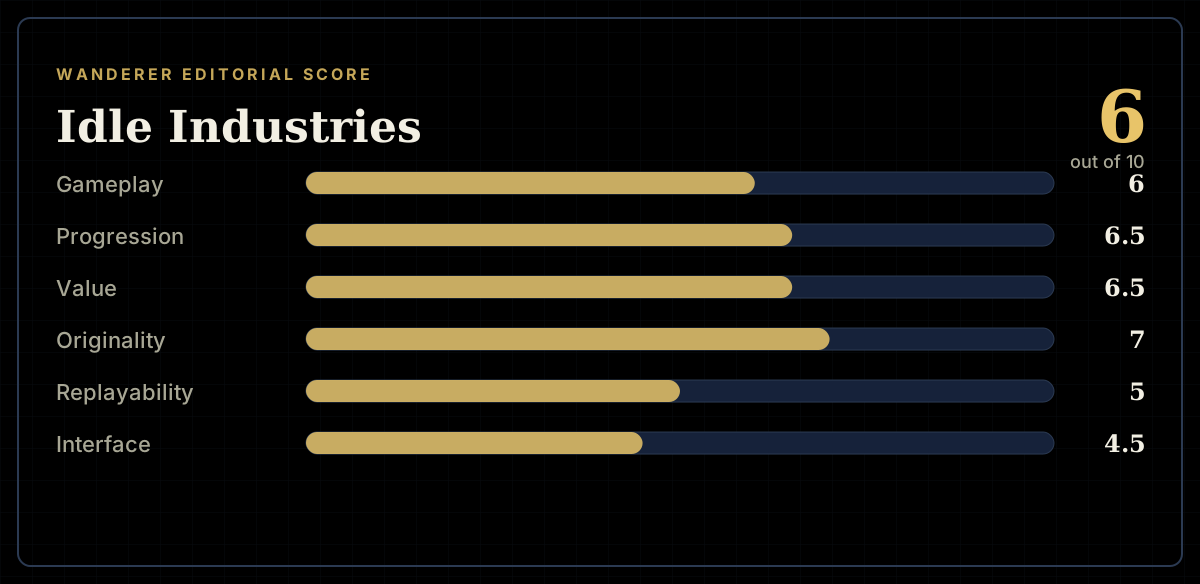
How the review scores each part of the gameWanderer Editorial -
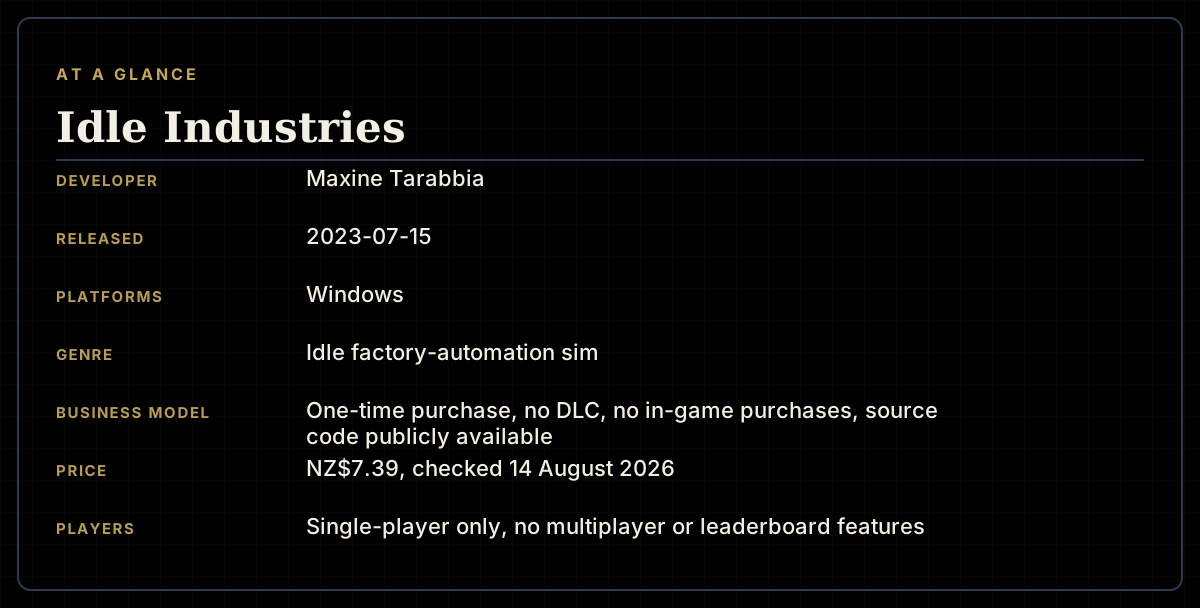
The game at a glanceWanderer Editorial -
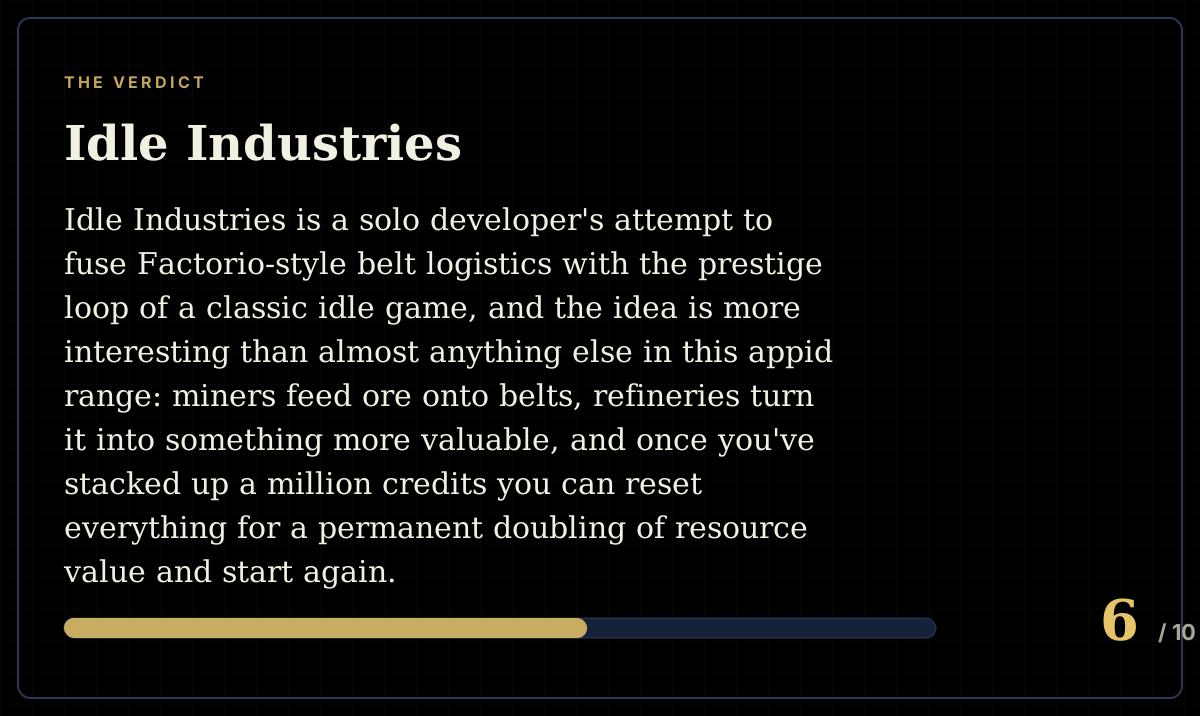
The short versionWanderer Editorial