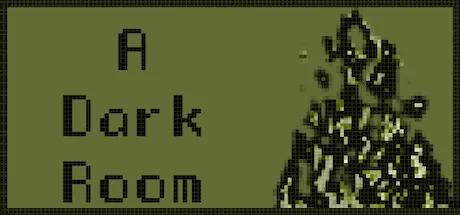
Game review
A Dark Room
8 / 10
- Developer
- Michael Townsend / doublespeak games (browser original); ported and later developed by Amir Rajan (iOS, Android, Steam)
- Publisher
- doublespeak games (browser); Scratchwork Development LLC (Steam)
- Released
- 10 June 2013
- Platforms
- Browser, iOS, Android, Windows, Mac, Linux
- Genre
- Incremental RPG
- Monetisation
- Free and ad-free in the browser; historically a one-off paid download on iOS and Android with nothing sold inside; a one-off paid Steam release with no DLC and no in-game purchases
- Players
- Single-player
The short version
A Dark Room takes the plainest interface a game can have — a handful of lines of text and a row of buttons that appear only when they mean something — and uses it to control pacing and dread more precisely than most games manage with a full engine. The incremental skeleton underneath (gather, build, feed, send people out, wait) never feels like busywork, because the game is using every tick of it to tell you something about the world without ever explaining itself directly.
It's also a game that turns genuinely hostile once you leave the room behind. The wasteland outside runs on a harder, less forgiving version of the systems you just learned, and a fair number of players bounce off that wall long before the story finishes making its point.
Biggest strengths
- The interface itself withholds information as a storytelling tool, so buttons and text appear only once they matter
- The early crafting-and-building loop teaches every system you'll need without a single tutorial popup
- Silence and short, plain sentences carry more atmosphere than most games manage with a full script
Biggest weaknesses
- The wasteland's combat and resource math punish careless expeditions hard, and the difficulty spike catches new players off guard
- Once the pattern behind the incremental loop is understood, later stretches of gathering and building repeat with little new to think about
- The Steam release is the same design as the decade-old free browser game with a handful of quality-of-life extras, not a reimagining
Who it's for: Players who enjoy a game that trusts them to work out what's happening from context, and anyone who likes their incrementals to have a beginning, middle and end rather than an infinite tail.
Our recommendation: Play the free browser version first — it's still the definitive way to experience this, and it costs nothing but a few hours. The Steam edition is worth its modest price only if you want the extras layered on top, not as a better copy of the same game.
8 / 10
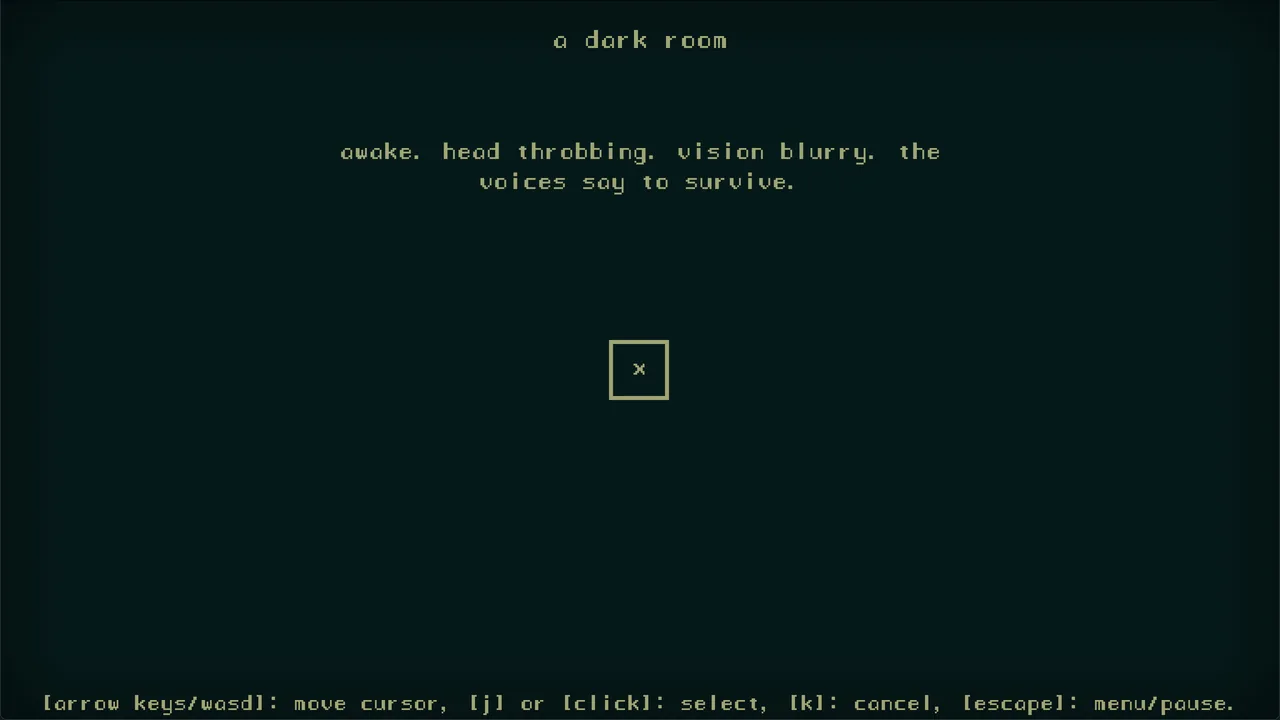
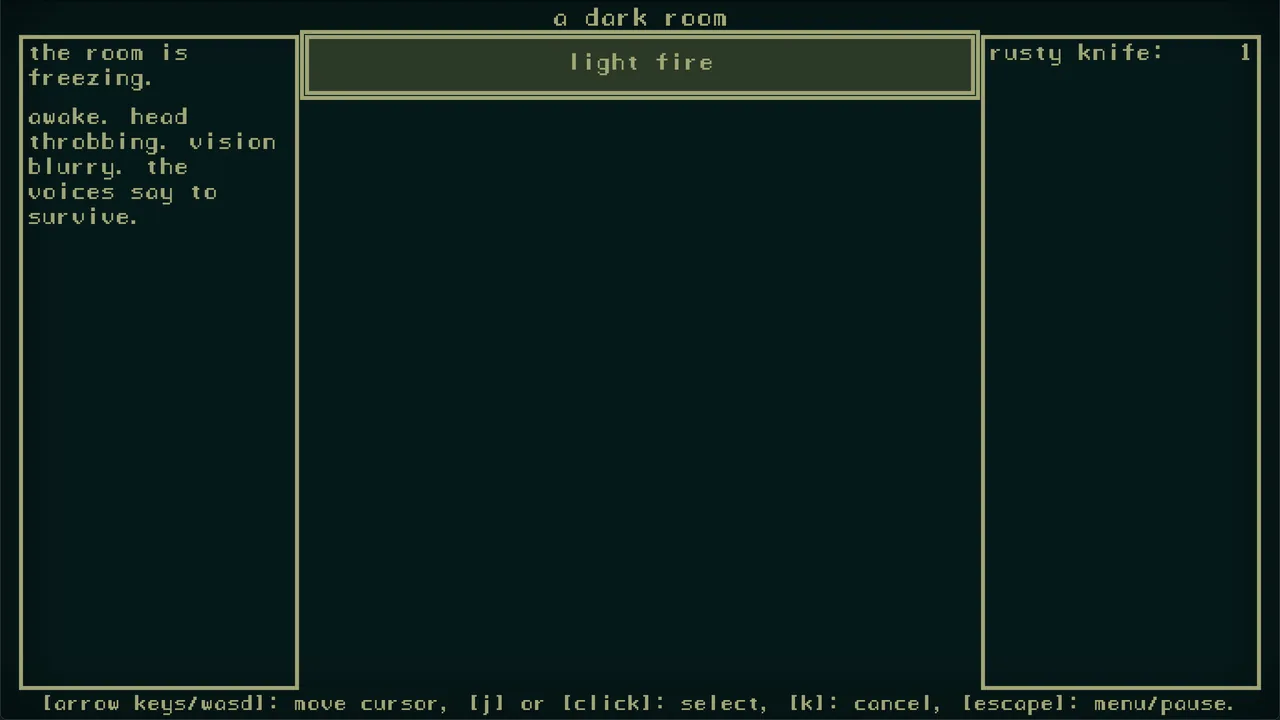
Most incrementals show you everything up front — every tab, every resource, every button you'll eventually need — and let the numbers do the work of making it feel earned. A Dark Room does the opposite. It opens on a single line of text and one button: light fire. Nothing else exists yet, because the game hasn't decided you're ready for it to exist. That refusal to show its hand is the whole design, and more than a decade after it first appeared as a free browser game, it's still one of the cleanest examples of an interface being used as a storytelling device rather than a container for one.
A tutorial that never announces itself
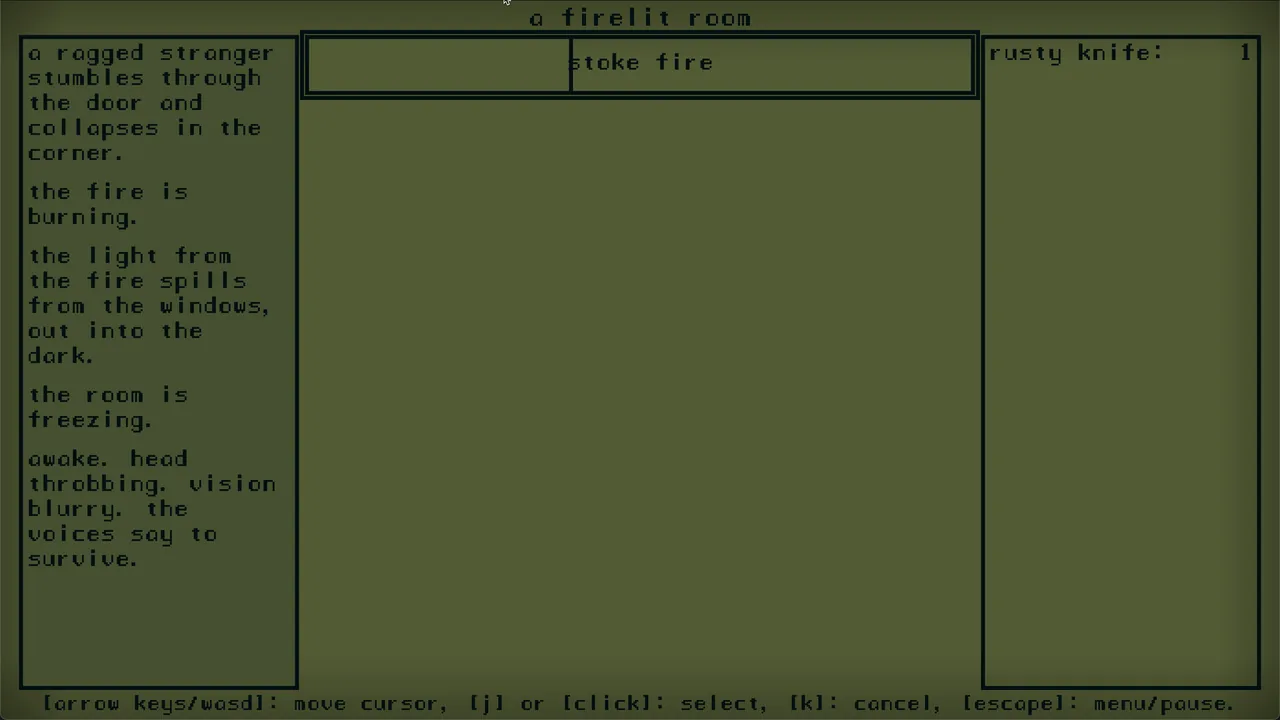
The opening minutes are close to nothing: stoke a fire, keep it burning, watch a stranger wander in out of the cold. There's no explanation of what any of this is building toward, no numbered objectives, no currency counter ticking up in a corner to reassure you that progress is happening. It works because the game is teaching you its rules through consequence rather than instruction — let the fire go out and you feel that mistake immediately, without a tooltip telling you it was a mistake. By the time buttons for gathering wood, building a trap and taking in a second stranger have quietly appeared, you've already internalised the rhythm the rest of the game runs on: do the small thing, wait, see what the room gives you back.
That restraint is also why the game is worth discussing carefully rather than describing in detail. Its later hours are built around a series of reveals about what this room and this world actually are, and the way those reveals land depends entirely on you not having been warned about them. Nothing in this review spoils them, and nothing should — the withholding is the design, not an incidental feature of it.
The incremental engine underneath the story
Strip away the prose and A Dark Room is a fairly conventional incremental skeleton: gather resources, spend them on huts and workshops, grow a population, unlock the next tier of buildings and tools. What makes it more than a skeleton is how tightly the fiction and the mechanics are welded together. Population isn't an abstract number you're optimising — it's villagers you took in individually, each one a small decision about whether you can feed one more mouth. Buildings aren't upgrade-tree nodes; they're the difference between a settlement that survives a bad stretch and one that doesn't. The game never breaks from its own voice to explain a mechanic in game-design language, and that discipline is a large part of why the loop still feels like a story being told rather than a spreadsheet being filled in.
It's a short loop, too, which works in the game's favour. You will exhaust most of what the village-management layer has to teach you well before it becomes repetitive, and the game knows this — it doesn't ask you to run the fire-and-hut economy for dozens of hours before letting you move on. The building phase exists to get you fluent in scarcity and trade-offs, then hands you off to the part of the game actually built to test them.
Leaving the room is where the game turns on you
Once exploration opens up, A Dark Room stops being gentle. Expeditions into the wasteland run on the same resource logic as the village — food, weapons, torches — but now failure has teeth: outposts that eat a stockpile you can't easily rebuild, encounters that punish an underequipped party hard, and a broader world that assumes you've been paying close attention to the numbers you were tracking a moment ago almost for free. This is the part of the design that earns the most consistent player pushback, and it's a fair complaint. The step from "manage a fire" to "manage a survival expedition with real loss conditions" is steep enough that some players never adjust to it, and the game does very little to soften the landing.
It's also, judged on its own terms, the correct design choice. A game about a world that has clearly been through something catastrophic loses its credibility if venturing into that world is comfortable. The difficulty spike is unpleasant in the way the story wants it to be unpleasant, and that's a harder thing to fault than a spike that exists purely to pad playtime. Where it's fair to mark the game down is on communication rather than intent: a little more signalling before a disastrous expedition would have preserved the tension without making the first few losses feel like the game simply hadn't told you the rules yet.
Nothing to look at, plenty to listen for
Visually, A Dark Room asks for essentially nothing — plain text, a sparse layout, and later a few line-drawing flourishes that never compete with the words for attention. That's a deliberate choice rather than a limitation, and it's the correct one for a game this dependent on the reader filling in gaps themselves. Where it goes further than a pure text engine like Kittens Game is sound: ambient audio and minimal sound cues do real work reinforcing mood at key moments, enough that muting the game genuinely changes how it lands. It's not a soundtrack anyone will hum later, but it's more considered than most games this stripped-down bother with.
What the paid Steam edition actually buys you
The free browser version at adarkroom.doublespeakgames.com is, and remains, the definitive way to experience this game — it's the original, it's complete, and it costs nothing. The Steam release, "A Dark Room ®", launched on 6 July 2023 for NZ$10.49 and is explicitly built on top of that same design rather than replacing it: full controller support alongside touch and keyboard, an "enhanced" interface, modding capabilities, and additional developer commentary layered over the original text. None of that changes what the game is underneath, and none of it needs to — this isn't a remaster papering over something dated, because the original was never trying to look like anything more than plain text in the first place.
Steam's own review base for it is small and skews heavily toward people who already knew the game from its browser or mobile years, which makes it hard to say how the paid edition reads to someone meeting A Dark Room for the first time here rather than free. What's clear is what you're actually buying: convenience and a couch-controller experience for a game that was designed around a mouse and a keyboard, plus a handful of extras for people who already love it and want to poke at how it was built. That's a reasonable pitch for existing fans. It's a thinner one for anyone who hasn't played the free version yet and would be paying for a game they could try at no cost first.
Verdict
Eight out of ten. A Dark Room earns its reputation as one of the incremental genre's genuine design landmarks by treating its interface as part of the narrative rather than a neutral pipe for numbers — very few games make "a button appeared that wasn't there before" feel like a plot beat, and this one does it repeatedly without ever resorting to a cutscene. The village-building loop teaches itself cleanly, the writing does a remarkable amount with almost no words, and the game commits to an actual structure and ending rather than trailing off into an infinite grind.
It doesn't reach higher because the transition into the wasteland is rough enough to lose players who did nothing wrong except not yet understand how sharply the rules had changed, and because once its central tricks are known, a second playthrough has much less left to surprise you with. The Steam edition is a fair way to support the people who built it and a genuinely nicer way to play on a controller, but it isn't a better game than the free one — it's the same game with furniture added. Anyone who likes progression systems that keep working quietly while they're not actively watching them, the way Wanderer's gathering loops do between sessions, will recognise the appeal of a game built entirely around what happens while you wait.
Pricing and Steam review data checked 30 July 2026.
Pros and cons
Pros
- The interface itself withholds information as a storytelling tool, so buttons and text appear only once they matter
- The early crafting-and-building loop teaches every system you'll need without a single tutorial popup
- Silence and short, plain sentences carry more atmosphere than most games manage with a full script
- The Steam edition adds full controller support, a modding layer and developer commentary on top of the same core game
- It has a definitive structure and an ending, rather than stretching out indefinitely for engagement's sake
Cons
- The wasteland's combat and resource math punish careless expeditions hard, and the difficulty spike catches new players off guard
- Once the pattern behind the incremental loop is understood, later stretches of gathering and building repeat with little new to think about
- The Steam release is the same design as the decade-old free browser game with a handful of quality-of-life extras, not a reimagining
- Presentation is deliberately almost nothing, which is a fair trade for the concept but still limits who it will hold onto
- A small, mostly loyal Steam review base makes it hard to judge how the paid edition lands with players who never met the original
Screenshots
-
A Dark Room ®Image: Scratchwork Development LLC via Steam -
A Dark Room ®Image: Scratchwork Development LLC via Steam -
A Dark Room ®Image: Scratchwork Development LLC via Steam -
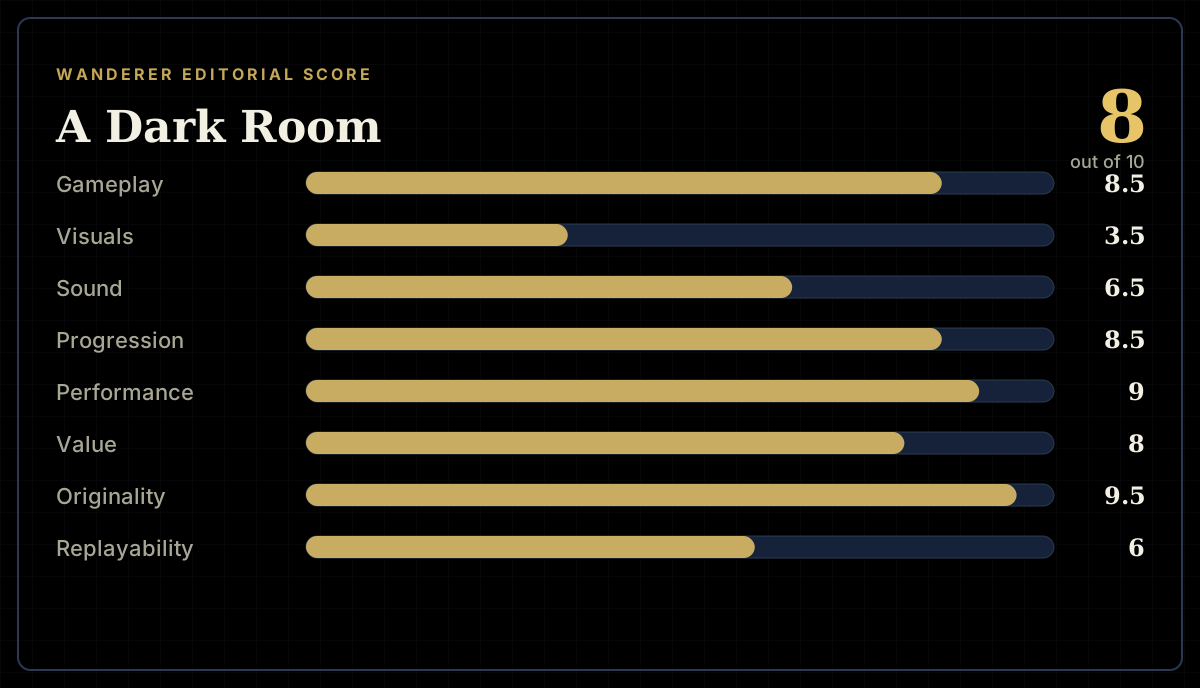
How the review scores each part of the gameWanderer Editorial -
The short versionWanderer Editorial