Game review
Universe Horizon
7.5 / 10
- Developer
- Jarkem
- Publisher
- Jarkem
- Released
- 11 January 2025
- Platforms
- Windows, Linux
- Genre
- Idle, Incremental, Exploration
- Monetisation
- One-time purchase; no in-app purchases, no DLC and no advertising
- Players
- Single-player only
The short version
Universe Horizon hands the player a single spaceship and a single goal: get as far from Earth as possible, upgrading engines, sensors and life support along the way until the observable universe itself runs out. Developed and self-published by the solo studio Jarkem, it released 11 January 2025 to a genuinely strong reception — Very Positive across 235 reviews — and its own achievement data backs that up unusually well, with more than three in five tracked players reaching the game's ending. The back stretch draws real, specific complaints about a UI that splits into too many separate screens as new systems unlock, and a minority of reviewers argue the pacing sags well before the credits, but the amount of players who see it through to the end argues those complaints describe a rough patch rather than a wall most people hit.
Biggest strengths
- An unusually healthy completion rate — Steam's own achievement data shows 61% of tracked players reaching the game's ending, well above what most incrementals in this library have shown
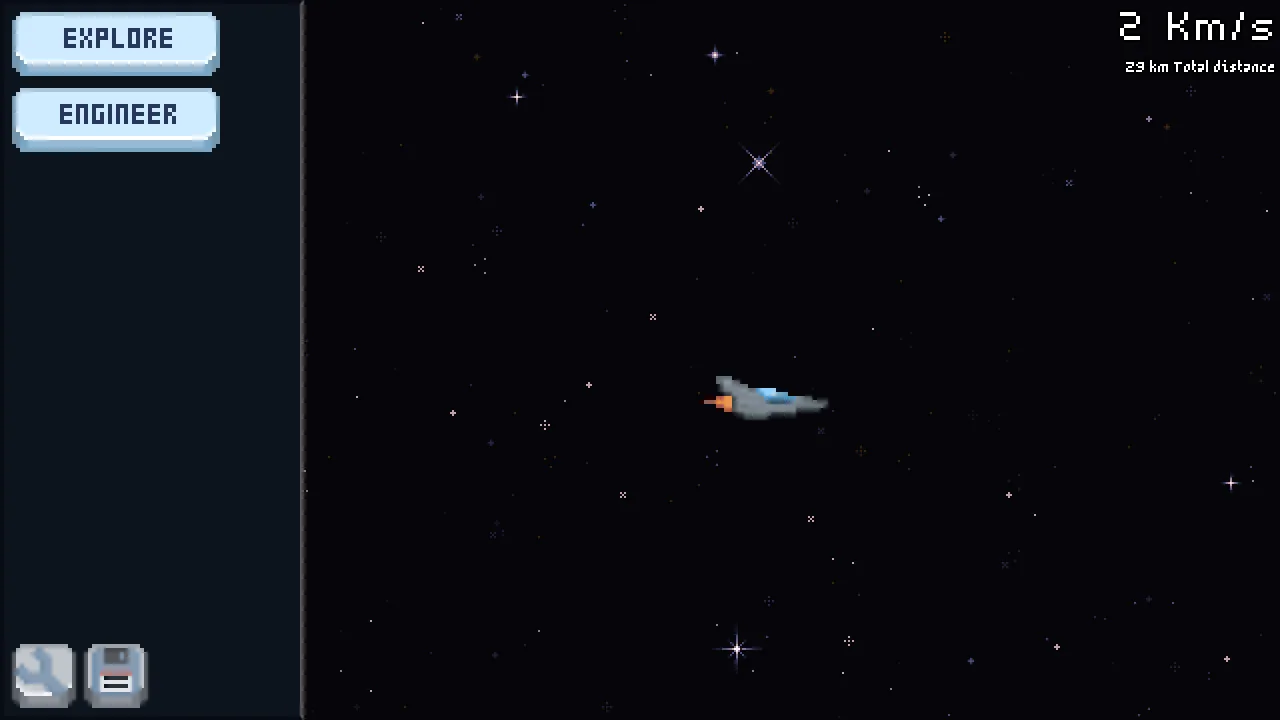
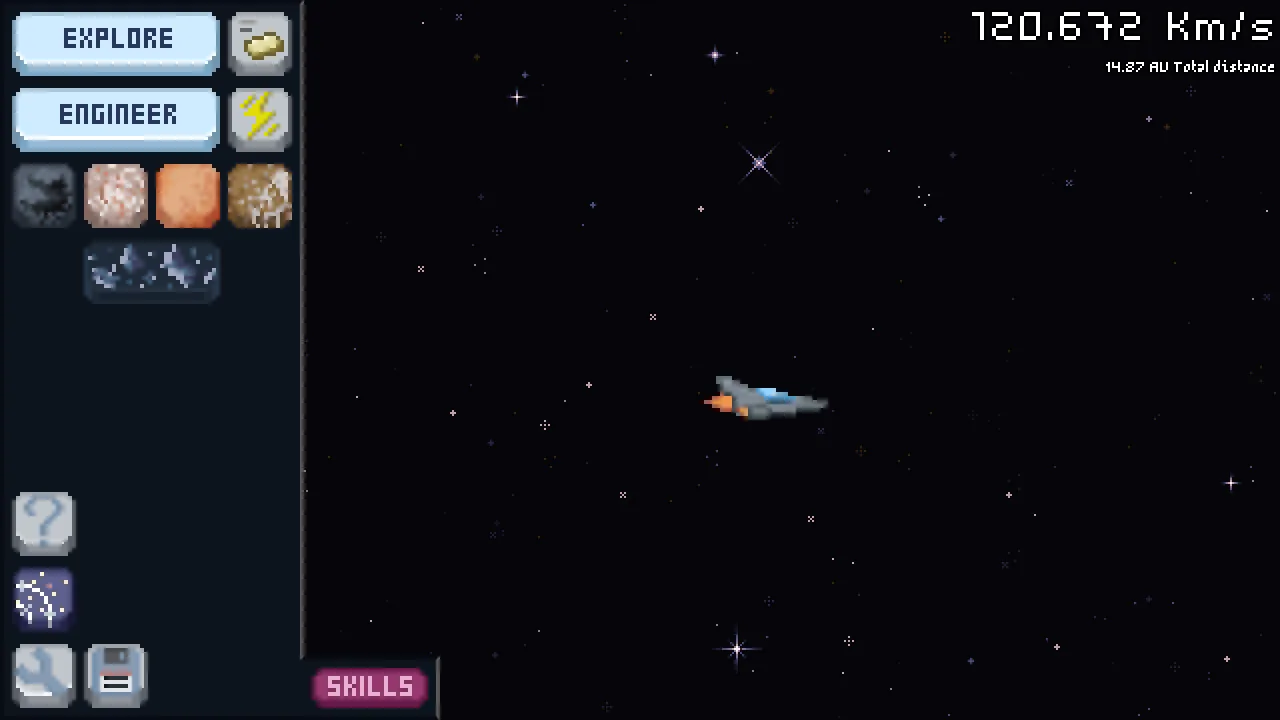
- Consistently praised pixel art and an ambient sci-fi soundtrack that reviewers specifically call soothing and well matched to the game's slow build in scale
- A finite structure with a real ending, appealing to reviewers tired of endless prestige loops; several report 100%-completing it in well under a hundred hours and being satisfied rather than wanting more
Biggest weaknesses
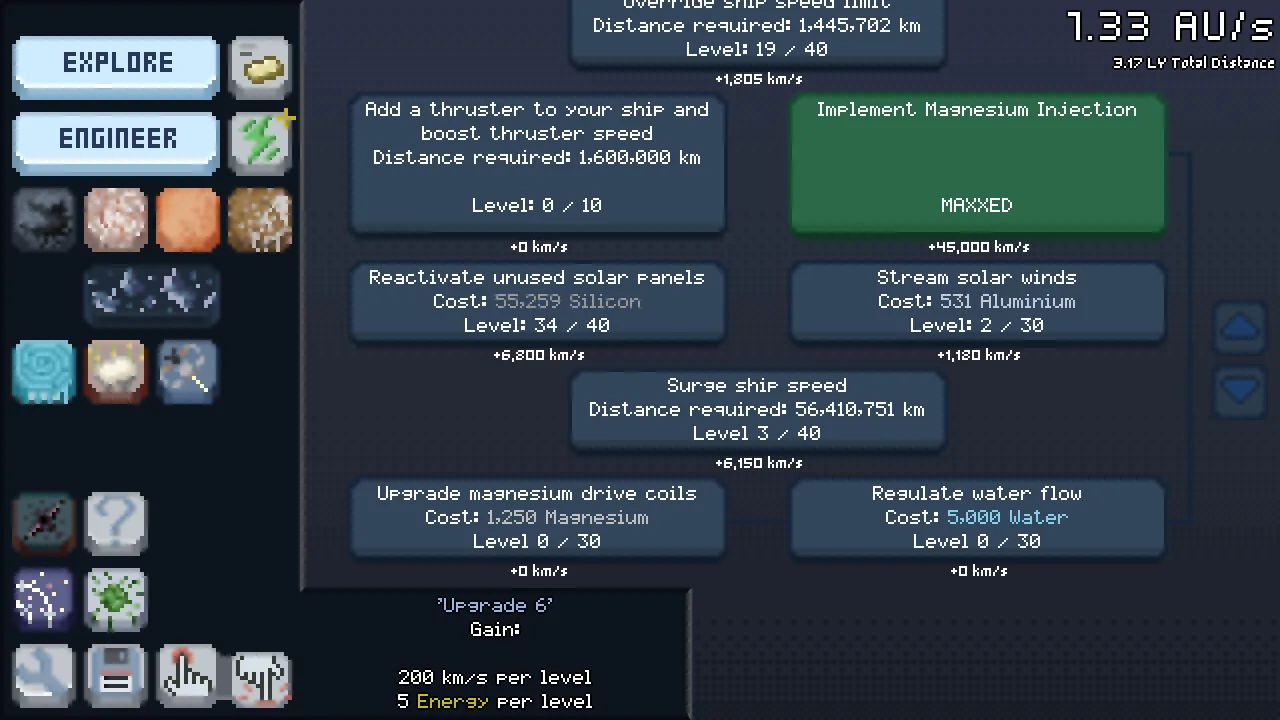
- A recurring, specific interface complaint: multiple reviewers independently describe the UI as splitting into "a million screens" as new systems unlock, making it hard to find the specific upgrade or resource they're looking for
- A minority of reviewers argue the game's final third sags noticeably, with balance and resource gating feeling less generous than the earlier chapters
- Scattered but specific technical reports: a hard crash that reset one reviewer's progress, and separate reports of the game failing to launch on Debian Linux under both the Steam Linux runtime and several Proton versions
Who it's for: Fans of short, finite incrementals who want a game with an actual ending rather than an endless prestige treadmill, and who don't mind a UI that gets busier as it goes; a poor fit for anyone who wants a game to sink hundreds of hours into or who is put off by a fiddly late-game interface.
Our recommendation: A cheap, well-reviewed, genuinely completable incremental with real charm in its presentation, worth its low asking price even accounting for real interface and late-game pacing complaints from a vocal minority.
7.5 / 10
Introduction
Most incremental games ask the player to imagine an ending that never quite arrives — the number keeps going up, the prestige loop keeps resetting, and "finishing" is really just deciding to stop. Universe Horizon takes the opposite approach. It gives the player a small ship, a starting point at Earth, and an actual destination: the edge of the observable universe, gained one order of magnitude of distance at a time by upgrading engines, sensors, drilling equipment and life support along the way. Developed and self-published by the solo studio Jarkem, it released 11 January 2025 at a low flat price, and its reception has been genuinely strong — Very Positive across 235 reviews, with the 121 English-language reviews sitting at roughly 83% positive on their own. This review reads all 21 of that English negative sample, alongside a hundred-review positive sample, to get a fuller picture of where the small minority of complaints actually land.
A game with an ending, and the numbers to prove people reach it
The clearest praise across this game's positive reviews is about scale and pacing done well. "The scaling is really well done if you play actively in terms of distance gain," one reviewer writes, "and I love how the visuals build as you progress." Others specifically credit the game for being finite in a genre that usually isn't: several reviewers report reaching 100% completion in anywhere from 71 to 102 hours and describing that as a satisfying stopping point rather than a game running out of things to offer. "The only bad part is that it only took 100 hours to 100% it," one writes. "I wanted more" — a complaint that's really a compliment about how well the ending lands.
Steam's own achievement data backs this up more convincingly than review sentiment alone can. The game's "End" achievement — almost certainly awarded for finishing the run — sits at 61.0% of all tracked players, and the chapter-gated milestones along the way decline gently from 79.5% down to 69.0% rather than falling off a cliff. That's an unusually healthy completion curve for this library: most incrementals lose the majority of their audience well before the credits, and here the majority of players who start are finishing. Whatever the vocal minority below is complaining about, it isn't stopping most buyers from seeing the game through.
A real complaint: the interface gets busier than the game needs it to be
The most specific, most repeated criticism in this game's negative sample is about the user interface rather than the core loop. "The UI is split into a million screens and I found it really hard [to navigate]," one reviewer writes; another separately complains it's "hard to find anything" and that the relationship between different resources and what they unlock "doesn't feel very inspired." That's a fair criticism of an incremental that adds new systems steadily without consolidating the screens managing them, and it's specific enough — two independent reviewers landing on the same "too many screens" framing — to treat as a real design rough edge rather than one person's unfamiliarity with the genre.
A related, smaller cluster argues the game's final stretch is where that clutter compounds with pacing problems: "the last 2/3 are disgusting," one terse review reads, while a longer one describes getting "gated on a few specific resources without any way of really improving their generation" once the early game's momentum runs out. Set against the achievement data above, this reads as a real but minority experience — most players evidently push through whatever friction exists in the back half, but for the subset who bounce off it, the complaint is specific enough to flag rather than dismiss.
Scattered technical reports worth knowing about
A handful of reports don't add up to a pattern but are worth a specific, dated mention. One reviewer describes a crash that reset their progress entirely; a separate report notes it's possible to spend an early resource, Energy, down to a point that soft-locks progress badly enough that a hard reset is the only real fix. On Linux specifically — a platform Universe Horizon does officially support — one Debian 12 user reports both the standard and legacy Steam Linux runtimes failing to launch the game outright, with several Proton versions only getting as far as a crash after overriding the ship's speed limit. None of these are frequent enough in the sample to call a systemic problem, but a new Linux buyer in particular should go in aware that the officially supported path isn't universally smooth.
Presentation, value and monetisation
The pixel art and soundtrack draw specific, repeated praise rather than passing mentions — "very relaxing... with soothing sci-fi music that seems to flow as well as the game does," one review puts it, and several others separately single out the artstyle as a highlight rather than an afterthought. At NZ$4.49 with no DLC, no in-app purchases and no advertising of any kind, one positive review frames it plainly as "what clicker/idle games should be" specifically because it doesn't try to monetise the wait — a fair assessment given how cleanly this game avoids every technique this library flags elsewhere in the genre.
Final Verdict
Universe Horizon does something genuinely uncommon for an incremental: it commits to an actual ending, and its own achievement data proves that most players who start it get there. That alone puts it ahead of a lot of genre company for players tired of number-go-up loops with no real destination. The interface complaints are specific and real rather than generic grumbling, and the minority who find the back third dragging deserve to be taken seriously even against a strong overall completion rate. At under five dollars, with zero monetisation pressure and a soundtrack and art style reviewers keep singling out unprompted, this is an easy recommendation for anyone who wants a short, well-paced incremental rather than a hundred-hour commitment — just expect the interface to get a little unwieldy by the time you're deep into the outer reaches of the map.
Pros and cons
Pros
- An unusually healthy completion rate — Steam's own achievement data shows 61% of tracked players reaching the game's ending, well above what most incrementals in this library have shown
- Consistently praised pixel art and an ambient sci-fi soundtrack that reviewers specifically call soothing and well matched to the game's slow build in scale
- A finite structure with a real ending, appealing to reviewers tired of endless prestige loops; several report 100%-completing it in well under a hundred hours and being satisfied rather than wanting more
- No microtransactions, no DLC and a low flat price, with offline progress unlocking early enough that several reviewers specifically credit it for respecting their time
Cons
- A recurring, specific interface complaint: multiple reviewers independently describe the UI as splitting into "a million screens" as new systems unlock, making it hard to find the specific upgrade or resource they're looking for
- A minority of reviewers argue the game's final third sags noticeably, with balance and resource gating feeling less generous than the earlier chapters
- Scattered but specific technical reports: a hard crash that reset one reviewer's progress, and separate reports of the game failing to launch on Debian Linux under both the Steam Linux runtime and several Proton versions
- At least one reviewer reports it's possible to soft-lock an early-game resource (Energy) badly enough that a hard reset is the only practical fix
Screenshots
-
Universe HorizonImage: Jarkem via Steam -
Universe HorizonImage: Jarkem via Steam -
Universe HorizonImage: Jarkem via Steam -
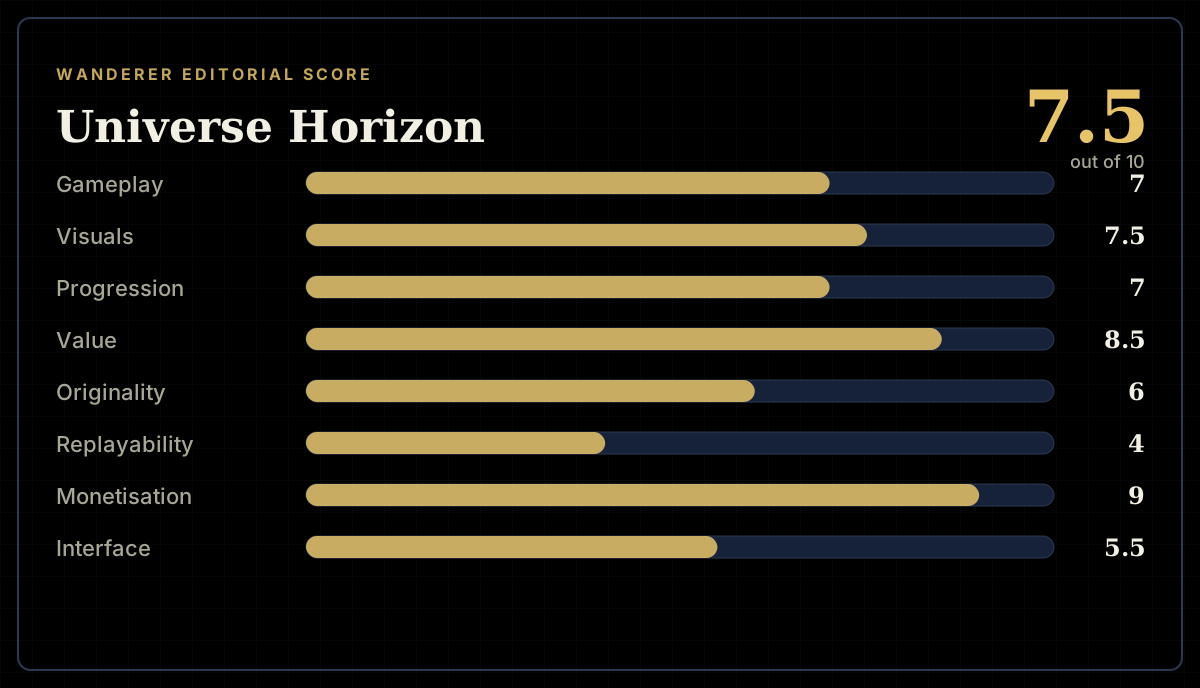
How the review scores each part of the gameWanderer Editorial -
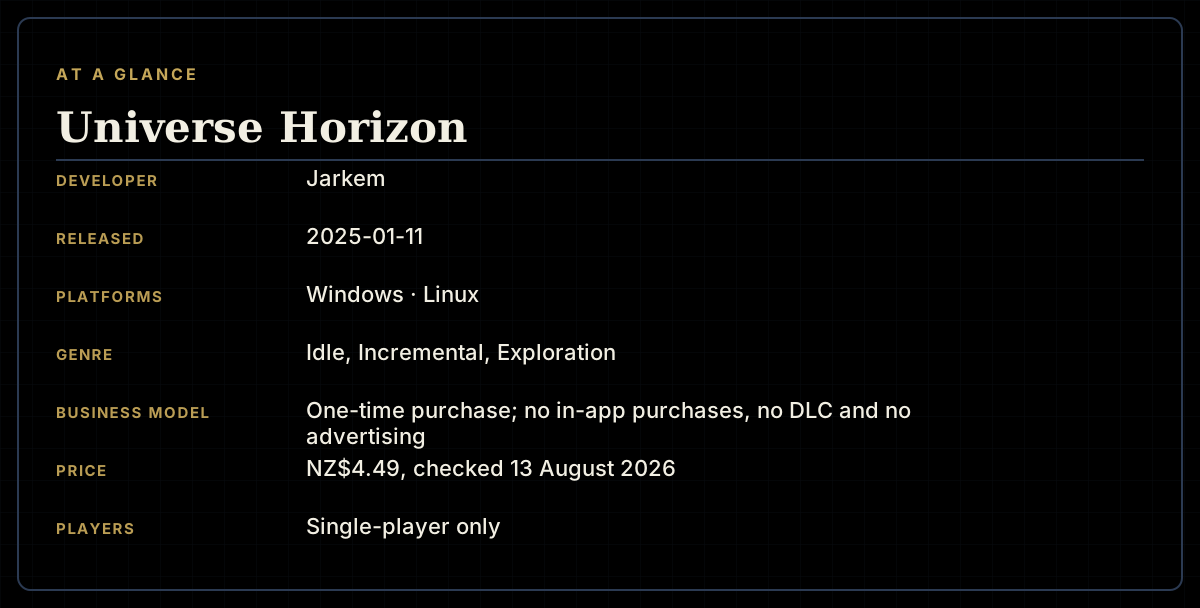
The essentials at a glanceWanderer Editorial -
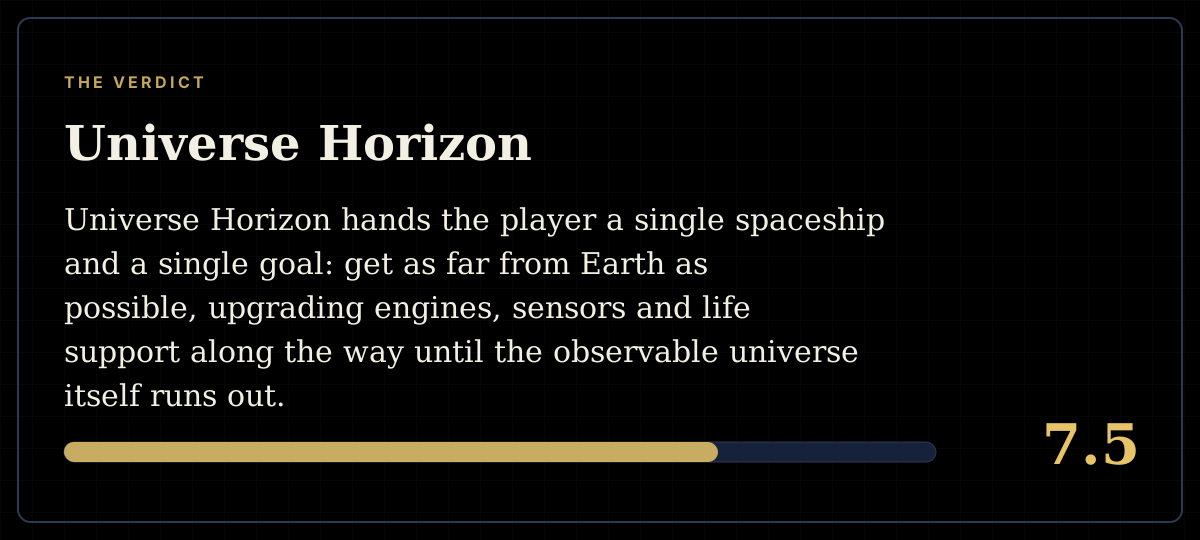
The short versionWanderer Editorial