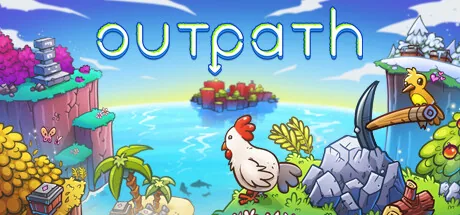
Game review
Outpath
6.5 / 10
- Developer
- David Moralejo Sánchez
- Publisher
- GrabTheGames, UpgradePoint
- Released
- 16 October 2023
- Platforms
- Windows
- Genre
- Crafting Sandbox
- Monetisation
- One-time purchase. No DLC, no in-game purchases. A separate free prologue, Outpath - First Journey, is available.
- Players
- Single-player
The short version
The first island is genuinely good. Outpath's loop — punch a tree, unlock a tool, unlock a building, unlock the next island — has the clean escalating rhythm that makes this genre work, and a solo developer built it. It sits at 93.2% positive across 1,726 English reviews.
Then it slows down, and that's what the criticism is about: **grinding in 20 of the 100 most-helpful negatives, islands in 28, progression in 12, tedious in 9.** Recent English reviews have dropped to **80 of 100 positive**, thirteen points below the lifetime figure, and one of the sharpest reviews argues the free prologue's inventory design was better than the paid game's.
Biggest strengths
- A clean, satisfying early progression loop with clear goals and steady unlocks
- Genuinely impressive scope for a single developer
- Cheap, and discounted often and deeply
Biggest weaknesses
- Progression slows sharply after the first island and becomes a grind
- The full game's local inventories are seen by some as a downgrade from the prologue's global one
- Automation arrives too thinly to relieve the repetition
Who it's for: People who liked Forager and want more of that specific rhythm, at a low price, and who are content to stop when it stops being fun. Not for anyone expecting deep automation.
Our recommendation: Play the free prologue first — it exists, it's a separate download, and it will tell you within an hour whether the loop works for you. Then buy the full game on one of its frequent 60–70% discounts rather than at list.
6.5 / 10
Outpath has a free prologue, and the most interesting criticism of the paid game is that the free one was designed better.
A 17-hour reviewer puts it precisely: "I love the idea here — an 'idle Minecraft' with cozy automation — but the inventory system ruins it. The prologue's global inventory felt perfect: relaxed, incremental, and smart. The full release swaps that for local inventories, collectors, and energy gimmicks that turn play into constant errands."
That's a specific, testable claim, and it's the reason this review's recommendation starts with "play the prologue" rather than "buy the game". Outpath - First Journey is a separate free app on Steam, not a demo build of the paid one, and an hour with it costs you nothing.
What's good
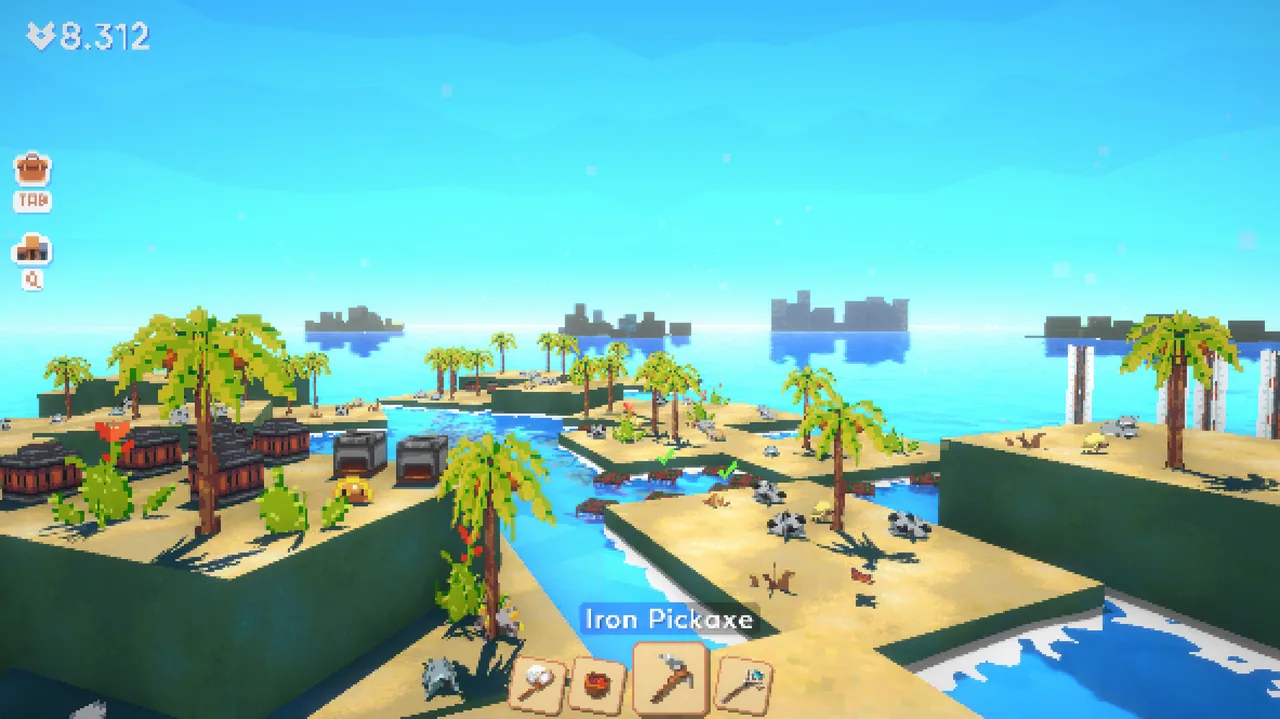
The core loop works. You punch a tree, get wood, build a tool, unlock a building, and eventually buy your way onto a new island. Early on the escalation is well judged — one 16-vote critic concedes "early game progression is really nice, attainable and sets clear goals. The tool progression feels really consistent."
That it was built by one person is worth stating plainly. Eighty-nine achievements, a full crafting tree, multiple islands, and a movement system reviewers specifically praise.
The achievement curve says people do engage: 89 achievements, the most common at 98.8%, the median still at 26.1%. That's a much gentler distribution than Bomb Rush Cyberfunk's 52.2% ceiling. Players get in and make progress.
Where it goes wrong
They just don't keep making it. Grinding — grind, grindy, grinding — appears in 20 of the hundred most-helpful negatives, islands in 28, progression in 12, tedious in 9, repetitive in 8.
A 9.8-hour reviewer describes the shape exactly: "First island was fun. You actually progress not to fast, not to slow. But after that… that's it. Everything becomes extremely slow and so many things need a lot of time to craft, because exactly the resources you need for them are less."
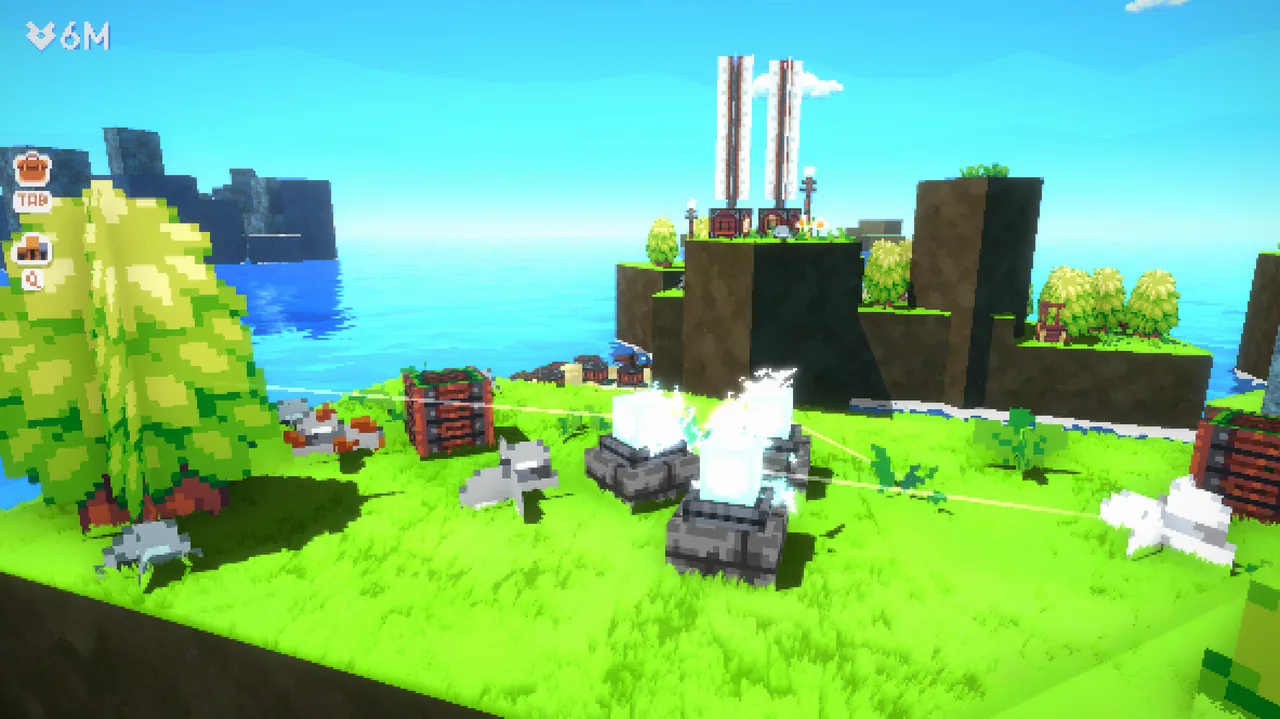
This is the same structural problem the second half of Keep on Mining! has, and it's endemic to the genre: the loop that's delightful when unlocks come every four minutes becomes a chore when they come every forty. Automation is supposed to be the answer — it appears in 21 of a hundred negatives — and reviewers say it doesn't arrive in enough strength to do the job.
Forager appears in 19 of a hundred negatives, Minecraft in 10. That's the fourth game today whose critics reach for a specific comparison; here it's mostly fair rather than damning, since the store page's own press quote calls it "a quirky fusion of Forager and Minecraft". But the comparison sets an expectation of automation depth that Outpath doesn't reach, and originality scores a 6.5 because of how openly it borrows.
Bugs remain a live concern. A 28-vote review from May 2026 describes an island-unlock totem failing to accept currency and eventually becoming unfixable — a run-ending problem, reported this year rather than at launch.
About the silence
Several reviews describe the game as abandoned, and some go into the developer's personal circumstances. I'm not going to relay any of that — it concerns a real individual and it isn't something a review corpus can establish.
What the public record does show, from the announcement feed: heavy patching through launch (v1.0.8 to v1.0.14 between October and December 2023), then a single update on 9 March 2024 which the developer titled "I am back to work", then roughly two years of sale posts and nothing else — and then, in March and May 2026, controller support, Steam Deck optimisation, bug fixes and mention of an Outpath VR.
So: a long quiet stretch, and currently active again. That's the honest version, and it's better news than "abandoned" while still being a real gap for anyone who bought it expecting the roadmap to continue.
The trajectory
The number that matters most here is the one the badge hides. Lifetime: 93.2% positive. The last hundred English reviews: 80 positive. Negative reviews haven't decayed the way a launch-wobble game's do either — 34 in 2023, then 22, 21 and 23. This is a steady, persistent objection rather than a resolved one.
The verdict
Outpath earns a 6.5. The first several hours are genuinely good and it's a remarkable amount of game from one person at NZ$21.99, less on the discounts it runs constantly.
It sits at a 6.5 rather than a 7.5 because the back half of the game asks for a great deal of time and gives back very little, because the automation that should rescue it doesn't, because a save-threatening bug was being reported three months ago, and because its own recent players rate it thirteen points below its lifetime score.
The good news is that you can test every word of this for free. Download the prologue. If the loop grabs you and you want more of it, buy the full game in a sale and stop playing the moment it starts feeling like work — you'll have had your money's worth well before then.
Pros and cons
Pros
- A clean, satisfying early progression loop with clear goals and steady unlocks
- Genuinely impressive scope for a single developer
- Cheap, and discounted often and deeply
- A free standalone prologue lets you test the core loop at no cost
- Development resumed in 2026 with controller support and Steam Deck work
Cons
- Progression slows sharply after the first island and becomes a grind
- The full game's local inventories are seen by some as a downgrade from the prologue's global one
- Automation arrives too thinly to relieve the repetition
- Bugs still reported in 2026, including an island-unlock failure that cost one player their run
- Roughly two years of near-silence between the March 2024 patch and 2026
Screenshots
-
OutpathImage: GrabTheGames via Steam -
OutpathImage: GrabTheGames via Steam -
OutpathImage: GrabTheGames via Steam -
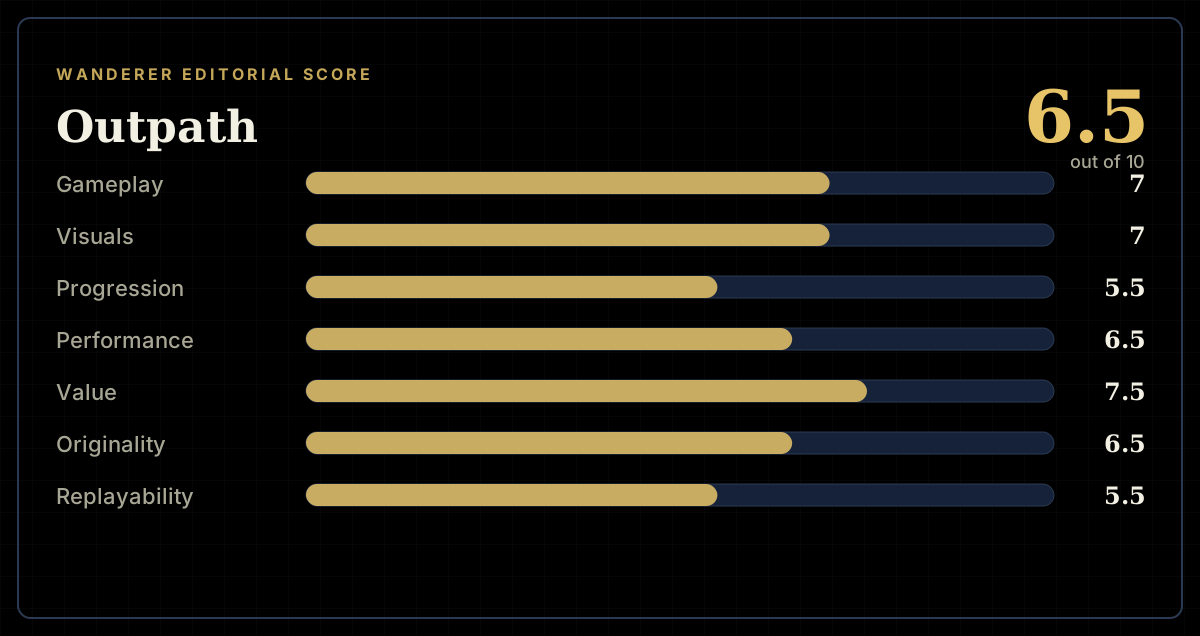
How the review scores each part of the gameWanderer Editorial -
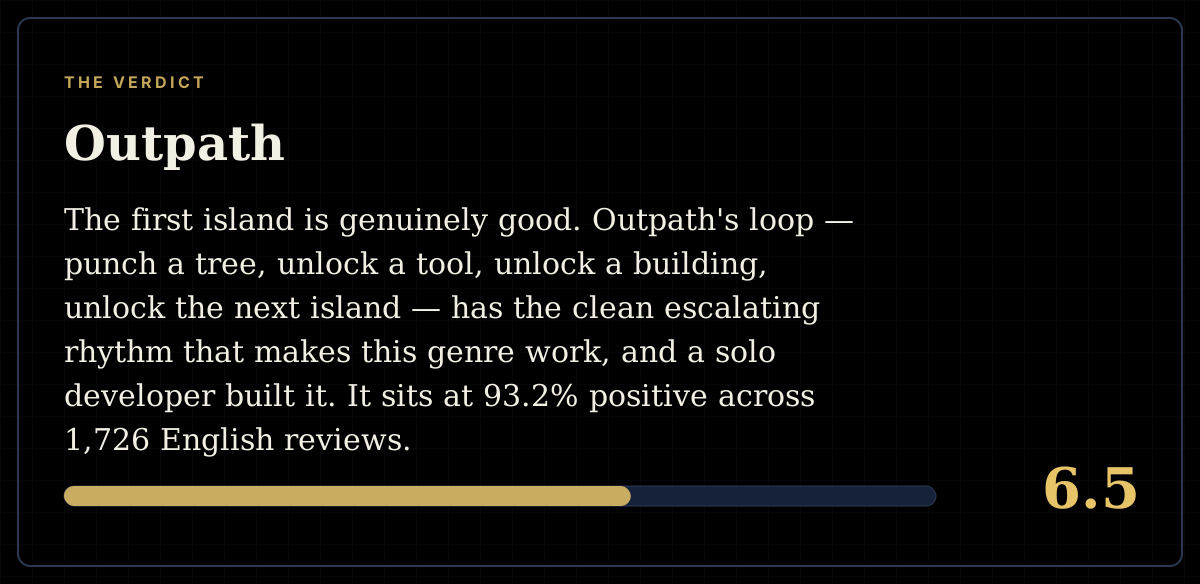
The short versionWanderer Editorial