Game review
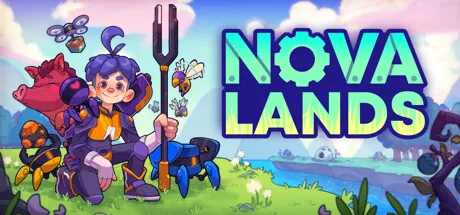
Nova Lands
7 / 10
- Developer
- BEHEMUTT
- Publisher
- HypeTrain Digital
- Released
- 22 June 2023
- Platforms
- Windows, PlayStation 4, Xbox One, Nintendo Switch
- Genre
- Automation, factory building and island survival
- Monetisation
- Premium, one-off purchase. No in-game purchases, no premium currency, no ads, no subscription. An optional Supporter Pack DLC adds cosmetic house decorations, pet skins and the soundtrack — nothing that touches gameplay or progression
- Players
- None. Nova Lands is single-player only on every platform it ships on, with no co-op or online mode of any kind
The short version
Nova Lands takes Forager's cute, low-stakes hand-gathering loop and slowly bolts a real automation game onto it — conveyor belts, sorters, power grids, the works. For roughly the first half of a playthrough that combination works better than it has any right to: gathering feels productive, automating feels like a genuine reward, and the pixel art sells the whole thing with more charm than the price tag suggests.
The second half is where the cracks show. Production chains stretch into long unattended waits, the tech tree stops introducing new ideas as fast as it introduces new numbers, and a real, dated cluster of player complaints accuses the game of shipping always-on telemetry that isn't fully optional. None of that erases what the opening hours get right, but it's enough to keep Nova Lands a pleasant genre mash-up rather than a genre highlight.
Biggest strengths
- The early-to-mid game loop of gathering by hand and gradually replacing yourself with automation lands exactly the satisfaction it's aiming for
- Pixel art, character portraits and creature designs are consistently praised even by reviewers who dislike other parts of the game
- Full controller support and a low-pressure pace make it comfortable to play on a couch or handheld rather than hunched over a spreadsheet-heavy automation game
Biggest weaknesses
- The most common complaint in the negative-review sample by a wide margin is that mid-to-late production chains turn into long stretches of waiting for timers rather than active problem-solving
- No multiplayer or co-op of any kind, unusual for a genre where Factorio, Satisfactory and even smaller peers like FOUNDRY are built around playing with someone else
- A recurring cluster of reviews beginning in 2025 accuses the game of bundling Epic Online Services telemetry that can't be fully disabled in-game, language several players describe outright as spyware
Who it's for: Players who like Forager's collect-and-build rhythm but wished it had real automation underneath it, and who want something low-pressure enough to play on a couch with a controller. Less suited to automation veterans chasing Factorio- or Satisfactory-level depth, or to anyone who wants a factory game they can build with a friend.
Our recommendation: A reasonable purchase at NZ$28.99 for its opening ten to fifteen hours alone, with the clear caveat that the pace slows considerably from there and a genuinely contested privacy complaint sits in the review pile. Worth trying on a sale for genre newcomers; automation veterans with Factorio or Satisfactory already installed will find little here they haven't already done better elsewhere.
7 / 10
The pitch for Nova Lands sounds almost too neat: take Forager's loop of chopping, mining and foraging your way into bigger and bigger unlocks, then keep going until the whole thing turns into a real automation game with conveyor belts, power grids and sorting logic. BEHEMUTT, a solo-turned-small studio, actually built that game, and published it through HypeTrain Digital on 22 June 2023 with no Early Access period beforehand — a genuine 1.0 launch, not the disguised exit that catches out so many other indie automation titles. Three years and roughly 3,500 Steam reviews later, it's still sitting at Very Positive, and it's worth being specific about which parts of that reputation are earned and which parts are carrying the game's back half on the strength of its front half.
The hook: Forager's rhythm, with real belts underneath
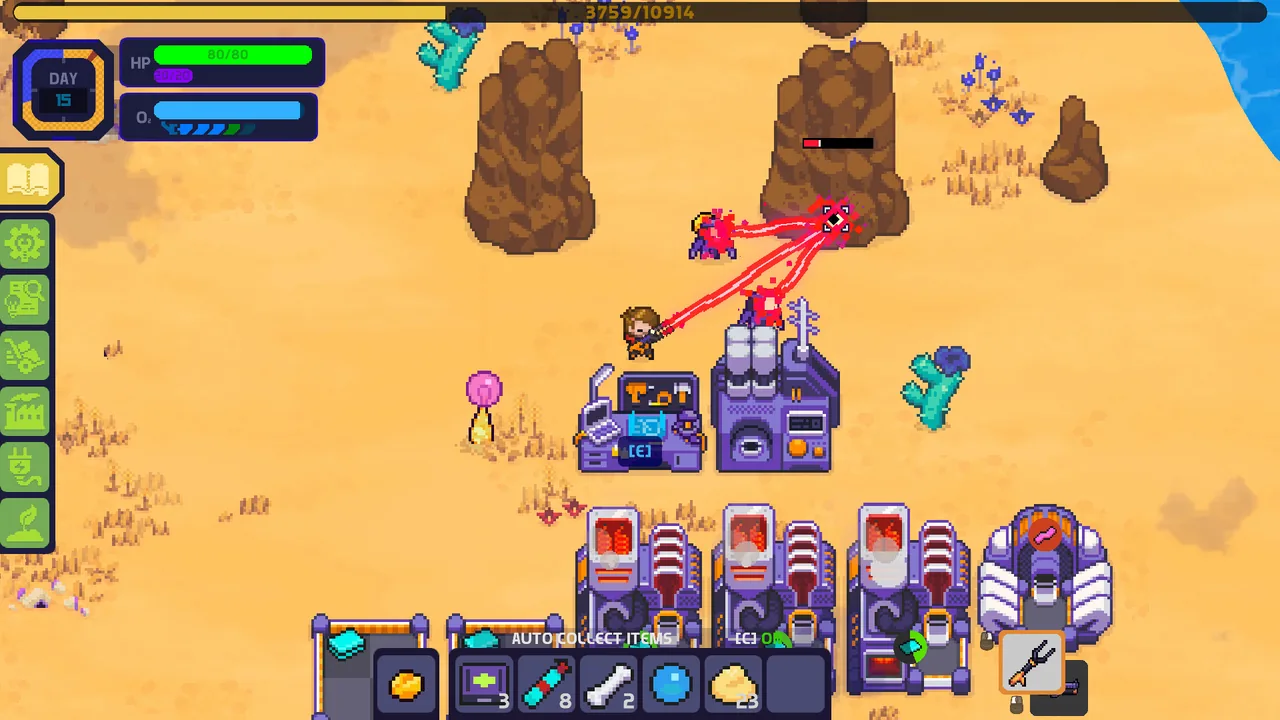
The opening hours are Nova Lands at its best. You wash up on a small island, punch trees and rocks by hand the way you would in Forager, and start stacking up the simple resources that unlock the next tool, the next building, the next island to explore. What sets it apart almost immediately is that the automation isn't a late-game bolt-on — belts, sorters and basic bots show up early enough that the transition from "I am gathering this by hand" to "a machine is gathering this for me" happens gradually and legibly, which is exactly the pacing this kind of hybrid needs to work. Watching your first fully automated ore-to-ingot line run on its own is a small, well-earned thrill, and it's the moment most positive reviews point to when explaining why they kept playing.
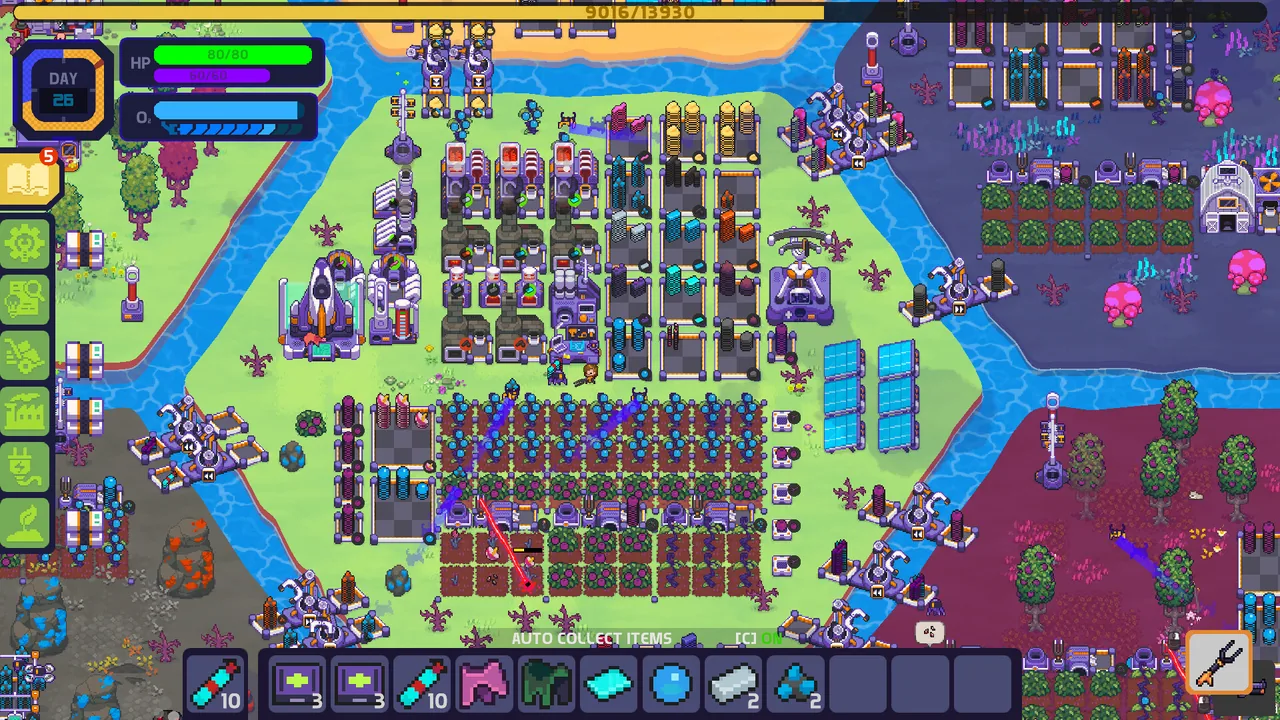
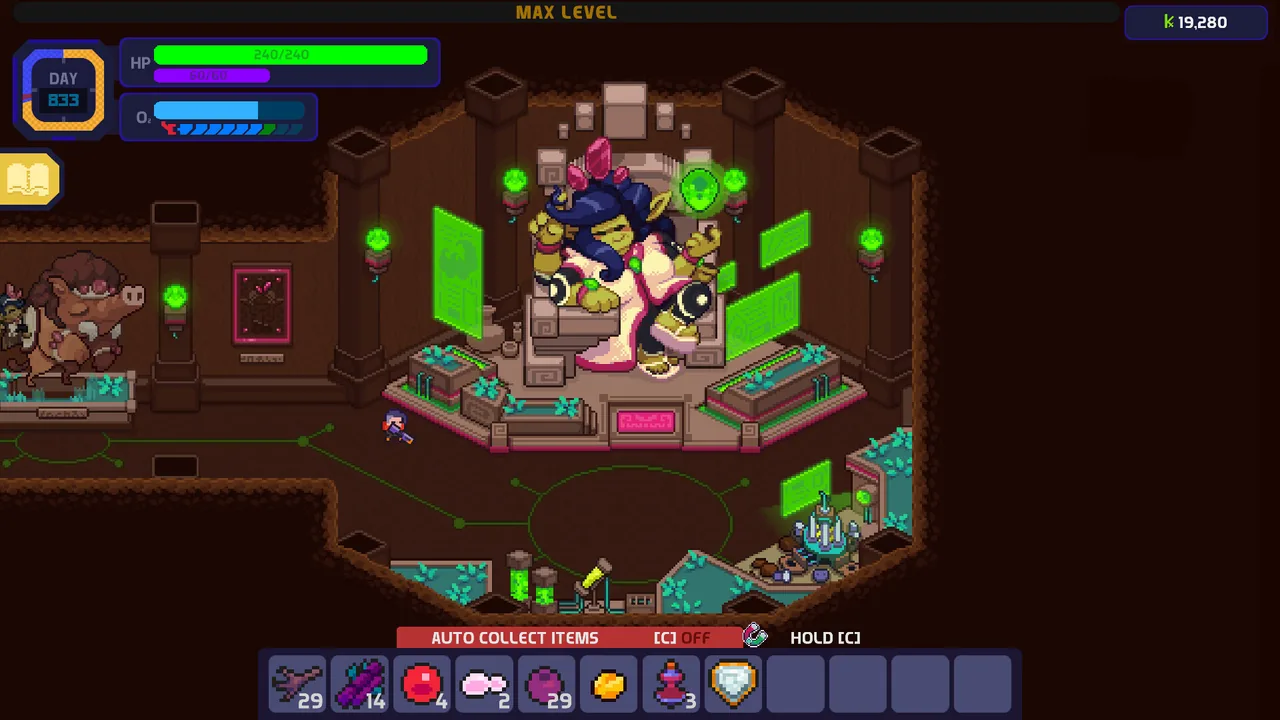
The island structure gives the loop a light exploration layer too: each new island has its own resources, its own puzzle-ish obstacles and, eventually, its own boss encounter, which keeps the early-to-mid game from feeling like a single flat factory floor. It's not deep world design — nobody is going to mistake Nova Lands for an open-world adventure game — but it's enough texture to make expansion feel like progress rather than repetition, for a while.
Where the wait timers take over
The trouble starts once the tech tree moves from unlocking new ideas to unlocking bigger numbers. Automation games generally survive their mid-game by introducing new logistics problems — more inputs to balance, more competing production lines to route — but a large share of Nova Lands' negative reviews describe the opposite happening: production increasingly comes down to building a machine, queuing a long timer, and waiting for it to finish, with less and less active problem-solving to fill the gap. "Strong start, poor finish" is close to a direct quote from more than one review, and it's the single most repeated complaint in the negative sample by a wide margin — more common than any bug report, balance gripe or technical issue combined.
Steam's own achievement data backs this up without proving a catastrophic drop-off. The most commonly earned achievement, for connecting a single bot, sits at 84% of the playerbase — a normal, healthy opening number. From there the curve tapers steadily rather than falling off a cliff: roughly 70% produce their first steel, a little under half reach the game's mid-tier bosses, and by the point of completing the full tech tree the number has dropped to 27.6%. The very bottom of the list — optional side content like mounting a specific creature or hitting shooting-range targets — sits around 13%. Read together, that's a game that loses a meaningful chunk of its audience through the middle stretch rather than at the very start, which lines up with the "great opening, thinning middle" pattern reviewers describe rather than a game nobody finishes at all.
A well-earned comparison it can't shake
Nova Lands doesn't hide its influences, and neither do its reviewers. A third of the negative reviews in the current sample bring up Forager directly and unprompted, almost always to make the same point: that Nova Lands takes Forager's concept and structure without meaningfully improving on either half of what it borrows. That's a harder complaint to answer than a bug report, because it isn't really about whether the belts function correctly (they do) or whether the art is charming (it clearly is) — it's about whether the game gives players who already know Forager, or who already know Factorio, a specific reason to pick this one instead. The honest answer is that the reason is mostly "it's the gentle, low-pressure version of both," which is a real audience but a thin pitch for genre veterans looking for something to sink real hours into.
The data-collection complaint, stated plainly
One pattern in the review history is worth naming directly rather than folding into general grumbling. Starting in early 2025 and continuing into recent months, a recurring cluster of negative reviews accuses Nova Lands of shipping data collection — tied to Epic Online Services — that is switched on by default and, in these players' accounts, can't be fully opted out of from inside the game itself; several go as far as calling it spyware, and at least one review specifically describes having to visit an external site and provide an email address to attempt an opt-out. This review can't independently verify what data is collected or confirm the mechanics of any opt-out process, and no press coverage was found corroborating the claim beyond the player reports themselves — but the complaint is specific, recurring across more than a year of reviews rather than a single flare-up, and consistent enough in its details that it deserves to be taken seriously rather than dismissed as noise. Anyone weighing a purchase should read a handful of the 2025-dated negative reviews directly before deciding.
Presentation, controls and value
None of the above should obscure that Nova Lands is a good-looking game. The pixel art is warm and readable, the creature and character designs have real personality, and the interface — some early-game confusion aside — holds up reasonably well once the basics click. Full controller support is a genuine strength; the game launched day-one on PlayStation 4, Xbox One and Nintendo Switch alongside PC, and its low-pressure pacing suits a couch session better than most factory games manage. It's a single-player experience only, with no co-op or online mode on any platform, which is worth flagging plainly against a genre where building together is often half the appeal.
At NZ$28.99, with an optional NZ$14.75 Supporter Pack that adds only cosmetic house decorations, pet skins and the soundtrack, the monetisation is about as clean as this genre gets — no premium currency, no in-game store, nothing that touches progression. Several reviewers argue the amount of content doesn't fully justify full price once the mid-game slows down, and that's a fair read of a game most players finish in twenty to forty hours; it's a much easier recommendation on a sale.
Players who like watching an automated system hum along quietly rather than babysitting every step of it may find a lighter, more forgiving version of that same pull in Wanderer's own gathering and crafting loops, minus the belts and factory floor.
Verdict
Seven out of ten. Nova Lands earns its Very Positive Steam rating honestly for its first stretch: the gradual handoff from manual gathering to real automation is well-paced, the presentation is consistently charming, and the price is fair for what it delivers up front. What keeps it from climbing higher is exactly what its own review pile keeps saying — a back half that trades active problem-solving for waiting on timers, an identity that leans on Forager and Factorio without doing enough to distinguish itself from either, and a specific, recurring data-collection complaint that a buyer deserves to know about before parting with money. It's a pleasant, honestly-priced way to spend an evening or two, less convincing as something to spend fifty hours inside.
Price, platform and review-score figures checked 3 August 2026.
Pros and cons
Pros
- The early-to-mid game loop of gathering by hand and gradually replacing yourself with automation lands exactly the satisfaction it's aiming for
- Pixel art, character portraits and creature designs are consistently praised even by reviewers who dislike other parts of the game
- Full controller support and a low-pressure pace make it comfortable to play on a couch or handheld rather than hunched over a spreadsheet-heavy automation game
- A clean one-time purchase with no in-game store; the only optional DLC is cosmetic house decorations, pet skins and the soundtrack
- Steam's 89% positive rating has held steady across more than 3,400 reviews spanning three years, which points to a durable core loop rather than a launch-week spike
Cons
- The most common complaint in the negative-review sample by a wide margin is that mid-to-late production chains turn into long stretches of waiting for timers rather than active problem-solving
- No multiplayer or co-op of any kind, unusual for a genre where Factorio, Satisfactory and even smaller peers like FOUNDRY are built around playing with someone else
- A recurring cluster of reviews beginning in 2025 accuses the game of bundling Epic Online Services telemetry that can't be fully disabled in-game, language several players describe outright as spyware
- Frequently and directly compared to Forager, with a large share of reviewers concluding it borrows the concept without meaningfully advancing it
- Several longer-session reviewers describe the ending as abrupt or anticlimactic relative to the dozens of hours spent reaching it
Screenshots
-
Nova LandsImage: HypeTrain Digital via Steam -
Nova LandsImage: HypeTrain Digital via Steam -
Nova LandsImage: HypeTrain Digital via Steam -
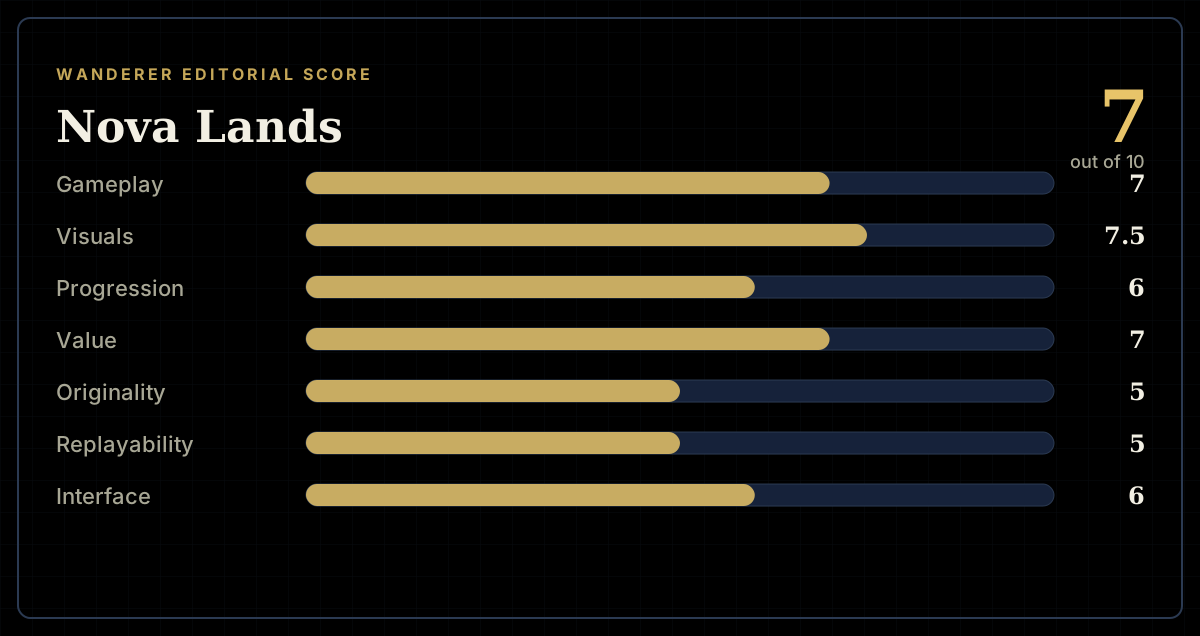
How the review scores each part of the gameWanderer Editorial -
The short versionWanderer Editorial