Game review
Sandustry
8 / 10
- Developer
- Lantto Games
- Publisher
- Hooded Horse
- Released
- 13 August 2026
- Platforms
- Windows, macOS, Linux
- Genre
- Automation, Survival Craft
- Monetisation
- One-time purchase; no microtransactions, no ads, no DLC
- Players
- Single-player
The short version
Sandustry's pitch is disarmingly simple to state and clearly hard to build: every pixel in its world, from grains of sand to droplets of water and flecks of ice, is a physically simulated resource that can be mined, filtered, heated, frozen or piped through a growing factory. Press coverage before launch compared it to Factorio's automation, Terraria's destructible 2D worlds and Noita's pixel-physics chaos in the same breath, and the Early Access launch on 13 August 2026 backed that up — 227 of its first 230 Steam reviews are positive, many from players who had already sunk hours into the free pre-launch demo.
The three negative reviews all point at the same real problem: a handful of players report the game freezing or crashing within minutes, specifically when hovering certain UI elements like filter technology or the ore agitator. That is a genuine early-build issue rather than a design complaint, worth knowing about before buying on launch week even though the overwhelming majority of reviewers report smooth, "unreal" polish for a day-one Early Access build. At under NZ$13, with a generous content-per-dollar reputation already forming and Steam Workshop modding support built in from the start, this is a strong Early Access buy for automation fans who don't mind the occasional rough edge.
Biggest strengths
- A genuinely distinctive pixel-physics simulation — sand, water, ice, steam and fire all interact — underneath a real factory-automation progression loop
- Backed by strong pre-launch press attention (PCGamesN, Rock Paper Shotgun, GamesRadar) that has translated into an equally strong player reception at launch
- 227 of 230 Steam reviews positive at time of writing, many from players who logged serious hours in the pre-release demo before ever buying
Biggest weaknesses
- A small number of launch-week reviews report the game freezing or crashing within minutes, specifically tied to hovering certain UI elements
- One detailed review estimates only 5-10 hours of progression content at the Early Access launch, a fair warning for anyone expecting a long campaign immediately
- Steam's achievement data is day-one and uninformative right now, so there's no independent read yet on how the difficulty or content curve holds up over time
Who it's for: Automation and factory-building fans who want the genre's satisfaction of optimised production chains combined with genuine falling-sand physics rather than a fixed grid. Also worth a look for Terraria and Noita fans curious what a factory game built on the same kind of pixel simulation feels like.
Our recommendation: Recommended at NZ$12.99, with the standard Early Access caveat — a small number of launch-week crash reports and roughly 5-10 hours of content by one detailed reviewer's estimate mean this is a game to buy for where it's clearly going as much as where it already is.
8 / 10
Factory-automation games usually build on a grid: place a machine, connect a belt, watch the numbers climb. Sandustry throws that assumption out. Every pixel in its world — a grain of sand, a droplet of water, a flake of snow, a spark of fire — is a physically simulated object with its own properties, reacting to heat, pressure and the other pixels around it. Ice melts into water when warmed, water boils into rising steam, steam condenses back into rain, and wet sand can be sifted for the gold hiding inside it. Building a factory here means building it on top of a world that is constantly, physically changing underneath your machines, and Early Access launched on 13 August 2026 to a reception strong enough to suggest the studio pulled that idea off.
Factorio's brain in Terraria's body
Pre-launch press coverage reached for the same comparisons independently: PCGamesN called it "blending the automation of Factorio with the 2D pixel world of Terraria," while Rock Paper Shotgun described it as "a factory sim set in the labyrinths of Noita." That's a genuinely unusual combination to land, and the screenshots back up the ambition — sprawling conveyor-belt networks threading through hand-carved caverns, water reservoirs draining into filtration arrays, and a deep vertical mine shaft descending through biome after biome as the player chases the next tier of automation. An "Objectives" panel tracks numeric progress toward each unlock, while a separate "Special Orders" system layers quest-like directives — securing a "Stratacore," condensing a resource called Florin into Florinol — on top of the open-ended building. The core promise, mining and processing "every pixel," is backed up in the tools on offer: filters, drones, pumps, pipes, conveyor belts and lifts, alongside blunter instruments like flamethrowers and rocket launchers for players who'd rather punch through a wall of ice than route around it.
A demo that did its job
A striking number of the launch reviews mention having played Sandustry's free demo extensively before ever buying the full release — one reviewer says they played it "for an unhealthy amount of time," another says it's "by far the quickest I've ever bought a game" as a result. That pre-release groundwork shows in how the launch reviews talk about polish: several draw a direct comparison between the demo build and the shipped Early Access version and describe the difference as "unreal" or immediately noticeable, which is a healthier signal for an Early Access launch than reviews written with no baseline to compare against. One reviewer who identifies as a playtester and early-access content creator reports around 150 hours with the game before launch — useful context for how much internal testing time the build already carries, though naturally that reviewer's relationship to the game is closer than a typical buyer's.
What's actually there at launch
Read plainly rather than dressed up, this is Early Access, and the reviews say so honestly. The most detailed critical-but-positive review in the sample estimates "only 5-10 hours of progression at the release of Early Access," a fair heads-up for anyone expecting a long campaign on day one rather than a foundation to be built on. Another describes the game as "a bit janky and unpolished" and not conventional pixel art, while still recommending it for the strength of the core Terraria plus Factorio plus Noita combination underneath. Both readings are consistent with what Early Access is supposed to be: real, playable systems with real rough edges, priced and marketed accordingly.
Real crash reports, not just launch-day noise
Of the 230 reviews Sandustry had accumulated at time of writing, only three are negative, and all three converge on the same specific problem rather than three different complaints. A Spanish- language review reports being unable to keep the game open for more than a minute, specifically identifying hovering the cursor over filter technology or the ore agitator as a reliable crash trigger. An English-language review independently reports the same shape of failure — the screen turning white or black and the game crashing within three to ten minutes, most often while unlocking new things in the game's menus. That reviewer adds, after searching around, that "these bugs have been in the game for years," which reads as a comment on the length of the game's pre-release development and demo history rather than a claim this reviewer could verify directly. Two independent reports describing the same specific trigger, on launch day, is worth taking seriously even against an otherwise overwhelming 99% positive score — this is exactly the kind of corroborated, dateable technical complaint that deserves a mention rather than being drowned out by volume.
Price and modding
At NZ$12.99 during its launch discount (NZ$19.99 at list price), Sandustry undercuts most of its genre neighbours while offering Steam Workshop support from its very first Early Access build — several reviewers flag the sub-$20 asking price specifically as "a clever move" given the amount of game already on offer. There is no DLC on the store page and nothing resembling a microtransaction, which is the standard this library expects from a one-time-purchase release and Sandustry clears it cleanly. Cross-platform support for Windows, macOS and Linux, plus at least one reviewer confirming smooth Steam Deck play, rounds out a launch that's easy to recommend on price and access alone.
Final verdict
Sandustry backs up an unusually specific pitch — a factory-automation game where the factory sits on top of a fully simulated falling-sand world — with a launch reception that's about as strong as Early Access reviews get: 227 of 230 positive, substantial pre-release demo goodwill, and press coverage that called the shot before launch and got it right. The catches are exactly the ones Early Access should carry: a genuinely limited content window right now by one detailed reviewer's own estimate, and a small but corroborated cluster of crash reports tied to specific UI interactions that buyers on launch week should know about going in. Neither undermines what's clearly a strong foundation. At under NZ$13, with modding support already live and a publisher with a track record of backing well-regarded simulation and strategy titles, this is worth buying now for automation fans who are comfortable with Early Access roughness, and worth watching closely if you'd rather wait for the crash reports to clear and the content list to grow.
Pros and cons
Pros
- A genuinely distinctive pixel-physics simulation — sand, water, ice, steam and fire all interact — underneath a real factory-automation progression loop
- Backed by strong pre-launch press attention (PCGamesN, Rock Paper Shotgun, GamesRadar) that has translated into an equally strong player reception at launch
- 227 of 230 Steam reviews positive at time of writing, many from players who logged serious hours in the pre-release demo before ever buying
- NZ$12.99 launch price with no microtransactions, no ads and no DLC anywhere on the store page
- Steam Workshop modding support built in from Early Access day one, plus cross-platform Windows, macOS and Linux support
Cons
- A small number of launch-week reviews report the game freezing or crashing within minutes, specifically tied to hovering certain UI elements
- One detailed review estimates only 5-10 hours of progression content at the Early Access launch, a fair warning for anyone expecting a long campaign immediately
- Steam's achievement data is day-one and uninformative right now, so there's no independent read yet on how the difficulty or content curve holds up over time
- At least one reviewer calls the presentation "a bit janky and unpolished" and not conventional pixel art, a fair description worth setting expectations around
- As with any Early Access release, the roadmap and long-term scope are promises rather than delivered facts yet
Screenshots
-
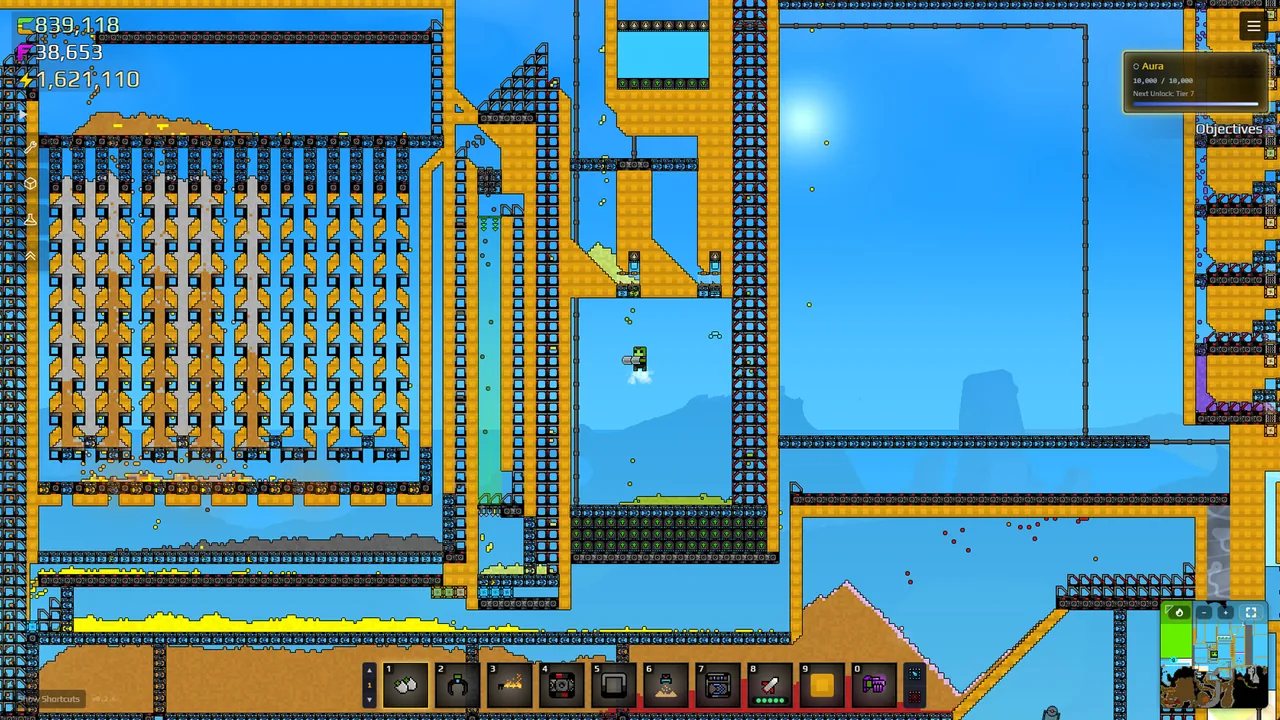
SandustryImage: Hooded Horse via Steam -
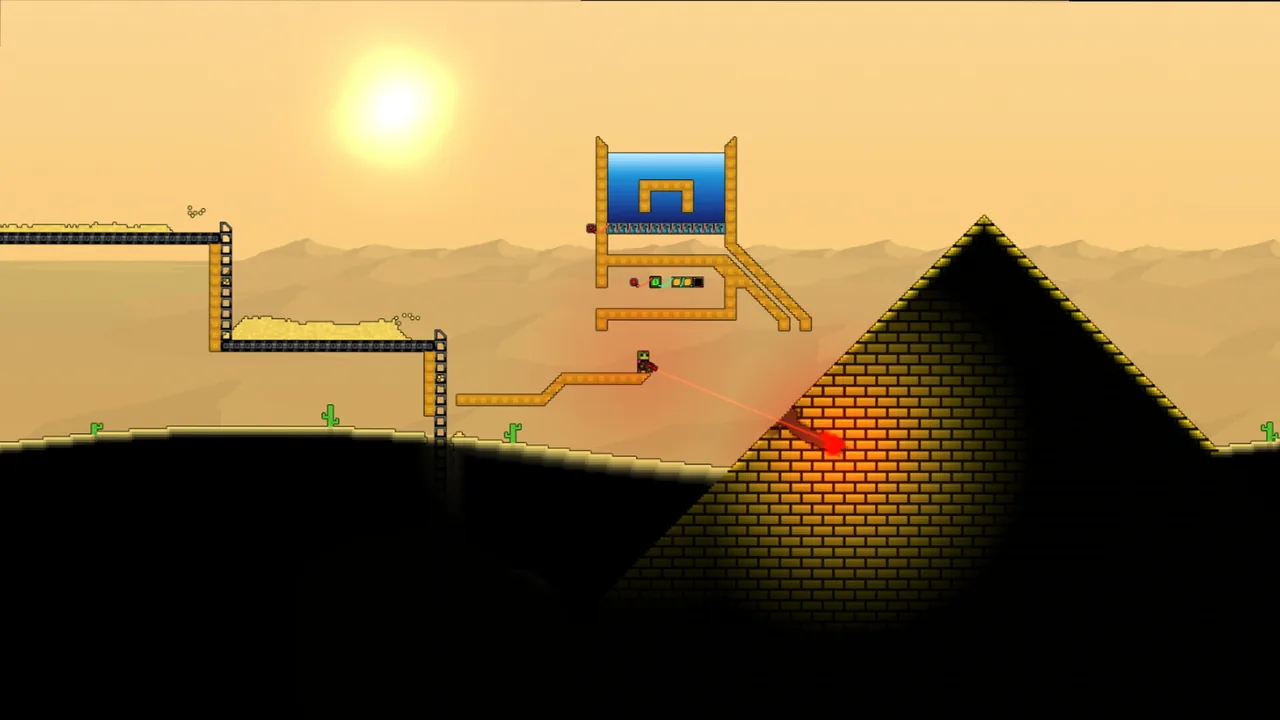
SandustryImage: Hooded Horse via Steam -
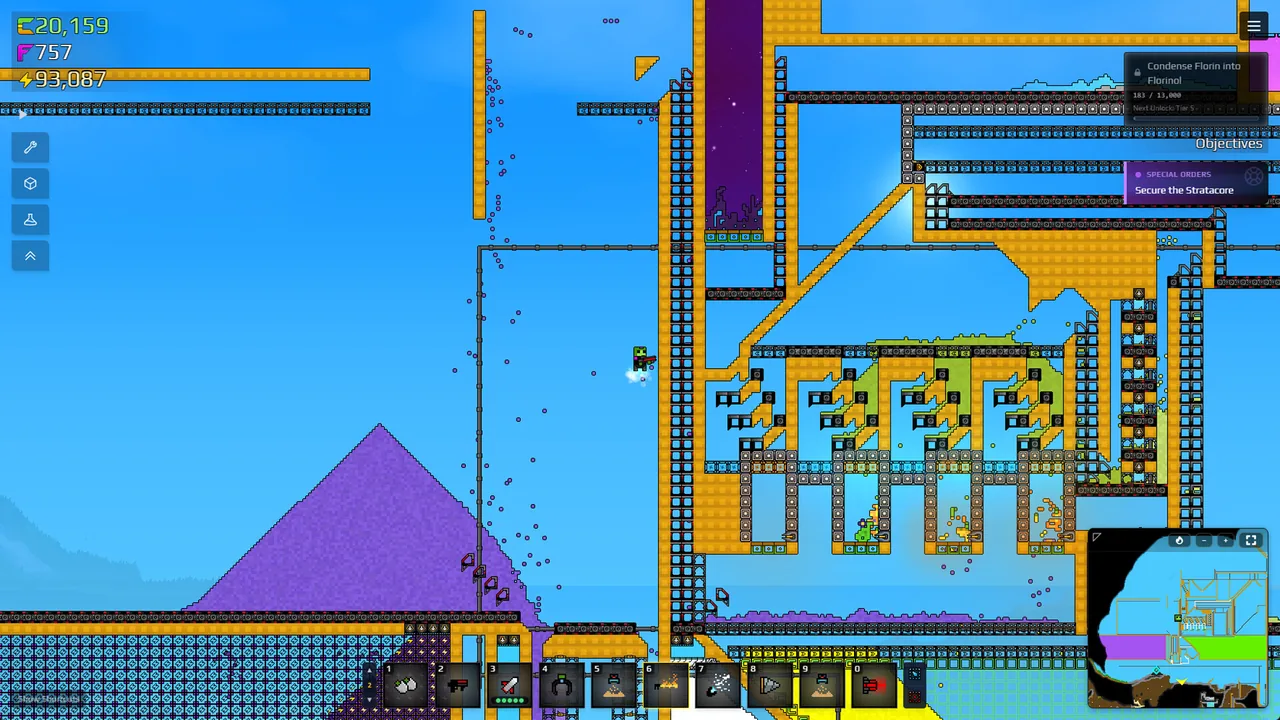
SandustryImage: Hooded Horse via Steam -
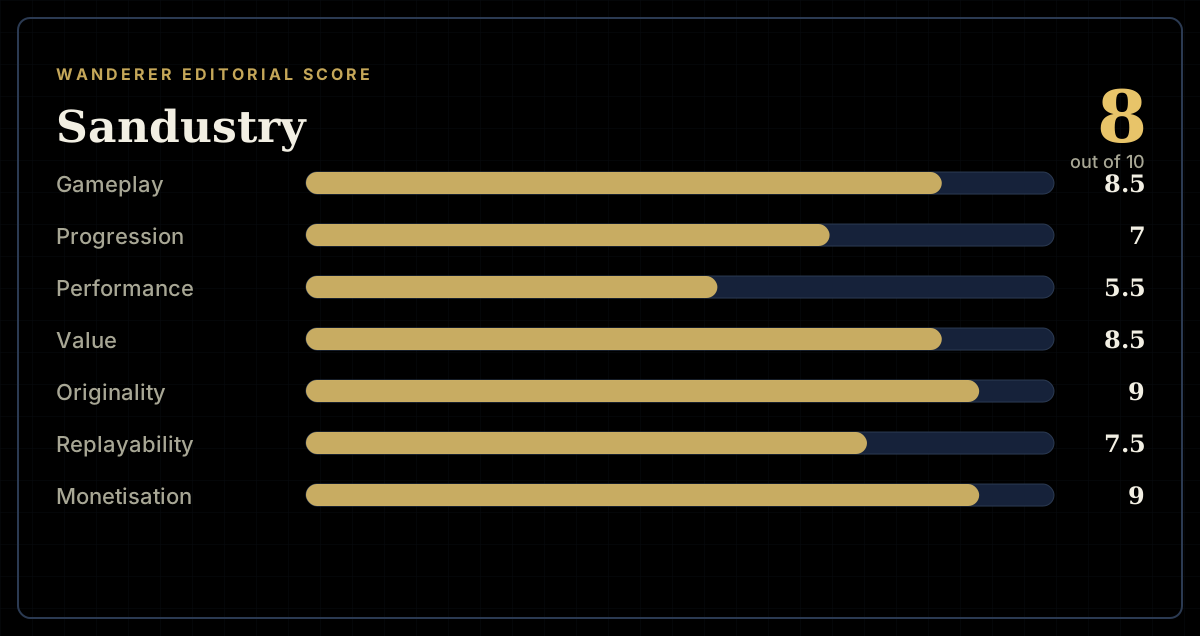
How the review scores each part of the gameWanderer Editorial -
The short versionWanderer Editorial