Game review
Forager
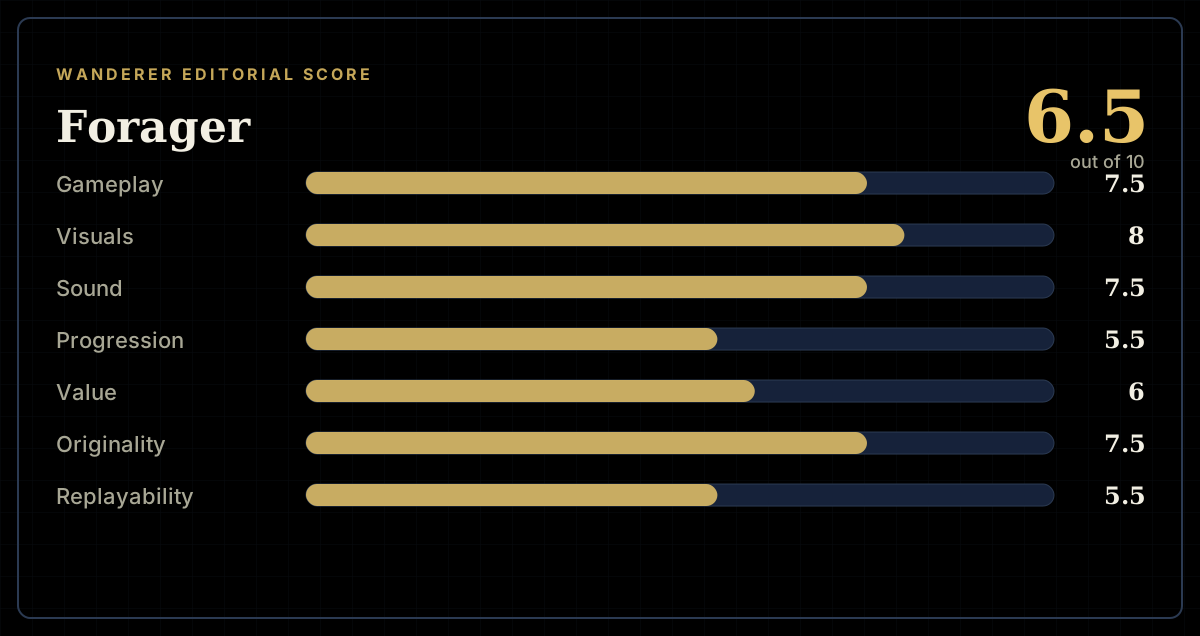
6.5 / 10
- Developer
- HopFrog
- Publisher
- Balor Games
- Released
- 18 April 2019
- Platforms
- Windows, Nintendo Switch, PlayStation 4, Xbox One, iOS
- Genre
- Crafting / Idle Sandbox
- Monetisation
- One-time purchase, no in-app purchases, no DLC. Steam Workshop mod support is free and built in. Listed at NZ$24.79 — checked 4 August 2026, unchanged in price despite the game receiving no updates since 2020.
- Players
- Single-player only — a multiplayer mode was announced as confirmed in June 2020 and never shipped
The short version
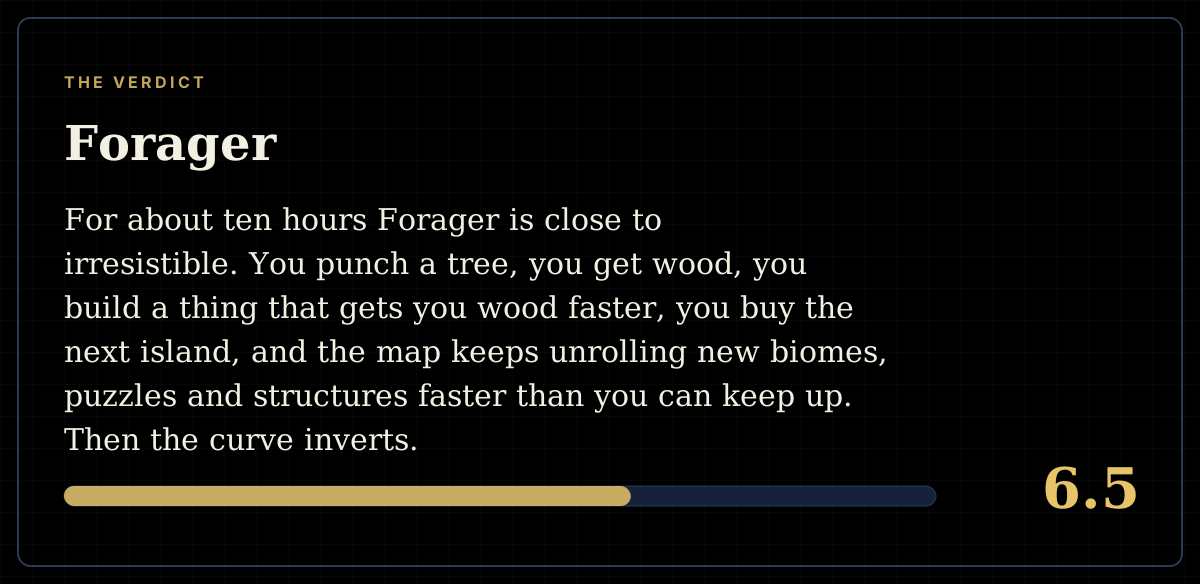
For about ten hours Forager is close to irresistible. You punch a tree, you get wood, you build a thing that gets you wood faster, you buy the next island, and the map keeps unrolling new biomes, puzzles and structures faster than you can keep up. Then the curve inverts. Everything becomes automatic, the challenge evaporates, and you're watching machines produce numbers for goals you stopped caring about. That would be a decent seven-out-of-ten story on its own. What drags it lower is what happened afterwards: multiplayer was announced as confirmed in 2020, never arrived, was never cancelled on the store page, and the game hasn't been updated since — while the price hasn't moved.
Biggest strengths
- The opening loop is genuinely exceptional — buying new land to unroll more map is a smarter hook than most survival-crafting games ever find
- Constant discovery in the early hours, with new biomes, structures, puzzles and recipes arriving faster than you can process them
- Automation chains are satisfying to design and the game is generous about letting you over-engineer them
Biggest weaknesses
- Abandoned — no content updates since 2020 and no Steam announcement since June 2021, which was an advert for a different game
- A multiplayer mode was publicly listed as confirmed and coming soon in June 2020; it was never delivered and never formally cancelled on the store page
- The difficulty collapses well before the content does, and the back half is waiting on machines rather than playing
Who it's for: Players who want a compulsive gather-and-automate loop and are happy to get ten or fifteen excellent hours and stop. Not for anyone expecting long-term support, co-op, or a late game with teeth.
Our recommendation: Worth playing, worth waiting for a sale. Go in planning to enjoy the discovery phase — the first two islands, the first automation chains, the first dungeon — and to put it down when the machines start doing everything. Don't buy it for the multiplayer mode that was announced in 2020; it isn't coming, and nothing on the store page will tell you that.
6.5 / 10
Forager's own store page calls it "the idle game that you want to actively keep playing," which is both an excellent line and, seven years on, a slightly awkward one. Because the criticism that follows the game everywhere — including through its overwhelmingly friendly review score — is that eventually it becomes an idle game you don't want to actively keep playing.
Getting there is the fun part, and it's worth being clear how good the getting there is.
The best land-buying loop in the genre
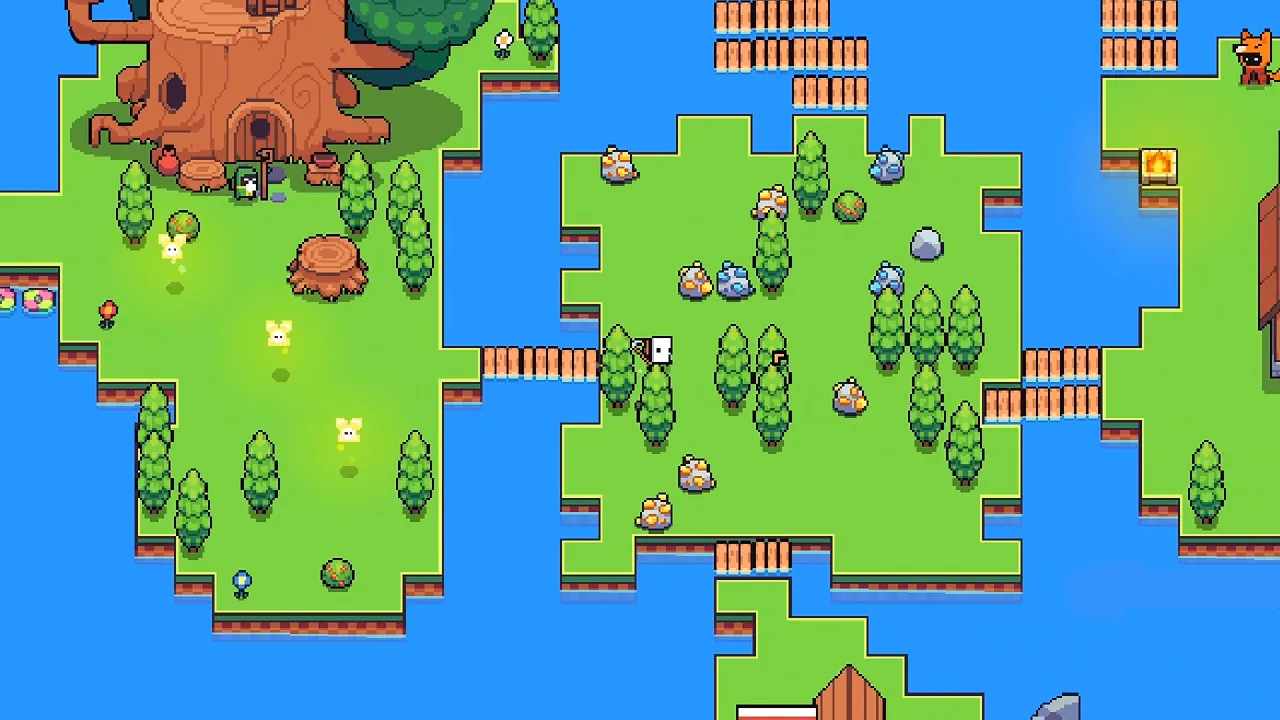
You start on a tiny island with a pickaxe. You hit rocks, you get ore, you smelt it, you build a furnace, and then you spend your coins on the adjacent island, which unrolls into existence with its own biome, its own resources and its own secrets.
That purchase is the hook, and it's a smarter one than most of this genre manages. In Terraria or Core Keeper the world is already there and you're pushing outward into it. Here the world arrives in deliberate, purchasable increments, each one a small event, each one adding a new production chain to think about. The pacing of the first several hours is close to perfect: you're always two minutes from the next unlock, and the game keeps handing you structures that make the previous fifteen minutes obsolete.
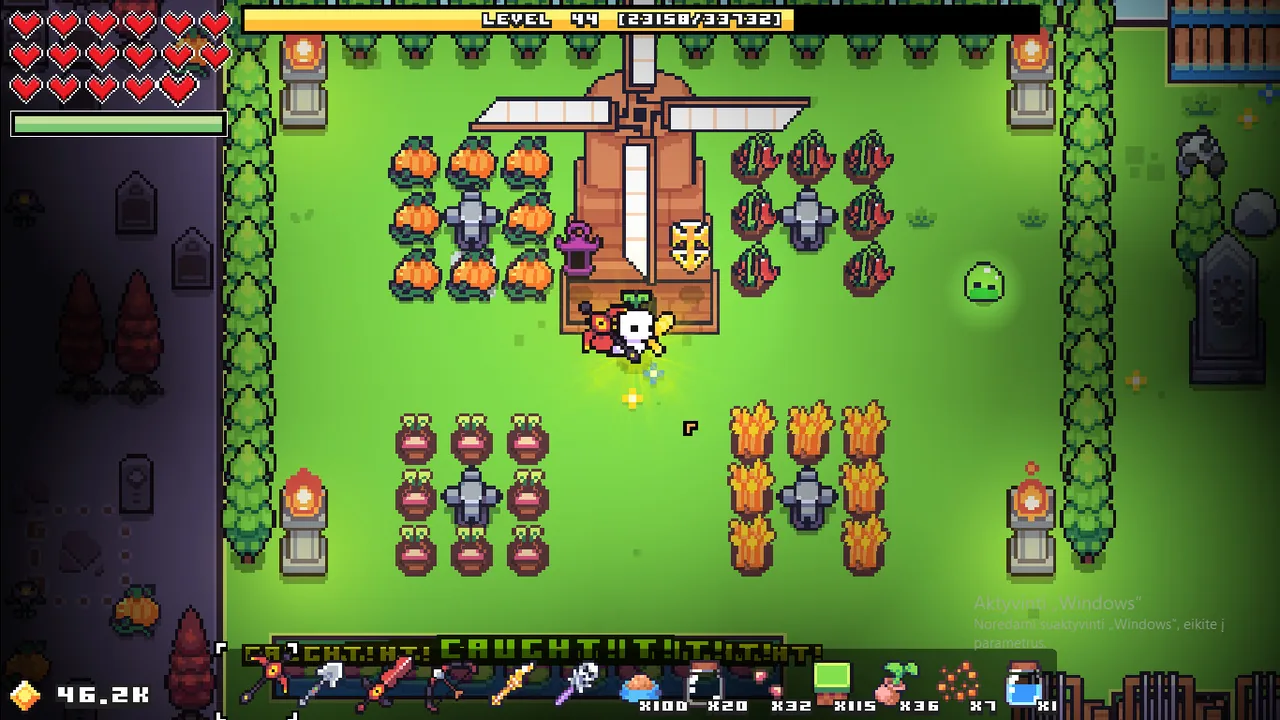
The automation is where it earns the idle comparison. Mining rods, furnaces, forges, banks and droids gradually take over the actions you were doing by hand, and designing a compact self-feeding factory is genuinely satisfying. The art is bright and readable, the soundtrack is lovely, and the whole thing is relentlessly cheerful.
Nearly 44,000 people have reviewed it and 89% recommend it. Four in five recent buyers still do. Whatever else is true, the first stretch of this game works on almost everybody.
Then the machines take over
The complaint that recurs, in negative reviews and glowing ones alike, is that Forager solves itself.
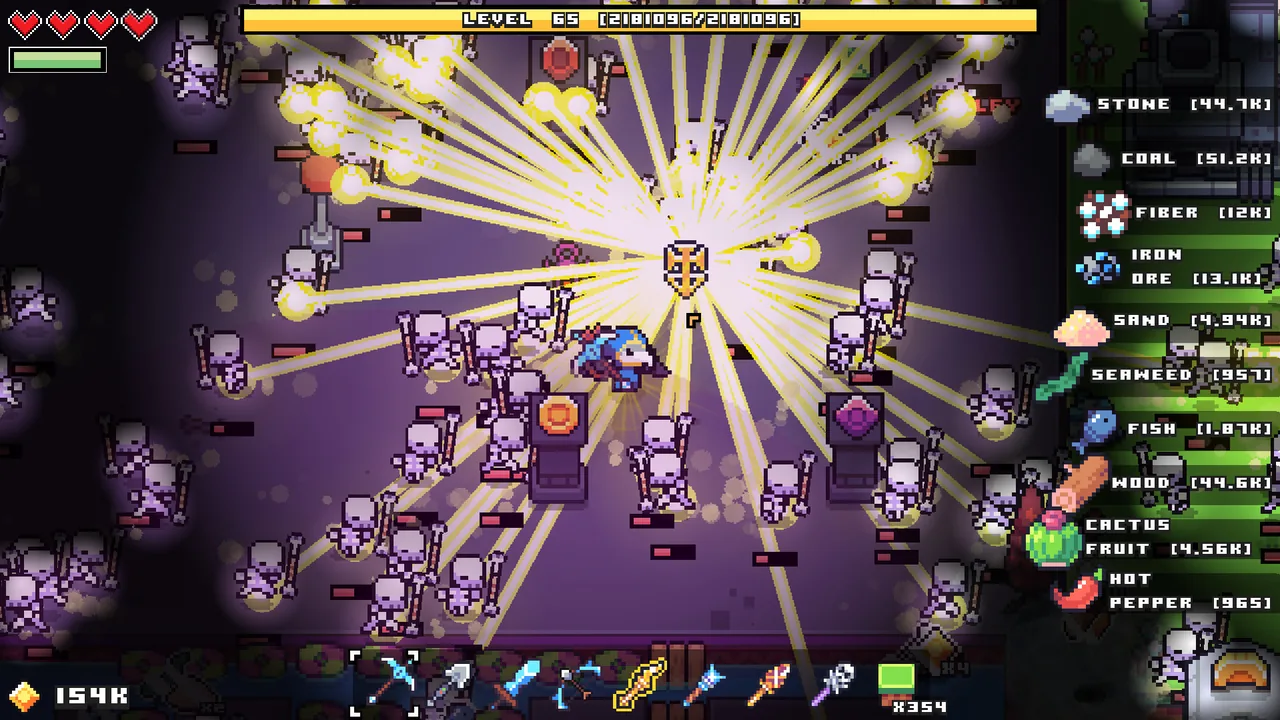
The difficulty curve inverts early. Resources that felt precious become infinite, threats stop threatening, and the structures you built to save time end up doing all the playing. What's left is waiting: watching a production chain fill, feeding its output into the next machine, and repeating that for goals whose rewards you no longer need. One reviewer, generously, called it the best clicker game they'd ever played and still couldn't recommend it. That's the shape of the problem — the transition from game to screensaver with a progress bar happens somewhere around hour ten, and nothing arrives afterwards to arrest it.
The late-game grind compounds it. Advancement costs balloon, but they balloon in quantity rather than complexity, so the answer is always more machines and more waiting rather than a new idea.
The achievement spread reflects a game people enjoy and drift away from rather than finish: the most common sits at 81%, roughly half the list is above 35%, and the tail runs down to 6%. Nobody hits a wall. They just stop finding reasons to continue.
For what it's worth, this is the exact design problem good idle games spend their whole lives solving — Melvor Idle keeps working because new skills keep opening sideways rather than upward. Forager runs out of sideways.
Why it hollows out
It's worth being specific about the mechanism, because Forager isn't lazy — it's built on an incentive that eats itself.
Every system in the game pushes in the same direction: more production. Land costs coins, coins come from selling goods, goods come from machines, machines come from resources, and resources come from more land. That's a tight, legible economy, and it's why the opening is so compelling. But it's a single axis. There is no second currency you're trading against it, no upkeep, no risk of losing what you built, no reason to ever specialise. Optimal play is always "build another one of everything," and the game never introduces a constraint that makes that a bad idea.
Compare it with the games it sits next to. Stardew Valley gives you a calendar, so time spent on one thing is time not spent on another. Don't Starve Together gives you a world actively trying to kill you, so every expansion is a liability as well as an asset. Terraria gates you behind bosses that demand you actually fight. Forager's islands don't fight back and its clock never runs out, so once your production exceeds your consumption — which happens early — nothing is pulling against you.
The automation then finishes the job. Automating a chore is a reward; automating every chore removes the activity the rewards were attached to. By the point you've fully built out, the game has systematically deleted each of the verbs that made the first hours enjoyable, and left the numbers behind. It's the idle-game trap, and idle games survive it by constantly opening new systems that reset you to manual. Forager only had the one system.
None of this ruins those first hours. It does explain why so many reviews follow the same arc — delight, then a shrug — and why the fix would have needed new content rather than tuning.
The part you need to know before buying
On 23 June 2020, the developer posted an update titled "The Future of Forager..." to the game's Steam page. It listed what was "confirmed to come soon." The first item was Multiplayer Mode.
It never shipped.
There has been no content update since 2020. The last Steam announcement of any kind went up on 17 June 2021, and it was an advertisement for a different game by other developers. In the five years since, the store page has carried no notice that multiplayer was cancelled, no change of plans, and no change of price — it still sells for NZ$24.79, which is more than Terraria and more than Stardew Valley, both of which have received years of free content since.
Linux support, which existed at launch, was withdrawn afterwards. People who had bought it on that platform were left with nothing.
I want to be careful about what I'm claiming here, because there is a great deal of heated commentary around this game's development that I can't verify and won't repeat. But the facts above come from the game's own Steam page and are the ones that matter to somebody deciding whether to spend money today: a feature was publicly promised, it did not arrive, the promise was never retracted where buyers would see it, and the game has been static for years while remaining at full price.
That isn't a bug and it isn't a matter of taste. It's the single most important thing a review of this game in 2026 can tell you.
Is it still worth playing?
6.5 out of 10. Rated 6.5 out of 10.
Yes, with conditions. The first ten or fifteen hours of Forager are excellent, and there's a reason the gather-buy-land-automate structure has been borrowed so widely since. If you catch it on sale and treat it as a compact, cheerful fifteen-hour game that you'll put down when the automation takes over, you'll have a good time and you'll understand why it sold as well as it did.
What stops the score going higher isn't only the hollow late game — plenty of good games sag at the end. It's that this one stopped receiving the support that would have fixed it, kept a cancelled headline feature on its record, and never adjusted its price to match what it actually is now: a finished, frozen 2019 game.
If the automation-and-expansion itch is what brings you here and you want something that keeps giving you new ladders to climb, Necesse and Core Keeper are both still being built. Forager is done. It's just never said so.
Pros and cons
Pros
- The opening loop is genuinely exceptional — buying new land to unroll more map is a smarter hook than most survival-crafting games ever find
- Constant discovery in the early hours, with new biomes, structures, puzzles and recipes arriving faster than you can process them
- Automation chains are satisfying to design and the game is generous about letting you over-engineer them
- Bright, readable pixel art and a soundtrack that carries the whole cosy tone
- Full Steam Workshop mod support, and the community's best mods were once folded into an official free content pack
- Nearly 44,000 reviews at 89% positive, and four in five recent buyers still recommend it, which says the good part is very good indeed
Cons
- Abandoned — no content updates since 2020 and no Steam announcement since June 2021, which was an advert for a different game
- A multiplayer mode was publicly listed as confirmed and coming soon in June 2020; it was never delivered and never formally cancelled on the store page
- The difficulty collapses well before the content does, and the back half is waiting on machines rather than playing
- Late-game resource costs balloon into grind without adding decisions
- Linux support was withdrawn after launch, stranding people who had already bought it
- Still priced at full retail seven years on, above what Terraria and Stardew Valley cost
Screenshots
-
ForagerImage: Balor Games via Steam -
ForagerImage: Balor Games via Steam -
ForagerImage: Balor Games via Steam -
How the review scores each part of the gameWanderer Editorial -
The short versionWanderer Editorial