
Game review
Goldclicking
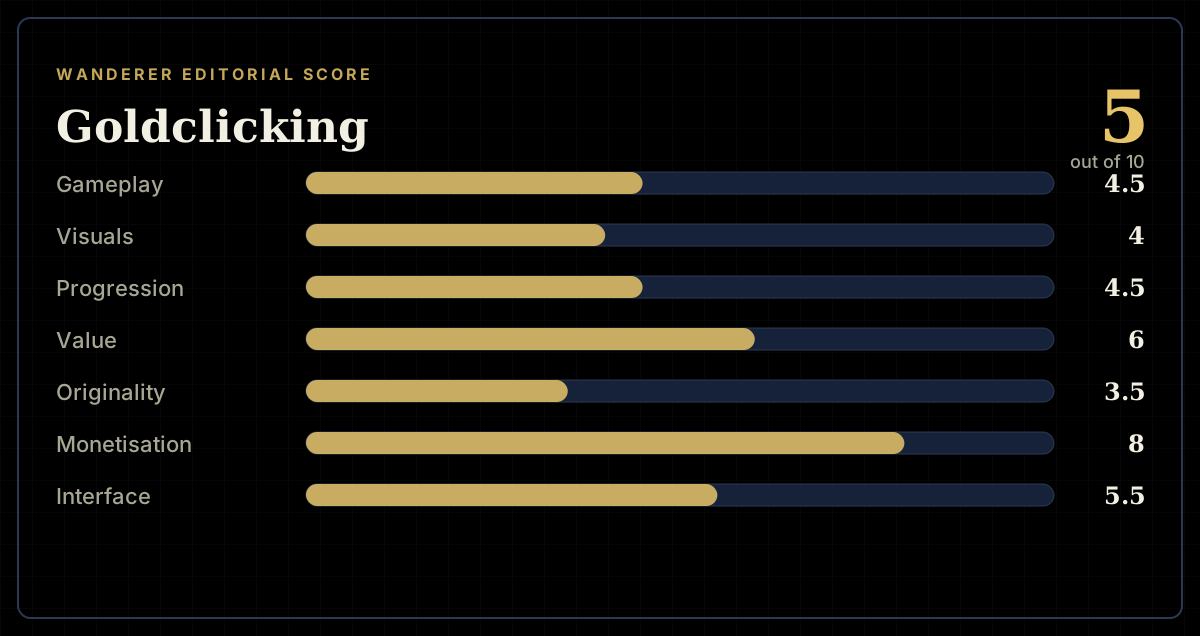
5 / 10
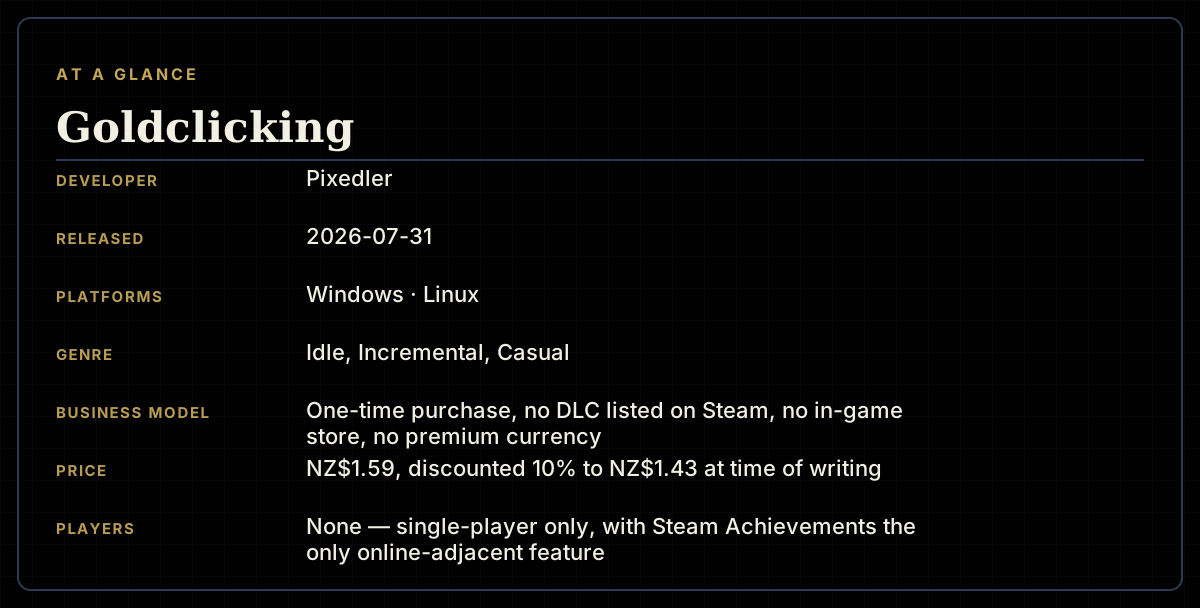
- Developer
- Pixedler
- Publisher
- Pixedler
- Released
- 31 July 2026
- Platforms
- Windows, Linux
- Genre
- Idle, Incremental, Casual
- Monetisation
- One-time purchase, no DLC listed on Steam, no in-game store, no premium currency
- Players
- None — single-player only, with Steam Achievements the only online-adjacent feature
The short version
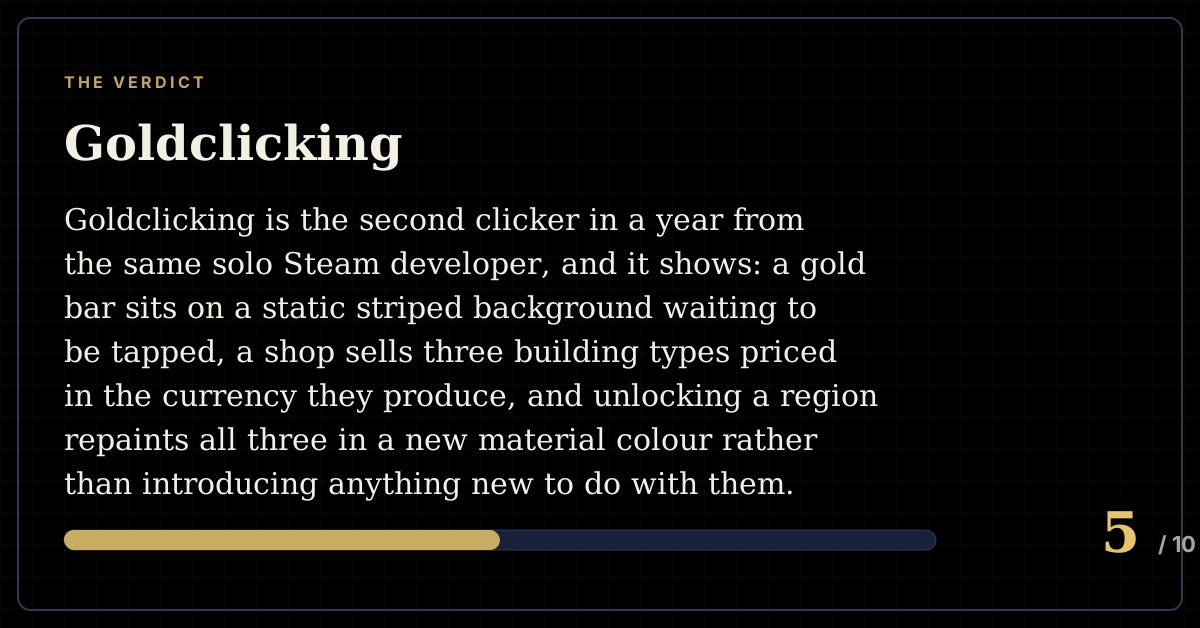
Goldclicking is the second clicker in a year from the same solo Steam developer, and it shows: a gold bar sits on a static striped background waiting to be tapped, a shop sells three building types priced in the currency they produce, and unlocking a region repaints all three in a new material colour rather than introducing anything new to do with them. Six regions and eight tool tiers give the shop real breadth to page through, and two short bonus minigames — one where a mine cart catches falling gold, one a rapid-fire click-the-bars burst — break up the tapping. What the achievement list, the store description and every one of its seven promotional screenshots never mention once is a prestige, ascension or reset system, the single most common structural idea in the genre it's tagged into. At under two dollars the risk is close to zero, but so is the ambition.
Biggest strengths
- Six regions each add a full new material tier of Pickaxe, Minecart and Mine buildings rather than a single flat upgrade list, so there's an actual shop to progress through rather than one screen with bigger numbers
- Two separate minigames — a mine cart catching falling gold bars, and a rapid click-the-bars burst against a countdown — each carry their own upgrade tier in the achievement list, giving the loop two side activities instead of the usual none
- NZ$1.43 at the time of writing (NZ$1.59 undiscounted), with no DLC, no in-game store and no premium currency anywhere on its Steam listing
Biggest weaknesses
- No achievement, upgrade name or line of store-page text anywhere references a prestige, ascension or reset mechanic — the defining structural idea of the genre this game is tagged into, and on all the evidence available it simply isn't here
- Each region reskins the identical three buildings and the same "+1 Clicking Multiplier" upgrade in a new material colour, so the six-region pitch is one shop repainted six times rather than six distinct systems to learn
- The store page calls this an idle game but never states whether gold accrues while the game is closed, the first thing idle-game buyers usually check
Who it's for: Players who want a pocket-change clicker to leave running in a spare window and don't mind that the endgame is simply "reach the last region," plus anyone specifically curious about how far a barebones Cookie Clicker skeleton can be stretched with palette swaps alone.
Our recommendation: Fine for the price if a short, undemanding tap-and-wait session is all you're after — there's a real six-region, eight-tier shop here and two minigames add variety the cheapest clickers usually skip. Look elsewhere if you want the genre's usual back half: a prestige currency, a reason to keep playing after the last region unlocks, or confirmation the game earns anything while it's closed, none of which this review could find evidence of.
5 / 10
Goldclicking's entire premise fits in the two sentences its own Steam page uses to describe it: tap a gold bar, buy tools to earn more without tapping. That is a fair summary of the whole game, and it is worth saying up front because the six-region, two-minigame structure sitting around that premise can make it look like there's more here than there is. Look at what actually changes as the numbers climb, and the honest answer is: not much, and never a reset.
The loop, stripped to its studs
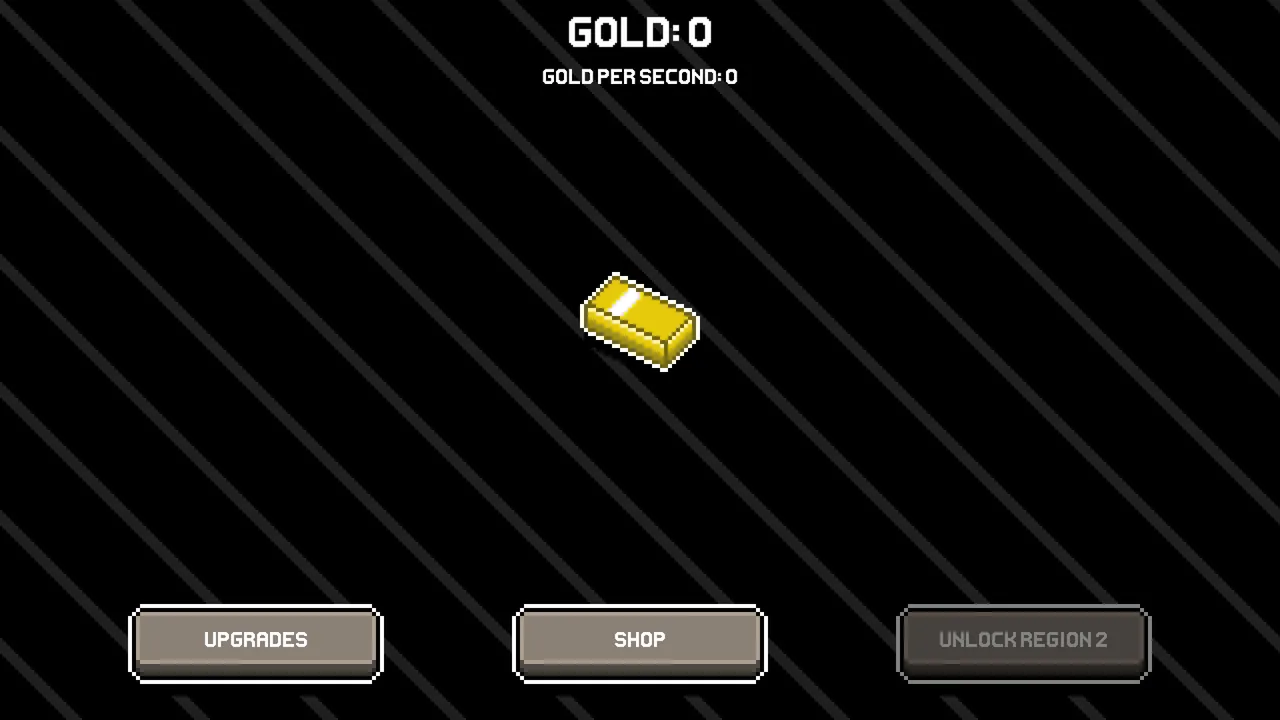
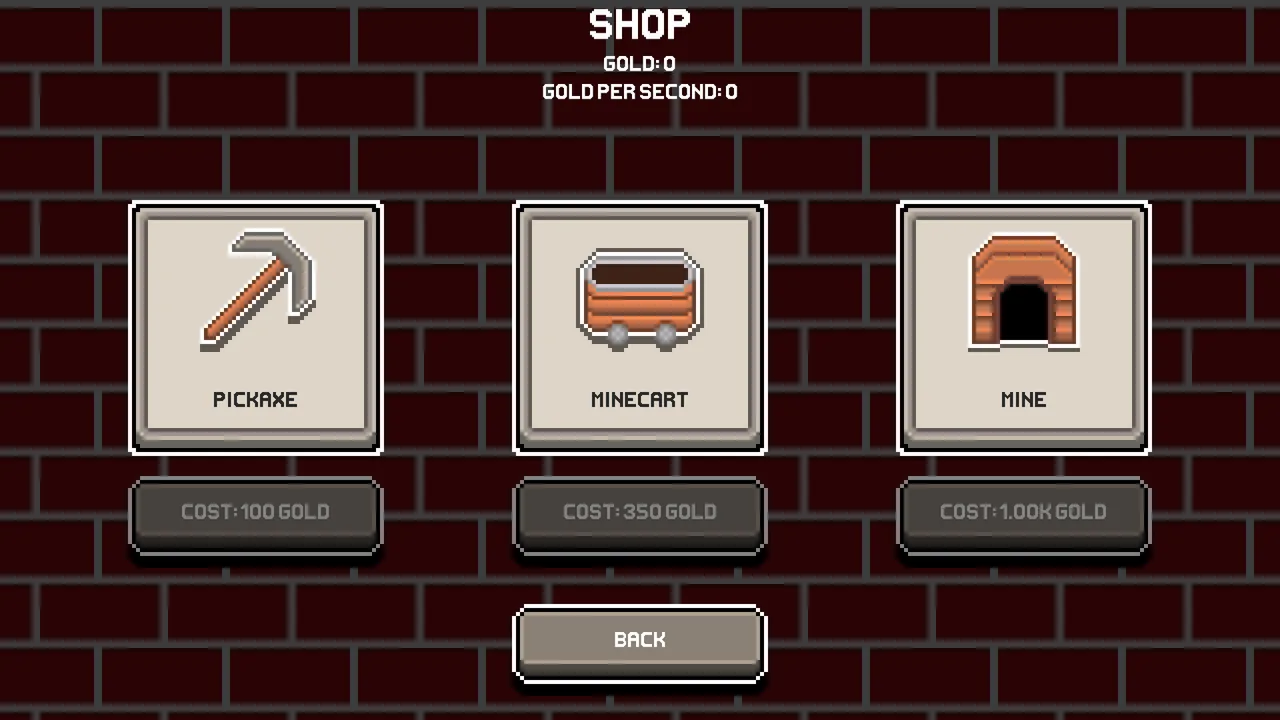
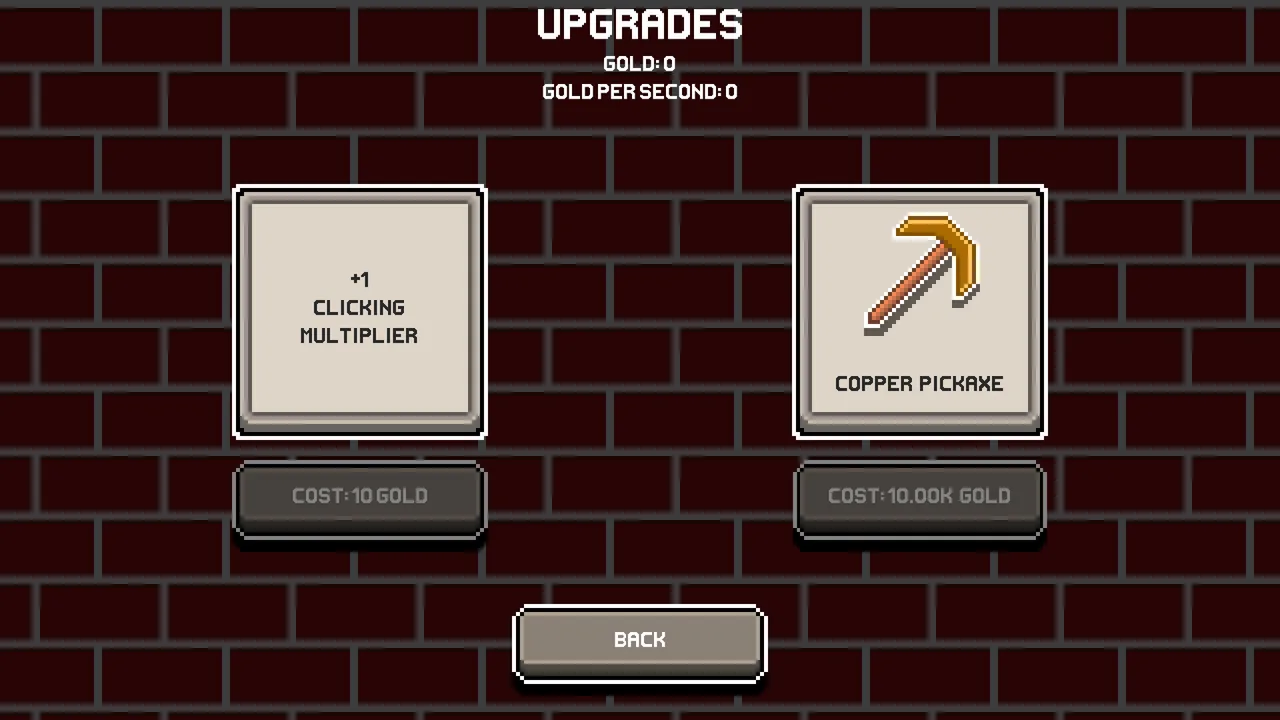
The starting screen is a single pixel-art gold bar rotating gently against a dark, diagonally striped background, with a Gold total and a Gold-per-second readout above it and three buttons below: Upgrades, Shop and Unlock Region. Tapping the bar adds gold one click at a time; the Shop sells three building types — Pickaxe, Minecart, Mine — each priced in the gold they're bought with and each producing more of it automatically once owned. The Upgrades screen holds two kinds of purchase: a flat "+1 Clicking Multiplier" that starts at a trivial 10 gold, and named tool upgrades like the Copper Pickaxe that cost thousands. It's the Cookie Clicker skeleton reduced to its studs — one currency, one click target, one building list — without the milestone doublers, synergy bonuses or automation options that games like Clickstellar build on top of the same base.
Six regions, one shop repainted six times
"Unlock 5 other regions to unlock more upgrades" is how the store page sells the game's back half, and the promotional screenshots confirm what that means in practice: Region 2's shop sells a green-tinted Pickaxe, Minecart and Mine at higher prices for higher output, and later regions do the same again in gold, steel and other material colours. The achievement list names eight tool-material tiers across those regions — Copper, Gold, Steel, Green Gold, Red Gold, Orange Gold, Blue Gold and Black Gold — which does at least give the shop real length to click through, a captured Region 3 screen shows a player sitting on 218.63K gold earning 2.72K per second with a Gold Pickaxe priced at 516, a Gold Minecart at 1.81K and a Gold Mine at 5.16K, so the economy is genuinely scaling as regions unlock. What it never does is introduce a fourth building type, a new resource, or any interaction between regions once the next one opens. Six regions is one system, run six times.
Two minigames, and nothing to spend their winnings on but more gold
The two bonus modes the store page promises are real and distinct from each other. One drops a scatter of falling gold bars down the screen while a mine cart at the bottom presumably needs to be steered underneath them, with a countdown timer and a running score visible in the HUD — an eight-second round shown mid-play had banked a score of 3. The other mode fills the screen with far more static bars at once, apparently a rapid click-everything-you-can burst against the same kind of countdown; a two-second-remaining capture shows well over a dozen bars on screen against a score of only 4, suggesting most of what's on screen goes unclaimed once the clock runs down. Both modes have their own upgrade tier in the achievement list — MinigameUpgrade and MinigameUpgrade2.0 — so they're not just decorative distractions bolted onto the side; they scale alongside the main loop. They're also the only variety the game offers outside the shop, and nothing in the visible evidence suggests they unlock anything beyond more of the same currency the main loop already produces.
No reset button anywhere
This is the gap that matters most for a game filed under Idle and Incremental by its own players. The genre's most common shape, going back well over a decade, is to let a run get unwieldy and then trade it in for a permanent multiplier and a fresh start — Cookie Clicker's ascension, Clickstellar's Dark Matter tree, dozens of others under different names. Goldclicking's 71-achievement list runs from the first click through region unlocks, gold-total milestones and minigame tiers, and not one of them references anything resembling a reset, a rebirth currency or a permanent multiplier earned by starting over. The store description doesn't mention one either. On the evidence available — the full achievement schema and every promotional image the developer chose to show — reaching Region 6 and maxing out the Black Gold tools appears to simply be the end of the game, full stop, rather than the gateway to a second layer most genre veterans would expect to find there.
A functional interface, with real blind spots
Credit where it's earned: the numbers behave. Costs and totals across every captured screenshot render in clean K notation — "218.63K," "2.72K," "5.16K" — with none of the malformed digit groupings that occasionally slip through budget clickers. The three-button main menu and the Shop/Upgrades split are legible at a glance, and "Playable without Timed Input" appearing as a Steam store category suggests the developer was thinking about accessibility for at least the core loop, even with two countdown-based minigames attached. What's missing is anything to judge beyond that: none of the seven official screenshots show an options screen, so whether the game offers volume controls, a colourblind mode or any text scaling isn't something the storefront confirms in either direction, and there's no Steam Cloud category listed, so cross-device saves aren't guaranteed either.
A week old, and almost nobody's played it yet
Goldclicking launched 31 July 2026 and this review lands seven days later to a Steam page with precisely zero user reviews of any rating. The achievement percentages are the only telemetry available, and they resolve to exact fractions of 23 — a tracked population small enough that a single player finishing the game moves the percentage by more than four points. Read as a shape rather than a statistic, it's a gentle taper rather than a cliff: the opening achievements sit at 100%, the first region unlock and passing a million gold both land at 91.3%, Region 3 and trying a minigame for the first time sit at 78.2%, and the single hardest-earned achievement — ten rounds of the click-the-bars minigame — sits at 26.0%. Read generously, that means close to a quarter of a very small group of early buyers played long enough to reach the deepest content on record. It's also worth knowing this isn't Pixedler's first clicker: Factoridling, released by the same developer in March 2026, carries an almost identical tag set on its own Steam listing, which reads less like a debut experiment and more like a template being run a second time.
Final verdict
Goldclicking does what a NZ$1.43 clicker needs to do and very little else: it functions cleanly, its numbers format correctly, and it gives a player six regions and two minigames' worth of things to unlock before the shop runs out of new colours to show. It loses ground for being about as unoriginal as the genre gets — one click target, one currency, no mechanical idea that wasn't already old when Cookie Clicker popularised it in 2013 — and more specifically for missing the prestige loop that genre regulars will expect to find and, on every piece of evidence this review could gather, simply isn't there. At this price the risk of trying it is close to nothing. Just don't go in expecting the second half of the incremental genre's usual playbook, because nothing here suggests it exists.
Pros and cons
Pros
- Six regions each add a full new material tier of Pickaxe, Minecart and Mine buildings rather than a single flat upgrade list, so there's an actual shop to progress through rather than one screen with bigger numbers
- Two separate minigames — a mine cart catching falling gold bars, and a rapid click-the-bars burst against a countdown — each carry their own upgrade tier in the achievement list, giving the loop two side activities instead of the usual none
- NZ$1.43 at the time of writing (NZ$1.59 undiscounted), with no DLC, no in-game store and no premium currency anywhere on its Steam listing
- Large numbers render cleanly in K notation throughout the shop and HUD across every one of the seven official screenshots, with none of the broken formatting cheap clickers sometimes ship with
- "Playable without Timed Input" is listed as a Steam accessibility category, suggesting the core loop doesn't require fast reflexes even with two timed minigames attached
Cons
- No achievement, upgrade name or line of store-page text anywhere references a prestige, ascension or reset mechanic — the defining structural idea of the genre this game is tagged into, and on all the evidence available it simply isn't here
- Each region reskins the identical three buildings and the same "+1 Clicking Multiplier" upgrade in a new material colour, so the six-region pitch is one shop repainted six times rather than six distinct systems to learn
- The store page calls this an idle game but never states whether gold accrues while the game is closed, the first thing idle-game buyers usually check
- None of the seven promotional screenshots show a settings or options menu, so audio, text-size or control adjustments aren't something the storefront confirms one way or the other
- One week after launch the game has zero Steam reviews and an achievement-tracked population of roughly 23 players, leaving no independent record of how the later regions or minigame tiers actually play
Screenshots
-
GoldclickingImage: Pixedler via Steam -
GoldclickingImage: Pixedler via Steam -
GoldclickingImage: Pixedler via Steam -
How the review scores each part of the gameWanderer Editorial -
The game at a glanceWanderer Editorial -
The short versionWanderer Editorial