Game review
Idle Colors
4 / 10
- Developer
- Like Idle Games
- Publisher
- Like Idle Games
- Released
- 13 May 2025
- Platforms
- Windows
- Genre
- Idle, Incremental, Simulation
- Monetisation
- One-time purchase. No DLC, no ads, no premium currency and no energy timers anywhere on its Steam listing
- Players
- None — single-player, with Steam Leaderboards for stat comparison only
The short version
Idle Colors builds a genuinely large frame — seven colour currencies, a hundred generators apiece, a triple prestige track split into Base Income, Income Multiplier and Prices Reduction, plus separate Evolve, Tiers, Converter and Interest systems on top. What its own most-invested players report, at a median of 23.7 hours per negative review against 5.7 for its positive ones, is that none of those layers change what you're actually doing: buy generators, hit a wall, reset, and get told nothing for it. Steam's achievement data backs that up almost exactly — 30.8% of tracked players clear the first difficulty gate, 13.1% the second, and just 4.5% reach the fifth. Recurring technical failures, including a save that "bricked itself" after 135 hours, have gone unpatched since the game's only content update in May 2025.
Biggest strengths
- Seven colour currencies each carry their own 100-slot generator ladder, layered under a triple prestige track (Base Income, Income Multiplier, Prices Reduction) plus separate Evolve, Tiers, Converter and Interest systems, giving the shop real structural scale on paper
- Monetisation is entirely clean for a NZ$12.49 purchase, with no DLC, ads, premium currency or energy timers anywhere on its Steam listing
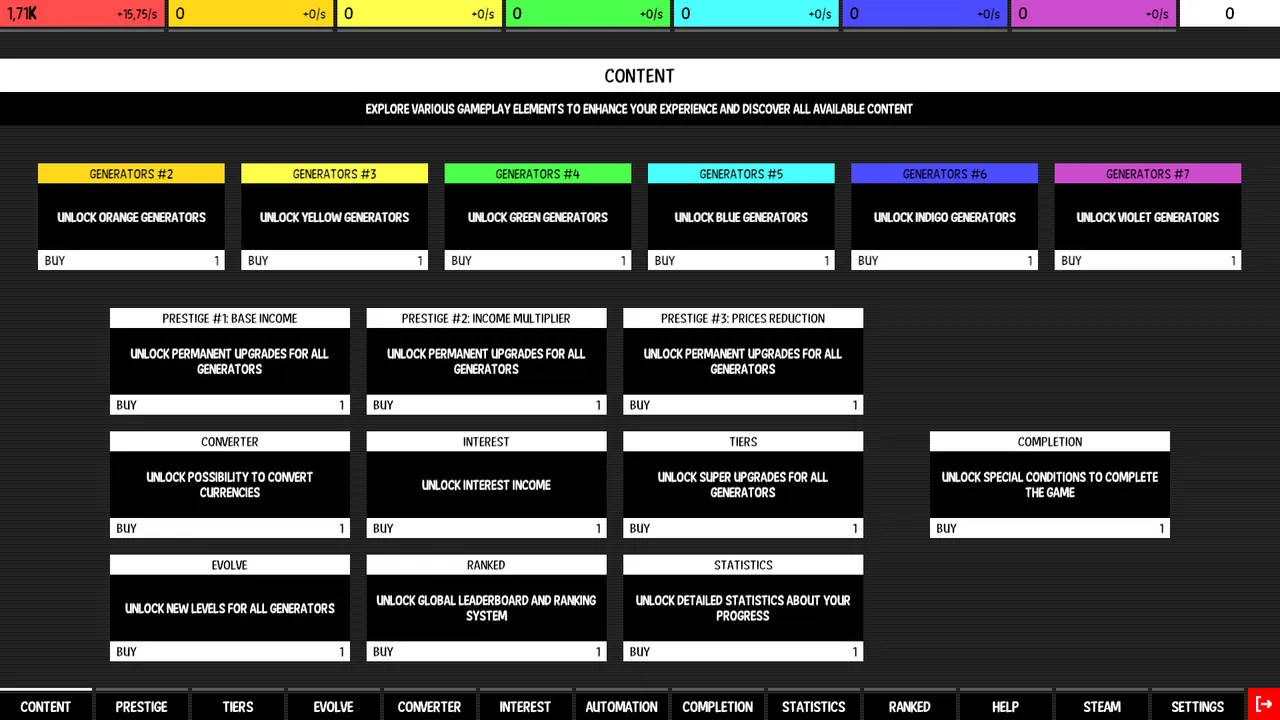
- Automation unlocks reasonably early through the Content tab, letting per-colour generator purchases and upgrades run themselves once the basic systems are up
Biggest weaknesses
- Its own most-invested reviewers describe finishing a difficulty tier and getting nothing for it — "to restart with NOTHING and GET NOTHING" — and Steam's achievement data shows completion collapsing from 30.8% at the first difficulty gate to 13.1% at the second and 4.5% by the fifth
- Recurring, unpatched technical failures span the entire review history: a save that "bricked itself" at difficulty 4 after 135 hours logged, freezing that blocks purchases until switching tabs, and reports of bugged achievements, against a developer news feed with exactly one post, dated two weeks after launch
- Reviewers who played into multiple colours describe all seven currencies as functionally identical, reducible to buying the first one and converting it into the rest, undercutting the store page's pitch of distinct production chains
Who it's for: Spreadsheet-idle veterans who specifically want more currencies and more generators to manage, and who don't mind a rough, unresolved interface in exchange for genuine depth on paper — provided they can accept that the depth may not pay off.
Our recommendation: Hard to recommend at full price. The systems are real and there's evidently enough here to hold some players for over a hundred hours, but the game's own reviewers, its achievement curve and its silent thirteen-month update history all point the same direction — buy in only if the specific loop already appeals to you, and expect the later currencies to feel like the first one wearing a different colour.
4 / 10
Seven currencies, one shape
Idle Colors sells scale. Seven colour currencies, each with its own income stream and its own row of a hundred upgradable generators. A triple prestige system — Base Income, Income Multiplier, Prices Reduction — that resets a colour's generators for a permanent bonus. Separate Evolve, Tiers, Converter and Interest systems stacked on top of that, each with its own tab and its own resource sink. On a store page, that reads like a lot of game for NZ$12.49. On Steam's own review page, it reads like the opposite: ten reviews, three of them positive, and several of the negative ones written by people who'd played for dozens or hundreds of hours before deciding the scale didn't add up to anything.
That's the whole story of Idle Colors, and it's worth stating plainly before anything else: this isn't an expectations mismatch from players who bounced off the tutorial. The median playtime logged at the moment of writing a negative review is 23.7 hours, against 5.7 hours for the positive reviews — a genre where the standing pattern is usually the reverse, harsh reviews from quick bounces and generous ones from people who stuck around. Here it's inverted. The people who gave up on Idle Colors are, on average, the ones who gave it the most time.
The reset that gives you nothing back
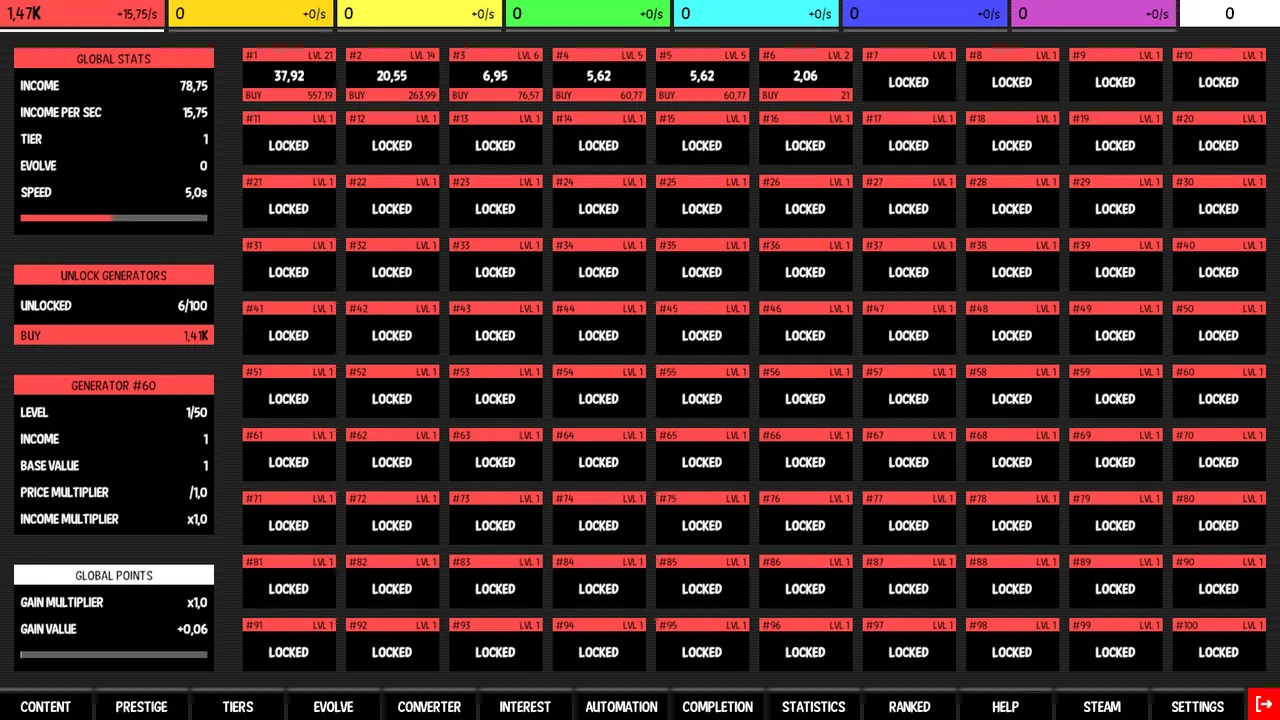
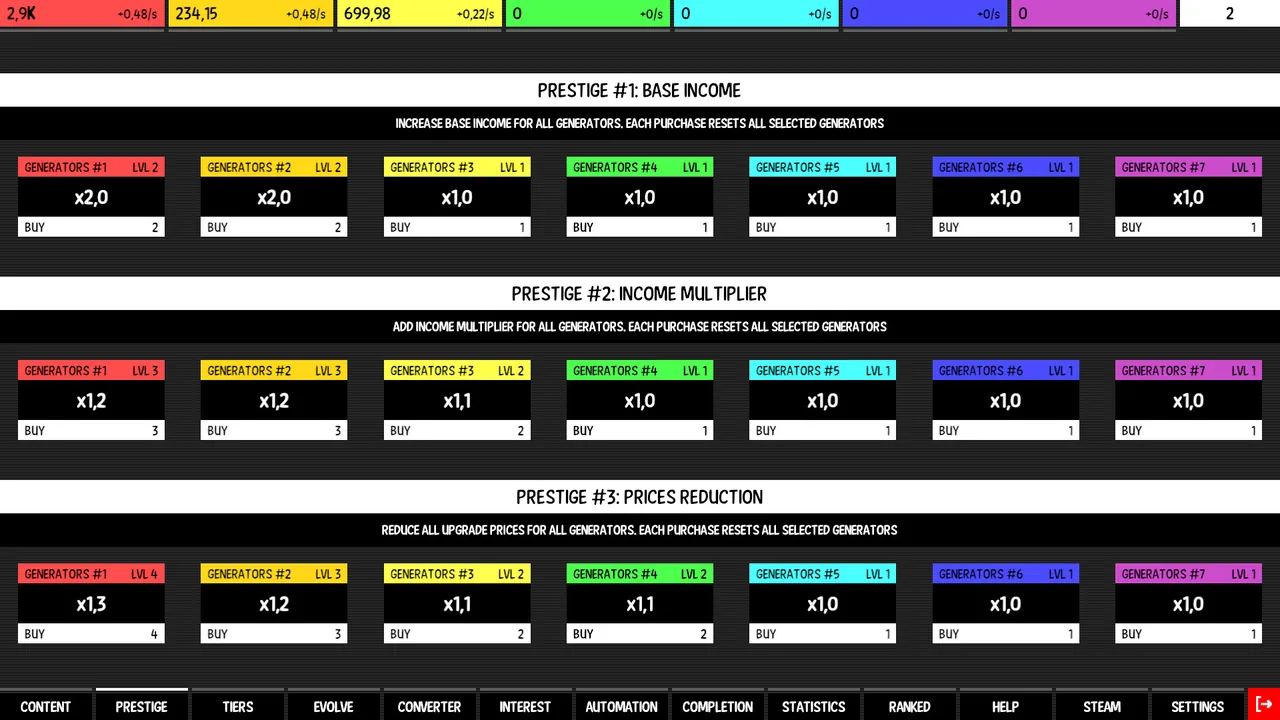
The core loop is straightforward and, on the evidence of its own promotional screenshots, honestly represented: click into a colour, buy generators numbered 1 through 100, watch income per second climb, then spend a growing "Global Points" meta-currency to unlock the next colour. Underneath that sits the reset structure — Prestige, Tiers, Evolve — that every generator screenshot shows locked behind the warning "each purchase resets all selected generators." It's a familiar shape for the genre. What isn't familiar is what several of its most committed players say happens once you actually reach the reset.
One reviewer, recommending the game with real reservations after 40 hours logged at the time of writing, put it in capitals: "I was loving this game UNTIL I restarted after completing all 'completion quests', the only thing that happened was i started again....As you complete all challenges you are in first place on leaderboards then to restart with NOTHING and GET NOTHING?" A second reviewer, at nearly 12 hours, made the same point about the currencies feeding that reset: "there's 7 'different' currencies that are exactly the same and give no extra content, just the same exact copy of what you were doing at the beginning… you can just convert the red currency to every other currency and still complete the difficulty using just the red, blue, magenta currencies." The game's lone non-English review, in Korean from a player at over 15 hours, makes the same argument from a different angle — that finishing a run doesn't open a new layer, just a repeat of the same one, and that the "Colors" premise never pays off with the currencies actually interacting.
It's worth being precise about what this complaint is and isn't. It isn't that Idle Colors lacks systems — the Converter tab alone is a 42-cell grid exchanging every colour against every other at a flat 10% rate, and the Completion tab sets seven separate investment thresholds running from 100,000 up to 700 billion. It's that, on the testimony of the players who pushed furthest into those systems, adding more colours and more tabs multiplies the bookkeeping without multiplying the decisions. One reviewer who wanted the game to feel like a specific genre favourite said so directly: "I really hoped this game would've made me feel similar to 'revolution idle', but sadly it disappointed me."
Where the achievement curve breaks
Steam's global achievement data gives that complaint a number instead of an anecdote. The curve isn't a single cliff — it's a steady, steepening taper that starts falling almost immediately: 56.7% of tracked players earn the "content" milestone, 42.4% reach "generatorsUnlock," and by the time a player clears the objectives that trigger the game's first proper reset — the "difficulty1"/"completion" achievement — only 30.8% are still there. From that point the drop accelerates rather than levelling off: 13.1% reach a second difficulty tier, 8.2% a third, 6.0% a fourth, and just 4.5% a fifth. Fewer than one in twenty tracked players get anywhere near as far as the reviewer who reported the save-bricking bug below.
That shape corroborates the review corpus almost exactly. The complaint isn't that Idle Colors is impossible to start — the opening achievements clear at better than half — it's that the reset loop, the thing meant to keep a player invested past the first colour, is precisely where the audience thins out fastest.
A save that "bricked itself"
The sharper problem is technical rather than structural. One reviewer at over 135 hours logged — the single highest playtime figure in the entire sample — described reaching difficulty 4 only to find "all generators are maxed out but not producing anything," writing that they were keeping the game installed "in hopes of a fix, which is high praise considering the issue I am having." A separate reviewer at roughly 66 hours reported "some achievements are bugged as well." A third, at under 9 hours, described the game "constantly" freezing and "not letting you buy anything unless you switch to a different tab."
Set those reports against Idle Colors' own update history: exactly one post on the game's Steam news feed, "Update 1.01," dated 27 May 2025 — two weeks after launch — adding the Automation system. Every bug report in the review sample, including the difficulty-4 bricking at 135 hours, postdates that update. There is no record of a follow-up patch, and the game's total review count has sat at ten since 14 July 2025, over a year before this review, with a current concurrent player count of zero on Steam's own API. Whatever fix a 135-hour investment might have earned, the evidence available says it hasn't arrived.
Comma decimals and dead space
None of the eleven official screenshots show anything resembling a broken layout in the crash sense, but several show a rougher interface than the store page's "clean, colorful UI that makes managing your empire a pleasure" line promises. Every number across every panel — currency totals, generator costs, interest percentages, statistics — renders with a European-style comma decimal ("2,92K," "0,004%") on a release with English as its only listed language. The generator screen itself is a wall of a hundred boxes per colour, 94 of which read simply "LOCKED" at a glance, with no visible way to buy multiple levels at once beyond the small "SHIFT + CLICK TO BUY MAX" label tucked into one corner. Several panels — Interest, Automation, Tiers, Statistics — leave roughly half their vertical space as plain dark background above a single strip of content, which reads less like minimalism and more like an interface still waiting for the rest of its layout. It isn't broken. It's unfinished-looking, in exactly the way a reviewer meant when they called the game "ugly to look at."
A clean business model, on an expensive shelf
Whatever else is debatable, Idle Colors' monetisation isn't. It's a single purchase with no DLC, no in-game store, no premium currency and no energy system anywhere on its Steam listing — the same honest structure this library rewards when it finds it elsewhere. The problem is the number attached to that purchase. NZ$12.49 is a noticeably heavier ask than most idle and incremental games this library has reviewed, several of which sell for under half that, and one reviewer raised the price directly rather than the mechanics: "I do not recommend buying this game for full price, this game makes itself look, like it's full of content, but in reality there's not much in this game." Set against an achievement curve where fewer than a third of tracked players clear the game's first proper reset, and a review corpus that stopped growing entirely more than a year ago, that price has had little independent confirmation that it's earning its keep.
Final verdict
Idle Colors isn't short on ambition. Seven currencies, a hundred generators each, three separate prestige tracks and four more systems layered on top is a genuinely large frame for a solo-scale release, and it clearly held some players for real stretches of time — one past 135 hours, another past 139. But the players who pushed furthest are also the ones telling you, in detail, what's wrong with it: a reset loop that returns nothing for finishing it, currencies that behave identically once you've played more than one of them, an achievement curve that halves at every difficulty gate, and unpatched bugs — including a fully bricked save — dating back to within weeks of a launch that has drawn no developer response and almost no new reviews since. At NZ$12.49, several times what comparable idle games in this library ask, none of that adds up to a confident recommendation. 4.0 reflects a game whose systems are real but whose own most invested audience says the depth doesn't pay off — worth a look only for players who already know this exact loop is what they want, and who are prepared for the price of finding out it might not be.
Pros and cons
Pros
- Seven colour currencies each carry their own 100-slot generator ladder, layered under a triple prestige track (Base Income, Income Multiplier, Prices Reduction) plus separate Evolve, Tiers, Converter and Interest systems, giving the shop real structural scale on paper
- Monetisation is entirely clean for a NZ$12.49 purchase, with no DLC, ads, premium currency or energy timers anywhere on its Steam listing
- Automation unlocks reasonably early through the Content tab, letting per-colour generator purchases and upgrades run themselves once the basic systems are up
- The loop hooks some players for real hours regardless of its flaws — one reviewer logged over 135 hours before hitting a bricking bug, and another who wrote a mixed but recommended review kept playing to nearly 140 hours total afterwards
Cons
- Its own most-invested reviewers describe finishing a difficulty tier and getting nothing for it — "to restart with NOTHING and GET NOTHING" — and Steam's achievement data shows completion collapsing from 30.8% at the first difficulty gate to 13.1% at the second and 4.5% by the fifth
- Recurring, unpatched technical failures span the entire review history: a save that "bricked itself" at difficulty 4 after 135 hours logged, freezing that blocks purchases until switching tabs, and reports of bugged achievements, against a developer news feed with exactly one post, dated two weeks after launch
- Reviewers who played into multiple colours describe all seven currencies as functionally identical, reducible to buying the first one and converting it into the rest, undercutting the store page's pitch of distinct production chains
- Every panel renders its numbers in European comma-decimal notation on an English-only release, and every screenshot examined leaves roughly half of each panel as dead black space above a single strip of interface
- At NZ$12.49, several times the price of most idle and incremental games this library has reviewed, the asking price has never moved since a May 2025 launch that has drawn a total of ten Steam reviews and currently shows zero concurrent players
Screenshots
-
Idle ColorsImage: Like Idle Games via Steam -
Idle ColorsImage: Like Idle Games via Steam -
Idle ColorsImage: Like Idle Games via Steam -
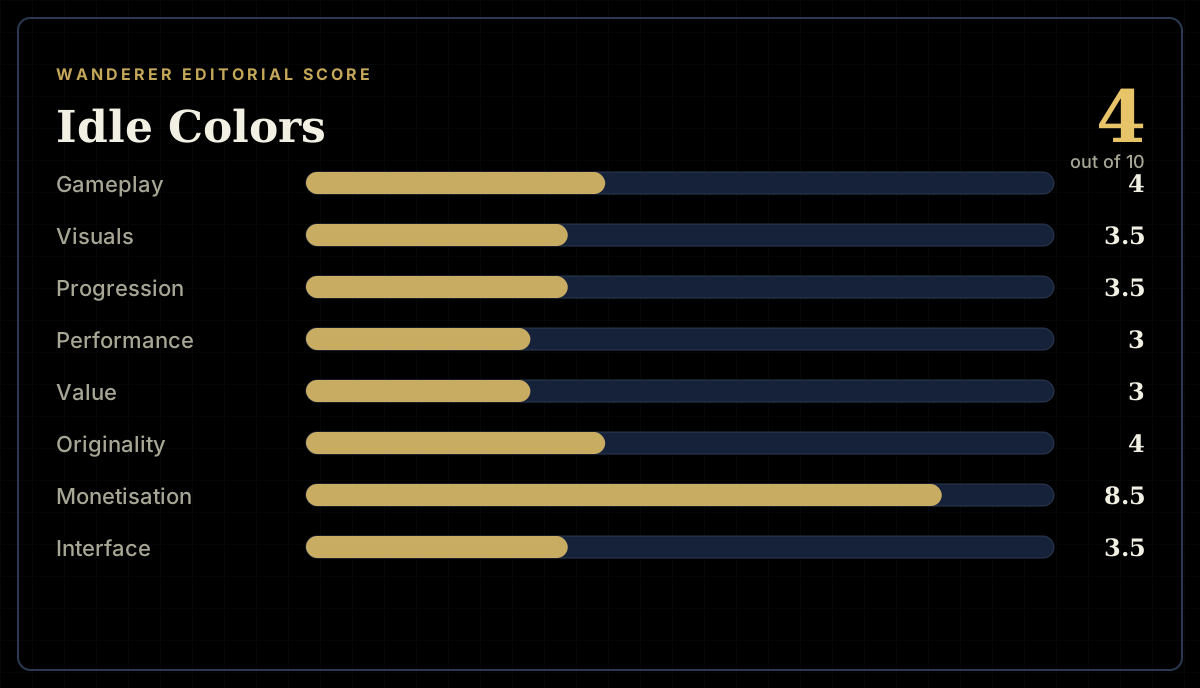
How the review scores each part of the gameWanderer Editorial -
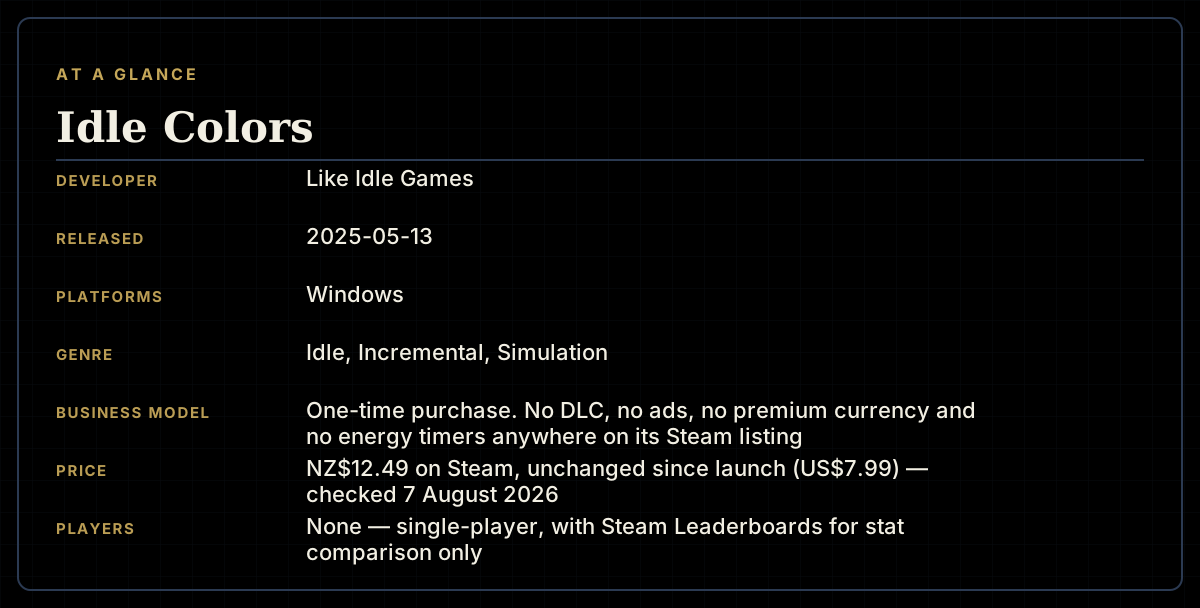
Idle Colors at a glanceWanderer Editorial -
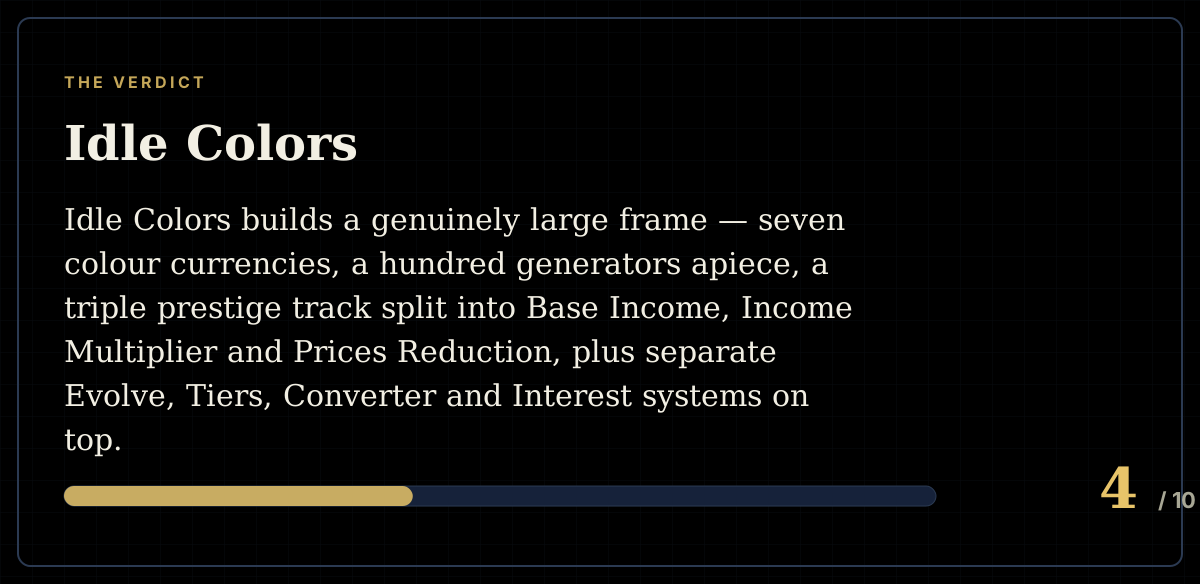
The short versionWanderer Editorial