
Game review
ScreenSaver Idle
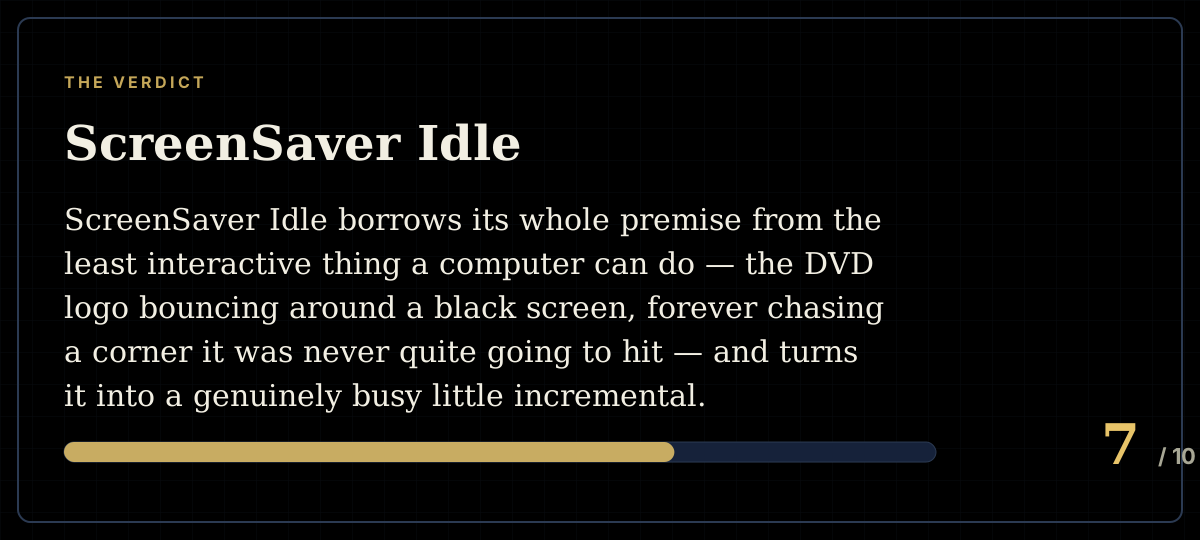
7 / 10
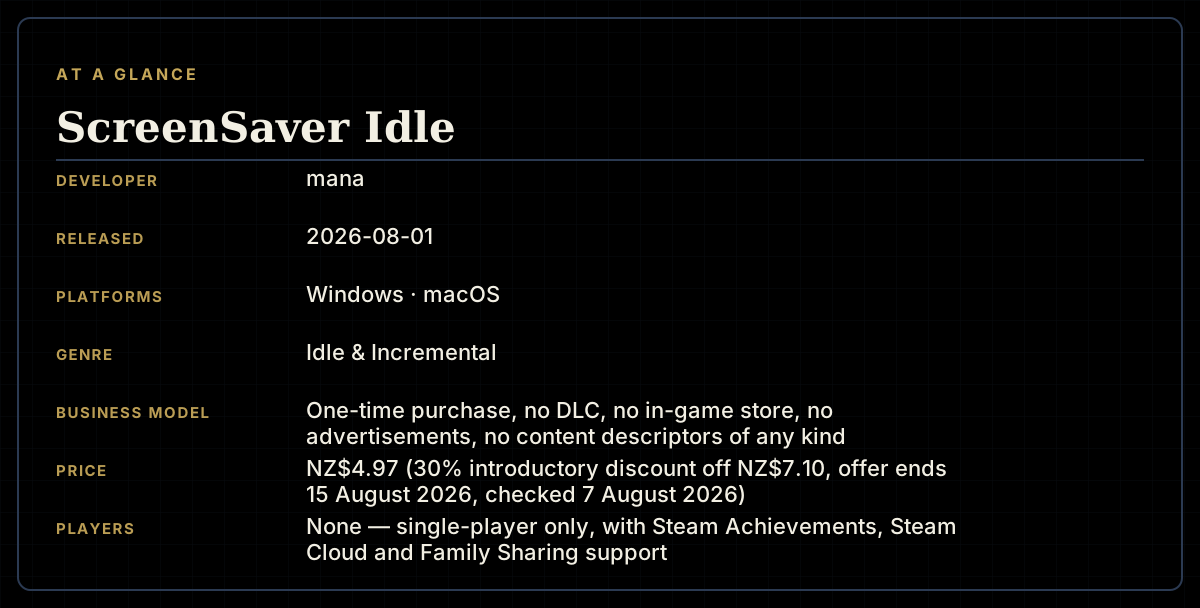
- Developer
- mana
- Publisher
- mana
- Released
- 1 August 2026
- Platforms
- Windows, macOS
- Genre
- Idle & Incremental
- Monetisation
- One-time purchase, no DLC, no in-game store, no advertisements, no content descriptors of any kind
- Players
- None — single-player only, with Steam Achievements, Steam Cloud and Family Sharing support
The short version
ScreenSaver Idle borrows its whole premise from the least interactive thing a computer can do — the DVD logo bouncing around a black screen, forever chasing a corner it was never quite going to hit — and turns it into a genuinely busy little incremental. The corner hit is real, it triggers fireworks, and it feeds a currency that also unlocks a mining sub-game and a farming-and-fishing sub-game, each with its own upgrade ladder and collection book. What it is not, whatever the name implies, is an actual screensaver: it runs in a normal window with a settings cog and a close button, and nothing on its store page claims it keeps working once that window is shut. Six days after launch it also has almost no outside record to lean on — eleven reviews, two people playing at the moment this was checked, and an achievement list that is one patch old.
Biggest strengths
- The corner hit is a genuine mechanical payoff, not just a title reference — landing it triggers a fireworks display, and Steam's own achievement list includes one for doing it while you weren't even watching, which is the actual DVD-screensaver joke made literal
- Three modes share one economy rather than sitting side by side: currency and resources earned bouncing the logo unlock and accelerate the mining and farming/fishing loops, and each of those has its own collection book (an ore book, a crop book, a fish book) to chase
- You are not purely a spectator — a limited dart throw lets you actively redirect the bouncing logo toward a corner instead of only watching probability do its work, which gives the idle half of the game something to do with your hands
Biggest weaknesses
- The upgrade structure reads more like a line than a tree in practice, and the game's lone Steam-recorded negative review calls it out directly for being too linear for what an idle game usually promises
- This is a bounded game with a documented ending (a dedicated Ending achievement, already reached by close to a quarter of trackable players), and at least one player reports the closing stretch dragging badly if the farm isn't upgraded early — a real risk for a genre whose audience usually expects a curve that keeps going, not a credits screen
- Nothing on the store page claims offline or away-from-keyboard progress, and there is no evidence the game does anything at all while its window isn't open — buyers expecting a true always-on screensaver replacement are shopping for the wrong thing
Who it's for: Incremental fans who want something with real range for a five-dollar buy-in — three linked modes and a proper skill tree rather than one number going up — and who are happy to be an early voice on a title that barely has one yet.
Our recommendation: At NZ$4.97 during its introductory window, ScreenSaver Idle asks less than a cinema ticket for three interlocking progression systems and a joke that actually pays off when the logo finds the corner. It is not a screensaver in any functional sense, and it will not run up gains while your PC sits locked or asleep, so buy it as a idle game to leave open in a window, not a wallpaper replacement. The bigger caveat is timing: this review is written six days into the game's life, with a review count and a player count too small to promise the pacing holds together for everyone the way it did for the small number of people who have spoken up so far.
7 / 10
The DVD screensaver only ever promised one thing, and it almost never delivered it: watch long enough and the logo will eventually strike a corner dead-on. ScreenSaver Idle takes that decades-old non-event and makes it the entire premise of a real game — the corner hit happens, it happens often, and it sets off fireworks when it does. That's the hook. What the name doesn't tell you is that landing the corner also funds a mining operation and a farming-and-fishing plot, both of which unlock their own upgrade ladders and both of which feed straight back into how fast and how often that logo finds its target. Six days after launch, from mana — a developer whose only other listed project is still marked "coming soon" — it's a more structured debut than a screensaver joke has any right to be.
Not a screensaver, a game about one
Worth settling before anything else: ScreenSaver Idle does not run as, or behind, an actual Windows or macOS screensaver. It opens in an ordinary window with a settings cog and a close button in the corner, same as any other Steam release, and nothing in its store description, its category list or its system requirements claims otherwise. There's no offline-progress promise anywhere on the page either — no "come back after eight hours away" popup, no catch-up multiplier, nothing that suggests the game keeps ticking once you've quit it or your machine has locked and gone to sleep. If you're shopping for something that genuinely replaces your desktop's idle-timeout animation and quietly banks currency while you're at lunch, this isn't it.
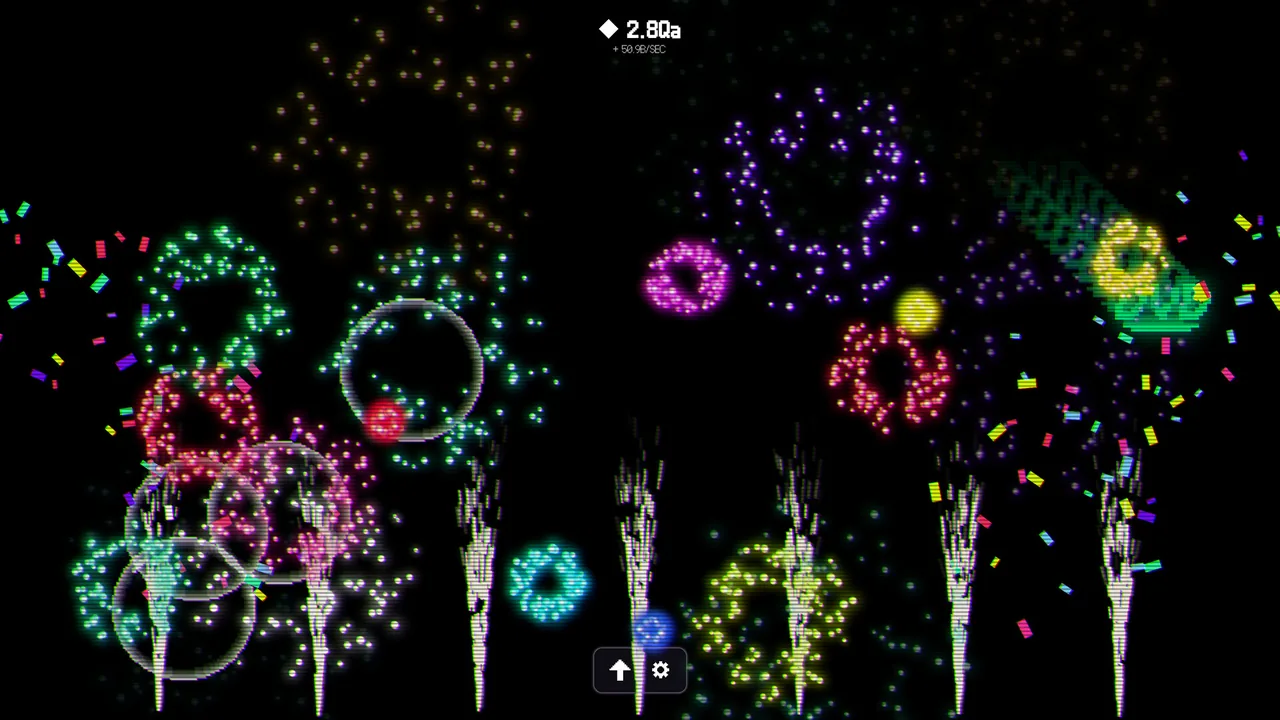
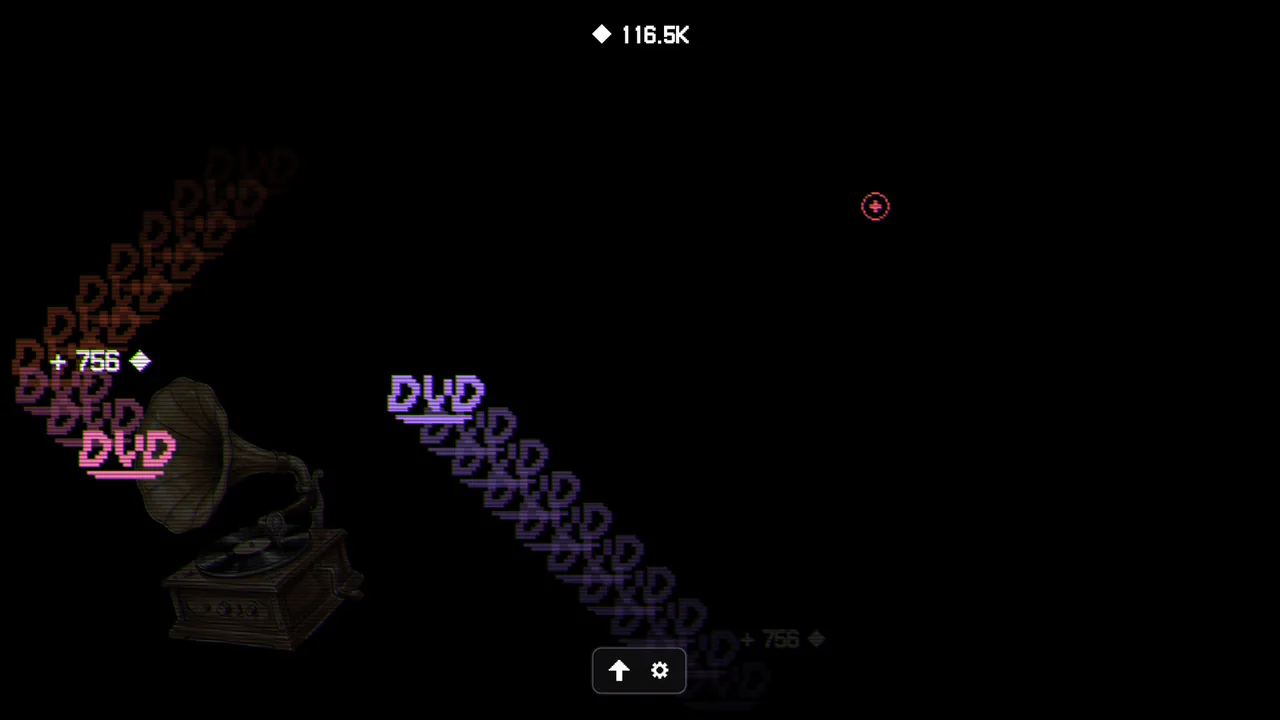
What it does deliver is the game's best joke made mechanical rather than cosmetic. The corner hit is a real, frequent event that triggers a burst of fireworks and a payout, and Steam's own achievement list includes one specifically for landing it while you weren't watching — the actual punchline of thirty years of screensaver small talk, reproduced as an unlock condition rather than a title pun. A limited dart-throw lets you nudge the logo's trajectory toward a corner rather than leaving it entirely to physics, so the "idle" half of the loop still has a lever to pull if you'd rather not just watch numbers climb. Read plainly, the pitch is honest about what kind of idle game this is: one you leave open in a window and periodically poke, not one that works while it's closed.
Three modes, one shared ledger
The corner-hit screen is the entry point, but it stops being the whole game quickly. Currency and materials earned there unlock a mining mode — pickaxes with their own upgrade tiers, a risk-based "Enchant" system with a stated success percentage, and an asteroid-field bubble variant that plays almost like a different game wearing the same UI — and a farming-and-fishing mode with planted crops, growth timers and a shop tab. All three are tied to the same currency ladder (the interface counts up through thousands, millions, billions and beyond using standard incremental shorthand) and each keeps its own collection book: an ore book, a crop book, a fish book, all filterable and all worth chasing on their own terms. A wandering "DVD" character even shows up as a sprite inside the farming map, and a bug fix in the most recent patch was specifically about a second one of him appearing where he shouldn't. It's a small detail, but it's the kind of small detail that suggests someone is actually maintaining continuity across three supposedly separate systems rather than bolting them together and hoping nobody looks too closely.
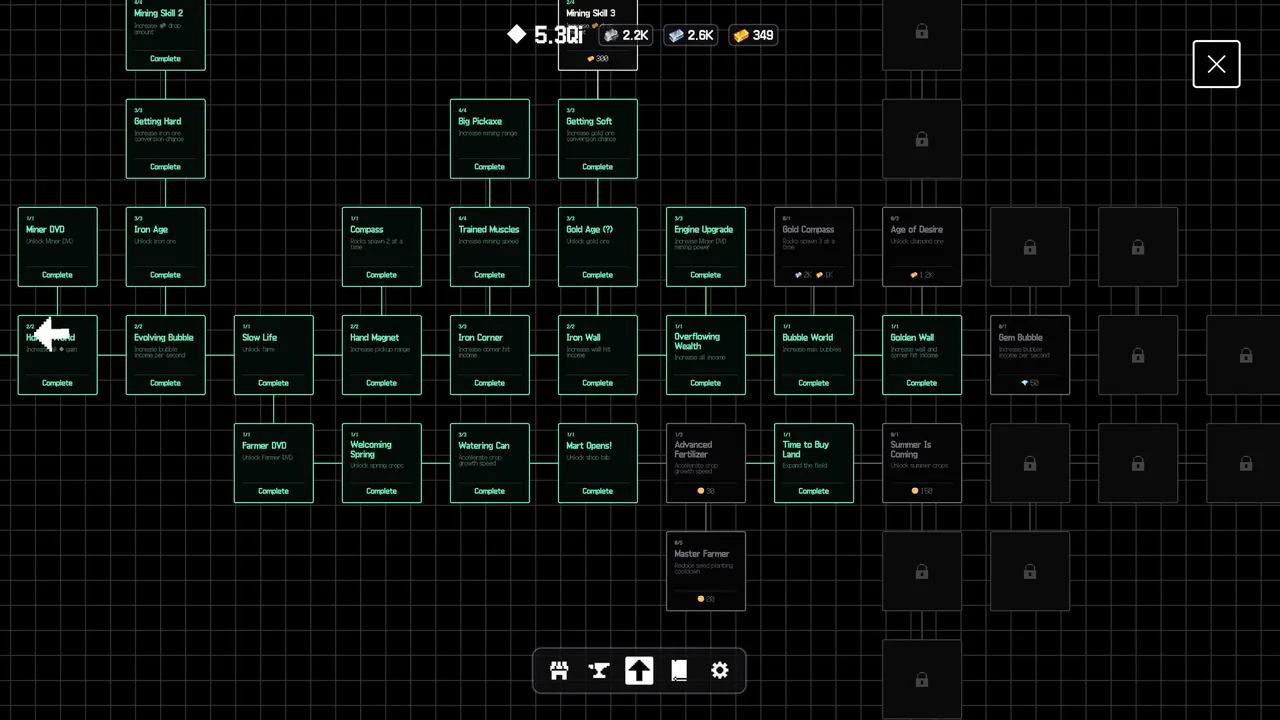
The best-argued positive review on the game's own Steam page — written by a curator who specialises in exactly this genre — makes a similar case at length: switching between the DVD screen, mining and farming never gets boring, resources genuinely help each other along, and even the collection-book chasing gets its own bonus loop. It's a fair description of what the screenshots show, too. The upgrade-tree panel isn't a single vertical list; it's laid out as an actual node graph with branching paths for mining, farming and the base corner-hit stats, each node showing its own cost in whichever resource unlocks it.
A tree that used to be a line
Set against that, the game's only recorded Steam complaint lands on exactly the opposite point: that it's "muito linear" — too linear, lacking the complexity a real idle game should have. That's not a contradiction so much as two readings of the same tree from different distances. Structurally there are branches; in practice, several reviewers (including the same curator who praised the rest of the systems) describe the actual path through them as closer to a straight line than a real choice, since most nodes gate the next one rather than opening up alternatives. mana clearly heard some version of this complaint already — the most recent patch's changelog specifically lists "improved the upgrade tree so it's harder to lose your way," which reads as an acknowledgement that the earlier layout was confusing rather than merely linear. Whether the fix adds real branching decisions or just clearer signposting for the same straight path isn't something the patch notes settle, and it's worth checking again once the game has had longer to season.
An idle game with an ending
The genre's usual promise is a curve that never quite stops. ScreenSaver Idle doesn't make that promise: Steam's own achievement list includes a dedicated Ending achievement, already reached by close to a quarter of the small number of players tracked so far, which means this is a bounded game with a defined finish rather than an infinite number-go-up machine. One English-language review frames that as a genuine selling point at the price — "quite short, but worth it for $5" — while flagging a real pacing problem underneath it: the closing stretch can turn into a slog if the farming mode is left undeveloped for too long, and the same reviewer's advice is to start upgrading it early rather than treating it as a side activity. That's useful, specific guidance rather than a vague complaint, and it lines up with the tree-linearity criticism above: a game built around one main path punishes a player harder for deprioritising any single branch of it, because there's no alternative route to fall back on.
Early days, thin evidence
None of the above should be read with more confidence than the numbers behind it support. Six days after launch, ScreenSaver Idle has eleven total Steam reviews — ten positive, one negative — every one of which was read in full for this piece rather than sampled. The negative review, worth noting plainly, came from a player who ultimately refunded the game after 75 hours; whether that reflects the linearity complaint souring on them over time or a change of mind for unrelated reasons isn't knowable from the review text alone. The achievement list, meanwhile, was switched on in a patch dated one day before this review was checked, so its percentages — 28.7% down to a low of 5.0% on the hardest corner-hit milestone — describe a population that's barely had the chance to earn them yet, not a mature completion curve. And at the moment this was checked, exactly two people were playing the game concurrently on Steam. None of that is disqualifying for a title six days old, but it does mean this review is closer to a first read than a settled verdict, and a reader checking back in a month should expect a fuller picture than the one available today.
Final verdict
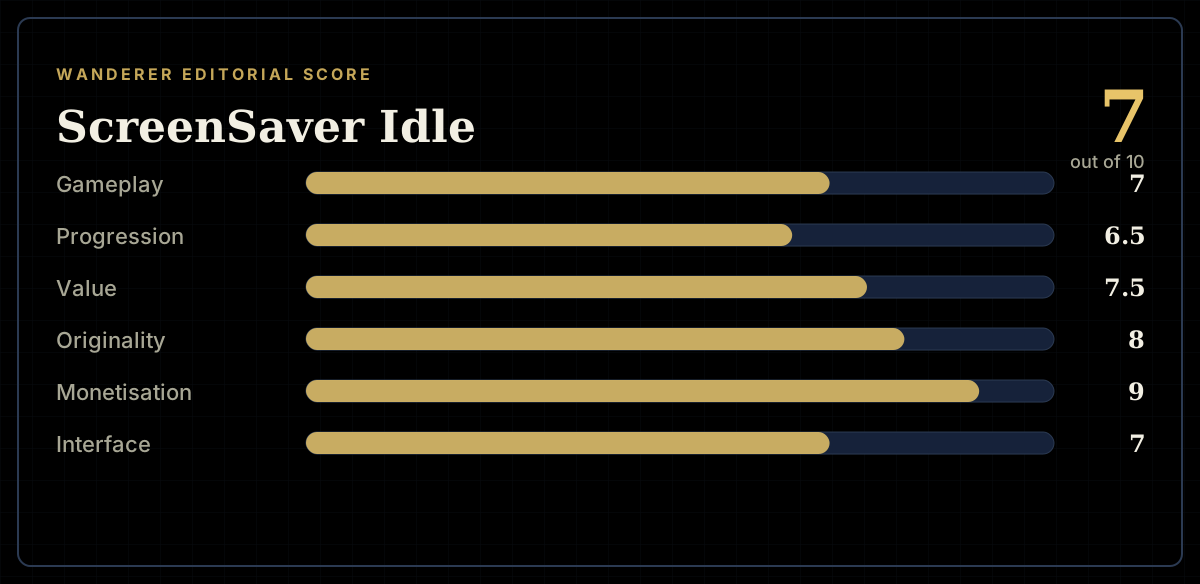
ScreenSaver Idle earns a 7 for genuinely following through on an idea that could easily have stayed a one-note joke: the corner hit is a real, funny, fireworks-triggering event, and it sits on top of three linked progression systems that share resources cleanly enough to make switching between them feel purposeful rather than arbitrary. It loses ground for a tree that plays more linear than it looks, an ending that at least one player found dragged badly without early farm investment, and — most importantly for anyone drawn in by the title alone — for being, quite deliberately, not an actual screensaver: there's no offline catch-up, no lock-screen integration, nothing that earns a cent while the window is shut. At NZ$4.97 during its introductory window it's an easy, low-risk pickup for anyone who wants a compact multi-mode incremental to leave running while they do something else at the same desk. Just don't expect it to work when you walk away from that desk entirely — and given how little outside record exists on it yet, expect this verdict to firm up rather than finalise.
Players who like the idea of persistent systems that reward checking back in, rather than a bounded run with a credits screen, may also find Wanderer's own ongoing progression a closer fit for that itch.
Pros and cons
Pros
- The corner hit is a genuine mechanical payoff, not just a title reference — landing it triggers a fireworks display, and Steam's own achievement list includes one for doing it while you weren't even watching, which is the actual DVD-screensaver joke made literal
- Three modes share one economy rather than sitting side by side: currency and resources earned bouncing the logo unlock and accelerate the mining and farming/fishing loops, and each of those has its own collection book (an ore book, a crop book, a fish book) to chase
- You are not purely a spectator — a limited dart throw lets you actively redirect the bouncing logo toward a corner instead of only watching probability do its work, which gives the idle half of the game something to do with your hands
- A clean one-time NZ$4.97 introductory price with no DLC, no ads and no in-game store, from a developer whose only prior listed project is still unreleased
- Genuinely fast post-launch support — three content and bug-fix patches inside the first week, one of which was specifically aimed at making the upgrade tree easier to read
Cons
- The upgrade structure reads more like a line than a tree in practice, and the game's lone Steam-recorded negative review calls it out directly for being too linear for what an idle game usually promises
- This is a bounded game with a documented ending (a dedicated Ending achievement, already reached by close to a quarter of trackable players), and at least one player reports the closing stretch dragging badly if the farm isn't upgraded early — a real risk for a genre whose audience usually expects a curve that keeps going, not a credits screen
- Nothing on the store page claims offline or away-from-keyboard progress, and there is no evidence the game does anything at all while its window isn't open — buyers expecting a true always-on screensaver replacement are shopping for the wrong thing
- The outside evidence is almost nonexistent six days after release: eleven total Steam reviews, two concurrent players at the moment this was checked, and an achievement list that was only switched on in a patch the day before this was written
- Windows and macOS only, no Linux build, and no controller support listed on the store page at all
Screenshots
-
ScreenSaver IdleImage: mana via Steam -
ScreenSaver IdleImage: mana via Steam -
ScreenSaver IdleImage: mana via Steam -
How the review scores each part of the gameWanderer Editorial -
The game at a glanceWanderer Editorial -
The short versionWanderer Editorial