
Game review
Idle Energy
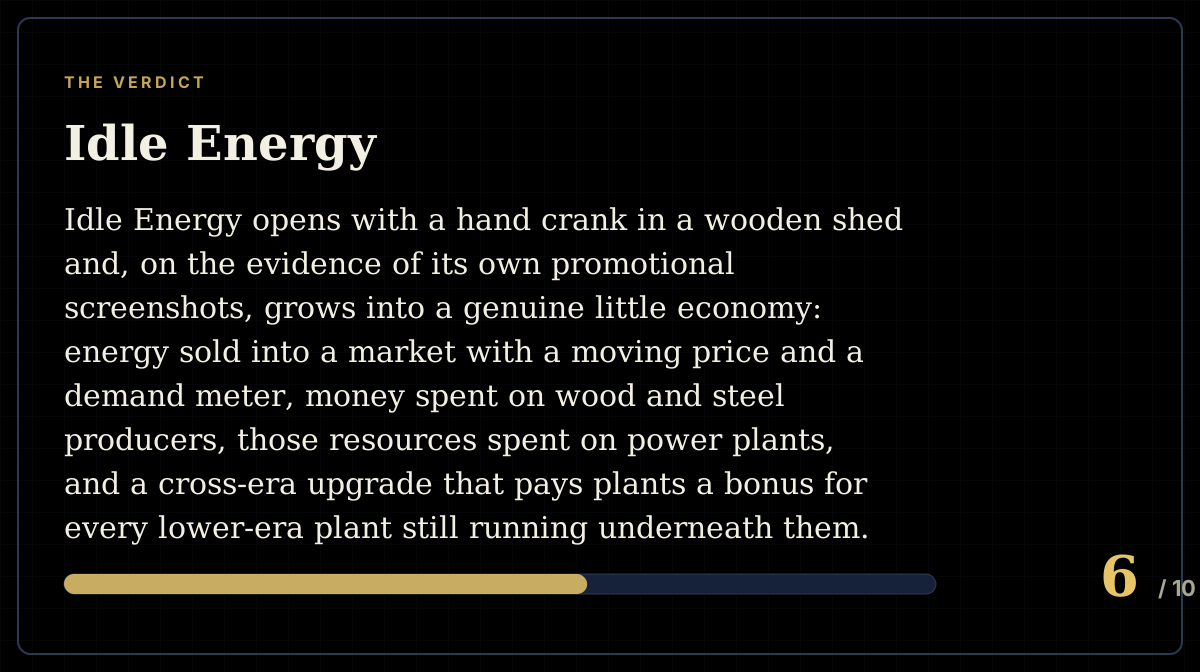
6 / 10
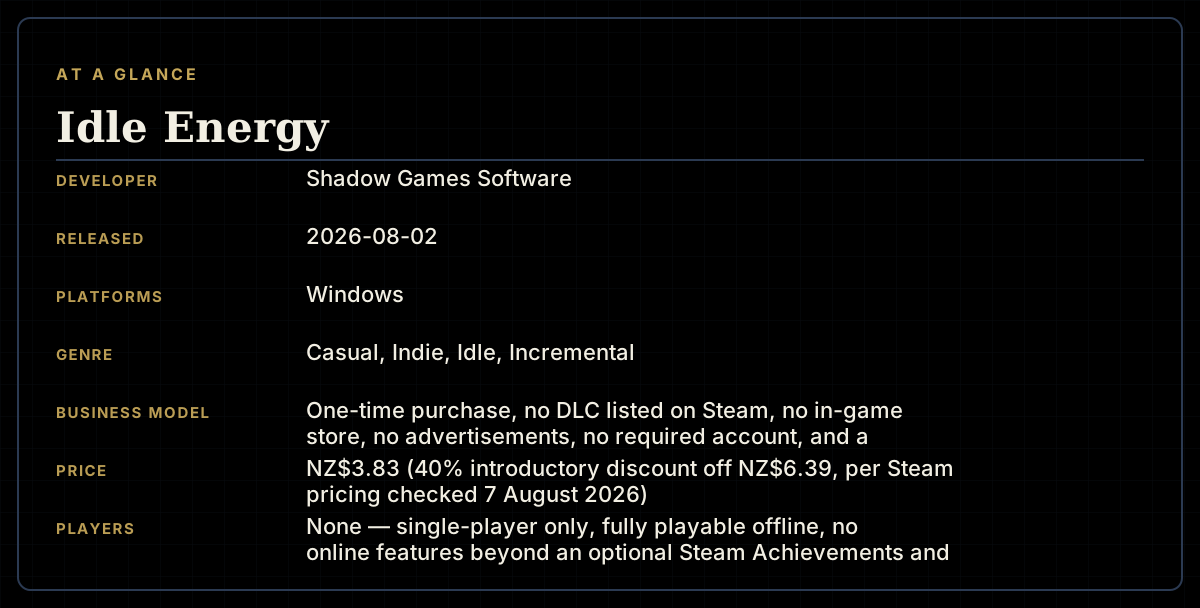
- Developer
- Shadow Games Software
- Publisher
- Shadow Games Software
- Released
- 2 August 2026
- Platforms
- Windows
- Genre
- Casual, Indie, Idle, Incremental
- Monetisation
- One-time purchase, no DLC listed on Steam, no in-game store, no advertisements, no required account, and a developer claim in the system requirements of collecting no player data
- Players
- None — single-player only, fully playable offline, no online features beyond an optional Steam Achievements and profile sync
The short version
Idle Energy opens with a hand crank in a wooden shed and, on the evidence of its own promotional screenshots, grows into a genuine little economy: energy sold into a market with a moving price and a demand meter, money spent on wood and steel producers, those resources spent on power plants, and a cross-era upgrade that pays plants a bonus for every lower-era plant still running underneath them. That's real production-chain thinking for a NZ$3.83 game, and the monetisation is about as clean as this library ever scores — one purchase, no ads, no accounts, no telemetry. What it doesn't do anywhere in its store page, description or screenshots is confirm the one thing idle-genre buyers care about most: whether any of this keeps running while the game is closed. Five days after launch it also has zero Steam reviews and a player count of one at the moment of checking, so none of this comes with any track record yet.
Biggest strengths
- The production chain has real depth for the price — a manual crank feeds an energy stockpile, energy sells into a Market screen with its own fluctuating price-per-unit and a demand meter, and the money buys Wood and Steel producers (Sawmill, Blast Furnace) that in turn get spent on power plants
- A visible cross-era upgrade called Creative Integration pays every power plant a permanent +1% production bonus for each power plant owned from a lower era, which is a genuine synergy mechanic rather than a flat multiplier tacked onto the same number
- Monetisation is close to a clean sheet — one NZ$3.83 purchase (currently 40% off NZ$6.39), no DLC, no in-game store, no ads, no required account, and a specific developer claim in the system requirements that the studio collects no player data at all
Biggest weaknesses
- Nowhere in the store description, the detailed description or the promotional screenshots does Shadow Games Software actually state that energy or money keeps accumulating while the game is closed — the "Offline" bullet point on the store page reads as "no internet connection required," not "earns while away," and idle-genre buyers who want the latter should confirm it before purchasing
- Five days after its 2 August 2026 launch the game has zero Steam user reviews and a live player count of one at the time this was checked, so every claim about its systems comes from the developer's own screenshots rather than any track record of people actually finishing an era
- Steam's global achievement statistics return an empty result for the app, which is consistent with the size of the playerbase so far but means there's currently no independent data on how far anyone has actually progressed through the promised eight eras
Who it's for: Incremental-game players who want a real multi-resource chain to plan around rather than one multiplier ladder, and who are happy to buy on the strength of a clean one-off price rather than an established review base — because there isn't one yet.
Our recommendation: A fair NZ$3.83 gamble on a structurally more ambitious idle game than its opening crank screen suggests, let down only by the fact that nobody has weighed in on it yet and that the developer's own marketing never states outright whether energy keeps accruing while the window is closed. Idle players for whom that specific feature is the point should confirm it before buying; everyone else gets a clean, ad-free NZ$3.83 economy game with more moving parts than its genre usually bothers with.
6 / 10
Idle Energy starts you in a wooden shed with nothing but a hand crank, a stockpile counter reading zero joules, and a button that adds one energy per click — the most conventional possible opening for the genre, and Shadow Games Software's own launch screenshot shows exactly that. What its later screenshots show is more interesting than the opening lets on: a game willing to build a small supply-and-demand economy underneath its clicker chassis, released 2 August 2026 for NZ$3.83 (40% off a regular NZ$6.39), five days before this review with a Steam review count of precisely zero.
A market, not just a multiplier
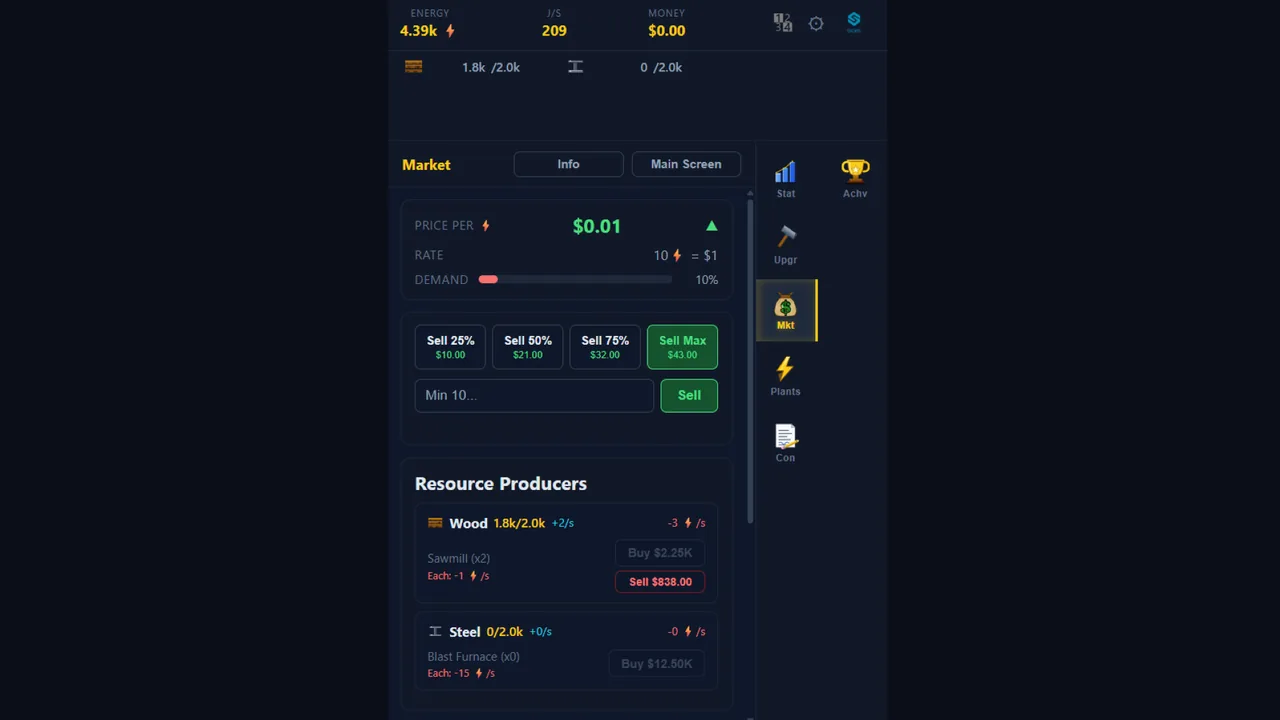
The clearest sign that Idle Energy is reaching past a single upgrade ladder is its Market screen, visible directly in the developer's own promotional captures. Energy doesn't just convert to money at a fixed rate — it sells at a price-per-unit that moves (a green arrow ticks the rate upward in one captured frame) against a visible Demand meter sitting at 10% in that same shot. Underneath the sell panel sits a Resource Producers list: Wood, generated by a Sawmill that itself drains energy to run, and Steel, generated by a Blast Furnace with a steeper energy cost per unit. Both of those raw materials exist to be spent elsewhere — almost certainly the Construction tab visible in the side rail but not captured in any of the five available screenshots — which is a second layer of resource conversion most NZ$3-4 idle games don't bother building. It's the automation-incremental shape the genre's better entries use: energy funds resources, resources fund infrastructure, infrastructure produces more energy, and a market sits in the loop to keep the exchange rate from just being a flat multiplier.
Eight eras, and a real reason to keep old plants running
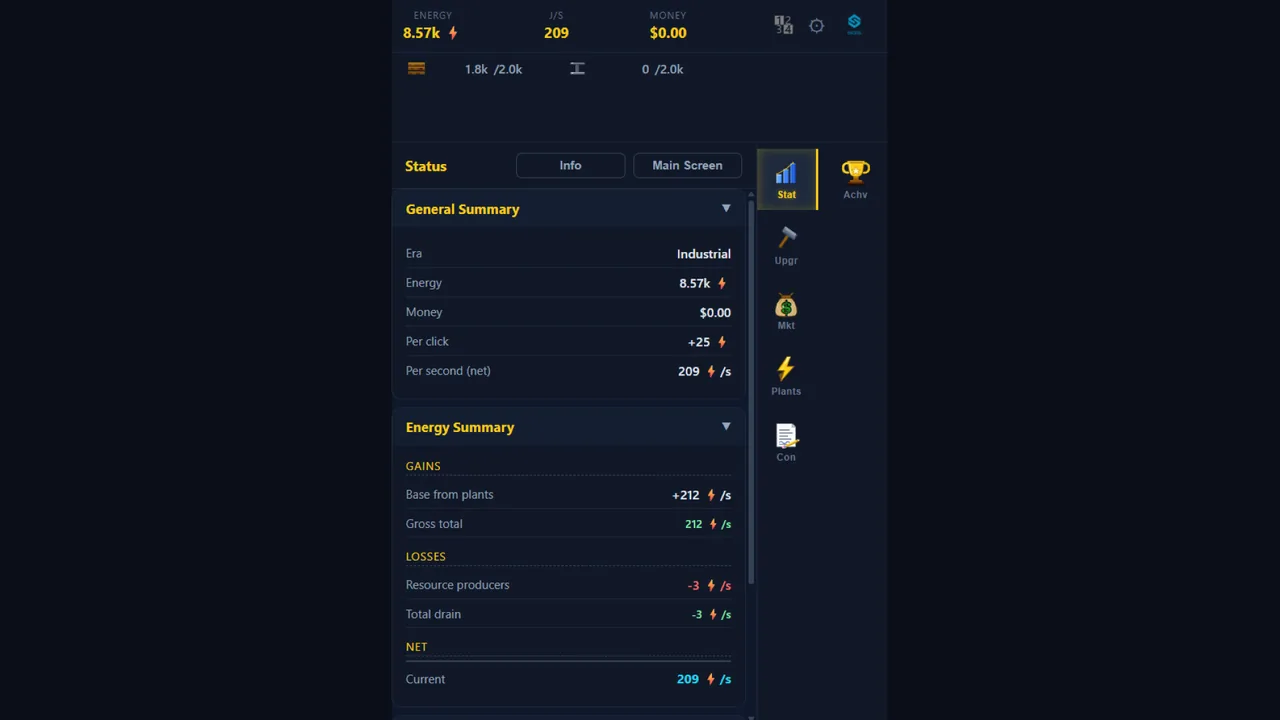
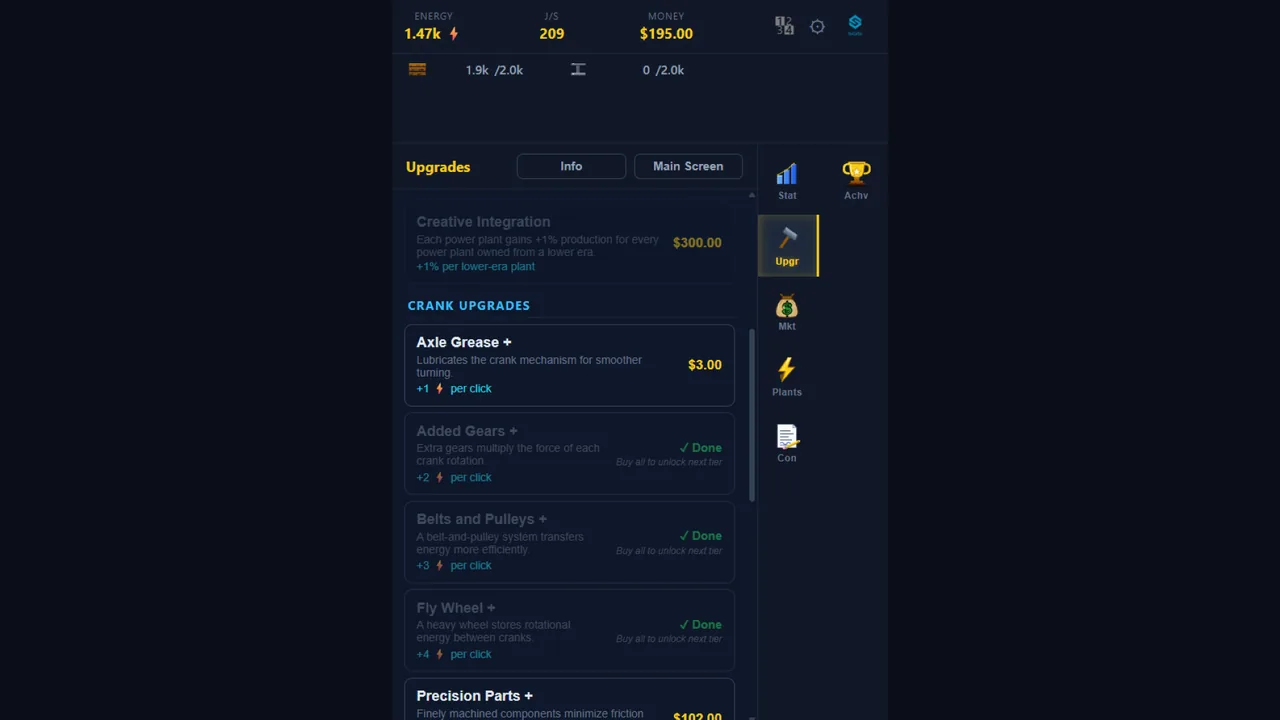
The store page promises the player climbs "through eight eras to star-spanning cosmic civilization," and one captured mid-game panel shows a save already in the Industrial era, with a Power Plant generating 209 joules a second net of losses. The single most interesting system visible anywhere in the marketing is an upgrade called Creative Integration, captured in the Upgrades screen's tier list: each power plant gains a permanent +1% production bonus for every power plant the player owns from a lower era. That's not a cosmetic detail — it's a structural reason to keep early-era generators running instead of letting them go obsolete the moment a newer plant type unlocks, which is exactly the kind of long-tail incentive that separates an incremental with a real production chain from one that's just re-skinning the same number with a bigger multiplier every act. The Crank Upgrades tier list beneath it works on a simpler gate — "Buy all to unlock next tier" — cycling through named tiers (Axle Grease, Added Gears, Belts and Pulleys, Fly Wheel, Precision Parts) that each add a flat few points per click, which is standard clicker-genre furniture next to the more ambitious plant economy sitting one tab over.
The genre's core promise is the one thing nobody confirms
Here's the gap that matters most for this library's readers. Idle Energy's short description opens with "a small game about pushing the world forward, one crank at a time," and its "Quiet by Design" feature list includes the line "Offline single-player. No internet required." Read closely, that sentence is a privacy and connectivity claim, not a progression claim — it sits next to "no microtransactions, no accounts, no telemetry, no ads" as a pitch about not needing a network connection to play, not as a promise that energy or money keeps accumulating while the window is closed. Nothing else in the store page, the detailed description or any of the five available screenshots settles the question either way. For a game built entirely around an idle-clicker loop, whether the numbers move while you're not looking is close to the whole pitch, and it's the one specific claim this review cannot verify from the sources available. Anyone buying Idle Energy specifically for away-from-keyboard progression should check for a confirmed away-earnings feature before purchasing rather than assuming the genre label guarantees it.
An unusually honest AI disclosure, and an unusually small track record
Idle Energy's Steam page carries a full AI Generated Content Disclosure, and it's more candid than most: "AI was used as the main tool to code this game, generate assets, and navigate the release processes... this is the core model of Shadow Games Software... As the 2nd real project for the studio, Idle Energy heavily used AI during development." That specificity is worth crediting on its own terms — a lot of disclosures on this library are a single boilerplate line, and this one actually says what AI was used for. It also means the pixel art, the era-appropriate background paintings visible behind the crank in the captured screenshots, and likely the code itself all passed through an AI pipeline, which readers who care about that distinction should weigh for themselves; a Steam developer-credit search turns up no earlier title under the "Shadow Games Software" name despite the disclosure's own reference to a first project, so that history isn't independently checkable either.
What there's genuinely none of, five days after launch, is anybody else's opinion. Zero Steam reviews of either polarity, a live player count of one at the moment this was checked, and an empty result from Steam's global achievement statistics — not because the game lacks an achievement system (the system requirements text confirms Steam Achievements sync), but because too few players have earned any yet for Valve to report a percentage. Every claim in this review about how the systems actually play out under sustained use comes from the developer's own promotional captures, because there is currently no larger body of player experience to check them against.
Accessibility and footprint
Credit where it's earned: the accessibility list is more thorough than a lot of much bigger idle games manage. Steam's own category tags confirm Color Alternatives (colourblind support), Custom Volume Controls separate from a single master slider, and both a Keyboard Only Option and a Mouse Only Option, meaning the whole game is playable without needing both an accurate mouse hand and a keyboard within reach. System requirements are correspondingly light — a 1.5GHz dual-core CPU, integrated DirectX 11 graphics and 4GB of RAM cover the minimum spec, which tracks for a 2D game with no stated demands beyond rendering its own UI and background art.
Final verdict
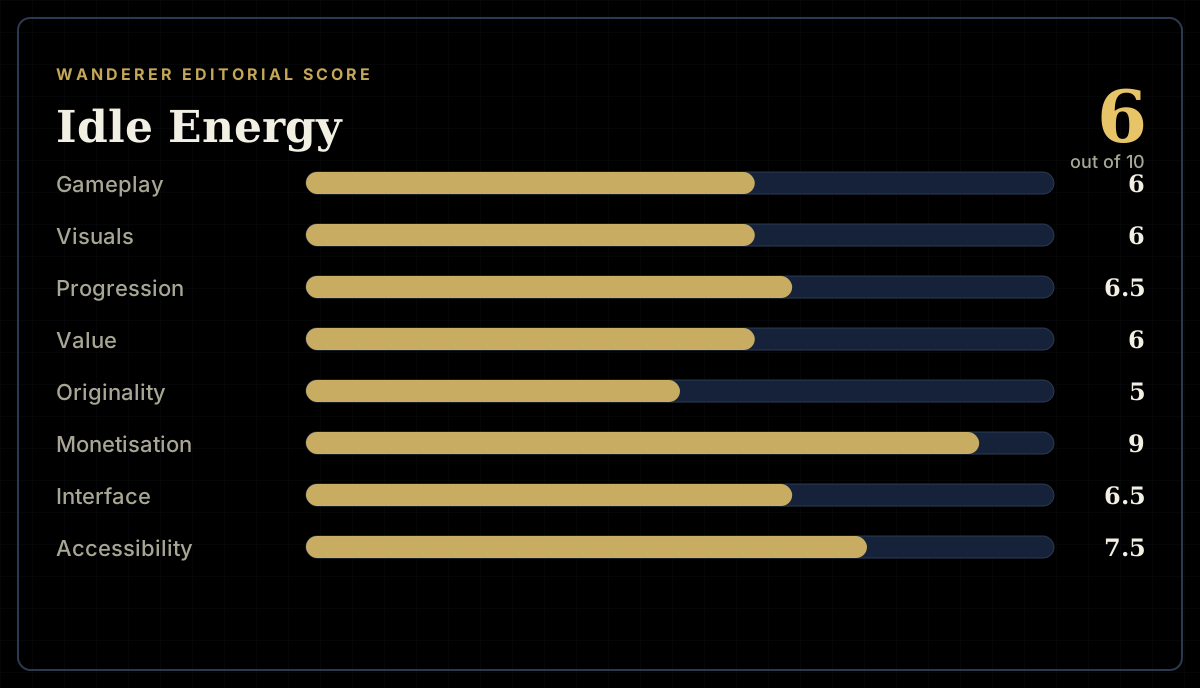
Idle Energy earns a 6.0 for building a genuinely multi-part production chain — a market with its own price and demand, two resource producers feeding into presumably a construction system, and a cross-era upgrade that gives old power plants a reason to stay running — at a clean, one-time NZ$3.83 price with essentially no monetisation complaints available to make. It doesn't score higher because none of that is backed by any player track record yet, because Steam's global achievement data can't currently confirm how far anyone has actually gotten through the promised eight eras, and because the one specific claim idle-genre buyers most need answered — does this keep earning while the window is closed — is never actually stated anywhere in the developer's own marketing. Buy it for the structure visible in its own screenshots and the unusually clean business model; don't buy it assuming the away-progress feature the genre is named for is confirmed, because on the evidence available here, it isn't.
Pros and cons
Pros
- The production chain has real depth for the price — a manual crank feeds an energy stockpile, energy sells into a Market screen with its own fluctuating price-per-unit and a demand meter, and the money buys Wood and Steel producers (Sawmill, Blast Furnace) that in turn get spent on power plants
- A visible cross-era upgrade called Creative Integration pays every power plant a permanent +1% production bonus for each power plant owned from a lower era, which is a genuine synergy mechanic rather than a flat multiplier tacked onto the same number
- Monetisation is close to a clean sheet — one NZ$3.83 purchase (currently 40% off NZ$6.39), no DLC, no in-game store, no ads, no required account, and a specific developer claim in the system requirements that the studio collects no player data at all
- The accessibility panel is unusually thorough for a two-person-scale release: colourblind-friendly colour alternatives, custom volume controls separate from a master slider, and both mouse-only and keyboard-only play modes are named directly in Steam's own category list
- The developer's own AI Generated Content Disclosure is candid rather than evasive, stating plainly that AI was "the main tool" used to code the game, generate its assets and manage the release process — a level of specificity most disclosures on this library don't offer
Cons
- Nowhere in the store description, the detailed description or the promotional screenshots does Shadow Games Software actually state that energy or money keeps accumulating while the game is closed — the "Offline" bullet point on the store page reads as "no internet connection required," not "earns while away," and idle-genre buyers who want the latter should confirm it before purchasing
- Five days after its 2 August 2026 launch the game has zero Steam user reviews and a live player count of one at the time this was checked, so every claim about its systems comes from the developer's own screenshots rather than any track record of people actually finishing an era
- Steam's global achievement statistics return an empty result for the app, which is consistent with the size of the playerbase so far but means there's currently no independent data on how far anyone has actually progressed through the promised eight eras
- Windows-only with English as the sole supported language narrows the audience considerably for a self-described "casual" game, and there's no Steam Deck rating on record yet to confirm handheld play
- The store page's own tagline for the endgame — "the end is just the beginning" — gestures at some kind of loop or reset after the eighth era without specifying what a subsequent run actually changes, which leaves the game's central long-term hook undocumented
Screenshots
-
Idle EnergyImage: Shadow Games Software via Steam -
Idle EnergyImage: Shadow Games Software via Steam -
Idle EnergyImage: Shadow Games Software via Steam -
How the review scores each part of the gameWanderer Editorial -
The game at a glanceWanderer Editorial -
The short versionWanderer Editorial