Game review
ARSONATE
7 / 10
- Developer
- Nash
- Publisher
- IndieArk
- Released
- 6 May 2026
- Platforms
- Windows, Linux
- Genre
- Strategy
- Monetisation
- Paid, one-time purchase.
- Players
- Local and online multiplayer for up to 6 players, alongside single-player against the Host.
The short version
ARSONATE is a tense card game from developer Nash and publisher IndieArk, casting players against a menacing Host in a death game where fire spreads with every card flip. Its Very Positive rating across a rich English review sample reflects genuine, widely repeated praise for its atmosphere and high-stakes tension, with this review finding fair complaints about how directly it borrows from Buckshot Roulette, thin content for solo players once the novelty wears off, and a lack of basic in-match options.
Biggest strengths
- Praised extensively and repeatedly for its atmosphere, sound design, and thematic presentation, with reviewers describing it as compact but extremely competent at everything it sets out to do.
- Praised specifically for the intensity and weight of its decision-making, with one detailed reviewer noting almost every round comes down to the last few cards.
- Praised by multiple reviewers for its multiplayer flexibility, supporting up to six players across free-for-all and team modes without requiring two humans to start a match.
Biggest weaknesses
- A fair, specific complaint reports the game leans heavily and visibly on Buckshot Roulette, sharing not just its general style but specific animations and effects, while offering only a handful of distinct card types.
- A fair, detailed complaint from a long-time player reports there isn't much game here beyond its core loop, with no deeper meta-progression once its three difficulty modes and lore snippets are exhausted.
- A fair, repeated complaint reports the game lacks a mid-match options menu and separate audio sliders, alongside a wish to skip or shorten the Host's intro and ending animations on repeat rounds.
Who it's for: Fans of Buckshot Roulette and other tense, high-stakes card and dice games who want a compact, atmospheric session with friends, in person or online; players looking for substantial single-player content or a fully original presentation should temper expectations.
Our recommendation: A tense, atmospheric psychological card game that borrows heavily from Buckshot Roulette but delivers real tension, best enjoyed in short sessions with friends.
7 / 10
A death game built around a burning card table
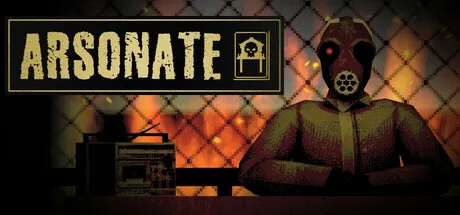
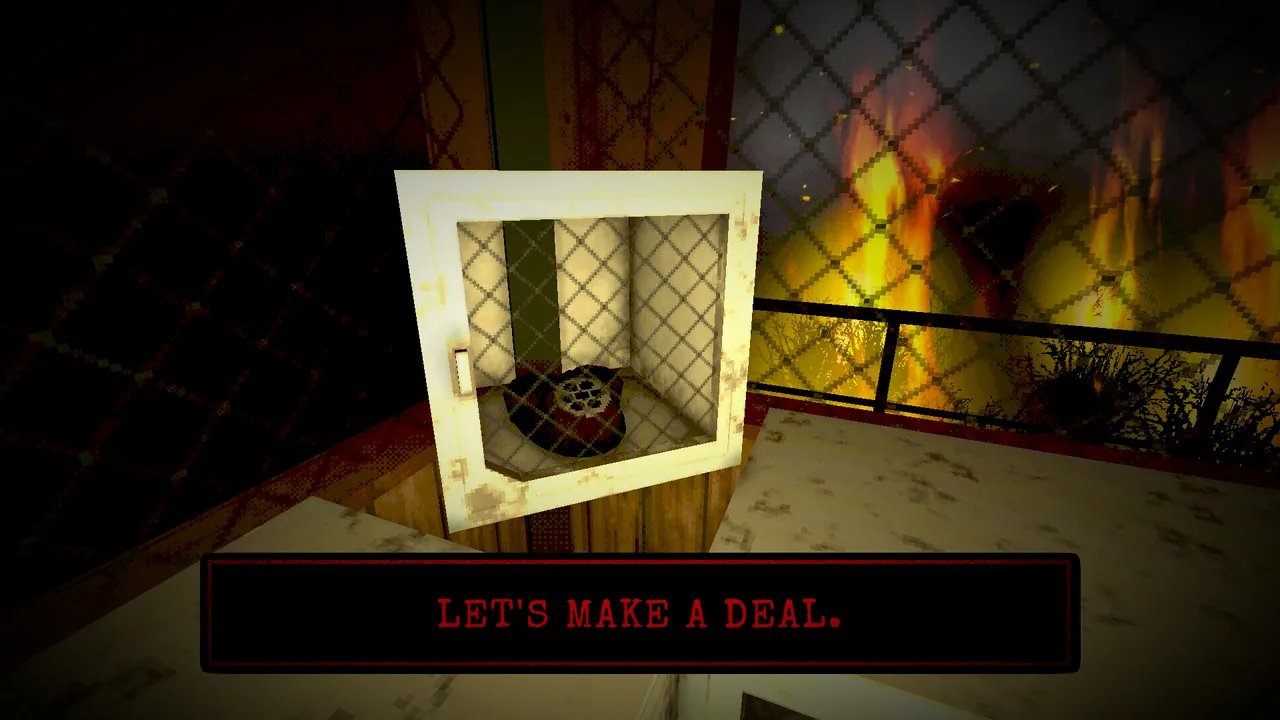
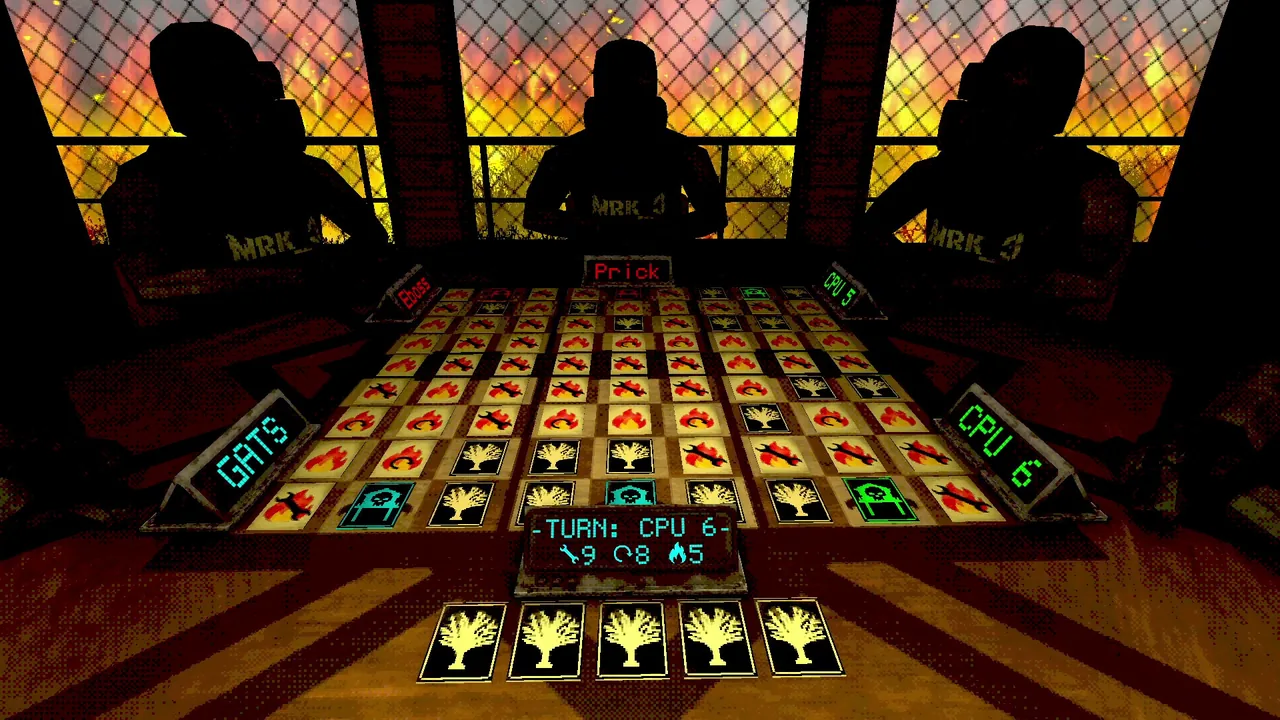
ARSONATE puts players across from a menacing figure known as the Host, flipping cards that spread fire around the table with every turn, the loser burning when the flames finally catch up. This review found that premise consistently and specifically praised across the English review sample. "What can I tell you about Arsonate that anyone with eyes can't see already? It has an incredible and highly thematic style, excellent atmosphere, impeccable sound design, polished and very fun mechanics... It's a compact, simple game, extremely competent in everything it sets out to do, and HIGHLY recommended," reads one review. This review treats that praise as fair: a small, inexpensive card game earning that kind of specific, wide-ranging praise for atmosphere and sound design independent of its gameplay loop is a genuine production achievement.
Praised for high-stakes, weighty decision-making
Beyond presentation, this review found reviewers repeatedly praising how much tension the core loop generates. "For a game so simple it's incredible at just how GOOD the game flows. Every game you play is intense and most of the time you are down to the last few cards or down to your very last one. Every decision you make carries so much weight," reads one detailed, long-time reviewer's account after 18.7 hours of play. A separate reviewer frames the same appeal through a genre comparison: "As a fan of Buckshot Roulette, this felt tailor-made for me... the campaign gameplay was fun to play through." This review treats that praise as fair: reviewers independently describing rounds that consistently come down to the wire, rather than feeling decided early, is a credible signal of tight, well- tuned risk-and-reward design.
Praised for flexible, accessible multiplayer
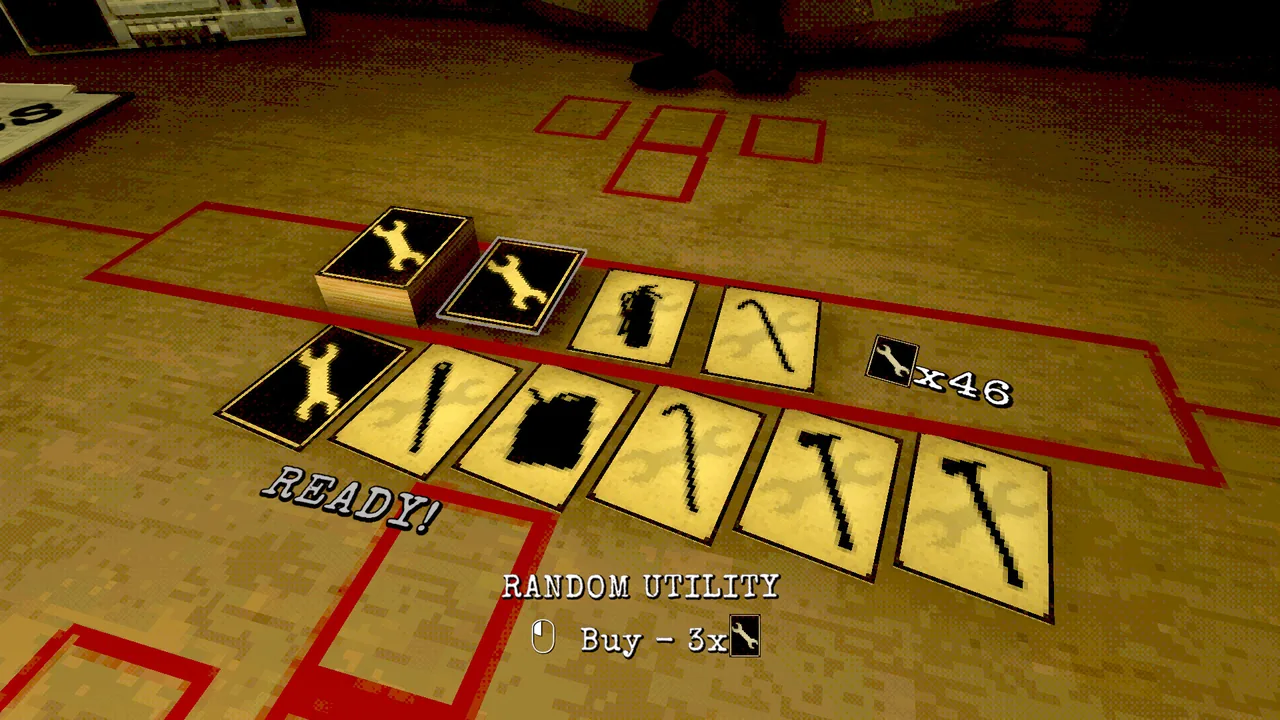
This review also found reviewers repeatedly praising the game's multiplayer structure specifically. "What sets ARSONATE apart is that its multiplayer mode doesn't require two players to start a game," reads one review, and a separate reviewer confirms the same point while noting support for "up to 6 players, Free-For-All, Teams, All CPU's, All Human Players, Mix of Human & CPU, Teams of 2." This review treats that praise as fair: a card game built to scale smoothly between solo play against an AI Host and full six-player online sessions, without forcing a minimum player count, is a genuinely flexible design choice reviewers specifically credit as a standout feature.
A fair, specific complaint about how closely it follows Buckshot Roulette
Set against that praise, this review found a fair and specific originality complaint. "A very unimaginative and derivative game. It tries very hard to mimic Buckshot Roulette. Not only does it share the general style popularized by that game... but even many of the animations and effects seem to have been copied directly... the game pretends to be a card game, even though it essentially has only three different types of cards," reads one detailed critical review. This review treats that complaint as fair: even reviewers who otherwise enjoyed the game frequently invoke the same comparison point, and a specific, detailed account of shared animations and a narrow card pool is a substantive originality concern rather than a superficial genre resemblance.
A fair, detailed complaint about thin long-term content
This review also found a fair complaint from one of the sample's most experienced reviewers about the game's ceiling. "For those wondering exactly how much of a game there is here, I have to say that there isn't much here. You play a card game and once you win or lose you just head back to main menu... That's pretty much it," reads that review, which nonetheless rates the game positively overall for how well its simple loop plays out. A separate, shorter review makes a related point about the demo-to-full-game ratio: "Beat a round in 15 minutes, the demo has 80% of the main games content." This review treats both as fair: even enthusiastic reviewers independently acknowledging a limited structural ceiling beyond its core loop and lore snippets is a legitimate value and longevity concern for solo players in particular.
Fair complaints about missing options and repeated animations
This review also found fair, specific interface complaints repeated across otherwise positive reviews. "The animations of the Host using items swing the camera around the room a lot, i kinda wish it was possible to turn off/lessen the movement... I would also like an option to turn off (or at least skip) the ending text and intro speech, playing multiple rounds take longer to start than it needs to take," reads one review. A separate reviewer raises a related, more basic complaint: "Only criticisms are no options menu when in the match and no separate music sliders in audio." This review treats both as fair: a game designed around quick, repeated rounds with friends benefits especially from the ability to skip repeated intro and ending sequences, and the lack of a basic in-match options menu is a straightforward usability gap.
A fair note on player perceptions of randomness
This review also found a smaller but notable complaint worth flagging honestly. "Am i the only one who thinks that fair is rigged?" asks one brief, critical review of the game's "Fair" difficulty mode. This review could not verify that complaint independently, since it relies on internal card-shuffling logic not published by the developer, but treats it as a genuine, if isolated, player perception worth noting rather than dismissing outright, particularly given the game's core design already leans heavily on randomness as a source of tension.
Final verdict
ARSONATE earns its Very Positive rating through a tense, atmospheric card game that reviewers consistently credit with punching well above its compact scope, especially in its flexible, low-barrier multiplayer. Its clearest weaknesses are a fair, well-documented complaint that it borrows heavily from Buckshot Roulette down to specific animations, a fair complaint about thin long-term content for solo players, and fair complaints about missing in-match options and repeated animations that slow down back-to-back rounds. For fans of tense, high-stakes card games looking for a cheap, atmospheric session with friends, this is a confident recommendation.
Pros and cons
Pros
- Praised extensively and repeatedly for its atmosphere, sound design, and thematic presentation, with reviewers describing it as compact but extremely competent at everything it sets out to do.
- Praised specifically for the intensity and weight of its decision-making, with one detailed reviewer noting almost every round comes down to the last few cards.
- Praised by multiple reviewers for its multiplayer flexibility, supporting up to six players across free-for-all and team modes without requiring two humans to start a match.
- Praised by more than one reviewer who followed the game from an earlier itch.io demo through to full release, describing strong underlying bones that held up over many hours of play.
Cons
- A fair, specific complaint reports the game leans heavily and visibly on Buckshot Roulette, sharing not just its general style but specific animations and effects, while offering only a handful of distinct card types.
- A fair, detailed complaint from a long-time player reports there isn't much game here beyond its core loop, with no deeper meta-progression once its three difficulty modes and lore snippets are exhausted.
- A fair, repeated complaint reports the game lacks a mid-match options menu and separate audio sliders, alongside a wish to skip or shorten the Host's intro and ending animations on repeat rounds.
- A fair complaint from at least one player reports suspicion that the "fair" difficulty mode's randomness feels stacked against the player, a concern this review could not independently verify but treats as a genuine player perception worth noting.
Screenshots
-
ARSONATEImage: IndieArk via Steam -
ARSONATEImage: IndieArk via Steam -
ARSONATEImage: IndieArk via Steam -
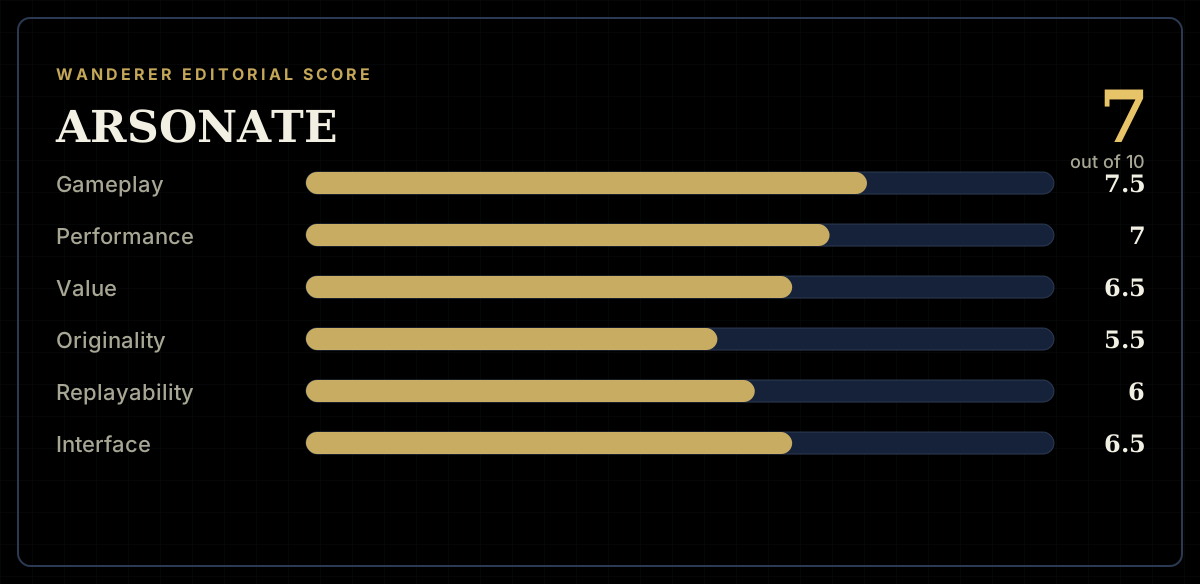
How the review scores each part of the gameWanderer Editorial -
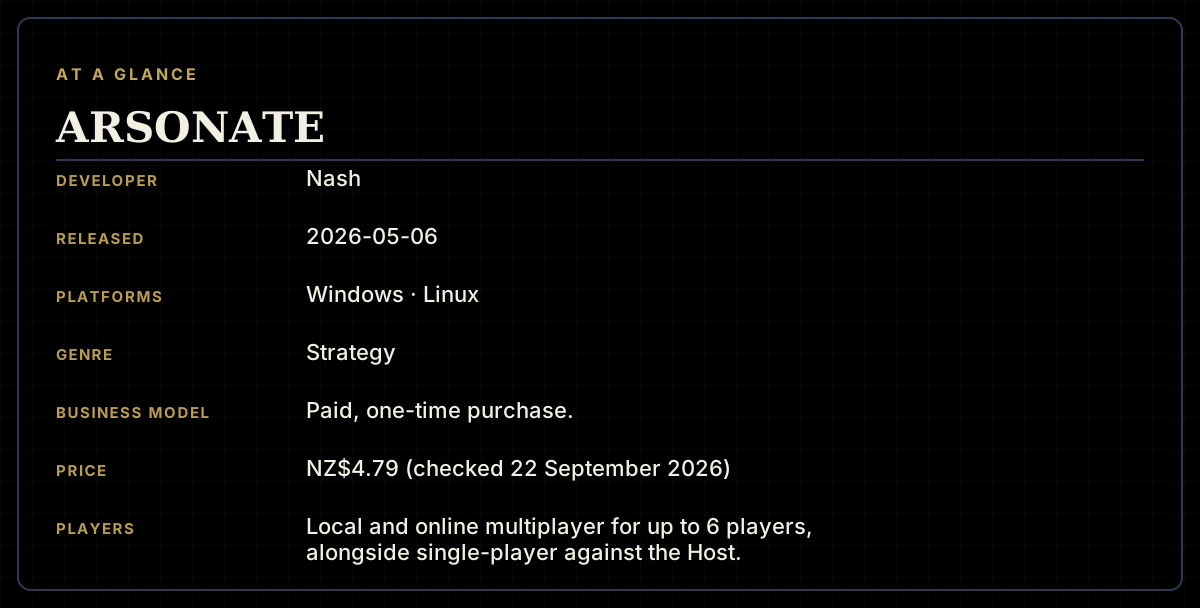
The specs at a glanceWanderer Editorial -
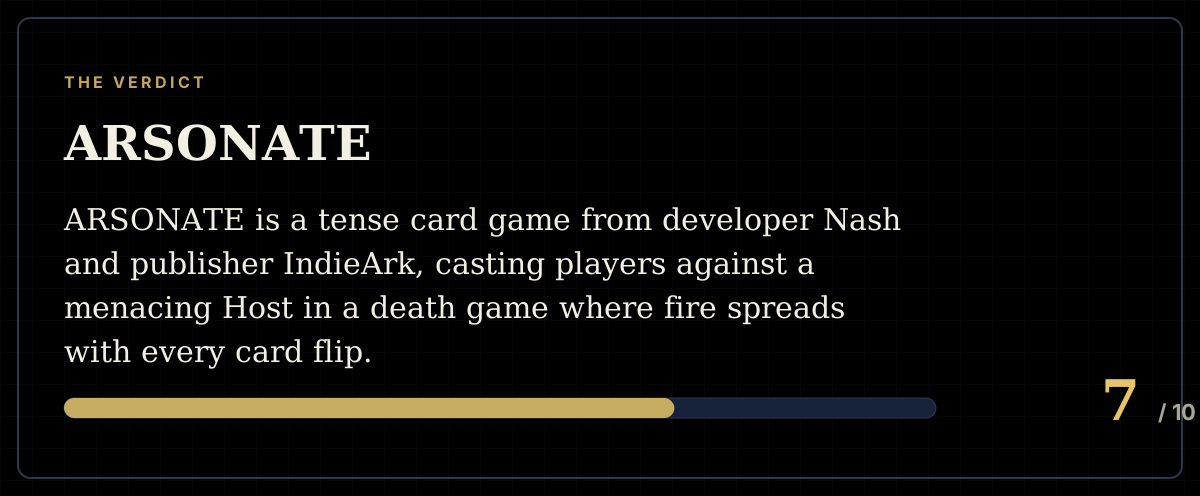
The short versionWanderer Editorial