Game review
Drop Duchy
7.5 / 10
- Developer
- Sleepy Mill Studio
- Publisher
- The Arcade Crew, Dotemu
- Released
- 5 May 2025
- Platforms
- Windows
- Genre
- Roguelike Puzzle
- Monetisation
- One-time purchase, plus two optional paid faction DLC packs
- Players
- Single-player only
The short version
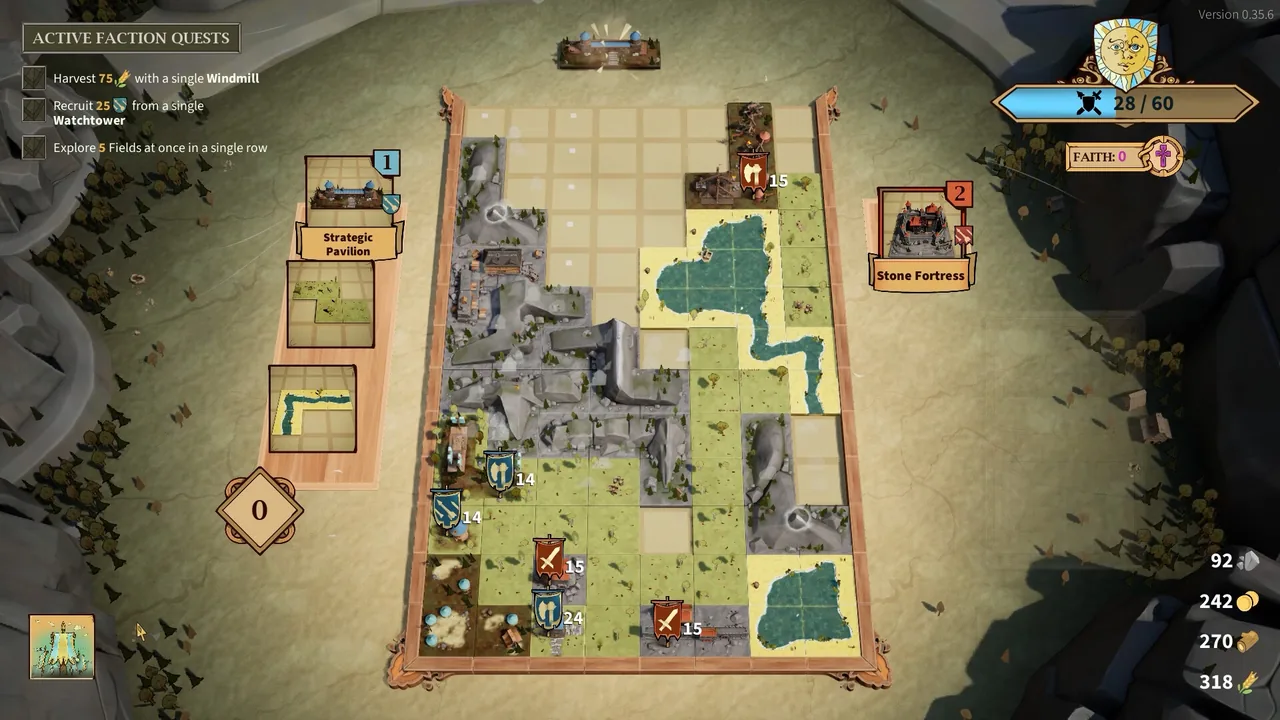
Drop Duchy is a roguelike from Sleepy Mill Studio, published by The Arcade Crew and Dotemu, that fuses Tetris-style block-dropping with deckbuilding and a light city-builder layer — dropped terrain and building pieces line up to form defensible territory ahead of turn-based combat. Released 5 May 2025 for NZ$21.99, it holds a large, healthy Very Positive rating — 89.3% across its 3,184-review all-language corpus, 90.3% across 1,707 English-language reviews. This review reads the 100 most-relevant English negative reviews and finds a single, dominant, well-argued complaint running through more than a third of them: 36 of the 100 describe the game's meta- progression system unlocking new cards into the draft pool without adding real tools to steer around bad draws, making runs feel less focused rather than richer the more a player unlocks — precisely the pool-dilution trap this outlet has documented before in other randomised builders. A second, related complaint concerns RNG generally (25 of 100), and a third, more recent complaint concerns a single-faction paid DLC that shipped roughly three and a half months after launch, which several reviewers read as an early signal about the base game's content depth.
Biggest strengths
- The core Tetris-meets-deckbuilding-meets-city-builder concept draws wide, specific praise as genuinely inventive, with reviewers crediting it as a fresh combination rather than a reskinned version of an existing formula
- Presentation earns consistent credit — visuals, music and the tactile satisfaction of piece placement are praised even inside detailed critical reviews
- Achievement data confirms a game with real staying power for a large committed playerbase: 181 tracked achievements with the easiest at 79.2% and a healthy median of 16.5%, evidence of substantial depth for players who push through the issues below
Biggest weaknesses
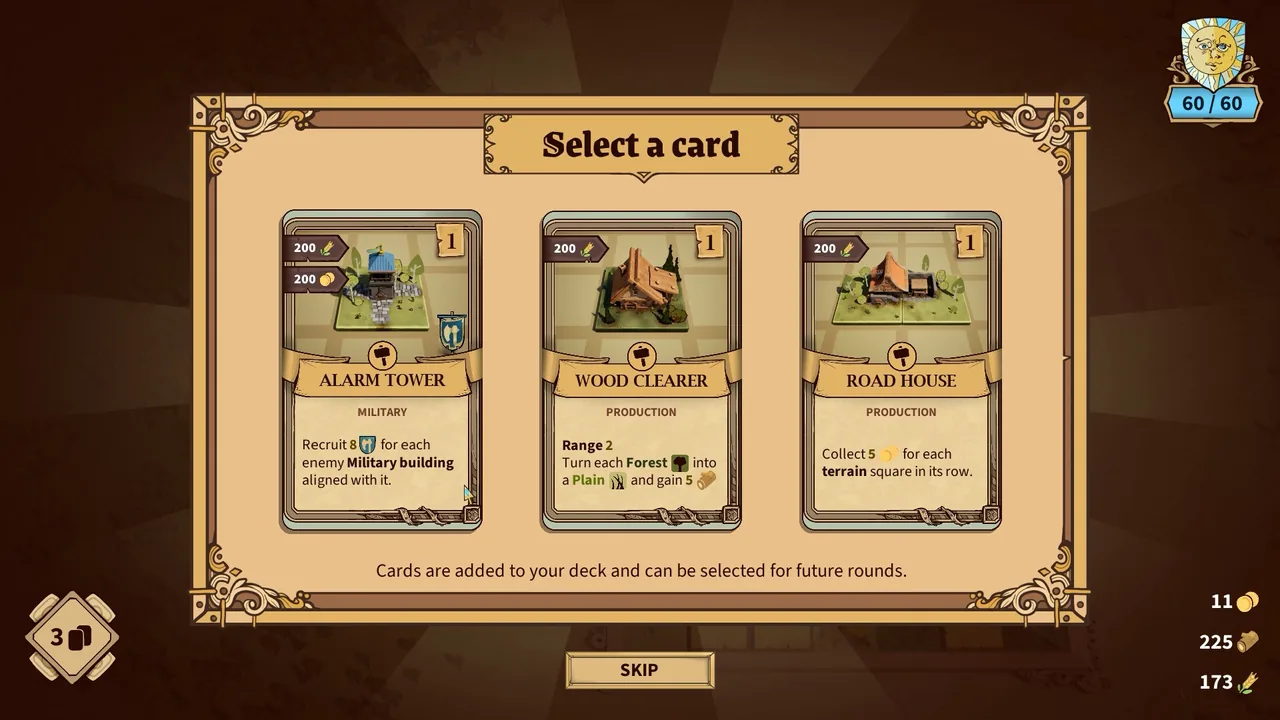
- Thirty-six of the 100 negative reviews read for this piece describe the meta-progression system diluting rather than enriching runs — new cards unlock into the draft pool as a player levels up, but without a way to remove or filter unwanted options, making later runs feel less focused than earlier ones rather than more powerful
- RNG frustration is a real, recurring complaint distinct from the progression issue, raised in 25 of the 100 negatives, with several reviewers specifically requesting a "banish" mechanic to remove cards from the pool, a tool the game currently lacks
- A single-faction paid DLC, "The Tribe," released roughly three and a half months after launch at NZ$5.99, drew specific criticism as an early red flag about the base game's content roadmap, with a second faction DLC following in December 2025
Who it's for: Fans of Slay the Spire-style roguelike deckbuilders looking for a genuinely fresh mechanical hook; a tougher sell for players who specifically want strong tools to shape their runs rather than embrace escalating randomness.
Our recommendation: A genuinely original, frequently addictive hybrid that most players will enjoy for many hours, with one real, well-documented design flaw in its unlock system worth knowing about before the mid-game — try the demo, and don't expect the game to get more manageable as you unlock more of it.
7.5 / 10
Introduction
Drop Duchy takes Tetris' falling-block structure and turns each piece into a strategic decision: terrain and building tiles drop into a grid, forming the shape of a territory that then fights through turn-based combat against whatever the run throws at it. Developed by Sleepy Mill Studio and published by The Arcade Crew alongside Dotemu, it released 5 May 2025 for NZ$21.99 and has held a large, Very Positive review base since — 90.3% across 1,707 English-language reviews, 89.3% across its wider 3,184-review all-language corpus. This review reads the 100 most-relevant English negative reviews and finds a corpus with an unusually clear, well-argued central thesis, one this outlet has seen before in other randomised builders and can name precisely.
A genuinely original hybrid
Before the criticism, it's worth stating plainly how novel this concept is. Reviewers across the whole sample credit Drop Duchy with combining Tetris' spatial puzzle-solving, deckbuilding's card economy, and a light city-builder layer into something that feels genuinely fresh rather than a reskin of an existing formula. "Roguelite, puzzle, city-builder Tetris is a very unique game genre, but it does an amazing job of pulling it off," reads one representative review. Presentation earns its own separate credit — visuals and music draw praise even inside otherwise critical reviews — and several reviewers describe the game as a slow-burning "creeper," with one detailed 58-hour review reporting the depth only became apparent well past the first ten hours.
The exact trap this outlet has learned to check for
Here's the finding worth naming precisely, because it matches a pattern this library has documented in other randomised-builder roguelikes before: does the player get real tools to steer toward what they want as content grows, or does the game simply become more random? Drop Duchy's own review corpus answers that question specifically, and mostly in the negative. Thirty-six of the 100 negative reviews read for this piece describe the meta-progression system diluting runs rather than enriching them — new cards unlock into the shared draft pool as a player levels up, but there's no mechanism to remove or filter unwanted options back out. "As it stands right now you can make the active game harder for yourself by unlocking too much too fast," reads one detailed 46-vote review, describing exactly the pool-dilution dynamic by name. Another, at 22 votes, reports the effect directly: "the unlocks adding to the drafting pool started to make every run so unfocused that the fun just fell off the farther I got." The single most-voted negative review in the whole corpus, at 231 votes, breaks the complaint down mechanically, arguing the progression system actively punishes continued play rather than rewarding it. This is the same design failure mode this outlet flagged in Dungeon Clawler and Luck be a Landlord — content added without selection tools makes a randomised builder worse, not richer, as its pool grows — and Drop Duchy's own players are making the argument in nearly identical terms.
Related but distinct, RNG frustration shows up in 25 of the 100 negatives as its own complaint, and several reviewers specifically request a "banish" mechanic — the ability to remove unwanted cards from a run's deck, a standard tool in genre peers like Slay the Spire — as the fix they'd want most. Its absence here isn't incidental to the progression complaint above; it's the same missing category of tool showing up at both the run level and the meta level.
A DLC decision that drew specific, dated criticism
A newer thread concerns monetisation timing rather than mechanics. Sleepy Mill Studio released "The Tribe," a single-faction paid DLC priced at NZ$5.99, on 18 August 2025 — roughly three and a half months after the base game's launch — with a second faction DLC, "The North," following in December
- Several reviewers read the first DLC's early timing as a signal rather than a neutral business
decision: "DLC already? This soon after release and it is a single faction, this is a red flag for the future," reads one 63-vote review. Another, with nearly 32 hours logged, calls it "ridiculous" for a game "out like 3-4 months" to already be splitting content behind a paywall. This review reports the timeline as independently verified — both DLC release dates are confirmed directly via the storefront — without asserting a motive behind the decision; readers can weigh the roughly NZ$12 combined cost of both faction packs against the NZ$21.99 base price themselves.
A shallower combat layer
A smaller but real complaint concerns the combat resolution itself. Several reviewers describe the "weapon triangle" system — a rock-paper-scissors-style counter mechanic between unit types — as resolving more through raw stat comparison than genuine tactical decision-making, distinct from the progression complaint above. This is a narrower critique, but worth separating from the pool-dilution issue since it points at the moment-to-moment combat rather than the run-to-run structure.
Final Verdict
Drop Duchy earns its large, enthusiastic following on the strength of a genuinely original idea, executed well enough that its presentation and core loop draw consistent praise even from reviewers who ultimately can't recommend the full experience. Where this review's sample identifies a real, specific, well-argued design flaw is in the meta-progression system — unlocking new content without giving players tools to manage it, the exact pool-dilution trap this outlet has flagged in other randomised builders before, corroborated here by dozens of independent reviewers making near-identical arguments. Layer on real RNG frustration and a DLC rollout that started earlier than some players expected, and the picture is of a genuinely good, inventive game with one clearly diagnosable weakness rather than a broken one. Try the free demo, understand that later hours may feel less focused rather than more powerful, and decide from there.
Pros and cons
Pros
- The core Tetris-meets-deckbuilding-meets-city-builder concept draws wide, specific praise as genuinely inventive, with reviewers crediting it as a fresh combination rather than a reskinned version of an existing formula
- Presentation earns consistent credit — visuals, music and the tactile satisfaction of piece placement are praised even inside detailed critical reviews
- Achievement data confirms a game with real staying power for a large committed playerbase: 181 tracked achievements with the easiest at 79.2% and a healthy median of 16.5%, evidence of substantial depth for players who push through the issues below
- A player who sticks with it past the early hours is repeatedly rewarded with growing appreciation, several reviewers describing the game as a "creeper" that reveals more depth after 10, 30 and 50-plus hours than its opening impression suggests
Cons
- Thirty-six of the 100 negative reviews read for this piece describe the meta-progression system diluting rather than enriching runs — new cards unlock into the draft pool as a player levels up, but without a way to remove or filter unwanted options, making later runs feel less focused than earlier ones rather than more powerful
- RNG frustration is a real, recurring complaint distinct from the progression issue, raised in 25 of the 100 negatives, with several reviewers specifically requesting a "banish" mechanic to remove cards from the pool, a tool the game currently lacks
- A single-faction paid DLC, "The Tribe," released roughly three and a half months after launch at NZ$5.99, drew specific criticism as an early red flag about the base game's content roadmap, with a second faction DLC following in December 2025
- A cluster of reviews describe the combat system's "weapon triangle" as shallow, resolving more through raw numbers than tactical decision-making, a criticism distinct from the progression-pool complaint above
Screenshots
-
Drop DuchyImage: The Arcade Crew via Steam -
Drop DuchyImage: The Arcade Crew via Steam -
Drop DuchyImage: The Arcade Crew via Steam -
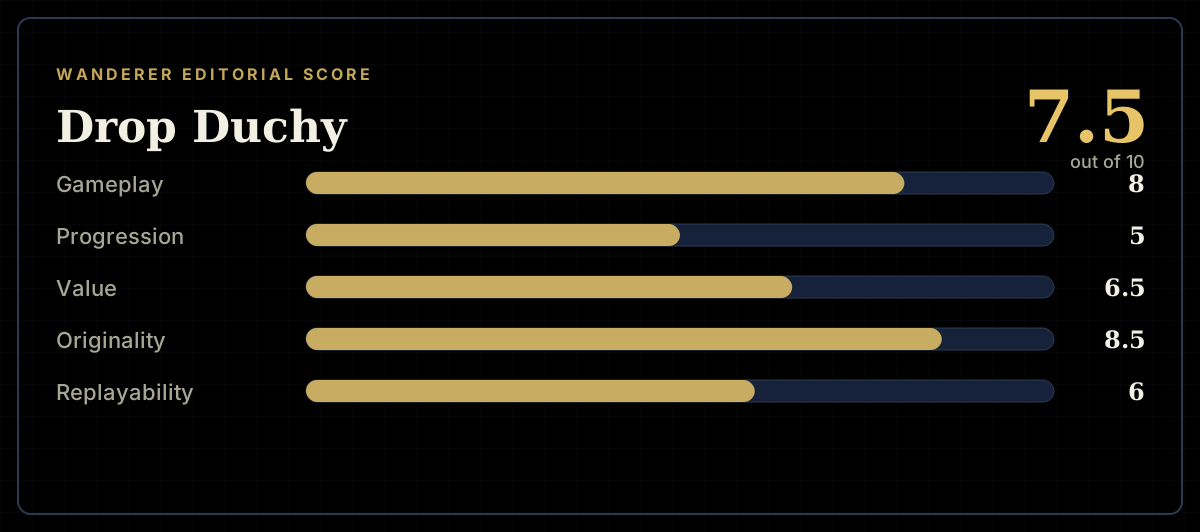
How the review scores each part of the gameWanderer Editorial -
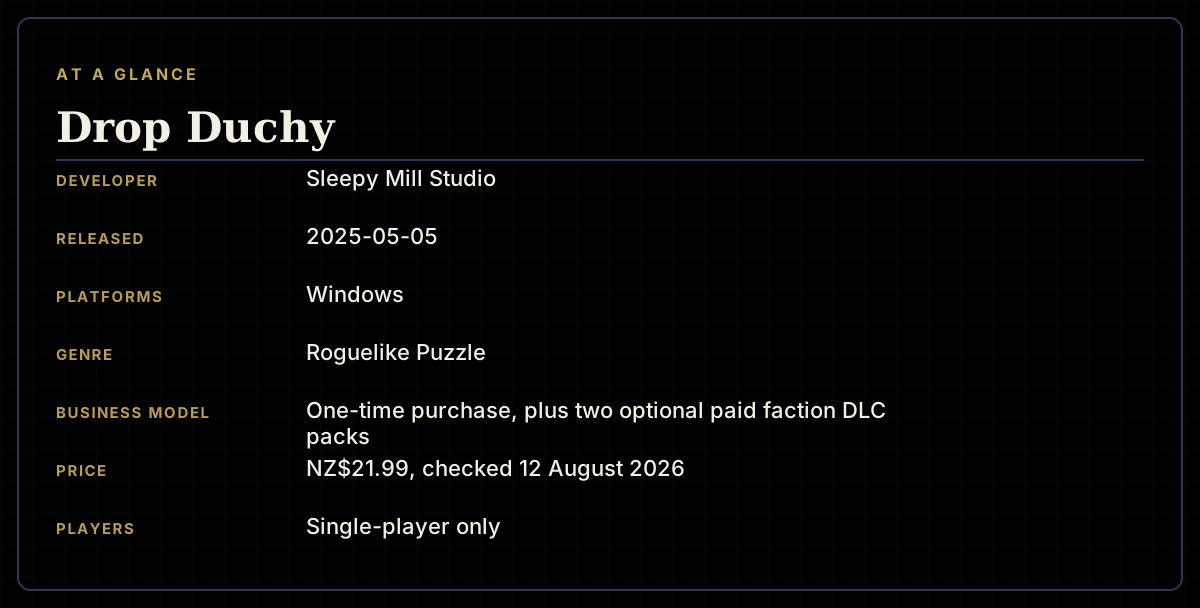
The essentials at a glanceWanderer Editorial -
The short versionWanderer Editorial