
Game review
Fortune Seller
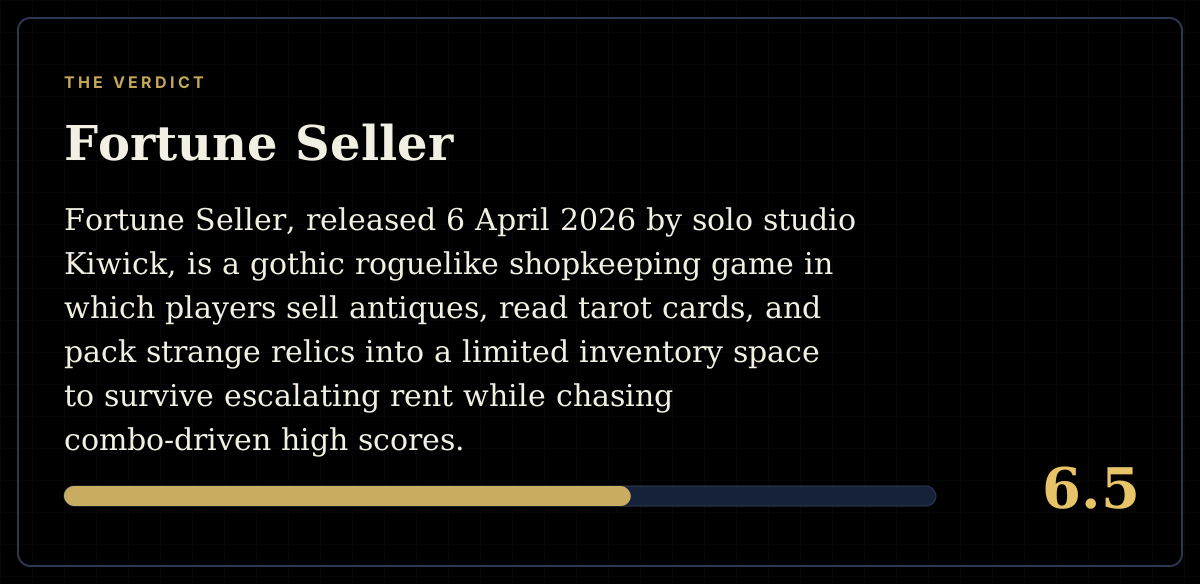
6.5 / 10
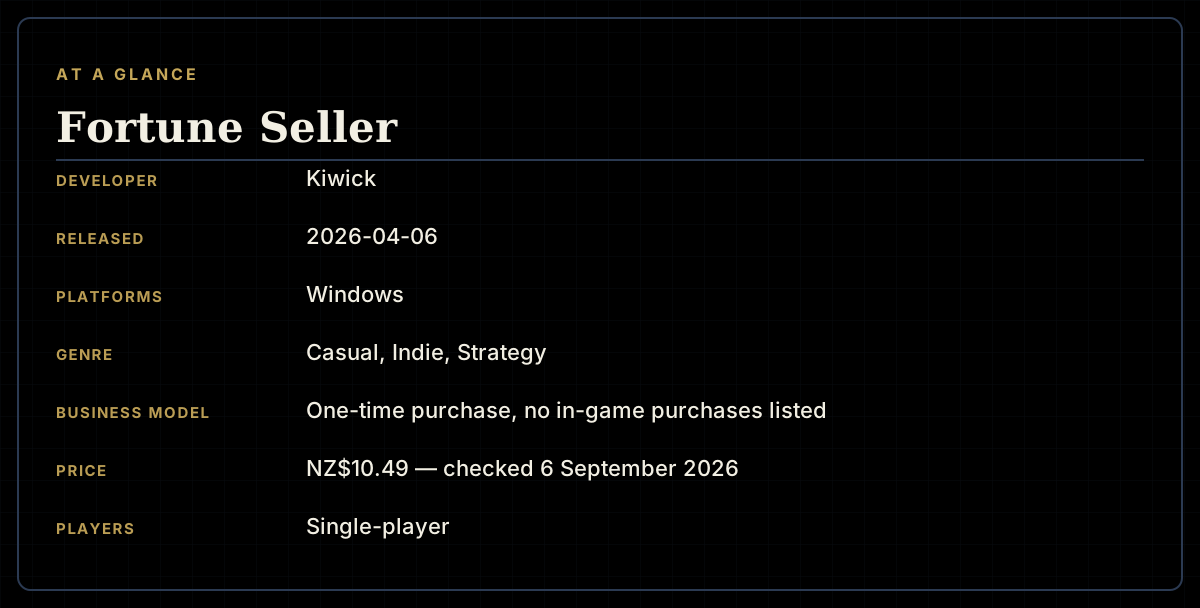
- Developer
- Kiwick
- Publisher
- Kiwick
- Released
- 6 April 2026
- Platforms
- Windows
- Genre
- Casual, Indie, Strategy
- Monetisation
- One-time purchase, no in-game purchases listed
- Players
- Single-player
The short version
Fortune Seller, released 6 April 2026 by solo studio Kiwick, is a gothic roguelike shopkeeping game in which players sell antiques, read tarot cards, and pack strange relics into a limited inventory space to survive escalating rent while chasing combo-driven high scores. It sits Very Positive with a sample of 80 reviews, and reading widely through it reveals a genuinely well-liked hybrid of two distinct inspirations: multiple reviewers describe the scoring and card-modifier systems as directly evoking the hit roguelike Balatro, fused with spatial inventory-packing mechanics several reviewers compare to Resident Evil's item management. Reviewers across this sample consistently describe the combination as genuinely addictive, with multiple accounts of planned short sessions turning into hours chasing "one more run," and one detailed reviewer reporting 137 satisfying hours reaching 100 percent completion. Set against that praise, several reviewers acknowledge directly that the game leans heavily on its Balatro inspiration without fully escaping the comparison, a smaller number report frustration at the absence of adjustable difficulty settings, and at least one detailed reviewer reports a persistent bug disabling a core game mechanic that survived a file verification and full restart. A separate, specific complaint concerns a post-launch bundle discount some early full-price buyers describe feeling undercut by.
Biggest strengths
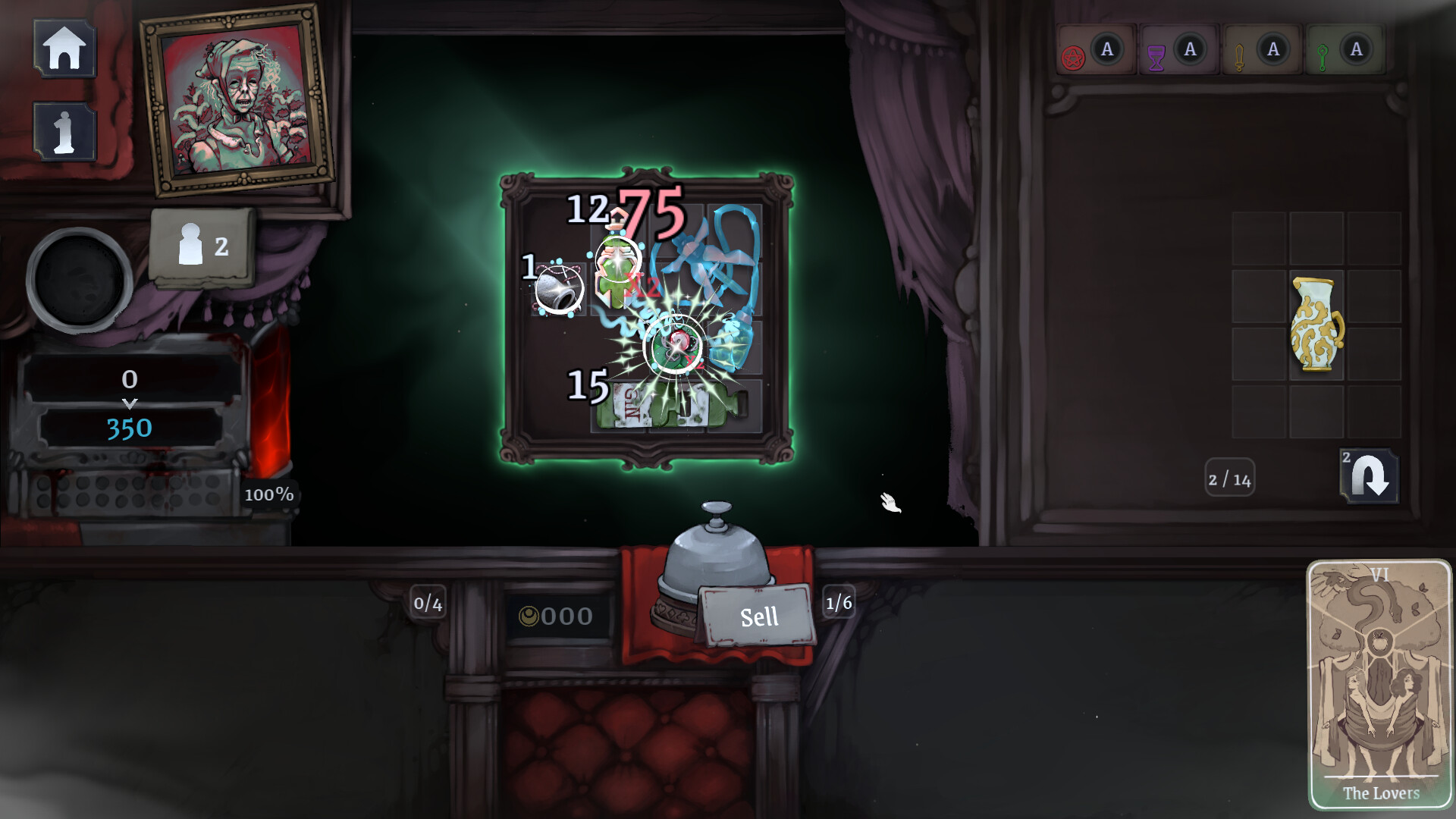
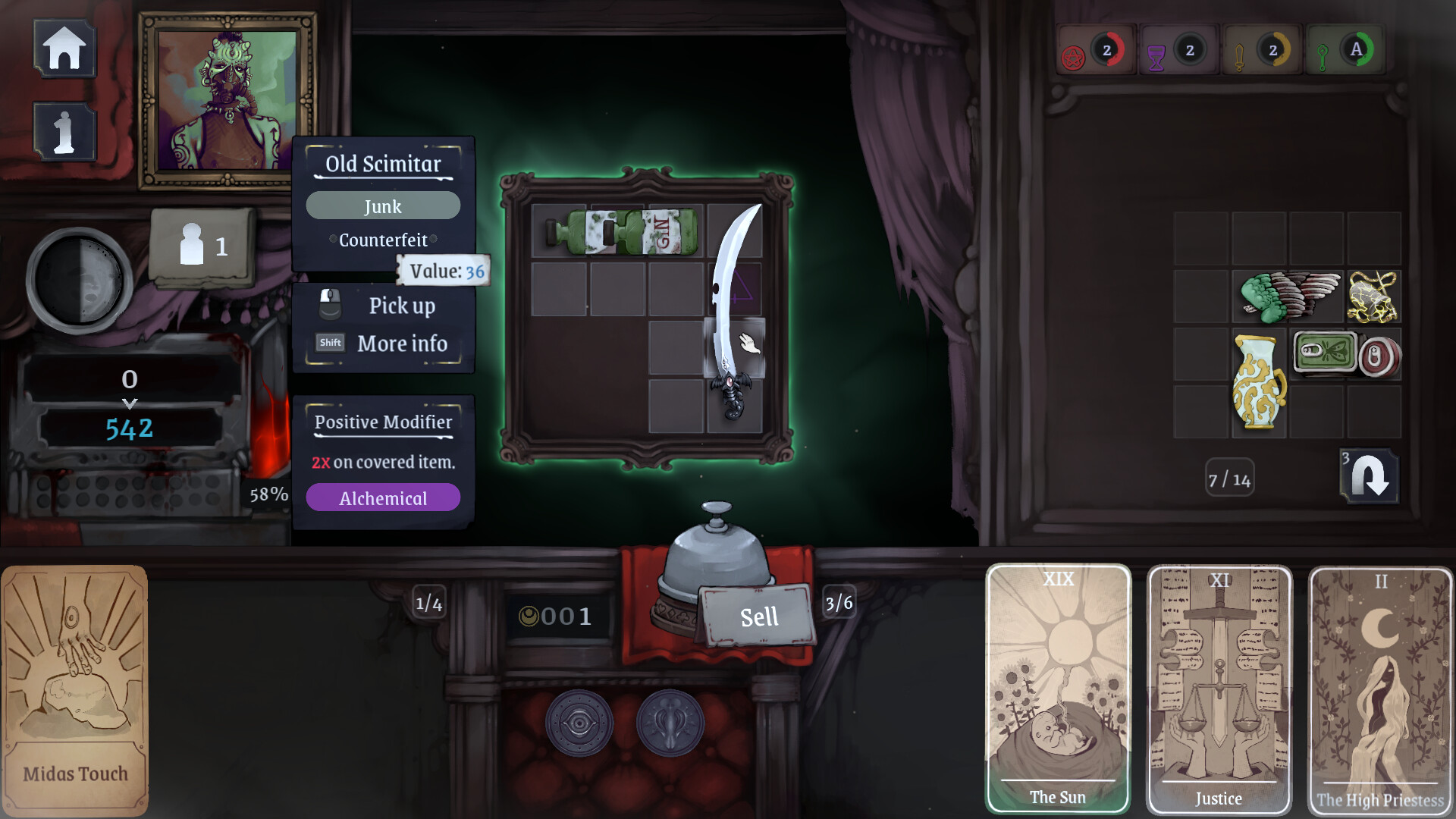
- The fusion of Balatro-style combo scoring with spatial inventory-packing mechanics draws consistent, specific praise as a genuinely fresh spin on a familiar formula, with multiple reviewers describing real satisfaction watching complex item and card interactions compound into large scores
- The core loop is repeatedly described as genuinely addictive, with multiple reviewers reporting planned short sessions extending to hours, and one detailed reviewer specifically reaching 100 percent completion across 137 hours of enjoyable, challenging play
- The gothic art style and antique-shop theme draw specific, consistent praise, with reviewers describing the overall aesthetic and character writing as a strong complement to the underlying mechanics
Biggest weaknesses
- Several reviewers explicitly acknowledge the game's heavy inspiration from Balatro, with more than one stating directly that items and modifiers feel too similar in function to each other, reducing the sense that each individual run plays out meaningfully differently from the last
- A smaller number of reviewers report frustration at the absence of adjustable difficulty settings, with one detailed reviewer specifically describing getting stuck at close to the same point on repeated attempts and wanting an easier mode to enjoy more of the game's content
- At least one detailed reviewer reports a persistent bug disabling a core game mechanic that continued to affect their save even after verifying game files and fully restarting a run
Who it's for: Fans of Balatro-style combo-scoring roguelikes and spatial inventory puzzles looking for a genuinely addictive, well-executed hybrid with real replayability, who don't mind the game wearing its inspirations openly on its sleeve.
Our recommendation: Worth it for roguelike deckbuilder fans who enjoy the genre's core loop and want a fresh spatial-puzzle spin on it; players specifically bothered by strong Balatro derivativeness or wanting adjustable difficulty should temper expectations accordingly.
6.5 / 10
Introduction
Fortune Seller, released 6 April 2026 by solo studio Kiwick, is a gothic roguelike shopkeeping game: sell antiques, read tarot cards, and pack a shifting collection of strange relics into a limited spatial inventory to survive escalating rent while chasing combo-driven high scores. It sits Very Positive with a sample of 80 reviews, and reading widely through it reveals a genuinely well-liked hybrid of two distinct genre touchstones, sitting alongside a real acknowledgment from the game's own fans about how directly it wears its inspirations.
A fresh spin on a familiar, beloved formula
The clearest strength across this sample is how the game combines its influences. Multiple reviewers directly compare the scoring and card-modifier systems to Balatro, the roguelike deckbuilder credited with popularising this specific combo-chasing loop, while separately praising the addition of spatial inventory-packing mechanics several reviewers compare to Resident Evil's item management. Reviewers consistently describe this combination as genuinely addictive rather than derivative for its own sake, with multiple accounts of planned short sessions extending into hours chasing "one more run." One detailed reviewer reports reaching 100 percent completion across 137 hours of consistently enjoyable, appropriately challenging play — a strong signal of real, sustained engagement rather than a fleeting novelty.
An honestly acknowledged debt to Balatro
What distinguishes this review's research is how openly reviewers themselves engage with the game's clearest point of comparison. Several reviewers state directly and without much hedging that Fortune Seller is essentially Balatro with a different theme and an inventory-management twist, and more than one specifically argues the available items and modifiers feel too similar to each other in practice, reducing how differently individual runs actually play out compared to the genre's most replayable entries. This isn't reviewers failing to notice the resemblance — it's a consistently, explicitly acknowledged tradeoff that several reviewers still land on a positive recommendation despite, framing the game as a worthwhile variation rather than a lesser imitation.
Missing difficulty options, and a specific stability bug
Beyond the derivativeness question, this review found two more concrete, specific complaints. A smaller number of reviewers report real frustration at the absence of adjustable difficulty settings, with one detailed reviewer describing repeatedly getting stuck at close to the same point in the game and wanting an easier mode to see more of its content without that specific wall. Separately, at least one detailed reviewer reports a persistent bug disabling a core game mechanic that continued to affect their save even after verifying game files and fully restarting — a concrete, reproducible technical failure rather than a general stability complaint.
A specific post-launch pricing controversy
A distinct, pointed complaint concerns a bundle discount offered relatively soon after the game's release. At least one early, full-price buyer describes this specifically as feeling like a slap in the face to supporters who purchased at launch, stating they now intend to wait for future bundle deals on any of the same developer's future releases rather than buy at full price again. This review reports this as one reviewer's specific, stated reaction to a pricing decision rather than a verdict on the game's underlying quality, but it's a concrete data point worth including for anyone weighing when to buy.
When "inspired by" earns its place
This review found it worth pausing on why the Balatro comparison lands so differently here than similar comparisons often do elsewhere. In many cases, a game visibly copying a hit's core loop without meaningfully building on it earns a fair "why not just play the original" dismissal from reviewers. That's notably not the dominant reaction in this sample. Multiple reviewers who freely admit the debt still describe the spatial inventory-packing layer as a genuine, distinct mechanical addition rather than a coat of paint — one detailed reviewer specifically frames the game as delivering "exactly what it promises," a combo-based spatial puzzle with an overlapping economic layer, and treats the Balatro lineage as a useful reference point for setting expectations rather than a mark against the game. The difference between a derivative clone and a worthwhile variation often comes down to whether the borrowed structure is used to support something new, and this review's research suggests Fortune Seller's inventory-management twist clears that bar for the large majority of its own audience, even if a smaller number of reviewers remain unconvinced the distinction is large enough.
Comparisons beyond Balatro alone
It's also worth noting that Balatro isn't the only reference point reviewers reach for. Multiple reviewers separately compare the game to Backpack Battles specifically for its spatial inventory-arrangement mechanics, and at least one reviewer reports discovering the game after recognising it being played within another, unrelated title's in-game world — a small but telling sign of the kind of cross-genre visibility a well-executed roguelike hybrid can pick up once word spreads. Triangulating between these reference points gives a clearer picture of the game's actual identity than any single comparison alone: this is less "Balatro but different" and more a genuinely specific point in the space between combo-scoring roguelikes and spatial inventory puzzlers, which several reviewers in this sample seem to recognise and value even while acknowledging its clearest single influence.
Final Verdict
Fortune Seller succeeds at combining two well-loved genre ideas — Balatro-style combo scoring and spatial inventory puzzling — into a genuinely addictive whole that a large share of its own reviewers, including some logging over a hundred hours, describe with real enthusiasm. What holds this score down is an honestly-acknowledged debt to its clearest inspiration that limits how distinctive individual runs ultimately feel, compounded by a missing difficulty option that frustrates less experienced players, a specific reported stability bug, and a post-launch pricing decision that left at least one early supporter feeling shortchanged. Worth it for roguelike deckbuilder fans specifically drawn to its spatial-puzzle twist; go in aware of exactly how much of its DNA is borrowed rather than expecting something wholly original.
Pros and cons
Pros
- The fusion of Balatro-style combo scoring with spatial inventory-packing mechanics draws consistent, specific praise as a genuinely fresh spin on a familiar formula, with multiple reviewers describing real satisfaction watching complex item and card interactions compound into large scores
- The core loop is repeatedly described as genuinely addictive, with multiple reviewers reporting planned short sessions extending to hours, and one detailed reviewer specifically reaching 100 percent completion across 137 hours of enjoyable, challenging play
- The gothic art style and antique-shop theme draw specific, consistent praise, with reviewers describing the overall aesthetic and character writing as a strong complement to the underlying mechanics
- The game runs well on Steam Deck according to multiple reviewers, making it a strong pick for handheld play alongside its desktop experience
Cons
- Several reviewers explicitly acknowledge the game's heavy inspiration from Balatro, with more than one stating directly that items and modifiers feel too similar in function to each other, reducing the sense that each individual run plays out meaningfully differently from the last
- A smaller number of reviewers report frustration at the absence of adjustable difficulty settings, with one detailed reviewer specifically describing getting stuck at close to the same point on repeated attempts and wanting an easier mode to enjoy more of the game's content
- At least one detailed reviewer reports a persistent bug disabling a core game mechanic that continued to affect their save even after verifying game files and fully restarting a run
- A separate, specific complaint concerns a bundle discount offered shortly after release, with at least one early full-price buyer describing it as feeling like a slap in the face to supporters who purchased at launch, and stating they would wait for future bundle deals on the developer's future titles rather than buy at full price again
- A smaller number of reviewers report the core loop, while initially compelling, doesn't sustain engagement much beyond a first full run, describing diminishing returns on replay compared to the genre's most replayable entries
Screenshots
-
Fortune SellerImage: Kiwick via Steam -
Fortune SellerImage: Kiwick via Steam -
Fortune SellerImage: Kiwick via Steam -
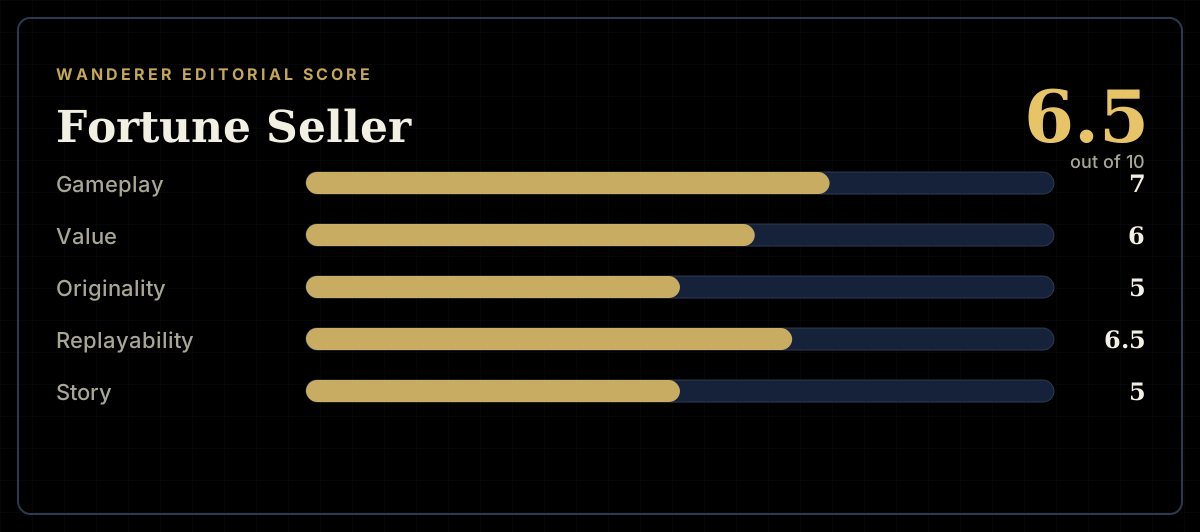
How the review scores each part of the gameWanderer Editorial -
The essentials at a glanceWanderer Editorial -
The short versionWanderer Editorial