Game review
Dice Tavern: Farkle Roguelike
7.5 / 10
- Developer
- Cavi Studio
- Publisher
- HARRISONWORLD CO.,LTD
- Released
- 7 September 2026
- Platforms
- Windows
- Genre
- Casual, Indie, Simulation, Strategy
- Monetisation
- One-time purchase, no in-game purchases listed
- Players
- Single-player
The short version
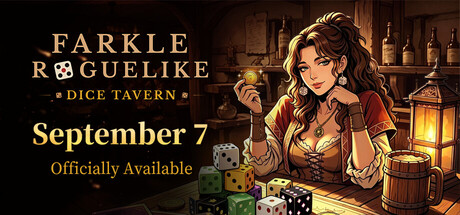
Dice Tavern: Farkle Roguelike, released 7 September 2026 by Cavi Studio, is a roguelike deckbuilding game built around the classic push-your-luck rules of Farkle: collect 35 unique dice, combine 43 synergies, and gamble in a candlelit medieval tavern where banking your score or risking one more reroll is the central, recurring decision. It sits Positive with a modest sample split across English and a larger Chinese-language pool, and reading through both reveals unanimous, detailed enthusiasm rather than uncritical praise. Reviewers repeatedly describe the core tension of choosing between locking in safe points and greedily rerolling for more as genuinely addictive, with several specifically comparing the game's emotional highs and lows to real gambling despite carrying none of its financial risk. The 3D dice models draw specific, detailed praise as a genuine collector's draw in their own right, and the tavern atmosphere and soundtrack draw consistent, appreciative comment. Set against that praise, this review found more specific, pointed complaints about individual game mechanics, including one particular joker-style modifier reviewers describe as excessively swingy, along with acknowledged minor bugs and requests for expanded features like Steam Workshop support and multiplayer.
Biggest strengths
- The core push-your-luck tension between banking a safe score and greedily rerolling for more draws extensive, detailed praise as genuinely addictive, with multiple reviewers specifically comparing the emotional rush to real gambling without its financial risk
- The 3D dice models draw specific, enthusiastic praise for their visual detail, with reviewers describing individual dice designs as genuinely collectible in their own right, independent of the underlying gameplay
- Build variety and dice-synergy combinations draw detailed, specific praise, with reviewers describing genuinely satisfying "hot dice" scoring chains once a strong build comes together, and citing specific named synergy combinations as standout strategies
Biggest weaknesses
- At least one specific joker-style modifier draws pointed criticism for being excessively swingy, with reviewers describing wild, unpredictable outcome swings between consecutive runs that several found frustrating despite the game's broader risk-reward design otherwise feeling fair
- Multiple reviewers report certain boss encounters directly counter or disable a player's carefully assembled build, which some find engaging as an additional challenge layer and others describe as a frustrating, deflating experience after significant investment in that specific strategy
- At least one detailed reviewer reports the game currently has some acknowledged mechanical bugs, while separately noting meaningfully more content is present compared to an earlier beta test version
Who it's for: Push-your-luck and dice-game enthusiasts, including fans of the Farkle minigame from Kingdom Come: Deliverance 2, looking for a full standalone roguelike built around that same core risk-reward tension.
Our recommendation: Strongly worth it at this price for dice and roguelike-deckbuilder fans; go in aware of a few specific swingy mechanics and minor reported bugs, and expect the addictive "one more round" pull reviewers repeatedly and specifically describe.
7.5 / 10
Introduction
Dice Tavern: Farkle Roguelike, released 7 September 2026 by Cavi Studio, builds a full roguelike deckbuilder around the classic push-your-luck rules of Farkle: collect 35 unique dice, combine 43 distinct synergies, and gamble your accumulated score against the temptation of one more reroll in a candlelit medieval tavern. It sits Positive with a modest sample split across English and a notably larger Chinese-language review pool, and reading through both reveals detailed, specific enthusiasm for a game that clearly understands exactly what makes its core mechanic compelling.
A genuinely addictive core tension
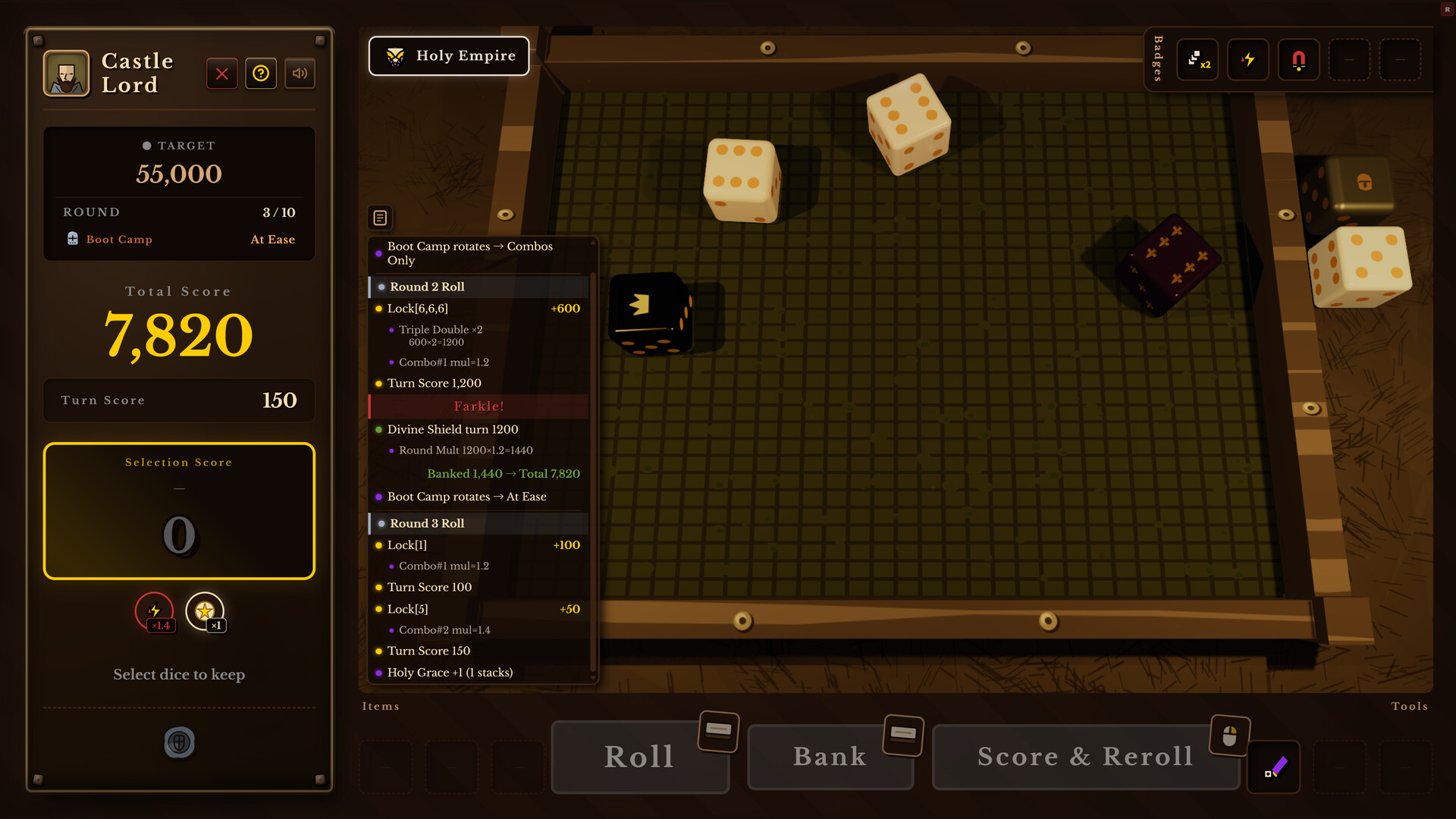
The clearest, most consistently praised element across this review's research is the central push-your-luck decision at the heart of every turn: bank your current score safely, or risk it all rerolling for more. Reviewers describe this tension in vivid, specific terms, with multiple comparing the resulting emotional highs and lows directly to real gambling, minus the financial stakes. One detailed reviewer specifically frames the game as a spiritual successor to the beloved dice minigame from Kingdom Come: Deliverance 2, suggesting this release finally gives that specific format a full standalone game built entirely around it. Several reviewers describe genuinely losing track of time once a session begins, with more than one humorously describing their own repeated inability to stop playing "just one more round."
Exquisite dice, satisfying synergy builds
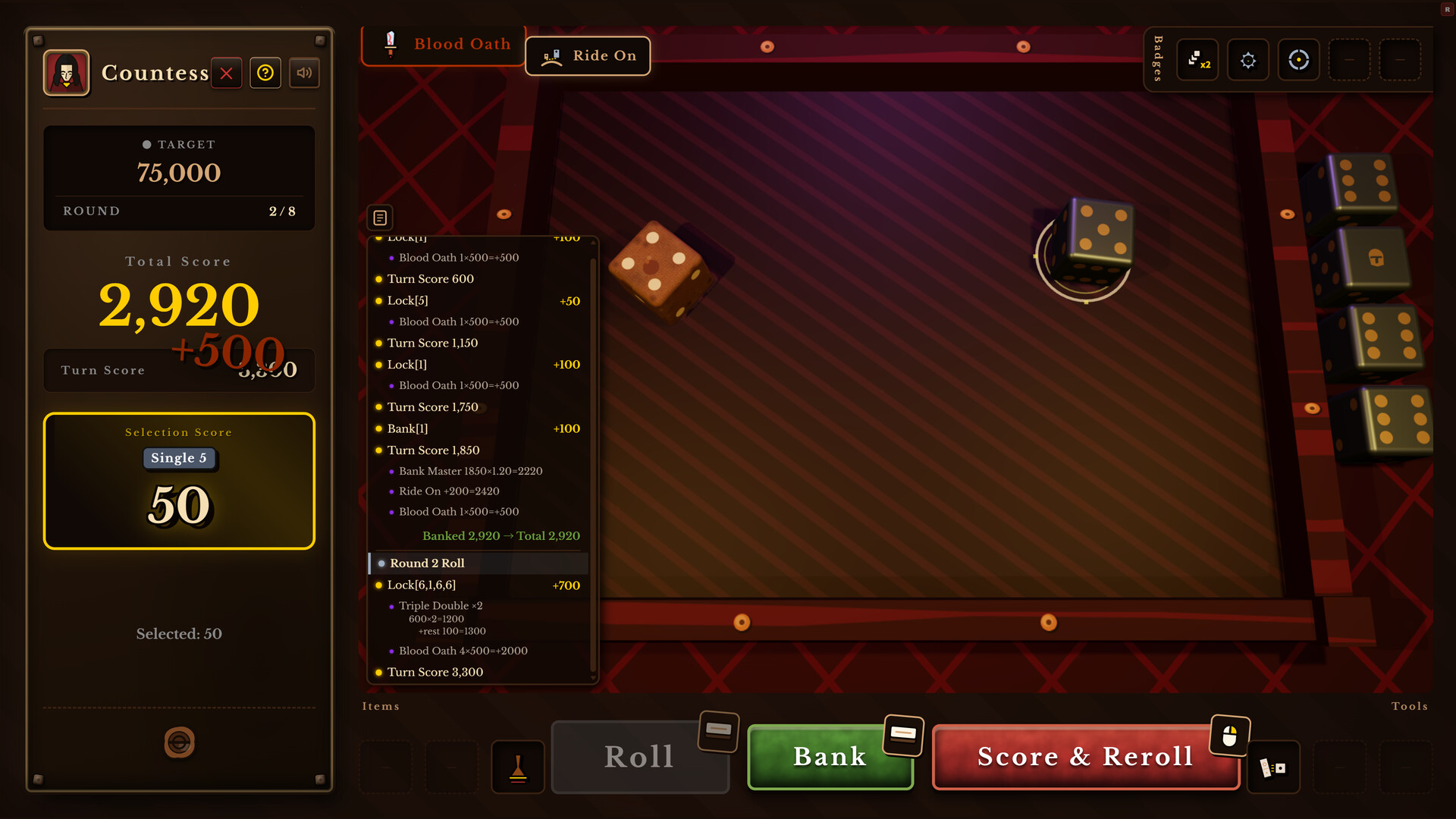
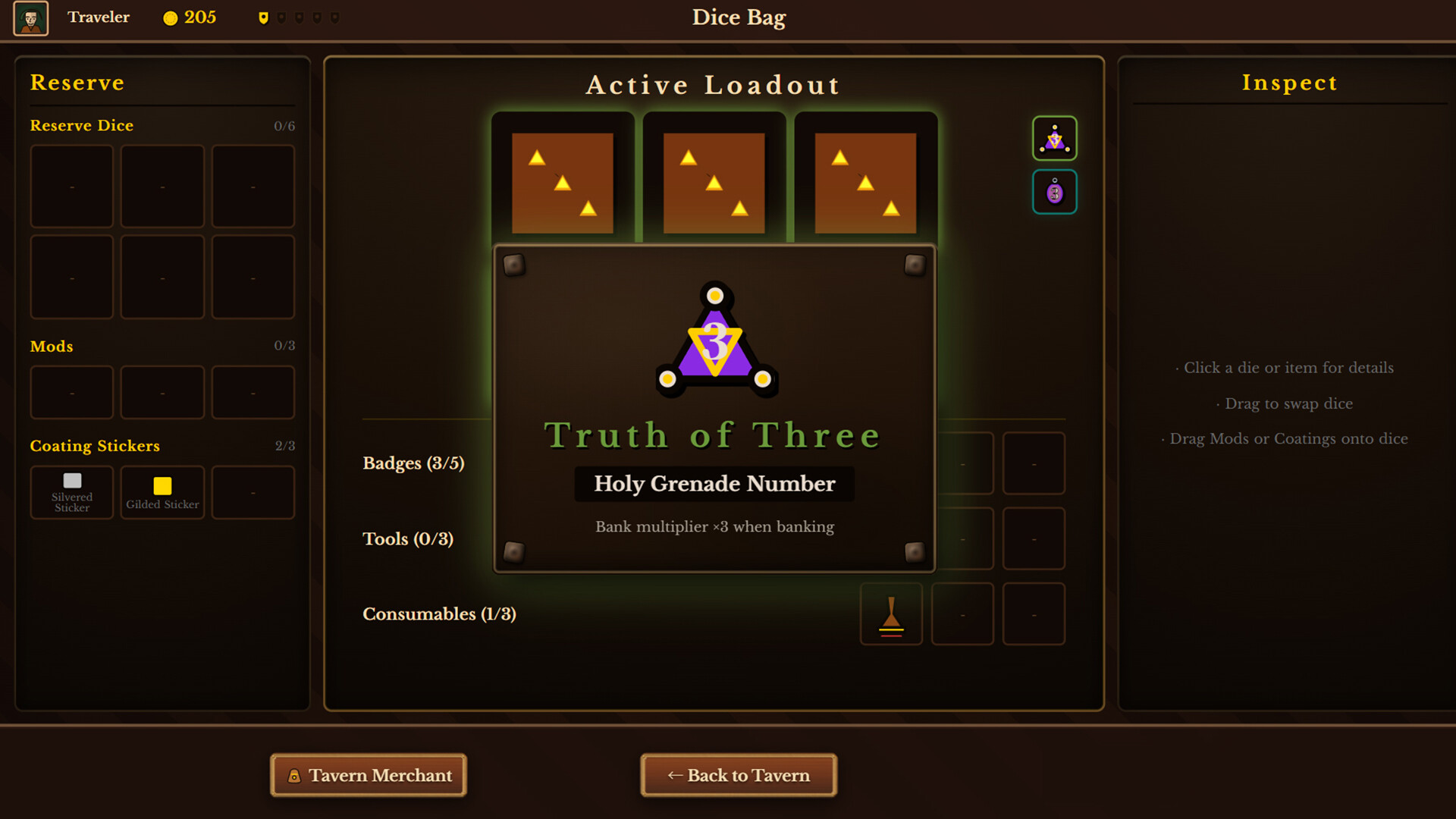
Beyond the core tension, this review found specific, detailed praise for presentation and build variety. The 3D dice models draw enthusiastic, detailed comment, with reviewers describing individual designs — an obsidian-textured "Heaven" die, a lava-patterned "Demon" die — as genuinely collectible in their own right, independent of how well they perform in play. Build variety draws its own specific praise, with reviewers describing satisfying "hot dice" scoring chains once a strong synergy combination comes together, and citing specific named combinations as standout strategies capable of producing dramatic, rapid score gains. Tavern atmosphere and music draw consistent, appreciative comment, and the ability to skip non-boss enemy encounters draws specific praise for respecting player time rather than forcing every fight.
A specific swingy mechanic, and build-countering bosses
Set against that praise, this review found more targeted, specific criticism of individual game elements rather than the core loop itself. At least one particular joker-style modifier draws pointed complaint for being excessively swingy, with reviewers describing wild, unpredictable outcome differences between consecutive runs using the same modifier — one reviewer half-jokingly suggests the game should be renamed a "blood pressure simulator" because of it. Separately, multiple reviewers report certain boss encounters directly counter or disable a carefully assembled build; reactions to this are genuinely mixed, with some finding it an engaging additional layer of challenge and others describing real frustration after investing significant effort into a specific strategy only to have it neutralised.
Acknowledged bugs and a pacing note
At least one detailed reviewer reports the game currently carries some acknowledged mechanical bugs, while separately noting the full release contains meaningfully more content than an earlier beta test build, framing the current state as a genuine improvement still settling into its final form. A separate reviewer raises a specific pacing complaint, describing one successful run stretching to nearly two hours and suggesting some trimming to late-game length would improve overall flow.
Requested features: Workshop support and multiplayer
Multiple reviewers specifically request two features not currently present: Steam Workshop support for custom dice designs, and a multiplayer mode allowing direct competition with friends. Both reads as genuine enthusiasm for the existing game rather than dissatisfaction — reviewers asking for ways to extend and share an experience they already enjoy rather than fixes for something broken.
Reading a genre-savvy, self-aware review sample
A distinctive pattern worth naming across this review's research is how self-aware and specific reviewers are about their own compulsive engagement with the game. Multiple reviewers frame their recommendations using explicitly humorous, half-serious language about addiction and self-control — describing themselves as unable to resist "just one more greedy round," or joking that the game functions less like entertainment and more like "an electronic thermostat" regulating their evening plans against their will. This review reads that pattern as a genuinely useful, if unconventional, signal about design quality: reviewers making self-deprecating jokes about their own inability to stop playing are, in effect, describing a core loop working exactly as a push-your-luck game is supposed to. That's a different and arguably more convincing kind of endorsement than straightforward praise, since it reflects reviewers' own documented behaviour rather than simply their stated opinion of the game.
Cross-language consistency as a confidence signal
It's worth noting directly how consistent this review's findings are across its two separate language pools. The specific complaints about the swingy joker modifier, the build-countering boss mechanic, and the addictive core tension all appear independently in both the English and Chinese review samples, described in remarkably similar terms despite the reviewers involved having no apparent connection to one another. This cross-language consistency gives this review meaningfully more confidence in its overall picture than either language pool would provide alone — the same strengths and the same specific friction points are being independently rediscovered by different, unconnected groups of players, which is a stronger signal of genuine, stable game qualities than a single, more homogeneous review community might offer.
Final Verdict
Dice Tavern: Farkle Roguelike succeeds at a genuinely difficult task: building an entire roguelike deckbuilder around a simple, classic push-your-luck mechanic and making that core tension feel fresh and addictive across repeated runs. Reviewers across this review's research describe real, specific enthusiasm for its dice models, synergy builds, and tavern atmosphere, tempered only by a few pointed complaints about one swingy modifier, some acknowledged bugs, and requests for expanded features. Strongly worth it at this price for dice-game and roguelike-deckbuilder fans; the addictive "one more round" pull this review's research repeatedly documents is very much by design, and it works.
Pros and cons
Pros
- The core push-your-luck tension between banking a safe score and greedily rerolling for more draws extensive, detailed praise as genuinely addictive, with multiple reviewers specifically comparing the emotional rush to real gambling without its financial risk
- The 3D dice models draw specific, enthusiastic praise for their visual detail, with reviewers describing individual dice designs as genuinely collectible in their own right, independent of the underlying gameplay
- Build variety and dice-synergy combinations draw detailed, specific praise, with reviewers describing genuinely satisfying "hot dice" scoring chains once a strong build comes together, and citing specific named synergy combinations as standout strategies
- Tavern atmosphere and music draw consistent, appreciative comment, with reviewers describing the soundtrack as perfectly suited to the setting, and the ability to skip non-boss enemy encounters draws specific praise for respecting player time
Cons
- At least one specific joker-style modifier draws pointed criticism for being excessively swingy, with reviewers describing wild, unpredictable outcome swings between consecutive runs that several found frustrating despite the game's broader risk-reward design otherwise feeling fair
- Multiple reviewers report certain boss encounters directly counter or disable a player's carefully assembled build, which some find engaging as an additional challenge layer and others describe as a frustrating, deflating experience after significant investment in that specific strategy
- At least one detailed reviewer reports the game currently has some acknowledged mechanical bugs, while separately noting meaningfully more content is present compared to an earlier beta test version
- Session length draws a specific pacing complaint from at least one reviewer, who reports a successful run stretching to nearly two hours and suggests trimming some late-game length
- Multiple reviewers specifically request Steam Workshop support for custom dice designs and a multiplayer mode to compete directly with friends, both currently absent from the game
Screenshots
-
Dice Tavern Farkle RoguelikeImage: HARRISONWORLD CO.,LTD via Steam -
Dice Tavern Farkle RoguelikeImage: HARRISONWORLD CO.,LTD via Steam -
Dice Tavern Farkle RoguelikeImage: HARRISONWORLD CO.,LTD via Steam -
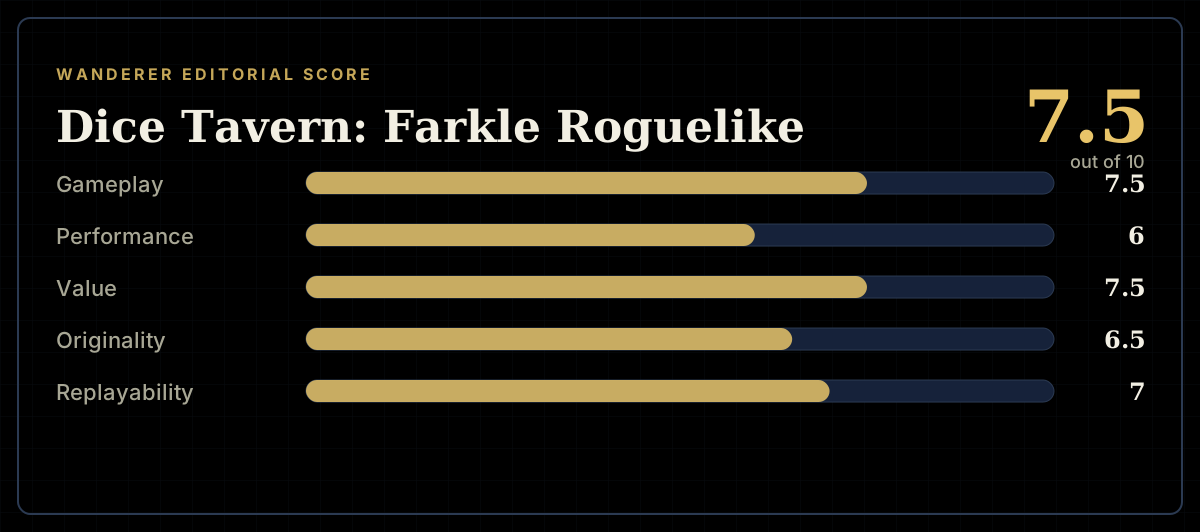
How the review scores each part of the gameWanderer Editorial -
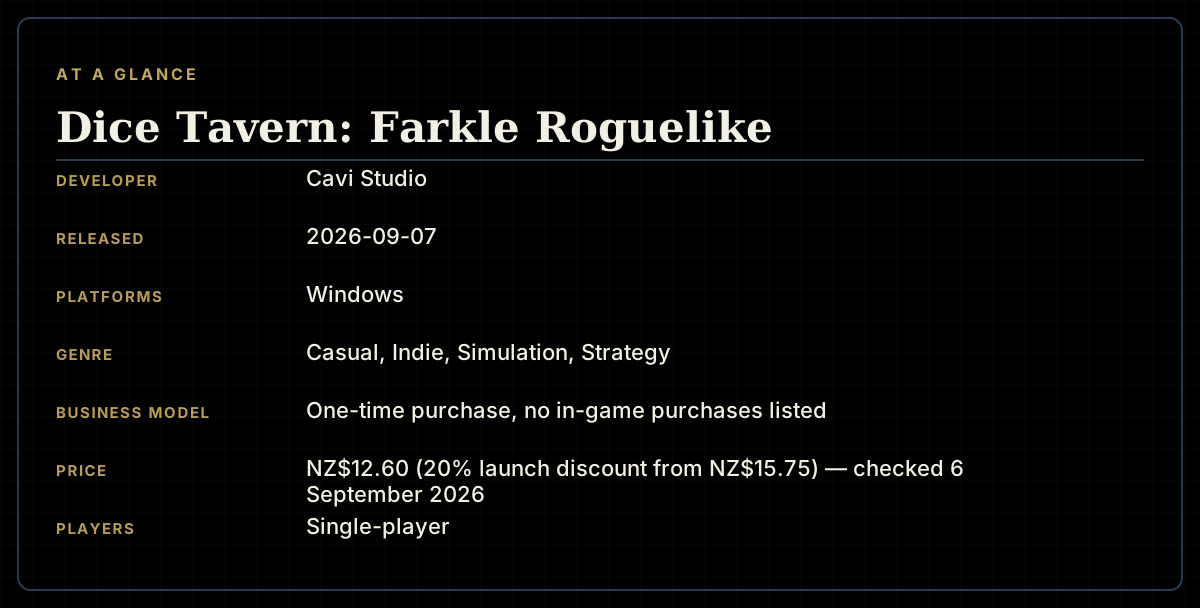
The essentials at a glanceWanderer Editorial -
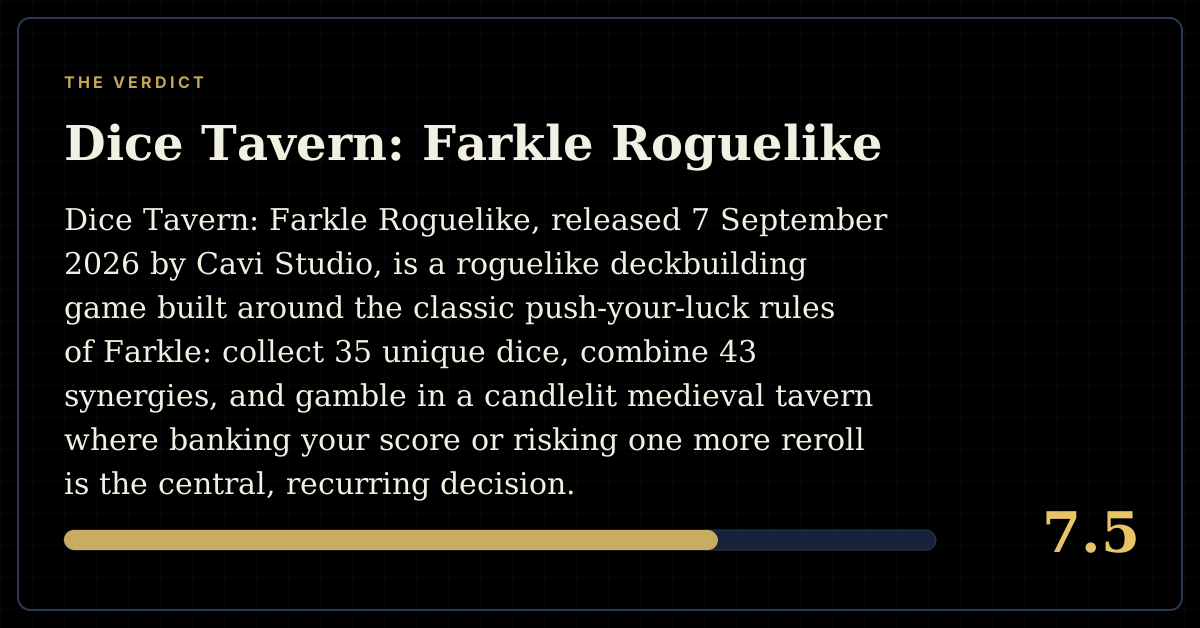
The short versionWanderer Editorial