Game review
LuckLand
7 / 10
- Developer
- e-Jade
- Publisher
- e-Jade
- Released
- 4 August 2023
- Platforms
- Windows
- Genre
- Slot Machine Roguelike-lite
- Monetisation
- One-time premium purchase; explicitly states it contains no real-money gambling, loot boxes or in-game currency purchases
- Players
- Single-player only; no online, co-op or PvP modes
The short version
LuckLand takes Luck be a Landlord's core hook — spin a slot machine whose symbols synergize with each other for escalating point totals — and builds an entire campaign map of individual levels around it, with dozens of thematic symbol sets to unlock as players clear stages. Reviewers consistently frame it as a worthy, content-rich entry in a still-small genre, praising a meaningful amount of variety and a genuinely large number of achievements to chase.
Where it departs from expectations is structure: this isn't a procedurally generated roguelike in the Slay the Spire sense, but a static, pre-built map of levels with fixed symbol pools per stage, and dying costs little beyond replaying that one level. A vocal minority of reviewers specifically push back on the "roguelike" framing for this reason, and rough translation obscures some unlocks and mechanics for others. A real, dense development cycle through its first eight months — including a talent that unlocks player-selectable theme pools — addressed some early complaints directly, though public updates appear to have stopped in early 2024.
Biggest strengths
- A large amount of content for the price, with dozens of themed symbol sets unlocked over the course of a lengthy campaign map, giving genre fans considerably more variety than the format's best-known predecessor offers
- Genuinely satisfying synergy-building gameplay that reviewers consistently compare favourably to Luck be a Landlord, describing real strategic depth in reading and combining symbol effects
- Explicitly, verifiably free of real-money gambling mechanics, loot boxes or purchasable currency, addressed directly in the game's own description
Biggest weaknesses
- The level structure is a fixed, pre-built map rather than a procedurally generated roguelike run, with each node offering a fixed symbol pool a player cannot choose or influence, and death costing little beyond redoing that specific level
- Rough translation is reported to obscure some unlocks and mechanic explanations, on top of a slow unlock pace that leaves much of the game's stated depth hidden for the first several hours
- A smaller share of reviewers describe the core "watch the reels synergize" loop as offering limited player agency once initial strategies are found, with some finding it grows repetitive over a long campaign
Who it's for: Fans of Luck be a Landlord and slot-machine roguelike-lites looking for a much larger amount of content in the same vein. Less suited to players who specifically want procedural generation and meaningful death stakes over a fixed, level-based campaign structure.
Our recommendation: A strong value pickup for genre fans specifically, provided you go in expecting a long, level-based unlock campaign rather than a true randomized roguelike run structure.
7 / 10
Luck be a Landlord proved there was real appetite for a roguelike built around spinning a slot machine rather than drafting a deck, and LuckLand is one of the clearer attempts to expand on that premise with sheer volume. Instead of a single procedurally generated run, LuckLand spreads its symbol-synergy gameplay across an entire map of individual levels, each themed around a different setting and gradually unlocking new symbol sets as a player progresses. Reviewers consistently credit it with a genuinely large amount of content for the price, even while a meaningful minority push back on how closely the word "roguelike" actually describes what's on offer.
The same core hook, spread much further
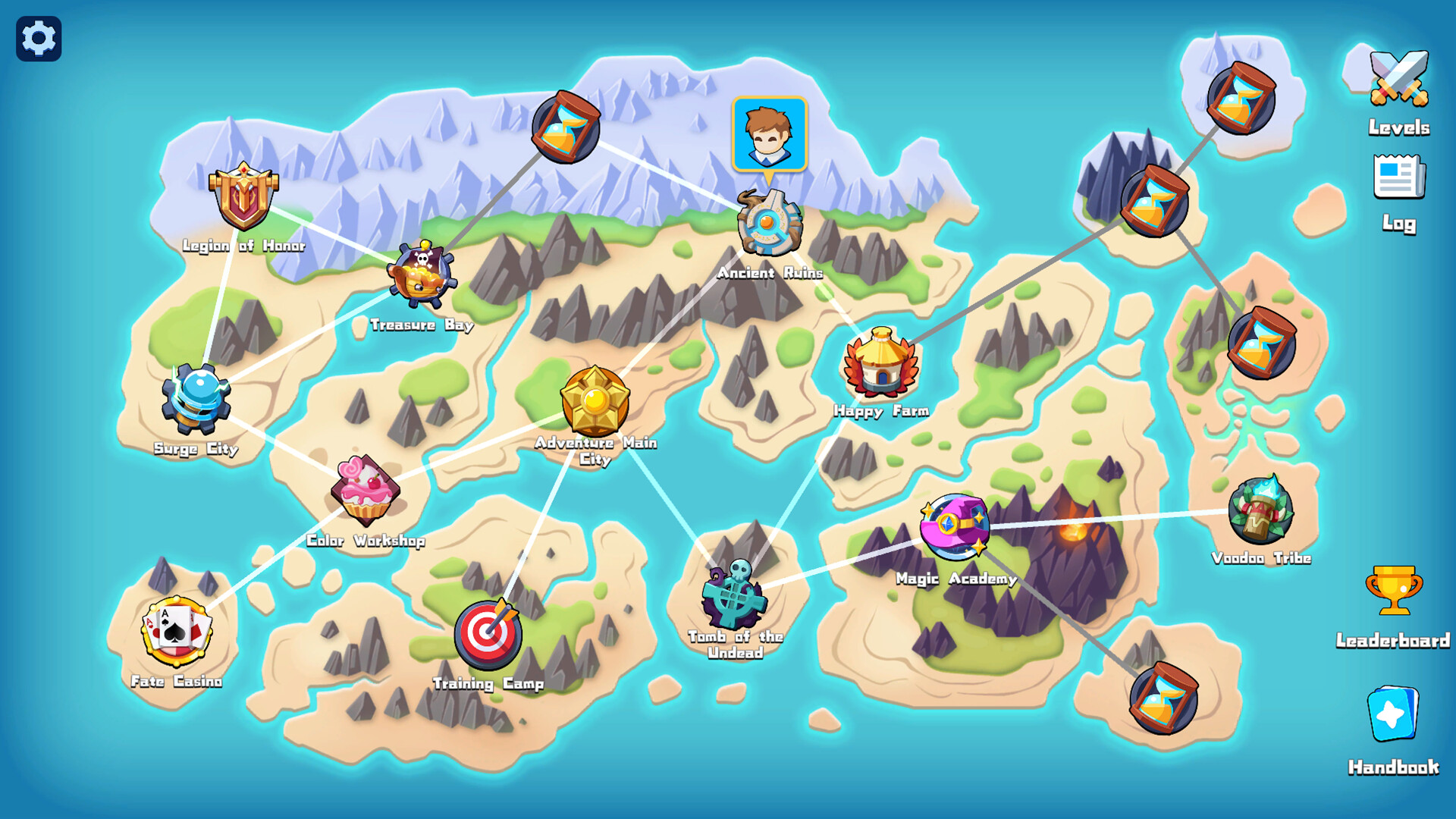
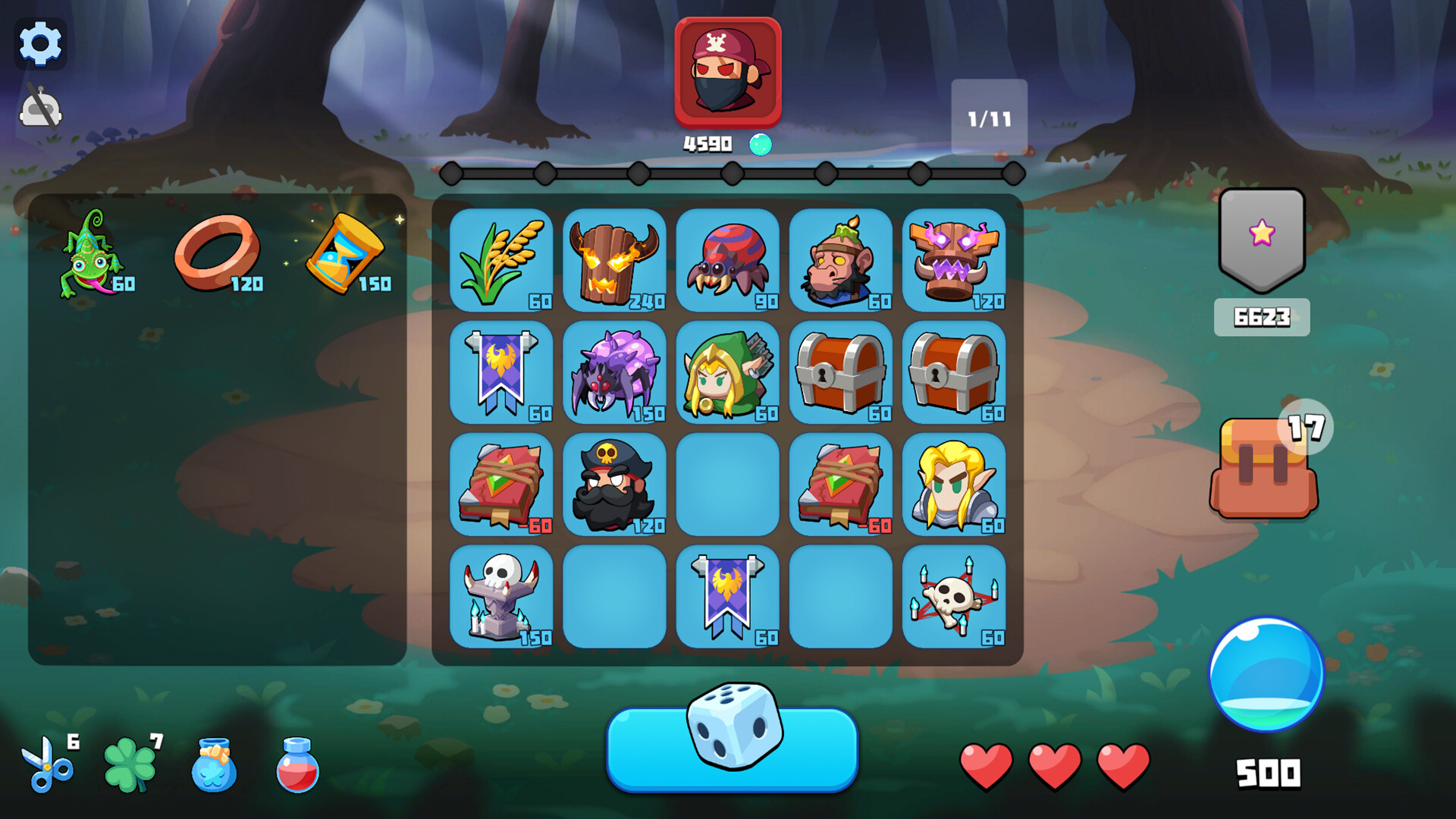
The moment-to-moment gameplay will be instantly familiar to anyone who's played its clearest influence: spin a set of reels, watch symbols land and trigger synergies with each other, and accumulate points toward a level's target before running out of spins. Reviewers describe real strategic depth in reading which symbols compound well together, and the game backs that loop with a considerably larger content footprint than Luck be a Landlord itself offers — dozens of themed symbol sets, described in-game as "genres," each unlocked by clearing specific nodes on a broader campaign map that lets players move between different areas rather than following one straight line. A very large achievement list gives completionist players plenty to chase across that campaign's full length, and the game is explicit and verifiable about containing no real-money gambling, loot boxes, or purchasable currency — a detail worth taking at face value given how directly the store page addresses it.
Not quite a roguelike, and some reviewers say so plainly
The most detailed pushback in this review's research concerns structure rather than content volume. Unlike Slay the Spire-style roguelikes, LuckLand's map is fixed and pre-built rather than randomly generated each run, and each node draws from a fixed, pre-chosen symbol pool a player has no way to select or influence directly by default. Dying at a level costs little beyond replaying that specific stage rather than losing broader run progress, which one detailed reviewer frames as a missed opportunity: "if the game followed more of a Slay the Spire map structure and generation instead, it would be a very good game." That's a fair, specific criticism of the game's genre framing rather than its execution — LuckLand delivers what it actually is very competently, but what it actually is departs meaningfully from what "roguelike" typically promises.
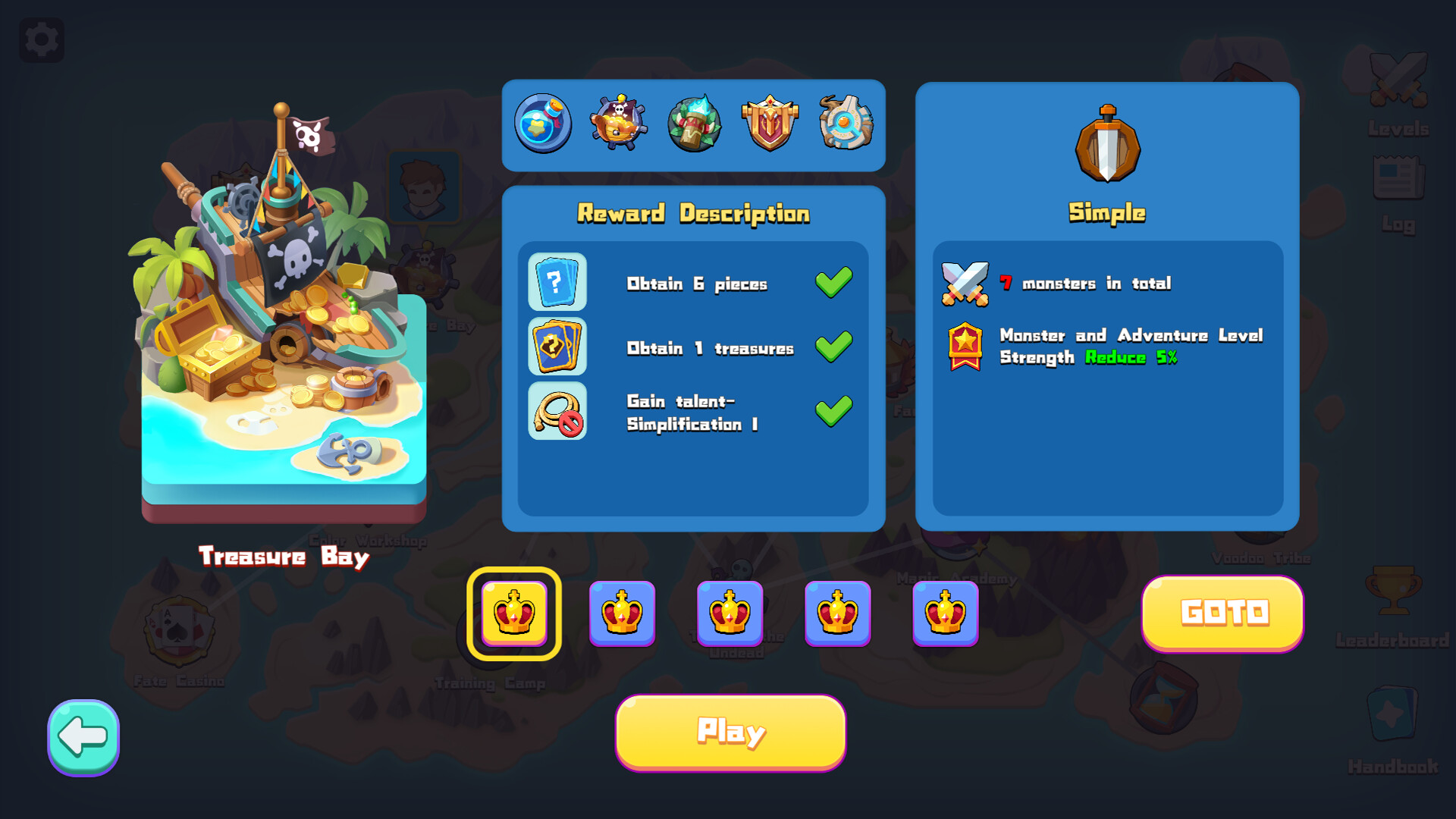
A related complaint concerns thematic consistency: several reviewers note that differently-themed levels often draw from what feels like the same underlying pool of symbols regardless of their stated setting, undercutting the sense that a "Treasure Bay" stage should feel meaningfully different from a "Tomb of the Undead" one. A later update did add a specific talent — "Autonomy Genre" — letting players self-select which genre pool they draw from once unlocked, a real answer to this complaint, though it's an earned unlock rather than a feature available from the outset.
Rough edges around a strong core
Beyond structure, reviewers cite rough translation as genuinely obscuring some unlocks and mechanic explanations, compounding an unlock pace several describe as slow enough that much of the game's real depth stays hidden for the first several hours. Interface friction adds up on top of this: fullscreen mode reportedly requires manually pressing Alt-Enter rather than being selectable through the settings menu, and menus can't be closed using the keyboard. None of these are severe individually, but they're the kind of specific, fixable friction that keeps an otherwise well-regarded release from feeling fully polished.
A dense first eight months, then quiet
LuckLand's own development history shows real, sustained effort through its first eight months on sale: near-constant devlogs from its August 2023 Early Access launch through early 2024, with numerous distinct "Genre Update" posts adding entirely new themed level sets (Dark Castle, Dragon Valley, Circus, Hell Gate, and more) at a steady clip, alongside the self-selected genre talent discussed above. The most recent logged public activity is a March 2024 Steam Deck-focused promotional push, with nothing further on the record since — over two years of apparent quiet by this review's writing, following what was, while it lasted, a genuinely active support cycle.
Limited agency, a real if smaller complaint
A quieter but recurring criticism concerns how much genuine control a player has once a level is underway. Because spins largely resolve automatically once triggered, the actual decisions a player makes are concentrated in pre-round setup — which symbols to buy or upgrade before spinning — rather than moment-to-moment choices during a match. One reviewer frames the resulting arc bluntly: "there isn't much player agency, and 'points go up' can remain fun only for a while." This isn't a universal reaction — many reviewers describe exactly this rhythm as the appeal, a low-effort way to watch numbers climb while genuinely thinking through synergy choices between spins — but for players who want active, moment-to-moment decision-making throughout a match rather than concentrated at its edges, it's worth knowing that LuckLand leans further toward the passive end of that spectrum than some genre alternatives.
Where it lands
LuckLand succeeds as a content-dense expansion on the slot-machine roguelike-lite format Luck be a Landlord popularized, offering considerably more variety and unlockable depth at a fair price. Its fixed, level-based structure is a legitimate departure from what "roguelike" usually promises, and rough translation, slow unlock pacing, and minor interface friction are real, specific complaints worth knowing about going in. None of it undoes a genuinely engaging core loop, but this is best understood as a long, level-based synergy puzzle rather than the randomized run structure its genre tag might suggest.
Pros and cons
Pros
- A large amount of content for the price, with dozens of themed symbol sets unlocked over the course of a lengthy campaign map, giving genre fans considerably more variety than the format's best-known predecessor offers
- Genuinely satisfying synergy-building gameplay that reviewers consistently compare favourably to Luck be a Landlord, describing real strategic depth in reading and combining symbol effects
- Explicitly, verifiably free of real-money gambling mechanics, loot boxes or purchasable currency, addressed directly in the game's own description
- A real, dense development cycle in its first eight months, adding numerous new themed level sets and a talent letting players self-select which symbol genres they draw from
- A large achievement list giving completionist players concrete long-term goals across the campaign's full length
Cons
- The level structure is a fixed, pre-built map rather than a procedurally generated roguelike run, with each node offering a fixed symbol pool a player cannot choose or influence, and death costing little beyond redoing that specific level
- Rough translation is reported to obscure some unlocks and mechanic explanations, on top of a slow unlock pace that leaves much of the game's stated depth hidden for the first several hours
- A smaller share of reviewers describe the core "watch the reels synergize" loop as offering limited player agency once initial strategies are found, with some finding it grows repetitive over a long campaign
- Fullscreen mode reportedly requires manually pressing Alt-Enter rather than being available directly from the settings menu, and menus can't be closed with the keyboard
- Symbol themes were reported at various points to draw from the same underlying pool regardless of a level's stated setting, a complaint at least partially addressed by a later unlockable talent letting players choose their own genre pool rather than a default, always-on option
Screenshots
-
LuckLandImage: e-Jade via Steam -
LuckLandImage: e-Jade via Steam -
LuckLandImage: e-Jade via Steam -
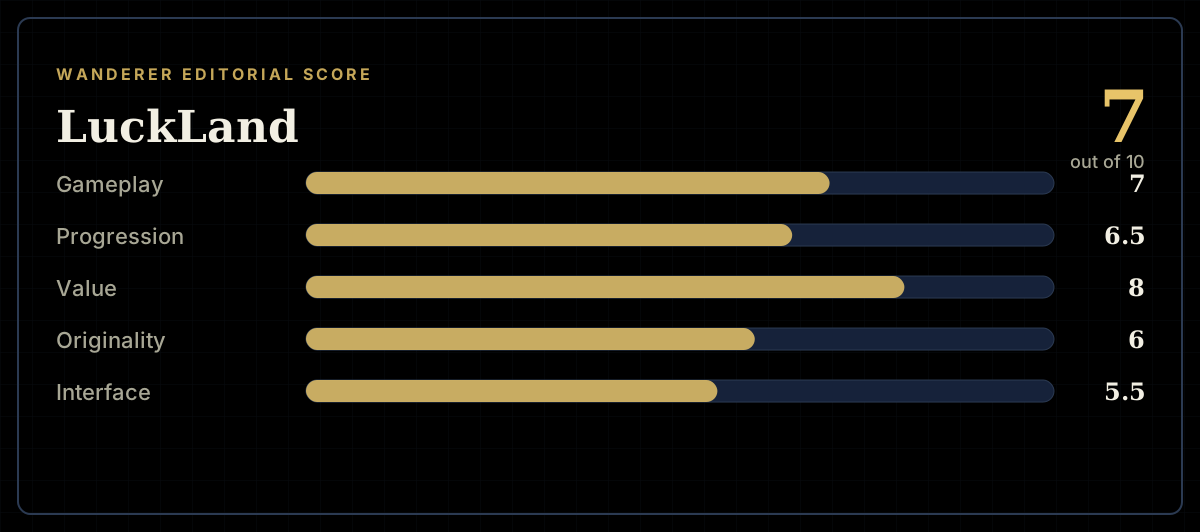
How the review scores each part of the gameWanderer Editorial -
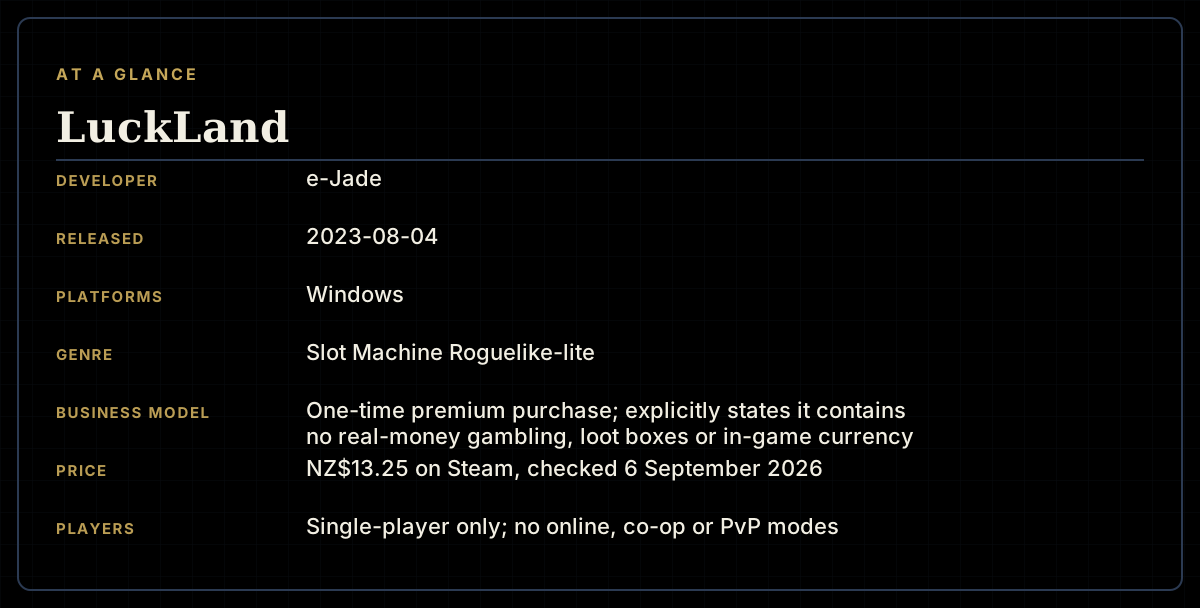
The specsWanderer Editorial -
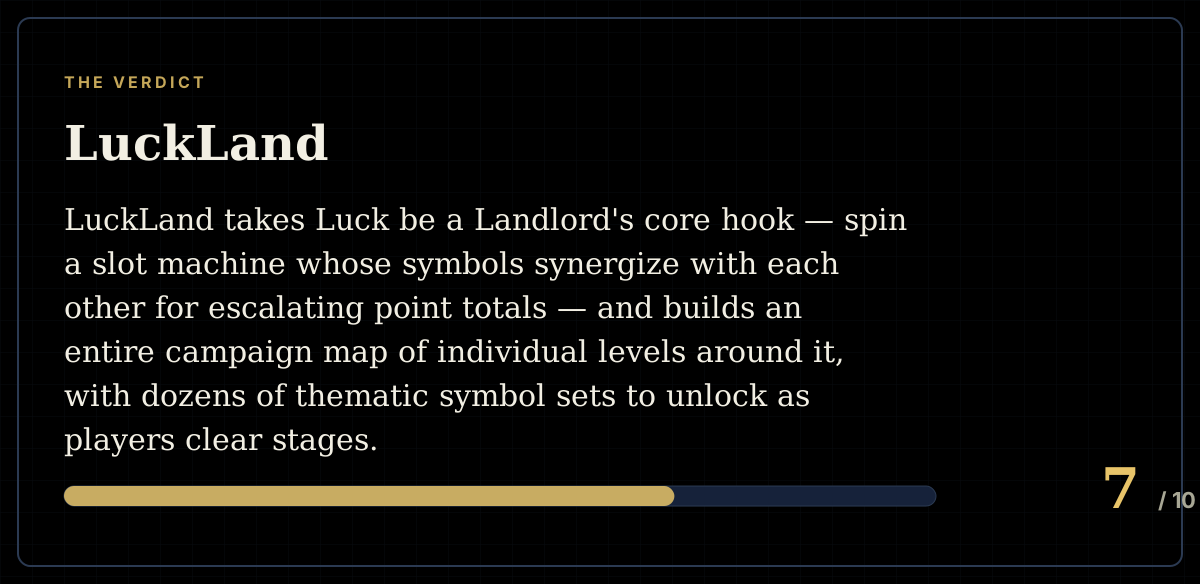
The short versionWanderer Editorial