
Game review
Alina of the Arena
7 / 10
- Developer
- PINIX
- Publisher
- PINIX, IndieArk
- Released
- 13 October 2022
- Platforms
- Windows
- Genre
- Roguelike, Deckbuilder, Tactics
- Monetisation
- One-time purchase, no DLC, no in-app purchases
- Players
- Single-player only
The short version
Alina of the Arena combines Slay the Spire's deckbuilding roguelike structure with Into the Breach's hex-grid tactical positioning, sending a gladiator through escalating arena runs where dodges and knockbacks matter as much as card choices. Developed and published by PINIX alongside IndieArk, it released 13 October 2022 and sits at Very Positive, 92.9% across 1,224 English-language reviews. The core loop draws genuine, sustained satisfaction from a real playerbase — including reviewers logging hundreds and, in one case, thousands of hours. Set against that is a consistent complaint about build diversity and balance, plus a specific, concrete accessibility issue: multiple reviewers report genuine motion sickness from the game's constant bobbing character animation.
Biggest strengths
- The core loop combining deckbuilding with hex-based tactical positioning is widely praised as genuinely satisfying, with dodges and knockbacks giving positioning real weight beyond simple card math
- A real, dedicated playerbase exists, with several reviewers logging hundreds of hours and one reporting over 6,500 hours played, describing it as ideal for stepping away and returning to in short sessions
- Reasonably priced at under NZ$20 for a genre where comparable deckbuilders often ask considerably more
Biggest weaknesses
- A consistent complaint concerns build diversity and balance: several reviewers report that once a viable strategy is found, deviating from it is heavily punished, with certain card types like blocking effectively obsolete once dodging is available, narrowing genuine strategic choice over time
- Multiple reviewers report a specific, concrete accessibility issue — motion sickness from the constant up-and-down bobbing animation of the player character, opponents and background spectators, severe enough that some can only play in short sessions
- Boss difficulty is described by several reviewers as disproportionately spiked relative to the rest of the game, creating frustration spikes rather than a smooth difficulty curve
Who it's for: Slay the Spire fans curious about a hex-tactics twist who can tolerate real balance rough edges; a poor fit for players sensitive to constant on-screen bobbing motion, or anyone wanting deep build variety rather than a small number of consistently optimal strategies.
Our recommendation: A genuinely satisfying deckbuilder hybrid for the price, openly derivative of its two clear influences rather than doing something wholly new, and worth checking the motion sensitivity concern before buying if that's ever been an issue for you.
7 / 10
Introduction
Alina of the Arena sends a gladiator through escalating roguelike runs, building a deck of attacks and abilities while manoeuvring across a hex grid where positioning, dodges and knockbacks matter as much as the cards themselves. Developed and published by PINIX alongside IndieArk, it released 13 October 2022 and sits at Very Positive, 92.9% across the 1,224 English-language reviews this review draws from. The game markets itself explicitly as a fusion of Slay the Spire and Into the Breach, and reviewers largely agree that's an accurate, earned description rather than an overreaching pitch — one reviewer put it plainly: "This game markets itself as a combination of Slay the Spire and Into the Breach, and that's exactly what it is."
A hybrid that satisfies a real, dedicated audience
The core loop draws consistent, genuine praise, and the depth of engagement in this review's positive sample is unusually striking: one reviewer reports over 6,500 hours played, another 423 hours across 540 runs, describing the "feeling of achieving" a difficult late-game victory as genuinely earned rather than grindy. A separate reviewer summed up the appeal in familiar but accurate terms: "easy to play hard to master," crediting the game specifically with being satisfying to pick up and set down in short sessions. That's a meaningful signal independent of the percentage score — this isn't a game people try once and abandon; a real subset of its audience has built it into a long-term habit.
The build-diversity complaint
Set against that satisfaction is a consistent, specific complaint about balance and strategic variety — a pattern this library has documented before in randomised deckbuilders, where adding content without adding selection tools narrows rather than widens what actually works. Multiple reviewers describe certain systems becoming effectively obsolete once a dominant strategy is found: one detailed review noted that "if you can dodge damage, blocking cards are pointless," and that weapon choice tends to converge on whatever was found earliest and simply upgraded, rather than genuinely varying between runs. A separate reviewer described the game punishing deviation from an established winning approach specifically, arguing this cuts against what a roguelike deckbuilder should reward. Boss difficulty draws its own related complaint, described by several reviewers as disproportionately spiked compared to the rest of the game's pacing — one detailed 131-vote review, posted while still holding out hope for the game's potential, catalogued this as the central issue keeping an otherwise promising game from standing out among the genre's many competitors.
A specific, real accessibility concern
One complaint in this sample deserves direct, individual attention rather than folding into general feedback: multiple reviewers report genuine motion sickness caused by the game's visual presentation, specifically a constant up-and-down bobbing animation applied to the player character, opponents, and even background spectators simultaneously. One reviewer, who identifies as susceptible to sickness from repetitive motion, described being unable to play for more than short stretches without discomfort, explicitly attributing it to the combined effect of multiple bobbing elements on screen at once rather than any single source. That's a concrete, specific accessibility gap worth flagging plainly for any reader who has experienced similar sensitivity to constant screen motion in other games.
A smaller technical complaint worth naming
A more minor but specific bug is worth including because it's checkable: at least one reviewer reports that the game's maximum available resolution setting causes the player's hand of cards to visually cover the bottom row of the arena grid, making it impossible to target enemies positioned there without first playing or discarding cards to clear the view — a real usability problem rather than a matter of preference.
Where players actually get to
Steam's achievement data shows a genre-typical curve for a demanding roguelike: the first-arena completion sits at 70.9%, tapering through a real midgame around 50-60% before the hardest, challenge-run achievements — speedrunning a win, or winning without any trinket assistance — drop to under 3%. That's consistent with a game a large majority of buyers engage with meaningfully, even as true mastery is reserved for a smaller, more dedicated group, which lines up with the huge playtime figures reported by this game's most invested reviewers.
Final Verdict
Alina of the Arena delivers exactly what it promises on the label — a competent, genuinely satisfying fusion of Slay the Spire's deckbuilding and Into the Breach's tactical positioning, cheap enough and deep enough to have built a real, dedicated audience logging hundreds of hours. What holds it back from a stronger score is a consistent complaint about build diversity narrowing rather than expanding as strategies solidify, and a specific, concrete accessibility issue around motion sickness that's worth checking seriously before buying if screen bobbing has ever bothered you elsewhere. For fans of both its clear influences willing to accept those trade-offs, there's a genuinely rewarding game here.
Pros and cons
Pros
- The core loop combining deckbuilding with hex-based tactical positioning is widely praised as genuinely satisfying, with dodges and knockbacks giving positioning real weight beyond simple card math
- A real, dedicated playerbase exists, with several reviewers logging hundreds of hours and one reporting over 6,500 hours played, describing it as ideal for stepping away and returning to in short sessions
- Reasonably priced at under NZ$20 for a genre where comparable deckbuilders often ask considerably more
- The hybrid concept is executed competently enough that fans of both Slay the Spire and Into the Breach recognise and appreciate what each influence contributes to the design
Cons
- A consistent complaint concerns build diversity and balance: several reviewers report that once a viable strategy is found, deviating from it is heavily punished, with certain card types like blocking effectively obsolete once dodging is available, narrowing genuine strategic choice over time
- Multiple reviewers report a specific, concrete accessibility issue — motion sickness from the constant up-and-down bobbing animation of the player character, opponents and background spectators, severe enough that some can only play in short sessions
- Boss difficulty is described by several reviewers as disproportionately spiked relative to the rest of the game, creating frustration spikes rather than a smooth difficulty curve
- A specific resolution bug is reported by at least one reviewer, where the maximum available resolution causes the player's hand of cards to obscure the bottom row of the arena, making some enemies impossible to target
Screenshots
-
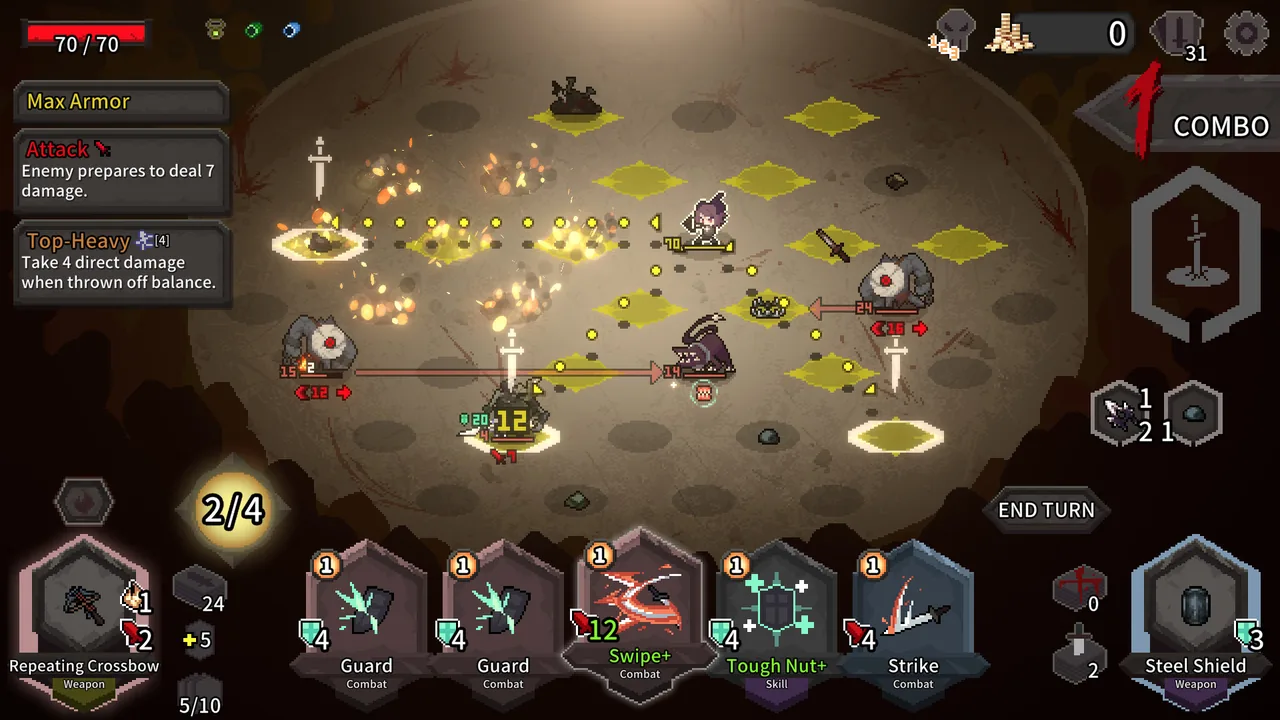
Alina of the ArenaImage: PINIX via Steam -
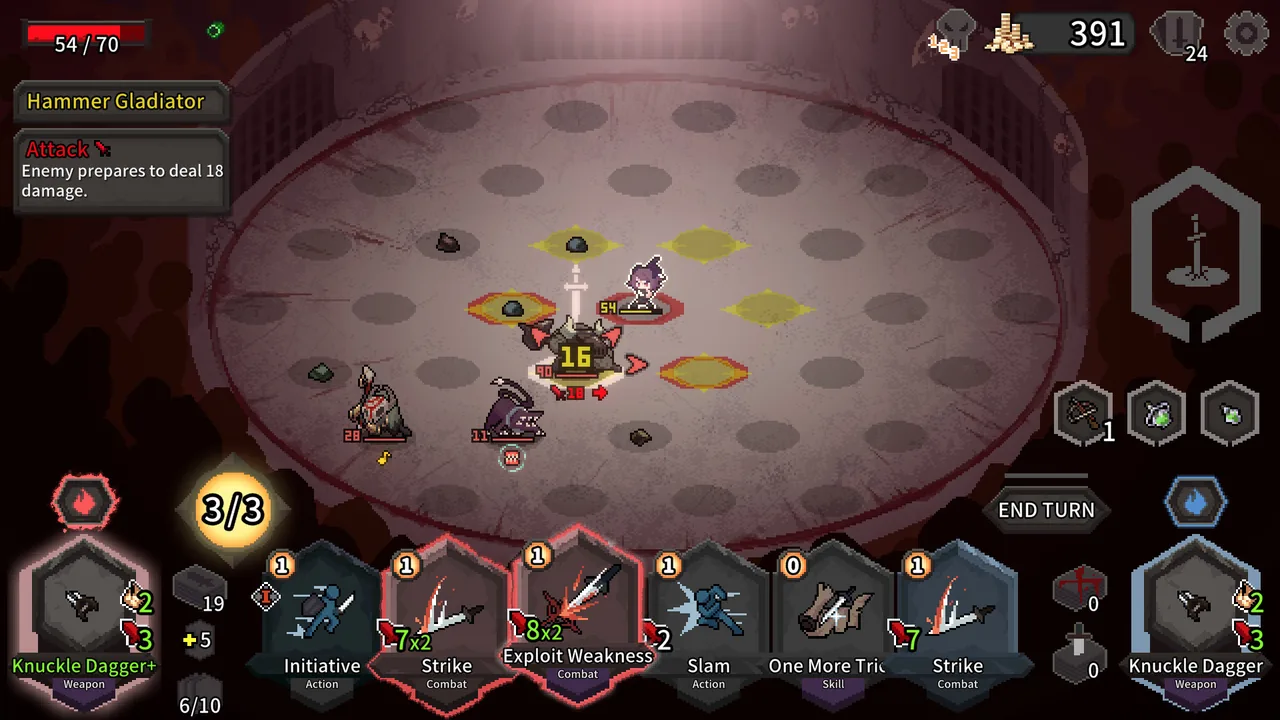
Alina of the ArenaImage: PINIX via Steam -
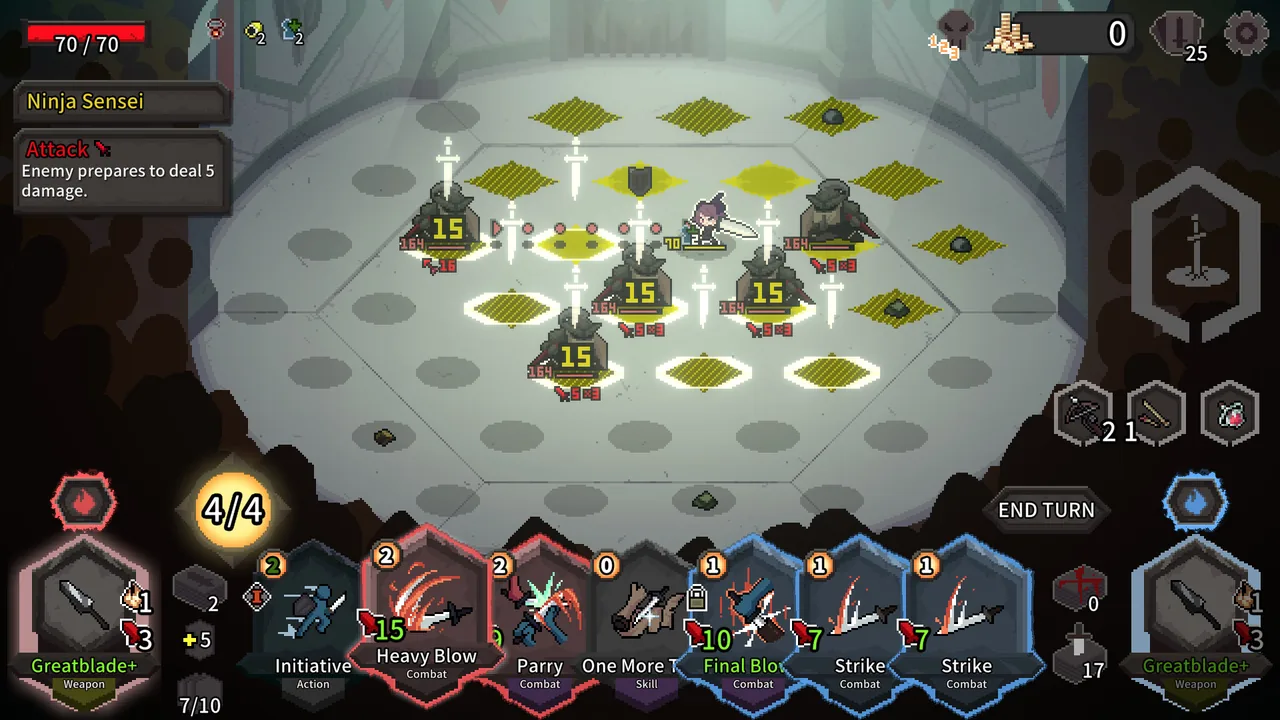
Alina of the ArenaImage: PINIX via Steam -
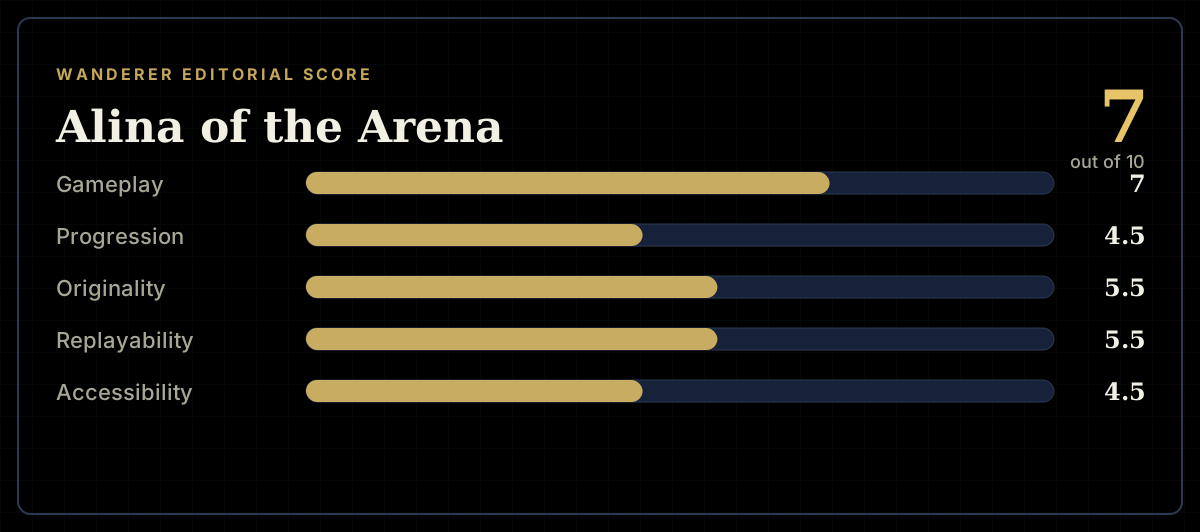
How the review scores each part of the gameWanderer Editorial -
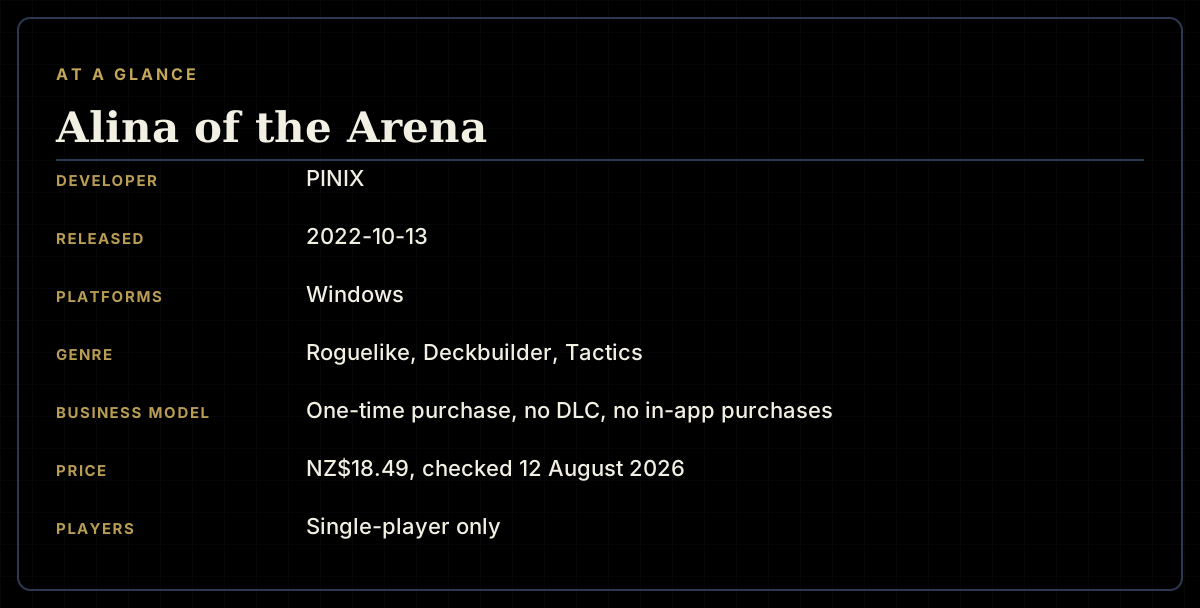
The essentials at a glanceWanderer Editorial -
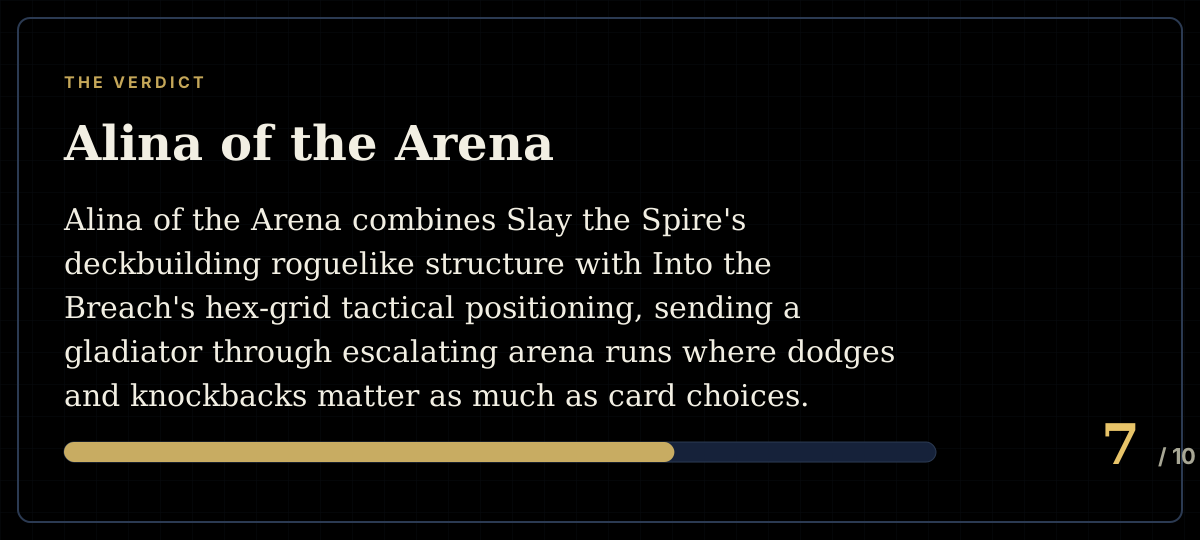
The short versionWanderer Editorial