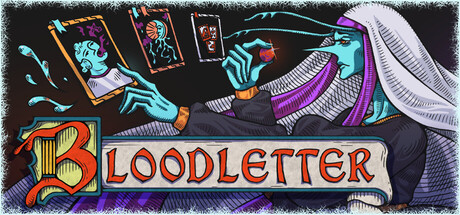
Game review
BLOODLETTER
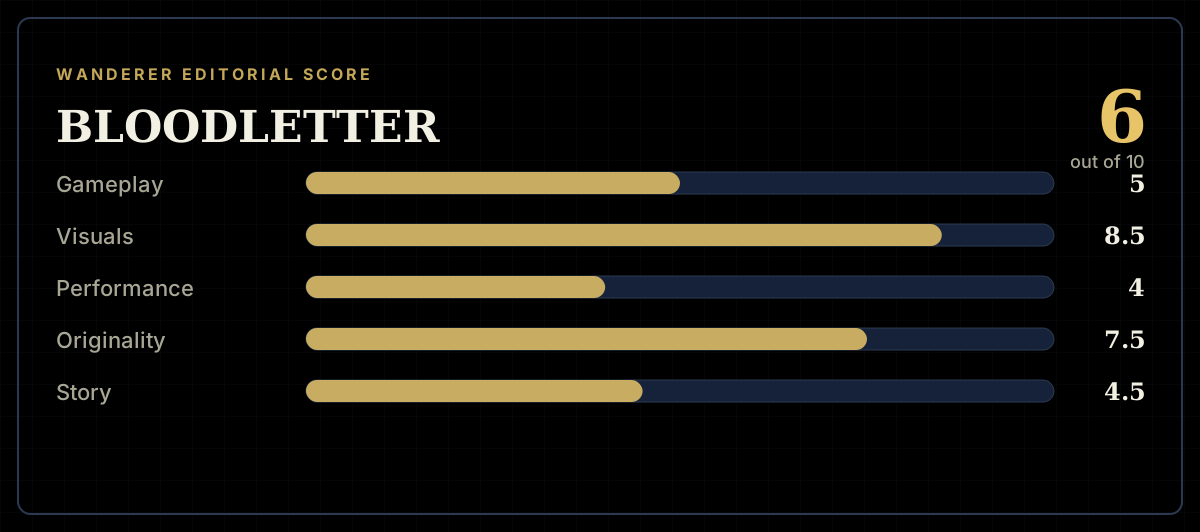
6 / 10
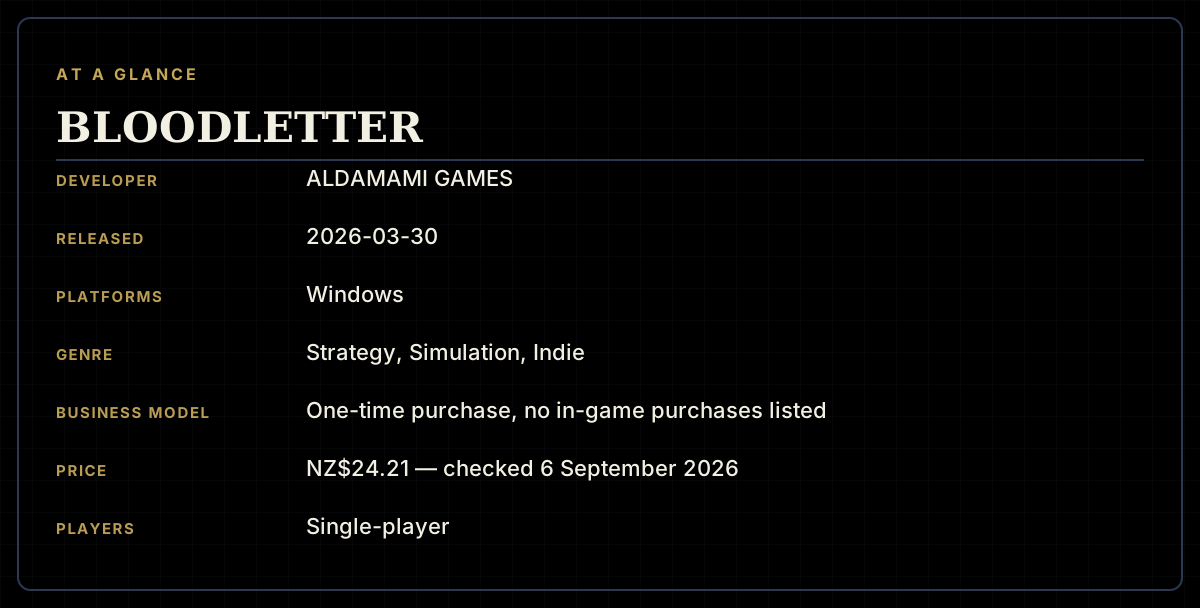
- Developer
- ALDAMAMI GAMES
- Publisher
- ALDAMAMI GAMES, Gamersky Games
- Released
- 30 March 2026
- Platforms
- Windows
- Genre
- Strategy, Simulation, Indie
- Monetisation
- One-time purchase, no in-game purchases listed
- Players
- Single-player
The short version
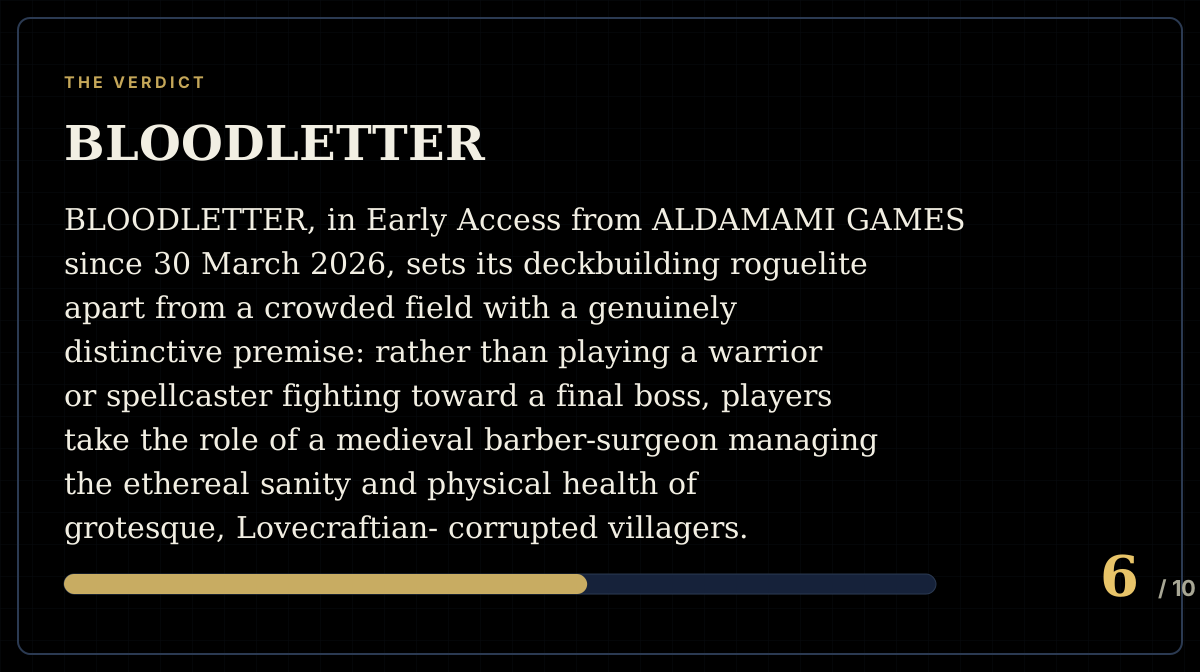
BLOODLETTER, in Early Access from ALDAMAMI GAMES since 30 March 2026, sets its deckbuilding roguelite apart from a crowded field with a genuinely distinctive premise: rather than playing a warrior or spellcaster fighting toward a final boss, players take the role of a medieval barber-surgeon managing the ethereal sanity and physical health of grotesque, Lovecraftian- corrupted villagers. It sits Mostly Positive with English-speaking players, 78.4% across a substantial 227-review sample as of this check, and the reception splits along a consistent, cross-camp line rather than a simple quality gradient. Art direction draws near-universal, specific praise, with reviewers repeatedly comparing it to Inscryption, Slay the Spire and Darkest Dungeon. Set against that, a genuine consensus spanning both fans and critics reports that runs feel repetitive and lack meaningful build diversity between attempts, that the game's writing is convoluted to the point of being difficult to follow, and that villagers lack enough individual identity to make their fates feel emotionally weighty despite the premise's clear intent. Separately, multiple reviewers report real stability problems, including soft-locks requiring a forced restart.
Biggest strengths
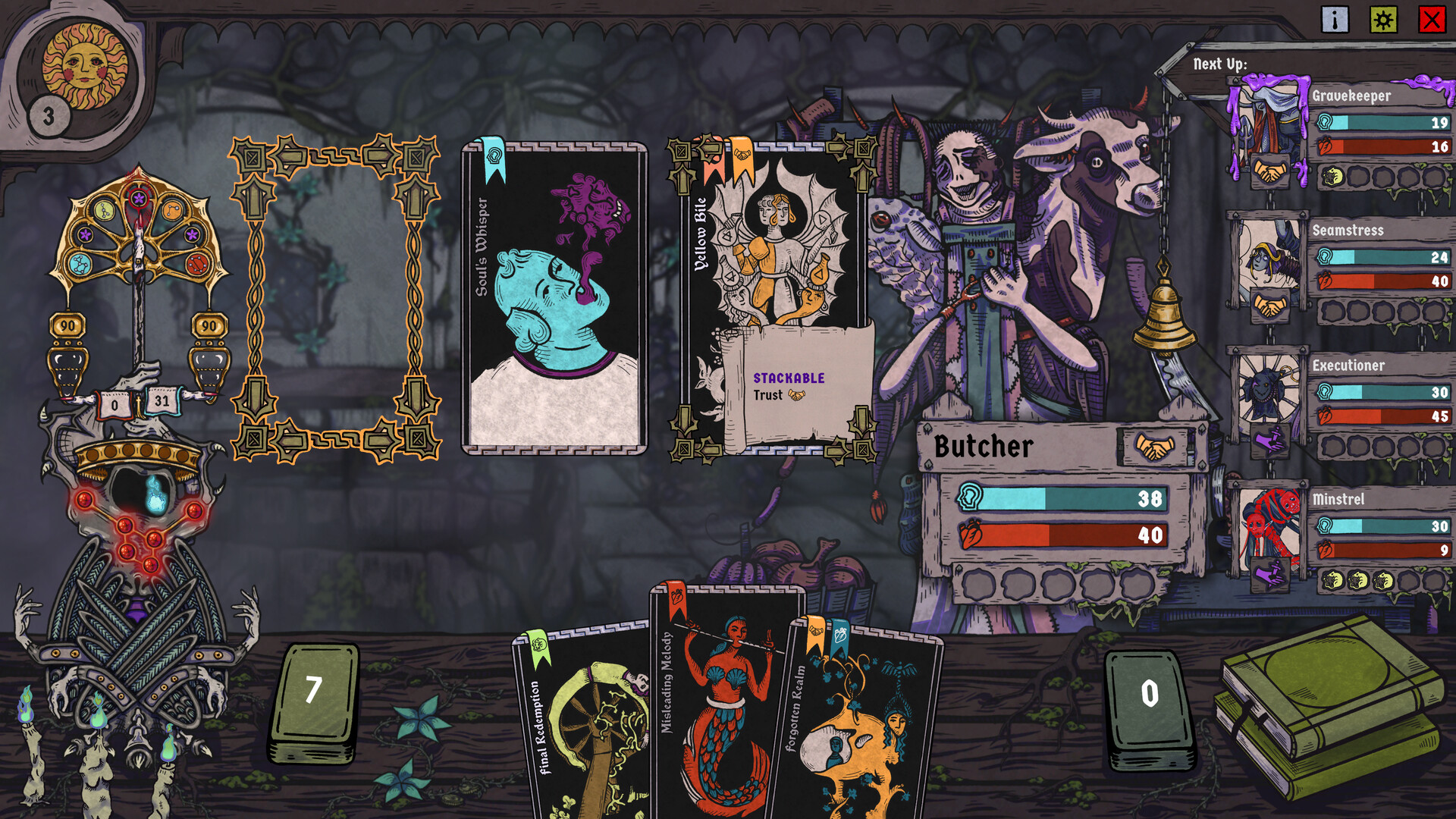
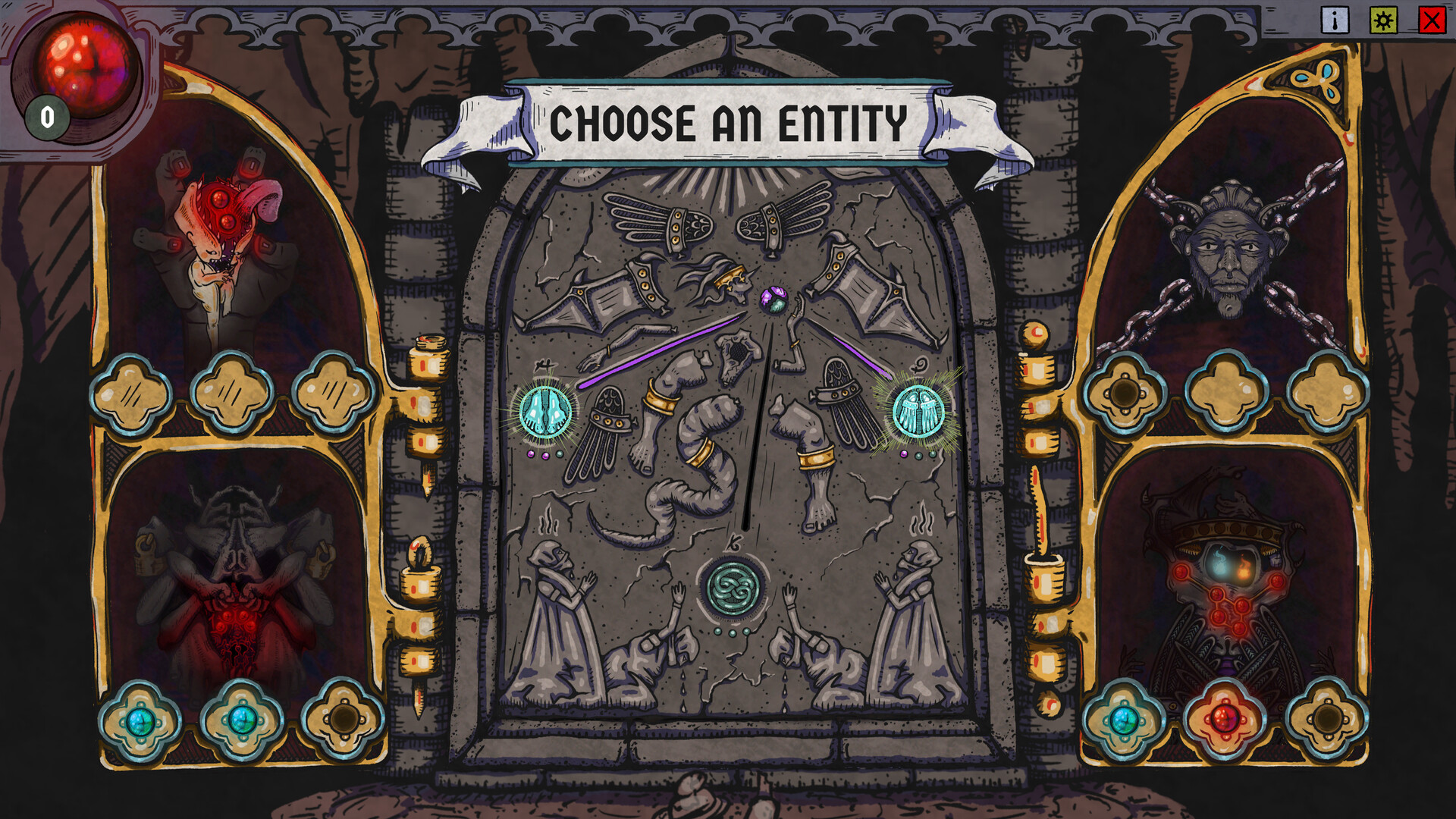
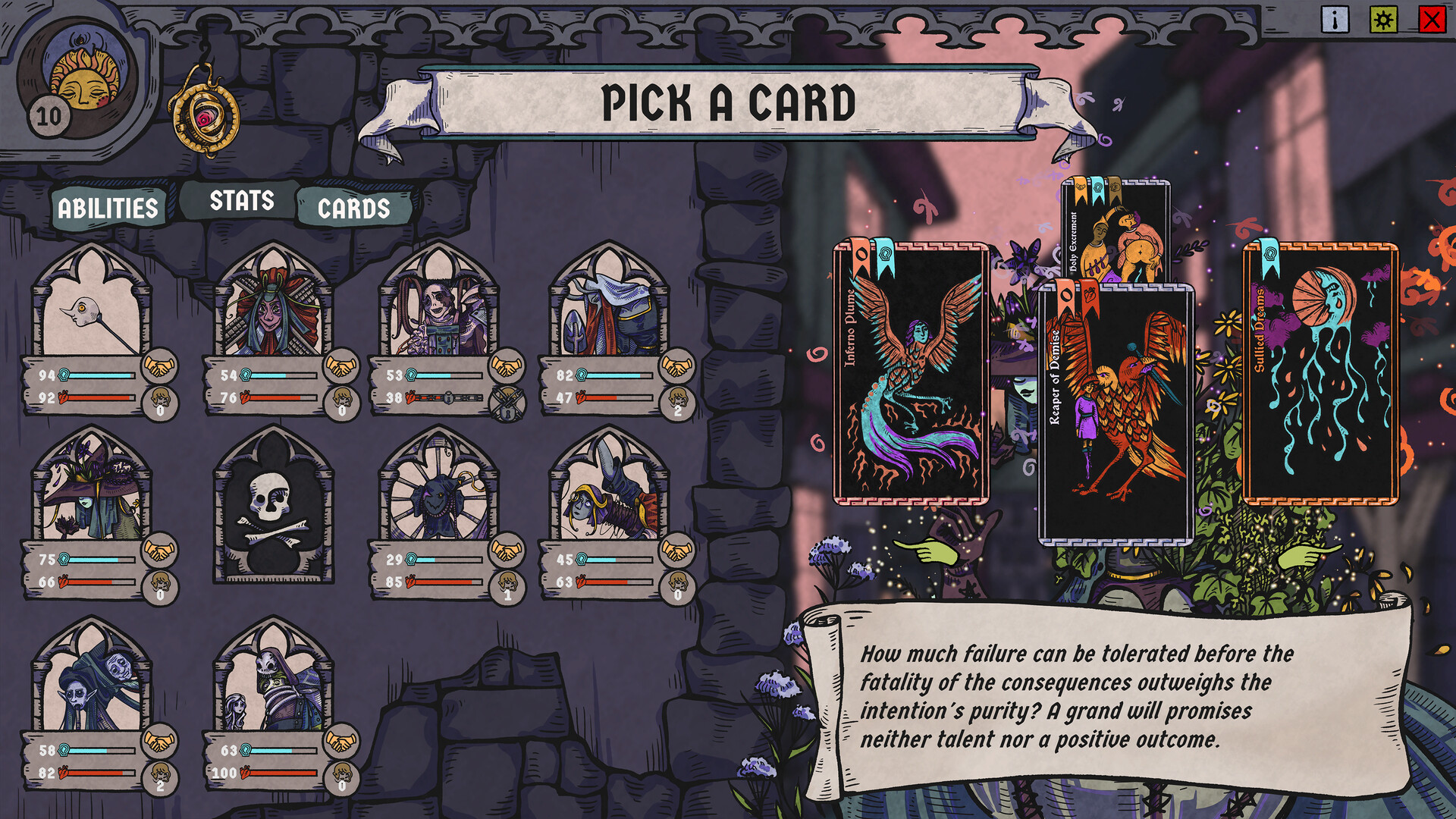
- Art direction draws exceptionally strong, specific and consistent praise across the review sample, with reviewers independently comparing it to Inscryption, Slay the Spire and Darkest Dungeon, and specifically highlighting card illustrations styled after medieval medical diagrams
- The core premise — a barber-surgeon protecting corrupted villagers rather than a conventional hero fighting toward a final boss — draws repeated, specific praise for breaking away from genre conventions many reviewers say have become formulaic
- Several detailed reviewers describe a genuinely satisfying core loop of balancing villagers' physical and ethereal health that kept them engaged for tens of hours, with at least one completing every currently available demon and difficulty tier
Biggest weaknesses
- A consistent complaint spans both fans and critics: runs are reported as repetitive and "same-y," with limited build diversity between attempts and few genuinely different strategic paths to pursue, several reviewers saying they'd seen everything the game currently offers within an hour or two
- Multiple reviewers, independently and on both sides of the recommendation split, describe the game's writing as convoluted to the point of being difficult to follow, with more than one stating this isn't a matter of vocabulary but of genuinely unclear prose
- Villagers are reported by several reviewers as lacking names, backstories or individual identity, which undercuts the emotional stakes the "protect, don't kill" premise is clearly built to deliver
Who it's for: Fans of atmospheric, art-forward roguelike deckbuilders who want a genuinely different premise from genre staples, and who can tolerate real Early Access repetitiveness and stability issues while the systems mature.
Our recommendation: Worth its price for the art and concept alone if you're a genre enthusiast prepared for real Early Access rough edges; wait for further patches if build variety and narrative clarity matter as much to you as atmosphere.
6 / 10
Introduction
BLOODLETTER, in Early Access from ALDAMAMI GAMES since 30 March 2026, sets out to do something genuinely different within an increasingly crowded genre: instead of playing a warrior or spellcaster fighting toward a climactic boss, players take the role of a medieval barber-surgeon tasked with protecting grotesque, Lovecraftian-corrupted villagers from an ancient evil, balancing their physical health against their fraying sanity. It sits Mostly Positive with English-speaking players — 78.4% across a substantial 227-review sample — and reading through a wide slice of that sample reveals something more specific and useful than a simple split: reviewers on both sides of the recommendation line converge on the same handful of strengths and the same handful of weaknesses, which makes this a game whose actual shape is unusually easy to describe with confidence.
Art and premise that reviewers keep comparing to genre landmarks
The praise here is exceptionally consistent and specific. Reviewers across the sample independently compare BLOODLETTER's presentation to Inscryption, Slay the Spire and Darkest Dungeon — genuinely high company for a deckbuilder to be mentioned alongside — and repeatedly single out card illustrations styled after medieval medical diagrams as a standout detail. Beyond the art, the premise itself draws specific credit for breaking from genre convention: rather than a conventional hero-versus-boss structure, the game asks players to think like a caretaker managing outbreaks of supernatural corruption, and multiple reviewers explicitly say this avoids what one calls "the trap of mindlessly imitating Slay the Spire" that much of the genre has fallen into.
A repetition problem reviewers agree on regardless of recommendation
The single most consistent complaint in this review's research appears on both sides of the recommendation split rather than only among critics. Multiple reviewers, including several who ultimately recommend the game, describe runs as repetitive and "same-y," with limited build diversity between attempts — one detailed positive review explicitly concedes "there are fair criticisms that the gameplay is not incredibly diverse from one run to another" even while still enjoying the game overall. Others are more blunt: one reviewer reports having effectively seen everything the game currently offers within about an hour, describing the moment-to-moment decisions as boiling down to raising or lowering a small number of status bars without much combinatorial depth to explore between them. When reviewers who like the game and reviewers who don't reach the identical specific conclusion independently, that's a strong signal about where the current build's content genuinely runs thin, regardless of how atmospheric the wrapper around it is.
Writing reviewers on both sides call convoluted
A second cross-camp complaint concerns the game's prose rather than its systems. Multiple reviewers, again independently and on both sides of the recommendation split, describe the writing as convoluted to the point of being difficult to follow — one positive reviewer states plainly that this isn't a vocabulary issue on their end, arguing the prose itself is structured in a way that makes it come across as nonsensical rather than atmospheric. Related to this, several reviewers note that villagers lack names, backstories or any individual identity, which undercuts the emotional weight the "protect, don't kill" premise clearly wants to carry — it's hard to feel the stakes of failing to save someone the game hasn't given you any reason to care about specifically.
Real stability problems on top of the above
Separate from design and writing concerns, this review found credible, specific reports of technical instability. Multiple reviewers report soft-locks requiring the game to be force-closed and restarted, with one detailed review reporting this happening five or more times across their playtime and explicitly withholding a recommendation until it's addressed. A separate detailed review, from a player who completed every currently available demon and difficulty tier, flags specific issues with townsfolk status mechanics as an ongoing detriment to overall enjoyment even after extensive play — a useful signal that some of the balance concerns here aren't limited to a player's first few hours.
More colony management than typical card combat
One recurring observation is worth reporting on its own terms because it reframes how the game should be evaluated against genre expectations. Multiple reviewers describe BLOODLETTER as playing less like a typical Slay the Spire-style combat deckbuilder and more like a colony or resource management sim expressed through cards — one reviewer explicitly frames it as closer to "a survival game with something of resource management" than a conventional card battler. That framing helps explain the repetition complaints above: reviewers expecting escalating tactical card combat may be disappointed by a loop built more around sustained villager upkeep, while reviewers who go in understanding the game as a management sim first and a card game second report a better match between expectation and experience.
Enjoying the atmosphere despite acknowledging the flaws
Several reviewers land in a specific, honest middle position worth naming directly: they recommend the game — or at least don't actively discourage buying it — purely on the strength of its tone and presentation, while stating plainly they don't expect to return to it. One reviewer with two hours logged puts this precisely, saying the flavour alone earned a thumbs up despite finding little reason to launch the game again. That's a meaningfully different endorsement than enthusiastic long-term engagement, and worth understanding as its own category of response distinct from both the game's detractors and its most invested fans.
Final Verdict
BLOODLETTER has real, unusual strengths that this review's research bears out clearly: art direction reviewers are comfortable comparing to some of the genre's most respected names, and a premise distinctive enough to stand out in a field increasingly defined by Slay the Spire clones. What keeps this score from climbing further is that its most consistent complaints come from both its fans and its critics simultaneously — repetitive, low-variety runs, writing multiple reviewers independently call hard to follow, and real stability bugs including reported soft-locks. This is Early Access, and every one of those problems is the kind further development can plausibly fix, but as it stands today, this is a genuinely striking-looking game whose systems haven't yet caught up to its atmosphere.
Pros and cons
Pros
- Art direction draws exceptionally strong, specific and consistent praise across the review sample, with reviewers independently comparing it to Inscryption, Slay the Spire and Darkest Dungeon, and specifically highlighting card illustrations styled after medieval medical diagrams
- The core premise — a barber-surgeon protecting corrupted villagers rather than a conventional hero fighting toward a final boss — draws repeated, specific praise for breaking away from genre conventions many reviewers say have become formulaic
- Several detailed reviewers describe a genuinely satisfying core loop of balancing villagers' physical and ethereal health that kept them engaged for tens of hours, with at least one completing every currently available demon and difficulty tier
- The developer is credited by long-time followers with visible, ongoing development since early public demos, and reviewers express genuine anticipation for how the Early Access period will expand the game's current systems
Cons
- A consistent complaint spans both fans and critics: runs are reported as repetitive and "same-y," with limited build diversity between attempts and few genuinely different strategic paths to pursue, several reviewers saying they'd seen everything the game currently offers within an hour or two
- Multiple reviewers, independently and on both sides of the recommendation split, describe the game's writing as convoluted to the point of being difficult to follow, with more than one stating this isn't a matter of vocabulary but of genuinely unclear prose
- Villagers are reported by several reviewers as lacking names, backstories or individual identity, which undercuts the emotional stakes the "protect, don't kill" premise is clearly built to deliver
- Multiple reviewers report real stability problems, including soft-locks that require force- closing and restarting the game, with at least one saying they'd hit this specific issue five or more times
- The in-game music is described by at least one detailed reviewer as monotonous, and visual feedback for character or villager progress is described as present but not substantial enough to feel meaningfully rewarding
- One detailed, heavily-invested reviewer who completed all currently available content specifically flags townsfolk status mechanics as needing rebalancing to improve overall enjoyment
Screenshots
-
BLOODLETTERImage: ALDAMAMI GAMES via Steam -
BLOODLETTERImage: ALDAMAMI GAMES via Steam -
BLOODLETTERImage: ALDAMAMI GAMES via Steam -
How the review scores each part of the gameWanderer Editorial -
The essentials at a glanceWanderer Editorial -
The short versionWanderer Editorial