Game review
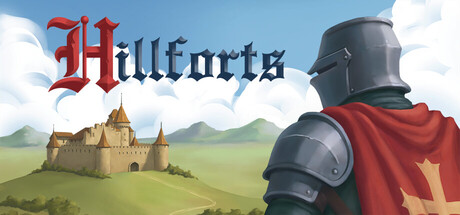
Hillforts
7 / 10
- Developer
- Five Head Games
- Publisher
- Five Head Games
- Released
- 22 July 2026
- Platforms
- Windows
- Genre
- Strategy, Indie
- Monetisation
- One-time purchase, no in-game purchases listed
- Players
- Single-player
The short version
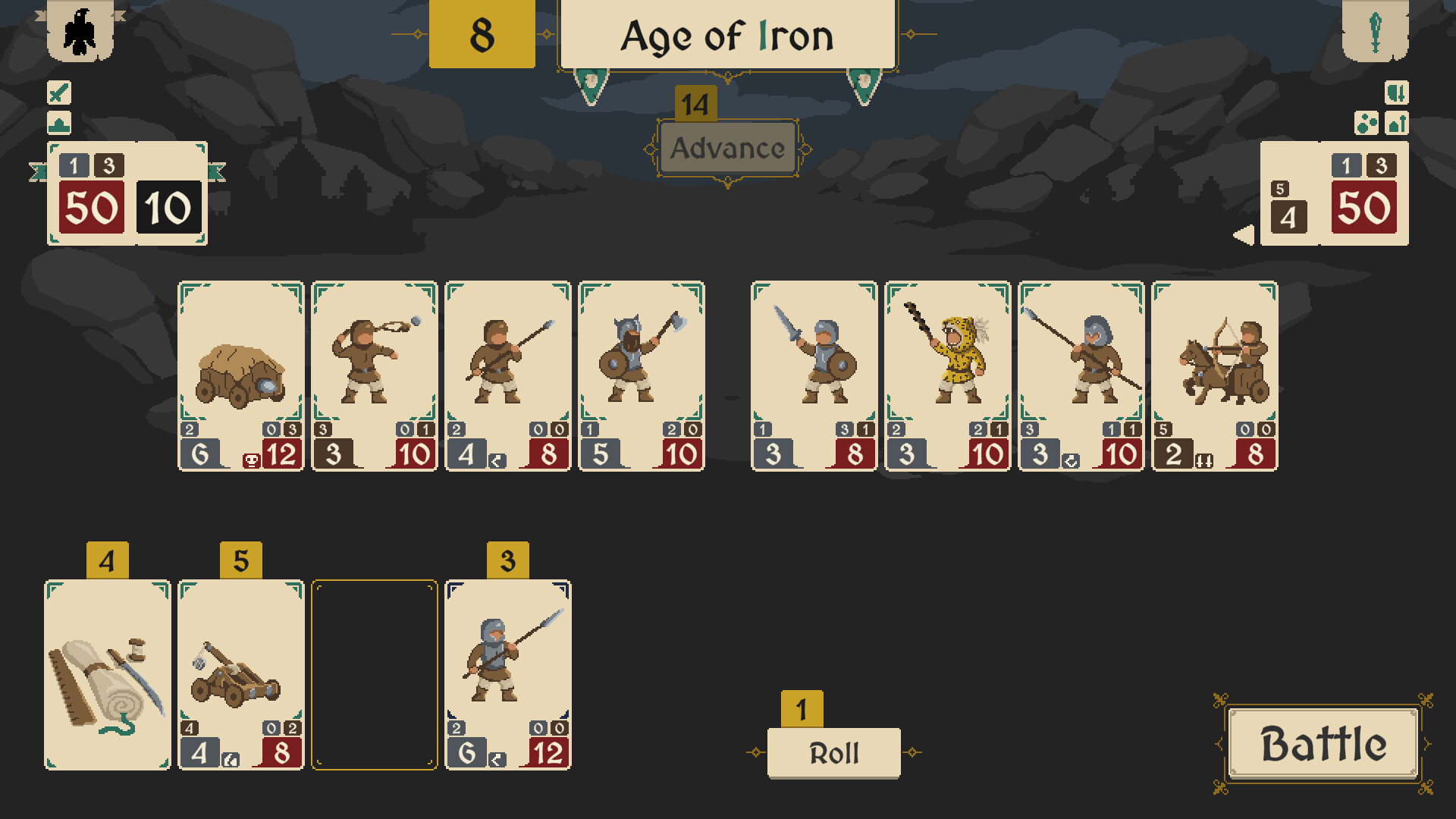
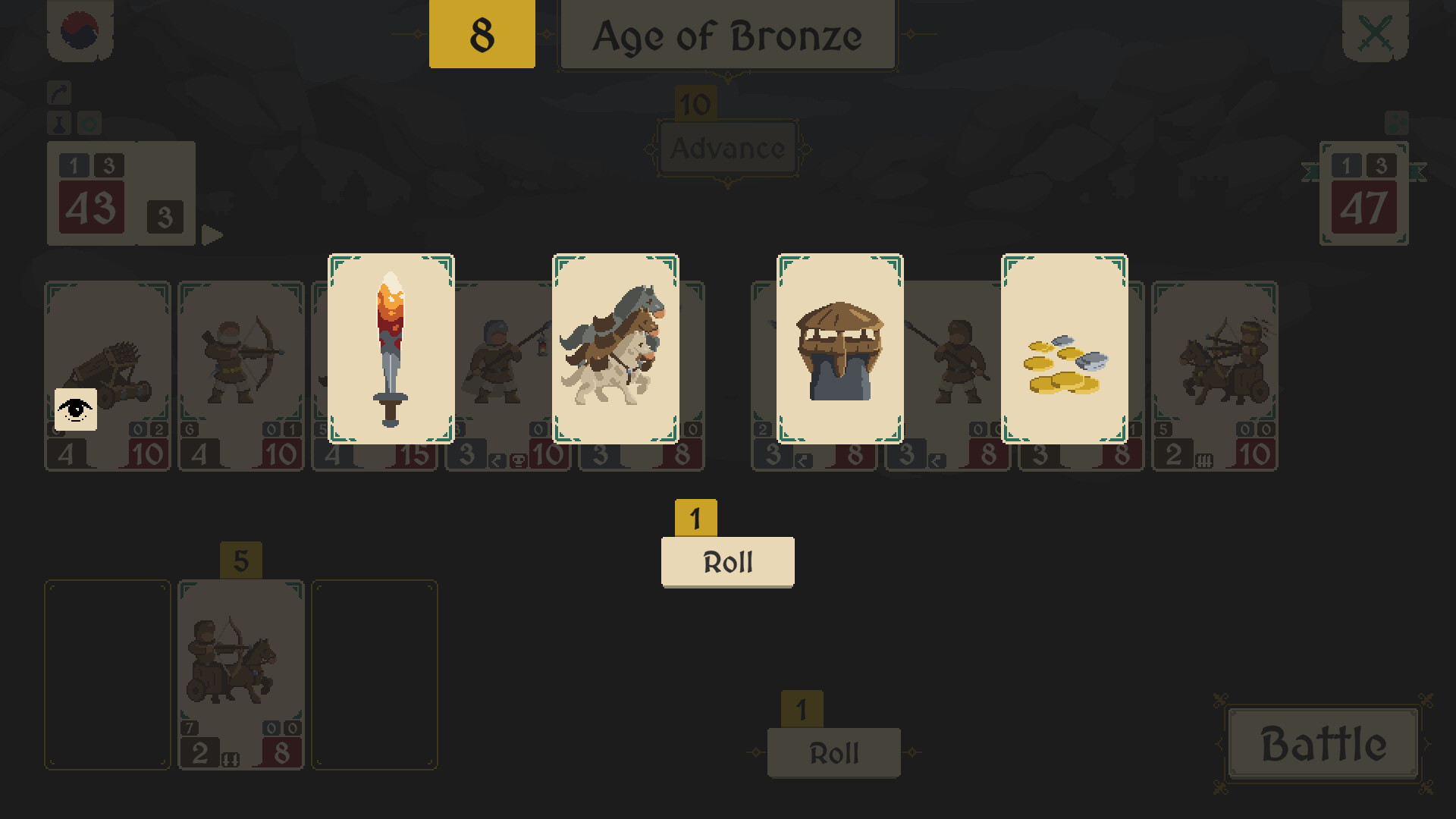
Hillforts, released 22 July 2026 by Five Head Games, is a medieval card-based autobattler: build an army from drafted cards, research technologies, and siege the enemy castle across short, replayable matches. It sits Positive with English-speaking players, 86.5% across 37 reviews as of this check, with much of that goodwill carried over directly from a well-liked pre-release demo — many reviewers logged dozens of hours in the demo before buying, and most say the full release lived up to that experience. Set against that continuity is a detailed, specifically argued dispute between reviewers with real genre experience: one, citing thousands of hours across other autobattlers, argues the new civilization bonuses added for the full release broke the demo's more careful balance by making strong bonus combinations overwhelmingly better than adapting to a match as it unfolds; a separate reviewer, quoting nearly the same civilization examples, argues those bonuses are exactly what gives the game real build variety. This review reports that dispute as genuinely open rather than resolving it. Separately, this review found a real, if minor, launch-day bug affecting profile-reset buttons, and a specific technical detail: standard Unity telemetry files are present in the save directory with no in-game opt-out, though they can be edited manually.
Biggest strengths
- The core loop of drafting cards, building an army and sieging enemy castles across short matches draws consistent praise for being easy to learn and difficult to put down, with several reviewers describing quick, replayable sessions that don't feel devastating to lose
- Many reviewers who logged significant hours in the free demo report the full release living up to or exceeding that experience, with new civilizations, technologies and a "Conquest" mode adding onto rather than replacing what they already liked
- Art direction and music draw specific, consistent praise for being clean, fitting the genre, and staying enjoyable without becoming repetitive
Biggest weaknesses
- One detailed review, from a reviewer citing extensive autobattler experience, argues the civilization bonuses added for the full release undermine the demo's more careful balance by making certain strong bonus combinations dominant enough to remove meaningful counterplay; a separate reviewer explicitly disputes this, citing nearly identical examples as evidence the bonuses instead add real strategic variety — this review reports both positions as genuinely contested rather than picking a side
- That same detailed review reports that a comparison of the game's content compendium between demo and full release shows only roughly 10–20% new material, despite the demo already containing an estimated 80–90% of the full game's units and technologies
- Profile reset and unlock-all buttons reportedly did not function correctly for at least one player at launch, requiring a longer wait than expected before registering a click
Who it's for: Autobattler and roguelite deckbuilder fans who want short, replayable matches with a historical theme, especially those who enjoyed the free demo already.
Our recommendation: Worth its price for a well-executed, replayable autobattler if you go in without expecting deep long-term content; genre veterans who specifically valued the demo's balance should read the specific civilization-bonus dispute above before assuming the full release plays the same way.
7 / 10
Introduction
Hillforts, released 22 July 2026 by Five Head Games, sets a card-based autobattler in a medieval setting: draft cards to build an army, research supporting technologies, and lay siege to an enemy castle across matches designed to be short and replayable rather than long campaigns. It sits Positive with English-speaking players — 86.5% across 37 reviews — and much of that goodwill traces directly back to a well-regarded pre-release demo, with several reviewers reporting dozens of hours spent there before ever buying the full game. Reading through the sample turns up something more specific and interesting than simple continuity, though: a genuine, detailed disagreement between reviewers with real stakes in the genre about whether the changes made for the full release improved or damaged what the demo had already gotten right.
A demo's goodwill mostly carrying forward
The dominant pattern among positive reviews is continuity. Multiple reviewers who spent significant time with the free demo — one citing roughly ninety hours — report the full release delivering on or exceeding that experience, crediting new civilizations, technologies and a "Conquest" mode for building meaningfully on the original concept rather than replacing it. Art direction and music draw specific, repeated praise for staying clean and enjoyable without becoming repetitive, and the short, quick-paced match structure is repeatedly cited as a genuine strength — losing a run doesn't feel devastating when the next one is minutes away. Steam Deck performance comes up unprompted more than once, with reviewers specifically valuing low power draw for travel sessions.
A detailed, unresolved dispute about civilization balance
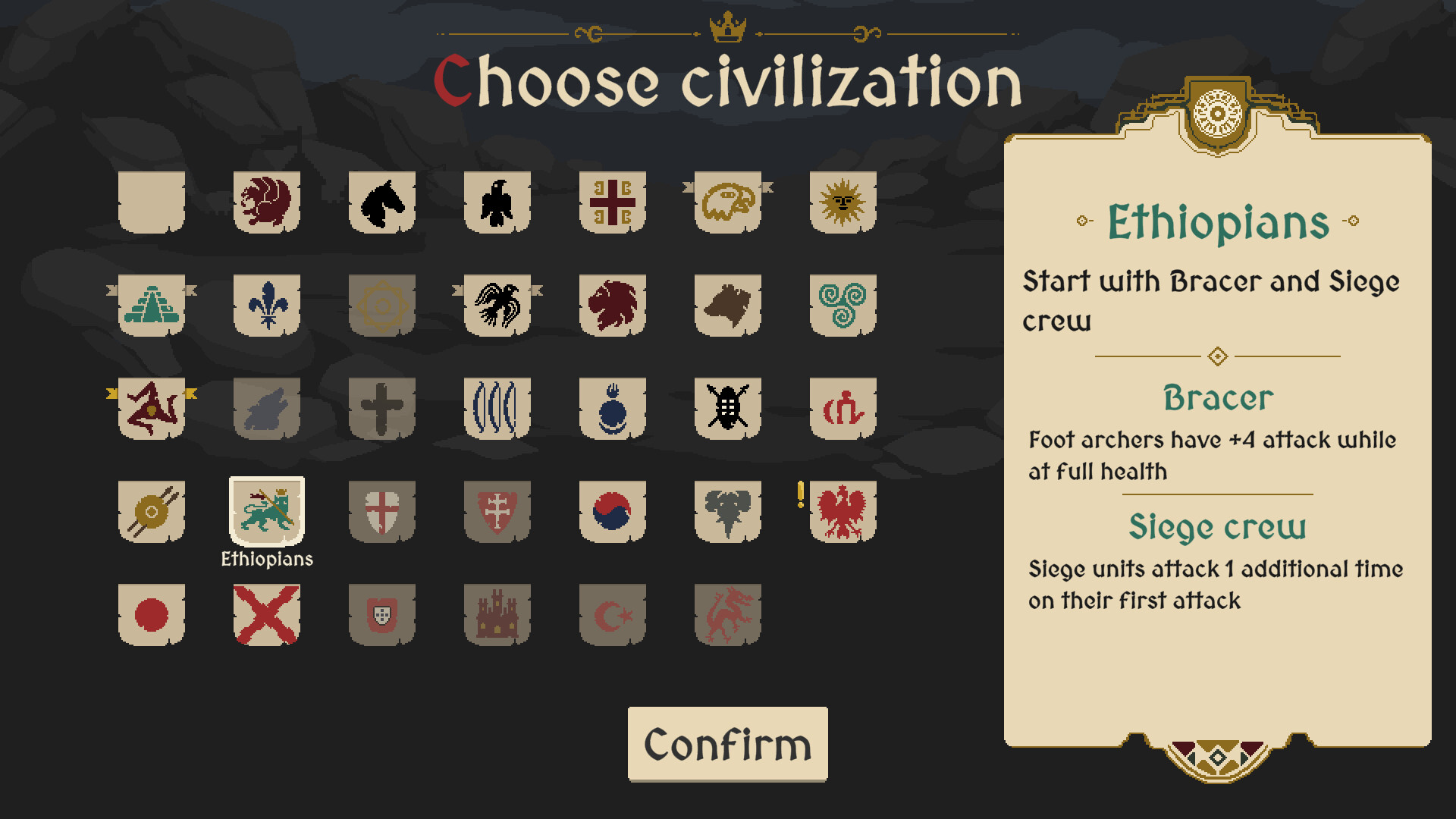
The most substantive material in this review's research is a direct disagreement between two reviewers, both citing real experience with the genre, over the same specific game feature. One detailed review — from a reviewer describing thousands of hours across other autobattler games — argues that new, strong civilization bonuses introduced for the full release broke the demo's more careful balance: bonuses like a siege-focused nation making an aggressive siege-heavy opening overwhelmingly strong, in that reviewer's view, remove the natural counterplay that made the demo feel adaptable and instead reward whoever best exploits their assigned civilization's bonus. A separate, positive review directly and explicitly rebuts this, citing nearly the same civilization examples as evidence that the bonuses instead deliver exactly the kind of build variety a good autobattler should have. Both reviewers are describing the identical mechanic; they simply reach opposite conclusions about whether it's good design. This review has not played enough matches across enough civilizations to adjudicate that dispute independently and reports it here as genuinely open, but flags it clearly for readers who specifically valued the demo's balance and are deciding whether the full release still delivers that.
A launch bug, and how much is actually new
Beyond the balance dispute, that same detailed review raises two more concrete points. It reports that profile reset and unlock-all buttons did not register clicks promptly at launch, an issue the developer is reported to have addressed in a public reply. It also compares the game's content compendium between demo and full release, estimating that only roughly 10 to 20% of units and technologies are genuinely new, given that the demo already contained an estimated 80 to 90% of the full game's content — a specific, checkable claim rather than a vague impression, though this review has not independently verified that percentage. Separately, even satisfied reviewers describe the overall game as short, with one saying it can be fully "finished" within a few hours of dedicated play, and several requesting expanded late-game modes and more starting-difficulty options for repeat playthroughs.
A small, specific privacy detail
One further technical point is worth reporting plainly rather than folding into general complaints: standard Unity engine telemetry files are present in the game's save directory with their default settings enabled, and there is no in-game option to disable this. The same detailed reviewer who identified this notes the files can be edited manually to opt out, but that requires a player to know to look for them — it isn't surfaced as a setting within the game itself.
Randomness that frustrates before it clicks
A smaller, more specific thread concerns the game's combat randomness rather than its civilization bonuses. One reviewer describes an early stretch where consistent improvement felt impossible, attributing the frustration to random targeting among units in combat, before the underlying logic eventually "clicked" and the experience became substantially more enjoyable. That's a meaningfully different complaint from the balance dispute above — it's about combat legibility during the learning curve rather than civilization design — and it's worth flagging on its own, since a player bouncing off in the first hour or two for this specific reason might be missing a game that becomes considerably more satisfying once its systems are better understood. Separately, and less charitably, two other reviewers independently describe the game's randomness as excessive even after significant playtime, with one comparing it unfavourably to Mordheim and another calling the experience after launch "about as fun as solitaire" — a reminder that not every player who bounces off the game's RNG does so purely from an unfamiliarity that later resolves.
Final Verdict
Hillforts succeeds at the thing its demo already proved it could do: a tight, replayable autobattler loop with clean presentation and matches short enough to make losing feel low-stakes rather than punishing. What keeps this from a more confident score is a genuinely unresolved question at the heart of its design — whether the civilization bonuses added for the full release are the source of real strategic variety or the thing that broke a more careful balance the demo had already found — argued in detail and good faith on both sides by reviewers with real genre experience. Add a minor launch bug, a real question about how much content is actually new, and an undisclosed telemetry detail, and this reads as a well-executed, worthwhile purchase for genre fans rather than an easy, unqualified recommendation.
Pros and cons
Pros
- The core loop of drafting cards, building an army and sieging enemy castles across short matches draws consistent praise for being easy to learn and difficult to put down, with several reviewers describing quick, replayable sessions that don't feel devastating to lose
- Many reviewers who logged significant hours in the free demo report the full release living up to or exceeding that experience, with new civilizations, technologies and a "Conquest" mode adding onto rather than replacing what they already liked
- Art direction and music draw specific, consistent praise for being clean, fitting the genre, and staying enjoyable without becoming repetitive
- The developer is credited by at least one reviewer with shipping balance changes and a new mechanic within days of release, and Steam Deck performance draws repeated praise for low power draw during travel play
Cons
- One detailed review, from a reviewer citing extensive autobattler experience, argues the civilization bonuses added for the full release undermine the demo's more careful balance by making certain strong bonus combinations dominant enough to remove meaningful counterplay; a separate reviewer explicitly disputes this, citing nearly identical examples as evidence the bonuses instead add real strategic variety — this review reports both positions as genuinely contested rather than picking a side
- That same detailed review reports that a comparison of the game's content compendium between demo and full release shows only roughly 10–20% new material, despite the demo already containing an estimated 80–90% of the full game's units and technologies
- Profile reset and unlock-all buttons reportedly did not function correctly for at least one player at launch, requiring a longer wait than expected before registering a click
- Even reviewers who recommend the game describe it as short overall, with one specifically noting it can be "finished" in a few hours of dedicated play, and several requesting more long-term content and expanded post-game modes
- Standard Unity engine telemetry files are present in the save directory with the usual telemetry settings enabled and no in-game option to opt out, though one detailed reviewer notes the files can be edited manually to disable this
Screenshots
-
HillfortsImage: Five Head Games via Steam -
HillfortsImage: Five Head Games via Steam -
HillfortsImage: Five Head Games via Steam -
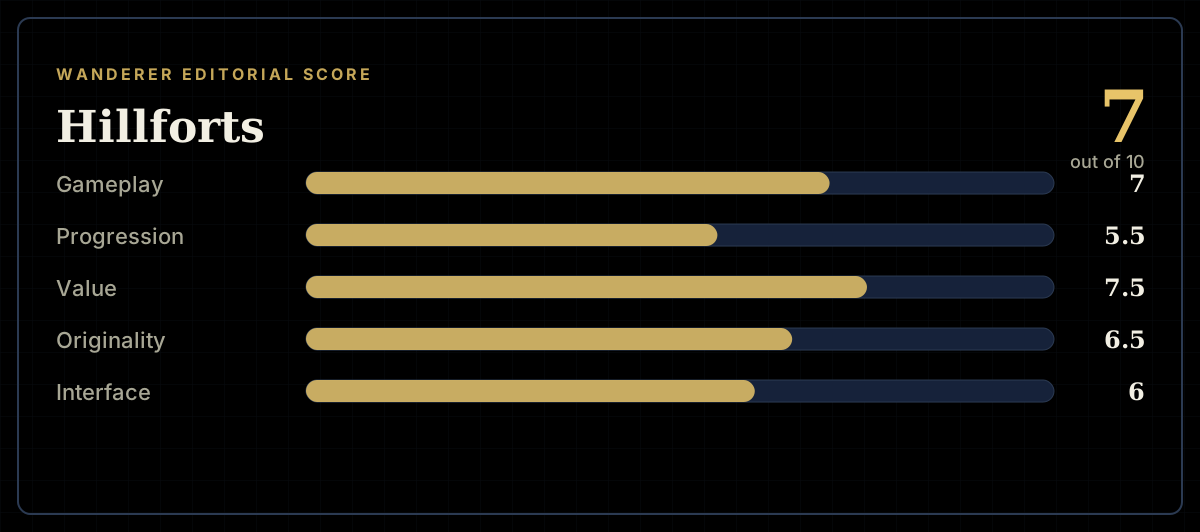
How the review scores each part of the gameWanderer Editorial -
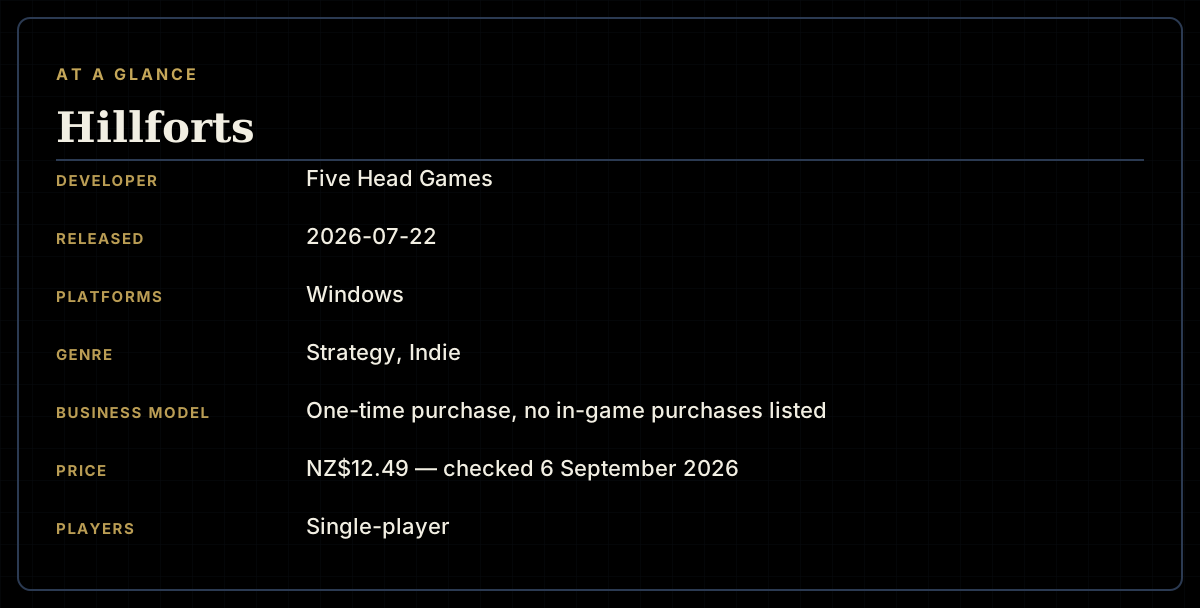
The essentials at a glanceWanderer Editorial -
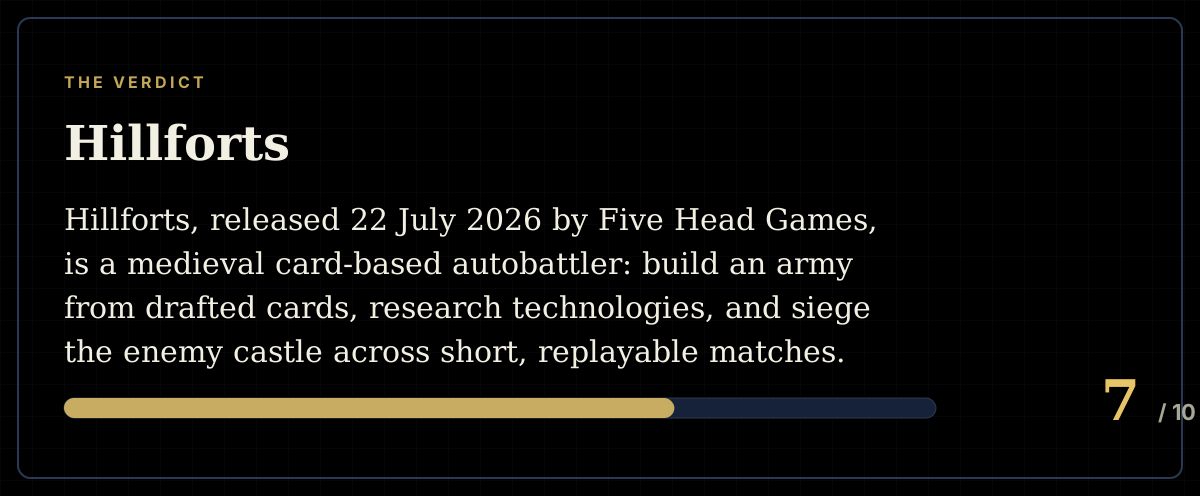
The short versionWanderer Editorial