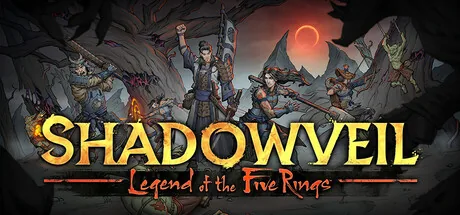
Game review
Shadowveil: Legend of The Five Rings
5.5 / 10
- Developer
- Palindrome Interactive
- Publisher
- Palindrome Interactive, Amplifier Studios, THQ Nordic
- Released
- 4 March 2025
- Platforms
- Windows
- Genre
- Roguelite Tactics RPG
- Monetisation
- One-time purchase, cosmetic/bonus content DLC available separately
- Players
- Single-player only
The short version
Shadowveil: Legend of The Five Rings is a roguelite tactics-autobattler hybrid from Palindrome Interactive, published by THQ Nordic, that sends players into the card-game and tabletop universe of Legend of the Five Rings to train samurai and play the cards dealt each run. Its lifetime Steam score sits at Mostly Positive, roughly 77% across 318 English-language reviews — but that headline number tells only part of the story. This review's read of the 100 most recent English reviews found a much sharper split: only 32 of the last 100 voted the game up, a steep drop from the lifetime rate. The dominant theme in that recent, more negative wave isn't a new complaint about the game's design — it's that the developer appears to have stopped updating it, layered on top of real, longer-standing frustrations with UI friction, meta-progression that can actively work against the player, and combat that some reviewers feel offers too little direct control. What launched with genuine praise for its L5R lore fidelity and tactical depth now reads, in its more recent reviews, as a promising game left in an unfinished state.
Biggest strengths
- The Legend of the Five Rings setting is treated with real fidelity according to reviewers familiar with the source material, praised for lore accuracy and thematic coherence rather than being a loose reskin
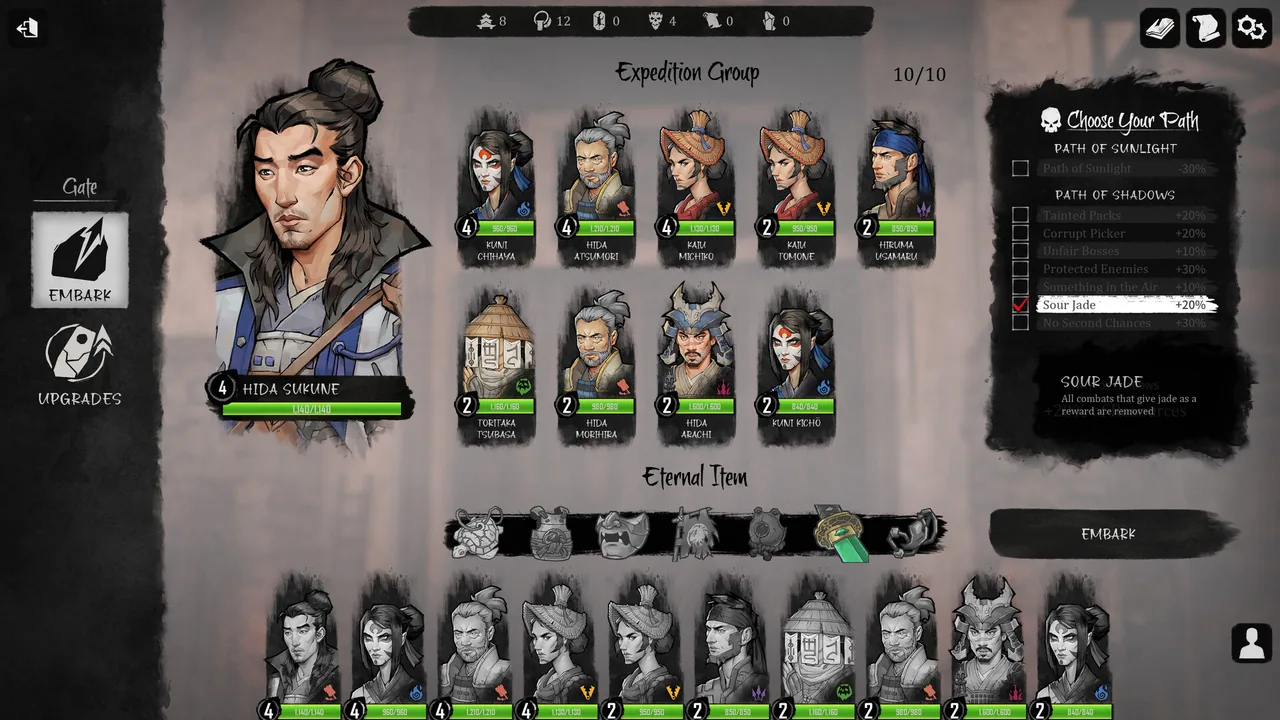
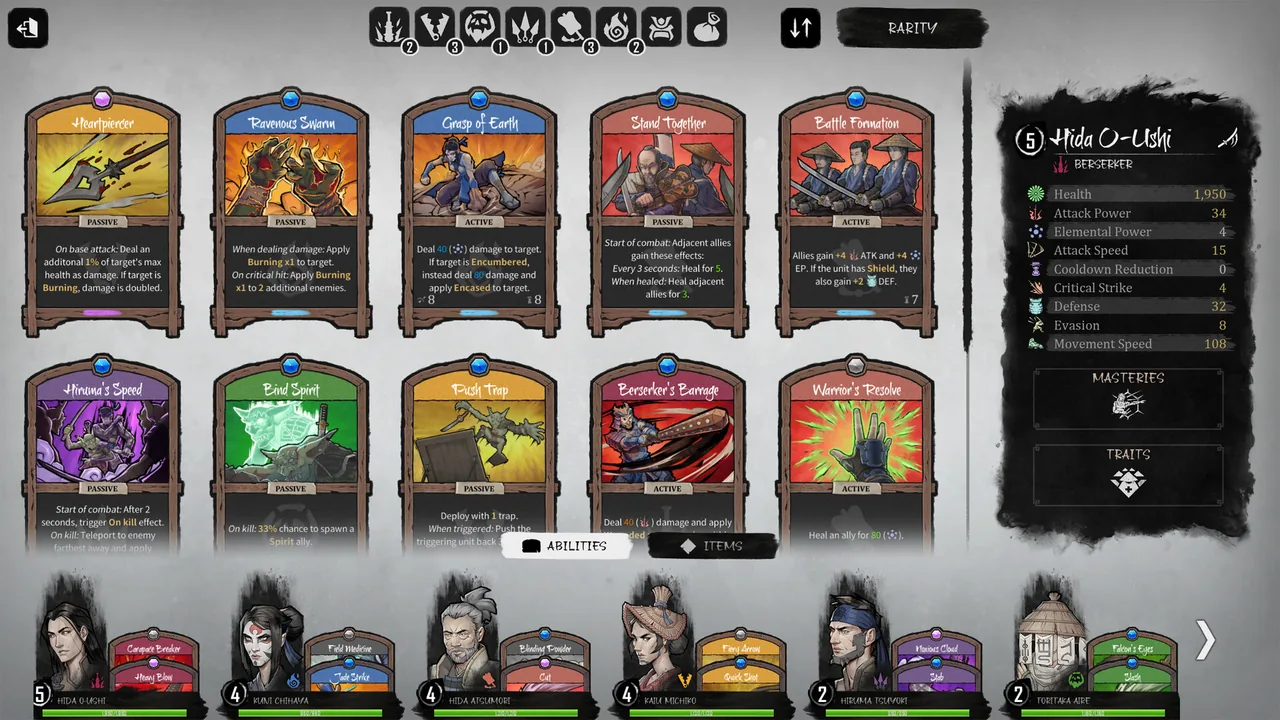
- Deckbuilding and unit customisation across runs offer meaningful build variety that rewards planning, a specific strength distinct from generic roguelite randomness
- Voice acting and narrative framing draw consistent praise across both older and more recent reviews, one of the few elements both waves of the review sample agree on
Biggest weaknesses
- The most frequent and most damaging recent complaint isn't about design — it's that the developer appears to have stopped updating the game, a claim that recurs specifically in this review's most-recent-100 sample rather than the older one
- Meta-progression can actively work against players: reviewers report that some upgrade paths are detrimental rather than helpful, and one reviewer with 667 hours finished the story having barely spent the currency meant to drive that system, having learned to avoid it
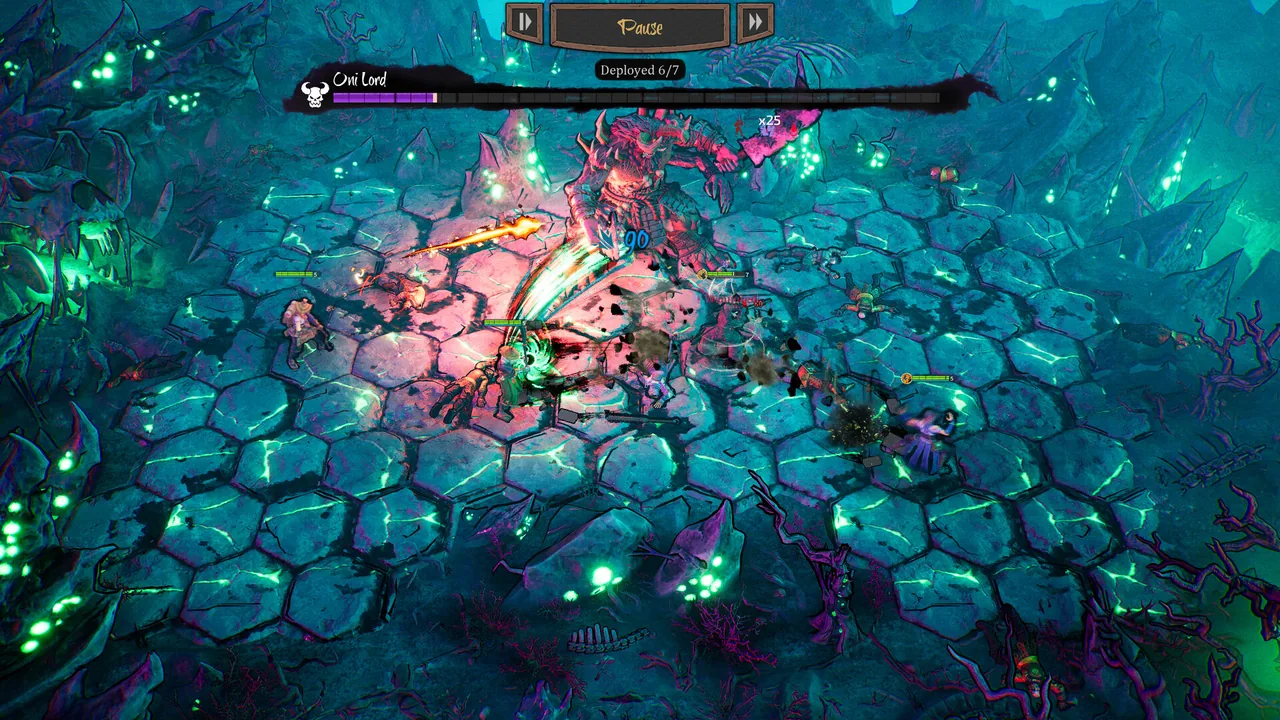
- The autobattler combat layer draws real criticism for limited player agency — no damage meter, poor pathfinding, and combat outcomes that are hard to read or influence in the moment
Who it's for: L5R fans and roguelite-tactics players drawn to the setting and willing to accept the game in whatever state it's currently in, at a steep discount; not recommended for anyone hoping for active ongoing development or support.
Our recommendation: A genuinely interesting hybrid with real lore fidelity and tactical ideas, sold cheap enough to be worth a look — but go in expecting the version that exists today rather than the one its early, more optimistic reviews describe.
5.5 / 10
Introduction
Shadowveil: Legend of The Five Rings takes the tabletop and card-game universe of Legend of the Five Rings and builds a roguelite around it: train unique samurai, embark on missions, and play the cards dealt each run across a hybrid of tactics and autobattler combat. Developed by Palindrome Interactive with Amplifier Studios and published by THQ Nordic, it released 4 March 2025 and now sells for NZ$14.39 at a 60% discount. Its lifetime Steam score is Mostly Positive, roughly 77% across 318 English-language reviews — a genuinely solid number on paper. But a lifetime average over 17 months can hide a real shift in how a game is currently regarded, and that's exactly what this review found here: counting directly through the 100 most recent English-language reviews, only 32 voted the game up. That's a sharp divergence from the lifetime figure, and understanding why requires separating what launched well from what's gone wrong since.
What earned the good lifetime score
Start with what drew genuine praise, because it's real and specific rather than generic. Reviewers familiar with the Legend of the Five Rings tabletop and card-game material credit Shadowveil with real lore fidelity — this isn't a fantasy skin loosely wrapped around generic mechanics, but a treatment reviewers who know the source material recognise and respect. Deckbuilding and unit customisation across runs offer meaningful build variety, the kind that rewards planning rather than just accumulating random power. Voice acting and narrative framing draw consistent praise across both the older and newer parts of this review's sample — one of the few things both waves of reviewers agree on, which says something about the strength of the writing and performance work specifically, independent of how players feel about everything built around it.
The recent collapse, counted directly
Here's the finding this review considers most important, and it's a directly counted fact rather than an impression: of the 100 most recent English-language reviews at time of writing, only 32 voted the game up. Against a lifetime rate near 77%, that is not noise — it's evidence of a real, substantial shift in how the game is currently being received relative to how it was received at launch and in the months after. And the dominant theme running through that more negative recent wave is specific and damning in a way pure design complaints usually aren't: reviewers report the developer appears to have stopped updating the game and responding to community questions. One recent review put it bluntly: "Dead game — Developer is not doing updates." That's a different kind of complaint than "the combat is too passive" or "the UI is clunky" — those are opinions about design choices a developer could still address. A perception of abandonment is a claim about whether anyone is going to address anything at all, and it reframes every other complaint in the sample from "rough edges in an evolving game" to "known issues in a game nobody is fixing."
The design complaints that were already there
It's worth being clear that the recent wave of negativity isn't purely about abandonment — it's compounding real, longer-standing design frustrations that show up throughout the full negative sample, not just the recent one. Meta-progression is a recurring sore point: one reviewer with 667 hours logged reported finishing the entire story having barely spent the currency meant to drive character upgrades, specifically because many of the available upgrades turned out to be detrimental rather than helpful once tried — a design failure that actively punishes engagement with a system the game presents as core progression. Combat transparency draws its own specific complaint: one reviewer with 121 hours described having "basically zero insight into how the fight went... no damage meter of any kind," a concrete UI gap rather than a vague balance complaint. And the campaign's structure — replaying chapter 1, then chapters 1 through 2, then 1 through 3 again as new chapters unlock — produces what one reviewer with a striking 1,867 hours logged called a game where "by the end... you have played the same thing the majority of the time," a padding complaint from someone who clearly invested serious time before reaching that conclusion.
The autobattler layer itself draws a specific structural criticism from reviewers who wanted more tactical control: one player with 4,253 hours logged — an extraordinary investment — described a narrow "solved" team composition (healer, tank, ranged damage) that makes many of the setting's more interesting characters mechanically undesirable, since building around them means passing up abilities and items your optimal team actually needs. That's a specific, experienced-player critique about build diversity not actually paying off in practice, distinct from a newer player's complaint about the game simply being confusing.
Reading the two numbers together
The honest way to hold both figures — 77% lifetime, 32% in the most recent sample — is that Shadowveil launched as a genuinely well-received game with real strengths in its setting, writing and build systems, and that whatever support existed after launch appears to have thinned out to the point where its own more recent players are noticing and saying so directly. The design complaints in the full negative sample (meta-progression punishing engagement, limited combat transparency, repetitive forced replays) were present from early on and were outweighed at the time by what the game got right. What's changed, on the evidence this review found, isn't that the underlying game got worse — it's that a perceived lack of ongoing developer attention has removed the goodwill that was previously carrying it past those flaws for a lot of players.
Final Verdict
Shadowveil: Legend of The Five Rings is a genuinely interesting hybrid — real Legend of the Five Rings lore fidelity, meaningful deckbuilding variety, and narrative writing strong enough to be praised in reviews from both its early optimistic period and its more recent, harsher one. But this review's direct count of the 100 most recent reviews — 32% positive against a 77% lifetime average — is hard to read as anything other than a real decline in how the game is currently regarded, and the recurring complaint about a developer gone quiet gives that decline a specific, credible cause rather than leaving it a mystery. At its current 60%-off price, it's a reasonable bet for L5R fans and roguelite-tactics players willing to take the game exactly as it stands today. It is not, on the evidence in front of this review, a game to buy expecting continued support to arrive and smooth out what current reviewers are describing as an increasingly settled set of flaws.
Pros and cons
Pros
- The Legend of the Five Rings setting is treated with real fidelity according to reviewers familiar with the source material, praised for lore accuracy and thematic coherence rather than being a loose reskin
- Deckbuilding and unit customisation across runs offer meaningful build variety that rewards planning, a specific strength distinct from generic roguelite randomness
- Voice acting and narrative framing draw consistent praise across both older and more recent reviews, one of the few elements both waves of the review sample agree on
- Currently discounted 60% to NZ$14.39, which several reviewers explicitly cite as making the game's real flaws easier to accept
Cons
- The most frequent and most damaging recent complaint isn't about design — it's that the developer appears to have stopped updating the game, a claim that recurs specifically in this review's most-recent-100 sample rather than the older one
- Meta-progression can actively work against players: reviewers report that some upgrade paths are detrimental rather than helpful, and one reviewer with 667 hours finished the story having barely spent the currency meant to drive that system, having learned to avoid it
- The autobattler combat layer draws real criticism for limited player agency — no damage meter, poor pathfinding, and combat outcomes that are hard to read or influence in the moment
- A forced chapter-replay structure (completing chapter 1, then 1-2, then 1-2-3 again) produces what several reviewers describe as artificial padding rather than genuine narrative tension
Screenshots
-
Shadowveil: Legend of The Five RingsImage: Palindrome Interactive via Steam -
Shadowveil: Legend of The Five RingsImage: Palindrome Interactive via Steam -
Shadowveil: Legend of The Five RingsImage: Palindrome Interactive via Steam -
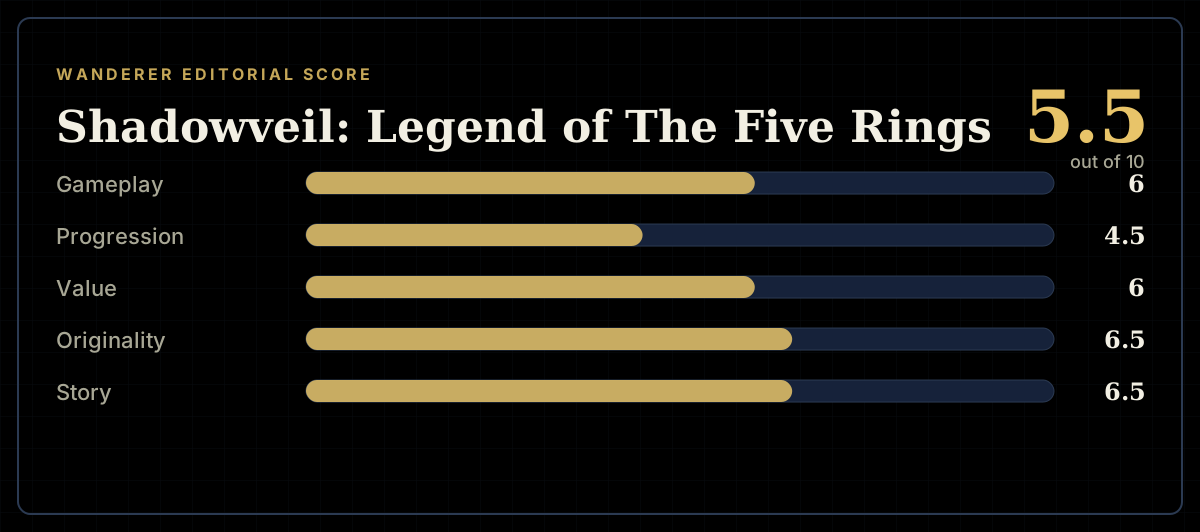
How the review scores each part of the gameWanderer Editorial -
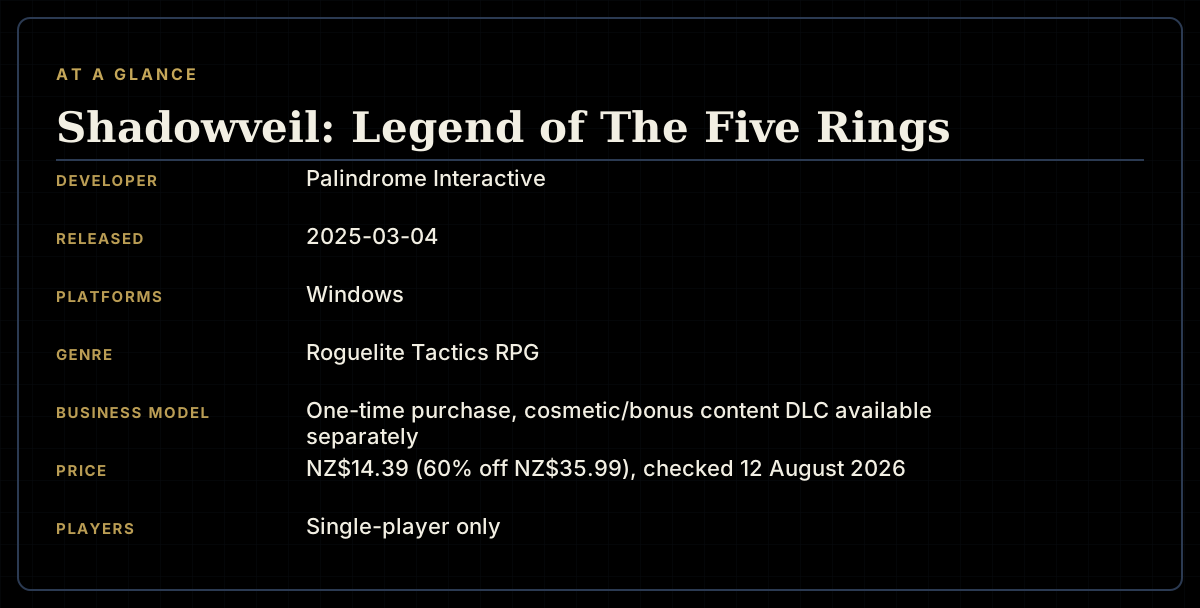
The essentials at a glanceWanderer Editorial -
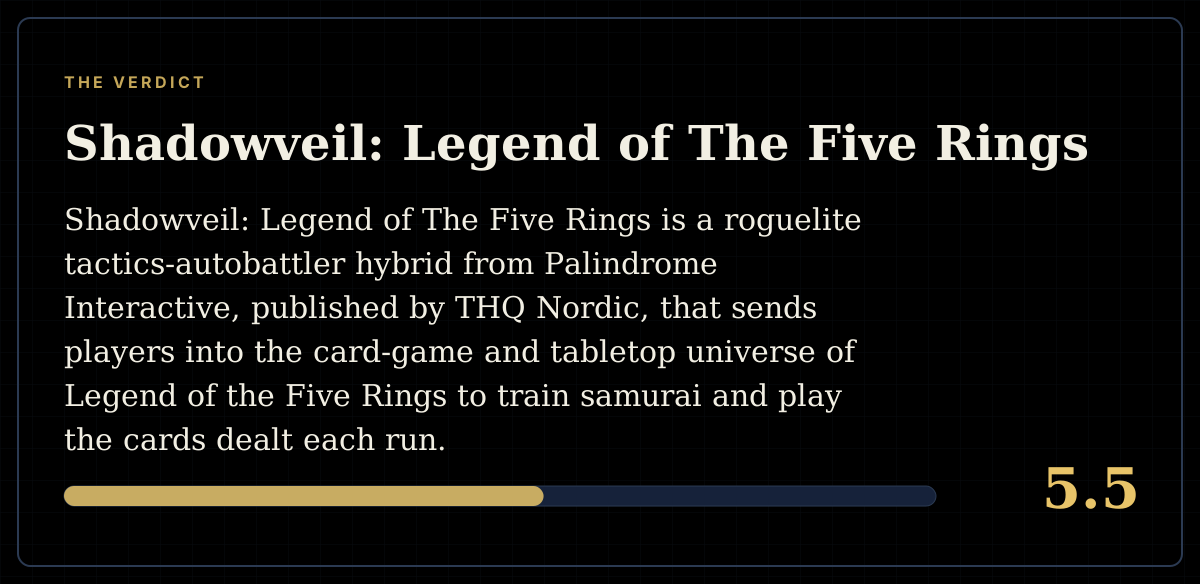
The short versionWanderer Editorial