
Game review
Auto Rogue
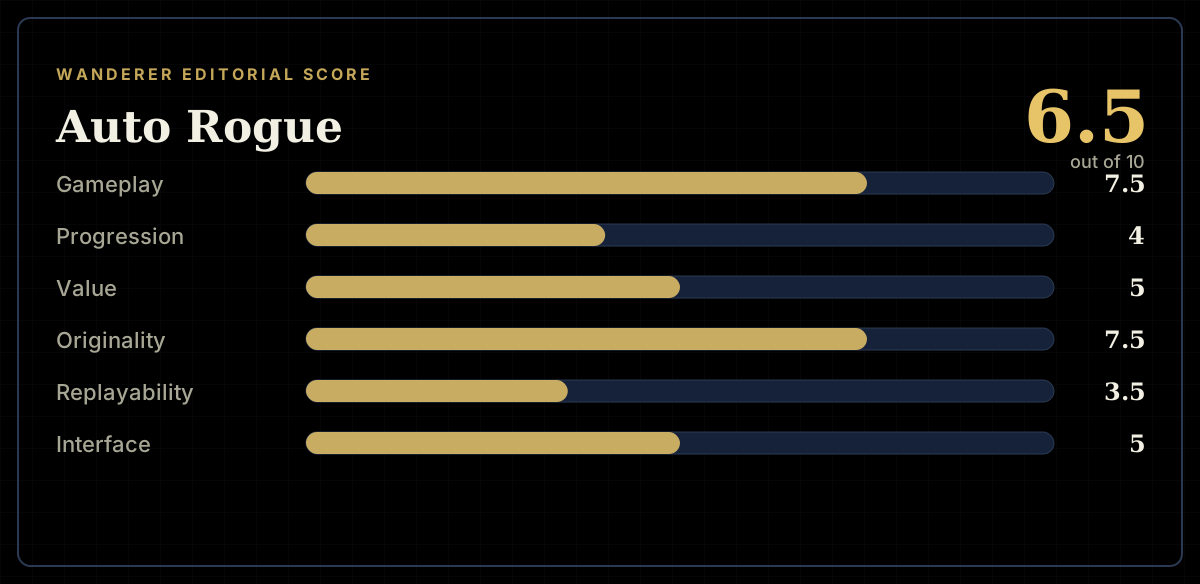
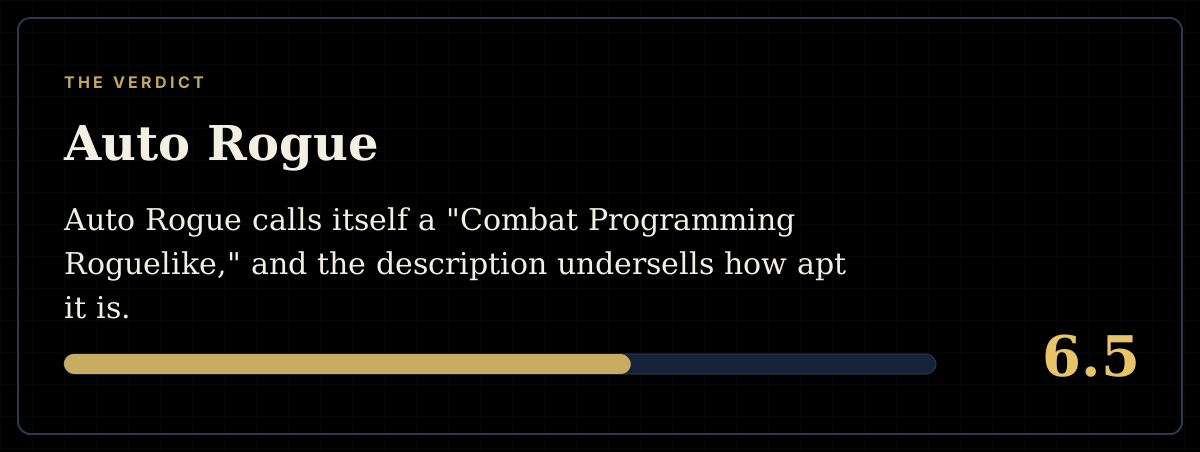
6.5 / 10
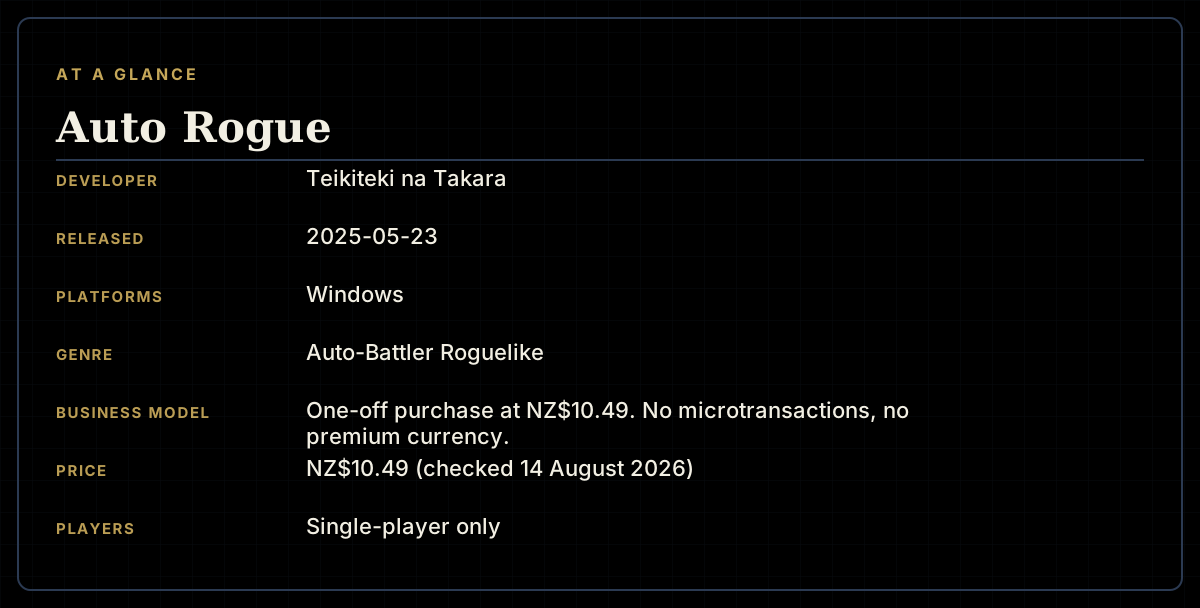
- Developer
- Teikiteki na Takara
- Publisher
- Teikiteki na Takara
- Released
- 23 May 2025
- Platforms
- Windows
- Genre
- Auto-Battler Roguelike
- Monetisation
- One-off purchase at NZ$10.49. No microtransactions, no premium currency.
- Players
- Single-player only
The short version
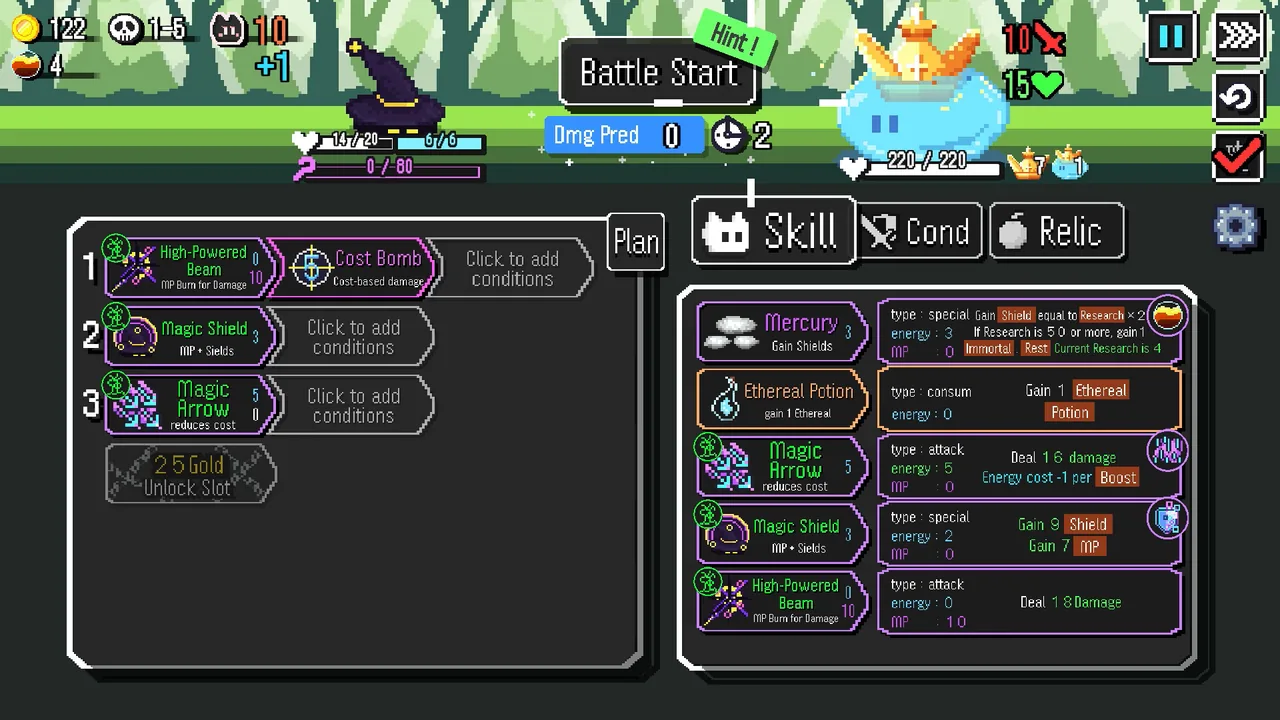
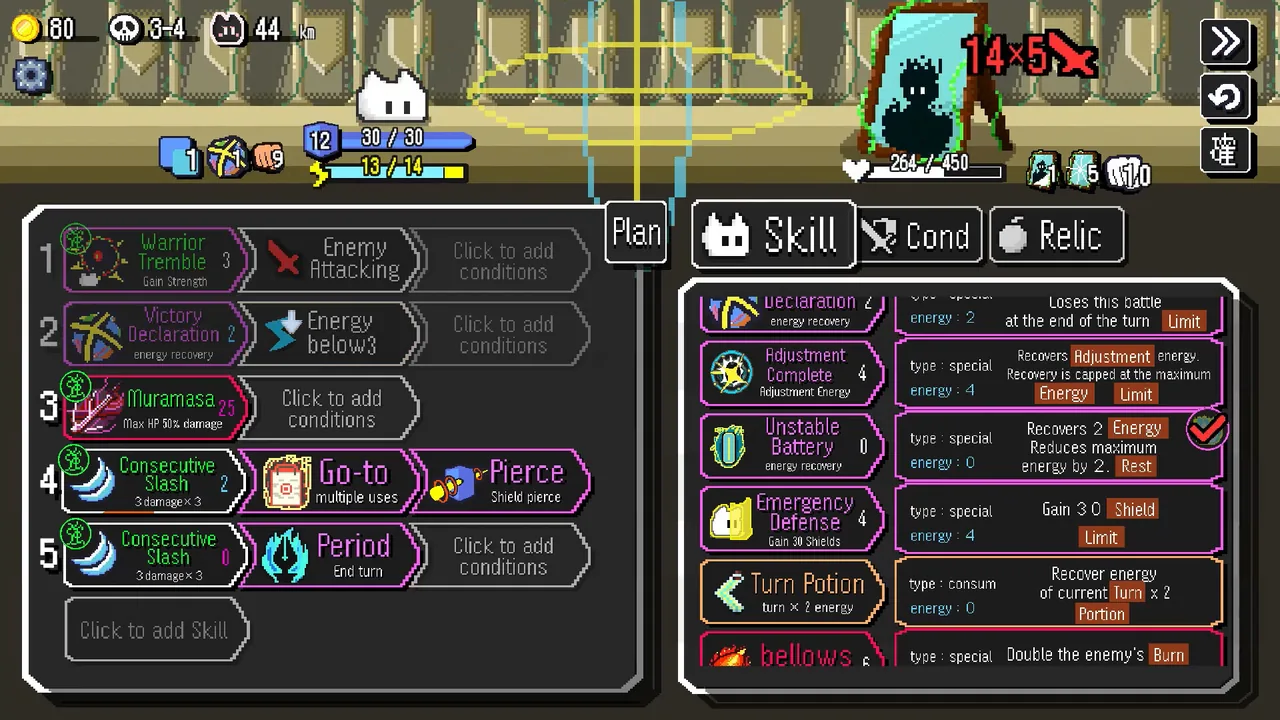
Auto Rogue calls itself a "Combat Programming Roguelike," and the description undersells how apt it is. You don't fight anything directly -- you combine skills with conditions before a battle begins, building a small automated script, then sit back and watch it execute against a scaling gauntlet of enemies. It's a genuinely clever hook, closer to writing simple logic than playing a conventional roguelike deckbuilder, and reviewers who click with it describe exactly that: "a programming-ish roguelike auto battler," one calls it, with "your brain a chance to think" even though you never touch the controls once a run starts.
The problem every serious review eventually arrives at is the same one: there isn't much game here once you've seen it. With only two playable characters, around 40 skills between them, and no endless mode or run-to-run meta-progression, a large share of reviewers report clearing the hardest difficulty and running out of new combinations to try within a handful of hours -- and a cluster of later reviews describe a development trail that appears to have gone quiet within weeks of the May 2025 launch.
Biggest strengths
- A genuinely distinctive core idea -- assembling skills and conditions into an automated battle script rather than fighting directly -- that reviewers consistently describe as clever and satisfying to experiment with
- Cheap enough that even reviewers frustrated by its thin content generally still call it fair value for what they got, rather than regretting the purchase outright
- Pixel art and presentation reviewers describe positively, with the visible result of each automated exchange giving the player something to parse even while not directly controlling the action
Biggest weaknesses
- Only two playable characters and roughly 40 skills total leave a hard content ceiling that a large share of reviewers say they hit within a handful of hours, with several explicitly asking for more characters, skills or an endless mode
- No meta-progression carries between runs and there's no endless mode, so once a winning build is found there's little reason to keep playing -- several reviewers single this out as the game's biggest structural gap
- Multiple reviews report rough, sometimes unclear English localization, including skill and condition descriptions that required trial and error to understand correctly
Who it's for: Fans of synergy-driven build-crafting who want a short, cheap, mechanically distinctive puzzle box rather than a long-running roguelike campaign, and anyone specifically curious about an automation-first, "programming-ish" spin on the genre. Not for players who want deep replayability, meta-progression between runs, or confidence that the game will keep receiving content.
Our recommendation: Worth its low price for the few hours the core idea takes to explore, but go in with expectations calibrated to a proof-of-concept rather than a full-scope roguelike. If ongoing content and developer support matter to your purchase, the pattern in recent reviews is a real yellow flag worth weighing before buying at full price.
6.5 / 10
Auto Rogue's own store page calls it a "Combat Programming Roguelike," and unlike most genre labels that turn out to be marketing shorthand, this one is close to literal. You never fight anything directly. Instead, before each battle you assemble skills and attach conditions to them -- this skill costs less if that condition is met, this one triggers twice if the last hit finished an enemy -- and then you watch the script you've built play out against a scaling gauntlet, "sit back, enjoy your coffee," as the store page puts it. It's a distinctive hook for a roguelike, closer to light logic puzzling than combat, and it's the reason the game sits at Very Positive across 213 English-language reviews. It's also, almost every serious review agrees, a hook with a short runway.
Writing the script, then watching it run
The appeal here is specific and reviewers describe it consistently: the satisfaction isn't in executing a fight, it's in designing the conditions that make a fight resolve itself well. "A great surprise, what a fun game! A programming-ish roguelike auto battler," reads one review, adding that watching the results of your conditional logic play out "gives your brain a chance to think" even with zero direct input once the run begins. Another reviewer with 45 hours logged -- a genuine outlier for a game most people finish much faster -- called it "a really cool proof-of-concept" they liked quite a bit, a phrase that captures both halves of Auto Rogue's reputation at once: real, demonstrated cleverness, wrapped around something that reads as unfinished.
The presentation supports that read. The pixel art draws steady approval, and reviewers who bounce off the conditional-skill system initially describe it clicking once they've run a few battles and started to see cause and effect in how their builds resolve. For players coming from synergy-driven deckbuilders and roguelikes, the on-ramp is short even if the underlying mechanic -- writing rules rather than executing actions -- is genuinely new to the genre.
Two characters, forty skills, and a hard ceiling
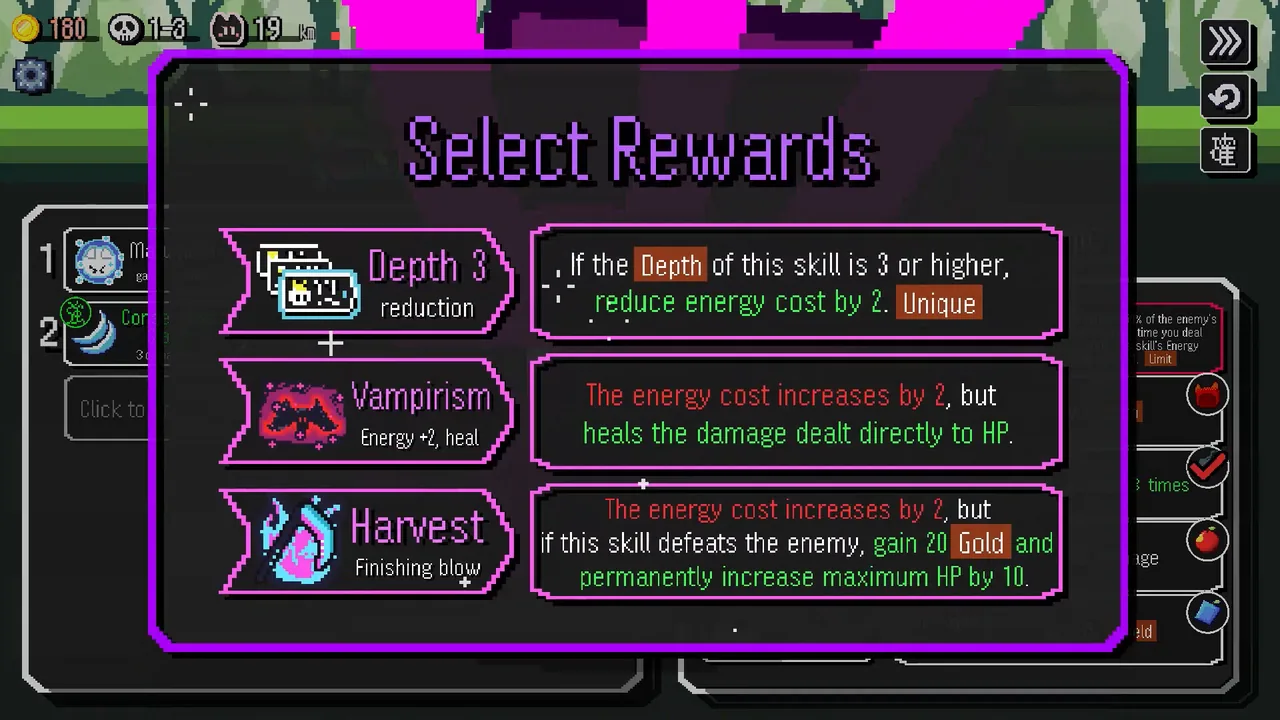
Set against that praise is a complaint that shows up in review after review with almost no variation: there just isn't enough here. Auto Rogue launched with two playable characters and roughly 40 skills split between them, no run-to-run meta-progression, and no endless mode to test a strong build against escalating difficulty indefinitely. Reviewers describe clearing the hardest available difficulty and running out of new combinations to try within a handful of hours -- "I absolutely BLASTED through both normal and hard modes," reads one of the most-voted reviews on the game, "I just don't see any reason to continue playing." Another, more blunt: "you've basically seen everything it has to offer in a couple of runs."
The absence of an endless mode specifically comes up again and again as the single addition reviewers most want. "Would enjoy it more if there was an infinite game mode to test your build even further," reads one; another describes runs that "take less then 10 minutes" once a build clicks, with nothing left to push against afterward. One of the more pointed negative reviews goes further still, arguing that several of the game's skills and items read as close copies of Slay the Spire's design rather than original work -- a specific, arguable criticism rather than a vague one, and worth weighing against how much credit the automation concept otherwise earns for originality. Multiple reviews also flag rough English localization, describing skill and condition text that needed trial and error to parse correctly rather than reading clearly on first pass.
A launch, a week of patches, then quiet
Auto Rogue's Steam news feed tells a short story on its own: a handful of bug-fix and balance patches landed in the days immediately following the 23 May 2025 launch, and then nothing. Reviews posted later start to notice the gap directly. "No movement for 7 months = dead game," reads one from October 2025, which goes on to call the game "a really great piece of game, but unfinished" with the developer having "went dark a while back." A January 2026 review makes a related point about missing infrastructure rather than content specifically: "no steam achievements or ANY visible sign of [continued support]." Neither review is hostile -- both frame the underlying game charitably -- but both treat the silence as a real reason to hold off rather than buy in expecting more to come.
None of this erases what's good about the two-hour-to-six-hour experience that is here. Even reviewers frustrated by the content ceiling tend to still call the price fair for what they got, rather than feeling cheated outright: "I recommend you buy the game for like $2... It was a lot of fun," reads one negative review that spends most of its text praising the core idea before landing on a thumbs-down purely over how quickly it ran out of new things to try.
6.5 out of 10. Auto Rogue's central idea -- building small automated combat scripts out of skills and conditions, then watching them resolve -- is genuinely clever and well-executed as far as it goes, and it's easy to see why 86.9% of reviewers land positive. But "as far as it goes" is a real limit here: two characters, a fixed pool of skills, no endless mode, and a development trail that goes quiet within a week of launch add up to a proof-of-concept that never grew into the fuller game its own mechanics clearly could have supported. Worth its price for a short, sharp taste of a genuinely original idea. Just don't buy it expecting it to last, or to keep growing.
Pros and cons
Pros
- A genuinely distinctive core idea -- assembling skills and conditions into an automated battle script rather than fighting directly -- that reviewers consistently describe as clever and satisfying to experiment with
- Cheap enough that even reviewers frustrated by its thin content generally still call it fair value for what they got, rather than regretting the purchase outright
- Pixel art and presentation reviewers describe positively, with the visible result of each automated exchange giving the player something to parse even while not directly controlling the action
- Accessible to newcomers of the deckbuilding/synergy genre once the initial learning curve around conditional skills clicks, according to multiple reviews
Cons
- Only two playable characters and roughly 40 skills total leave a hard content ceiling that a large share of reviewers say they hit within a handful of hours, with several explicitly asking for more characters, skills or an endless mode
- No meta-progression carries between runs and there's no endless mode, so once a winning build is found there's little reason to keep playing -- several reviewers single this out as the game's biggest structural gap
- Multiple reviews report rough, sometimes unclear English localization, including skill and condition descriptions that required trial and error to understand correctly
- A cluster of reviews from October 2025 through early 2026 describe no visible development activity since the patches that followed the May 2025 launch, with more than one calling the game "abandoned" or "dead"
- At least one detailed negative review argues several skills and items closely mirror Slay the Spire's design, a specific originality complaint worth flagging even against the game's own novel automation hook
Screenshots
-
Auto RogueImage: 定期的な宝物 via Steam -
Auto RogueImage: 定期的な宝物 via Steam -
Auto RogueImage: 定期的な宝物 via Steam -
How the review scores each part of the gameWanderer Editorial -
The essentialsWanderer Editorial -
The short versionWanderer Editorial