Game review
Once a Pawn a King
4.5 / 10
- Developer
- Clover Bite
- Publisher
- indie.io
- Released
- 25 June 2026
- Platforms
- Windows
- Genre
- Tactical Roguelike
- Monetisation
- One-time purchase, no in-game store, no DLC
- Players
- Single-player only
The short version
Once a Pawn a King takes chess apart and rebuilds it as a roguelike: pieces have their own personalities and upgrade paths, boards are traps as much as battlefields, and reviewers who played it through roughly a year of Early Access compare it warmly to Into the Breach and Hades. That reception was real and well-earned. Then, on 25 June 2026, the game left Early Access for a 1.0 that a large share of this review's sample says is worse than the build that preceded it — missing content, new bugs, and crashes that weren't there before.
What happened in between is unusually well-documented for this library, though this review treats the most serious part of it carefully. Steam's own news feed confirms the game's publishing arrangement changed to indie.io on 26 March 2026. A widely-upvoted review quotes what it presents as an official Discord announcement from the developers, dated 6 May 2026, stating that the company holding the game's IP had let go of the team that made it. This review could not independently verify that specific claim through press coverage, and reports it at exactly that level of certainty — a quote inside a review, not a confirmed fact. What is independently verifiable is the result: a 1.0 release dozens of reviewers describe, in specific and consistent terms, as less finished than the Early Access build it replaced.
Biggest strengths
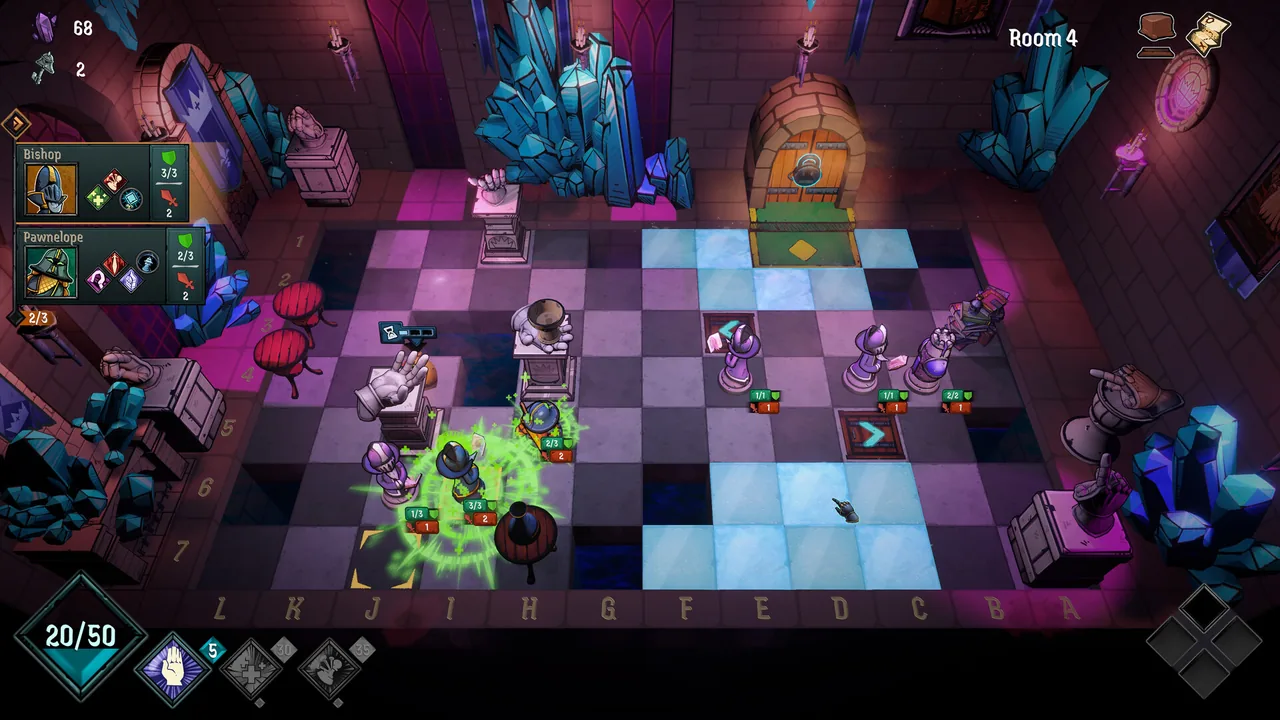
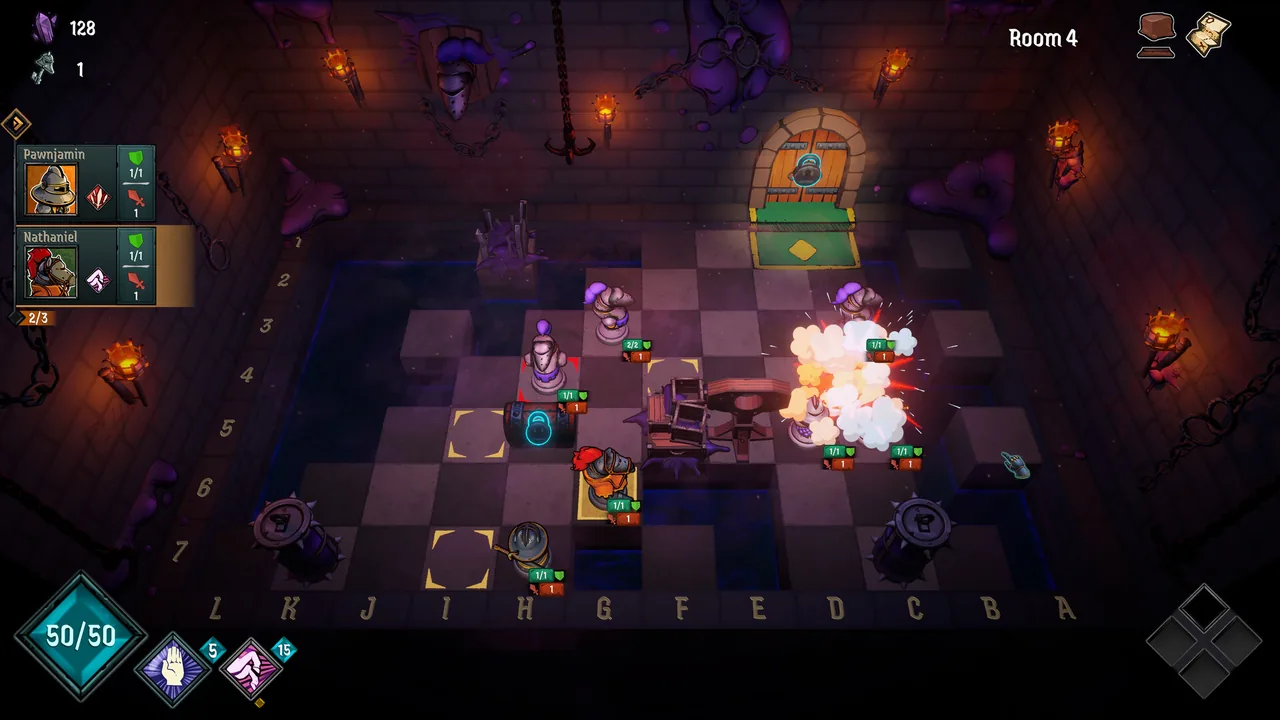
- The core hook — chess pieces with individual movesets, personalities and upgrade trees, arranged into a roguelike run against a living, trap-filled board — draws detailed, specific praise from reviewers who tested it across its year in Early Access
- Comparisons to Into the Breach and Hades recur independently across multiple reviewers, both for the tactical decision space and for a narrative layer built around the pieces themselves
- Reviewers describe the difficulty as fair rather than punishing for its own sake: losses are consistently attributed to misreading the board rather than randomness or unfair mechanics
Biggest weaknesses
- The 1.0 release is described by a large share of reviewers as less complete than the Early Access build it replaced — several specifically report only two dungeon floors are currently playable, versus more content available before the full release
- Consistent, specific bug reports recur across the negative sample: visual damage overlays that don't clear, enemy patrol routes rendering inconsistently, pieces becoming unplaceable mid-run, and softlocks in the tutorial itself
- Ultrawide monitor support is reported as broken badly enough that at least one reviewer couldn't get past the start menu at all
Who it's for: Fans of tactical puzzle roguelikes (Into the Breach, Hades) with a soft spot for chess who are prepared to wait for stability, and anyone specifically curious about a well-documented case of a promising Early Access game's rocky transition to 1.0. Not recommended right now for anyone who wants a finished, stable game on day one.
Our recommendation: Wait. The underlying design is genuinely good enough to be worth returning to, and it may well get there — but buy it now and, on the balance of this review's sample, you're more likely to hit crashes, softlocks and missing content than the polished experience Early Access testers describe from a year earlier.
4.5 / 10
Introduction
The pitch for Once a Pawn a King is simple enough to say in one line: chess is broken, so gather the Black Army and build a party of chess pieces to fight your way through fractured boards. In practice, developer Clover Bite spent roughly a year in Early Access — starting August 2025 — turning that idea into something reviewers repeatedly compare to Into the Breach's tight tactical puzzles and Hades' character-driven roguelike structure. It left Early Access for a 1.0 release on 25 June 2026. This review reads the complete English sample — 46 reviews — and finds two overlapping stories: genuine, detailed praise for a design that earned real fans over its development, and a specific, consistent account of that design shipping its "finished" version in worse shape than the build that came before it.
A genuinely inventive idea, well executed
The praise from Once a Pawn a King's Early Access period is worth taking seriously on its own terms, because it's specific rather than the generic enthusiasm any well-marketed roguelike attracts. "I think its important for people to understand that more then this game is a chess rogue-like, its a chess themed rogue-like," wrote one reviewer, precisely distinguishing it from a literal chess simulator: "on a macro level it plays similar to games like Into The Breach." Another described the narrative layer directly: "Love the combination between roguelite and plain-old chess, and the Hades-style narrative just makes it all the better." Difficulty draws a specific kind of praise too — reviewers consistently describe losses as their own fault for misreading a position rather than the game cheating them, the mark of a well-tuned puzzle-tactics system: "not paying attention is costly and can and will get [you]," and "because the enemies are so predictable, every loss was 100% my own fault for not seeing the big picture." Art direction and music draw consistent credit throughout the sample, including from reviewers who are otherwise sharply critical of the 1.0 release's technical state.
What changed, and what this review can verify
Here's where the story gets more serious, and where this review wants to be precise about what's confirmed and what isn't. Steam's own news history for the game is a matter of public record: a post titled "Once a Pawn a King Joins Indie.io!" went up on 26 March 2026, confirming a change in the game's publishing arrangement roughly three months before the 1.0 launch. Separately, the single most-upvoted review in this review's entire sample — 132 votes — reproduces what it presents as a verbatim announcement from the developers' own Discord, dated 6 May 2026, reading in part: "Last month, the company under which we developed Once a Pawn a King (and which still owns the IP) let go of its workers - ourselves included." This review could not independently confirm that specific claim through press coverage, and is reporting it exactly as what it is — a quote embedded inside a player review, not a fact this review is asserting on its own authority.
What doesn't require taking anyone's word for it is the state of the 1.0 release itself, because dozens of reviewers, writing independently across several weeks after the June launch, describe the same specific problems. "Since full release too buggy to play, it was actually better in early access somehow?" asked one. Another, more detailed: "It was released in an incomplete state, thus why only two floors and an assortment of bugs." A third catalogued specific regressions: "Health/Damage overlays stay and block visuals after a piece has been captured. Paths don't show when they should, and are sometimes shown permanently after a capture... Only 2 floors. Definitely only half finished. Consistent crashes." One reviewer summarised the trajectory bluntly, comparing the launch build directly against memory of the earlier one: "It felt far more user friendly and playable before 1.0." That degree of independent, specific, and consistent agreement — about missing content and new bugs, not merely "it's still Early Access rough" — is the part of this story that doesn't depend on any single unverified claim to be taken seriously.
Technical specifics worth flagging directly
Beyond the general "buggy 1.0" complaint, several reports are specific enough to be worth naming. Ultrawide monitor support is reported as broken badly enough to block play entirely: "If you have an ultra widescreen monitor you are cooked. The game is unplayable... I can't even get past the start menu." Tutorial softlocks appear in more than one independent review. And a recurring feature request — an undo function for individual moves — reflects a real design tension in a game this punishing: losing a piece to a misread mechanic, with no way to take the move back, reads very differently in a roguelike where a single mistake can end a run.
Final Verdict
Once a Pawn a King is a hard game to score fairly, because the thing being scored has genuinely changed shape between the version that earned its warm Early Access reputation and the version currently for sale. The underlying design — chess pieces reimagined as roguelike characters, a tight tactical puzzle layer, real narrative ambition — is good enough that dozens of reviewers went out of their way to say so in detail, across nearly a year of testing. The 1.0 release that followed a publisher change, whatever exactly happened behind the scenes to produce it, is described independently and specifically by a large share of this review's sample as a step backward rather than the finish line Early Access is supposed to lead to. This review can't in good conscience score the current state of the game on the strength of what it used to be. If Once a Pawn a King gets the support its concept deserves, it could still become the game its Early Access testers believed it was becoming. On the evidence of what's actually shipping today, that's a hope rather than a recommendation.
Pros and cons
Pros
- The core hook — chess pieces with individual movesets, personalities and upgrade trees, arranged into a roguelike run against a living, trap-filled board — draws detailed, specific praise from reviewers who tested it across its year in Early Access
- Comparisons to Into the Breach and Hades recur independently across multiple reviewers, both for the tactical decision space and for a narrative layer built around the pieces themselves
- Reviewers describe the difficulty as fair rather than punishing for its own sake: losses are consistently attributed to misreading the board rather than randomness or unfair mechanics
- Art direction and music draw consistent praise even from reviewers otherwise frustrated with the 1.0 release's technical state
- A number of Early Access reviewers specifically credited the original team's responsiveness to feedback and bug reports during that period
Cons
- The 1.0 release is described by a large share of reviewers as less complete than the Early Access build it replaced — several specifically report only two dungeon floors are currently playable, versus more content available before the full release
- Consistent, specific bug reports recur across the negative sample: visual damage overlays that don't clear, enemy patrol routes rendering inconsistently, pieces becoming unplaceable mid-run, and softlocks in the tutorial itself
- Ultrawide monitor support is reported as broken badly enough that at least one reviewer couldn't get past the start menu at all
- Steam's own news feed confirms a publisher change to indie.io on 26 March 2026, roughly three months before the 1.0 launch that reviewers say regressed in quality — a timeline this review can verify, even though the specific claim about the original team losing their jobs comes from a quoted Discord post inside a review rather than independent press confirmation
- No undo function exists for individual moves, a request that recurs across multiple reviews given how costly a single misread board position can be in a roguelike run
Screenshots
-
Once a Pawn a KingImage: indie.io via Steam -
Once a Pawn a KingImage: indie.io via Steam -
Once a Pawn a KingImage: indie.io via Steam -
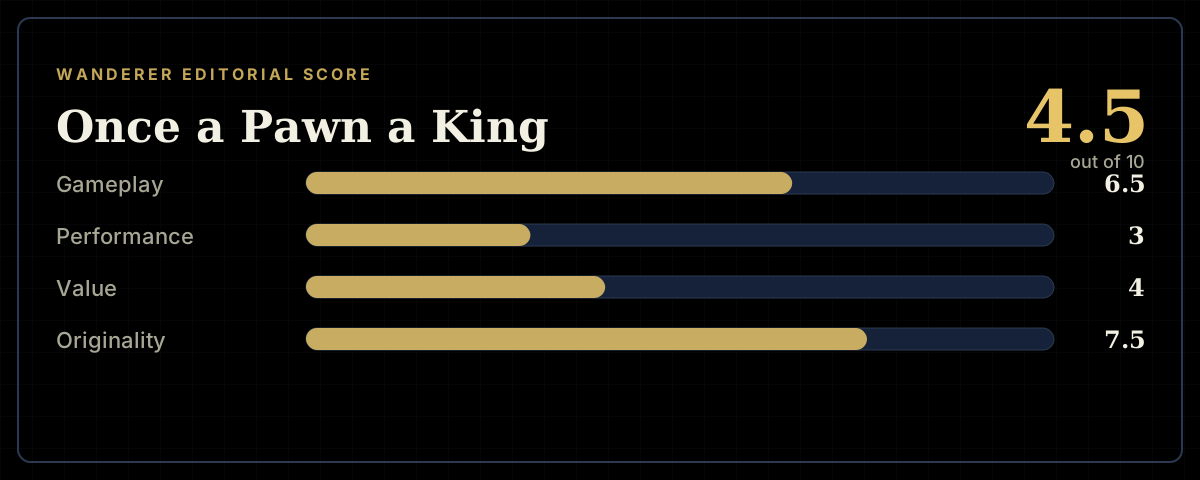
How the review scores each part of the gameWanderer Editorial -
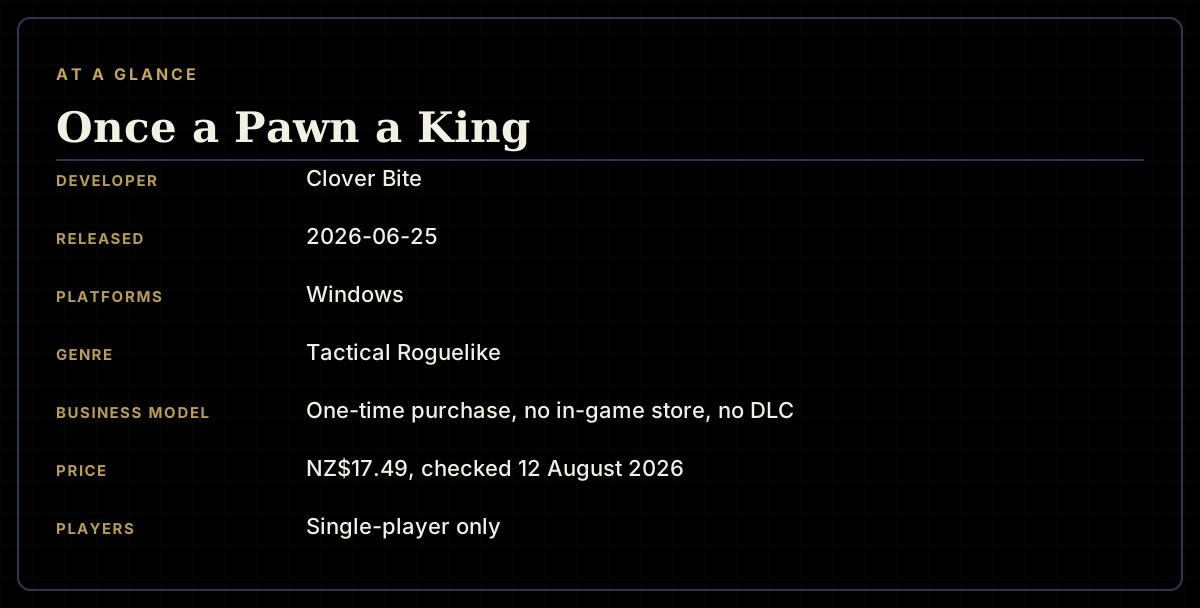
The essentials at a glanceWanderer Editorial -
The short versionWanderer Editorial