
Game review
Archon Soul
7.5 / 10
- Developer
- PolyGryph
- Publisher
- Goblinz Publishing, Maple Whispering Limited
- Released
- 29 July 2026
- Platforms
- Windows
- Genre
- Roguelike Deckbuilder
- Monetisation
- One-time purchase (NZ$15.39 with a 30% launch discount, NZ$21.99 standard); no in-game store, no IAP
- Players
- None; fully single-player
The short version
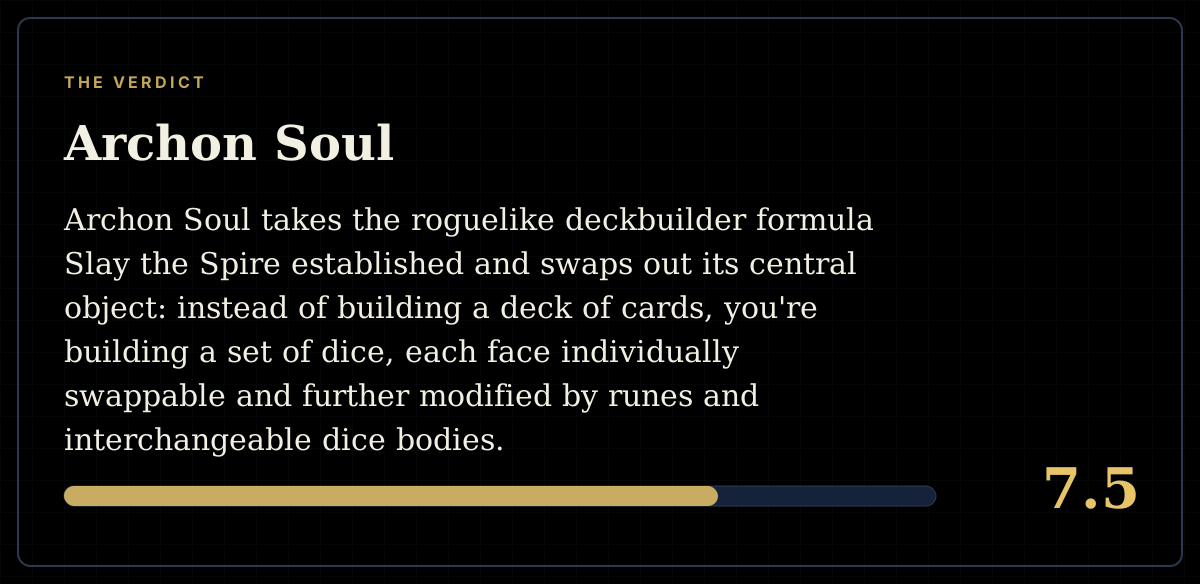
Archon Soul takes the roguelike deckbuilder formula Slay the Spire established and swaps out its central object: instead of building a deck of cards, you're building a set of dice, each face individually swappable and further modified by runes and interchangeable dice bodies. It's a genuinely clever reframing of a familiar genre rather than a coat of paint over it, and the numbers back up the ambition — 40 runes, over 30 dice bodies, and more than 65,000 possible combinations across four playable mages.
A week after launch, at 86% positive across 95 reviews, the reception is genuinely strong, and the comparisons its own players keep reaching for — Slay the Spire, Dicey Dungeons, SpellRogue — tell you plainly what you're getting into. What holds it back from a stronger recommendation is a real, recurring complaint about difficulty spikes that some reviewers call unfair rather than hard, alongside a handful of specific technical gaps that a week-old launch hasn't caught up on yet.
Biggest strengths
- The dice-building hook is a genuine mechanical innovation rather than a reskin — permanently modifying die faces, runes and bodies gives the run-building layer real depth
- Over 65,000 stated dice combinations across four mages and more than 200 spells give the game substantial reason to replay beyond a single successful run
- Distinctive, consistently praised hand-illustrated artwork that stands out from the genre's usual digital-painted look
Biggest weaknesses
- Multiple reviewers describe specific difficulty spikes as unfair rather than challenging, including one account of an early run needing at least five starting dice rather than the default three to feel playable
- A recurring complaint calls the turn-by-turn pace "a slog," with one review summarising the experience as "Slay the Spire with dice and worse graphics" despite praising its unique synergies
- One detailed review reports no ultrawide resolution support and states Steam Cloud saves weren't working, leaving a save stuck on a single device — notable since Steam Cloud is listed among the game's own store categories, a discrepancy this review cannot resolve
Who it's for: Slay the Spire and Dicey Dungeons fans looking for a fresh mechanical hook on a familiar structure, and players who enjoy min-maxing a huge combination space rather than a curated card pool.
Our recommendation: A strong pick for genre fans at its launch-discounted price, with the caveat that the difficulty curve has real teeth some players consider poorly tuned rather than intentionally brutal — read the specific complaints below before deciding how much of that risk you're comfortable with.
7.5 / 10
Roguelike deckbuilders are a crowded field, and most new entries are judged almost entirely on what they do differently from Slay the Spire. Archon Soul's answer is structural rather than cosmetic: there's no deck of cards to draft and thin here. Instead, you build dice — six faces each, individually swappable, further shaped by 40 possible runes and more than 30 interchangeable dice bodies, adding up to a stated 65,000-plus combinations across four playable mages. It's a genuinely different object to optimise around, and it's the reason Archon Soul's own reviewers keep reaching for the same handful of comparisons — Slay the Spire, Dicey Dungeons, SpellRogue — without anyone treating that as an insult.
Building dice instead of decks
The moment-to-moment loop will feel immediately familiar to anyone who's played the genre: explore a branching map through the Archon's palace, choose your path between combat, events and bosses, and fight your way through four acts toward the game's title object. What changes is what you're building along the way. Rather than relics stacking passive bonuses on top of a card pool, Archon Soul has you permanently reshaping your dice — swapping which values sit on which faces, socketing runes for on-roll effects, and changing the die's underlying body for a different baseline behaviour. Draft spells on top of that, and combos emerge from the interaction between what your dice can roll and what your spells do with those rolls, rather than purely from card synergies alone. Three starting mages — the Gaiamancer, Pyromancer and Thaumancer — plus a stated secret fourth character each bring their own spell pools into that structure, with over 200 spells across the roster in total.
Reviewers who've clicked with this describe it in exactly those terms. One positive review sums it up as "Slay The Spire meets Dicey Dungeons... instead of relics, you buff your die permanently," and another calls it "maybe the only game (besides StS and StS2) that scratches that StS itch." That's high praise from a genre audience that's notoriously particular about what counts as a genuine variation versus a reskin, and it suggests the dice-building hook is landing as intended for a meaningful share of players.
Where the difficulty complaints cluster
The most consistent thread running through Archon Soul's negative reviews isn't about the core concept — it's about tuning. One reviewer calls the game "way too difficult... so difficult that it is unfair," a distinction worth taking seriously in a genre where "hard" is usually the point. A separate, more detailed complaint argues that starting with three dice is untenable and that "you need at least 5 to enjoy the game," alongside a broader complaint that the game currently lacks equipment, artifacts, abilities and traits the reviewer expected from the genre. Another puts it more bluntly still: "Imbalanced, shallow and boring. Starts repeating itself during tutorial run."
Set against those accounts, other reviewers with comparable playtime describe the same systems as "a very fun and unique take on traditional deck building" with "lots" to explore. That split isn't necessarily a contradiction — roguelike deckbuilders famously reward system mastery, and what reads as "unfair" to a newer player can read as "appropriately hard" to someone deeper into the run-building logic. What's notable is how specific and repeated the complaint is: more than one reviewer independently lands on early-game dice count and pacing as the sticking point, which suggests a real tuning question rather than scattered, unrelated frustration. The achievement data backs up the difficulty framing on its own terms — several of the hardest achievements sit under 1% global completion, a genuinely brutal tail even by the standards of a punishing genre.
The technical gaps a week hasn't closed yet
Two more specific complaints are worth flagging directly because they're checkable rather than subjective. One detailed review reports no support for 5120x1440 ultrawide resolution, suggesting a straightforward black-bar centring fix as a stopgap. The same review states that Steam Cloud saves were not enabled, leaving progress stranded on a single Steam Deck rather than syncing across devices — a claim that sits in direct tension with Steam Cloud appearing among the game's own listed store categories. This review cannot resolve that discrepancy independently; it may reflect a bug present at the time of that review that's since been patched, or a gap between the category being enabled and actually functioning correctly. Anyone relying on cross-device saves should verify current behaviour before assuming it works as listed.
A separate, narrower complaint concerns the final boss specifically: one reviewer describes it as circumventing "a bunch of mechanics" in a way that's trivial once you know what's coming but can unfairly punish builds assembled without that knowledge on a first blind attempt. It's the kind of boss-design critique that tends to soften with familiarity rather than persist as a permanent flaw, but it's worth knowing going in if you'd rather not have your first ending run undercut by a surprise mechanic.
What the demo history says about the foundation
Archon Soul didn't arrive out of nowhere. Its Steam news feed shows a demo iterating publicly since February 2026, through multiple patches including a full "Events Revamp" in March, well ahead of its 29 July full launch. That's a meaningfully longer public testing runway than many indie roguelikes get, and it's a reasonable point in the game's favour when weighing the balance complaints above — this wasn't rushed to release untested, even if some tuning decisions remain contentious among its early player base.
Final verdict
Archon Soul earns its Very Positive standing honestly: the dice-building hook is a real mechanical idea rather than a genre reskin, the artwork is distinctive and well-regarded, and the combination space on offer gives it genuine replay depth. The difficulty complaints running through its negative reviews are specific and repeated enough to take seriously rather than dismiss as genre gatekeeping, and the ultrawide and Steam Cloud gaps are worth checking against the current build before assuming they're resolved.
For genre fans comfortable with a demanding curve and drawn to the idea of permanently rebuilding dice rather than thinning a deck, this is a strong pick at its launch discount. Players who bounce off Slay the Spire's difficulty already should expect Archon Soul to ask at least as much of them, by its own reviewers' account, and possibly more.
Players who'd rather build power gradually over a long-running character than restart from scratch on every difficult run may also want to look at Wanderer.
Pros and cons
Pros
- The dice-building hook is a genuine mechanical innovation rather than a reskin — permanently modifying die faces, runes and bodies gives the run-building layer real depth
- Over 65,000 stated dice combinations across four mages and more than 200 spells give the game substantial reason to replay beyond a single successful run
- Distinctive, consistently praised hand-illustrated artwork that stands out from the genre's usual digital-painted look
- A long, iterated pre-release demo period going back to February 2026 suggests real, sustained playtesting rather than a rushed Early Access-to-1.0 sprint
- 86% positive across 95 reviews a week after launch is a strong showing for a genre this crowded and this scrutinised by its own dedicated community
Cons
- Multiple reviewers describe specific difficulty spikes as unfair rather than challenging, including one account of an early run needing at least five starting dice rather than the default three to feel playable
- A recurring complaint calls the turn-by-turn pace "a slog," with one review summarising the experience as "Slay the Spire with dice and worse graphics" despite praising its unique synergies
- One detailed review reports no ultrawide resolution support and states Steam Cloud saves weren't working, leaving a save stuck on a single device — notable since Steam Cloud is listed among the game's own store categories, a discrepancy this review cannot resolve
- A separate review describes the final boss as circumventing several core mechanics in a way that undercuts builds a blind player is likely to bring into the fight
- The achievement completion curve is extremely steep even for the genre — several late achievements sit under 1%, consistent with the difficulty complaints in the review sample
Screenshots
-
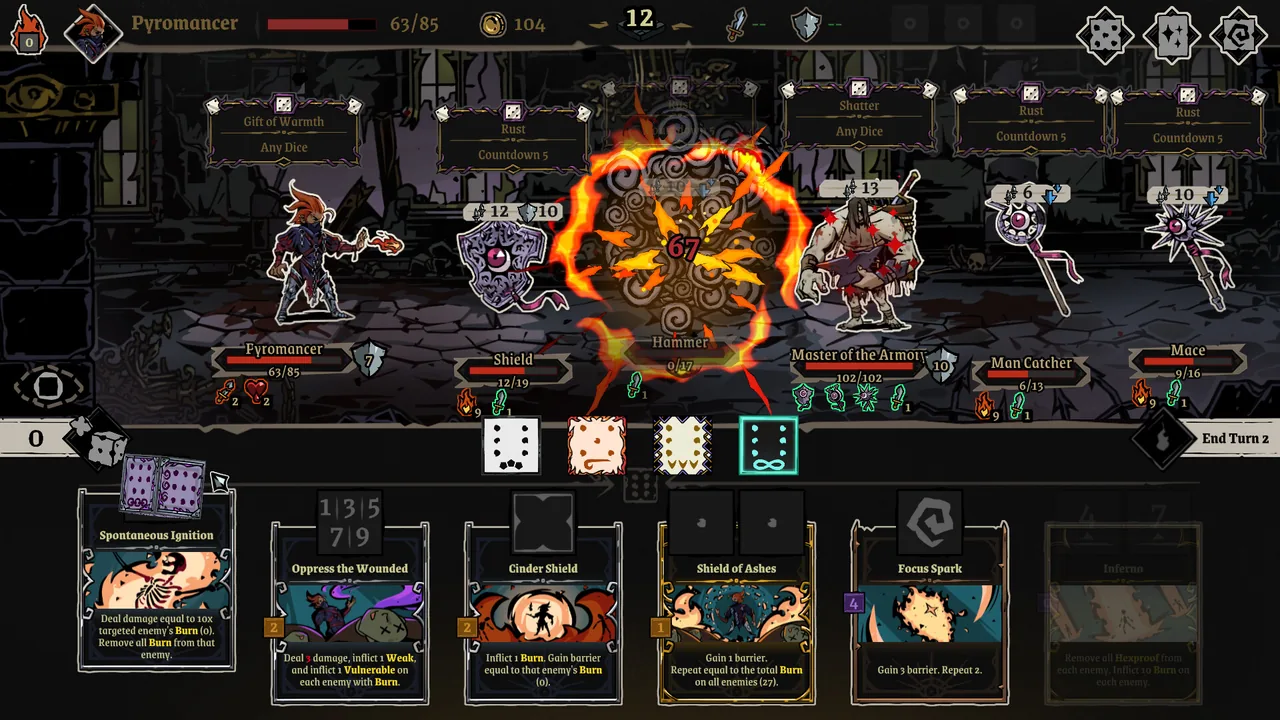
Archon SoulImage: Goblinz Publishing via Steam -
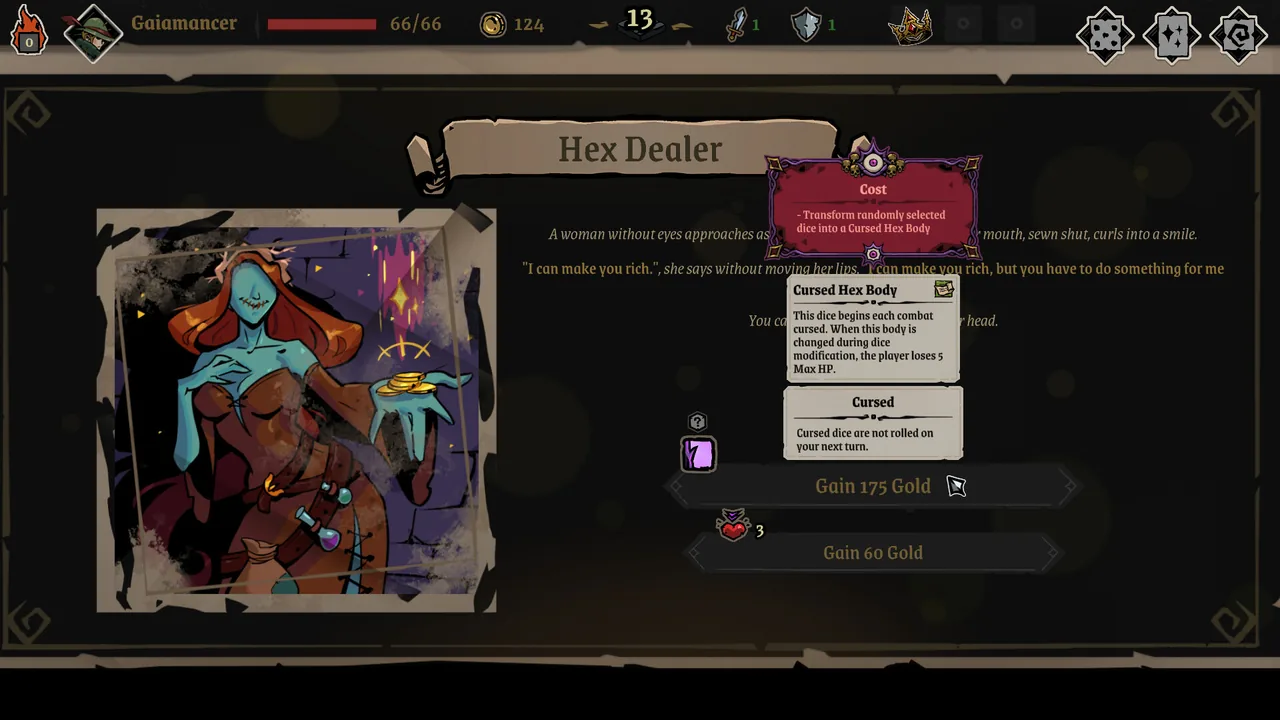
Archon SoulImage: Goblinz Publishing via Steam -
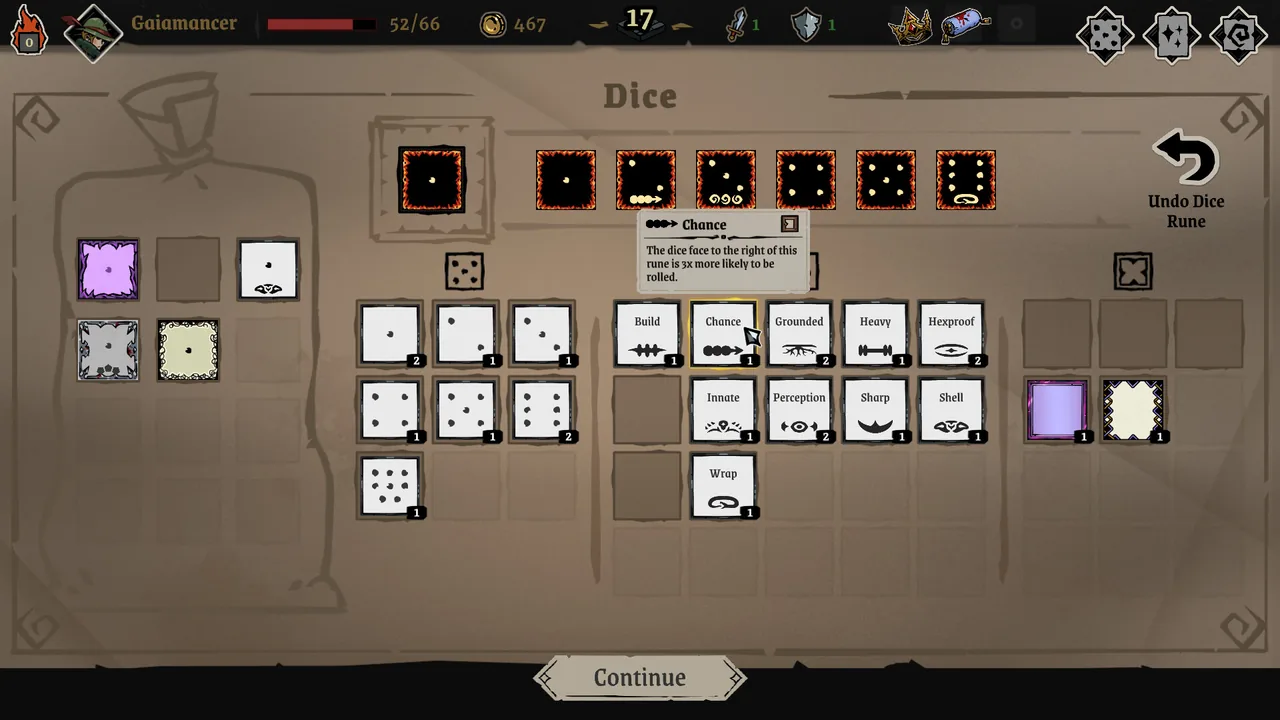
Archon SoulImage: Goblinz Publishing via Steam -
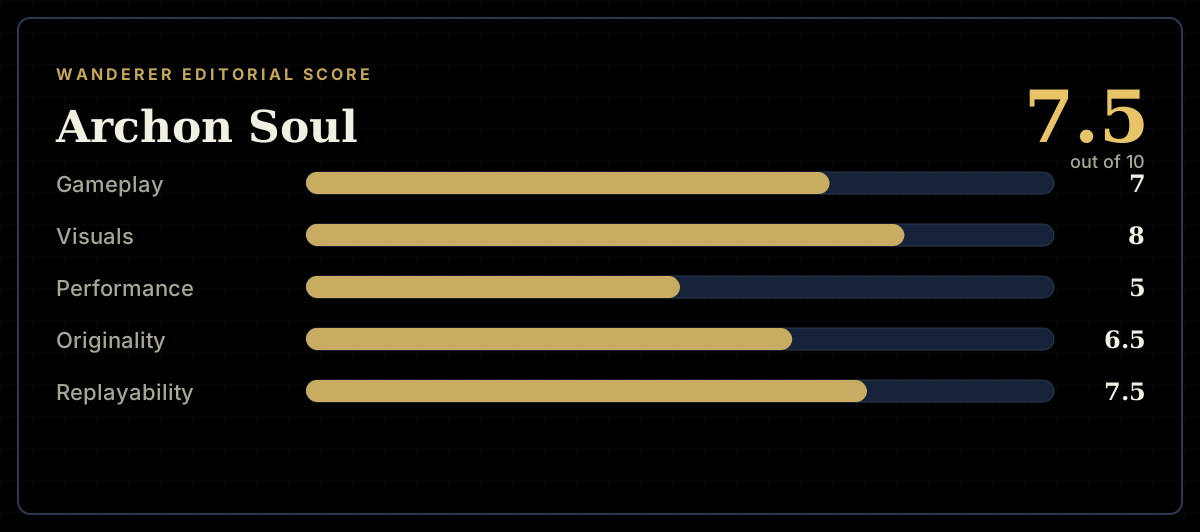
How the review scores each part of the gameWanderer Editorial -

The game at a glanceWanderer Editorial -
The short versionWanderer Editorial