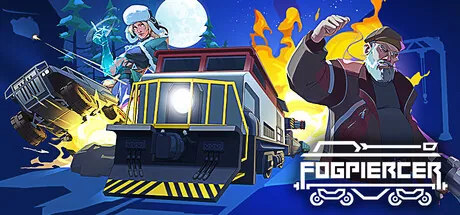
Game review
Fogpiercer
7.5 / 10
- Developer
- Mad Cookies Studio
- Publisher
- Hooded Horse
- Released
- 17 July 2026
- Platforms
- Windows, macOS, Linux
- Genre
- Roguelike Deckbuilder
- Monetisation
- Premium, one-off purchase
- Players
- Single-player
The short version
Fogpiercer's central idea is genuinely clever: your train is your deck, so every locomotive, carriage and weapon you bolt on doesn't just add cards, it changes what your deck can even do. Combine that with a tactical grid where nudging a carriage into an enemy can chain into a string of accidental kills, and you've got a deckbuilder with real board-game bones underneath the cards.
Where it comes up short is everything around that core idea — a thin story, stingy metaprogression between runs, and a build-variety ceiling that a crowded genre's better entries have already pushed past.
Biggest strengths
- Building your train literally builds your deck, so every carriage choice is a mechanical decision, not just a stat upgrade
- Positioning and collisions on the tactical grid can chain into genuine domino-effect victories, giving fights real tactical texture beyond card selection
- Punchy animations and clear feedback make each turn's stakes easy to read at a glance
Biggest weaknesses
- The story is little more than a few paragraphs of conductor backstory, wasting the clear Snowpiercer-inspired premise
- Metaprogression between runs is stingy enough that reviewers have flagged the loop as repetitive once the initial hook wears off
- Card-to-carriage binding has a real learning cost, and the game doesn't explain build pathing as clearly as it could
Who it's for: Deckbuilder and tactics fans who want a genuinely new mechanical hook rather than another Slay the Spire-shaped game, and don't mind a steep early learning curve in exchange for it.
Our recommendation: Worth buying for the train-as-deck idea alone if you're already a genre fan.
7.5 / 10
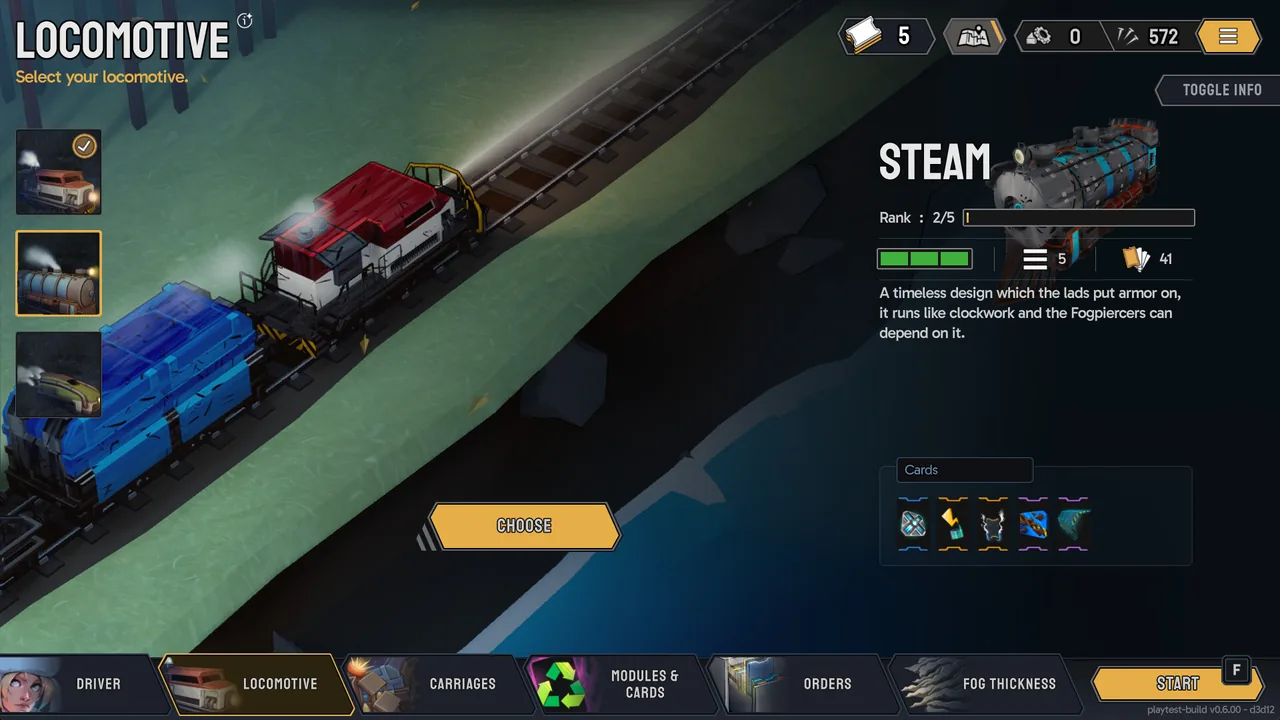
Deckbuilding roguelikes have had almost a decade to settle into a formula, and Fogpiercer's answer to "how do we stand out" is a genuinely good one: stop treating your deck as an abstract pile of cards and make it a physical train instead. Every locomotive, carriage and weapon you choose to bolt onto that train isn't a stat stick — it's the specific set of cards you'll be able to play, which means deckbuilding and train-building are the same decision rather than two separate systems bolted together.
The train is the deck
That single design choice does a lot of work. A carriage isn't just "more health" the way an extra card slot might be in a more abstract deckbuilder — it's a physical, positioned object on the battlefield that carries its own cards, its own vulnerabilities, and its own place in a formation that can be attacked, knocked around, or lost outright. Building a run means thinking about your train as both a deck and a shape, which is a more interesting design space than most of the genre bothers exploring.
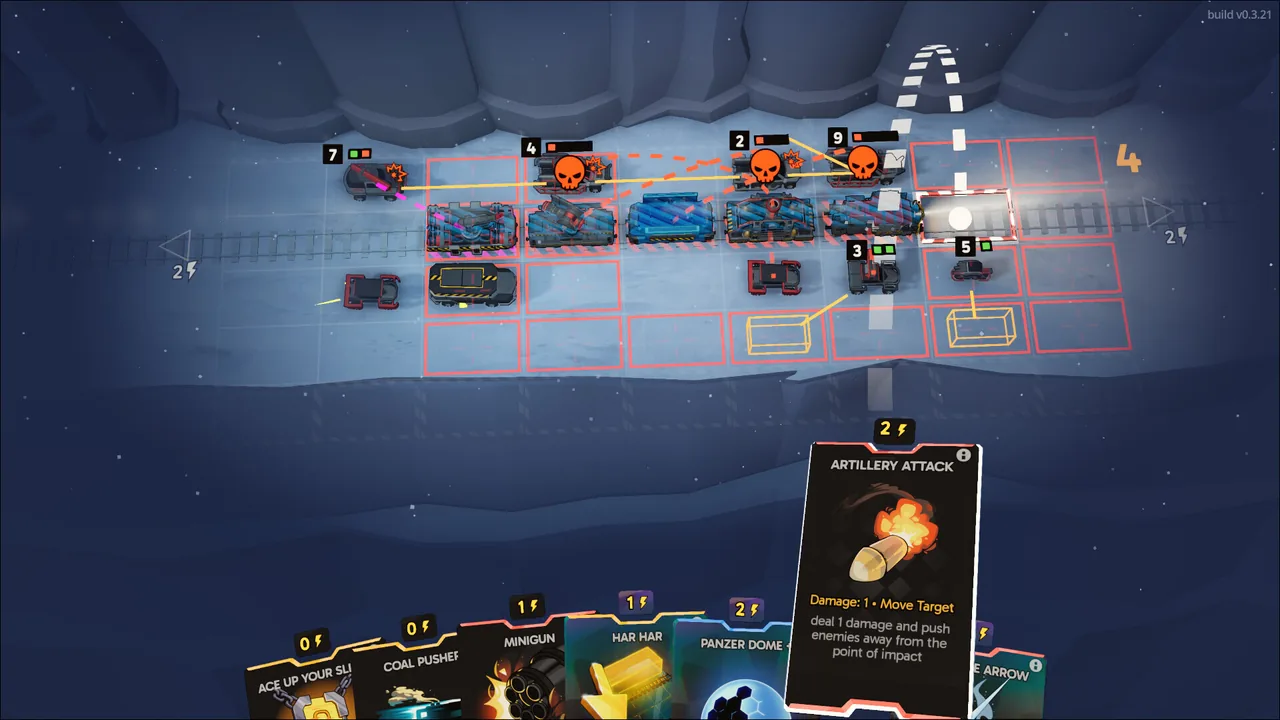
The tactical grid backs that idea up well. Positioning matters in the literal sense — nudging a carriage or a bike into an enemy can set off a chain of collisions, and hitting the right unit at the right moment can trigger a cascade that takes out several enemies from a single well-placed action. With limited action points per turn, exploiting the environment and chain reactions is often a smarter play than brute-forcing damage numbers, and that's the kind of tactical texture that separates Fogpiercer from decks-in-a-vacuum genre peers.
Where the idea runs out
The mechanical hook is strong enough to carry the game's early hours, but reviewers have been consistent about where it thins out. The story amounts to a handful of paragraphs sketching conductor backstories — a real missed opportunity given how clearly Snowpiercer-inspired the premise is, and how much atmosphere a train crossing a fog-covered wasteland could support with more narrative investment. Metaprogression between runs is stingy, and without much narrative or build variety to compensate, the core loop has been called out as repetitive once its central trick has been seen a few times.
The learning curve is steeper than it needs to be, too. Binding specific cards to specific carriages is a meaningful system, but the game doesn't explain build pathing clearly, and the early hours ask you to learn that system mostly through trial and error. The bigger structural problem is what happens when you lose a carriage, particularly a middle one in a three-carriage formation — that loss can cascade into a disadvantage that's genuinely difficult to recover from, which makes some runs feel decided well before they're actually over.
Final verdict
Fogpiercer's central idea — your deck is your train, and your train is a physical, positioned thing that can be attacked, rearranged and chained into cascading collisions — is the kind of mechanical innovation this genre needs more of, and it's executed with real craft in the moment- to-moment tactics. That's worth real credit in a genre this crowded.
It settles at seven and a half because everything wrapped around that idea — the story, the metaprogression, the build variety — is thinner than the core mechanic deserves, and a punishing carriage-loss snowball can undercut the tactical fairness the combat otherwise earns. Buy it for the train. Don't expect the rest of the ride to match it yet.
Price checked 30 July 2026.
If chain-reaction tactics sound appealing but you'd rather they played out across a persistent world than a single run, Wanderer keeps its progress permanent.
Pros and cons
Pros
- Building your train literally builds your deck, so every carriage choice is a mechanical decision, not just a stat upgrade
- Positioning and collisions on the tactical grid can chain into genuine domino-effect victories, giving fights real tactical texture beyond card selection
- Punchy animations and clear feedback make each turn's stakes easy to read at a glance
- A lean, inventive combination of board-game tactics and deckbuilding that stands out from a crowded genre mechanically, even where it doesn't narratively
- Very Positive reception from an already-sizeable early Steam audience
Cons
- The story is little more than a few paragraphs of conductor backstory, wasting the clear Snowpiercer-inspired premise
- Metaprogression between runs is stingy enough that reviewers have flagged the loop as repetitive once the initial hook wears off
- Card-to-carriage binding has a real learning cost, and the game doesn't explain build pathing as clearly as it could
- Losing a carriage, especially a middle one in a three-carriage formation, can cascade into a permanent disadvantage that's hard to claw back from
Screenshots
-
FogpiercerImage: Hooded Horse via Steam -
FogpiercerImage: Hooded Horse via Steam -
FogpiercerImage: Hooded Horse via Steam -
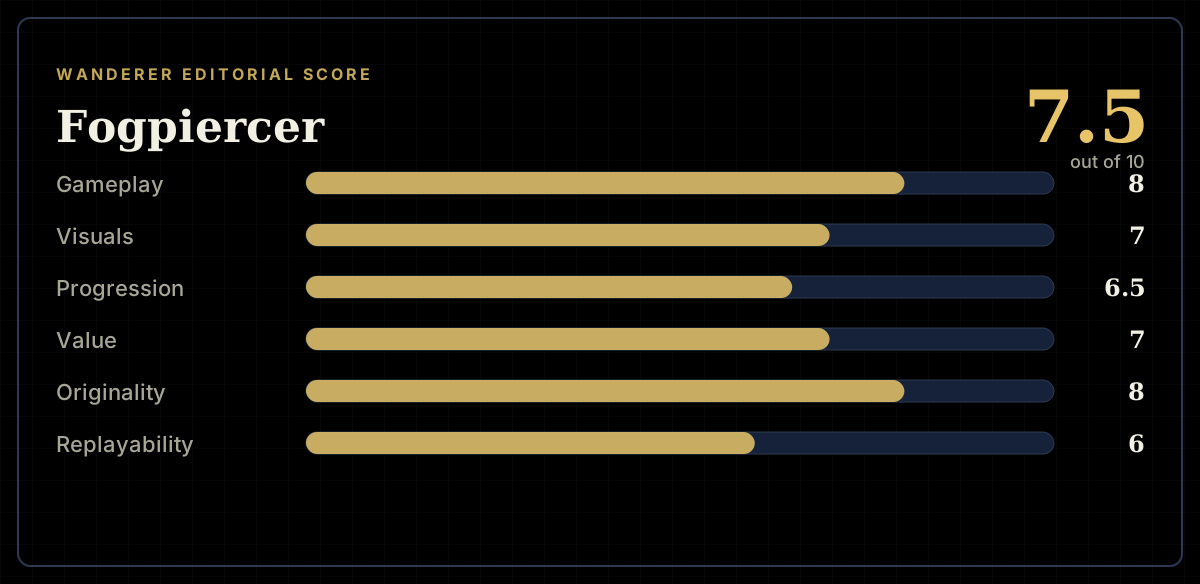
How the review scores each part of the gameWanderer Editorial -
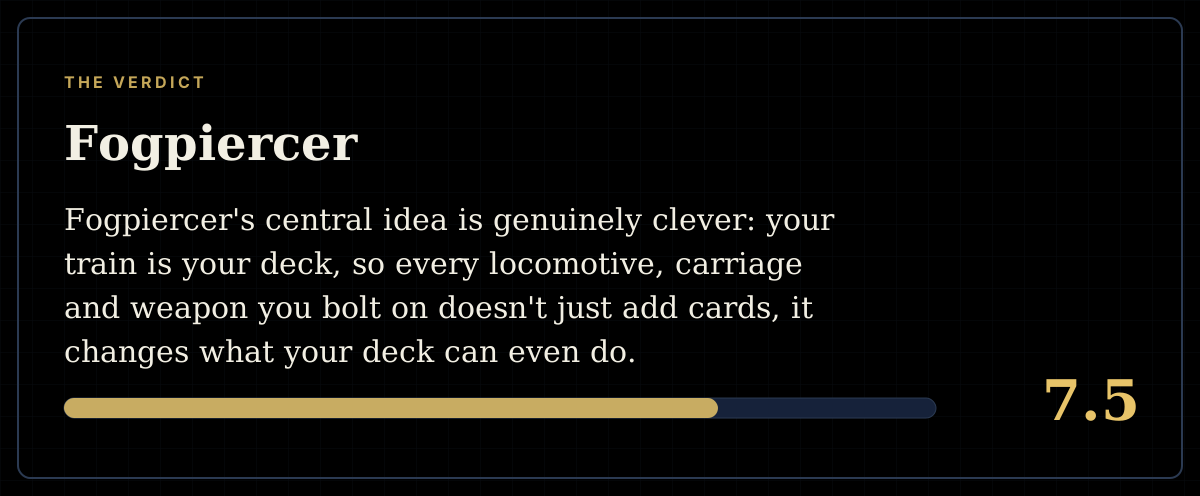
The short versionWanderer Editorial