Game review
Afterplace
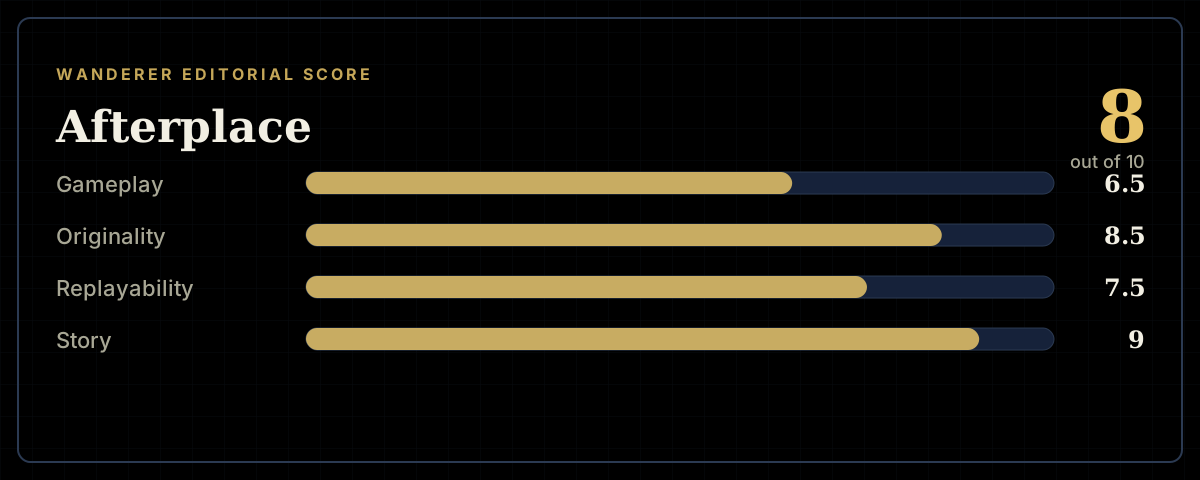
8 / 10
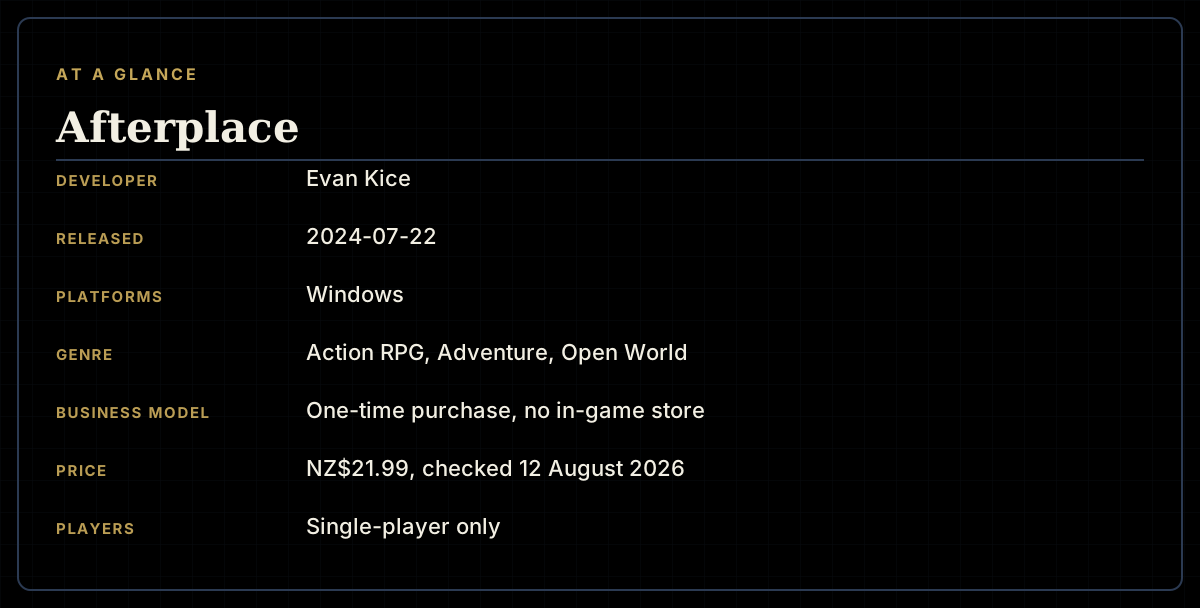
- Developer
- Evan Kice
- Publisher
- indie.io
- Released
- 22 July 2024
- Platforms
- Windows
- Genre
- Action RPG, Adventure, Open World
- Monetisation
- One-time purchase, no in-game store
- Players
- Single-player only
The short version
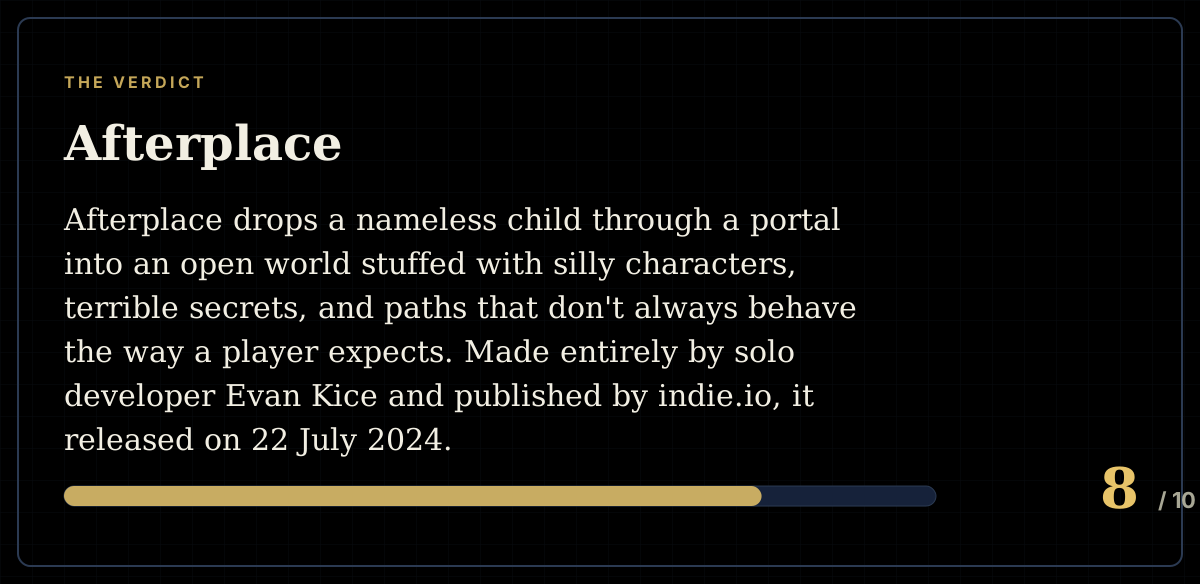
Afterplace drops a nameless child through a portal into an open world stuffed with silly characters, terrible secrets, and paths that don't always behave the way a player expects. Made entirely by solo developer Evan Kice and published by indie.io, it released on 22 July 2024. Its 183 English-language Steam reviews sit at Very Positive, an exceptional roughly 97.3%, and reading all 5 available negative reviews alongside the top positives finds a game whose hand-crafted writing and world design draw the kind of specific, effusive praise this library rarely sees, with the small negative sample converging on real but comparatively minor complaints about combat depth, pacing and navigation.
Biggest strengths
- Character writing draws exceptional, specific praise across nearly the entire sample, with multiple reviewers describing dialogue written uniquely for niche interactions rather than generic filler text
- The open world earns repeated superlative praise for secret density and attention to detail, with reviewers describing genuine surprise on repeat playthroughs even after extensive exploration
- Its surreal tone and willingness to break expected game logic draw direct, favourable comparisons to Undertale, with one reviewer calling it what that game "could have been if Undertale had actually been fun to play"
Biggest weaknesses
- Combat draws consistent, specific criticism as simple and somewhat undemanding, with multiple reviewers noting it takes a clear back seat to exploration and writing rather than being a primary draw
- Navigation and pacing frustrate a meaningful share of reviewers, with doors, paths and map logic behaving in ways some players describe as confusing rather than intentionally mysterious, leading to real, frustrating backtracking
- Dialogue delivery while moving draws a specific, practical complaint, with at least one reviewer reporting text becoming hard to read or missed entirely during active movement
Who it's for: Players who want a densely written, surprise-filled exploration game with genuinely memorable characters over one built for combat depth; fans of Undertale-style tonal shifts and hidden-secret density will feel especially at home.
Our recommendation: A genuine hidden gem worth seeking out specifically for its writing and world design, with simple combat that isn't the point and a navigation system some players will find disorienting rather than mysterious.
8 / 10
Introduction
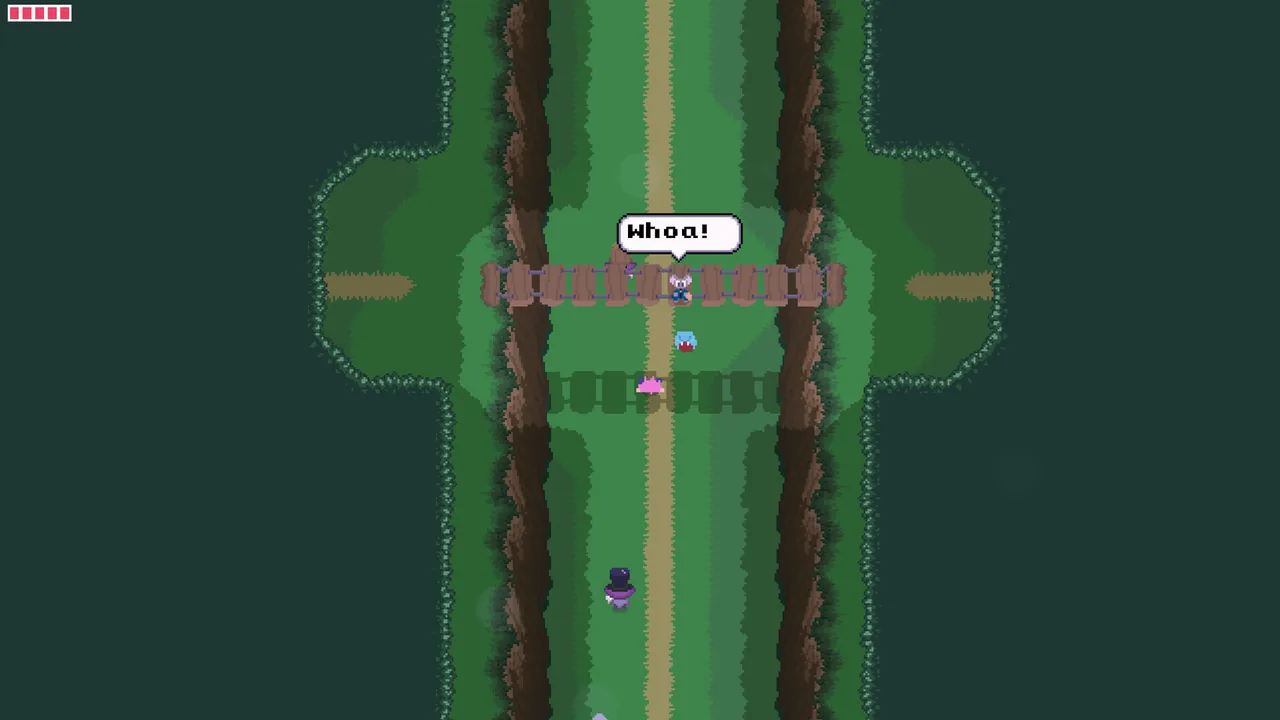
Afterplace opens with a nameless child tossed through a portal into an open world with no explanation of who they are or what they're meant to do, left only to follow the road and gradually piece together a story stuffed with silly characters, terrible secrets and a setting that doesn't always play by expected rules. Evan Kice made the entire game solo, and indie.io published it on 22 July 2024. Reading all 5 available English-language negative reviews alongside the top 100 positives, out of a corpus sitting at Very Positive, an exceptional roughly 97.3% across 183 reviews, finds a game its reviewers reach for genuinely rare language to describe.
Writing that reviewers keep insisting is exceptional
The single clearest throughline across this review's sample is character writing, and reviewers get remarkably specific about why it works. One reviewer, over 1,000 minutes in, wrote that the "attention to detail on repeat playthroughs" felt like the developer "made unique and special dialogue for every single niche case" rather than reusing generic filler — a rare, high compliment for a game made by one person. Another framed the whole experience through a genre comparison that reads as genuinely earned rather than casual: Afterplace is "what Undertale could have been if Undertale had actually been fun to play." A third reviewer opened by calling it "a VERY VERY refreshing adventure game... chock full of funny little design decisions you won't find in other games," crediting them as working "through the sheer power of love and effort put into their realization." That's the kind of specific, considered praise that separates a genuinely earned near-unanimous score from an inflated one, and it recurs across independent reviewers with real consistency.
An open world built for surprise
Beyond the writing, the world itself draws its own superlative praise. Reviewers describe an open, non-linear structure "filled to the brim with secrets," with one calling the world design something that "genuinely blew me away." Several reviewers who finished the game specifically wrote reviews purely because they felt compelled to, one noting "you know a game is really good when I exit it wanting to write a review." The game's willingness to bend or break expected logic — described by its own store listing as trying "very, very hard not to break reality... or don't, you do you" — comes through in reviewer accounts as a genuine structural feature rather than a gimmick, rewarding players who poke at the edges of what the world allows.
Where the small negative sample converges
What's notable about this review's tiny negative sample is how much it agrees on, in ways that sharpen rather than contradict the overall picture. Combat draws consistent, specific criticism as simple and undemanding — several reviewers explicitly note it's not the game's focus and describe it as "simple," which reads less as a flaw than as confirmation that Afterplace's priorities lie elsewhere. Navigation is the more substantive complaint: multiple reviewers describe doors, paths and map logic behaving confusingly rather than mysteriously, leading to real backtracking frustration for players who lose their bearings easily. A related, practical complaint concerns dialogue delivered while the player is moving, which at least one reviewer found genuinely difficult to read in full. A separate, more technical issue concerns controller support — one player using only a trackpad and keyboard found shop and dialogue menus difficult or impossible to navigate without a gamepad, serious enough to prompt a refund.
Final Verdict
Afterplace is a genuine hidden gem, and this review's sample backs that description up with specifics rather than vague enthusiasm — hand-crafted dialogue that goes well beyond what a single developer typically manages, a world built to reward curiosity and exploration, and a tonal confidence that draws favourable comparison to genre touchstones without feeling derivative. Its combat is simple by design rather than accident, and its navigation will frustrate players who lose their bearings easily, but neither complaint threatens what the game is actually trying to do. For anyone who values writing and world design over combat depth, this is an easy, confident recommendation, and one of the stronger solo-developer achievements this library has covered.
Pros and cons
Pros
- Character writing draws exceptional, specific praise across nearly the entire sample, with multiple reviewers describing dialogue written uniquely for niche interactions rather than generic filler text
- The open world earns repeated superlative praise for secret density and attention to detail, with reviewers describing genuine surprise on repeat playthroughs even after extensive exploration
- Its surreal tone and willingness to break expected game logic draw direct, favourable comparisons to Undertale, with one reviewer calling it what that game "could have been if Undertale had actually been fun to play"
- As a genuinely solo-developed project, the scope and craft on display draw specific admiration, with reviewers noting the sheer density of hand-made content for a single creator's output
Cons
- Combat draws consistent, specific criticism as simple and somewhat undemanding, with multiple reviewers noting it takes a clear back seat to exploration and writing rather than being a primary draw
- Navigation and pacing frustrate a meaningful share of reviewers, with doors, paths and map logic behaving in ways some players describe as confusing rather than intentionally mysterious, leading to real, frustrating backtracking
- Dialogue delivery while moving draws a specific, practical complaint, with at least one reviewer reporting text becoming hard to read or missed entirely during active movement
- Controller support issues are reported by at least one player using trackpad and keyboard only, with shop and dialogue menus described as difficult or impossible to navigate without a gamepad
Screenshots
-

AfterplaceImage: indie.io via Steam -

AfterplaceImage: indie.io via Steam -
AfterplaceImage: indie.io via Steam -
How the review scores each part of the gameWanderer Editorial -
The essentials at a glanceWanderer Editorial -
The short versionWanderer Editorial