Game review
Codex Lost
5.5 / 10
- Developer
- Freemana
- Publisher
- JanduSoft
- Released
- 14 November 2024
- Platforms
- Windows
- Genre
- Action RPG, Souls-like, Open World
- Monetisation
- One-time purchase, no in-game store
- Players
- Single-player only
The short version
Codex Lost is a magic-only Soulslike sending a Curator through an interconnected open world to craft up to 80 spells and recover the stolen grimoires that once held civilisation together. It was developed almost entirely by one person, Freemana, and published by JanduSoft, releasing on 14 November 2024. Its 68 English-language Steam reviews sit at Mostly Positive, roughly 72.1%, and this review reads all 19 available negative reviews alongside the top positives to find a genuinely ambitious, magic-focused passion project whose world design and spellcrafting draw real comparisons to Dark Souls and Elden Ring, undercut by a consistent, wide-ranging list of interface and feedback problems that a mostly quiet 20 months of post-launch patching hasn't resolved.
Biggest strengths
- The magic-only combat identity draws consistent, specific praise for genuinely reinventing the Soulslike formula, with reviewers crediting the sheer variety of craftable spells and elemental schools for keeping builds interesting across a full playthrough
- The interconnected, semi-open world design draws real, informed comparisons to Dark Souls and Elden Ring from reviewers who know the genre well, with several specifically praising the sense of discovery in its late-game areas
- Multiple reviewers explicitly frame their score in the context of the game being built almost entirely by one developer, expressing genuine admiration for the scope achieved by so small a team
Biggest weaknesses
- The single most consistent complaint across this review's entire sample is a near-total absence of hit feedback, with reviewers repeatedly saying they can only tell they've been hit or landed a hit by watching health bars change, with no particle effects, sound or physical response
- Controls cannot be rebound at all, a repeated, specific complaint that becomes a serious accessibility barrier for reviewers on non-QWERTY keyboards, with at least one reporting the game effectively unplayable as a result
- Navigation and structure draw pointed criticism despite the game's "open world" billing, with reviewers describing an absence of any in-game map, unclear quest objectives, and checkpoints that don't allow fast travel back to the hub without a consumable item
Who it's for: Soulslike fans who specifically want to play as a mage and are willing to tolerate real jank for a genuinely fresh take on the formula; a poor fit for anyone who needs rebindable controls, clear hit feedback, or a fully polished experience.
Our recommendation: A creative, ambitious one-person Soulslike worth trying for its magic-focused identity and world design, best bought on sale given a steep asking price and unresolved rough edges nearly two years after launch.
5.5 / 10
Introduction
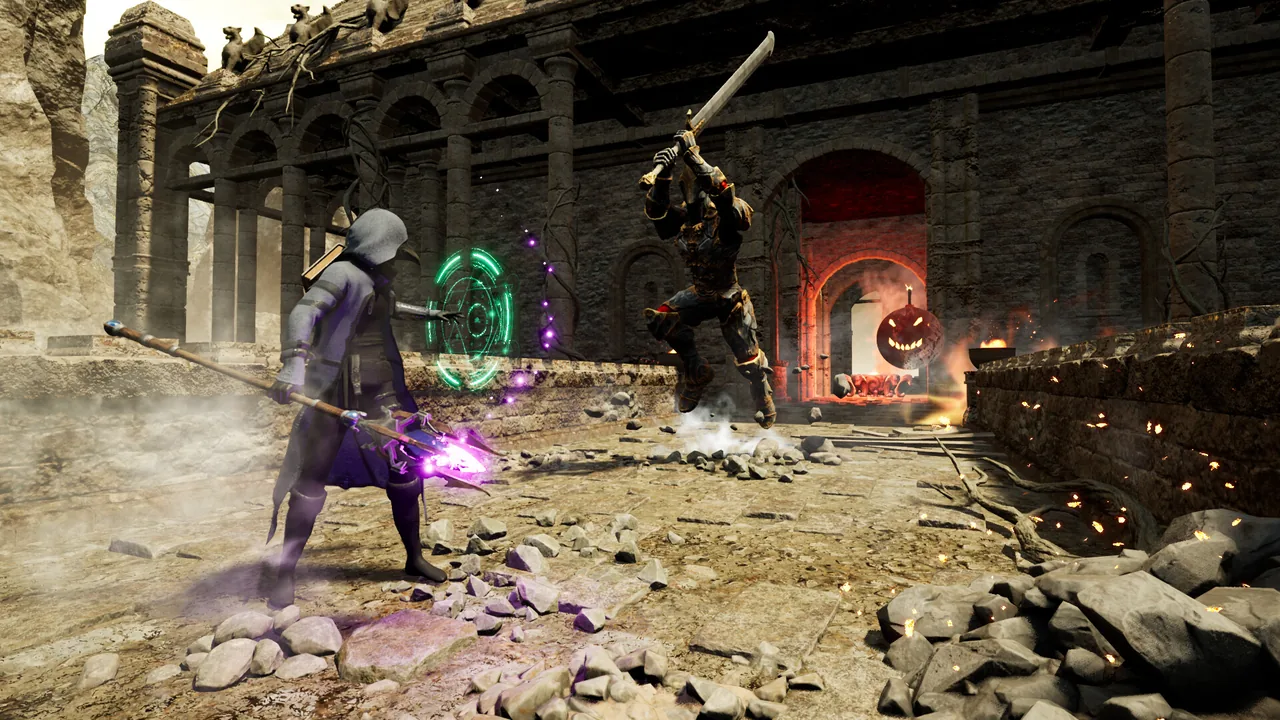
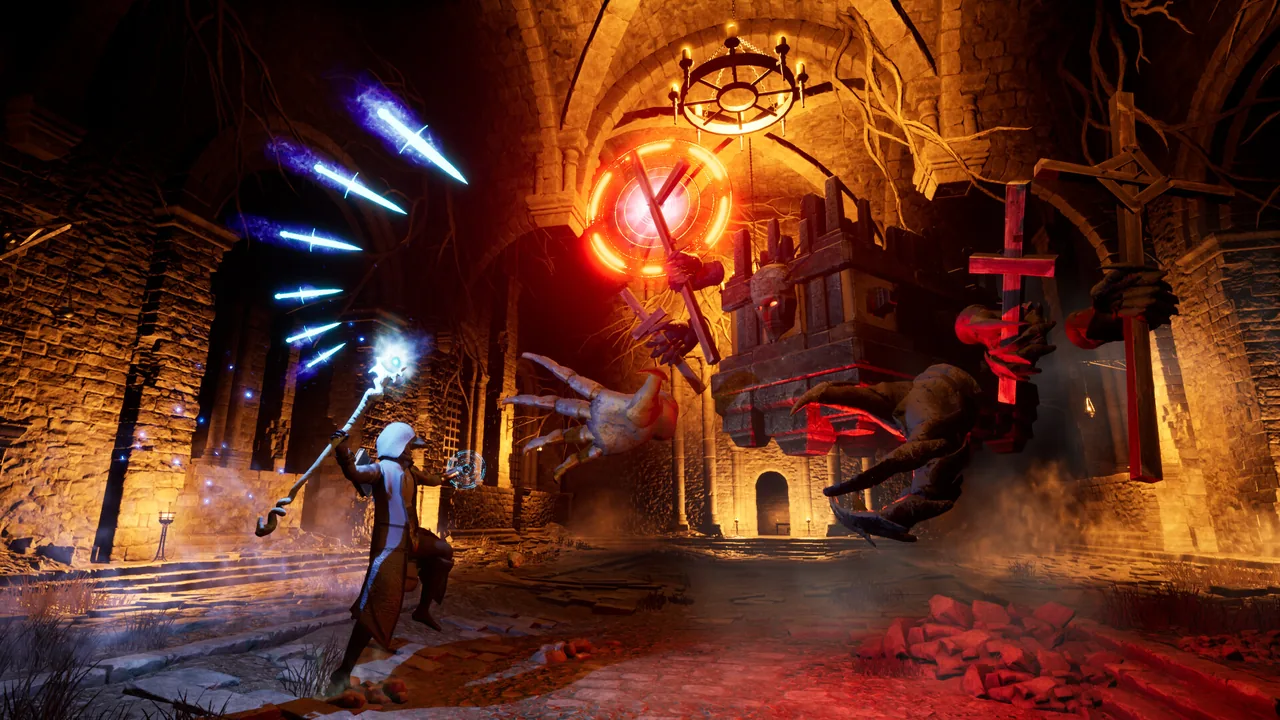
Codex Lost sends the player, a Curator, through a fractured open world hunting the stolen grimoires that once held civilisation together, crafting up to 80 unique spells across elemental schools and combining them with staves and talismans in place of traditional Soulslike melee builds. Freemana built almost all of it alone, with JanduSoft publishing; it released on 14 November 2024. Reading all 19 available English-language negative reviews alongside the top positives, out of a Mostly Positive corpus (roughly 72.1% across 68 reviews), and cross-checking the game's own Steam news feed for its update history, finds a genuinely ambitious magic-focused passion project whose real strengths keep running into a long, specific list of rough edges.
A genuinely different Soulslike identity
The most consistent, informed praise in this review's sample credits Codex Lost for actually reinventing the Soulslike formula around magic rather than bolting a spell system onto conventional melee combat. One reviewer, self-described as someone who "plays the mage in every single game," wrote plainly: "this soulslike was made for me... every single spell is useful, the combat is good, the parry system is so satisfying, the story is really interesting, the variety of spells and combinations are really good." Another compared it favourably and specifically to genre landmarks: "The environments seem straight out of Elden Ring at times and that is just amazing for a single dev," while a longer, more measured review credited the "sprawling semi-open world that is both segmented yet complexly interconnected" as the game's standout achievement, adding that discovering certain late-game areas "literally made my jaw drop." Multiple reviewers explicitly and generously frame their assessment around the fact that this was built almost entirely by one person — a fair, honest context this review shares, though one that shouldn't lower the bar for what players are actually asked to pay.
A long, specific list of things that get in the way
Set against that ambition, this review's negative sample converges on remarkably consistent, specific complaints — not vague genre grumbling, but the same handful of concrete problems raised independently by reviewer after reviewer. The most frequent is a near-total absence of hit feedback: one detailed review put it precisely, "If something hits your shield, the animation simply plays out without particle effects, pushback, any sense of physicality. You can never tell if you blocked an attack or it whiffed." Another, shorter review made the same point from the receiving end: "Hit detection is non existent. Had absolutely no idea when a hit landed on me. Watching my health bar is the only way I knew if I was getting hit." Controls draw their own sustained, specific frustration — key rebinding isn't available at all, which multiple reviewers call unacceptable regardless of team size, and at least one reviewer reports the game unplayable on a non-QWERTY keyboard as a direct result. Navigation frustrates even fans of the underlying world design: despite its "open world" billing, reviewers describe no in-game map, unclear quest objectives, and checkpoints that require a consumable item just to travel back to the hub for basic upgrades — one reviewer who has "completed, and pumped hours into, all the 'proper' souls-likes out there" called the resulting backtracking "ruined... by the lack of basic fundamentals for a game of this genre."
Real bugs, and a long silence since
Beyond the interface complaints, this review's sample includes several specific, reproducible bugs: one reviewer reported the game hard-crashing whenever Escape is pressed on the main screen; another described the same crash forcing them to close the game via Task Manager; and a cluster of reviewers independently flag motion blur intense enough to cause physical discomfort, with no in-game setting to reduce it. This review's own check of the game's Steam news feed found two patches in the month following launch — 1.4.8 and 1.5.0, both in December 2024 — and nothing since, a gap of roughly twenty months at the time of this review. One frustrated reviewer speculated the developer has moved on to a sequel rather than continuing to fix this game; this review cannot independently confirm that, only that the public patch history is silent on it either way.
Final Verdict
Codex Lost is a genuinely creative, ambitious Soulslike built around an identity few other games in the genre attempt — magic as the only way to fight, not an optional playstyle — and its world design earns real, informed comparisons to genre landmarks from reviewers who clearly know the space well. What holds it back from a stronger recommendation is a long, specific and remarkably consistent list of problems that go beyond ordinary indie roughness: missing hit feedback, unrebindable controls, absent navigation tools, and reproducible bugs that a mostly quiet twenty months of post-launch support hasn't visibly addressed. For Soulslike fans specifically drawn to a mage-only build and willing to push through real jank, there's a worthwhile, distinctive game here — just go in with patience, and ideally at a discount.
Pros and cons
Pros
- The magic-only combat identity draws consistent, specific praise for genuinely reinventing the Soulslike formula, with reviewers crediting the sheer variety of craftable spells and elemental schools for keeping builds interesting across a full playthrough
- The interconnected, semi-open world design draws real, informed comparisons to Dark Souls and Elden Ring from reviewers who know the genre well, with several specifically praising the sense of discovery in its late-game areas
- Multiple reviewers explicitly frame their score in the context of the game being built almost entirely by one developer, expressing genuine admiration for the scope achieved by so small a team
- Atmosphere and sound design draw specific credit, with reviewers describing lighting and contrast reminiscent of the original Dark Souls and praising restrained, well-used ambient audio
Cons
- The single most consistent complaint across this review's entire sample is a near-total absence of hit feedback, with reviewers repeatedly saying they can only tell they've been hit or landed a hit by watching health bars change, with no particle effects, sound or physical response
- Controls cannot be rebound at all, a repeated, specific complaint that becomes a serious accessibility barrier for reviewers on non-QWERTY keyboards, with at least one reporting the game effectively unplayable as a result
- Navigation and structure draw pointed criticism despite the game's "open world" billing, with reviewers describing an absence of any in-game map, unclear quest objectives, and checkpoints that don't allow fast travel back to the hub without a consumable item
- This review's own check of the game's Steam news feed found only two patches in the month after launch and no further updates in the roughly twenty months since, leaving specific, repeated complaints — including a hard crash on pressing Escape and heavy, unadjustable motion blur that some reviewers say makes them physically ill — seemingly unaddressed
Screenshots
-
Codex LostImage: JanduSoft via Steam -
Codex LostImage: JanduSoft via Steam -
Codex LostImage: JanduSoft via Steam -
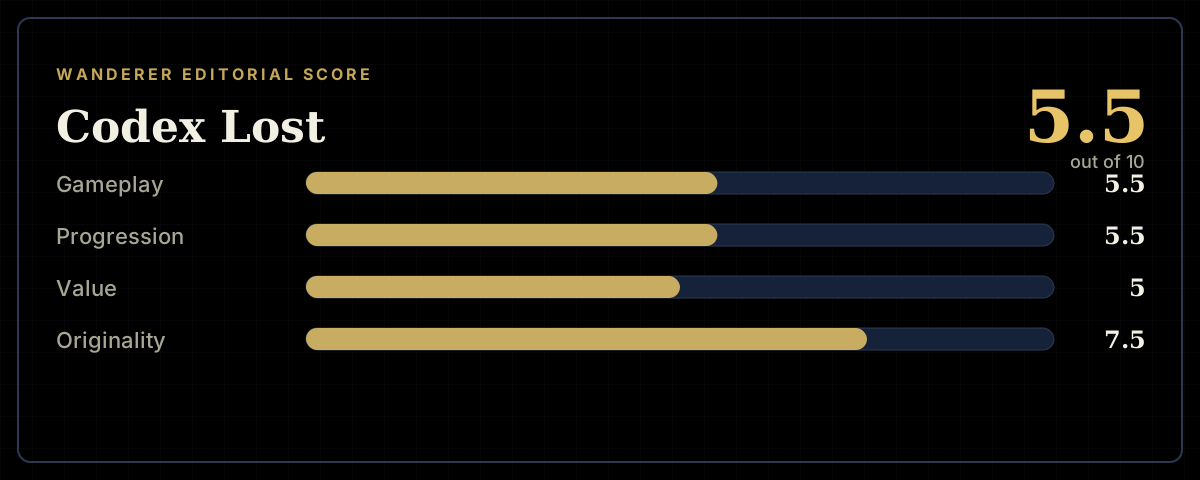
How the review scores each part of the gameWanderer Editorial -
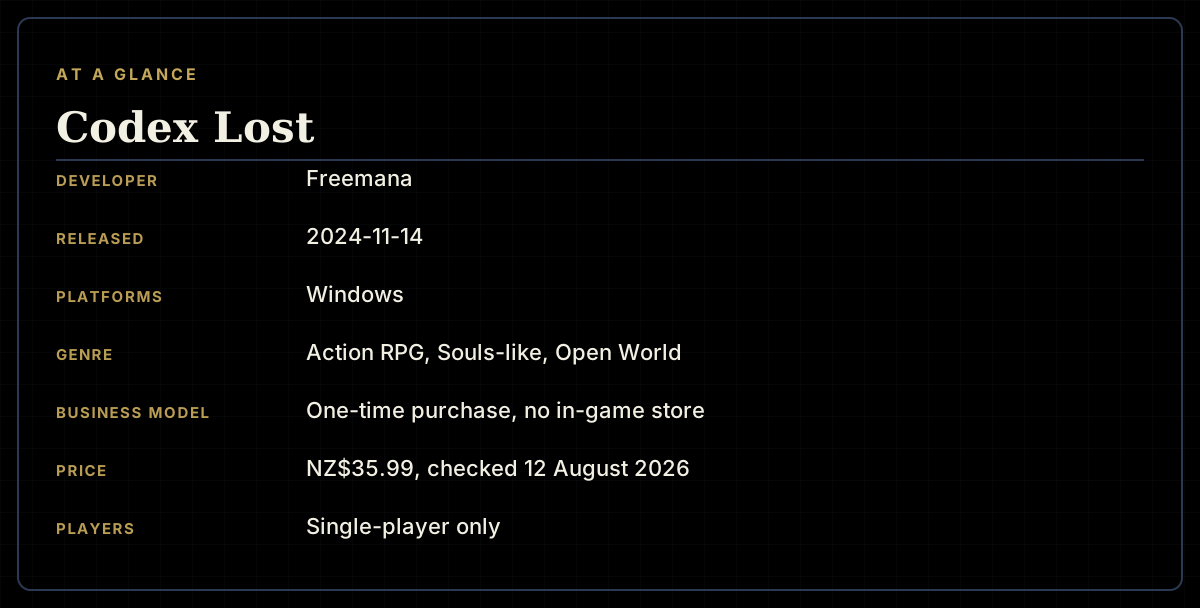
The essentials at a glanceWanderer Editorial -
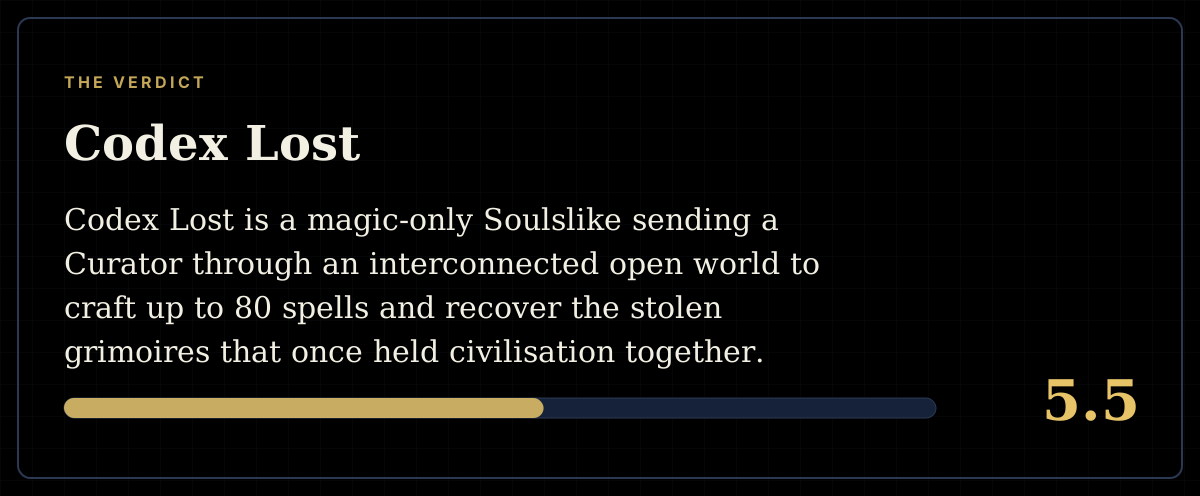
The short versionWanderer Editorial