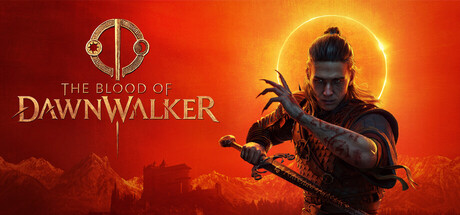
Game review
The Blood of Dawnwalker
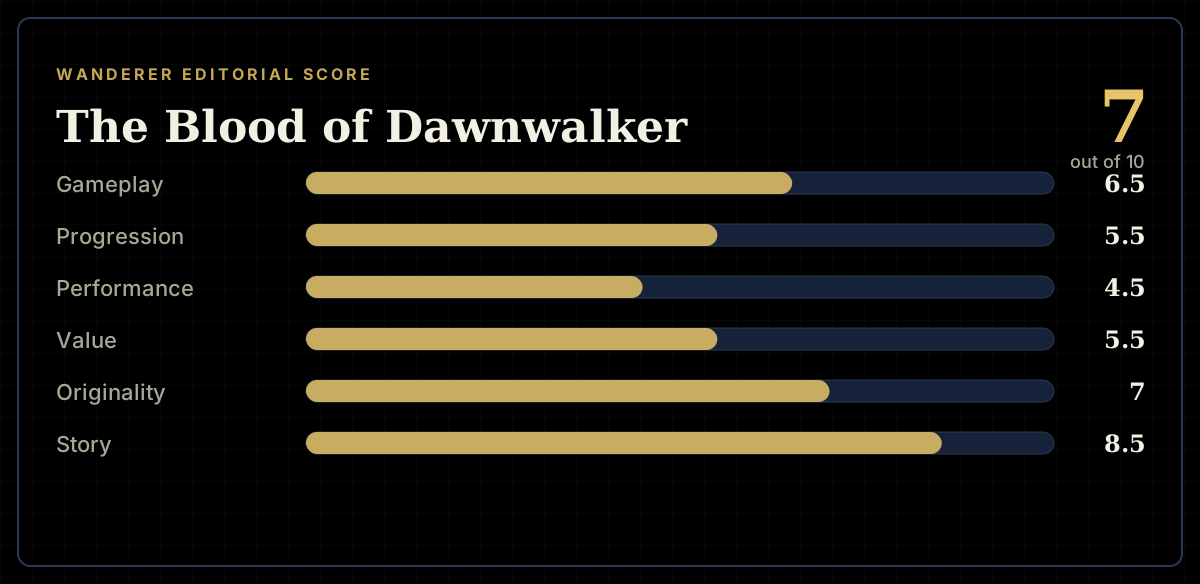
7 / 10
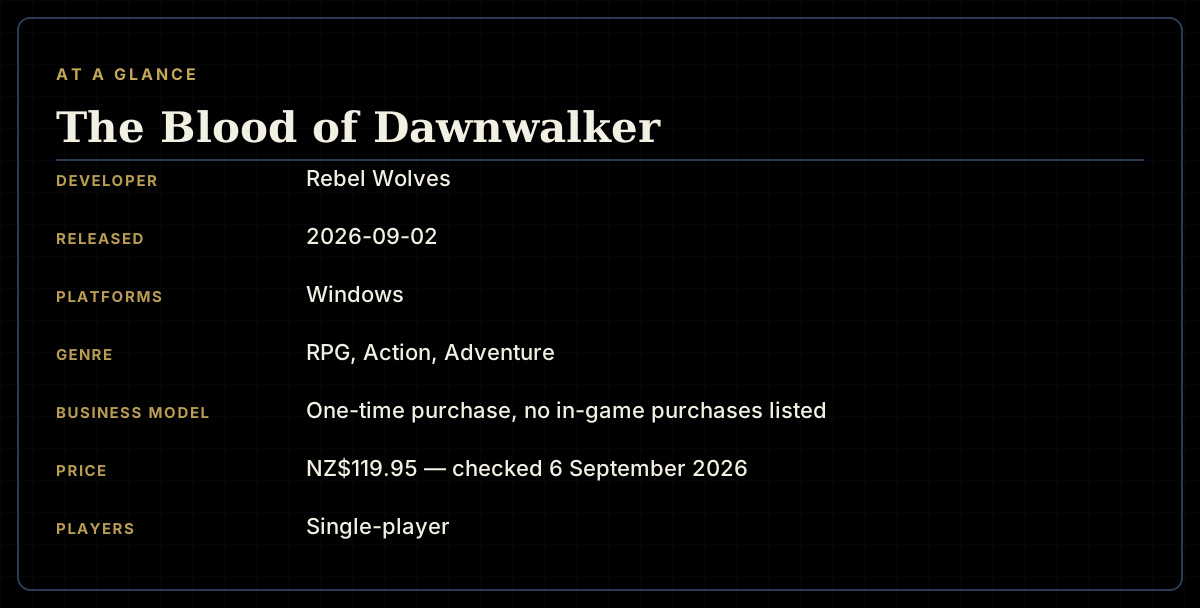
- Developer
- Rebel Wolves
- Publisher
- Bandai Namco Entertainment
- Released
- 2 September 2026
- Platforms
- Windows
- Genre
- RPG, Action, Adventure
- Monetisation
- One-time purchase, no in-game purchases listed
- Players
- Single-player
The short version
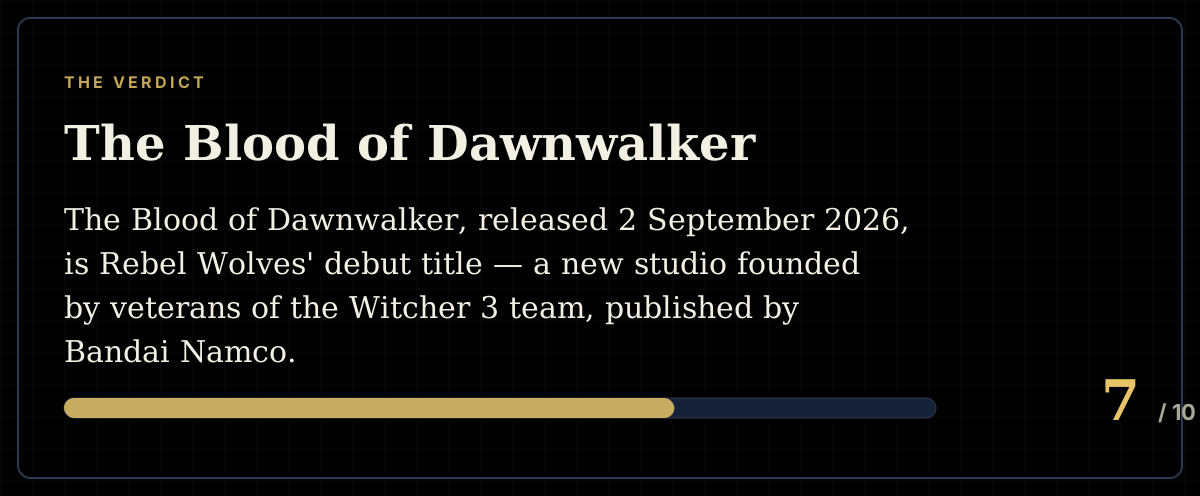
The Blood of Dawnwalker, released 2 September 2026, is Rebel Wolves' debut title — a new studio founded by veterans of the Witcher 3 team, published by Bandai Namco. Set in a 14th-century Europe ravaged by plague, it casts players as Coen, human by day and vampire by night, in an open-world dark fantasy action RPG built around a real-time-progressing calendar rather than a freely-paused clock. It sits Very Positive with English-speaking players, 81.0% across a very large sample of 7,524 reviews as of this check, and reading through a wide slice of that sample finds a genuinely ambitious, well-written debut arriving with real, specific launch problems rather than a simple hit-or-miss verdict. Story, characters and atmosphere draw exceptionally strong, consistent praise from both critics and fans — several reviewers explicitly call this the vampire RPG the genre has been missing since Vampire: The Masquerade – Bloodlines 2's troubled development. Set against that is a genuinely divisive core design choice: the game's time-progression system, which some reviewers praise as a meaningful, Final Fantasy XIII-2-style structure forcing real choices, while a large and specific share of others say was marketed as far more flexible than what actually shipped, turning nearly every activity — including levelling skills — into a cost against a ticking clock. Separately, this review found widespread but hardware-inconsistent performance complaints, real controller input bugs (several already patched within days of launch), and a specific, unusual controversy over a censored, language-locked Japanese release.
Biggest strengths
- Story, characters, quest writing and voice acting draw exceptionally strong, remarkably consistent praise across both critical and positive reviews, with many describing genuine investment in the world and its cast within the first few hours
- The game fills what a large number of reviewers describe as a real, long-standing gap for a genuinely good vampire-themed RPG, several explicitly citing frustration with Vampire: The Masquerade – Bloodlines 2's protracted development as part of why this release feels especially welcome
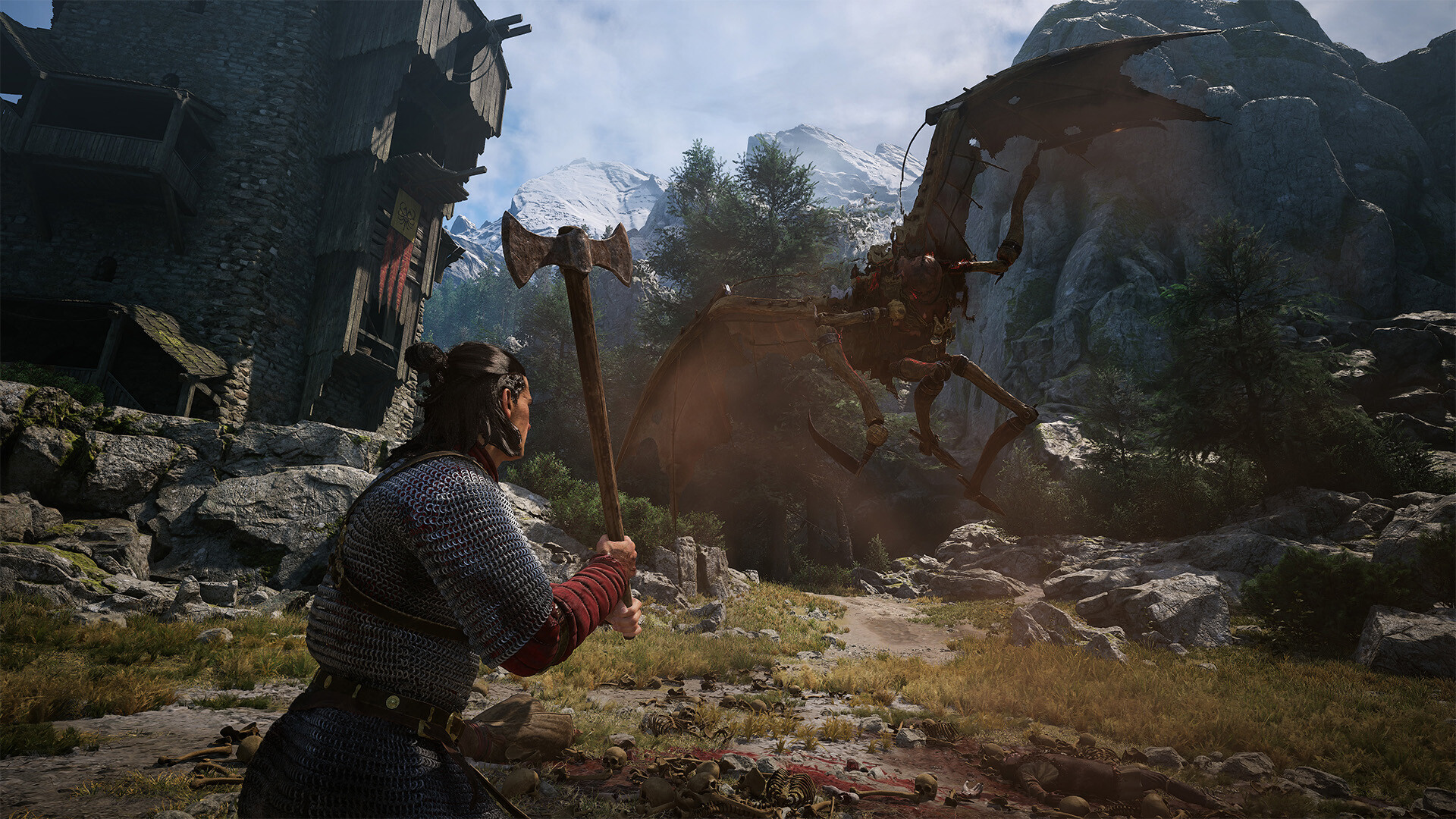
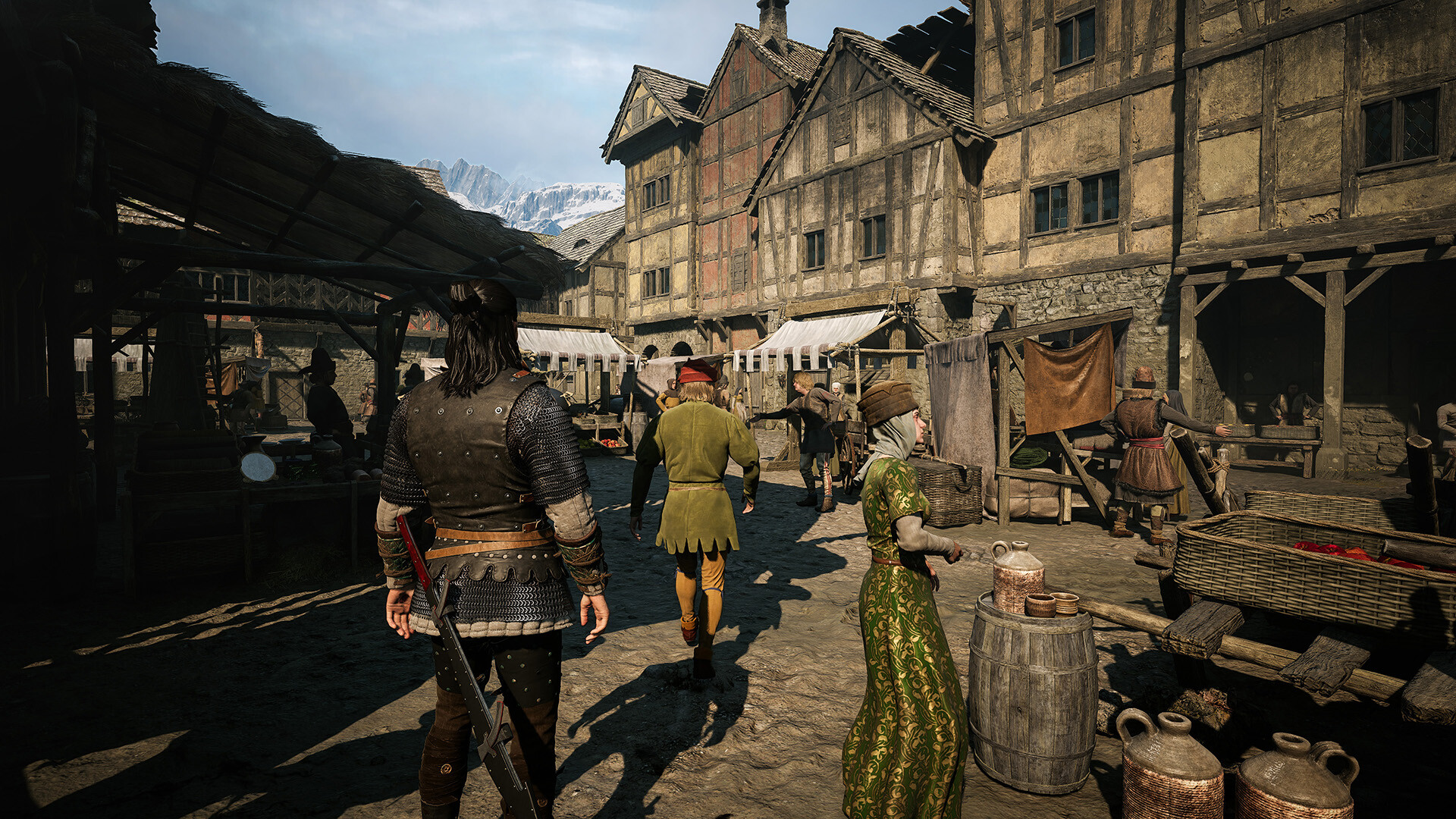
- Atmosphere and world design draw specific, repeated praise, with reviewers describing a plague-ravaged 14th-century Europe that feels genuinely lived-in rather than generic fantasy dressing
Biggest weaknesses
- A large, specific share of reviewers report that the game's time-progression system was marketed as allowing free exploration outside of story-critical activities, but that in practice nearly everything — including levelling skills and unlocking fast travel — costs time, which they describe as punishing normal RPG behaviours like exploring and side-questing; this review reports this as a genuine, unresolved dispute rather than a settled flaw, since a separate, substantial share of reviewers praise the identical system as a meaningful, Final Fantasy XIII-2-style structure that forces real, weighty choices
- Performance problems are widespread but inconsistent across hardware: many reviewers, including some on high-end systems, report severe stuttering and frame drops, while others report smooth, trouble-free performance on similarly powerful configurations, suggesting optimization issues tied to specific hardware or driver combinations rather than a uniformly broken build
- Multiple reviewers report real controller problems at launch, including inputs failing to register, no native DualSense support requiring Steam Input, and movement briefly cutting out during stick rotation; several of these are reported as already patched within days, but not all reviewers confirm the fixes cover their specific issue
Who it's for: Fans of story-driven, character-focused open-world RPGs in the Witcher 3 mould who specifically want a fresh vampire setting, and who are willing to tolerate real launch-week technical problems from a new studio's first release.
Our recommendation: Worth it now if the time-pressure structure and current technical state genuinely don't bother you, since the writing and atmosphere are worth experiencing; otherwise wait for patches and a price drop, as a large and specific share of this review's own fans recommend.
7 / 10
Introduction
The Blood of Dawnwalker, released 2 September 2026, marks the debut release from Rebel Wolves, a studio founded by veterans of CD Projekt Red's Witcher 3 team, published by Bandai Namco Entertainment. Set in a 14th-century Europe collapsing under plague and vampiric conquest, it casts players as Coen — human during the day, a vampire by night — on a quest to save his family, in an open world where a real, forward-moving calendar replaces the genre's usual freely-paused clock. It sits Very Positive with English-speaking players, 81.0% across a very large sample of 7,524 reviews, and reading through a wide slice of that sample reveals a genuinely ambitious debut whose reception is more nuanced than its headline score suggests: exceptionally strong praise for its writing sits directly alongside real, specific, well-documented launch problems, and one of its most central design decisions is being argued about in real time by its own audience.
A vampire RPG reviewers say the genre has been missing
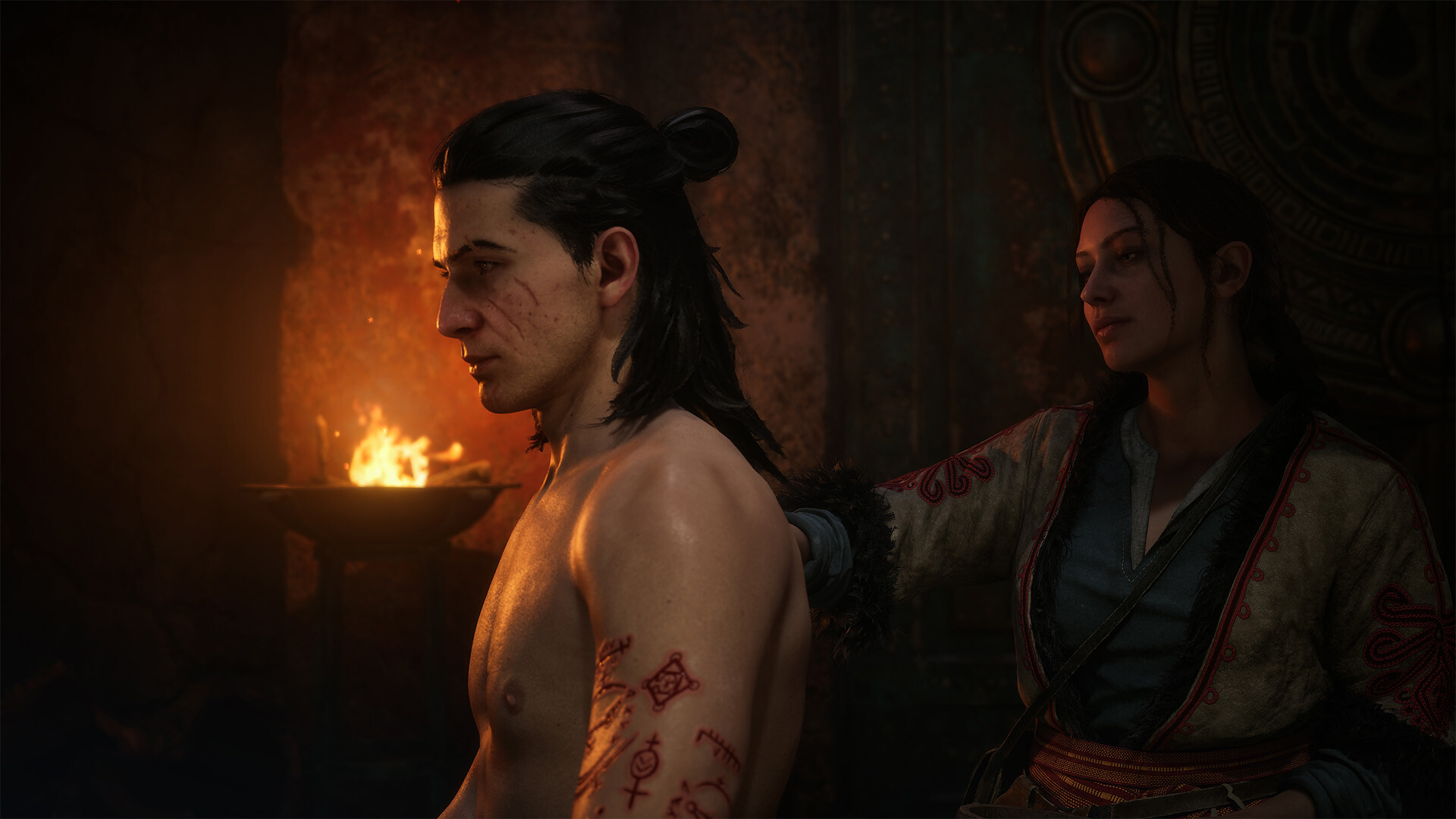
The most consistent, most emphatic praise in this sample concerns story, character writing and atmosphere, and it comes from critical and positive reviews alike. Multiple reviewers explicitly frame this as the vampire RPG they've been waiting years for, several citing specific frustration with Vampire: The Masquerade – Bloodlines 2's long, troubled development as part of why this release feels especially welcome — one reviewer calls it "Nosferatu reinvented" and explicitly rejects comparisons to lighter, more romantic vampire fiction. The plague-ravaged setting draws specific praise for feeling genuinely lived-in, and quest writing, NPC interactions and voice acting are singled out repeatedly as clearly benefiting from the team's Witcher 3 pedigree. Even reviewers who ultimately recommend waiting before buying tend to carve out an explicit exception for the writing — a pattern that recurs often enough across this sample to treat as the game's most secure, least contested strength.
A time-pressure system its own players are actively arguing about
The single most interesting pattern in this review's research isn't a one-sided complaint — it's a live, substantive disagreement between reviewers about the game's central structural choice. A large, specific share of reviewers report feeling misled by pre-release marketing that described a world where players could freely explore and only story-critical activities would advance time; in practice, they report, nearly everything costs time, including levelling skills, unlocking fast travel points, and even certain kinds of combat, which several describe as actively punishing the exploratory, do-everything playstyle the genre typically rewards. One widely-read review calls this "FOMO for Quests" and reports specifically disabling comments after disagreements over the point.
Directly opposed to this is a separate, substantial group of reviewers who praise the identical system as a deliberate, meaningful design choice. One detailed review compares it favourably to Final Fantasy XIII-2's time-travel structure, arguing that a clock that never stops moving forces genuinely weighty decisions about what to prioritize, rather than letting a player exhaustively complete everything in one playthrough with no real cost. This review has not played enough of the game to referee that dispute independently, and reports it here as exactly what it is: a real, unresolved disagreement between reviewers who are describing the identical mechanic and reaching opposite conclusions about whether it's the game's best idea or its most serious broken promise. Anyone considering a purchase should weigh this specifically rather than assume either side represents consensus.
Performance that depends heavily on what you're running
This review found performance complaints across a large share of the negative sample, but with an important nuance: they don't read as universal. Multiple reviewers, including some on genuinely high-end systems like an RTX 5080 paired with a 7800X3D, report severe stuttering and frame drops immediately upon leaving the game's tutorial and entering the open world, with one detailed technical review specifically comparing this unfavourably to other recent, similarly ambitious open-world titles — Crimson Desert, Stellar Blade and Kingdom Come: Deliverance II are all cited by name as recent releases that ran acceptably on the same reviewer's hardware without this game's issues. Set directly against this, a separate, meaningful share of reviewers report smooth, trouble-free performance on comparably powerful configurations, with specific settings listed — DLSS Quality at ultrawide resolutions, for instance — and no complaints at all. That split suggests the game's optimization problems are tied to specific hardware, driver, or configuration combinations rather than being uniformly broken across all systems, which is a meaningfully different, more fixable problem than universal poor performance would be, but doesn't make it any less real for the players currently affected.
Real controller bugs, several already being patched
Beyond general performance, this review found specific, named input problems reported repeatedly at launch: controller movement briefly cutting out and defaulting to a slow walk during stick rotation, horizontal movement failing to map correctly on some controllers entirely, and no native DualSense support, requiring Valve's Steam Input layer as a workaround. Encouragingly, several of these reports include follow-up edits confirming fixes arrived within days of launch — one reviewer notes the deadzone issue was patched despite some confusion over whether it had existed at all, and another confirms the X-axis mapping problem was resolved in a quick update. Not every affected reviewer confirms their specific issue is covered by these fixes, so this remains a real consideration for controller-focused players buying at launch rather than after a patch or two.
Combat that splits opinion much like the clock does
Combat and camera work draw a similarly divided response. Critics describe janky animations, a camera that doesn't move smoothly, and counter-attacks that reportedly auto-target the farthest enemy rather than the one directly threatening the player — specific, reproducible-sounding complaints rather than vague dissatisfaction. Several reviewers explicitly compare the combat unfavourably to Witcher 3's decade-old system, calling it a downgrade rather than an evolution. Against this, other reviewers describe the same system, once its rhythm is learned, as genuinely rewarding, drawing comparisons to For Honor and Kingdom Come: Deliverance's more grounded, weight-driven approach to melee combat. As with the time mechanic, this reads less as a settled flaw than as a design the community hasn't reached consensus on, and reviewers considering a purchase should treat combat feel as something to research carefully via footage rather than assume either side of this debate as the last word.
A specific, unusual regional controversy
One further pattern is worth reporting on its own terms because of how specific and unusual it is. Multiple reviewers independently describe the game's Japanese Steam release as censored — with blood, violence and nudity removed relative to other regions — and locked to Japanese-language text only, preventing players physically located in Japan, including non-Japanese Steam account holders, from selecting English even in the game's menus. Reviewers explicitly dispute why this happened: one reviewer claims Japanese law mandates this kind of censorship for a game with this content, while a separate, detailed reviewer directly rebuts that claim, pointing to other titles, including Cyberpunk 2077, that ship uncensored on the Japanese Steam storefront, and arguing this reflects a discretionary publisher decision rather than a legal requirement. This review has not independently verified either the underlying censorship claim or the legal dispute over its cause, and reports both only as specific, attributed claims from reviewers — but the pattern is specific and consistent enough, for a game explicitly built around vampiric violence, that prospective buyers in the affected region should investigate further before purchasing.
A save-sync quirk worth knowing about
One smaller but concrete technical detail: at least one detailed reviewer, testing across a laptop and a desktop with different graphics hardware, reports that the game ties graphics configuration to the save file itself, meaning switching between machines with different GPUs requires manually reselecting every graphics setting each time rather than the game handling this automatically. It's a minor annoyance next to the performance and controller issues above, but a concrete one worth knowing about for anyone who splits play time across more than one PC.
Final Verdict
The Blood of Dawnwalker is a genuinely ambitious, frequently well-written debut that earns its Very Positive reception honestly in the one area reviewers agree on almost without exception: its story, characters and atmosphere are strong enough that even reviewers recommending you wait before buying carve out explicit exceptions for the writing. What keeps this score from climbing further is that nearly everything else about the game is currently being actively debated by its own audience rather than settled — a time-pressure system some call its smartest idea and others call a broken promise, performance that ranges from flawless to unplayable depending on hardware, and combat that lands beautifully for some players and feels like a step backward for others. Layered on top of genuinely real, specific launch bugs and a notable regional controversy, this reads as a strong, promising first release from a new studio that clearly has real storytelling talent, but one that — by a large and specific share of its own fans' own advice — is worth approaching with a few patches and a discount between you and the purchase button, rather than at full price on launch week.
Pros and cons
Pros
- Story, characters, quest writing and voice acting draw exceptionally strong, remarkably consistent praise across both critical and positive reviews, with many describing genuine investment in the world and its cast within the first few hours
- The game fills what a large number of reviewers describe as a real, long-standing gap for a genuinely good vampire-themed RPG, several explicitly citing frustration with Vampire: The Masquerade – Bloodlines 2's protracted development as part of why this release feels especially welcome
- Atmosphere and world design draw specific, repeated praise, with reviewers describing a plague-ravaged 14th-century Europe that feels genuinely lived-in rather than generic fantasy dressing
- A meaningful share of reviewers report a smooth, well-optimized experience on their specific hardware configurations, and the developer is credited with shipping fixes to some reported controller issues within days of release
- Several reviewers specifically praise the ambition of blending Witcher-style narrative RPG design with combat influences from Kingdom Come: Deliverance and For Honor, calling the resulting hybrid a genuinely interesting new take even where its execution draws criticism
Cons
- A large, specific share of reviewers report that the game's time-progression system was marketed as allowing free exploration outside of story-critical activities, but that in practice nearly everything — including levelling skills and unlocking fast travel — costs time, which they describe as punishing normal RPG behaviours like exploring and side-questing; this review reports this as a genuine, unresolved dispute rather than a settled flaw, since a separate, substantial share of reviewers praise the identical system as a meaningful, Final Fantasy XIII-2-style structure that forces real, weighty choices
- Performance problems are widespread but inconsistent across hardware: many reviewers, including some on high-end systems, report severe stuttering and frame drops, while others report smooth, trouble-free performance on similarly powerful configurations, suggesting optimization issues tied to specific hardware or driver combinations rather than a uniformly broken build
- Multiple reviewers report real controller problems at launch, including inputs failing to register, no native DualSense support requiring Steam Input, and movement briefly cutting out during stick rotation; several of these are reported as already patched within days, but not all reviewers confirm the fixes cover their specific issue
- Combat and camera work draw specific, repeated criticism as janky, with counter-attacks reported auto-targeting the wrong enemy and animations described as stiff, though a separate share of reviewers say the system clicks and feels rewarding once its rhythm is learned
- At roughly NZD 120, many reviewers explicitly call the price difficult to justify given the game's current technical state, with a specific, repeated recommendation across the sample to wait for patches and a discount rather than buy at launch
- A specific, unusual controversy is reported around the game's Japanese Steam release: multiple reviewers independently describe it as censored for blood, violence and nudity and locked to Japanese-language text even for non-Japanese Steam accounts physically located in Japan, though reviewers explicitly dispute whether this reflects an actual legal requirement or a discretionary decision by the publisher
Screenshots
-
The Blood of DawnwalkerImage: Bandai Namco Entertainment via Steam -
The Blood of DawnwalkerImage: Bandai Namco Entertainment via Steam -
The Blood of DawnwalkerImage: Bandai Namco Entertainment via Steam -
How the review scores each part of the gameWanderer Editorial -
The essentials at a glanceWanderer Editorial -
The short versionWanderer Editorial