
Game review
Gene Crawl: Dungeon Descent
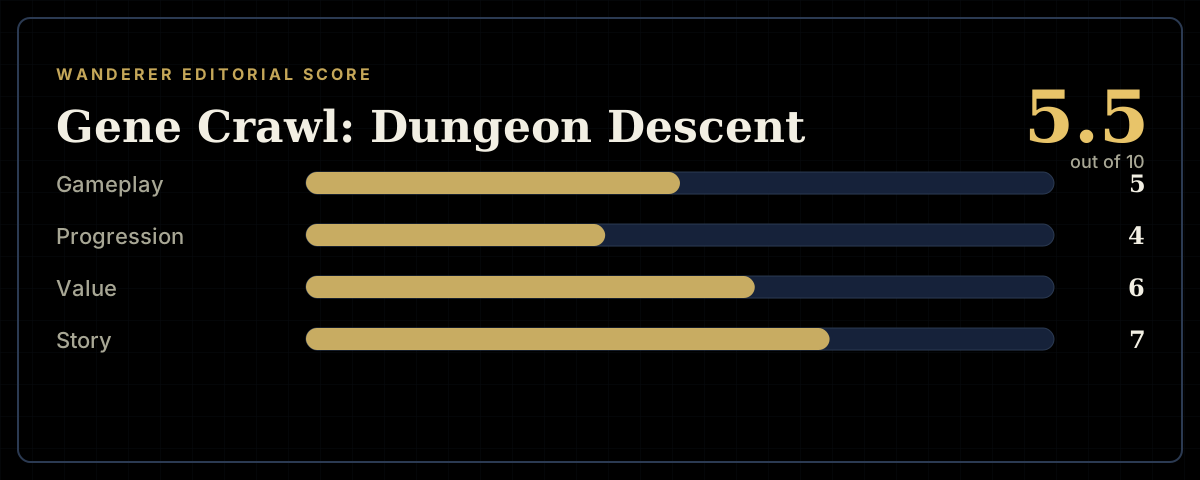
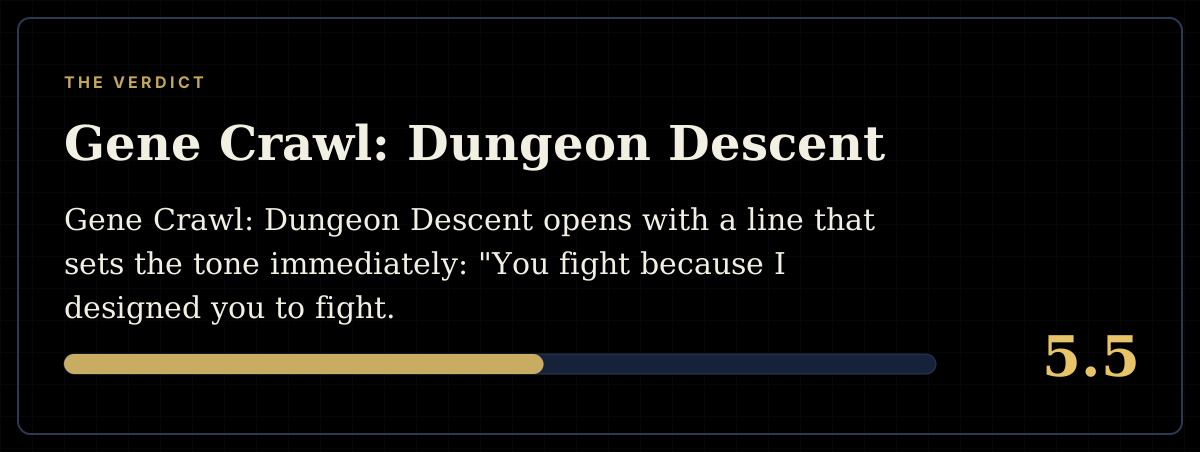
5.5 / 10
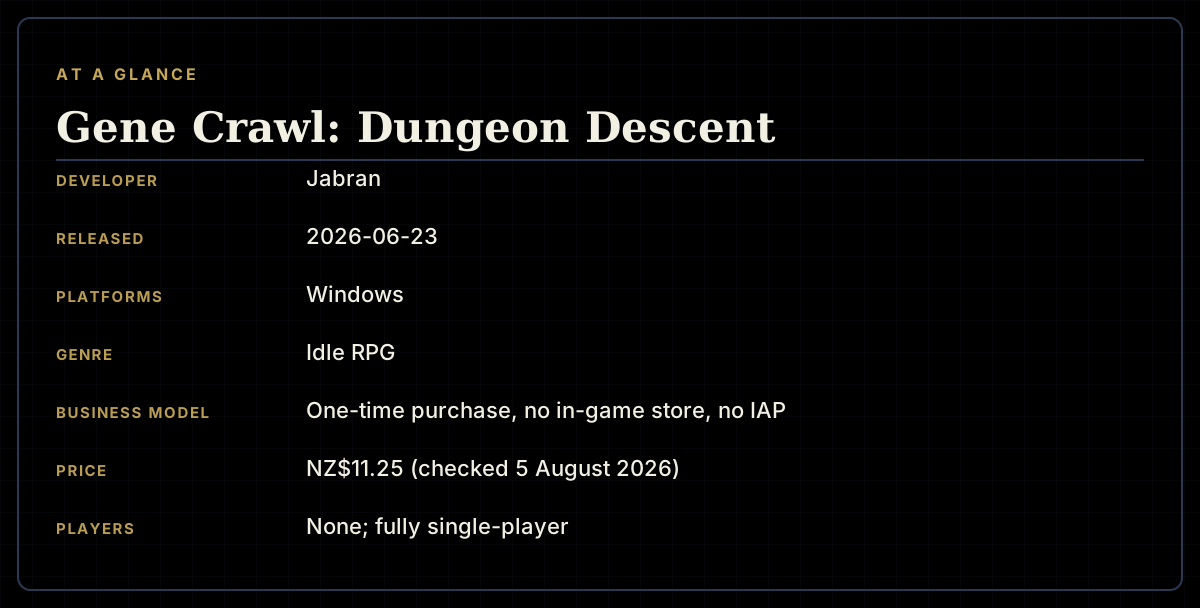
- Developer
- Jabran
- Publisher
- Jabran
- Released
- 23 June 2026
- Platforms
- Windows
- Genre
- Idle RPG
- Monetisation
- One-time purchase, no in-game store, no IAP
- Players
- None; fully single-player
The short version
Gene Crawl: Dungeon Descent opens with a line that sets the tone immediately: "You fight because I designed you to fight. You progress because the alternative is oblivion." That's The Architect talking, and the game's whole pitch runs through that unsettling lens — die in the dungeon, pass your bloodline's DNA to the next generation, come back stronger, and slowly uncover who's actually benefiting from your repeated deaths. It's a genuinely distinctive hook for an idle incremental RPG, closer to a body-horror mystery than the genre's usual cheerful number-go-up framing.
Six early reviews split the reception exactly down the middle, and two of the three negative ones, written independently in Chinese and Korean, describe the identical specific problem: after repeated rebirths, enemy stats reportedly scale up faster than the player's own growth, so pushing further can mean getting effectively weaker relative to what you're fighting — the opposite of what an incremental's core loop is supposed to deliver. That's a serious, corroborated design complaint sitting alongside reviewers who've logged 40 and even 120-plus hours and still recommend the game regardless.
Biggest strengths
- A genuinely distinctive premise for the genre — a body-horror mystery about who benefits from your character's repeated deaths — carried through evocative, well-written flavour text rather than treated as a throwaway hook
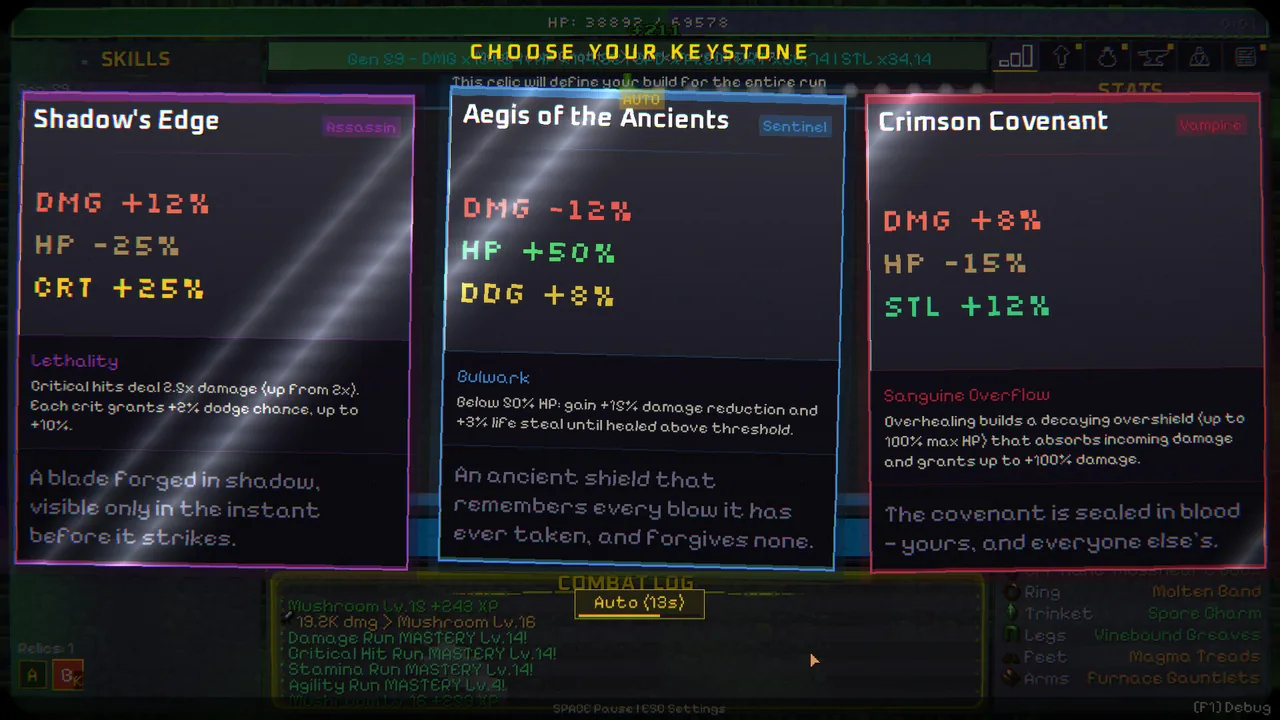
- Real structural depth: dual mastery progression, crafting, potion brewing, relic collection, and a genuine late-game boss gauntlet reflected in achievement data running from a Fungal King through to an Archangel and a Void Emperor
- At least one reviewer logged over 40 hours and still recommends it as "not a bad idler," describing an engaging opening before settling into a comfortable background rhythm
Biggest weaknesses
- Two independent, detailed negative reviews — one in Chinese, one in Korean — describe the same specific mechanical problem: after repeated rebirths, enemy stats reportedly scale up faster than the player's own growth, making the character feel weaker relative to threats the more the game is played
- The Korean-language review specifically criticises the inclusion of stat penalties in a genre built around accumulation, arguing they actively undermine what makes an incremental satisfying to play
- One detailed review describes minimal player interaction beyond repeated clicking once playback speed is increased, with content largely exhausted within a few hours at that pace
Who it's for: Idle RPG fans drawn to a darker, more narrative-forward premise than the genre usually offers, who are prepared for a rougher, less generous progression curve than most incrementals promise.
Our recommendation: Worth trying for the horror-tinged premise and the crafting-and-relic systems underneath it, but go in aware of a specific, corroborated complaint about late-run power scaling before committing serious hours to repeated rebirths.
5.5 / 10
Idle RPGs rarely bother with atmosphere beyond "fantasy dungeon, go." Gene Crawl: Dungeon Descent opens instead with a quote attributed to something called The Architect: "You fight because I designed you to fight. You progress because the alternative is oblivion." From there the store page keeps building the same unsettling tone — lab notes insisting "the subject must believe they can survive," descriptions of glowing mushrooms and vibrating crystals that feel less like flavour text and more like surveillance logs, a "Celestial Spire" described as "not a tower — it is a lens." The pitch, stripped of its horror dressing, is a familiar rebirth-and-inherit loop: die, pass your bloodline's DNA forward, come back stronger, dive deeper. What makes it distinctive is committing fully to the question of who's actually watching, and why.
Die, inherit, evolve — and something is counting
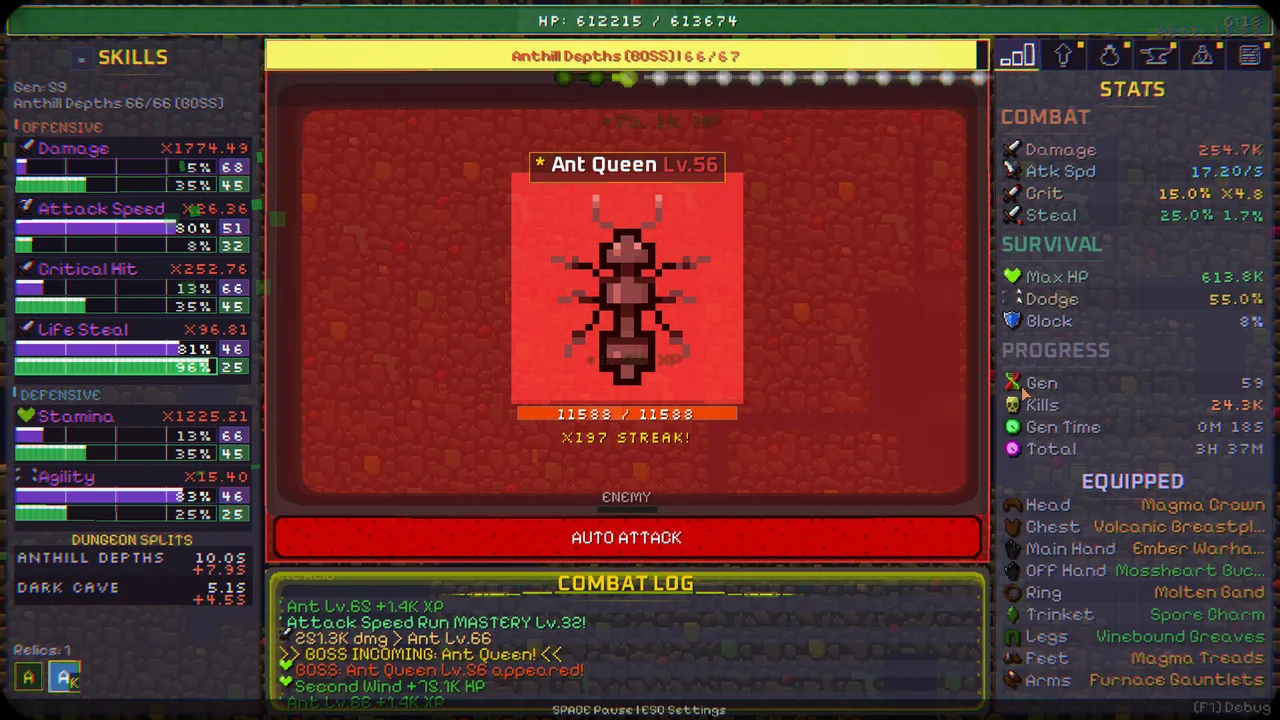
The mechanical bones are standard idle-RPG fare dressed in that premise: dual mastery progression across combat and crafting, an "infinite builds" skill system, gear crafting and potion brewing, and relic collection layered on top of repeated dungeon runs. Achievement data confirms real structural depth behind the pitch — 35 achievements in total, tracking a genuine late-game boss gauntlet running from an early Fungal King through to a Void Emperor and, eventually, an Archangel, the latter sitting at just 16.6% global completion. That's a long tail for a game this size, and it suggests real content exists for players willing to push deep.
One reviewer, with over 40 hours logged, frames the experience honestly: engaging for the first 10 to 20 minutes, then settling into the genre's usual rhythm of checking back periodically to spend resources and craft gear. That reviewer still recommends it — "not a bad idler" — while flagging the music and sound effects directly as weak points. A Russian-language review, logged at well over 120 hours, offers no elaboration beyond a single emphatic word of approval, which is its own kind of data point about how much time the game can hold someone regardless of its rougher edges.
The complaint two languages agree on
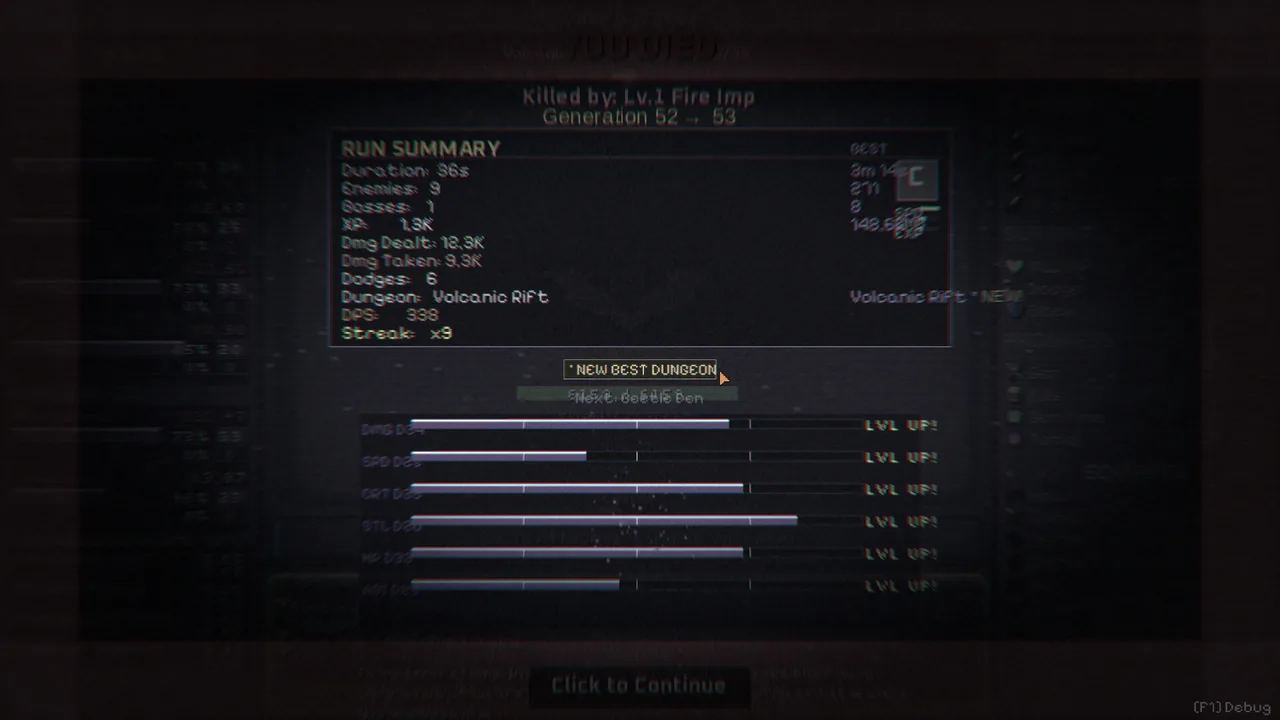
What keeps this review from a stronger recommendation is a specific, mechanical criticism that shows up independently, in detail, in two different languages. A Chinese-language review lays out the problem precisely: as clear counts increase, character growth "falls far behind" the growth of enemies after each rebirth. The reviewer's own stats climb, they note, but only by 20 to 30 percent per clear, while monster stats "increase exponentially" — meaning, in their words, the character actually gets weaker the more the game is played, compounding into what they describe as a near-unwinnable save state by the end. A Korean-language review, written independently five days later, arrives at a closely related conclusion through a different framing: growth feels "diagonal" rather than staircase-shaped, never delivering the satisfying jump in power the genre usually promises, and specifically objects to the inclusion of stat penalties at all — asking, reasonably, why an incremental built around accumulating numbers would ever choose to subtract from them.
Two independent, detailed accounts converging on the same underlying mechanical complaint — that the core promise of getting stronger through repeated play doesn't reliably hold — is meaningfully stronger evidence than either report alone, even in a review sample this small. It's also a more serious complaint than the genre's usual gripes about pacing or content depth, because it strikes at the specific thing incremental and idle RPGs are supposed to deliver: a legible sense that persistence pays off.
A premise strong enough to be worth the risk, for the right player
None of this means the game has nothing going for it. The horror-tinged framing around a generational bloodline experiment is genuinely well executed in its writing, and it's a real point of differentiation in a genre that rarely aims for atmosphere at all. The achievement data's long, difficult tail suggests the systems have real depth for players willing to push through whatever scaling issues the negative reviews describe. And critically, nobody in the sample — positive or negative — describes the game as buggy or abandoned; two patches landed within its first week, a reasonable early sign of active support.
Final verdict
Gene Crawl: Dungeon Descent pairs a genuinely distinctive, well-written horror premise with a specific, corroborated mechanical complaint serious enough to weigh heavily against it: two independent, detailed reviews describe the exact same experience of falling behind enemy scaling the more the game is played, which cuts directly against what an idle RPG is supposed to deliver. Set against that are reviewers who've logged dozens to well over a hundred hours and still recommend it, suggesting the problem may be more pronounced at certain points in a run than others, or more noticeable to players pushing for full completion than those enjoying it as background idle content.
Worth trying for the premise and the crafting depth, with realistic expectations set by the specific complaint above — this isn't a game to buy expecting an uninterrupted climb in power.
Players who want that same sense of steady, reliable growth without a scaling curve working against them, sustained across a much longer and more persistent world, may also want to look at Wanderer.
Pros and cons
Pros
- A genuinely distinctive premise for the genre — a body-horror mystery about who benefits from your character's repeated deaths — carried through evocative, well-written flavour text rather than treated as a throwaway hook
- Real structural depth: dual mastery progression, crafting, potion brewing, relic collection, and a genuine late-game boss gauntlet reflected in achievement data running from a Fungal King through to an Archangel and a Void Emperor
- At least one reviewer logged over 40 hours and still recommends it as "not a bad idler," describing an engaging opening before settling into a comfortable background rhythm
- No monetisation friction of any kind — a single upfront purchase with nothing else to buy
- Two patches landed within the game's first week, suggesting a developer paying attention to early feedback
Cons
- Two independent, detailed negative reviews — one in Chinese, one in Korean — describe the same specific mechanical problem: after repeated rebirths, enemy stats reportedly scale up faster than the player's own growth, making the character feel weaker relative to threats the more the game is played
- The Korean-language review specifically criticises the inclusion of stat penalties in a genre built around accumulation, arguing they actively undermine what makes an incremental satisfying to play
- One detailed review describes minimal player interaction beyond repeated clicking once playback speed is increased, with content largely exhausted within a few hours at that pace
- Audio is criticised directly by at least one otherwise positive reviewer, who calls both the music and sound effects "fairly poor"
- With only six total reviews, this reception is a small, early sample rather than a settled verdict, though the specificity and independence of the two negative accounts make them worth weighing seriously regardless of sample size
Screenshots
-
Gene Crawl: Dungeon DescentImage: Jabran via Steam -
Gene Crawl: Dungeon DescentImage: Jabran via Steam -
Gene Crawl: Dungeon DescentImage: Jabran via Steam -
How the review scores each part of the gameWanderer Editorial -
The game at a glanceWanderer Editorial -
The short versionWanderer Editorial