Game review
Idle Battle RPG
6 / 10
- Developer
- roflinka games
- Publisher
- roflinka games
- Released
- 20 April 2024
- Platforms
- Windows
- Genre
- Idle RPG, Action RPG, Simulation
- Monetisation
- One-time purchase, no DLC, no in-app purchases
- Players
- Single-player only
The short version
Idle Battle RPG auto-fights its way through waves of monsters while the player upgrades stats and gear between fights, but breaks from genre convention in one deliberate way: bosses can kill the player outright, and death — not a soft setback — wipes progress that wasn't already banked as permanent prestige. Made by solo developer roflinka games and released 20 April 2024, it has a genuinely tiny review corpus this review reads in full — all 19 reviews the game has ever received, in every language, not just the 14 in English. The result is Mixed, and the split runs almost exactly along one line: does an idle game get to punish you for not watching it closely enough?
Biggest strengths
- The core hook — permadeath and souls-like risk grafted onto an idle auto-battler, backed by community-voted Steam tags for Perma Death (281 votes) and Souls-like (240) — is genuinely distinctive within the genre rather than another reskinned number-go-up game
- Several reviewers logged extraordinary time with it, including individual players at over 150, 175 and 375 hours, which is hard evidence the core loop holds up for its committed audience
- Steam's own achievement data shows 90.6% of players have died at least once and 66.6% have earned the "No Refunds!" achievement for it — dying and restarting is clearly a designed, expected part of the experience rather than an edge case that ruins most playthroughs
Biggest weaknesses
- The game withholds basic combat information — boss evasion, critical and stun chances are not shown anywhere in the interface, which one detailed, 175-hour review specifically flags as a design choice that costs new players hours of blind farming
- At least one long, carefully argued review from an 8,400-hours-invested-elsewhere player reports specific stat-balance problems: health and defence matter early and stop mattering later, with no in-game guidance to help players adjust
- Several reviews written well after the death-penalty patch still describe accidental deaths as excessively harsh, including one from October 2024 written by a player with over 275 hours logged
Who it's for: Idle-genre players drawn to a real risk-reward hook rather than pure passive number growth, and anyone who enjoys the souls-like "you will die, and it matters" ethos applied to an auto-battler; a poor fit for anyone who wants a game to leave running unattended.
Our recommendation: A cheap, distinctive idle RPG with a genuinely unusual design idea at its core, let down by information the game doesn't surface to new players and by a developer who stopped patching it two weeks after launch, well before every rough edge was smoothed.
6 / 10
Introduction
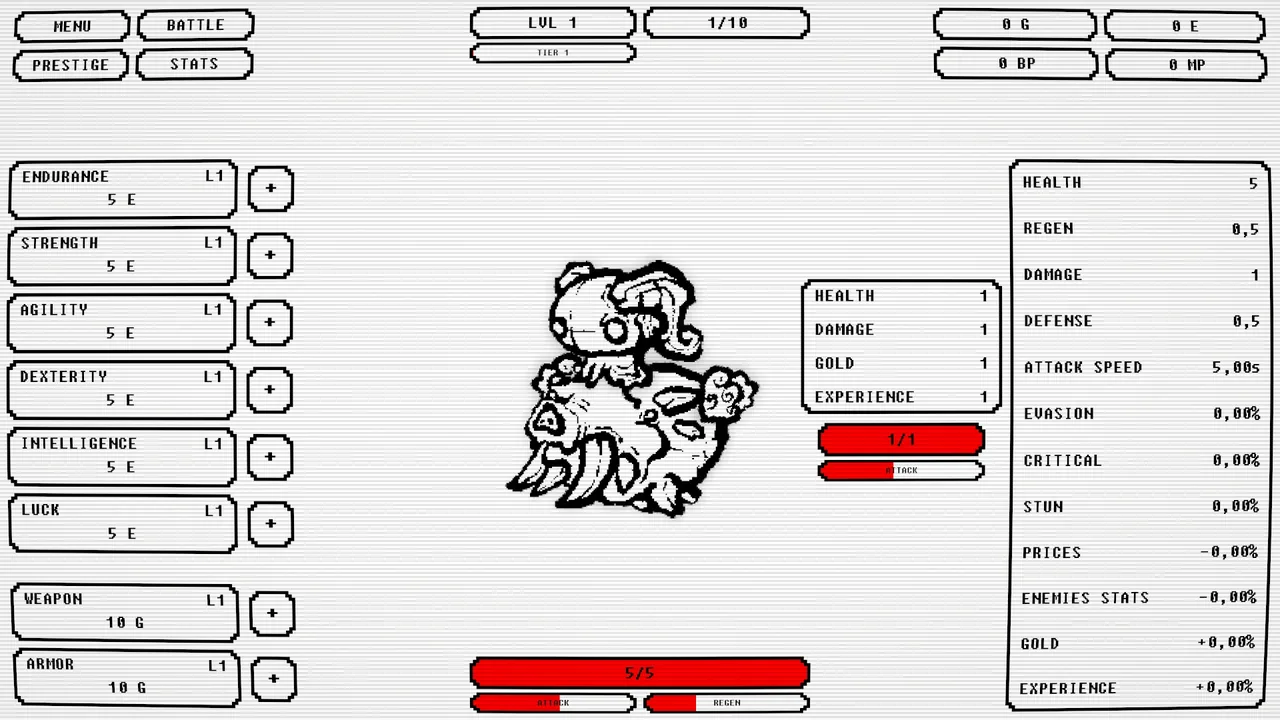
Idle Battle RPG asks a question most idle games never think to ask: what if not paying attention actually cost you something? The loop looks familiar at a glance — monsters die automatically, stats and gear get upgraded between fights, a prestige system called rebirth resets the run for permanent multipliers — but bosses in this game can genuinely kill the player, and death erases anything that wasn't already banked as a permanent prestige point. Made solo by developer roflinka games and released 20 April 2024 for NZ$6.39, it carries a genuinely tiny review history — 19 reviews total across every language it's ever received, all of which this review reads in full, including all 14 in English. That's Mixed sentiment overall, and reading every word of it shows the split runs almost entirely along one question: is an idle game allowed to punish idling?
An idle game with real stakes
The community's own vote-weighted Steam tags describe the identity better than the store genres do: RPG (306 votes) and Idler (297) sit essentially tied at the top, but Perma Death (281) and Souls-like (240) aren't far behind — this is being played and rated as a souls-like with idle mechanics, not a number-crunching idler with a difficulty spike bolted on. One positive review puts the appeal plainly: "It's an idle game that punishes you for getting too greedy... I enjoyed the challenge and having something to think about." A second, more measured recommendation warns "THIS GAME IS NOT FOR EVERYONE. There is very little to do... [it is] NOT FORGIVING about dying," and recommends it anyway, specifically because that's the kind of game its author likes.
That the hook lands for a real audience isn't in doubt. Individual reviewers report playtimes of 8,400, 10,516, 11,013, 14,204, 16,649 and 22,616 minutes — several hundred hours each — which is an extraordinary depth of engagement for a NZ$6.39 solo project with a Mixed score. Steam's achievement data backs up how central death actually is to the design rather than being a rare misfortune: 90.6% of everyone who's played has died at least once, and 66.6% have earned the achievement literally called "No Refunds!" — a joke one reviewer singled out as their favourite part of the game. Dying here isn't an edge case that ruins most playthroughs; it's clearly the intended texture of the whole experience.
Where the game keeps players in the dark
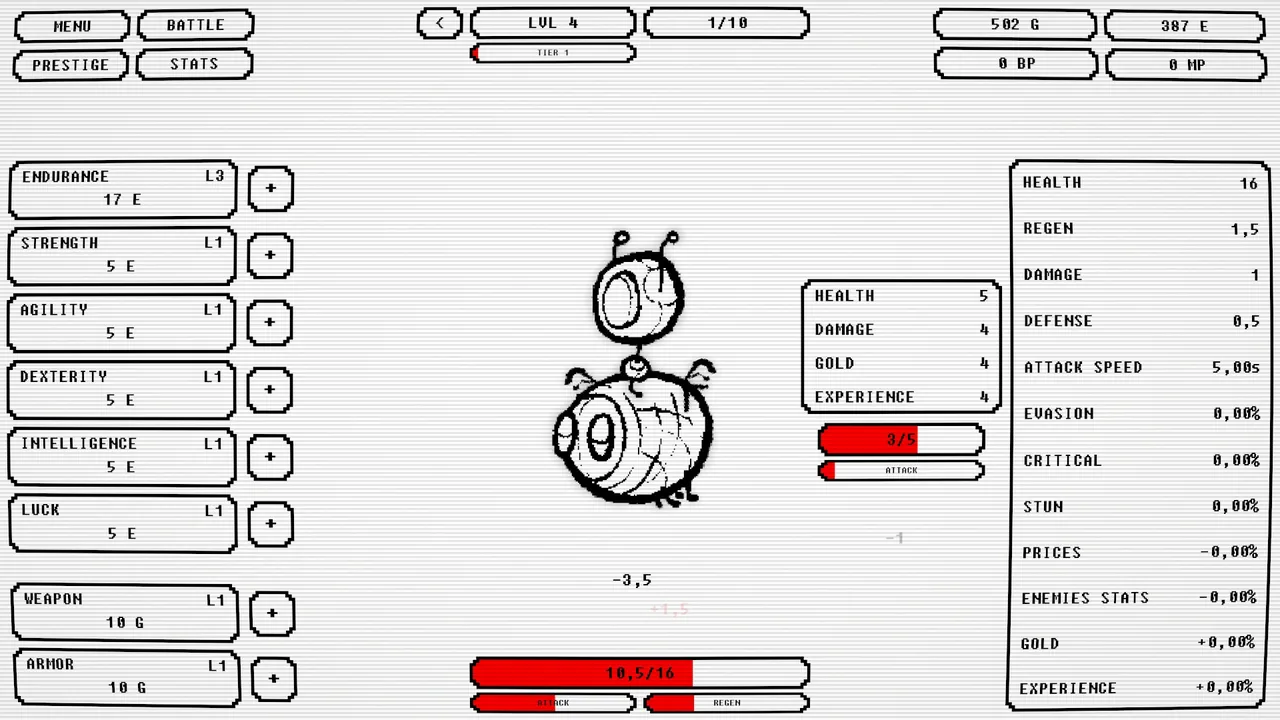
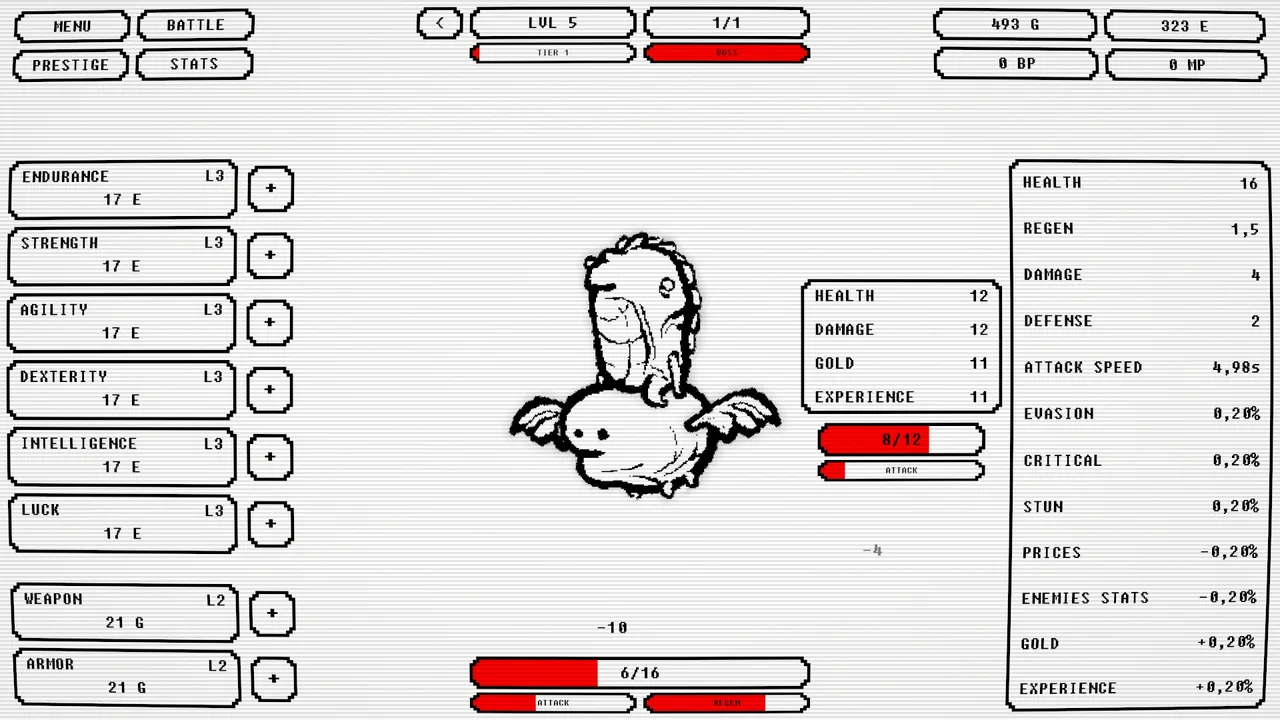
The most substantial, specific criticism in this small sample concerns information the game simply doesn't provide. One detailed 175-hour review flags that boss evasion, critical hit and stun chances are never surfaced anywhere in the interface — numbers that directly determine whether a farming session ends in profit or in an unexpected death, hidden from a player who has no way to plan around them. A second, even longer review from a player who logged 8,400 minutes lays out specific balance concerns: health and defence carry real weight in the early stats race and stop mattering as the game progresses, with nothing in the game explaining the shift or helping a player retool their build accordingly. Both complaints share a shape — not that the systems are broken, but that the game asks players to learn its rules through trial, error and lost runs rather than telling them upfront, which sits uneasily against a genre whose whole premise is usually letting players learn at their own pace.
A fast start, then silence
To its credit, the developer moved quickly in the immediate aftermath of launch. An auto-pause option before boss fights arrived on 22 April, two days after release, directly answering players who found themselves ambushed by fights they hadn't seen coming. A week later, the 29 April update meaningfully softened the death penalty — capping losses at 50% of gold and experience on a regular level death and 80% on a boss death, and preserving level progress through prestige resets rather than wiping it entirely. Two further bugfix updates followed on 3 May, and then nothing has shipped since.
That gap matters because at least one review post-dating every one of those fixes — an October 2024 review from a player with 277 hours logged — still describes accidental deaths as excessively harsh, and a Swedish-language review from mid-May reports having to manually reset after death or lose everything, which reads at odds with the patch notes' claim that level progress now survives. Whether that's the softened penalty still landing as unforgiving for some players, or a case of players missing an option that exists but isn't obvious, this review can't settle from the outside — but it's fair to note the complaint persisted in the record well past the point the developer stopped actively responding to it.
Final Verdict
Idle Battle RPG is a small, cheap, genuinely distinctive idea — a souls-like grafted onto an idle auto-battler, where not watching the screen can actually cost you a run — and it has earned a small, fiercely loyal following willing to put hundreds of hours into exactly that premise. What holds it back is that the game asks a lot of trust from new players without giving them the information to earn it: hidden combat numbers, unexplained stat shifts, and death consequences that at least some players still find punishing well after the developer's own patches were meant to soften them. Development stopped just two weeks after launch, so anything still rough today is likely to stay that way. For the asking price, it's a fair gamble for anyone specifically drawn to the hook — go in expecting the game to teach you its harshest lessons through loss rather than explanation.
Pros and cons
Pros
- The core hook — permadeath and souls-like risk grafted onto an idle auto-battler, backed by community-voted Steam tags for Perma Death (281 votes) and Souls-like (240) — is genuinely distinctive within the genre rather than another reskinned number-go-up game
- Several reviewers logged extraordinary time with it, including individual players at over 150, 175 and 375 hours, which is hard evidence the core loop holds up for its committed audience
- Steam's own achievement data shows 90.6% of players have died at least once and 66.6% have earned the "No Refunds!" achievement for it — dying and restarting is clearly a designed, expected part of the experience rather than an edge case that ruins most playthroughs
- The developer responded fast in the first two weeks after launch, adding an auto-pause option before boss fights and substantially softening the death penalty within nine days
Cons
- The game withholds basic combat information — boss evasion, critical and stun chances are not shown anywhere in the interface, which one detailed, 175-hour review specifically flags as a design choice that costs new players hours of blind farming
- At least one long, carefully argued review from an 8,400-hours-invested-elsewhere player reports specific stat-balance problems: health and defence matter early and stop mattering later, with no in-game guidance to help players adjust
- Several reviews written well after the death-penalty patch still describe accidental deaths as excessively harsh, including one from October 2024 written by a player with over 275 hours logged
- Development support ran for barely two weeks after launch — five updates between 21 April and 3 May 2024, then nothing since — leaving some of these complaints permanently unresolved
Screenshots
-
Idle Battle RPGImage: roflinka games via Steam -
Idle Battle RPGImage: roflinka games via Steam -
Idle Battle RPGImage: roflinka games via Steam -
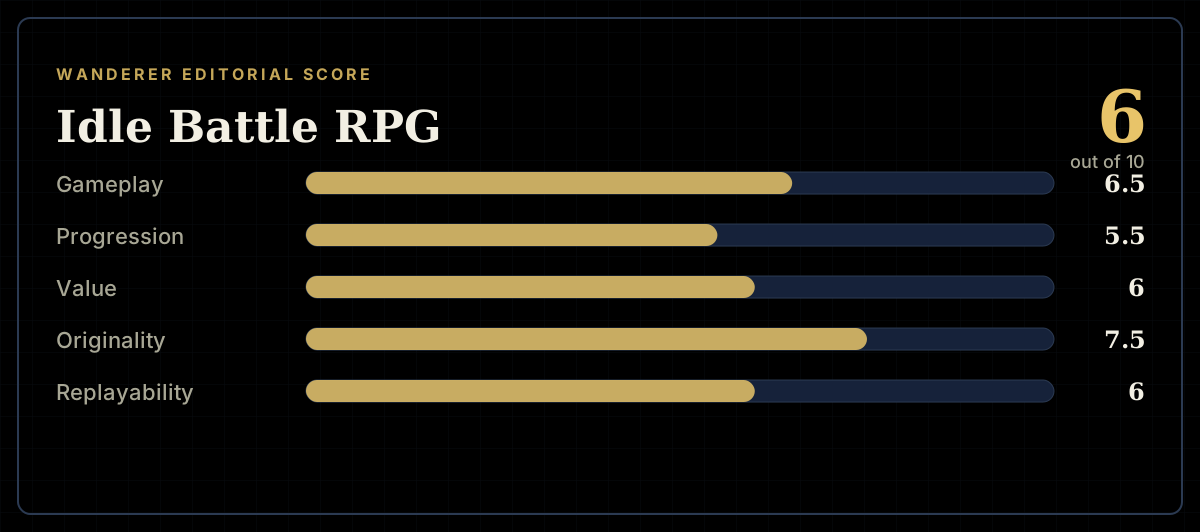
How the review scores each part of the gameWanderer Editorial -
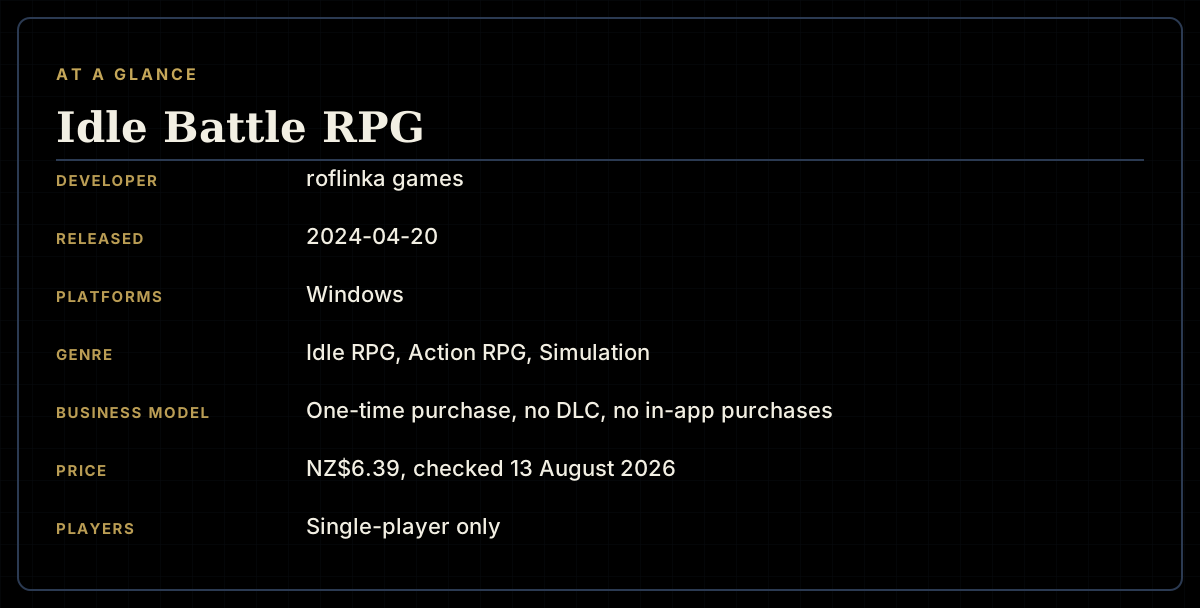
The essentials at a glanceWanderer Editorial -
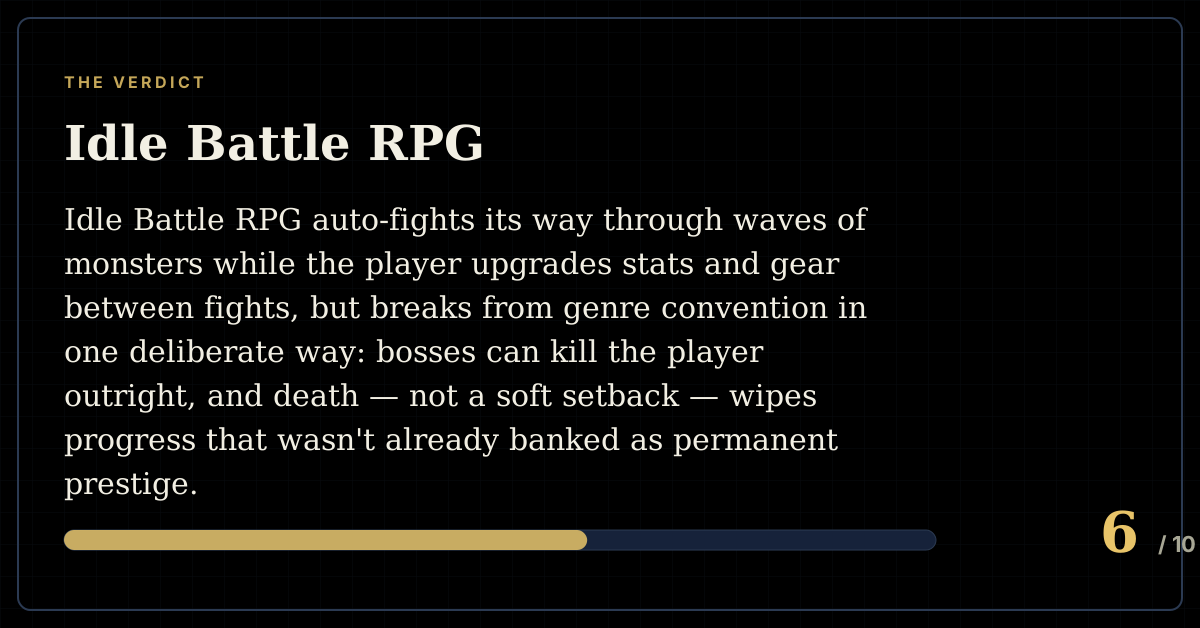
The short versionWanderer Editorial