
Game review
Slay All Bosses: Idle
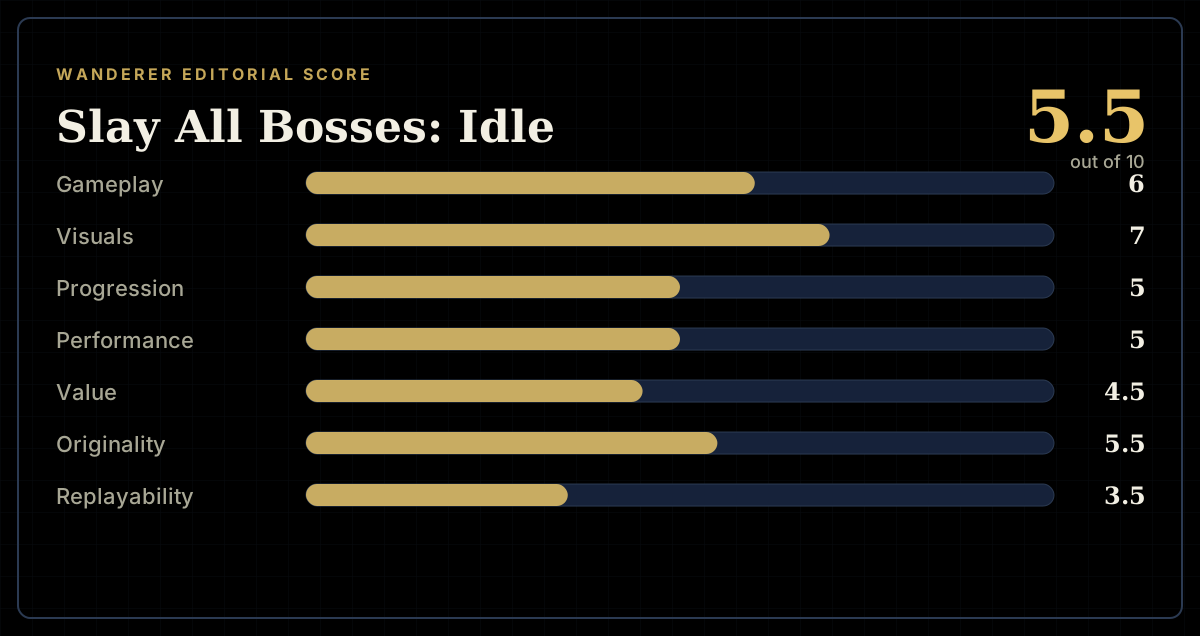
5.5 / 10
- Developer
- Memoria Interactive
- Publisher
- Memoria Interactive
- Released
- 14 April 2026
- Platforms
- Windows
- Genre
- Incremental RPG
- Monetisation
- One-off premium purchase with no DLC, no in-app purchases and nothing sold beyond the base game
- Players
- None. Single-player only, with no leaderboard, co-op or shared-progress feature
The short version
Slay All Bosses: Idle picks a strong hook — three heroes, a rotating gauntlet of named monsters, weapon skills that get permanently learned once you've used them enough to stop punishing experimentation — and then runs out of game to attach it to. A full clear sits somewhere around nine hours for a completionist, the three characters lean on mostly the same shared skill tree rather than three distinct builds, and calling it an idle game oversells how hands-off it actually is: it wants your attention roughly as often as it leaves you alone. The monster art and boss designs are genuinely good, which makes the thinness elsewhere more noticeable rather than less.
Biggest strengths
- Weapon Skills convert from temporary to permanently learned after enough uses, which removes the usual incremental-RPG penalty for trying a different loadout mid-run
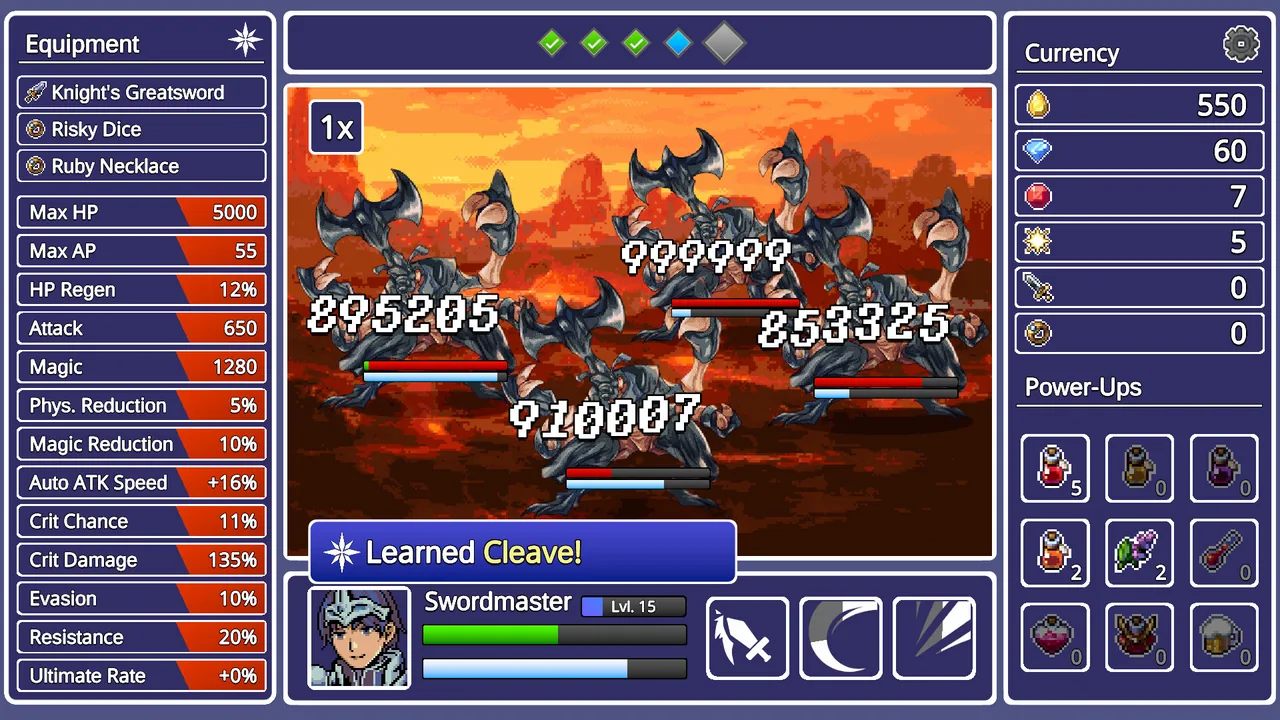
- Monster and boss sprite work is a clear strength — named bosses like Jormungandr, Kirin and the Spectral Reaper each read as distinct silhouettes rather than palette-swapped filler
- Cheap enough, even at full price, that a short single-sitting boss-rush doesn't feel like a bad bet the way a longer, more expensive game with the same amount of content would
Biggest weaknesses
- Despite the name, this isn't an idle game in the genre sense — it's an auto-battler that needs a fresh input roughly every couple of minutes, and several reviewers specifically call out the mismatch between the title and what's actually being asked of the player
- The three playable characters share most of one skill tree rather than offering meaningfully different builds, which undercuts the promise of three distinct playthroughs
- A completionist clear lands around nine hours, and multiple reviewers who reached the credits describe the loop as exhausted well before that point — there's no meta-progression reason to run it back once you've seen the bosses
Who it's for: Players who want a short, cheap boss-rush with light RPG dressing for an evening, not a genre veteran looking for the kind of deep, weeks-long incremental loop the "Idle" in the title might suggest.
Our recommendation: Fine at a deep discount for a single sitting of boss-fighting; hard to recommend at anything close to full price once you know how little separates the three characters and how quickly the content ends.
5.5 / 10
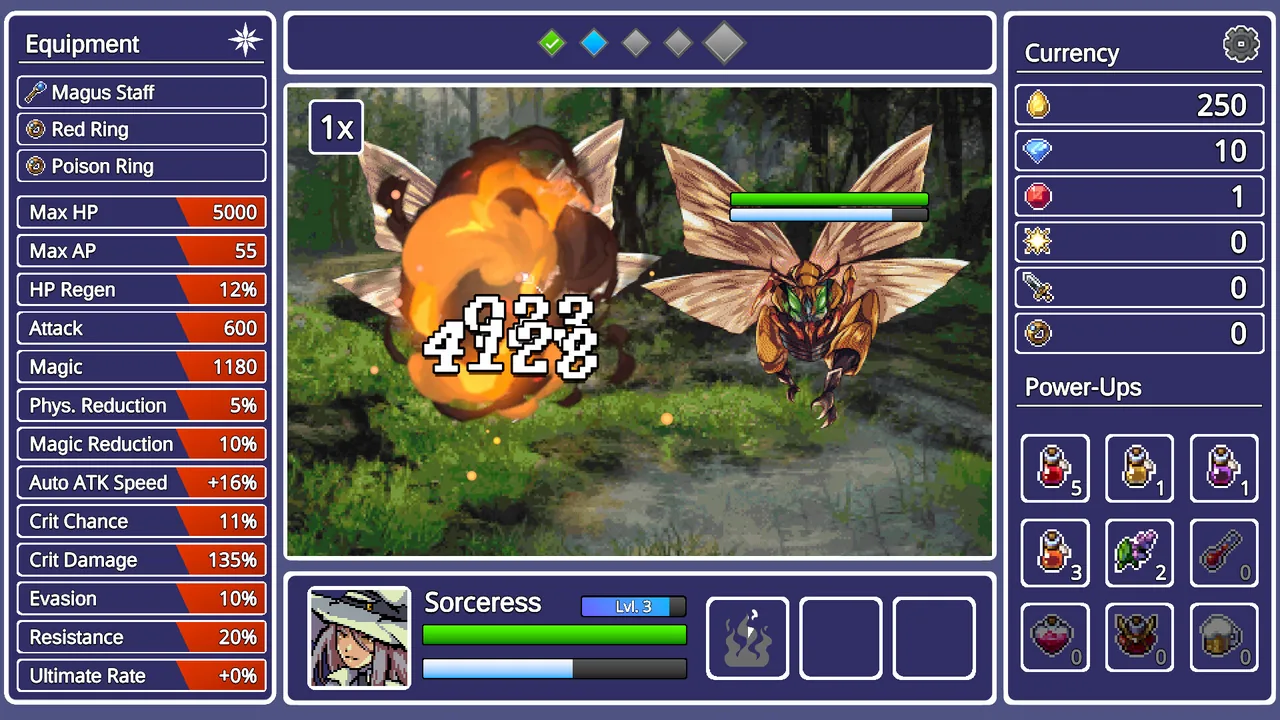
The title is doing a lot of work it can't back up. Slay All Bosses: Idle sounds like it's promising the genre's usual deal — leave it running, come back richer — but what solo developer Memoria Interactive actually built is a compact auto-battler: pick one of three heroes, watch them cut through waves of trash automatically, then step in every couple of minutes to trigger a Weapon Skill or react to a boss mechanic. That's not a criticism of the loop itself, which is perfectly pleasant in short bursts. It's a mismatch between what the name sells and what's on the disc, and it's the single most common complaint in the game's review history for a reason.
The boss gauntlet
Where the game earns its keep is in the actual fights. The roster of named monsters — Goblin Chieftain, Minotaurus, Elder Treant, Jormungandr, Kirin, a Spectral Reaper, an Abaddon waiting at the end — reads like a genuine effort to give every stop on the ladder its own identity, and the sprite and spell-animation work backs that up. Even players who came away disappointed by the overall package tend to single out the monster art as a highlight, which says something about where the studio's actual strengths lie.
The Weapon Skill system is the other idea worth crediting. Skills are tied to whatever weapon is currently equipped, but using one enough times permanently unlocks it for the character, which means switching weapons to try a different playstyle doesn't cost you progress the way it would in a lot of loadout-based RPGs. It's a small design choice that removes a specific, common source of friction, and it works.
Where it runs thin
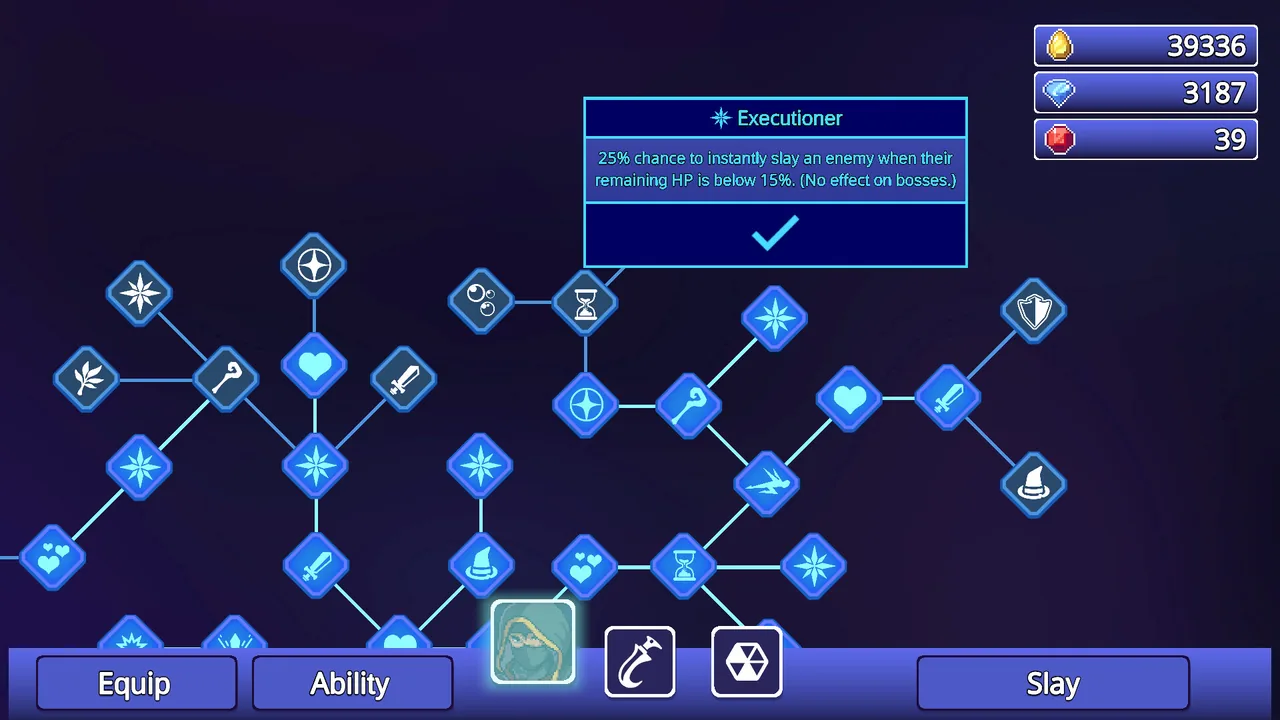
Everything else is where the complaints concentrate, and they're consistent across a small but pointed review sample. The three heroes — a swordsman, a mage and something closer to a ninja or shinobi archetype, going by the achievement names — mostly draw from one shared skill tree rather than three meaningfully distinct builds, which several players call out directly as feeling underbaked given that character choice is supposed to be a headline feature. One reviewer who tracked their own time reports roughly nine hours to reach 100% completion and says they can't recommend the game at the end of it; more than one describes the loop as having said everything it has to say well before the credits actually roll.
Steam's global achievement data backs up a game that's short but not brutally gated: the easiest unlock sits at 94% and the hardest — full mastery of the bonus systems — at 26.4%, a smooth decline with no single wall where players collectively give up. That's a healthy completion curve for a short game, which actually reinforces the main criticism rather than undercutting it: this isn't a game people are bouncing off early, it's one they're finishing and then not returning to, because there's no meta-progression reason to run a second character once you've already seen the first one's fights.
A handful of more technical complaints round things out. Achievements are reported as inconsistent for some players — one specific note says the game requires fullscreen mode to register unlocks at all, which shouldn't still be a live issue months after a 1.0 launch. Another review describes serious GPU strain for a game with fairly modest 2D presentation, the kind of performance-versus-visual-complexity mismatch that usually points at an optimisation pass that never happened rather than anything ambitious under the hood.
Value and the idle question
At NZ$6.31 — a price that's been sitting at a 20% discount off its NZ$7.89 list since shortly after launch — Slay All Bosses: Idle is cheap enough that a single evening spent clearing the boss gauntlet isn't really a bad transaction on its own terms. The trouble is the review sample is full of players who specifically weighed the price against what they got and came away feeling shortchanged, not because the asking price is high in absolute terms, but because the game doesn't give them a reason to have spent it twice. "Not worth the five dollars" shows up more than once in almost those exact words, which is a harder thing for a five-dollar game to survive than a fifty-dollar one, precisely because there's so little room left to disappoint anyone on price alone.
The Wanderer angle is worth being honest about too: if you came to this looking for something to scratch the same itch as a persistent-world idle game — genuine offline progress, a loop that rewards checking back in over days or weeks — this isn't that game, and the title's own reviewers are the ones saying so most clearly. What's here is a tight, good-looking, forgettably short boss-rush with an idle-adjacent combat rhythm. Judge it as that rather than as what its name promises, and it's a reasonable way to spend an evening. Judge it against the "Idle" in its title, and it comes up short in exactly the way its own players keep describing.
Pros and cons
Pros
- Weapon Skills convert from temporary to permanently learned after enough uses, which removes the usual incremental-RPG penalty for trying a different loadout mid-run
- Monster and boss sprite work is a clear strength — named bosses like Jormungandr, Kirin and the Spectral Reaper each read as distinct silhouettes rather than palette-swapped filler
- Cheap enough, even at full price, that a short single-sitting boss-rush doesn't feel like a bad bet the way a longer, more expensive game with the same amount of content would
- Auto-battling the trash waves while stepping in for boss mechanics gives combat a light, manageable rhythm rather than either full-idle or full-manual extremes
Cons
- Despite the name, this isn't an idle game in the genre sense — it's an auto-battler that needs a fresh input roughly every couple of minutes, and several reviewers specifically call out the mismatch between the title and what's actually being asked of the player
- The three playable characters share most of one skill tree rather than offering meaningfully different builds, which undercuts the promise of three distinct playthroughs
- A completionist clear lands around nine hours, and multiple reviewers who reached the credits describe the loop as exhausted well before that point — there's no meta-progression reason to run it back once you've seen the bosses
- Achievement unlocks are reportedly unreliable for some players (one specific complaint about requiring fullscreen mode to trigger), which is a rough edge for a game this small to still have months after launch
- At least one review reports serious performance trouble on a mid-range GPU for a game this visually modest, suggesting optimisation hasn't had the attention the art has
Screenshots
-
Slay All Bosses: IdleImage: Memoria Interactive via Steam -
Slay All Bosses: IdleImage: Memoria Interactive via Steam -
Slay All Bosses: IdleImage: Memoria Interactive via Steam -
How the review scores each part of the gameWanderer Editorial -
The short versionWanderer Editorial