
Game review
Idle Nine Heavens
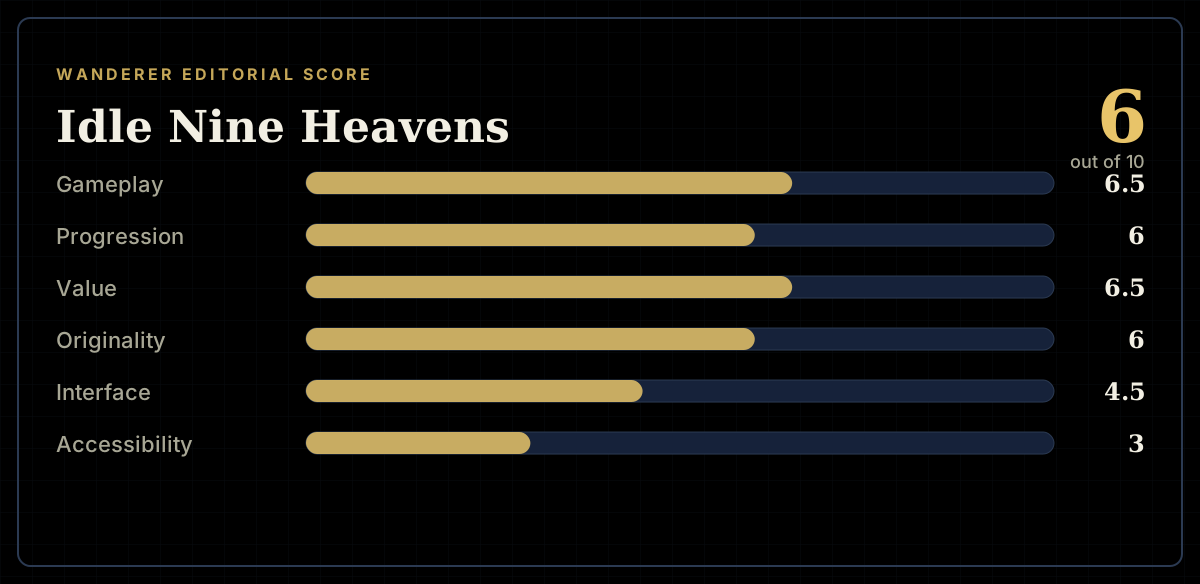
6 / 10
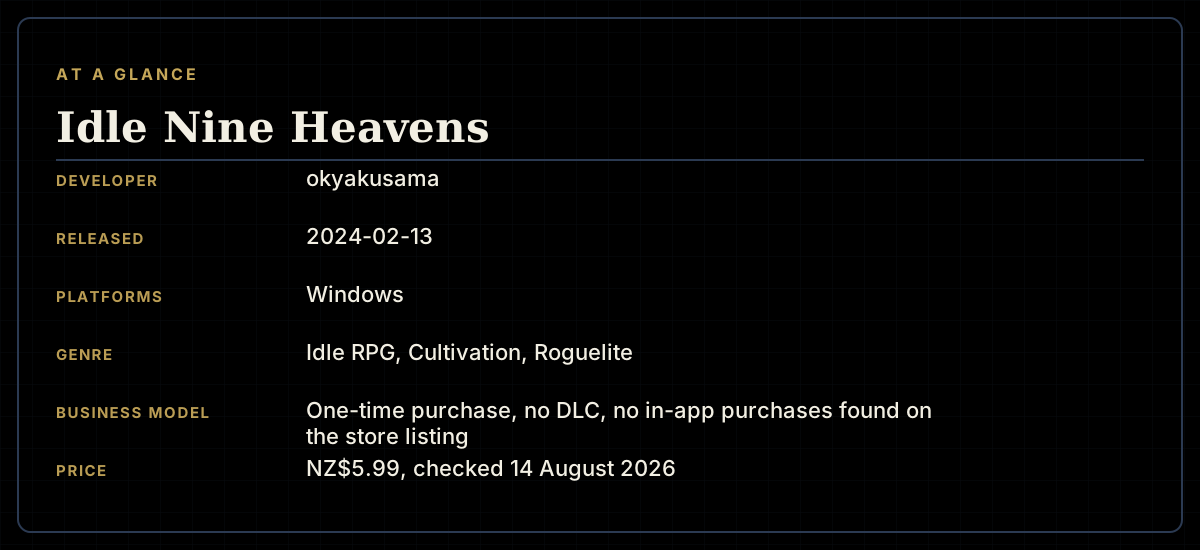
- Developer
- okyakusama
- Publisher
- okyakusama
- Released
- 13 February 2024
- Platforms
- Windows
- Genre
- Idle RPG, Cultivation, Roguelite
- Monetisation
- One-time purchase, no DLC, no in-app purchases found on the store listing
The short version
Idle Nine Heavens is a solo-developer xianxia idle RPG: pick a cultivator, summon Dao companions to train alongside you, and grind through more than forty cultivation-realm tiers while secondary professions like alchemy and refining feed your gear. It released on Steam on 13 February 2024 and sits at Mostly Positive, 71.3% of 94 reviews — a small corpus, and an overwhelmingly Chinese-speaking one, since the game's Steam page lists Simplified Chinese as its only supported language. That single fact matters more than the score: this review can describe the game's systems and its own community's verdict on them in detail, but it cannot in good conscience recommend it to a reader who doesn't read Chinese, because nothing in the actual interface will be legible to them.
Biggest strengths
- Genuine systemic depth for an idle RPG — Dao companions, alchemy and refining side professions, a magic-weapon equipment system, and more than 40 cultivation-realm tiers to climb
- A flat NZ$5.99 with no DLC or in-app purchases found on the listing
- Steam's own achievement data shows a genuinely dedicated playerbase rather than a fast drop-off — even the hardest of its 100 achievements sits above 10%, and reviews in both the positive and negative columns log hundreds of hours
Biggest weaknesses
- The store page lists Simplified Chinese as the only supported language; there is no English UI, so most of Wanderer's audience cannot play it as shipped
- Several of the game's own detailed reviews, including one from a player at 797 hours, describe the interface giving almost no feedback on realm progress, remaining requirements, or what items actually do
- Steam's community-announcement feed shows a dense run of patches from launch through 11 March 2024 and effectively nothing to this specific game since — later posts on the same feed promote the developer's other, newer idle and tower-defense titles instead
Who it's for: Players who read Chinese and want a deep, patient xianxia idle RPG with real systems under the hood — companions, professions, dozens of realm tiers; not a fit for anyone who doesn't read Simplified Chinese, since there is no other supported language, and a cautious pick even for fluent readers given how quiet development has gone since early 2024.
Our recommendation: A niche, genuinely substantial idle RPG for a specific audience that Steam's own language listing and patch history narrow considerably — worth flagging for Wanderer readers who read Chinese and want to see how the genre is built elsewhere, not a general recommendation.
6 / 10
Introduction
Idle Nine Heavens is a small, single-developer take on the xianxia idle RPG — the wuxia-adjacent cultivation genre built around ranking up through cosmic "realms" of power, a staple of Chinese mobile gaming that rarely gets much attention in English-language coverage. Released on Steam on 13 February 2024 by developer okyakusama, it sits at a respectable Mostly Positive, 71.3% across 94 reviews. Before anything else, this review has to state the fact that shapes everything about who this game is for: Steam lists its only supported language as Simplified Chinese, and 83 of a 94-review all-language sample are written in it. There is no English option in the interface, and this review is not going to pretend otherwise for the sake of a tidier recommendation.
Cultivating, companions, and combat
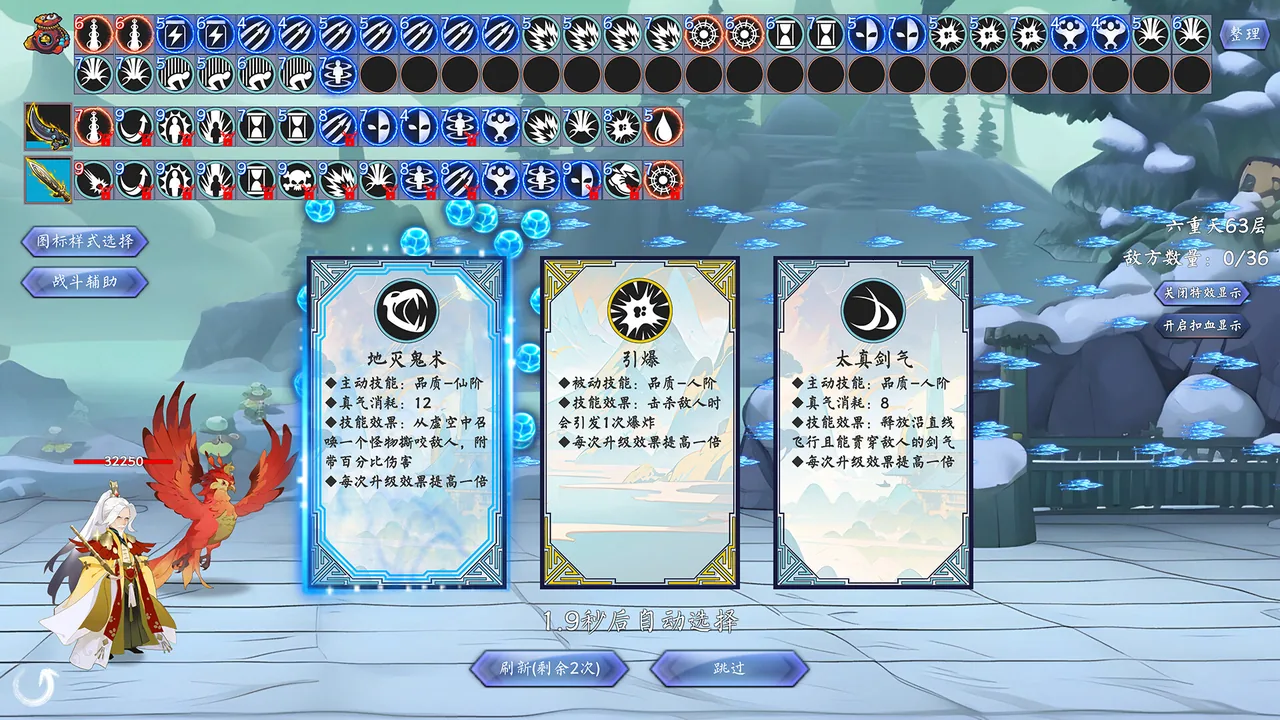
What the game actually offers is more substantial than its tiny review count suggests. Players take on the role of a wandering cultivator who can summon multiple Dao companions to train alongside them — a relationship system that, per several reviews, becomes the fastest route to early power through a "dual cultivation" mechanic. Around that sits a genuinely broad set of systems: secondary professions in alchemy, spellcasting, and equipment refining that consume gathered materials; a magic-weapon equipment system; an NPC affinity system that unlocks exclusive missions through gift-giving; and a stated 40-plus tier realm ladder for the core cultivation progress bar, alongside nine "heaven" story challenges and assorted replica dungeons. Community tag votes on the store page — Casual, Idler, Roguelike, Tower Defense, Singleplayer — suggest a looser structure than a straight cultivation clicker, mixing idle progression with roguelike run structure and tower-defense-style challenge stages. That is a distinctive combination within its own genre, and it is a large part of why 797-, 668-, 388-, and 295-hour reviews exist at all: for the audience that can actually read the game, there is clearly enough here to hold attention for a very long time.
What the players who can read it are saying
Reading the full negative sample — all 27 of them, none written in English — turns up a specific, recurring complaint that has nothing to do with language and everything to do with basic usability. One detailed review from a player with 797 hours logged asks, in translation, a long list of questions the game apparently never answers on its own: what realm tier the character has reached, how much accumulated energy remains before the next tier, what a consumed item actually added, what each of the guild's many crafting options produces, which of two available weapons to actually equip. Another reviewer, at over 100 hours, describes the UI as "fragmented" with "almost zero" operational feedback, adding that the game's own in-fiction "cultivation guide" gives minimal direction. A third, shorter review sums up a common thread plainly: "too simple and repetitive, as an idle game it falls well short." These are not launch-week first impressions — they span from February through July 2024, across playtimes from 12 hours to nearly 800, which argues these are engaged players describing a real, persistent gap rather than reviewers who bounced early. A separate, recurring detail worth noting honestly: several reviews, including positive ones, describe Cheat Engine speed-editing as close to a standard strategy for reaching the deeper realm tiers in reasonable time, which says something about how slow the intended pace actually is without it. Steam's achievement statistics support that read of a patient, invested audience rather than one that quits early — none of the game's 100 achievements sits below 10% completion, and the median sits at a healthy 24%, an unusually gentle curve for a game this size.
A quiet launch window, then silence
Idle Nine Heavens' own community-announcement feed tells a clear before-and-after story. Between 19 February and 11 March 2024, the developer shipped a dense run of numbered patches — 1.2.9 through 1.4.7 in under a month, evidence of real post-launch attention early on. Nothing has been posted for this specific game since. The same announcement feed has continued to post occasionally through 2025 and 2026, but those later entries promote the developer's other releases — an "Idle Land of Exile" demo and a tower-defense title entering Steam's New Games Festival — rather than anything new for Idle Nine Heavens itself. That lines up with a lost-save complaint from a 282-hour player asking, without apparent response, where to find support, and with a request for cloud-save support that shows up in the positive review column too. None of it looks malicious; it reads like a small developer's attention moving on to newer projects, which is common enough in this genre, but it means anyone buying in now should expect the game roughly as it exists today rather than a title still being actively refined.
Final Verdict
Idle Nine Heavens is a legitimately deep xianxia idle RPG that most of Wanderer's readers cannot currently play as intended, because its interface has never been translated out of Simplified Chinese. That single fact keeps this review's score well short of what its systems alone might earn — a companion-based progression loop, real secondary professions, and a 40-plus tier realm ladder that has clearly held a dedicated audience's attention for hundreds of hours. For readers who read Chinese and want to see the idle-RPG genre built on the other side of the language barrier, it's a cheap, substantial, if under-explained example, best approached with patience for its sparse feedback and quiet development. For everyone else, it's a curiosity worth knowing about rather than a game worth buying yet.
Pros and cons
Pros
- Genuine systemic depth for an idle RPG — Dao companions, alchemy and refining side professions, a magic-weapon equipment system, and more than 40 cultivation-realm tiers to climb
- A flat NZ$5.99 with no DLC or in-app purchases found on the listing
- Steam's own achievement data shows a genuinely dedicated playerbase rather than a fast drop-off — even the hardest of its 100 achievements sits above 10%, and reviews in both the positive and negative columns log hundreds of hours
- A distinctive niche blend the community tags confirm — Idler, Roguelike, and Tower Defense together, not just a straight cultivation clicker
Cons
- The store page lists Simplified Chinese as the only supported language; there is no English UI, so most of Wanderer's audience cannot play it as shipped
- Several of the game's own detailed reviews, including one from a player at 797 hours, describe the interface giving almost no feedback on realm progress, remaining requirements, or what items actually do
- Steam's community-announcement feed shows a dense run of patches from launch through 11 March 2024 and effectively nothing to this specific game since — later posts on the same feed promote the developer's other, newer idle and tower-defense titles instead
- Multiple reviewers describe Cheat Engine speed-editing as a near-necessary strategy to reach the game's later realm tiers in reasonable time, which is a telling signal about its intended pacing
Screenshots
-

Idle Nine HeavensImage: okyakusama via Steam -

Idle Nine HeavensImage: okyakusama via Steam -
Idle Nine HeavensImage: okyakusama via Steam -
How the review scores each part of the gameWanderer Editorial -
The essentials at a glanceWanderer Editorial -
The short versionWanderer Editorial